Questões de Concurso Para prefeitura de peruíbe - sp

Foram encontradas 2.726 questões

Resolva questões gratuitamente!

Junte-se a mais de 4 milhões de concurseiros!

Q4227844 Inglês
Leia o texto para responder à questão.

    Through practice and experience in an increasingly wide range of communicative contexts and events, learners gradually expand their communicative competence, consisting of grammatical competence, discourse competence, sociocultural competence and strategic competence. All these components are interrelated. An increase in one component interacts with other components to produce a corresponding increase in overall communicative competence.

    Grammatical competence refers to sentence-level grammatical form, the ability to recognize the lexical, morphological, syntactic and phonological feature of a language and to make use of these features to interpret and form words and whole sentences. One demonstrates grammatical competence not by stating a rule but by using a rule in the interpretation, expression or negotiation of meaning.

    Discourse competence is concerned not with isolated words or phrases but with the interconnectedness of a series of utterances, written words and/or phrases to build a text, a meaningful whole. Two familiar concepts to talk about discourse competence are text coherence and cohesion. Text coherence is the relation of all sentences or utterances in a text to a single global proposition. Local connections or structural links between individual sentences provide cohesion. Sociocultural competence extends well beyond linguistic forms and is an interdisciplinary field of inquiry having to do with the social rules of language use.

    Sociocultural competence requires an understanding of the social context where language is used: the roles of the participants, the information they share, and the function of the interation. And although we are far from an adequate description of sociocultural rules of appropriateness, we use them to communicate successfully in many different contexts of situation. Sociocultural competence also includes a willingness to suspend judgement and take into consideration the possibility of cultural differences in convention and use. Thus the importance of the term cultural flexibility or cultural awareness.

    The ‘’ideal native speaker,’’ someone who knows a language perfectly and uses it appropriately in all social interactions, exists in theory only. None of us knows all there is to know of English in its many manifestations, both around the world and in our own backyards. Communicative competence is always relative. The coping strategies we use in unfamiliar contexts, with constraints due to imperfect knowledge of rules or limiting factors in their application such as fatigue or distraction, are represented as strategic competence. With practice and experience, we gain in grammatical, discourse, and socio-cultural competence. The relative importance of strategic competence thus decreases. However, the effective use of coping strategies is important for communicative competence in all contexts and distinguishes highly competent communicators from those who are less so.


(Sandra J. Savignon. Communicative language teaching for the
twenty-first century. IN: Marianne Celce-Murcia. Teaching English as a
second or foreign language. Boston, Massachusstes: Heinle&Heinle.
3rd edition. 2002. Adaptado)
In the fourth paragraph, the discourse markers “although” and “thus” indicate, respectively,
Alternativas
Q4227843 Inglês
Leia o texto para responder à questão.

    Through practice and experience in an increasingly wide range of communicative contexts and events, learners gradually expand their communicative competence, consisting of grammatical competence, discourse competence, sociocultural competence and strategic competence. All these components are interrelated. An increase in one component interacts with other components to produce a corresponding increase in overall communicative competence.

    Grammatical competence refers to sentence-level grammatical form, the ability to recognize the lexical, morphological, syntactic and phonological feature of a language and to make use of these features to interpret and form words and whole sentences. One demonstrates grammatical competence not by stating a rule but by using a rule in the interpretation, expression or negotiation of meaning.

    Discourse competence is concerned not with isolated words or phrases but with the interconnectedness of a series of utterances, written words and/or phrases to build a text, a meaningful whole. Two familiar concepts to talk about discourse competence are text coherence and cohesion. Text coherence is the relation of all sentences or utterances in a text to a single global proposition. Local connections or structural links between individual sentences provide cohesion. Sociocultural competence extends well beyond linguistic forms and is an interdisciplinary field of inquiry having to do with the social rules of language use.

    Sociocultural competence requires an understanding of the social context where language is used: the roles of the participants, the information they share, and the function of the interation. And although we are far from an adequate description of sociocultural rules of appropriateness, we use them to communicate successfully in many different contexts of situation. Sociocultural competence also includes a willingness to suspend judgement and take into consideration the possibility of cultural differences in convention and use. Thus the importance of the term cultural flexibility or cultural awareness.

    The ‘’ideal native speaker,’’ someone who knows a language perfectly and uses it appropriately in all social interactions, exists in theory only. None of us knows all there is to know of English in its many manifestations, both around the world and in our own backyards. Communicative competence is always relative. The coping strategies we use in unfamiliar contexts, with constraints due to imperfect knowledge of rules or limiting factors in their application such as fatigue or distraction, are represented as strategic competence. With practice and experience, we gain in grammatical, discourse, and socio-cultural competence. The relative importance of strategic competence thus decreases. However, the effective use of coping strategies is important for communicative competence in all contexts and distinguishes highly competent communicators from those who are less so.


(Sandra J. Savignon. Communicative language teaching for the
twenty-first century. IN: Marianne Celce-Murcia. Teaching English as a
second or foreign language. Boston, Massachusstes: Heinle&Heinle.
3rd edition. 2002. Adaptado)
In the first sentence from the third paragraph “Discourse competence is concerned not with isolated words or phrases but with the interconnectedness of a series of utterances, written words and/or phrases to build a text, a meaningful whole.”, the underlined word functions as a cohesive device, and the expression “to build” can be replaced, with no change in meaning, by
Alternativas
Q4227842 Inglês
Leia o texto para responder à questão.

    Through practice and experience in an increasingly wide range of communicative contexts and events, learners gradually expand their communicative competence, consisting of grammatical competence, discourse competence, sociocultural competence and strategic competence. All these components are interrelated. An increase in one component interacts with other components to produce a corresponding increase in overall communicative competence.

    Grammatical competence refers to sentence-level grammatical form, the ability to recognize the lexical, morphological, syntactic and phonological feature of a language and to make use of these features to interpret and form words and whole sentences. One demonstrates grammatical competence not by stating a rule but by using a rule in the interpretation, expression or negotiation of meaning.

    Discourse competence is concerned not with isolated words or phrases but with the interconnectedness of a series of utterances, written words and/or phrases to build a text, a meaningful whole. Two familiar concepts to talk about discourse competence are text coherence and cohesion. Text coherence is the relation of all sentences or utterances in a text to a single global proposition. Local connections or structural links between individual sentences provide cohesion. Sociocultural competence extends well beyond linguistic forms and is an interdisciplinary field of inquiry having to do with the social rules of language use.

    Sociocultural competence requires an understanding of the social context where language is used: the roles of the participants, the information they share, and the function of the interation. And although we are far from an adequate description of sociocultural rules of appropriateness, we use them to communicate successfully in many different contexts of situation. Sociocultural competence also includes a willingness to suspend judgement and take into consideration the possibility of cultural differences in convention and use. Thus the importance of the term cultural flexibility or cultural awareness.

    The ‘’ideal native speaker,’’ someone who knows a language perfectly and uses it appropriately in all social interactions, exists in theory only. None of us knows all there is to know of English in its many manifestations, both around the world and in our own backyards. Communicative competence is always relative. The coping strategies we use in unfamiliar contexts, with constraints due to imperfect knowledge of rules or limiting factors in their application such as fatigue or distraction, are represented as strategic competence. With practice and experience, we gain in grammatical, discourse, and socio-cultural competence. The relative importance of strategic competence thus decreases. However, the effective use of coping strategies is important for communicative competence in all contexts and distinguishes highly competent communicators from those who are less so.


(Sandra J. Savignon. Communicative language teaching for the
twenty-first century. IN: Marianne Celce-Murcia. Teaching English as a
second or foreign language. Boston, Massachusstes: Heinle&Heinle.
3rd edition. 2002. Adaptado)
A word with a silent gh, as in “through” (line 1), is also found in alternative:
Alternativas
Q4227841 Linguística
Leia o texto para responder à questão.

    Through practice and experience in an increasingly wide range of communicative contexts and events, learners gradually expand their communicative competence, consisting of grammatical competence, discourse competence, sociocultural competence and strategic competence. All these components are interrelated. An increase in one component interacts with other components to produce a corresponding increase in overall communicative competence.

    Grammatical competence refers to sentence-level grammatical form, the ability to recognize the lexical, morphological, syntactic and phonological feature of a language and to make use of these features to interpret and form words and whole sentences. One demonstrates grammatical competence not by stating a rule but by using a rule in the interpretation, expression or negotiation of meaning.

    Discourse competence is concerned not with isolated words or phrases but with the interconnectedness of a series of utterances, written words and/or phrases to build a text, a meaningful whole. Two familiar concepts to talk about discourse competence are text coherence and cohesion. Text coherence is the relation of all sentences or utterances in a text to a single global proposition. Local connections or structural links between individual sentences provide cohesion. Sociocultural competence extends well beyond linguistic forms and is an interdisciplinary field of inquiry having to do with the social rules of language use.

    Sociocultural competence requires an understanding of the social context where language is used: the roles of the participants, the information they share, and the function of the interation. And although we are far from an adequate description of sociocultural rules of appropriateness, we use them to communicate successfully in many different contexts of situation. Sociocultural competence also includes a willingness to suspend judgement and take into consideration the possibility of cultural differences in convention and use. Thus the importance of the term cultural flexibility or cultural awareness.

    The ‘’ideal native speaker,’’ someone who knows a language perfectly and uses it appropriately in all social interactions, exists in theory only. None of us knows all there is to know of English in its many manifestations, both around the world and in our own backyards. Communicative competence is always relative. The coping strategies we use in unfamiliar contexts, with constraints due to imperfect knowledge of rules or limiting factors in their application such as fatigue or distraction, are represented as strategic competence. With practice and experience, we gain in grammatical, discourse, and socio-cultural competence. The relative importance of strategic competence thus decreases. However, the effective use of coping strategies is important for communicative competence in all contexts and distinguishes highly competent communicators from those who are less so.


(Sandra J. Savignon. Communicative language teaching for the
twenty-first century. IN: Marianne Celce-Murcia. Teaching English as a
second or foreign language. Boston, Massachusstes: Heinle&Heinle.
3rd edition. 2002. Adaptado)
No trecho do quarto parágrafo “ Sociocultural competence requires an understanding of the social context where language is used”, the underlined word can be correctly replaced by
Alternativas
Q4227840 Inglês
Leia o texto para responder à questão.

    Through practice and experience in an increasingly wide range of communicative contexts and events, learners gradually expand their communicative competence, consisting of grammatical competence, discourse competence, sociocultural competence and strategic competence. All these components are interrelated. An increase in one component interacts with other components to produce a corresponding increase in overall communicative competence.

    Grammatical competence refers to sentence-level grammatical form, the ability to recognize the lexical, morphological, syntactic and phonological feature of a language and to make use of these features to interpret and form words and whole sentences. One demonstrates grammatical competence not by stating a rule but by using a rule in the interpretation, expression or negotiation of meaning.

    Discourse competence is concerned not with isolated words or phrases but with the interconnectedness of a series of utterances, written words and/or phrases to build a text, a meaningful whole. Two familiar concepts to talk about discourse competence are text coherence and cohesion. Text coherence is the relation of all sentences or utterances in a text to a single global proposition. Local connections or structural links between individual sentences provide cohesion. Sociocultural competence extends well beyond linguistic forms and is an interdisciplinary field of inquiry having to do with the social rules of language use.

    Sociocultural competence requires an understanding of the social context where language is used: the roles of the participants, the information they share, and the function of the interation. And although we are far from an adequate description of sociocultural rules of appropriateness, we use them to communicate successfully in many different contexts of situation. Sociocultural competence also includes a willingness to suspend judgement and take into consideration the possibility of cultural differences in convention and use. Thus the importance of the term cultural flexibility or cultural awareness.

    The ‘’ideal native speaker,’’ someone who knows a language perfectly and uses it appropriately in all social interactions, exists in theory only. None of us knows all there is to know of English in its many manifestations, both around the world and in our own backyards. Communicative competence is always relative. The coping strategies we use in unfamiliar contexts, with constraints due to imperfect knowledge of rules or limiting factors in their application such as fatigue or distraction, are represented as strategic competence. With practice and experience, we gain in grammatical, discourse, and socio-cultural competence. The relative importance of strategic competence thus decreases. However, the effective use of coping strategies is important for communicative competence in all contexts and distinguishes highly competent communicators from those who are less so.


(Sandra J. Savignon. Communicative language teaching for the
twenty-first century. IN: Marianne Celce-Murcia. Teaching English as a
second or foreign language. Boston, Massachusstes: Heinle&Heinle.
3rd edition. 2002. Adaptado)
At the lexical level, competence includes the recognition and use of longer stretches of language such as the underlined expression in “an interdisciplinary field of inquiry having to do with the social rules of language use”. The same meaning for the expression is found in alternative:
Alternativas
Q4227839 Inglês
Leia o texto para responder à questão.

    Through practice and experience in an increasingly wide range of communicative contexts and events, learners gradually expand their communicative competence, consisting of grammatical competence, discourse competence, sociocultural competence and strategic competence. All these components are interrelated. An increase in one component interacts with other components to produce a corresponding increase in overall communicative competence.

    Grammatical competence refers to sentence-level grammatical form, the ability to recognize the lexical, morphological, syntactic and phonological feature of a language and to make use of these features to interpret and form words and whole sentences. One demonstrates grammatical competence not by stating a rule but by using a rule in the interpretation, expression or negotiation of meaning.

    Discourse competence is concerned not with isolated words or phrases but with the interconnectedness of a series of utterances, written words and/or phrases to build a text, a meaningful whole. Two familiar concepts to talk about discourse competence are text coherence and cohesion. Text coherence is the relation of all sentences or utterances in a text to a single global proposition. Local connections or structural links between individual sentences provide cohesion. Sociocultural competence extends well beyond linguistic forms and is an interdisciplinary field of inquiry having to do with the social rules of language use.

    Sociocultural competence requires an understanding of the social context where language is used: the roles of the participants, the information they share, and the function of the interation. And although we are far from an adequate description of sociocultural rules of appropriateness, we use them to communicate successfully in many different contexts of situation. Sociocultural competence also includes a willingness to suspend judgement and take into consideration the possibility of cultural differences in convention and use. Thus the importance of the term cultural flexibility or cultural awareness.

    The ‘’ideal native speaker,’’ someone who knows a language perfectly and uses it appropriately in all social interactions, exists in theory only. None of us knows all there is to know of English in its many manifestations, both around the world and in our own backyards. Communicative competence is always relative. The coping strategies we use in unfamiliar contexts, with constraints due to imperfect knowledge of rules or limiting factors in their application such as fatigue or distraction, are represented as strategic competence. With practice and experience, we gain in grammatical, discourse, and socio-cultural competence. The relative importance of strategic competence thus decreases. However, the effective use of coping strategies is important for communicative competence in all contexts and distinguishes highly competent communicators from those who are less so.


(Sandra J. Savignon. Communicative language teaching for the
twenty-first century. IN: Marianne Celce-Murcia. Teaching English as a
second or foreign language. Boston, Massachusstes: Heinle&Heinle.
3rd edition. 2002. Adaptado)
According to the second paragraph, grammatical competence helps interpretation of words. Thus in the phrase “whole sentences” (paragraph 2), grammatical structure helps identify the underlined word as an adjective; in “a meaningful whole” (paragraph 3), the underlined word is a noun. Sentence structure allows the identification of the word “quiet” as a noun in alternative:
Alternativas
Q4227838 Inglês
Leia o texto para responder à questão.

    Through practice and experience in an increasingly wide range of communicative contexts and events, learners gradually expand their communicative competence, consisting of grammatical competence, discourse competence, sociocultural competence and strategic competence. All these components are interrelated. An increase in one component interacts with other components to produce a corresponding increase in overall communicative competence.

    Grammatical competence refers to sentence-level grammatical form, the ability to recognize the lexical, morphological, syntactic and phonological feature of a language and to make use of these features to interpret and form words and whole sentences. One demonstrates grammatical competence not by stating a rule but by using a rule in the interpretation, expression or negotiation of meaning.

    Discourse competence is concerned not with isolated words or phrases but with the interconnectedness of a series of utterances, written words and/or phrases to build a text, a meaningful whole. Two familiar concepts to talk about discourse competence are text coherence and cohesion. Text coherence is the relation of all sentences or utterances in a text to a single global proposition. Local connections or structural links between individual sentences provide cohesion. Sociocultural competence extends well beyond linguistic forms and is an interdisciplinary field of inquiry having to do with the social rules of language use.

    Sociocultural competence requires an understanding of the social context where language is used: the roles of the participants, the information they share, and the function of the interation. And although we are far from an adequate description of sociocultural rules of appropriateness, we use them to communicate successfully in many different contexts of situation. Sociocultural competence also includes a willingness to suspend judgement and take into consideration the possibility of cultural differences in convention and use. Thus the importance of the term cultural flexibility or cultural awareness.

    The ‘’ideal native speaker,’’ someone who knows a language perfectly and uses it appropriately in all social interactions, exists in theory only. None of us knows all there is to know of English in its many manifestations, both around the world and in our own backyards. Communicative competence is always relative. The coping strategies we use in unfamiliar contexts, with constraints due to imperfect knowledge of rules or limiting factors in their application such as fatigue or distraction, are represented as strategic competence. With practice and experience, we gain in grammatical, discourse, and socio-cultural competence. The relative importance of strategic competence thus decreases. However, the effective use of coping strategies is important for communicative competence in all contexts and distinguishes highly competent communicators from those who are less so.


(Sandra J. Savignon. Communicative language teaching for the
twenty-first century. IN: Marianne Celce-Murcia. Teaching English as a
second or foreign language. Boston, Massachusstes: Heinle&Heinle.
3rd edition. 2002. Adaptado)
A course grounded on the idea that simply teaching students to use a language rule is not enough, and dedicates a considerable amount of time and effort to stating the rule, would be following
Alternativas
Q4227797 Geografia

Em uma das unidades temáticas definidas no BNCC – Geografia, Ensino Fundamental – anos finais (8o ano), o objetivo de conhecimento está focado na distribuição da população mundial e nos deslocamentos populacionais, bem como na diversidade e dinâmica da população mundial e local.


(BNCC. Base Nacional Comum Curricular: Geografia,2017.

Disponível em: http://basenacionalcomum.mec.gov.br/

pesquisar?q=Geografia)


A unidade temática em destaque é:

Alternativas
Q4227796 Geologia
Em função de suas gêneses e características minerais de texturas, as rochas se classificam em três grandes grupos. As rochas magmáticas ou ígneas resultam da solidificação do magma e por isso são consideradas rochas primárias. As rochas ígneas intrusivas têm como ambiente de formação o interior da litosfera e correspondem as intrusões de massas magmáticas, que penetram através de fraturas e falhas, mas não chegam a atingir a superfície externa da Terra, consolidando no interior dela.
(Geografia do Brasil,1995)

São exemplos de rochas ígneas as que constam na alternativa:
Alternativas
Q4227795 Geografia
O componente Geografia da BNCC foi dividido em unidades temáticas comuns ao longo do Ensino Fundamental, em uma progressão das habilidades. Uma das unidades é “Conexões e escalas”.
(BNCC. Base Nacional Comum Curricular: Geografia, 2017. Disponível em: http://basenacionalcomum.mec.gov.br/ pesquisar?q=Geografia)

A habilidade relacionada a unidade mencionada no excerto é:
Alternativas
Q4227794 Geografia
O ciclo hidrológico tem uma aplicação prática no estudo de recursos hídricos que visa avaliar e monitorar a quantidade de água disponível na superfície terrestre.
A unidade geográfica recomendada para esse estudo é:
(Decifrando a Terra, 2000)
Alternativas
Q4227793 Geografia

Produto muito cultivado ao longo do Corredor central norte-sul, aparecendo em manchas descontínuas no oeste paulista, no Triângulo Mineiro e sudoeste de Minas Gerais, e no norte do Paraná. São destaques na produção os estados de Minas Gerais, Espirito Santo, São Paulo, Rondônia, Bahia e Paraná, conforme tabela a seguir.


(Ecogeografia do Brasil, 2006)


Tabela: Produção agrícola

e principais produtores – IBGE (2003)
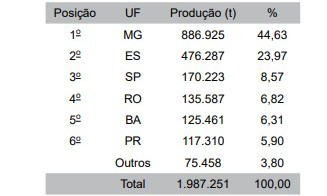

Imagem associada para resolução da questão


(ROSS, J. L. S. Ecogeografia do Brasil. São Paulo:

Oficina de Textos, 2006, p. 138


Trata-se da produção agrícola de: 

Alternativas
Q4227792 Meio Ambiente

É um instrumento político e técnico de planejamento, cuja finalidade consiste em otimizar o uso do espaço e as políticas públicas. Do ponto de vista técnico, ele organiza informações sobre o território, necessárias para planejar a ocupação racional e o uso sustentável dos recursos naturais. Do ponto de vista político, ele serve para aumentar a eficácia das decisões políticas e da intervenção pública na gestão do território, bem como para criar canais de negociação entre as várias esferas de governo e sociedade civil.


(Ecogeografia do Brasil, 2006)


O texto refere-se ao instrumento:

Alternativas
Q4227791 Geografia

 Nas baixas latitudes, na altura do equador, na atmosfera ocorre o encontro dos ventos alísios e sua oscilação para norte ou para o sul é importante para definir as estações de seca e de chuva nas suas áreas de influência. Os alísios são ventos de grande escala que se manifestam principalmente sobre os oceanos e têm sua origem nos anticiclones subtropicais.


(Geografia do Brasil, 1995)


Essa faixa de encontro dos Alísios de Nordeste com os de Sudeste denominamos de:

Alternativas
Q4227790 Geografia

A figura a seguir apresenta o sentido da circulação atmosférica durante um ciclone e um anticiclone.


(Geografia do Brasil, 1995)
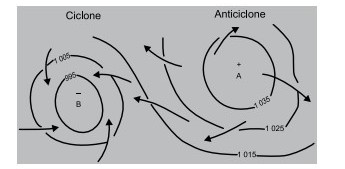

Imagem associada para resolução da questão

(ROSS, J. L. S. (org.). Geografia do Brasil. São Paulo: Edusp, 1995. p. 94)


A partir dos seus conhecimentos sobre a temática, é possível afirmar que:

Alternativas
Q4227789 Geografia

A mineração e o garimpo são atividades que exercem forte interferência no ambiente natural e contribuem para sua deterioração.


(Geografia do Brasil, 1995)


Sobre as atividades da mineração é correto afirmar:

Alternativas
Q4227788 Geografia
Em Geografia, as características descritas a seguir referem-se a uma definição: um crescimento que expande a cidade, prolongando-a para fora de seu perímetro, e absorve aglomerados rurais e outras cidades; a existência de um centro histórico onde se concentram atividades de serviços e a partir do qual surgem subcentros; a dicotomia entre a existência da cidade enquanto espaço edificado e a estrutura político administrativa; e por fim, fluxos de circulação de veículos com dois picos de maior intensidade, normalmente no período da manhã e no final da tarde. (Geografia do Brasil, 1995) Essas características são específicas de:
Alternativas
Q4227787 Pedagogia
Uma das inovações feitas nos Parâmetros Curriculares Nacionais, na época de seu lançamento, foi a inclusão de temas que deveriam perpassar por todas as disciplinas do currículo mediante diferentes práticas pedagógicas. Essa proposta teve como base a reforma curricular da Espanha, já que o governo brasileiro, na época, a adotou como modelo.

(Para ensinar e aprender Geografia,2007)

O texto refere-se ao conceito de:
Alternativas
Q4227786 Meio Ambiente

Em 1992, realizou-se no Rio de Janeiro a Conferência das Nações Unidas sobre o Meio Ambiente e Desenvolvimento, ocasião em que o problema ambiental ocupou importante espaço nos meios de comunicação de todo o globo.


(Decifrando a Terra, 2000)


Como resultado dessa Conferência podemos citar:

Alternativas
Q4227785 Geografia

Nas áreas costeiras, os aquíferos normalmente descarregam suas águas no mar e existe um equilíbrio dinâmico entre as águas salgadas que saturam as rochas ou sedimentos sob o mar. Quando este equilíbrio se rompe, por meio do bombeamento de poços, por exemplo, há uma degradação desse aquífero.


(Decifrando a Terra, 2000)


A esse processo denomina-se:

Alternativas
Respostas
921: B
922: E
923: B
924: C
925: A
926: D
927: A
928: B
929: E
930: E
931: A
932: C
933: D
934: E
935: A
936: B
937: C
938: B
939: D
940: E