Questões de Concurso
Para prefeitura de seara - sc
Foram encontradas 3.363 questões
Resolva questões gratuitamente!
Junte-se a mais de 4 milhões de concurseiros!


Ano: 2023
Banca:
AMAUC
Órgão:
Prefeitura de Seara - SC
Prova:
AMAUC - 2023 - Prefeitura de Seara - SC - Professor - Área de Inglês |
Q4357041
Inglês
Complete the sentences with the right words. Choose the alternative with the CORRECT answers:
I.Nobody _____ me can speak German in my family.
II.I almost got late to work _____ of the heavy traffic.
III.Let's go to the beach ____ swim.
IV.I won't go to bed _____ finish my project.
Ano: 2023
Banca:
AMAUC
Órgão:
Prefeitura de Seara - SC
Prova:
AMAUC - 2023 - Prefeitura de Seara - SC - Professor - Área de Inglês |
Q4357040
Inglês
In English there are different categories to the words.
Look at the words below and mark to what category they
belong: substantive, adjective or verb. Choose the
alternative with the CORRECT answers. Works - him - have been - apple - goodbye - us:
Ano: 2023
Banca:
AMAUC
Órgão:
Prefeitura de Seara - SC
Prova:
AMAUC - 2023 - Prefeitura de Seara - SC - Professor - Área de Inglês |
Q4357039
Pedagogia
A Base Comum Curricular da área de Linguagens e suas
Tecnologias para o nível do Ensino Médio busca
consolidar e ampliar as aprendizagens previstas na
BNCC do Ensino Fundamental − observada a garantia
dos direitos linguísticos aos diferentes povos e grupos
sociais brasileiros. Portanto, prevê que os estudantes
desenvolvam competências e habilidades que lhes
permitam mobilizar e articular conhecimentos. Tendo
como ponto de partida a BNCC, marque a alternativa
INCORRETA sobre as competências específicas da área
de Linguagens e suas Tecnologias:
Ano: 2023
Banca:
AMAUC
Órgão:
Prefeitura de Seara - SC
Prova:
AMAUC - 2023 - Prefeitura de Seara - SC - Professor - Área de Inglês |
Q4357038
Inglês
Have you ever saw a restaurant that shows its name like
"John's pizzeria"? This indicates that the pizzeria belongs
to John, it's his possession. The phrases below also
show possession, but one of them is it not in the right
tense. Mark the INCORRECT alternative:
Ano: 2023
Banca:
AMAUC
Órgão:
Prefeitura de Seara - SC
Prova:
AMAUC - 2023 - Prefeitura de Seara - SC - Professor - Área de Inglês |
Q4357037
Inglês
The words below have been separated by syllables, but
one of them it's not separated how it was supposed to be.
Look at them and choose the alternative that contains the
word that has been separated the wrong way:
cont-ent. bub-ble. kit-ten. mar-ble. ta-ckle.
cont-ent. bub-ble. kit-ten. mar-ble. ta-ckle.
Ano: 2023
Banca:
AMAUC
Órgão:
Prefeitura de Seara - SC
Prova:
AMAUC - 2023 - Prefeitura de Seara - SC - Professor - Área de Inglês |
Q4357036
Inglês
Ao aprender uma segunda língua, nos deparamos com
palavras que são parecidas com palavras de nossa
língua materna. Entretanto, nem sempre duas palavras
similares possuem um significado igualmente similar: por
exemplo PUSH e PUXE, que possuem significados
opostos. Estas palavras são conhecidas como "falsos
cognatos" e estão sempre presentes na relação entre
dois idiomas diferentes. Sendo assim, observe as
palavras abaixo e marque a alternativa que contém um
falso cognato:
Ano: 2023
Banca:
AMAUC
Órgão:
Prefeitura de Seara - SC
Prova:
AMAUC - 2023 - Prefeitura de Seara - SC - Professor - Área de Inglês |
Q4357035
Literatura
There are many book genres in the English language,
and they are classified in two big categories: fiction and
non-fiction. Fiction books are those in which the elements
are created by the author and the non-fiction are those
that are based in real facts. Look at the subgenres listed
below and separate them between ficction and
non-fiction.
Thriller − Biography − Academic Texts − Philosophy − Self-help book.
Thriller − Biography − Academic Texts − Philosophy − Self-help book.
Ano: 2023
Banca:
AMAUC
Órgão:
Prefeitura de Seara - SC
Prova:
AMAUC - 2023 - Prefeitura de Seara - SC - Professor - Área de Inglês |
Q4357034
Inglês
To describe how something works, we usually use
prepositions or adverbs to explain movement. Match the
"moving" figures in the first column with its corresponding
word in the second column. Choose the CORRECT
answer:
Coluna 1
I.In the box. II.Behind the box. III.Through the box. IV.On the box.
Coluna 2
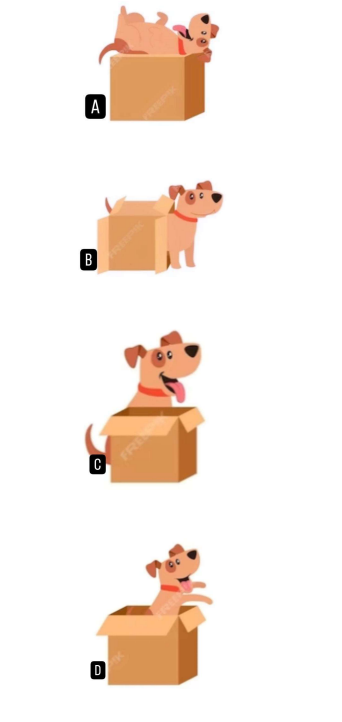
Coluna 1
I.In the box. II.Behind the box. III.Through the box. IV.On the box.
Coluna 2
Ano: 2023
Banca:
AMAUC
Órgão:
Prefeitura de Seara - SC
Prova:
AMAUC - 2023 - Prefeitura de Seara - SC - Professor - Área de Inglês |
Q4357033
Inglês
Na Língua Portuguesa possuímos diversas expressões
idiomáticas, ou seja, expressões nas quais o significado
é dado de forma figurativa: alguns exemplos seriam "tirar
o cavalinho da chuva", ou "dar a volta por cima". Na
Língua Inglesa não é diferente e essas expressões
também são utilizadas. Leia as três expressões
idiomáticas abaixo e marque a resposta CORRETA, com
os significados respectivos de cada expressão:
"Butter someone up"−"The cream of the crop"−"To spice things up"
"Butter someone up"−"The cream of the crop"−"To spice things up"
Ano: 2023
Banca:
AMAUC
Órgão:
Prefeitura de Seara - SC
Prova:
AMAUC - 2023 - Prefeitura de Seara - SC - Professor - Área de Inglês |
Q4357032
Inglês
To express the frequency in which someone does
something, we use the adverbs of frequency, and they
can present themselves in any tense. Choose the
CORRECT alternative that contains only adverbs of
frequency:
Ano: 2023
Banca:
AMAUC
Órgão:
Prefeitura de Seara - SC
Prova:
AMAUC - 2023 - Prefeitura de Seara - SC - Professor - Área de Inglês |
Q4357030
Inglês
The Cambridge Dictionary defines synonym as "a word
or phrase that has the same or nearly same meaning as
another word or phrase in the same language". With this
noted, match the words and its synonyms in the two
columns below. Choose the alternative with the
CORRECT matches:
Coluna 1
A.Definition B.Challenges C.History D.Advantages E.Disadvantages F.Answers G.Summarize
Coluna 2
(___)Background (___)Benefits (___)Solutions (___)Conclude (___)Meaning (___)Drawbacks (___)Problems
Coluna 1
A.Definition B.Challenges C.History D.Advantages E.Disadvantages F.Answers G.Summarize
Coluna 2
(___)Background (___)Benefits (___)Solutions (___)Conclude (___)Meaning (___)Drawbacks (___)Problems
Ano: 2023
Banca:
AMAUC
Órgão:
Prefeitura de Seara - SC
Prova:
AMAUC - 2023 - Prefeitura de Seara - SC - Professor - Área de Inglês |
Q4357029
Inglês
To build a sentence, the subject and the verb must be in
harmony regarding of its number, genre etc. Complete
the sentences below:
I.When I left the house this morning, the sun ________ (shine).
II.The cinema lights _____ (go out) and the movie _____ (start).
III.He _______ (write) everything in the last meeting.
IV.The journalist _______ (talk) in a interview.
Choose the alternative with the CORRECT answers:
I.When I left the house this morning, the sun ________ (shine).
II.The cinema lights _____ (go out) and the movie _____ (start).
III.He _______ (write) everything in the last meeting.
IV.The journalist _______ (talk) in a interview.
Choose the alternative with the CORRECT answers:
Ano: 2023
Banca:
AMAUC
Órgão:
Prefeitura de Seara - SC
Prova:
AMAUC - 2023 - Prefeitura de Seara - SC - Professor - Área de Inglês |
Q4357028
Inglês
Texto associado
Two Teens Volunteering on an Archaeological Dig in
Israel Uncovered Solid-Gold Treasure Buried More
Than 1,000 years ago
The coins date to the Abbasid Caliphate, which ruled
1,100 years ago during the Golden Age of Islam.
A pair of 18-years-olds recently made an unexpected
discovery when they unearthed a cache of 424 rare
golden coins while volunteering at an archaeological dig
conducted by the Israel Antiquities Authority. Such a
large amount of gold is, it goes without saying, extremely
valuable; it had been buried inside a clay jar for
safekeeping more than 1,00 years ago.
"I dug in the ground and when I swept away the soil, I
saw what looked like very thin leaves" one of the
teenagers, Oz Cohen, said in a statement. "When I
looked again I saw that they were gold coins. It was really
exciting to find such a special and ancient treasure."
In addition to full dinar gold coins, the hoard also contains
270 smaller fragments, reports Haaretz. In 9th century
Israel, cutting gold and silver coins to make small change
in lieu of cheaper bronze and copper currency that had
become scarce was common practice, according to
Robert Kool, a coin expert with the Israel Antiquities
Authority.
The 24-carat pure gold coins date to the Abbasid period,
around 1,100 years ago. The Abbasid Caliphate was a Muslim dynasty during what is known as the Golden Age
of Islam, ruling over Persia and North Africa from its
capital in Bagdhad.
But the coins also include a fragment of a gold solidus
minted in Constantinople featuring Theophilos, the
Byzantine emperor from 829 to 842 − possible evidence
of trade and cultural exchange between two ancient
empires. It is the only coin of its kind find in Israel to date.
"Finding gold coins, certainly in such a considerable
quantity, its extremely rare, said Liat Nadav-Ziv and Elie
Haddad, who oversaw the dig, in a statement. "The
person who buried this treasure 1,100 years ago must
have expected to retrieve it, and even secured the vessel
with a nail so it would not move."
The Israel Antiquities Authority is keeping the exact
location of the discovery − at a dig conducted ahead of
planned construction in Yavneh, south of Tel Aviv in
central Israel − under wraps to avoid looting from
would-be treasure hunters. The cache weighs 845 grams,
or close to two pounds. By weight alone, that much gold
would be worth $52,618 today.
Sarah Cascone, August 25, 2020. Access on November
27, 2023.
Available on
https://news.artnet.com/art-world/israeli-teens-discover-a
ncient-gold-coins-1903948
https://news.artnet.com/art-world/israeli-teens-discover-ancient-gold-coi
ns-1903948
In the text, which paragraph contain the information
about the Abbasid Caliphate? Mark the CORRECT
alternative:
Ano: 2023
Banca:
AMAUC
Órgão:
Prefeitura de Seara - SC
Prova:
AMAUC - 2023 - Prefeitura de Seara - SC - Professor - Área de Inglês |
Q4357027
Inglês
Texto associado
Two Teens Volunteering on an Archaeological Dig in
Israel Uncovered Solid-Gold Treasure Buried More
Than 1,000 years ago
The coins date to the Abbasid Caliphate, which ruled
1,100 years ago during the Golden Age of Islam.
A pair of 18-years-olds recently made an unexpected
discovery when they unearthed a cache of 424 rare
golden coins while volunteering at an archaeological dig
conducted by the Israel Antiquities Authority. Such a
large amount of gold is, it goes without saying, extremely
valuable; it had been buried inside a clay jar for
safekeeping more than 1,00 years ago.
"I dug in the ground and when I swept away the soil, I
saw what looked like very thin leaves" one of the
teenagers, Oz Cohen, said in a statement. "When I
looked again I saw that they were gold coins. It was really
exciting to find such a special and ancient treasure."
In addition to full dinar gold coins, the hoard also contains
270 smaller fragments, reports Haaretz. In 9th century
Israel, cutting gold and silver coins to make small change
in lieu of cheaper bronze and copper currency that had
become scarce was common practice, according to
Robert Kool, a coin expert with the Israel Antiquities
Authority.
The 24-carat pure gold coins date to the Abbasid period,
around 1,100 years ago. The Abbasid Caliphate was a Muslim dynasty during what is known as the Golden Age
of Islam, ruling over Persia and North Africa from its
capital in Bagdhad.
But the coins also include a fragment of a gold solidus
minted in Constantinople featuring Theophilos, the
Byzantine emperor from 829 to 842 − possible evidence
of trade and cultural exchange between two ancient
empires. It is the only coin of its kind find in Israel to date.
"Finding gold coins, certainly in such a considerable
quantity, its extremely rare, said Liat Nadav-Ziv and Elie
Haddad, who oversaw the dig, in a statement. "The
person who buried this treasure 1,100 years ago must
have expected to retrieve it, and even secured the vessel
with a nail so it would not move."
The Israel Antiquities Authority is keeping the exact
location of the discovery − at a dig conducted ahead of
planned construction in Yavneh, south of Tel Aviv in
central Israel − under wraps to avoid looting from
would-be treasure hunters. The cache weighs 845 grams,
or close to two pounds. By weight alone, that much gold
would be worth $52,618 today.
Sarah Cascone, August 25, 2020. Access on November
27, 2023.
Available on
https://news.artnet.com/art-world/israeli-teens-discover-a
ncient-gold-coins-1903948
https://news.artnet.com/art-world/israeli-teens-discover-ancient-gold-coi
ns-1903948
Also about the text, where is the information on the
location of the digging site? Mark the CORRECT
alternative:
Ano: 2023
Banca:
AMAUC
Órgão:
Prefeitura de Seara - SC
Prova:
AMAUC - 2023 - Prefeitura de Seara - SC - Professor - Área de Inglês |
Q4357026
Inglês
Texto associado
Two Teens Volunteering on an Archaeological Dig in
Israel Uncovered Solid-Gold Treasure Buried More
Than 1,000 years ago
The coins date to the Abbasid Caliphate, which ruled
1,100 years ago during the Golden Age of Islam.
A pair of 18-years-olds recently made an unexpected
discovery when they unearthed a cache of 424 rare
golden coins while volunteering at an archaeological dig
conducted by the Israel Antiquities Authority. Such a
large amount of gold is, it goes without saying, extremely
valuable; it had been buried inside a clay jar for
safekeeping more than 1,00 years ago.
"I dug in the ground and when I swept away the soil, I
saw what looked like very thin leaves" one of the
teenagers, Oz Cohen, said in a statement. "When I
looked again I saw that they were gold coins. It was really
exciting to find such a special and ancient treasure."
In addition to full dinar gold coins, the hoard also contains
270 smaller fragments, reports Haaretz. In 9th century
Israel, cutting gold and silver coins to make small change
in lieu of cheaper bronze and copper currency that had
become scarce was common practice, according to
Robert Kool, a coin expert with the Israel Antiquities
Authority.
The 24-carat pure gold coins date to the Abbasid period,
around 1,100 years ago. The Abbasid Caliphate was a Muslim dynasty during what is known as the Golden Age
of Islam, ruling over Persia and North Africa from its
capital in Bagdhad.
But the coins also include a fragment of a gold solidus
minted in Constantinople featuring Theophilos, the
Byzantine emperor from 829 to 842 − possible evidence
of trade and cultural exchange between two ancient
empires. It is the only coin of its kind find in Israel to date.
"Finding gold coins, certainly in such a considerable
quantity, its extremely rare, said Liat Nadav-Ziv and Elie
Haddad, who oversaw the dig, in a statement. "The
person who buried this treasure 1,100 years ago must
have expected to retrieve it, and even secured the vessel
with a nail so it would not move."
The Israel Antiquities Authority is keeping the exact
location of the discovery − at a dig conducted ahead of
planned construction in Yavneh, south of Tel Aviv in
central Israel − under wraps to avoid looting from
would-be treasure hunters. The cache weighs 845 grams,
or close to two pounds. By weight alone, that much gold
would be worth $52,618 today.
Sarah Cascone, August 25, 2020. Access on November
27, 2023.
Available on
https://news.artnet.com/art-world/israeli-teens-discover-a
ncient-gold-coins-1903948
https://news.artnet.com/art-world/israeli-teens-discover-ancient-gold-coi
ns-1903948
What is the tone that the author is using about the
discovery? Mark the CORRECT alternative.
Ano: 2023
Banca:
AMAUC
Órgão:
Prefeitura de Seara - SC
Prova:
AMAUC - 2023 - Prefeitura de Seara - SC - Professor - Área de Inglês |
Q4357025
Inglês
Texto associado
Two Teens Volunteering on an Archaeological Dig in
Israel Uncovered Solid-Gold Treasure Buried More
Than 1,000 years ago
The coins date to the Abbasid Caliphate, which ruled
1,100 years ago during the Golden Age of Islam.
A pair of 18-years-olds recently made an unexpected
discovery when they unearthed a cache of 424 rare
golden coins while volunteering at an archaeological dig
conducted by the Israel Antiquities Authority. Such a
large amount of gold is, it goes without saying, extremely
valuable; it had been buried inside a clay jar for
safekeeping more than 1,00 years ago.
"I dug in the ground and when I swept away the soil, I
saw what looked like very thin leaves" one of the
teenagers, Oz Cohen, said in a statement. "When I
looked again I saw that they were gold coins. It was really
exciting to find such a special and ancient treasure."
In addition to full dinar gold coins, the hoard also contains
270 smaller fragments, reports Haaretz. In 9th century
Israel, cutting gold and silver coins to make small change
in lieu of cheaper bronze and copper currency that had
become scarce was common practice, according to
Robert Kool, a coin expert with the Israel Antiquities
Authority.
The 24-carat pure gold coins date to the Abbasid period,
around 1,100 years ago. The Abbasid Caliphate was a Muslim dynasty during what is known as the Golden Age
of Islam, ruling over Persia and North Africa from its
capital in Bagdhad.
But the coins also include a fragment of a gold solidus
minted in Constantinople featuring Theophilos, the
Byzantine emperor from 829 to 842 − possible evidence
of trade and cultural exchange between two ancient
empires. It is the only coin of its kind find in Israel to date.
"Finding gold coins, certainly in such a considerable
quantity, its extremely rare, said Liat Nadav-Ziv and Elie
Haddad, who oversaw the dig, in a statement. "The
person who buried this treasure 1,100 years ago must
have expected to retrieve it, and even secured the vessel
with a nail so it would not move."
The Israel Antiquities Authority is keeping the exact
location of the discovery − at a dig conducted ahead of
planned construction in Yavneh, south of Tel Aviv in
central Israel − under wraps to avoid looting from
would-be treasure hunters. The cache weighs 845 grams,
or close to two pounds. By weight alone, that much gold
would be worth $52,618 today.
Sarah Cascone, August 25, 2020. Access on November
27, 2023.
Available on
https://news.artnet.com/art-world/israeli-teens-discover-a
ncient-gold-coins-1903948
https://news.artnet.com/art-world/israeli-teens-discover-ancient-gold-coi
ns-1903948
Using the text about the finding of gold coins in an
archaeological excavation, mark the sentences below
with TRUE or FALSE, based on the text:
(__)The discovery of the gold coins was made by the lead researcher of the Israel Antiquities Authority.
(__)The Israel Antiquities Authority kept the exact location of the discovery under wraps.
(__)The gold coins are originally from the time of the Abbasid Caliphate and are about 1,100 years old.
(__)The one that buried the gold coins never intended to come back and retrieve them.
(__)The discovery of the gold coins was made by the lead researcher of the Israel Antiquities Authority.
(__)The Israel Antiquities Authority kept the exact location of the discovery under wraps.
(__)The gold coins are originally from the time of the Abbasid Caliphate and are about 1,100 years old.
(__)The one that buried the gold coins never intended to come back and retrieve them.
Ano: 2023
Banca:
AMAUC
Órgão:
Prefeitura de Seara - SC
Prova:
AMAUC - 2023 - Prefeitura de Seara - SC - Professor - Área de Inglês |
Q4357024
Inglês
Texto associado
Two Teens Volunteering on an Archaeological Dig in
Israel Uncovered Solid-Gold Treasure Buried More
Than 1,000 years ago
The coins date to the Abbasid Caliphate, which ruled
1,100 years ago during the Golden Age of Islam.
A pair of 18-years-olds recently made an unexpected
discovery when they unearthed a cache of 424 rare
golden coins while volunteering at an archaeological dig
conducted by the Israel Antiquities Authority. Such a
large amount of gold is, it goes without saying, extremely
valuable; it had been buried inside a clay jar for
safekeeping more than 1,00 years ago.
"I dug in the ground and when I swept away the soil, I
saw what looked like very thin leaves" one of the
teenagers, Oz Cohen, said in a statement. "When I
looked again I saw that they were gold coins. It was really
exciting to find such a special and ancient treasure."
In addition to full dinar gold coins, the hoard also contains
270 smaller fragments, reports Haaretz. In 9th century
Israel, cutting gold and silver coins to make small change
in lieu of cheaper bronze and copper currency that had
become scarce was common practice, according to
Robert Kool, a coin expert with the Israel Antiquities
Authority.
The 24-carat pure gold coins date to the Abbasid period,
around 1,100 years ago. The Abbasid Caliphate was a Muslim dynasty during what is known as the Golden Age
of Islam, ruling over Persia and North Africa from its
capital in Bagdhad.
But the coins also include a fragment of a gold solidus
minted in Constantinople featuring Theophilos, the
Byzantine emperor from 829 to 842 − possible evidence
of trade and cultural exchange between two ancient
empires. It is the only coin of its kind find in Israel to date.
"Finding gold coins, certainly in such a considerable
quantity, its extremely rare, said Liat Nadav-Ziv and Elie
Haddad, who oversaw the dig, in a statement. "The
person who buried this treasure 1,100 years ago must
have expected to retrieve it, and even secured the vessel
with a nail so it would not move."
The Israel Antiquities Authority is keeping the exact
location of the discovery − at a dig conducted ahead of
planned construction in Yavneh, south of Tel Aviv in
central Israel − under wraps to avoid looting from
would-be treasure hunters. The cache weighs 845 grams,
or close to two pounds. By weight alone, that much gold
would be worth $52,618 today.
Sarah Cascone, August 25, 2020. Access on November
27, 2023.
Available on
https://news.artnet.com/art-world/israeli-teens-discover-a
ncient-gold-coins-1903948
https://news.artnet.com/art-world/israeli-teens-discover-ancient-gold-coi
ns-1903948
Complete the gaps in the information below about the
discovery. Choose the alternative with the CORRECT
answer:
Gold Coins Discovery Location: __________ Who found: _________ Estimated date: _______ What historic period: _________
Gold Coins Discovery Location: __________ Who found: _________ Estimated date: _______ What historic period: _________
Ano: 2023
Banca:
AMAUC
Órgão:
Prefeitura de Seara - SC
Prova:
AMAUC - 2023 - Prefeitura de Seara - SC - Professor - Área de Inglês |
Q4357023
Inglês
Texto associado
Two Teens Volunteering on an Archaeological Dig in
Israel Uncovered Solid-Gold Treasure Buried More
Than 1,000 years ago
The coins date to the Abbasid Caliphate, which ruled
1,100 years ago during the Golden Age of Islam.
A pair of 18-years-olds recently made an unexpected
discovery when they unearthed a cache of 424 rare
golden coins while volunteering at an archaeological dig
conducted by the Israel Antiquities Authority. Such a
large amount of gold is, it goes without saying, extremely
valuable; it had been buried inside a clay jar for
safekeeping more than 1,00 years ago.
"I dug in the ground and when I swept away the soil, I
saw what looked like very thin leaves" one of the
teenagers, Oz Cohen, said in a statement. "When I
looked again I saw that they were gold coins. It was really
exciting to find such a special and ancient treasure."
In addition to full dinar gold coins, the hoard also contains
270 smaller fragments, reports Haaretz. In 9th century
Israel, cutting gold and silver coins to make small change
in lieu of cheaper bronze and copper currency that had
become scarce was common practice, according to
Robert Kool, a coin expert with the Israel Antiquities
Authority.
The 24-carat pure gold coins date to the Abbasid period,
around 1,100 years ago. The Abbasid Caliphate was a Muslim dynasty during what is known as the Golden Age
of Islam, ruling over Persia and North Africa from its
capital in Bagdhad.
But the coins also include a fragment of a gold solidus
minted in Constantinople featuring Theophilos, the
Byzantine emperor from 829 to 842 − possible evidence
of trade and cultural exchange between two ancient
empires. It is the only coin of its kind find in Israel to date.
"Finding gold coins, certainly in such a considerable
quantity, its extremely rare, said Liat Nadav-Ziv and Elie
Haddad, who oversaw the dig, in a statement. "The
person who buried this treasure 1,100 years ago must
have expected to retrieve it, and even secured the vessel
with a nail so it would not move."
The Israel Antiquities Authority is keeping the exact
location of the discovery − at a dig conducted ahead of
planned construction in Yavneh, south of Tel Aviv in
central Israel − under wraps to avoid looting from
would-be treasure hunters. The cache weighs 845 grams,
or close to two pounds. By weight alone, that much gold
would be worth $52,618 today.
Sarah Cascone, August 25, 2020. Access on November
27, 2023.
Available on
https://news.artnet.com/art-world/israeli-teens-discover-a
ncient-gold-coins-1903948
https://news.artnet.com/art-world/israeli-teens-discover-ancient-gold-coi
ns-1903948
About the gold fragment that was found featuring the
Byzantine emperor Theophilus, mark the CORRECT
alternative, based on the information given by the text:
Ano: 2023
Banca:
AMAUC
Órgão:
Prefeitura de Seara - SC
Prova:
AMAUC - 2023 - Prefeitura de Seara - SC - Professor - Área de Inglês |
Q4357007
Português
Assinale a alternativa em que há o uso do sentido
conotativo na oração:
Ano: 2023
Banca:
AMAUC
Órgão:
Prefeitura de Seara - SC
Prova:
AMAUC - 2023 - Prefeitura de Seara - SC - Professor - Área de História |
Q4356652
História
A Roma Antiga é conhecida pelo seu sistema jurídico
avançado. O Direito Romano influenciou fortemente os
sistemas legais ocidentais modernos. Nesse sentido, um
princípio do Direito Romano que ainda é amplamente
aplicado na atualidade é o conceito de "precedente" ou
"jurisprudência", conhecido como "stare decisis". Sobre
isso, assinale a alternativa que indica corretamente o
significado deste princípio:

 Conheça nossos planos