Questões de Concurso
Para prefeitura de cristalândia do piauí - pi
Foram encontradas 280 questões
Resolva questões gratuitamente!
Junte-se a mais de 4 milhões de concurseiros!


Ano: 2025
Banca:
Instituto IBED
Órgão:
Prefeitura de Cristalândia do Piauí - PI
Prova:
Instituto IBED - 2025 - Prefeitura de Cristalândia do Piauí - PI - Professor de Educação Física |
Q3788848
Educação Física
Nos jogos esportivos coletivos, como o futebol e
o futsal, a escolha do sistema ofensivo está
invariavelmente condicionada ao modelo tático do
adversário, não havendo margem para decisões
estratégicas independentes.
Ano: 2025
Banca:
Instituto IBED
Órgão:
Prefeitura de Cristalândia do Piauí - PI
Prova:
Instituto IBED - 2025 - Prefeitura de Cristalândia do Piauí - PI - Professor de Educação Física |
Q3788847
Educação Física
O índice técnico utilizado em natação como
critério classificatório para competições oficiais
baseia-se unicamente no tempo obtido em provas
individuais, desconsiderando aspectos como
eficiência do nado e técnica de virada.
Ano: 2025
Banca:
Instituto IBED
Órgão:
Prefeitura de Cristalândia do Piauí - PI
Prova:
Instituto IBED - 2025 - Prefeitura de Cristalândia do Piauí - PI - Professor de Educação Física |
Q3788846
Educação Física
Em competições oficiais de futebol de salão, o
sistema defensivo conhecido como “pressão quadra
inteira” é geralmente adotado quando se deseja
proteger o resultado e manter o adversário em seu
campo de defesa, com menor gasto energético e
reduzido risco de exposição.
Ano: 2025
Banca:
Instituto IBED
Órgão:
Prefeitura de Cristalândia do Piauí - PI
Prova:
Instituto IBED - 2025 - Prefeitura de Cristalândia do Piauí - PI - Professor de Educação Física |
Q3788845
Educação Física
O estilo de nado borboleta, exigente em termos de
coordenação e força, apresenta como característica
obrigatória a recuperação simultânea dos braços e
uma ondulação do corpo que se inicia nos quadris,
sendo permitida uma única pernada submersa até 15
metros após a largada ou após cada virada.
Ano: 2025
Banca:
Instituto IBED
Órgão:
Prefeitura de Cristalândia do Piauí - PI
Prova:
Instituto IBED - 2025 - Prefeitura de Cristalândia do Piauí - PI - Professor de Educação Física |
Q3788844
Educação Física
A inclusão dos Jogos Escolares Brasileiros, dos
Jogos da Juventude e dos Jogos Abertos no calendário
nacional representa não apenas a valorização do
desporto como instrumento de promoção da saúde e
inclusão, mas também garante, em sua totalidade, a
formação cidadã e a democratização do acesso ao
esporte de rendimento, sem distinções regionais ou
sociais.
Ano: 2025
Banca:
Instituto IBED
Órgão:
Prefeitura de Cristalândia do Piauí - PI
Prova:
Instituto IBED - 2025 - Prefeitura de Cristalândia do Piauí - PI - Professor de Matemática |
Q3788843
Matemática
Em R3
, o produto vetorial de dois vetores não
paralelos é um vetor perpendicular ao plano gerado
por eles, e seu módulo é igual à área do paralelogramo
definido pelos vetores.
Ano: 2025
Banca:
Instituto IBED
Órgão:
Prefeitura de Cristalândia do Piauí - PI
Prova:
Instituto IBED - 2025 - Prefeitura de Cristalândia do Piauí - PI - Professor de Matemática |
Q3788841
Matemática
Uma empresa de engenharia civil contratou um
matemático para projetar rampas de acesso a um
prédio comercial com base nas normas de
acessibilidade. Considerando que a inclinação
máxima permitida é de 8,33% e que a entrada
principal está situada a 1,5 metro acima do nível da
calçada, é correto afirmar que o comprimento mínimo
da rampa, em metros, deve ser superior a 18 metros
para obedecer à inclinação máxima permitida.
Ano: 2025
Banca:
Instituto IBED
Órgão:
Prefeitura de Cristalândia do Piauí - PI
Prova:
Instituto IBED - 2025 - Prefeitura de Cristalândia do Piauí - PI - Professor de Matemática |
Q3788840
Matemática
A reta y=x−2 é tangente a uma circunferência
com centro em P=(2,0).
A distância do centro à reta é:
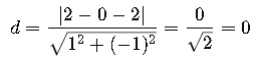
Mas isso é incompatível com uma reta tangente. A equação da reta deveria ser reescrita e avaliada com correção.
Como o item fornece a equação incorretamente tratada e resultado incorreto, a assertiva é inválida.
A distância do centro à reta é:
Mas isso é incompatível com uma reta tangente. A equação da reta deveria ser reescrita e avaliada com correção.
Como o item fornece a equação incorretamente tratada e resultado incorreto, a assertiva é inválida.
Ano: 2025
Banca:
Instituto IBED
Órgão:
Prefeitura de Cristalândia do Piauí - PI
Prova:
Instituto IBED - 2025 - Prefeitura de Cristalândia do Piauí - PI - Professor de Matemática |
Q3788839
Matemática
As razões trigonométricas seno, cosseno e
tangente podem assumir qualquer valor real para um
triângulo retângulo.
Ano: 2025
Banca:
Instituto IBED
Órgão:
Prefeitura de Cristalândia do Piauí - PI
Prova:
Instituto IBED - 2025 - Prefeitura de Cristalândia do Piauí - PI - Professor de Matemática |
Q3788838
Matemática
Durante o processo seletivo para compor uma
equipe olímpica feminina de base, uma comissão
técnica estipulou que a média aritmética simples das
idades das 8 jogadoras deveria ser exatamente 17
anos, visando alinhamento entre maturidade
biológica e potencial técnico. Já se encontram
confirmadas 7 jogadoras, cujas idades se distribuem
da seguinte forma:
• 2 jogadoras com 16 anos, • 2 jogadoras com 17 anos, • 2 jogadoras com 18 anos, • 1 jogadora com 15 anos.
Com base nessa configuração, afirma-se que a escolha da oitava jogadora deverá recair sobre uma atleta com 22 anos, visto que a média aritmética exige o equilíbrio absoluto dos valores em relação ao centro da distribuição, e a leve assimetria negativa presente nos dados já lançados demanda uma compensação numérica superior à média-alvo, conforme o princípio de conservação da soma total e o efeito matemático de outliers de ajuste.
• 2 jogadoras com 16 anos, • 2 jogadoras com 17 anos, • 2 jogadoras com 18 anos, • 1 jogadora com 15 anos.
Com base nessa configuração, afirma-se que a escolha da oitava jogadora deverá recair sobre uma atleta com 22 anos, visto que a média aritmética exige o equilíbrio absoluto dos valores em relação ao centro da distribuição, e a leve assimetria negativa presente nos dados já lançados demanda uma compensação numérica superior à média-alvo, conforme o princípio de conservação da soma total e o efeito matemático de outliers de ajuste.
Ano: 2025
Banca:
Instituto IBED
Órgão:
Prefeitura de Cristalândia do Piauí - PI
Prova:
Instituto IBED - 2025 - Prefeitura de Cristalândia do Piauí - PI - Professor de Matemática |
Q3788836
Matemática
Dada a equação de segunda ordem y′′−3y′+2y=
e2x
, sua solução geral pode ser obtida usando
coeficientes indeterminados, cuja forma particular
assumirá yp=Ae2xy
Ano: 2025
Banca:
Instituto IBED
Órgão:
Prefeitura de Cristalândia do Piauí - PI
Prova:
Instituto IBED - 2025 - Prefeitura de Cristalândia do Piauí - PI - Professor de Matemática |
Q3788835
Matemática
O conjunto dos números complexos C é um
corpo, admite representação geométrica no plano e
possui estrutura de espaço vetorial sobre R.
Ano: 2025
Banca:
Instituto IBED
Órgão:
Prefeitura de Cristalândia do Piauí - PI
Prova:
Instituto IBED - 2025 - Prefeitura de Cristalândia do Piauí - PI - Professor de Matemática |
Q3788833
Matemática
Em uma expedição com 5 chuvas registradas, 6
manhãs e 3 tardes sem chuva, e sabendo-se que nunca
choveu o dia inteiro, a duração total da viagem é de 7
dias, pois são 14 turnos divididos entre chuvas e não
chuvas.
Ano: 2025
Banca:
Instituto IBED
Órgão:
Prefeitura de Cristalândia do Piauí - PI
Prova:
Instituto IBED - 2025 - Prefeitura de Cristalândia do Piauí - PI - Professor de Matemática |
Q3788832
Matemática
Dada uma reta tangente a uma circunferência com
centro em P = (2,0), e sabendo-se que a distância do
centro à reta tangente é igual ao raio, conclui-se,
aplicando a fórmula da distância ponto-reta, que o
raio R é igual a 1.
Ano: 2025
Banca:
Instituto IBED
Órgão:
Prefeitura de Cristalândia do Piauí - PI
Prova:
Instituto IBED - 2025 - Prefeitura de Cristalândia do Piauí - PI - Professor de Matemática |
Q3788831
Matemática
A integral imprópria de 1/x^p no intervalo de 1
ao infinito diverge para p ≤ 1 e converge para p > 1.
Portanto, é incorreto afirmar que ela diverge para todo
valor real de p.
Ano: 2025
Banca:
Instituto IBED
Órgão:
Prefeitura de Cristalândia do Piauí - PI
Prova:
Instituto IBED - 2025 - Prefeitura de Cristalândia do Piauí - PI - Professor de Matemática |
Q3788830
Matemática
Em uma pesquisa, 68% consomem A, 56%
consomem B, 66% consomem C e 15% não
consomem nenhum. Aplicando o princípio da
inclusão e exclusão, conclui-se que a porcentagem
mínima de entrevistados que consomem
simultaneamente os três produtos é 10%.
Ano: 2025
Banca:
Instituto IBED
Órgão:
Prefeitura de Cristalândia do Piauí - PI
Prova:
Instituto IBED - 2025 - Prefeitura de Cristalândia do Piauí - PI - Professor de Matemática |
Q3788829
Matemática
Um estudante observa o topo de um edifício a
partir de 20m de distância e, após recuar 60m, verifica
que o ângulo de visão é reduzido à metade.
Modelando a situação com a função tangente e
utilizando a identidade trigonométrica do ângulo
duplo, é correto afirmar que a altura do edifício
corresponde a 40 metros.
Ano: 2025
Banca:
Instituto IBED
Órgão:
Prefeitura de Cristalândia do Piauí - PI
Prova:
Instituto IBED - 2025 - Prefeitura de Cristalândia do Piauí - PI - Professor de Matemática |
Q3788828
Matemática
Dois terrenos quadrados com lados de 15 m e 11
m são adjacentes e totalmente contíguos. A área de
interseção que será usada como canil corresponde ao
retângulo de 11 m × 9,45 m, se considerarmos a maior
projeção possível. No entanto, afirmar que a área
sombreada será de 104 m² exige verificação
geométrica mais rigorosa.
Ao assumir que a sobreposição se dá por uma faixa longitudinal de largura igual à diferença de lados, o valor de 104 m² estaria incorreto.
Ao assumir que a sobreposição se dá por uma faixa longitudinal de largura igual à diferença de lados, o valor de 104 m² estaria incorreto.
Ano: 2025
Banca:
Instituto IBED
Órgão:
Prefeitura de Cristalândia do Piauí - PI
Prova:
Instituto IBED - 2025 - Prefeitura de Cristalândia do Piauí - PI - Professor de Matemática |
Q3788827
Matemática
Um hexágono regular de lados 10 cm possui área
total calculada por meio do produto entre o seu
perímetro e o apótema, dividido por dois. É correto
afirmar que, sendo o apótema igual à altura de um
triângulo equilátero formado pelos lados do polígono,
a área é dada por 259,8 cm².
Ano: 2025
Banca:
Instituto IBED
Órgão:
Prefeitura de Cristalândia do Piauí - PI
Prova:
Instituto IBED - 2025 - Prefeitura de Cristalândia do Piauí - PI - Professor de Matemática |
Q3788826
Matemática
Um cilindro maciço de ferro com volume de 2
dm³ e massa de 15 kg possui densidade de 7,5 g/cm³.
Convertendo corretamente as unidades, conclui-se
que esse valor é compatível com a densidade usual do
ferro em temperatura ambiente.

 Conheça nossos planos