Foram encontradas 249 questões
Resolva questões gratuitamente!
Junte-se a mais de 4 milhões de concurseiros!


I. Serviços de Convivência e Fortalecimento de vínculos, com os objetivos de combate às vulnerabilidades, prevenção de risco social, promoção de potencialidades e fortalecimento de vínculos familiares e comunitários, realizado em grupos, divididos segundo ciclos de vida.
Il. Serviços para crianças de 0 a 6 anos de idade que visem ao fortalecimento dos vínculos familiares, ao direito de brincar e a ações de socialização e de sensibilização para a defesa dos direitos das crianças.
III. Programas e projetos locais de acolhimento, convivência e socialização de famílias e de indivíduos, envolvendo oficinas e escuta qualificada, como o Programa de Atenção Integral à Família.
IV. Serviços socioeducativos para crianças, adolescentes e jovens na faixa etária de 6 a 24 anos de idade, visando à sua proteção, a sua socialização e ao fortalecimento dos vínculos familiares e comunitários.
Estão corretos os serviços e / ou programas e projetos
( ) No CREAS, são acompanhados indivíduos e famílias em situações complexas, envolvendo violações de direitos, como abuso de drogas e violência, o que exige intervenções que demandam conhecimento e habilidades técnicas específicas da equipe.
( ) São estratégias do CREAS para assistência as famílias em condições de extrema pobreza a construção de uma rede de parcerias com outras organizações para geração de emprego e renda, que os possibilitem a reinserção social.
( ) A equipe interdisciplinar do CREAS deve ter postura acolhedora, pautada na ética e no respeito à autonomia e dignidade dos sujeitos, construindo assim vínculos de referência e confiança de seus usuários.
( ) O acompanhamento especializado ofertado no CREAS deve contribuir para o alcance de maior grau de independência familiar e pessoal e qualidade nos laços sociais, devendo também possibilitar o acesso dessas famílias a serviços, benefícios e programas de transferência de renda.
Assinale a sequência correta.
No atendimento psicológico, diante dos sinais e sintomas apresentados pela funcionária, é correto pensar em uma hipótese diagnóstica de
Nesse contexto, são propósitos de um trabalho de psicoterapia de grupo:
I. O tratamento da depressão e de outros transtornos, como o espectro da esquizofrenia e o Transtorno do Espectro Autista — TEA.
II. A modificação de comportamentos e também de padrões de relacionamento desadaptativos, geradores de risco a saúde física e mental.
III. A modificação de comportamentos de natureza crônica, cuja origem se situa em dificuldades na infância, através de insights sobre conflitos psíquicos inconscientes.
IV. A compreensão do momento de vida e das experiências em comum desses jovens, por meio de técnicas de apoio e métodos psicoeducacionais.
Estão corretos os propósitos
Considerando a importância desses cuidados, analise as afirmativas a seguir.
I. Estabelecer um psicodiagnóstico equivale a explicar o que ocorre além do que o paciente pode descrever conscientemente, utilizando-se inclusive de técnicas especificas.
Il. O psicodiagnóstico é um processo a ser utilizado apenas em casos de risco de suicídio, dependência de drogas ou desestruturação psicótica.
III. No psicodiagnóstico, a inclusão de instrumentos padronizados, além do exame clinico, contribui para uma maior segurança na construção da hipótese diagnostica.
IV. A entrevista de anamnese é suficiente no processo psicodiagnóstico para que seja determinado o tratamento aconselhável, se psicoterapia cognitiva comportamental ou psicanálise.
Estão corretas as afirmativas
Os dados do Censo de 2022 apontam que o Brasil também teve o maior salto de envelhecimento entre censos desde 1940. Em 2010, a cada 30,7 idosos, o país tinha 100 jovens de até 14 anos. Agora, são 55 idosos para cada 100 jovens. Na prática, isso quer dizer que a tendência do país é ter cada vez menos jovens e cada vez mais idosos.
Disponível em: https://g1.globo.com/economia/censo/ noticia/2023/10/27/razao-de-sexo-idade-mediana-taxa-defecundidade-entenda-os-termos-do-censo.ghtml. Acesso em: 14 fev. 2024.
Essa mudança gradativa, que vem ocorrendo ao longo do tempo, aponta para a necessidade de tomada de medidas por parte do poder público no sentido de
La Niña: fenômeno deve ocorrer no 2º semestre de 2024
Depois de 2023 apresentar efeitos meteorológicos extremos, o inverno deste ano será afetado por mais um fenômeno: o La Niña. A previsão foi realizada pela Administração Oceânica e Atmosférica Nacional dos Estados Unidos (NOAA) e diz que os primeiros sinais da niña devem começar a ser sentidos já no segundo semestre de 2024.
Disponível em: https://www.correiobraziliense.com.br/ brasil/2024/01/6789655-la-nina-fenonemo-deve-ocorre-no-2- semestre-de-2024-entenda-efeitos.html. Acesso em: 19 mar. 2024.
Caso a ocorrência do fenômeno se confirme no segundo semestre de 2024, como mencionado no título da reportagem, será constatado no Brasil o seguinte efeito:
Ensinar sobre os problemas urbanos dá aos professores a oportunidade de levar o assunto para o cotidiano que os alunos vivenciam. Isso permite ao professor tornar a aula mais prática e o assunto mais interessante, uma vez que o aluno pode ser conduzido de modo a relacionar diversos conteúdos presentes nos livros com as vivências do dia a dia.
Pensando nisso, um professor levou a seguinte reportagem para a sala de aula:
Temporal alaga ruas, arrasta carros, deixa pessoas ilhadas e derruba árvores em BH
A chuva forte que caiu nesta terça-feira (23/01/2024) provocou alagamentos em Belo Horizonte e Grande BH. Durante o temporal, pessoas ficaram ilhadas, carros foram arrastados e árvores caíram. A Defesa Civil de Belo Horizonte fez algumas interdições por segurança. Na Região da Pampulha, o Córrego Ressaca ameaçou transbordar, e a avenida Heráclito Mourão de Miranda foi interditada. A Avenida Vilarinho também foi bloqueada, em razão do risco de transbordamento do Córrego Vilarinho.
Disponível em: https://g1.globo.com/mg/minas-gerais/ noticia/2024/01/23/temporal-provoca-alagamentos-em-belohorizonte-e-regiao-metropolitana.ghtml. Acesso em: 16 jan. 2024.
A partir do conteúdo apresentado na reportagem, o professor solicitou aos alunos que indicassem uma medida que contribua para amenizar o problema apresentado no texto.
Sendo assim, assinale a alternativa que apresenta uma medida correta.
Essa corrente do pensamento geográfico foi formulada no século XIX pelo geógrafo alemão Friedrich Ratzel. Ela fala das influências que as condições naturais exerceriam sobre o ser humano, sustentando a tese de que o meio natural tem influência direta sobre o homem. Nesse sentido, os homens procurariam organizar o espaço para garantir a manutenção da vida. O maior sinal de perda de uma sociedade seria a perda do território.
Essa corrente do pensamento geográfico tem o nome de:
Disponível em: https://escoladainteligencia.com.br/blog/construtivismo-na-educacao/#:~:text=O%20que%20%C3%A9%20o%20 construtivismo,m%C3%A9todos%20que%20estimulem%20essa%20constru%C3%A7%C3%A3o. Acesso em: 15 fev. 2024.
Dentro desse contexto, o professor apresentou aos alunos, durante uma aula sobre solos, a seguinte imagem:

Disponível em: https://acesse.dev/iEyIV/f. Acesso em: 15 fev. 2024.
A partir da análise da imagem apresentada, o professor pediu a quatro alunos que apontassem causas naturais relacionadas ao desastre ocorrido na região.
Qual aluno fez o apontamento correto?
Um professor de Matemática confere a seus alunos o dever de casa usando um método peculiar: no 1º dia de aula, ele analisa o caderno do aluno de número 1 da lista de presença. No 2º dia, ele analisa o caderno do aluno de número 5, e segue esse método em uma progressão aritmética enquanto for possível.
Quando o número do dia extrapola o total de alunos da turma, ele reinicia o padrão de PA pela mesma razão, porém partindo do aluno de número 2 da lista, seguido do número 6, e assim por diante. Quando não for mais possível, ele retoma o padrão a partir do aluno de número 3, seguido pelo número 7, e assim por diante.
Em uma turma de 45 alunos, esse professor desenvolveu esse método para escolher o aluno de quem irá conferir o dever de casa.
Dessa forma, o aluno que tiver o caderno escrito no 30º dia de aula será o de número
Os 540 alunos de uma escola de Ensino Fundamental da cidade de Carlos Chagas foram entrevistados sobre o meio de transporte mais frequentemente utilizado para irem à escola. Dentre os alunos do turno da manhã, 150 vão a pé, 80 de ônibus e 70 vão por outros meios. Já entre os alunos do turno da tarde, 120 respondem que vão a pé, 100 vão de ônibus e 20 utilizam outros meios de transporte para ir à escola.
Escolhendo-se ao acaso um desses 540 alunos, e sabendo que este não utiliza ônibus para ir à escola, qual é a probabilidade de esse aluno ser do turno da manhã?
Durante uma aula de Matemática, uma professora propôs que seus alunos realizassem, em grupos, uma atividade cujo tema poderia ser escolhido pelos próprios alunos. O grupo de Mateus optou por falar do tema “criminalização do aborto”, uma vez que os estudantes genuinamente se interessavam pelo assunto.
Ao apresentar uma ideia de tema para a professora, ela não ficou confortável com a escolha dos alunos, mas, apesar dos inconvenientes visíveis, ela não vetou essa possibilidade. Mateus e seus colegas, no entanto, optaram por não levar a ideia adiante e procuraram outro tema para o trabalho, pois relataram temer a ocorrência da professora. Para eles, ela poderia fazer uma avaliação negativa do trabalho como forma de retaliação pela escolha do tema, mesmo que ela não tivesse feito uma crítica ou ameaça nesse sentido.
A situação descrita coloca foco em um problema de comunicação discutido com ênfase na obra “Diálogo e Aprendizagem em Educação Matemática”, de Elen Alrø e Ole Skovsmose. Esse problema está centralizado
Deseja-se projetar um cilindro a partir da rotação de um retângulo em torno de um dos seus lados, como ilustrado a seguir:
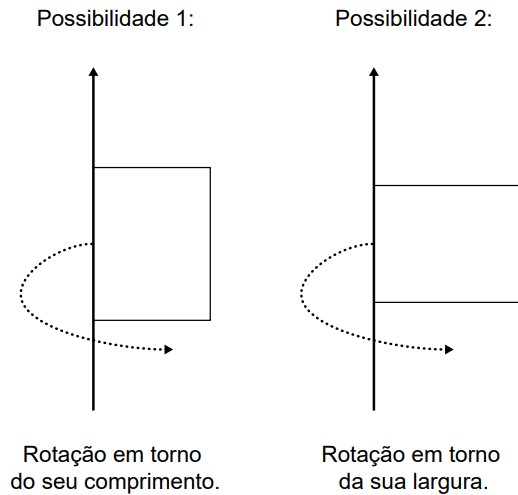
Se o retângulo, nas duas possibilidades, possui dimensões de 6 cm por 8 cm, qual a diferença, em valor absoluto, entre os volumes dos cilindros gerados na possibilidade 1 e na possibilidade 2, em cm3?
Em 2020, Pedro completou, em seu aniversário, o dobro da idade que completou em 1998, acrescido de 6 anos.
Caso você esteja vivo até lá, quantos anos Pedro completará em 2056?
INSTRUCTION: Read the following text to answer question.
Communicative Language Teaching
By Judson Wright
Introduction
The teacher as model
In some approaches to teaching English, the teacher’s main role is to pass on knowledge to students through explanations. In Communicative Language Teaching, the role of the teacher is rather different, although providing clear explanations of language points is still an important part of it. First of all, the teacher acts as a model of good communication skills. This involves asking clear questions, providing clear answers, and giving clear instructions to students. The teacher also models active listening skills, which include making eye contact, listening carefully to what people are saying, checking that listeners understand what’s being said, and responding appropriately. It is the teacher who sets the expectation that these and other communication skills, such as taking turns appropriately in a conversation, are the classroom norm.
Classroom interaction
As in many other classrooms, some of the interaction in the CLT classroom consists of the teacher talking to the whole class while the students listen or respond to the teacher’s questions, particularly when the teacher is explaining a language point. However, CLT is based on the idea that in order to improve students’ communication skills, most of the interaction that teachers need to provide for their students should be classroom tasks that require and develop communication skills. In particular, CLT makes use of roleplays, pair work and group work tasks. These forms of interaction provide some important benefits.
One benefit is that students usually find these forms of interaction motivating and engaging. Pair and group work provide opportunities to focus more on fluency and on content than on accuracy, which often means that students are able to speak more freely than when they are asked to respond to direct questions from the teacher in front of the whole class. These interactions provide a safer space to practise communication skills. The teacher has an important part to play here, ensuring that students avoid focusing on form too much during tasks as well as bringing their students’ focus back onto the content of the interaction rather than correcting each other’s English while carrying out the task
Another benefit is a better use of time. When students are divided into pairs or groups and given a task that each pair or group carries out at the same time, it is a far more efficient and effective use of classroom time than other forms of classroom interaction. It means that all students can be engaged and active at the same time, rather than merely listening to other students respond to the teacher’s questions or prompts, which is a typical interaction in some classrooms. Through pair and group work, each individual student spends far more time using English and practising their communication skills.
Meaningful communication
In order for the interactions to be effective, we need to ensure that successfully completing a task depends on meaningful communication. In other words, each pair and group work task are designed so that there is a real purpose for the interaction, mirroring communicative interactions in the real world. This real purpose might involve a student communicating something about their own life which another student doesn’t know, such as information about their family, or their own opinions on a subject. It might also involve creating an information gap between the students which requires the use of different communication skills. Let’s consider a couple of examples at different levels of English ability that illustrate the idea of meaningful communication.
Imagine a teacher is working with students at an elementary level of English who are learning or practising the names of colours. The teacher produces sheets of paper with perhaps four or five coloured circles on them. Most sheets are different from each other, but each sheet has at least one other that matches it exactly. Each student receives a sheet and is asked not to let other people see their sheet. The task is for each student to find another student whose sheet exactly matches their own. Armed with a simple structure, such as Do you have a … circle?, students mingle around the classroom, asking and answering each other’s questions, until they have each found a matching partner. This type of task can be easily adapted to focus on shapes, body parts, and a range of other lexical sets. Contrast this with a situation where a teacher indicates different objects that the whole class can see and asks questions such as What colour is this? and expects students to respond with the correct colour. In that case, no meaningful communication takes place since all students already know the answer.
[…]
Assessment and correction
During the task, the students’ focus should be on achieving the communicative aim, whether that’s finding someone in the class with matching information, reconstructing a text, or successfully completing a roleplay. The teacher’s role is to employ ongoing informal assessment by monitoring the interactions and making sure that each pair and group stays on task and does not get distracted by trying to correct each other’s use of language. It’s worth making the importance of completing the task explicit at the start of any communicative task. As teachers monitor the students, they should make a note of any errors that they want to focus on after the activity. This is usually most effective when the teacher selects errors that more than one student makes since focusing on these is likely to be of use to more students. While the teacher may choose to ignore most other errors, it is sometimes worth using ‘hot correction’ with individual students. With hot correction, the teacher quickly makes a note of the correct form on a slip of paper and simply places it on the table in front of the student, without interrupting the interaction.
Conclusion
Communicative Language Teaching prepares students for communicative demands outside the classroom using techniques that develop communication skills. In its pure form, some teachers may feel that there is not enough focus on accuracy and language structure to meet their needs and the needs of their students. However, introducing elements of the approach into your classroom and reconsidering your role as a teacher and the types of tasks you ask your students to take part in will motivate and engage your students while developing their communication skills.
Available at: https://www.onestopenglish.com/methodology-theworld-of-elt/communicative-language-teaching/1000116.article. Accessed on: Jan 23rd, 2024.
The discourse marker however in “However, introducing elements of the approach into your classroom and reconsidering your role as a teacher and the types of tasks you ask your students to take part in will motivate and engage your students while developing their communication skills.” is closest in meaning to
INSTRUCTION: Read the following text to answer question.
Communicative Language Teaching
By Judson Wright
Introduction
The teacher as model
In some approaches to teaching English, the teacher’s main role is to pass on knowledge to students through explanations. In Communicative Language Teaching, the role of the teacher is rather different, although providing clear explanations of language points is still an important part of it. First of all, the teacher acts as a model of good communication skills. This involves asking clear questions, providing clear answers, and giving clear instructions to students. The teacher also models active listening skills, which include making eye contact, listening carefully to what people are saying, checking that listeners understand what’s being said, and responding appropriately. It is the teacher who sets the expectation that these and other communication skills, such as taking turns appropriately in a conversation, are the classroom norm.
Classroom interaction
As in many other classrooms, some of the interaction in the CLT classroom consists of the teacher talking to the whole class while the students listen or respond to the teacher’s questions, particularly when the teacher is explaining a language point. However, CLT is based on the idea that in order to improve students’ communication skills, most of the interaction that teachers need to provide for their students should be classroom tasks that require and develop communication skills. In particular, CLT makes use of roleplays, pair work and group work tasks. These forms of interaction provide some important benefits.
One benefit is that students usually find these forms of interaction motivating and engaging. Pair and group work provide opportunities to focus more on fluency and on content than on accuracy, which often means that students are able to speak more freely than when they are asked to respond to direct questions from the teacher in front of the whole class. These interactions provide a safer space to practise communication skills. The teacher has an important part to play here, ensuring that students avoid focusing on form too much during tasks as well as bringing their students’ focus back onto the content of the interaction rather than correcting each other’s English while carrying out the task
Another benefit is a better use of time. When students are divided into pairs or groups and given a task that each pair or group carries out at the same time, it is a far more efficient and effective use of classroom time than other forms of classroom interaction. It means that all students can be engaged and active at the same time, rather than merely listening to other students respond to the teacher’s questions or prompts, which is a typical interaction in some classrooms. Through pair and group work, each individual student spends far more time using English and practising their communication skills.
Meaningful communication
In order for the interactions to be effective, we need to ensure that successfully completing a task depends on meaningful communication. In other words, each pair and group work task are designed so that there is a real purpose for the interaction, mirroring communicative interactions in the real world. This real purpose might involve a student communicating something about their own life which another student doesn’t know, such as information about their family, or their own opinions on a subject. It might also involve creating an information gap between the students which requires the use of different communication skills. Let’s consider a couple of examples at different levels of English ability that illustrate the idea of meaningful communication.
Imagine a teacher is working with students at an elementary level of English who are learning or practising the names of colours. The teacher produces sheets of paper with perhaps four or five coloured circles on them. Most sheets are different from each other, but each sheet has at least one other that matches it exactly. Each student receives a sheet and is asked not to let other people see their sheet. The task is for each student to find another student whose sheet exactly matches their own. Armed with a simple structure, such as Do you have a … circle?, students mingle around the classroom, asking and answering each other’s questions, until they have each found a matching partner. This type of task can be easily adapted to focus on shapes, body parts, and a range of other lexical sets. Contrast this with a situation where a teacher indicates different objects that the whole class can see and asks questions such as What colour is this? and expects students to respond with the correct colour. In that case, no meaningful communication takes place since all students already know the answer.
[…]
Assessment and correction
During the task, the students’ focus should be on achieving the communicative aim, whether that’s finding someone in the class with matching information, reconstructing a text, or successfully completing a roleplay. The teacher’s role is to employ ongoing informal assessment by monitoring the interactions and making sure that each pair and group stays on task and does not get distracted by trying to correct each other’s use of language. It’s worth making the importance of completing the task explicit at the start of any communicative task. As teachers monitor the students, they should make a note of any errors that they want to focus on after the activity. This is usually most effective when the teacher selects errors that more than one student makes since focusing on these is likely to be of use to more students. While the teacher may choose to ignore most other errors, it is sometimes worth using ‘hot correction’ with individual students. With hot correction, the teacher quickly makes a note of the correct form on a slip of paper and simply places it on the table in front of the student, without interrupting the interaction.
Conclusion
Communicative Language Teaching prepares students for communicative demands outside the classroom using techniques that develop communication skills. In its pure form, some teachers may feel that there is not enough focus on accuracy and language structure to meet their needs and the needs of their students. However, introducing elements of the approach into your classroom and reconsidering your role as a teacher and the types of tasks you ask your students to take part in will motivate and engage your students while developing their communication skills.
Available at: https://www.onestopenglish.com/methodology-theworld-of-elt/communicative-language-teaching/1000116.article. Accessed on: Jan 23rd, 2024.
Concerning assessment in the Communicative Approach, a teacher is encouraged
INSTRUCTION: Read the following text to answer question.
Communicative Language Teaching
By Judson Wright
Introduction
The teacher as model
In some approaches to teaching English, the teacher’s main role is to pass on knowledge to students through explanations. In Communicative Language Teaching, the role of the teacher is rather different, although providing clear explanations of language points is still an important part of it. First of all, the teacher acts as a model of good communication skills. This involves asking clear questions, providing clear answers, and giving clear instructions to students. The teacher also models active listening skills, which include making eye contact, listening carefully to what people are saying, checking that listeners understand what’s being said, and responding appropriately. It is the teacher who sets the expectation that these and other communication skills, such as taking turns appropriately in a conversation, are the classroom norm.
Classroom interaction
As in many other classrooms, some of the interaction in the CLT classroom consists of the teacher talking to the whole class while the students listen or respond to the teacher’s questions, particularly when the teacher is explaining a language point. However, CLT is based on the idea that in order to improve students’ communication skills, most of the interaction that teachers need to provide for their students should be classroom tasks that require and develop communication skills. In particular, CLT makes use of roleplays, pair work and group work tasks. These forms of interaction provide some important benefits.
One benefit is that students usually find these forms of interaction motivating and engaging. Pair and group work provide opportunities to focus more on fluency and on content than on accuracy, which often means that students are able to speak more freely than when they are asked to respond to direct questions from the teacher in front of the whole class. These interactions provide a safer space to practise communication skills. The teacher has an important part to play here, ensuring that students avoid focusing on form too much during tasks as well as bringing their students’ focus back onto the content of the interaction rather than correcting each other’s English while carrying out the task
Another benefit is a better use of time. When students are divided into pairs or groups and given a task that each pair or group carries out at the same time, it is a far more efficient and effective use of classroom time than other forms of classroom interaction. It means that all students can be engaged and active at the same time, rather than merely listening to other students respond to the teacher’s questions or prompts, which is a typical interaction in some classrooms. Through pair and group work, each individual student spends far more time using English and practising their communication skills.
Meaningful communication
In order for the interactions to be effective, we need to ensure that successfully completing a task depends on meaningful communication. In other words, each pair and group work task are designed so that there is a real purpose for the interaction, mirroring communicative interactions in the real world. This real purpose might involve a student communicating something about their own life which another student doesn’t know, such as information about their family, or their own opinions on a subject. It might also involve creating an information gap between the students which requires the use of different communication skills. Let’s consider a couple of examples at different levels of English ability that illustrate the idea of meaningful communication.
Imagine a teacher is working with students at an elementary level of English who are learning or practising the names of colours. The teacher produces sheets of paper with perhaps four or five coloured circles on them. Most sheets are different from each other, but each sheet has at least one other that matches it exactly. Each student receives a sheet and is asked not to let other people see their sheet. The task is for each student to find another student whose sheet exactly matches their own. Armed with a simple structure, such as Do you have a … circle?, students mingle around the classroom, asking and answering each other’s questions, until they have each found a matching partner. This type of task can be easily adapted to focus on shapes, body parts, and a range of other lexical sets. Contrast this with a situation where a teacher indicates different objects that the whole class can see and asks questions such as What colour is this? and expects students to respond with the correct colour. In that case, no meaningful communication takes place since all students already know the answer.
[…]
Assessment and correction
During the task, the students’ focus should be on achieving the communicative aim, whether that’s finding someone in the class with matching information, reconstructing a text, or successfully completing a roleplay. The teacher’s role is to employ ongoing informal assessment by monitoring the interactions and making sure that each pair and group stays on task and does not get distracted by trying to correct each other’s use of language. It’s worth making the importance of completing the task explicit at the start of any communicative task. As teachers monitor the students, they should make a note of any errors that they want to focus on after the activity. This is usually most effective when the teacher selects errors that more than one student makes since focusing on these is likely to be of use to more students. While the teacher may choose to ignore most other errors, it is sometimes worth using ‘hot correction’ with individual students. With hot correction, the teacher quickly makes a note of the correct form on a slip of paper and simply places it on the table in front of the student, without interrupting the interaction.
Conclusion
Communicative Language Teaching prepares students for communicative demands outside the classroom using techniques that develop communication skills. In its pure form, some teachers may feel that there is not enough focus on accuracy and language structure to meet their needs and the needs of their students. However, introducing elements of the approach into your classroom and reconsidering your role as a teacher and the types of tasks you ask your students to take part in will motivate and engage your students while developing their communication skills.
Available at: https://www.onestopenglish.com/methodology-theworld-of-elt/communicative-language-teaching/1000116.article. Accessed on: Jan 23rd, 2024.
The aim of Communicative Language Teaching is
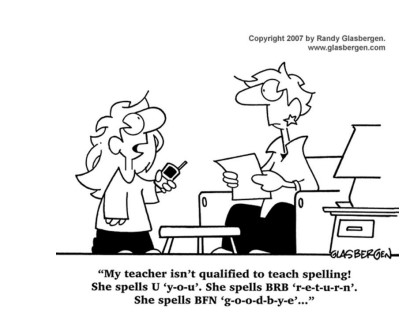
Available at: https://www.glasbergen.com/education-cartoons/language-grammar/. Accessed on: Jan 23rd, 2024.
An essential feature of cartoons is humor. The cartoonist is making fun of the fact that
Learning goals, which are referred to in version 3 of the BNCC as abilities, are intended to list the basic knowledge to be acquired by students, and to serve as a reference for drafting and updating the regional, state and municipal curricula.
[…]
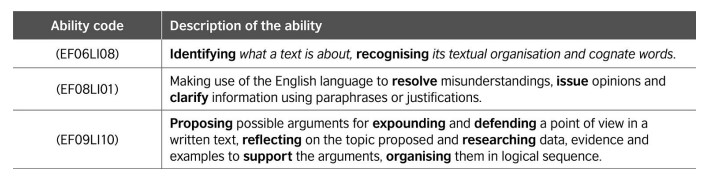
Available at: https://www.britishcouncil.org.br/sites/default/files/leitura_critica_bncc_-_en_-_v4_final.pdf. Accessed on: Jan 23rd, 2024. [Fragment]
To develop the BNCC ability EF06LI08, which includes identifying what a text is about, an English teacher should provide students with learning opportunities to

 Conheça nossos planos