Questões de Concurso
Comentadas para engenheiro eletricista
Foram encontradas 7.457 questões
Resolva questões gratuitamente!
Junte-se a mais de 4 milhões de concurseiros!


Ano: 2026
Banca:
CESGRANRIO
Órgão:
Caixa
Provas:
CESGRANRIO - 2026 - Caixa - Arquiteto
|
CESGRANRIO - 2026 - Caixa - Engenheiro Eletricista |
CESGRANRIO - 2026 - Caixa - Engenheiro Mecânico |
CESGRANRIO - 2026 - Caixa - Engenheiro Civil |
CESGRANRIO - 2026 - Caixa - Engenheiro de Segurança do Trabalho |
CESGRANRIO - 2026 - Caixa - Médico do Trabalho |
Q3862516
Gestão de Pessoas
Um funcionário de um banco é emocionalmente instável, incapaz de despertar muito entusiasmo ou interesse em seus subordinados. Sua consciência sobre suas próprias emoções e as emoções dos outros é quase nula. Normalmente reage de forma exagerada aos problemas. Ele não entende por que seus subordinados ficam perturbados com ele.
Essa descrição caracteriza um funcionário que possui baixa
Ano: 2026
Banca:
CESGRANRIO
Órgão:
Caixa
Provas:
CESGRANRIO - 2026 - Caixa - Arquiteto
|
CESGRANRIO - 2026 - Caixa - Engenheiro Eletricista |
CESGRANRIO - 2026 - Caixa - Engenheiro Mecânico |
CESGRANRIO - 2026 - Caixa - Engenheiro Civil |
CESGRANRIO - 2026 - Caixa - Engenheiro de Segurança do Trabalho |
CESGRANRIO - 2026 - Caixa - Médico do Trabalho |
Q3862515
Gestão de Pessoas
As técnicas e boas práticas adotadas pelas organizações
no contexto do trabalho à distância (teletrabalho) afetam o
comportamento organizacional, principalmente através de
sua influência na identificação organizacional, um construto que mede o nível de conexão afetiva e cognitiva entre o trabalhador e a organização.
Na relação entre os elementos do teletrabalho e a identificação organizacional, verifica-se que
Na relação entre os elementos do teletrabalho e a identificação organizacional, verifica-se que
Ano: 2026
Banca:
CESGRANRIO
Órgão:
Caixa
Provas:
CESGRANRIO - 2026 - Caixa - Arquiteto
|
CESGRANRIO - 2026 - Caixa - Engenheiro Eletricista |
CESGRANRIO - 2026 - Caixa - Engenheiro Mecânico |
CESGRANRIO - 2026 - Caixa - Engenheiro Civil |
CESGRANRIO - 2026 - Caixa - Engenheiro de Segurança do Trabalho |
CESGRANRIO - 2026 - Caixa - Médico do Trabalho |
Q3862509
Português
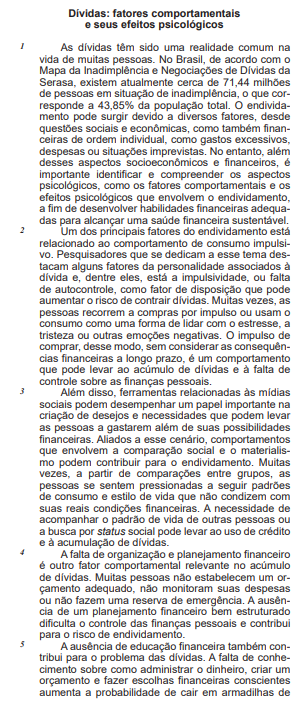
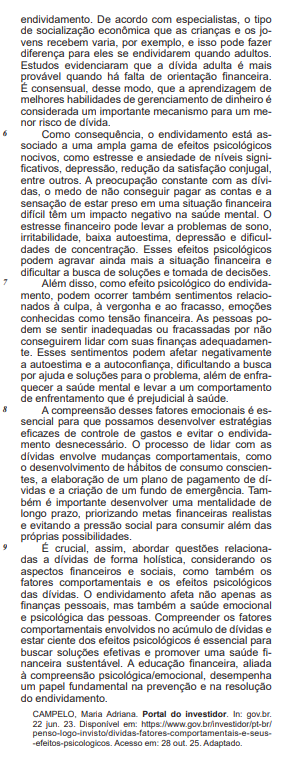
No texto aparecem palavras como “autocontrole”,
“autoestima” e “autoconfiança”. Segundo o Novo Acordo
Ortográfico, estão também corretamente grafadas sem
hífen as palavras:
Ano: 2026
Banca:
CESGRANRIO
Órgão:
Caixa
Provas:
CESGRANRIO - 2026 - Caixa - Arquiteto
|
CESGRANRIO - 2026 - Caixa - Engenheiro Eletricista |
CESGRANRIO - 2026 - Caixa - Engenheiro Mecânico |
CESGRANRIO - 2026 - Caixa - Engenheiro Civil |
CESGRANRIO - 2026 - Caixa - Engenheiro de Segurança do Trabalho |
CESGRANRIO - 2026 - Caixa - Médico do Trabalho |
Q3862508
Comunicação Social
De acordo com o Manual de Redação da Presidência da
República, o atributo da precisão
Ano: 2026
Banca:
CESGRANRIO
Órgão:
Caixa
Provas:
CESGRANRIO - 2026 - Caixa - Arquiteto
|
CESGRANRIO - 2026 - Caixa - Engenheiro Eletricista |
CESGRANRIO - 2026 - Caixa - Engenheiro Mecânico |
CESGRANRIO - 2026 - Caixa - Engenheiro Civil |
CESGRANRIO - 2026 - Caixa - Engenheiro de Segurança do Trabalho |
CESGRANRIO - 2026 - Caixa - Médico do Trabalho |
Q3862507
Português
O uso do sinal indicativo de crase, nas palavras em destaque, está de acordo com a norma-padrão da Língua Portuguesa em:
Ano: 2026
Banca:
CESGRANRIO
Órgão:
Caixa
Provas:
CESGRANRIO - 2026 - Caixa - Arquiteto
|
CESGRANRIO - 2026 - Caixa - Engenheiro Eletricista |
CESGRANRIO - 2026 - Caixa - Engenheiro Mecânico |
CESGRANRIO - 2026 - Caixa - Engenheiro Civil |
CESGRANRIO - 2026 - Caixa - Engenheiro de Segurança do Trabalho |
CESGRANRIO - 2026 - Caixa - Médico do Trabalho |
Q3862506
Português
No trecho “As pessoas podem se sentir inadequadas ou
fracassadas por não conseguirem lidar com suas finanças adequadamente. Esses sentimentos podem afetar
negativamente a autoestima e a autoconfiança, dificultando a busca por ajuda e soluções para o problema,
além de enfraquecer a saúde mental e levar a um comportamento de enfrentamento que é prejudicial à saúde.”
(7o
parágrafo), a relação lógica entre os dois períodos
pode ser expressa por
Ano: 2026
Banca:
CESGRANRIO
Órgão:
Caixa
Provas:
CESGRANRIO - 2026 - Caixa - Arquiteto
|
CESGRANRIO - 2026 - Caixa - Engenheiro Eletricista |
CESGRANRIO - 2026 - Caixa - Engenheiro Mecânico |
CESGRANRIO - 2026 - Caixa - Engenheiro Civil |
CESGRANRIO - 2026 - Caixa - Engenheiro de Segurança do Trabalho |
CESGRANRIO - 2026 - Caixa - Médico do Trabalho |
Q3862505
Português
A frase em que a concordância do verbo em destaque está
de acordo com a norma-padrão da Língua Portuguesa é:
Ano: 2026
Banca:
CESGRANRIO
Órgão:
Caixa
Provas:
CESGRANRIO - 2026 - Caixa - Arquiteto
|
CESGRANRIO - 2026 - Caixa - Engenheiro Eletricista |
CESGRANRIO - 2026 - Caixa - Engenheiro Mecânico |
CESGRANRIO - 2026 - Caixa - Engenheiro Civil |
CESGRANRIO - 2026 - Caixa - Engenheiro de Segurança do Trabalho |
CESGRANRIO - 2026 - Caixa - Médico do Trabalho |
Q3862504
Português
De acordo com a ordem das ideias apresentadas no texto, observa-se que, depois de afirmar que podem ocorrer,
como efeito psicológico do endividamento, sentimentos
relacionados à culpa, à vergonha e ao fracasso, o texto
explica que
Ano: 2026
Banca:
CESGRANRIO
Órgão:
Caixa
Provas:
CESGRANRIO - 2026 - Caixa - Arquiteto
|
CESGRANRIO - 2026 - Caixa - Engenheiro Eletricista |
CESGRANRIO - 2026 - Caixa - Engenheiro Mecânico |
CESGRANRIO - 2026 - Caixa - Engenheiro Civil |
CESGRANRIO - 2026 - Caixa - Engenheiro de Segurança do Trabalho |
CESGRANRIO - 2026 - Caixa - Médico do Trabalho |
Q3862503
Português
Na organização do texto, os parágrafos 2, 4 e 5 têm a
função de
Ano: 2026
Banca:
CESGRANRIO
Órgão:
Caixa
Provas:
CESGRANRIO - 2026 - Caixa - Arquiteto
|
CESGRANRIO - 2026 - Caixa - Engenheiro Eletricista |
CESGRANRIO - 2026 - Caixa - Engenheiro Mecânico |
CESGRANRIO - 2026 - Caixa - Engenheiro Civil |
CESGRANRIO - 2026 - Caixa - Engenheiro de Segurança do Trabalho |
CESGRANRIO - 2026 - Caixa - Médico do Trabalho |
Q3862502
Português
Ao usar a palavra “holística” na conclusão do texto, a autora indica que o endividamento deve ser observado de
maneira que se
Ano: 2026
Banca:
CESGRANRIO
Órgão:
Caixa
Provas:
CESGRANRIO - 2026 - Caixa - Arquiteto
|
CESGRANRIO - 2026 - Caixa - Engenheiro Eletricista |
CESGRANRIO - 2026 - Caixa - Engenheiro Mecânico |
CESGRANRIO - 2026 - Caixa - Engenheiro Civil |
CESGRANRIO - 2026 - Caixa - Engenheiro de Segurança do Trabalho |
CESGRANRIO - 2026 - Caixa - Médico do Trabalho |
Q3862501
Português
Uma das estratégias argumentativas usadas pela autora é
Ano: 2026
Banca:
CESGRANRIO
Órgão:
Caixa
Provas:
CESGRANRIO - 2026 - Caixa - Arquiteto
|
CESGRANRIO - 2026 - Caixa - Engenheiro Eletricista |
CESGRANRIO - 2026 - Caixa - Engenheiro Mecânico |
CESGRANRIO - 2026 - Caixa - Engenheiro Civil |
CESGRANRIO - 2026 - Caixa - Engenheiro de Segurança do Trabalho |
CESGRANRIO - 2026 - Caixa - Médico do Trabalho |
Q3862500
Português
O texto afirma que o comportamento de consumo impulsivo
Q3852606
Engenharia de Automação
No domínio da Automação Industrial, o CLP utiliza módulos PID,
que são empregados em aplicações em anel fechado para que a
variável controlada possa retornar ao set-point pré-fixado. O
algoritmo PID calcula o sinal atuantes (U) sobre o sinal de erro (E).
Sobre as ações do controlador PID, assinale a opção correta.
Sobre as ações do controlador PID, assinale a opção correta.
Q3852596
Eletricidade
Os sistemas de instrumentação (I&C) de uma central nuclear
seguem uma hierarquia de proteção baseada na defesa em
profundidade. Dentro dessa hierarquia, o sistema de limitação
(PLS) atua como um nível intermediário, evitando que distúrbios
operacionais evoluam para condições de risco. Se o PLS falhar em
conter uma perturbação operacional e os limites de segurança da
planta forem violados, um sistema da mais alta prioridade intervirá
automaticamente para mitigar as consequências.
Nesse cenário, intervirá automaticamente o sistema
Nesse cenário, intervirá automaticamente o sistema
Q3852592
Eletricidade
A norma CNEN-NE-1.26 estabelece os requisitos mínimos
necessários de segurança para a operação de usinas
nucleoelétricas. A Organização Operadora deve estabelecer uma
estrutura organizacional capaz de sustentar uma cultura da
segurança e garantir que a usina possa operar com segurança,
atenuar as consequências de acidentes e assegurar a resposta
correta a situações de emergência.
O princípio fundamental que deve estar estabelecido na estrutura organizacional para atender às exigências da CNEN-NE-1.26 quanto à funcionalidade organizacional e à capacidade de resposta a eventos não normais é
O princípio fundamental que deve estar estabelecido na estrutura organizacional para atender às exigências da CNEN-NE-1.26 quanto à funcionalidade organizacional e à capacidade de resposta a eventos não normais é
Ano: 2026
Banca:
VUNESP
Órgão:
Prefeitura de São José do Rio Preto - SP
Prova:
VUNESP - 2026 - Prefeitura de São José do Rio Preto - SP - Engenheiro Eletricista |
Q3850043
Legislação Municipal
Recentemente, em 2024, a Prefeitura de São José do Rio Preto promulgou a Lei Ordinária no
14.554/2024, que é relevante para engenheiros eletricistas que desejem trabalhar na cidade. Essa lei dispõe, especificamente, sobre:
Ano: 2026
Banca:
VUNESP
Órgão:
Prefeitura de São José do Rio Preto - SP
Prova:
VUNESP - 2026 - Prefeitura de São José do Rio Preto - SP - Engenheiro Eletricista |
Q3850030
Redes de Computadores
Em uma rede de dados estruturada, diferentes dispositivos atuam em distintas camadas do modelo OSI,
desempenhando funções complementares no encaminhamento das informações. Com relação aos roteadores
e switches, assinale a alternativa correta.
Ano: 2026
Banca:
FGV
Órgão:
AMAZUL
Provas:
FGV - 2026 - AMAZUL - Advogado
|
FGV - 2026 - AMAZUL - Contador |
FGV - 2026 - AMAZUL - Designer Gráfico |
FGV - 2026 - AMAZUL - Analista de Administração |
FGV - 2026 - AMAZUL - Engenheiro Mecatrônico |
FGV - 2026 - AMAZUL - Analista de Desenvolvimento de Sistemas |
FGV - 2026 - AMAZUL - Engenheiro Naval |
FGV - 2026 - AMAZUL - Engenheiro de Computação |
FGV - 2026 - AMAZUL - Médico do Trabalho |
FGV - 2026 - AMAZUL - Psicólogo |
FGV - 2026 - AMAZUL - Analista de Infraestrutura de Tecnologia da Informação |
FGV - 2026 - AMAZUL - Engenheiro de Controle da Qualidade |
FGV - 2026 - AMAZUL - Analista de Negócios |
FGV - 2026 - AMAZUL - Arquiteto |
FGV - 2026 - AMAZUL - Auditor |
FGV - 2026 - AMAZUL - Analista de Recursos Humanos |
FGV - 2026 - AMAZUL - Engenheiro Ambiental |
FGV - 2026 - AMAZUL - Engenheiro de Materiais |
FGV - 2026 - AMAZUL - Especialista de Radioproteção |
FGV - 2026 - AMAZUL - Engenheiro Nuclear |
FGV - 2026 - AMAZUL - Engenheiro de Produção |
FGV - 2026 - AMAZUL - Engenheiro Civil |
FGV - 2026 - AMAZUL - Engenheiro Controle e Automação |
FGV - 2026 - AMAZUL - Físico |
FGV - 2026 - AMAZUL - Engenheiro Químico |
FGV - 2026 - AMAZUL - Engenheiro de Telecomunicações |
FGV - 2026 - AMAZUL - Engenheiro de Segurança do Trabalho |
FGV - 2026 - AMAZUL - Engenheiro Eletricista |
FGV - 2026 - AMAZUL - Engenheiro Eletrônico |
FGV - 2026 - AMAZUL - Meteorologista |
FGV - 2026 - AMAZUL - Químico |
FGV - 2026 - AMAZUL - Tecnólogo em Fabricação Mecânica |
FGV - 2026 - AMAZUL - Engenheiro de Energia |
FGV - 2026 - AMAZUL - Engenheiro Mecânico |
Q3846042
Inglês
Texto associado
READ THE TEXT AND ANSWER THE FOLLOWING QUESTION
Social Dimensions of Climate Change
Extreme weather events are deeply intertwined with global
patterns of inequality. The poorest and most vulnerable people
bear the brunt of climate change impacts yet contribute the least
to the crisis. As the impacts of climate change mount, millions of
vulnerable people face disproportionate challenges in terms of
loss of jobs; physical harm; disease; mental health effects; food
insecurity; access to water; migration and forced displacement;
loss of shelter, assets, and community ties, and other related risks.
Some people are more vulnerable to climate change than others.
For example, workers in sectors such as agriculture, fishing, and
tourism rely on natural resources that are particularly sensitive to
increasingly unpredictable weather and seasonal patterns.
Female-headed households, children, persons with
disabilities, Indigenous Peoples and ethnic minorities, landless
tenants, migrant workers, displaced persons, older people, and
other socially marginalized groups often have fewer financial and
other resources to cope with and recover from shocks which might
threaten their wellbeing and the wellbeing of their families. The
root causes of their vulnerability lie in a combination of their
geographical locations; their financial, socio-economic, cultural,
and social status; and their access to resources, services, and
decision-making power.
The poor are often not just among the most vulnerable to climate
change, but also disproportionately impacted by measures to
address it. These impacts can include increased costs of living, loss
of livelihoods, and limited access to resources and support
systems, which exacerbate existing inequalities and poverty
trends. In the absence of well-designed and citizen-centered
policies, efforts to tackle climate change can have unintended
consequences for the livelihoods of certain groups, including
placing a higher financial burden on poor households […].
While much progress has been made on the science and the types
of policies needed to support a transition to low carbon, climateresilient development, a challenge facing many countries is
engaging citizens who are concerned that they will be unfairly
impacted by climate policies. Citizen-centered programs play a
vital role in ensuring that resources are used efficiently. Engaging
people in shaping climate action is equally critical for achieving
lasting impact. This means ensuring transparency, access to
information, and active citizen engagement on climate risks and
green growth. Such involvement can help build public support to
reduce climate impacts, overcome behavioral and political barriers
to decarbonization, as well as foster both new ideas and a sense of
ownership over solutions.
Moreover, communities bring unique perspectives, skills, and a
wealth of knowledge to the challenge of strengthening resilience
and addressing climate change. They should be engaged as
partners in resilience-building rather than being regarded merely
as beneficiaries. Research and experience show that community
leaders can successfully set priorities, influence ownership, as well
as design and implement investment programs that are responsive
to their community’s own needs. A 2022 report by the
Intergovernmental Panel on Climate Change (IPCC) recognizes the
value of diverse forms of knowledge — such as scientific,
Indigenous, and local knowledge — in building climate resilience.
Innovations in the architecture of climate finance can connect
communities and marginalized groups to the policy, technical, and
financial assistance that they need for locally relevant and
effective development outcomes.
From: https://www.worldbank.org/en/topic/social-dimensions-of-climate-change
The modal verb in “They should be engaged as partners” (5th
paragraph) indicates a(n):
Ano: 2026
Banca:
FGV
Órgão:
AMAZUL
Provas:
FGV - 2026 - AMAZUL - Advogado
|
FGV - 2026 - AMAZUL - Contador |
FGV - 2026 - AMAZUL - Designer Gráfico |
FGV - 2026 - AMAZUL - Analista de Administração |
FGV - 2026 - AMAZUL - Engenheiro Mecatrônico |
FGV - 2026 - AMAZUL - Analista de Desenvolvimento de Sistemas |
FGV - 2026 - AMAZUL - Engenheiro Naval |
FGV - 2026 - AMAZUL - Engenheiro de Computação |
FGV - 2026 - AMAZUL - Médico do Trabalho |
FGV - 2026 - AMAZUL - Psicólogo |
FGV - 2026 - AMAZUL - Analista de Infraestrutura de Tecnologia da Informação |
FGV - 2026 - AMAZUL - Engenheiro de Controle da Qualidade |
FGV - 2026 - AMAZUL - Analista de Negócios |
FGV - 2026 - AMAZUL - Arquiteto |
FGV - 2026 - AMAZUL - Auditor |
FGV - 2026 - AMAZUL - Analista de Recursos Humanos |
FGV - 2026 - AMAZUL - Engenheiro Ambiental |
FGV - 2026 - AMAZUL - Engenheiro de Materiais |
FGV - 2026 - AMAZUL - Especialista de Radioproteção |
FGV - 2026 - AMAZUL - Engenheiro Nuclear |
FGV - 2026 - AMAZUL - Engenheiro de Produção |
FGV - 2026 - AMAZUL - Engenheiro Civil |
FGV - 2026 - AMAZUL - Engenheiro Controle e Automação |
FGV - 2026 - AMAZUL - Físico |
FGV - 2026 - AMAZUL - Engenheiro Químico |
FGV - 2026 - AMAZUL - Engenheiro de Telecomunicações |
FGV - 2026 - AMAZUL - Engenheiro de Segurança do Trabalho |
FGV - 2026 - AMAZUL - Engenheiro Eletricista |
FGV - 2026 - AMAZUL - Engenheiro Eletrônico |
FGV - 2026 - AMAZUL - Meteorologista |
FGV - 2026 - AMAZUL - Químico |
FGV - 2026 - AMAZUL - Tecnólogo em Fabricação Mecânica |
FGV - 2026 - AMAZUL - Engenheiro de Energia |
FGV - 2026 - AMAZUL - Engenheiro Mecânico |
Q3846041
Inglês
Texto associado
READ THE TEXT AND ANSWER THE FOLLOWING QUESTION
Social Dimensions of Climate Change
Extreme weather events are deeply intertwined with global
patterns of inequality. The poorest and most vulnerable people
bear the brunt of climate change impacts yet contribute the least
to the crisis. As the impacts of climate change mount, millions of
vulnerable people face disproportionate challenges in terms of
loss of jobs; physical harm; disease; mental health effects; food
insecurity; access to water; migration and forced displacement;
loss of shelter, assets, and community ties, and other related risks.
Some people are more vulnerable to climate change than others.
For example, workers in sectors such as agriculture, fishing, and
tourism rely on natural resources that are particularly sensitive to
increasingly unpredictable weather and seasonal patterns.
Female-headed households, children, persons with
disabilities, Indigenous Peoples and ethnic minorities, landless
tenants, migrant workers, displaced persons, older people, and
other socially marginalized groups often have fewer financial and
other resources to cope with and recover from shocks which might
threaten their wellbeing and the wellbeing of their families. The
root causes of their vulnerability lie in a combination of their
geographical locations; their financial, socio-economic, cultural,
and social status; and their access to resources, services, and
decision-making power.
The poor are often not just among the most vulnerable to climate
change, but also disproportionately impacted by measures to
address it. These impacts can include increased costs of living, loss
of livelihoods, and limited access to resources and support
systems, which exacerbate existing inequalities and poverty
trends. In the absence of well-designed and citizen-centered
policies, efforts to tackle climate change can have unintended
consequences for the livelihoods of certain groups, including
placing a higher financial burden on poor households […].
While much progress has been made on the science and the types
of policies needed to support a transition to low carbon, climateresilient development, a challenge facing many countries is
engaging citizens who are concerned that they will be unfairly
impacted by climate policies. Citizen-centered programs play a
vital role in ensuring that resources are used efficiently. Engaging
people in shaping climate action is equally critical for achieving
lasting impact. This means ensuring transparency, access to
information, and active citizen engagement on climate risks and
green growth. Such involvement can help build public support to
reduce climate impacts, overcome behavioral and political barriers
to decarbonization, as well as foster both new ideas and a sense of
ownership over solutions.
Moreover, communities bring unique perspectives, skills, and a
wealth of knowledge to the challenge of strengthening resilience
and addressing climate change. They should be engaged as
partners in resilience-building rather than being regarded merely
as beneficiaries. Research and experience show that community
leaders can successfully set priorities, influence ownership, as well
as design and implement investment programs that are responsive
to their community’s own needs. A 2022 report by the
Intergovernmental Panel on Climate Change (IPCC) recognizes the
value of diverse forms of knowledge — such as scientific,
Indigenous, and local knowledge — in building climate resilience.
Innovations in the architecture of climate finance can connect
communities and marginalized groups to the policy, technical, and
financial assistance that they need for locally relevant and
effective development outcomes.
From: https://www.worldbank.org/en/topic/social-dimensions-of-climate-change
The verb in “efforts to tackle climate change” (3rd paragraph) is
semantically equivalent to:
Ano: 2026
Banca:
FGV
Órgão:
AMAZUL
Provas:
FGV - 2026 - AMAZUL - Advogado
|
FGV - 2026 - AMAZUL - Contador |
FGV - 2026 - AMAZUL - Designer Gráfico |
FGV - 2026 - AMAZUL - Analista de Administração |
FGV - 2026 - AMAZUL - Engenheiro Mecatrônico |
FGV - 2026 - AMAZUL - Analista de Desenvolvimento de Sistemas |
FGV - 2026 - AMAZUL - Engenheiro Naval |
FGV - 2026 - AMAZUL - Engenheiro de Computação |
FGV - 2026 - AMAZUL - Médico do Trabalho |
FGV - 2026 - AMAZUL - Psicólogo |
FGV - 2026 - AMAZUL - Analista de Infraestrutura de Tecnologia da Informação |
FGV - 2026 - AMAZUL - Engenheiro de Controle da Qualidade |
FGV - 2026 - AMAZUL - Analista de Negócios |
FGV - 2026 - AMAZUL - Arquiteto |
FGV - 2026 - AMAZUL - Auditor |
FGV - 2026 - AMAZUL - Analista de Recursos Humanos |
FGV - 2026 - AMAZUL - Engenheiro Ambiental |
FGV - 2026 - AMAZUL - Engenheiro de Materiais |
FGV - 2026 - AMAZUL - Especialista de Radioproteção |
FGV - 2026 - AMAZUL - Engenheiro Nuclear |
FGV - 2026 - AMAZUL - Engenheiro de Produção |
FGV - 2026 - AMAZUL - Engenheiro Civil |
FGV - 2026 - AMAZUL - Engenheiro Controle e Automação |
FGV - 2026 - AMAZUL - Físico |
FGV - 2026 - AMAZUL - Engenheiro Químico |
FGV - 2026 - AMAZUL - Engenheiro de Telecomunicações |
FGV - 2026 - AMAZUL - Engenheiro de Segurança do Trabalho |
FGV - 2026 - AMAZUL - Engenheiro Eletricista |
FGV - 2026 - AMAZUL - Engenheiro Eletrônico |
FGV - 2026 - AMAZUL - Meteorologista |
FGV - 2026 - AMAZUL - Químico |
FGV - 2026 - AMAZUL - Tecnólogo em Fabricação Mecânica |
FGV - 2026 - AMAZUL - Engenheiro de Energia |
FGV - 2026 - AMAZUL - Engenheiro Mecânico |
Q3846040
Inglês
Texto associado
READ THE TEXT AND ANSWER THE FOLLOWING QUESTION
Social Dimensions of Climate Change
Extreme weather events are deeply intertwined with global
patterns of inequality. The poorest and most vulnerable people
bear the brunt of climate change impacts yet contribute the least
to the crisis. As the impacts of climate change mount, millions of
vulnerable people face disproportionate challenges in terms of
loss of jobs; physical harm; disease; mental health effects; food
insecurity; access to water; migration and forced displacement;
loss of shelter, assets, and community ties, and other related risks.
Some people are more vulnerable to climate change than others.
For example, workers in sectors such as agriculture, fishing, and
tourism rely on natural resources that are particularly sensitive to
increasingly unpredictable weather and seasonal patterns.
Female-headed households, children, persons with
disabilities, Indigenous Peoples and ethnic minorities, landless
tenants, migrant workers, displaced persons, older people, and
other socially marginalized groups often have fewer financial and
other resources to cope with and recover from shocks which might
threaten their wellbeing and the wellbeing of their families. The
root causes of their vulnerability lie in a combination of their
geographical locations; their financial, socio-economic, cultural,
and social status; and their access to resources, services, and
decision-making power.
The poor are often not just among the most vulnerable to climate
change, but also disproportionately impacted by measures to
address it. These impacts can include increased costs of living, loss
of livelihoods, and limited access to resources and support
systems, which exacerbate existing inequalities and poverty
trends. In the absence of well-designed and citizen-centered
policies, efforts to tackle climate change can have unintended
consequences for the livelihoods of certain groups, including
placing a higher financial burden on poor households […].
While much progress has been made on the science and the types
of policies needed to support a transition to low carbon, climateresilient development, a challenge facing many countries is
engaging citizens who are concerned that they will be unfairly
impacted by climate policies. Citizen-centered programs play a
vital role in ensuring that resources are used efficiently. Engaging
people in shaping climate action is equally critical for achieving
lasting impact. This means ensuring transparency, access to
information, and active citizen engagement on climate risks and
green growth. Such involvement can help build public support to
reduce climate impacts, overcome behavioral and political barriers
to decarbonization, as well as foster both new ideas and a sense of
ownership over solutions.
Moreover, communities bring unique perspectives, skills, and a
wealth of knowledge to the challenge of strengthening resilience
and addressing climate change. They should be engaged as
partners in resilience-building rather than being regarded merely
as beneficiaries. Research and experience show that community
leaders can successfully set priorities, influence ownership, as well
as design and implement investment programs that are responsive
to their community’s own needs. A 2022 report by the
Intergovernmental Panel on Climate Change (IPCC) recognizes the
value of diverse forms of knowledge — such as scientific,
Indigenous, and local knowledge — in building climate resilience.
Innovations in the architecture of climate finance can connect
communities and marginalized groups to the policy, technical, and
financial assistance that they need for locally relevant and
effective development outcomes.
From: https://www.worldbank.org/en/topic/social-dimensions-of-climate-change
“Yet” in “yet contribute the least” (1st paragraph) introduces an
idea of:
 Conheça nossos planos