Questões de Concurso Comentadas para professor - inglês

Foram encontradas 23.863 questões

Resolva questões gratuitamente!

Junte-se a mais de 4 milhões de concurseiros!

Q1806167 Inglês

O texto seguinte servirá de base para responder à questão.


Pensioners face £1,000 fine if they don't get TV licence this week


1º§ The BBC confirmed it will start to charge everyone for the licence from August 1, so you only have until Saturday before the change comes in. Anybody who watches live telly has to pay for a licence. Brits over the age of 75 used to get free TV licences, but the benefit was axed last year - unless you claim pension credit.

2º§ The government stopped funding the free licences for over-75s in 2015, handing the responsibility over to the BBC. But the BBC last year announced it would also pull the plug on the initiative to save cash.

3º§ There was a transition period set up because of the coronavirus crisis, which meant anyone who couldn't afford a TV licence wouldn't be fined. But that all comes to an end this weekend, and anyone without a licence that needs one after the end date of July 31 will face the fine.

4º§ The BBC has said that more than nine in 10 over-75s households have already made arrangements for a paid licence, or updated changes in their circumstances to entitle them to a free one. In its latest update on the changes, the broadcasting house said it would otherwise write to the remaining 260,000 customers who hadn't yet made arrangements. Over 2,838,000 people now have a paid-for licence.

5º§ Since the over-75s have been forced to pay the annual fee, the BBC has reportedly raked in an extra £250million in licence fees, and this will only go up with the end of the grace period looming. You'll want to make sure to get a licence before the deadline or risk paying the hefty fine. 6º§ You need a TV licence to watch or record live programmes on any channel in the UK, or if you're watching something live on a streaming service too.

7º§ If you're using those services but you don't pay the fee then you could face prosecution plus a fine of up to £1,000. To get one, it's going to cost you £159 for a standard colour TV licence, otherwise it's £53.50 for a black and white one.

8º§ You don't have to pay for the licence if you're over 75 and on Pension Credit though, but you'll need to apply for a free licence on the TV licensing website or call 0300 790 6117.

9º§ You can apply for a TV licence online or by calling 0300 790 6165. The fee you pay will last you a whole year and starts from the day that you buy it.

10º§ You'll want to make a note of when this is so you know when to renew it next year too - after 12 months you'll have to pay the £159 (or £53.50) all over again.

11º§ You'll only need one per household and it doesn't matter how many people live with you. But if you or someone you live with is blind or severely sight-impaired, you can get 50% off the fee.

12º§ If you live in a residential care home or sheltered accommodation, you may be able to apply for a reduced licence which will normally cost you £7.50 instead. Plus if you're a student you don't have to pay yourself as you can be covered by your parents licence despite living away from home, but you can't watch something plugged into the mains in this case.


source(adapted):https://www.thesun.co.uk/money/15704333/pensioners-face-fine-for-no-tv-licence-this-week/


(Adapted):https://www.thesun.co.uk/money/15704333/pensioners-face-fine-for-no-tv-licence-this-week/ 

Which paragraph provide information about the situation of students regarding the payment of the TV licence?
Alternativas
Q1796213 Inglês
Leia o texto para responder à questão.

Why the world is becoming more allergic to food
   Inquiries into the deaths of British teenagers after eating buttermilk, sesame and peanut have highlighted the sometimes tragic consequences. Last year, a six-year-old girl in Western Australia died as the result of a dairy allergy.
   The rise in allergies in recent decades has been particularly noticeable in the West. Food allergy now affects about 7% of children in the UK and 9% of those in Australia, for example. Across Europe, 2% of adults have food allergies.
   Life-threatening reactions can be prompted even by traces of the trigger foods, meaning patients and families live with fear and anxiety. The dietary restrictions which follow can become a burden to social and family lives.
   While we can't say for sure why allergy rates are increasing, researchers around the world are working hard to find ways to combat this phenomenon.
   The increase in allergies is not simply the effect of society becoming more aware of them and better at diagnosing them.
   It is thought that allergies and increased sensitivity to foods are probably environmental, and related to Western lifestyles.
   We know there are lower rates of allergies in developing countries. They are also more likely to occur in urban rather than rural areas.
   Factors may include pollution, dietary changes and less exposure to microbes, which change how our immune systems respond.
   Migrants appear to show a higher prevalence of asthma and food allergy in their adopted country compared to their country of origin, further illustrating the importance of environmental factors.
SANTOS, Alexandra. 2019. Disponível em: https://www.bbc.com/news/health-46302780. Acesso em 14 jun. 2021. 
Mark the alternative which better describes the use of the word “rather” in “They are also more likely to occur in urban rather than rural areas”.
Alternativas
Q1796212 Inglês
Leia o texto para responder à questão.

Why the world is becoming more allergic to food
   Inquiries into the deaths of British teenagers after eating buttermilk, sesame and peanut have highlighted the sometimes tragic consequences. Last year, a six-year-old girl in Western Australia died as the result of a dairy allergy.
   The rise in allergies in recent decades has been particularly noticeable in the West. Food allergy now affects about 7% of children in the UK and 9% of those in Australia, for example. Across Europe, 2% of adults have food allergies.
   Life-threatening reactions can be prompted even by traces of the trigger foods, meaning patients and families live with fear and anxiety. The dietary restrictions which follow can become a burden to social and family lives.
   While we can't say for sure why allergy rates are increasing, researchers around the world are working hard to find ways to combat this phenomenon.
   The increase in allergies is not simply the effect of society becoming more aware of them and better at diagnosing them.
   It is thought that allergies and increased sensitivity to foods are probably environmental, and related to Western lifestyles.
   We know there are lower rates of allergies in developing countries. They are also more likely to occur in urban rather than rural areas.
   Factors may include pollution, dietary changes and less exposure to microbes, which change how our immune systems respond.
   Migrants appear to show a higher prevalence of asthma and food allergy in their adopted country compared to their country of origin, further illustrating the importance of environmental factors.
SANTOS, Alexandra. 2019. Disponível em: https://www.bbc.com/news/health-46302780. Acesso em 14 jun. 2021. 
Mark the correct alternative according to the text.
Alternativas
Q1796210 Inglês
Leia o texto e responda à questão.

What Is the Lexical Approach?
   Linguist Michael Lewis literally wrote the book on the topic. His 1993 work, titled “The Lexical Approach: The State of ELT and a Way Forward,” put together the conceptual foundations for effectively teaching a second language.
   The idea is that grammar comes only second to Lexis, or words. But by “words,” we’re not talking about vocabulary or individual words here. We’re more interested in word “chunks,” or phrases—words that usually go together and are commonly found next to each other in the language.
   There are plenty of them in English: words that come as a set and signal the presence of the other, like Starsky and Hutch, Donkey and Shrek, Batman and Robin. Consider the following phrases:
• by the way
• abstract reasoning
• complete idiot
• best wishes
• make up your mind
• go to great lengths
   These words often go together and native speakers use them next to each other a lot.
   The lexical approach posits that languages are composed of these “chunks” and that the key to fluency in any language is the nuanced use of these phrases—which native speakers spew in daily conversations—without regard for grammatical soundness or word meaning. (If you think about it, native speakers don’t really consciously observe grammar rules every time they speak. They simply talk).
Adaptado de: FLUENTU. Disponível em: https://www.fluentu.com/blog/educator/lexical-approach-tolanguage-teaching/. Acesso em: 10 jun. 2021.
Mark the alternative in which the word “often” from “These words often go together and native speakers use them next to each other a lot” could be better replaced without change the meaning.
Alternativas
Q1796209 Inglês
Leia o texto e responda à questão.

What Is the Lexical Approach?
   Linguist Michael Lewis literally wrote the book on the topic. His 1993 work, titled “The Lexical Approach: The State of ELT and a Way Forward,” put together the conceptual foundations for effectively teaching a second language.
   The idea is that grammar comes only second to Lexis, or words. But by “words,” we’re not talking about vocabulary or individual words here. We’re more interested in word “chunks,” or phrases—words that usually go together and are commonly found next to each other in the language.
   There are plenty of them in English: words that come as a set and signal the presence of the other, like Starsky and Hutch, Donkey and Shrek, Batman and Robin. Consider the following phrases:
• by the way
• abstract reasoning
• complete idiot
• best wishes
• make up your mind
• go to great lengths
   These words often go together and native speakers use them next to each other a lot.
   The lexical approach posits that languages are composed of these “chunks” and that the key to fluency in any language is the nuanced use of these phrases—which native speakers spew in daily conversations—without regard for grammatical soundness or word meaning. (If you think about it, native speakers don’t really consciously observe grammar rules every time they speak. They simply talk).
Adaptado de: FLUENTU. Disponível em: https://www.fluentu.com/blog/educator/lexical-approach-tolanguage-teaching/. Acesso em: 10 jun. 2021.
According to the text, mark the alternative which expresses only one chunk.
Alternativas
Q1796208 Inglês
Leia o texto e responda à questão.

Bakhtinian Dialogic Concept in Language Learning Process
   The relationship between learning and teaching is so much complex. Some studies carried out on language teaching process confirm that learning a language is one of the most serious concerns for human beings. Recently, scholars have used Bakhtinian concepts in language studies because some of Bakhtin's concepts can act as tools to help the teaching process, for instance Bakhtin's concept of dialogue shows how in the process of teaching, the teacher can have communication with his or her students to transform meaning. Furthermore, Bakhtin's concept of dialogue is used to analyze classroom discourses, whereas, teachers control all the learning and teaching activities in the classroom. A classroom with this kind of positive environment will be based on the dialogic model, in contrast to the traditional, predominantly monologic and teacher-centered classrooms where students mostly work individually with authoritative texts.
Adaptado de: SHIRKHANI, Fatemeh; NESARI, ,Ali
Jamali; FEILINEZHAD, Nabieh. Bakhtinian Dialogic Concept in
Language Learning Process. 2015. Procedia: Social and
Behavioral Sciences. p. 510 – 515.
The text proposes a new model of classroom based on dialogic model from Bakhtin, mark the alternative which better fits the authors idea of making the learning a language process easier by the dialogic method.
Alternativas
Q1796207 Inglês
Leia o texto e responda à questão.

Bakhtinian Dialogic Concept in Language Learning Process
   The relationship between learning and teaching is so much complex. Some studies carried out on language teaching process confirm that learning a language is one of the most serious concerns for human beings. Recently, scholars have used Bakhtinian concepts in language studies because some of Bakhtin's concepts can act as tools to help the teaching process, for instance Bakhtin's concept of dialogue shows how in the process of teaching, the teacher can have communication with his or her students to transform meaning. Furthermore, Bakhtin's concept of dialogue is used to analyze classroom discourses, whereas, teachers control all the learning and teaching activities in the classroom. A classroom with this kind of positive environment will be based on the dialogic model, in contrast to the traditional, predominantly monologic and teacher-centered classrooms where students mostly work individually with authoritative texts.
Adaptado de: SHIRKHANI, Fatemeh; NESARI, ,Ali
Jamali; FEILINEZHAD, Nabieh. Bakhtinian Dialogic Concept in
Language Learning Process. 2015. Procedia: Social and
Behavioral Sciences. p. 510 – 515.
Mark the alternative which better translates the underlined word “scholars” to Portuguese in the text context.
Alternativas
Q1796206 Inglês
Leia o texto para responder à questão.

Benefits of testing the four skills (reading, listening, writing and speaking)
   When we say that someone “speaks” a language fluently, we usually mean that they have a high level in all four skills – listening, speaking, reading and writing. But, as any teacher knows, learners often have strengths or weaknesses in particular skills, and in some cases can achieve high levels in, for example, reading and writing, while not being able to speak or listen at a comparable level.
   For some purposes – highly specialised jobs, for example – these uneven skills may not matter very much. However, English is such an important skill in the global world, and needed in so many different contexts, that someone without a good ability in all four skills will greatly reduce the opportunities open to them in education and professional life.
   If we want to assess someone’s speaking ability, we must get them to speak. The same applies to all the other skills. We can’t infer ability in one skill (e.g. speaking) from performance in another (e.g. listening), or from using tests of language knowledge, e.g. grammar, vocabulary, as proxies for communicative language ability. Therefore if we want to accurately assess communicative language ability, we need to include tasks which elicit a wide range of skills related to communicative language.
   The Common European Framework of Reference (2001) extends the definition of communicative language ability into five skills, and divides speaking into two skills: spoken production and spoken interaction. This is based on the evidence that these two skills are different, since one involves only monologue-type speech and the other involves being both a speaker and a listener at the same time. A test of communicative language, therefore, needs to include both spoken production and spoken interaction.
Adaptado de: GALACZI, Evelina. 2018. Disponível em: https://www.cambridgeenglish.org/blog/benefits-oftesting-the-four-skills/. Acesso em: 30 mar. 2021.
According to the text, mark the alternative which better explain what means to be fluent.
Alternativas
Q1796205 Inglês
Leia o texto para responder à questão.

Benefits of testing the four skills (reading, listening, writing and speaking)
   When we say that someone “speaks” a language fluently, we usually mean that they have a high level in all four skills – listening, speaking, reading and writing. But, as any teacher knows, learners often have strengths or weaknesses in particular skills, and in some cases can achieve high levels in, for example, reading and writing, while not being able to speak or listen at a comparable level.
   For some purposes – highly specialised jobs, for example – these uneven skills may not matter very much. However, English is such an important skill in the global world, and needed in so many different contexts, that someone without a good ability in all four skills will greatly reduce the opportunities open to them in education and professional life.
   If we want to assess someone’s speaking ability, we must get them to speak. The same applies to all the other skills. We can’t infer ability in one skill (e.g. speaking) from performance in another (e.g. listening), or from using tests of language knowledge, e.g. grammar, vocabulary, as proxies for communicative language ability. Therefore if we want to accurately assess communicative language ability, we need to include tasks which elicit a wide range of skills related to communicative language.
   The Common European Framework of Reference (2001) extends the definition of communicative language ability into five skills, and divides speaking into two skills: spoken production and spoken interaction. This is based on the evidence that these two skills are different, since one involves only monologue-type speech and the other involves being both a speaker and a listener at the same time. A test of communicative language, therefore, needs to include both spoken production and spoken interaction.
Adaptado de: GALACZI, Evelina. 2018. Disponível em: https://www.cambridgeenglish.org/blog/benefits-oftesting-the-four-skills/. Acesso em: 30 mar. 2021.
According to the text, mark the alternative which contains all the skills presented by the The Common European Framework of Reference for the definition of communicative language ability.
Alternativas
Q1796204 Inglês
The word “freed” from the title, can be classified as:
Alternativas
Q1790983 Conhecimentos Gerais
Fake News são notícias falsas publicadas por veículos de comunicação como se fossem informações reais. Esse tipo de texto, em sua maior parte, é feito e divulgado com o objetivo de legitimar um ponto de vista ou prejudicar uma pessoa ou grupo (geralmente figuras públicas). (BRASIL ESCOLA). Ultimamente redes sociais como o Facebook, Instagram, Twitter, etc, estão sofrendo com a escalada no número de notícias falsas, dentre uma das notícias falsas mais replicadas está:
Alternativas
Q1790982 Atualidades
"Um dos principais motivos para isso é que muitas das atividades em que o público em geral veria o impacto do acordo não estão ocorrendo no momento devido à pandemia, como, por exemplo, viajar de férias pela Europa, se alguém vai ao supermercado e nota que está faltando alguma fruta, legume ou verdura, não saberá se é efeito da pandemia ou do acordo." (BBC).
O texto acima se refere a qual acordo?
Alternativas
Q1790981 Geografia
Entre setembro e outubro de 2020, um grande incêndio destruiu cerca de 30% do Pantanal, cujo território tem 250 mil km2. Desde que é monitorado pelo Instituto Nacional de Pesquisas Espaciais (Inpe), foi o ano mais grave em incêndios. O Pantanal é Patrimônio da Humanidade e Reserva da Biosfera e abriga uma fauna variada, que cada vez é mais ameaçada por incêndios. Nos meses mais críticos de 2020, o número de focos ultrapassou a marca dos 20 mil.
Sobre o pantanal é correto afirmar que:
Alternativas
Q1790980 Conhecimentos Bancários
No final de 2020 entrou em vigor uma nova modalidade de transação monetária no Brasil, nesse novo sistema gratuito é necessário você fornecer seu CPF, número de telefone ou e-mail, esse modelo funciona 24 horas por dia e tem contribuído muito no dia a dia dos brasileiros, o nome dessa nova modalidade é:
Alternativas
Q1790979 Conhecimentos Gerais
Os crimes de ódio, também chamados de crimes motivados pelo preconceito, são crimes cometidos quando o criminoso seleciona intencionalmente a sua vítima em função de esta pertencer a um certo grupo. Sendo assim quando falamos em crime de xenofobia, estamos sobre aversão a:
Alternativas
Q1790977 Matemática

Paulo é caminhoneiro, e precisa percorrer um caminho em linha reta, que seria o caminho mais perto. Existe porém, um outro caminho, mais longo, para que precise abastecer, antes de chegar em seu destino. Considerando que Paulo esteja no ponto A, o ponto B seja a localização do posto de combustível, e o ponto C seja o destino de Paulo. Paulo sabe que ABC formam um triangulo retângulo, com ângulo reto no vértice B, e
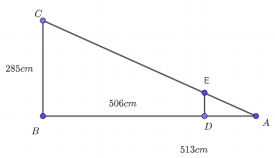
Imagem associada para resolução da questão


o ângulo do vértice A é a. Paulo sabe também, que a = 12/16. Sabendo, que todas os comprimentos do exercícios são em quilômetros, qual a distância entre os pontos A e C?

Alternativas
Q1790974 Matemática
Consideremos a definição de um número primo como: “Um número é chamado de primo, quando for maior que zero e tem exatamente dois divisores”. Dessa forma, quantos números primos dividem o número 120?
Alternativas
Q1790973 Português

Para responder à questão, leia atentamente o texto a seguir: 


Apelo


    Amanhã faz um mês que a Senhora está longe de casa. Primeiros dias, para dizer a verdade, não senti falta, bom chegar tarde, esquecido na conversa de esquina. Não foi ausência por uma semana: o batom ainda no lenço, o prato na mesa por engano, a imagem de relance no espelho.
    Com os dias, Senhora, o leite primeira vez coalhou. A notícia de sua perda veio aos poucos: a pilha de jornais ali no chão, ninguém os guardou debaixo da escada. Toda a casa era um corredor deserto, e até o canário ficou mudo. Para não dar parte de fraco, ah, Senhora, fui beber com os amigos. Uma hora da noite eles se iam e eu ficava só, sem o perdão de sua presença a todas as aflições do dia, como a última luz na varanda. 
    E comecei a sentir falta das pequenas brigas por causa do tempero na salada – o meu jeito de querer bem. Acaso é saudade, Senhora? Às suas violetas, na janela, não lhes poupei água e elas murcham. Não tenho botão na camisa, calço a meia furada. Que fim levou o saca-rolhas? Nenhum de nós sabe, sem a Senhora, conversar com os outros: bocas raivosas mastigando. Venha para casa, Senhora, por favor.    

            (Dalton Trevisan, em Apelo)

Assinale a alternativa que corresponde à classificação CORRETA da oração em destaque no excerto a seguir:
Para não dar parte de fraco, ah, Senhora, fui beber com os amigos.
Alternativas
Q1790972 Português

Para responder à questão, leia atentamente o texto a seguir: 


Apelo


    Amanhã faz um mês que a Senhora está longe de casa. Primeiros dias, para dizer a verdade, não senti falta, bom chegar tarde, esquecido na conversa de esquina. Não foi ausência por uma semana: o batom ainda no lenço, o prato na mesa por engano, a imagem de relance no espelho.
    Com os dias, Senhora, o leite primeira vez coalhou. A notícia de sua perda veio aos poucos: a pilha de jornais ali no chão, ninguém os guardou debaixo da escada. Toda a casa era um corredor deserto, e até o canário ficou mudo. Para não dar parte de fraco, ah, Senhora, fui beber com os amigos. Uma hora da noite eles se iam e eu ficava só, sem o perdão de sua presença a todas as aflições do dia, como a última luz na varanda. 
    E comecei a sentir falta das pequenas brigas por causa do tempero na salada – o meu jeito de querer bem. Acaso é saudade, Senhora? Às suas violetas, na janela, não lhes poupei água e elas murcham. Não tenho botão na camisa, calço a meia furada. Que fim levou o saca-rolhas? Nenhum de nós sabe, sem a Senhora, conversar com os outros: bocas raivosas mastigando. Venha para casa, Senhora, por favor.    

            (Dalton Trevisan, em Apelo)

Assinale a alternativa que corresponde à classificação CORRETA da oração em destaque no excerto a seguir:
Nenhum de nós sabe, sem a Senhora, conversar com os outros: bocas raivosas mastigando.
Alternativas
Q1790971 Português

Para responder à questão, leia atentamente o texto a seguir: 


Apelo


    Amanhã faz um mês que a Senhora está longe de casa. Primeiros dias, para dizer a verdade, não senti falta, bom chegar tarde, esquecido na conversa de esquina. Não foi ausência por uma semana: o batom ainda no lenço, o prato na mesa por engano, a imagem de relance no espelho.
    Com os dias, Senhora, o leite primeira vez coalhou. A notícia de sua perda veio aos poucos: a pilha de jornais ali no chão, ninguém os guardou debaixo da escada. Toda a casa era um corredor deserto, e até o canário ficou mudo. Para não dar parte de fraco, ah, Senhora, fui beber com os amigos. Uma hora da noite eles se iam e eu ficava só, sem o perdão de sua presença a todas as aflições do dia, como a última luz na varanda. 
    E comecei a sentir falta das pequenas brigas por causa do tempero na salada – o meu jeito de querer bem. Acaso é saudade, Senhora? Às suas violetas, na janela, não lhes poupei água e elas murcham. Não tenho botão na camisa, calço a meia furada. Que fim levou o saca-rolhas? Nenhum de nós sabe, sem a Senhora, conversar com os outros: bocas raivosas mastigando. Venha para casa, Senhora, por favor.    

            (Dalton Trevisan, em Apelo)

Assinale a alternativa que corresponde à classificação CORRETA da expressão em destaque no excerto a seguir:
Com os dias, Senhora, o leite primeira vez coalhou. A notícia de sua perda veio aos poucos: a pilha de jornais ali no chão, ninguém os guardou debaixo da escada.
Alternativas
Respostas
15301: A
15302: B
15303: C
15304: C
15305: A
15306: D
15307: B
15308: A
15309: D
15310: C
15311: B
15312: A
15313: D
15314: C
15315: C
15316: B
15317: B
15318: C
15319: A
15320: B