Foram encontradas 24.416 questões
Resolva questões gratuitamente!
Junte-se a mais de 4 milhões de concurseiros!


Read the following text to answer the question.
By Leo Selivan
In this article, informed by the Lexical Approach, I reflect on grammar instruction in the classroom […]. I consider the problems with ‘traditional’ grammar teaching before arguing that what we actually need is more grammar input as well as showing how lexis can provide necessary ‘crutches’ for the learner.
Lexis = vocabulary + grammar
The shift in ELT from grammar to lexis mirrors a similar change in the attitude of linguists. In the past linguists were preoccupied with the grammar of language; however the advances in corpus linguistics have pushed lexis to the forefront. The term ‘lexis’, which was traditionally used by linguists, is a common word these days and frequently used even in textbooks.
Why use a technical term borrowed from the realm of linguistics instead of the word ‘vocabulary’? Quite simply because vocabulary is typically seen as individual words (often presented in lists) whereas lexis is a somewhat wider concept and consists of collocations, chunks and formulaic expressions. It also includes certain patterns that were traditionally associated with the grammar of a language, e.g. If I were you…, I haven’t seen you for ages etc.
Recognising certain grammar structures as lexical
items means that they can be introduced much earlier,
without structural analysis or elaboration. Indeed, since the
concept of notions and functions made its way into language
teaching, particularly as Communicative Language Teaching
(CLT) gained prominence, some structures associated with
grammar started to be taught lexically (or functionally). I’d like
to is not taught as ‹the conditional› but as a chunk expressing
desire. Similarly many other ‹traditional› grammar items can
be introduced lexically relatively early on.
Less grammar or more grammar?
You are, no doubt, all familiar with students who on one hand seem to know the ‘rules’ of grammar but still fail to produce grammatically correct sentences when speaking or, on the other, sound unnatural and foreign-like even when their sentences are grammatically correct. Michael Lewis, who might be considered the founder of the Lexical Approach, once claimed that there was no direct relationship between the knowledge of grammar and speaking. In contrast, the knowledge of formulaic language has been shown by research to have a significant bearing on the natural language production.
Furthermore, certain grammar rules are practically impossible to learn. Dave Willis cites the grammar of orientation (which includes the notoriously difficult present perfect and the uses of certain modal verbs) as particularly resistant to teaching. The only way to grasp their meaning is through continuous exposure and use.
Finally, even the most authoritative English grammars never claim to provide a comprehensive description of all the grammar, hence the word ‘introduction’ often used in their titles (for instance, Huddleston & Pullum’s A Student’s Introduction to English Grammar or Halliday’s An Introduction to Functional Grammar).
If grammarians do not even attempt to address all areas of grammar, how can we, practitioners, cover all the aspects of grammar in our teaching, especially if all we seem to focus on is a limited selection of discrete items, comprised mostly of tenses and a handful of modal verbs? It would seem that we need to expose our students to a lot of naturally occurring language and frequently draw their attention to various grammar points as they arise.
For example, while teaching the expression fall asleep / be asleep you can ask your students:
• Don’t make any noise – she’s fallen asleep.
• Don’t make any noise – she’s asleep.
What does’s stand for in each of these cases (is or has)?
One of the fathers of the Communicative Language Teaching Henry Widdowson advocated using lexical items as a starting point and then ‘showing how they need to be grammatically modified to be communicatively effective’ (1990:95). For example, when exploring a text with your students, you may come across a sentence like this:
• They’ve been married for seven years.
You can ask your students: When did they get married? How should you change the sentence if the couple you are talking about is no longer married?
The above demonstrates how the teacher should be constantly on the ball and take every opportunity to draw students’ attention to grammar. Such short but frequent ‘grammar spots’ will help to slowly raise students’ awareness and build their understanding of the English grammar system.
[…]
Conclusion
So is there room for grammar instruction in the classroom? Certainly yes. But the grammar practice should always start with the exploitation of lexical items. Exposing students to a lot of natural and contextualised examples will offer a lexical way into the grammar of the language.
To sum up, grammar should play some role in language teaching but should not occupy a big part of class time. Instead grammar should be delivered in small but frequent portions. Students should be encouraged to collect a lot of examples of a particular structure before being invited to analyse it. Hence, analysis should be preceded by synthesis.
Lastly, language practitioners should bear in mind that grammar acquisition is an incremental process which requires frequent focus and refocus on the items already studied.
Available at: https://www.teachingenglish.org.uk/professionaldevelopment/teachers/knowing-subject/articles/grammar-vs-lexisor-grammar-through. Accessed on: April 29, 2024.
Empowering language learning through assessment
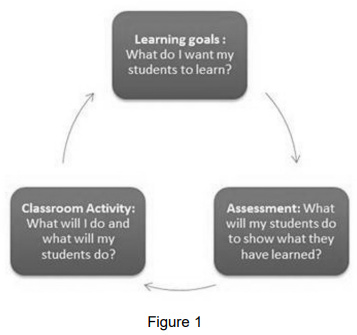
Assessment of, as, and for learning
Empowering language learning through assessment
Assessment of, as, and for learning
A Lei Nacional para as instituições de ensino públicas e privadas, a Lei de Diretrizes e Bases da Educação (LDB) ou Lei nº 9.394/1996, disciplina a educação escolar brasileira é a principal Lei Educacional de valor referencial para os demais documentos vigentes. O que confirma o mérito da sua importância, significado e disciplinamento apenas para a educação.
LDB : Lei de Diretrizes e Bases da Educação Nacional. – 7. ed. – Brasília, DF : Senado Federal, Coordenação de Edições Técnicas, 2023.
Nessa perspectiva, em seus dispositivos legais no que trata da distribuição das incumbências de natureza atributiva dos estabelecimentos de ensino e dos docentes em seus artigos 12 e 13, avalie as afirmações a seguir.
I. Administrar seu pessoal e seus recursos materiais e financeiros.
II. Articular-se com as famílias e a comunidade, criando processos de integração da sociedade com a escola.
III. Estabelecer ações destinadas a promover a cultura de paz nas escolas.
IV. Participar da elaboração da proposta pedagógica do estabelecimento de ensino.
V. Zelar pela aprendizagem dos alunos.
É CORRETO o que se afirma em:
Com o advento do Estatuto da Criança e do Adolescente (ECA) na década de 1990 um progresso significativo na proteção integral das crianças e dos adolescentes trouxe novas perspectivas em torno da democracia e valorização dos seus direitos. O que implicou na criação do Conselho Tutelar como um órgão público responsável para proteger e garantir de forma efetiva os direitos das crianças e adolescentes brasileiras.
Disponível em: https://www.planalto.gov.br/ccivil_03/leis/l8069.htm. Acesso em: 24 jan. 2024.
Considerando o Art. 56 que versa sobre os casos que os dirigentes de estabelecimentos de ensino fundamental deverão incumbir de comunicar ao Conselho Tutelar, avalie as afirmações a seguir.
I. Uso de armas, munições e explosivos.
II. Maus-tratos envolvendo seus alunos.
III. Reiteração de faltas injustificadas e de evasão escolar, esgotados os recursos escolares.
IV. Consumo de bebidas alcoólicas.
V. Elevados níveis de repetência.
É CORRETO apenas o que se afirma em:
Como documento normativo a Base Nacional Comum Curricular (BNCC) legisla sobre um conjunto de aprendizagens para as redes brasileiras de ensino públicas e privadas orientando-as na elaboração de seus currículos e propostas pedagógicas para a educação infantil, ensino fundamental e ensino médio, com a finalidade de garantir aos alunos os direitos de aprendizagem e desenvolvimento.
Disponível em:http://basenacionalcomum.mec.gov.br/images/BNCC_EI_EF_110518_versaofinal_site.pdf. Acesso em: 22 jan. 2024
No que tange ao Ensino Fundamental, e os pressupostos apresentados pela BNCC, avalie as afirmações a seguir.
I. Atingir o objetivo de uma Base para toda a Educação Básica Brasileira por meio das dez competências gerais favorecendo que cada aluno saia da escola apto a concretizar seu projeto de vida e continuidade dos estudos.
II. Em seu documento normativo a BNNC organiza o ensino fundamental em sete áreas do conhecimento que devem serem desenvolvidas ao longo da escolaridade.
III. Atenta as suas finalidades no âmbito da educação brasileira, a BNCC está amparada nos marcos legais da Constituição Brasileira, Lei de Diretrizes e Bases da Educação Nacional, nas Diretrizes Curriculares Nacionais da Educação Básica, entre outros.
IV. Ao longo da Educação Básica, as aprendizagens essenciais definidas na BNCC devem concorrer para assegurar aos estudantes o desenvolvimento de dez competências gerais, que consubstanciam, no âmbito pedagógico, os direitos de aprendizagem e desenvolvimento.
V. Ao longo da Educação Básica, o processo das aprendizagens deve desenvolver, expressar, considerar e atender sobre os pressupostos da igualdade e da equidade.
É CORRETO apenas o que se afirma em:
Proveniente das rápidas e múltiplas transformações científicas, tecnológicas e sociais ocorridas na contemporaneidade, as metodologias ativas vêm se constituindo como estratégias pedagógicas para além da concepção e atuação nos processos de ensinar e aprender centrada nos paradigmas tradicionais, ou seja, inverte e reverte o contexto educativo da escola e o papel do aluno como protagonista do seu próprio processo de aprendizagem, de maneira autônoma, criativa, crítica, reflexiva e participativa.
SEFTON, Ana Paula; GALINI, Marcos Evandro. Metodologias ativas: desenvolvendo aulas ativas para a aprendizagem significativa. In: Metodologias ativas: estratégias de aprendizagem e os paradigmas educacionais. Freitas Bastos Editora, 2022.
Considerando as premissas que embasam as metodologias ativas, avalie as afirmações a seguir.
I. Personalização da aprendizagem.
II. Múltiplas Inteligências e Competências.
III. Métodos e atividades focadas na experiência.
IV. Processos Criativos e Colaborativos.
V. Acreditar que todos os alunos irão experienciar da mesma forma e aprender todos da mesma maneira.
É CORRETO apenas o que se afirma em:
A noção de competências ganhou no meio educacional notáveis discursos relativos à formação inicial e continuada dos professores, com o intuito de incumbi-los em redelinear as práticas pedagógicas em torno das mudanças necessárias demandadas pelo novo contexto político, econômico e social. Nessa trilha, a pedagogia das competências se consolidou como uma teoria e concepção eminentemente pragmática na perspectiva de conjugar as ambições das políticas educativas contemporâneas.
PERRENOUD, Phillipe. Dez novas competências para ensinar: convite à viagem. [recurso eletrônico] Trad. Patrícia Chittoni Ramos. Revisão técnica: Cristina Dias Alessandrini. Porto Alegre. Artmed, 2014.
Com base no texto acima e as dez competências profissionais globais e específicas para ensinar à luz do pensamento perrenoudiano, avalie as afirmações a seguir.
I. Como competência global, organizar e dirigir situações de aprendizagem dispõe de outras competências específicas entre elas construir e planejar dispositivos e sequências didáticas.
II. Quanto a competência relativa ao administrar a progressão das aprendizagens, corresponde a fazer balanços periódicos de competências e tomar decisões de progressão.
III. A competência de que trata o administrar sua própria formação contínua, pauta como específico o saber explicitar as próprias práticas.
É CORRETO o que se afirma em:
Apesar da evolução dos significados sobre a problemática da avaliação da aprendizagem ter gerado, nos últimos tempos, mudanças significativas no processo educativo, ainda conduz à questionamentos e reflexões na busca de uma ressignificação diante da complexidade e dos desafios postos a educação e suas intermediações com a universalização da educação básica no Brasil, a formação continuada dos professores e suas práticas avaliativas.
Disponível em: https://revista.unitins.br/index.php/humanidadeseinovacao/article/view/8070 . Acesso em: 19 jan. 2024.(adaptado).
Considerando o texto apresentado sobre a avaliação da aprendizagem, seus pressupostos como instrumento de mediação e potencialização do processo de ensino aprendizagem, avalie as afirmações a seguir.
I. Como abordagem libertadora é ação reflexiva, postura cooperativa entre os alunos, privilégio à aprendizagem e consciência crítica e de responsabilidade de todos os envolvidos.
II. Como opção mediadora é embasada em três princípios condutores para a transformação das práticas pedagógicas: da investigação docente, da complementaridade e da provisoriedade dos registros em avaliação.
III. Baseada na concepção dialógica não possui caráter punitivo o qual caracteriza a avaliação na concepção bancária e burocrática da escola.
IV. Centrada numa perspectiva democrática e libertadora a avaliação deve renegar o contexto social e político.
V. Em uma concepção classificatória a avaliação é realizada por meio de um instrumento, comumente chamado de prova.
É CORRETO apenas o que se afirma em:
Definições e teorizações acerca do currículo escolar apontadas pela literatura têm evidenciado concepções variáveis e diferenciações no tocante ao seu significado e funções. O que vem provocando múltiplas pesquisas quanto as questões epistemológicas para melhor compreensão sobre o processo de elaboração e operacionalização do currículo na escola e sua intrínseca relação com o compromisso social, político, econômico e cultural.
LEÃO, Débora Ortiz de . Organização curricular: saberes, políticas e perspectivas. 1 ed. -Santa Maria, RS: Ed. UFSM, 2023. (adaptado).
Considerando as concepções sobre currículo à luz dos pressupostos das teorias pós-crítica, avalie as afirmações a seguir.
I. O currículo escolar precisa ser compreendido não somente como texto, discurso e documento de identidade, mas como prática significativa, criação e emancipação dos sentidos.
II. O currículo em sua forma mais idealizada deverá ser constituído de apenas disciplinas e matérias teóricas no processo de aprendizagem escolar.
III. Na perspectiva de superação como prescrição formal e tradicionalmente compreendido, o currículo deve pressupor a vivência cotidiana da escola e toda a dinâmica das relações instituídas.
IV. Toda concepção de currículo escolar decorre das produções humanas advindas de determinados pressupostos teóricos que incluem compromissos sociais e políticos, demarcados pelos contextos históricos.
V. O Currículo é um conjunto de conhecimentos em constante construção e reconstrução, portanto não é estável e inalterável.
É CORRETO apenas o que se afirma em:
A trajetória discussão em torno da temática Projeto Político-Pedagógico (PPP) tem ampliado progressivamente o compromisso social da escola como instituição compromissada com o processo de formação humana, cujo caráter é intencional, sistemático e dotado de princípios filosóficos, epistemológicos e pedagógicos.
VEIGA, Ilma. Passos Alencastro, FONSECA, Marilia (orgs.). As dimensões do projeto político-pedagógico: novos desafios para a escola. In: Projeto-político-pedagógico: novas trilhas para a escola. 9. ed. Campinas, São Paulo: Papirus Editora, 2013.(adaptado).
De acordo com os pressupostos sobre projeto político-pedagógico, avalie as afirmações a seguir.
I. O projeto político-pedagógico é fruto da projeção arquitetada por todos os envolvidos com o processo educativo.
II. O PPP não se constitui na simples produção de um documento, mas na consolidação de um processo de ação-reflexão-ação.
III. Sob o ponto de vista emancipador o projeto político-pedagógico deverá ser concebido como instrumento de controle atrelado as regulações dominantes.
IV. O projeto político-pedagógico quando construído na visão de unicidade da teoria e da prática pressupõe relações de interdependência e reciprocidade.
V. O PPP da escola é apenas uma oportunidade para que algumas coisas sejam pensadas e dentre elas a conjuntura da escola e a sua função social.
É CORRETO apenas o que se afirma em:
No campo educacional compreender o processo de planejar a organização do trabalho didático-pedagógico da escola requer fortalecer a concepção de planejamento de ensino à luz da perspectiva dialética resultante da interação efetiva entre a escola e o contexto social. Nessa perspectiva, o planejamento de ensino como tarefa docente reafirma-se como processo reflexivo, coletivo, integrado, flexível e contextualizado para além de seus elementos estruturantes e não como documento burocrático, obrigatório e formal.
Disponível em: https://periodicos.ufpb.br/ojs2 /index.php/rec/article/view/45583. Acesso em: 4 jan. 2024.(adaptado).
Considerando essa perspectiva sobre o planejamento de ensino, avalie as afirmações a seguir.
I. Deve ser entendido como um instrumento capaz de intervir em uma situação real para transformá-la.
II. Numa perspectiva crítica e transformadora fornecerá ao docente maior segurança para sua prática educativa no sentido de acolher as exigências, os problemas e desafios que ocorrem na sala de aula, na escola e na comunidade em geral.
III. Constitui uma forma de o professor ter seu trabalho valorizado e compartilhado, contribuindo para sua profissionalização docente.
IV. Como elemento estruturante, os objetivos são formulações que advém das intencionalidades.
V. É um recurso que contribui para a organização do trabalho pedagógico com a finalidade de orientar a prática docente de forma que a mesma não modifique sua condução.
É CORRETO apenas o que se afirma em:
Ao se pensar no complexo e dialético processo de socialização que a escola deve cumprir na sociedade contemporânea faz-se necessário compreender os objetivos, mecanismos e procedimentos que são utilizados para a sua realização. Constitui-se assim, pressupor o compromisso social da escola para além da simples transmissão do conhecimento sistematizado, uma vez que ela precisa exercer sua função social.
Disponível em: http://repositorio.ufc.br/handle /riufc/39125. Acesso em: 28 dez. 2023. (adaptado).
I. Constituir-se como espaço de construção de saberes, valorização de cultura e da formação humana.
II. Defender o processo educativo em favor de uma reprodução da sociedade vigente, contribuindo para a vida posterior do aluno.
III. Determinar com exatidão seu caráter como local de mobilização, diversidade, produção e criação, posturas e atitudes que podem levar à conscientização ou cristalização do modelo de sociedade atual.
IV. Fortalecer sua função para além da aprendizagem de conceitos, teorias e desenvolvimento de habilidades e atitudes.
V. Envolver a participação da comunidade no ambiente escolar como promoção de uma gestão democrática, restringindo-a de envolvimento nas problemáticas que interferem na aprendizagem do aluno.
É CORRETO apenas o que se afirma em:
Em relação ao Windows 10, um dos recursos é o Gerenciador de Tarefas. Qual das funções abaixo NÃO faz parte deste recurso.
The Reasons Why We Dance
- As a choreographer, I get asked to share my opinion about a myriad of dance-related
- topics, from the practical, like “How can dance help you get in shape?” to the existential, like “Is
- my dancing a projection of my self-image?”. But the question I think matters most is: why do
- people dance? What is about moving our bodies to a song we love that is so joyfully Pavlovian?
- Why do we watch videos and take lessons on something that could be labeled as trivial? Why do
- we love it so?
- There are the obvious answers. We dance for physical fitness, mental clarity, emotional
- stability, and other such pluses. However, all these benefits could be attained by other means –
- though I confess I have yet to find a better alternative than a great “cha cha”* to lift both one’s
- heart rate and spirits. There must be something glorious about dancing that is more than just
- intangible. We cannot seem to explain it, yet we all know it so well that we do not hesitate to
- tap our feet to a Gershwin melody or pulse with the percussion of a samba rhythm.
- Perhaps dance is the way we express ourselves when words are insufficient. The joy we
- feel over newfound love, the determination we have in the face of great sorrow or adversity, the
- passionate fire of our youth, and the peacefulness of our softer and more graceful years – maybe
- they are never expressed more fully than through a waltz, or a tango, or a jive. We all want to
- be understood, and if we could truly speak the words that describe our feelings, how deep and
- powerful they would surely be. But alas, those words never seem to come to us just right. Maybe
- dance is simply a translator for the human heart.
- Perhaps dance is the medium through which we show the world who we truly are and who
- we can be. All of us, if we are honest, believe deep down that we are not ordinary. We know
- ourselves to be wonderfully unique, with many layers of personality and talent woven in such a
- way that no one on earth could possibly have our same make-up. We know it. We just do not
- always know how to prove it. Maybe dance gives us the opportunity. And perhaps dance is how
- we choose to remember, how we hold on to the past. It is how we relive __ fun-filled days of
- our youth or __ time we looked into their eyes and knew they were the one. It is our tribute to
- the heroes of yesterday who jitterbugged like carefree boys and girls, when tomorrow they would
- march as men and women to defend freedom’s cause. It is the chance to be __ princess again,
- waiting for __ outstretched hand and the call to __ romance that is graceful, true, and not as
- forgotten as the cynics say. When we dance, we can remember them all a little better, feel the
- butterflies once again, and if only for a moment, return to the purest part of our lives when time
- was of no matter…for we were dancing.
- Why do we dance? Every answer will be different, and that is as it should be. Perhaps the
- better question is, “Why would we not?”
*Cha Cha: an energetic modern dance.
(Available in: https://dancewithmeusa.com/why-we-dance-the-reasons/ – text especially adapted for this test).
In the image below we see a man who is taking dancing lessons and a woman who is saying “There are only two things stopping you from being a good dancer, Mr. Jones. Your feet!”
The word “dancer” is formed by adding a suffix to the verb “dance.” Which of the words below does NOT take the suffix -er when used as a noun describing professions?
The Reasons Why We Dance
- As a choreographer, I get asked to share my opinion about a myriad of dance-related
- topics, from the practical, like “How can dance help you get in shape?” to the existential, like “Is
- my dancing a projection of my self-image?”. But the question I think matters most is: why do
- people dance? What is about moving our bodies to a song we love that is so joyfully Pavlovian?
- Why do we watch videos and take lessons on something that could be labeled as trivial? Why do
- we love it so?
- There are the obvious answers. We dance for physical fitness, mental clarity, emotional
- stability, and other such pluses. However, all these benefits could be attained by other means –
- though I confess I have yet to find a better alternative than a great “cha cha”* to lift both one’s
- heart rate and spirits. There must be something glorious about dancing that is more than just
- intangible. We cannot seem to explain it, yet we all know it so well that we do not hesitate to
- tap our feet to a Gershwin melody or pulse with the percussion of a samba rhythm.
- Perhaps dance is the way we express ourselves when words are insufficient. The joy we
- feel over newfound love, the determination we have in the face of great sorrow or adversity, the
- passionate fire of our youth, and the peacefulness of our softer and more graceful years – maybe
- they are never expressed more fully than through a waltz, or a tango, or a jive. We all want to
- be understood, and if we could truly speak the words that describe our feelings, how deep and
- powerful they would surely be. But alas, those words never seem to come to us just right. Maybe
- dance is simply a translator for the human heart.
- Perhaps dance is the medium through which we show the world who we truly are and who
- we can be. All of us, if we are honest, believe deep down that we are not ordinary. We know
- ourselves to be wonderfully unique, with many layers of personality and talent woven in such a
- way that no one on earth could possibly have our same make-up. We know it. We just do not
- always know how to prove it. Maybe dance gives us the opportunity. And perhaps dance is how
- we choose to remember, how we hold on to the past. It is how we relive __ fun-filled days of
- our youth or __ time we looked into their eyes and knew they were the one. It is our tribute to
- the heroes of yesterday who jitterbugged like carefree boys and girls, when tomorrow they would
- march as men and women to defend freedom’s cause. It is the chance to be __ princess again,
- waiting for __ outstretched hand and the call to __ romance that is graceful, true, and not as
- forgotten as the cynics say. When we dance, we can remember them all a little better, feel the
- butterflies once again, and if only for a moment, return to the purest part of our lives when time
- was of no matter…for we were dancing.
- Why do we dance? Every answer will be different, and that is as it should be. Perhaps the
- better question is, “Why would we not?”
*Cha Cha: an energetic modern dance.
(Available in: https://dancewithmeusa.com/why-we-dance-the-reasons/ – text especially adapted for this test).
In the adapted excerpt “If we could truly speak the words that describe our feelings, they would surely be deep and powerful”, we have an example of:
The Reasons Why We Dance
- As a choreographer, I get asked to share my opinion about a myriad of dance-related
- topics, from the practical, like “How can dance help you get in shape?” to the existential, like “Is
- my dancing a projection of my self-image?”. But the question I think matters most is: why do
- people dance? What is about moving our bodies to a song we love that is so joyfully Pavlovian?
- Why do we watch videos and take lessons on something that could be labeled as trivial? Why do
- we love it so?
- There are the obvious answers. We dance for physical fitness, mental clarity, emotional
- stability, and other such pluses. However, all these benefits could be attained by other means –
- though I confess I have yet to find a better alternative than a great “cha cha”* to lift both one’s
- heart rate and spirits. There must be something glorious about dancing that is more than just
- intangible. We cannot seem to explain it, yet we all know it so well that we do not hesitate to
- tap our feet to a Gershwin melody or pulse with the percussion of a samba rhythm.
- Perhaps dance is the way we express ourselves when words are insufficient. The joy we
- feel over newfound love, the determination we have in the face of great sorrow or adversity, the
- passionate fire of our youth, and the peacefulness of our softer and more graceful years – maybe
- they are never expressed more fully than through a waltz, or a tango, or a jive. We all want to
- be understood, and if we could truly speak the words that describe our feelings, how deep and
- powerful they would surely be. But alas, those words never seem to come to us just right. Maybe
- dance is simply a translator for the human heart.
- Perhaps dance is the medium through which we show the world who we truly are and who
- we can be. All of us, if we are honest, believe deep down that we are not ordinary. We know
- ourselves to be wonderfully unique, with many layers of personality and talent woven in such a
- way that no one on earth could possibly have our same make-up. We know it. We just do not
- always know how to prove it. Maybe dance gives us the opportunity. And perhaps dance is how
- we choose to remember, how we hold on to the past. It is how we relive __ fun-filled days of
- our youth or __ time we looked into their eyes and knew they were the one. It is our tribute to
- the heroes of yesterday who jitterbugged like carefree boys and girls, when tomorrow they would
- march as men and women to defend freedom’s cause. It is the chance to be __ princess again,
- waiting for __ outstretched hand and the call to __ romance that is graceful, true, and not as
- forgotten as the cynics say. When we dance, we can remember them all a little better, feel the
- butterflies once again, and if only for a moment, return to the purest part of our lives when time
- was of no matter…for we were dancing.
- Why do we dance? Every answer will be different, and that is as it should be. Perhaps the
- better question is, “Why would we not?”
*Cha Cha: an energetic modern dance.
(Available in: https://dancewithmeusa.com/why-we-dance-the-reasons/ – text especially adapted for this test).
Local accents aside, in standard English the final -ed in regular simple past verbs can be pronounced /d/, as in “labeled”, /t/, as in “asked”, and /Id/, as in “related”. Which alternative below shows verbs that follow the same pronunciation rules, in the same order as “labeled”, “asked”, and “related”?
The Reasons Why We Dance
- As a choreographer, I get asked to share my opinion about a myriad of dance-related
- topics, from the practical, like “How can dance help you get in shape?” to the existential, like “Is
- my dancing a projection of my self-image?”. But the question I think matters most is: why do
- people dance? What is about moving our bodies to a song we love that is so joyfully Pavlovian?
- Why do we watch videos and take lessons on something that could be labeled as trivial? Why do
- we love it so?
- There are the obvious answers. We dance for physical fitness, mental clarity, emotional
- stability, and other such pluses. However, all these benefits could be attained by other means –
- though I confess I have yet to find a better alternative than a great “cha cha”* to lift both one’s
- heart rate and spirits. There must be something glorious about dancing that is more than just
- intangible. We cannot seem to explain it, yet we all know it so well that we do not hesitate to
- tap our feet to a Gershwin melody or pulse with the percussion of a samba rhythm.
- Perhaps dance is the way we express ourselves when words are insufficient. The joy we
- feel over newfound love, the determination we have in the face of great sorrow or adversity, the
- passionate fire of our youth, and the peacefulness of our softer and more graceful years – maybe
- they are never expressed more fully than through a waltz, or a tango, or a jive. We all want to
- be understood, and if we could truly speak the words that describe our feelings, how deep and
- powerful they would surely be. But alas, those words never seem to come to us just right. Maybe
- dance is simply a translator for the human heart.
- Perhaps dance is the medium through which we show the world who we truly are and who
- we can be. All of us, if we are honest, believe deep down that we are not ordinary. We know
- ourselves to be wonderfully unique, with many layers of personality and talent woven in such a
- way that no one on earth could possibly have our same make-up. We know it. We just do not
- always know how to prove it. Maybe dance gives us the opportunity. And perhaps dance is how
- we choose to remember, how we hold on to the past. It is how we relive __ fun-filled days of
- our youth or __ time we looked into their eyes and knew they were the one. It is our tribute to
- the heroes of yesterday who jitterbugged like carefree boys and girls, when tomorrow they would
- march as men and women to defend freedom’s cause. It is the chance to be __ princess again,
- waiting for __ outstretched hand and the call to __ romance that is graceful, true, and not as
- forgotten as the cynics say. When we dance, we can remember them all a little better, feel the
- butterflies once again, and if only for a moment, return to the purest part of our lives when time
- was of no matter…for we were dancing.
- Why do we dance? Every answer will be different, and that is as it should be. Perhaps the
- better question is, “Why would we not?”
*Cha Cha: an energetic modern dance.
(Available in: https://dancewithmeusa.com/why-we-dance-the-reasons/ – text especially adapted for this test).
Mark the INCORRECT statement about the word “must” in the sentence “There must be something glorious about dancing” (l. 10).
The Reasons Why We Dance
- As a choreographer, I get asked to share my opinion about a myriad of dance-related
- topics, from the practical, like “How can dance help you get in shape?” to the existential, like “Is
- my dancing a projection of my self-image?”. But the question I think matters most is: why do
- people dance? What is about moving our bodies to a song we love that is so joyfully Pavlovian?
- Why do we watch videos and take lessons on something that could be labeled as trivial? Why do
- we love it so?
- There are the obvious answers. We dance for physical fitness, mental clarity, emotional
- stability, and other such pluses. However, all these benefits could be attained by other means –
- though I confess I have yet to find a better alternative than a great “cha cha”* to lift both one’s
- heart rate and spirits. There must be something glorious about dancing that is more than just
- intangible. We cannot seem to explain it, yet we all know it so well that we do not hesitate to
- tap our feet to a Gershwin melody or pulse with the percussion of a samba rhythm.
- Perhaps dance is the way we express ourselves when words are insufficient. The joy we
- feel over newfound love, the determination we have in the face of great sorrow or adversity, the
- passionate fire of our youth, and the peacefulness of our softer and more graceful years – maybe
- they are never expressed more fully than through a waltz, or a tango, or a jive. We all want to
- be understood, and if we could truly speak the words that describe our feelings, how deep and
- powerful they would surely be. But alas, those words never seem to come to us just right. Maybe
- dance is simply a translator for the human heart.
- Perhaps dance is the medium through which we show the world who we truly are and who
- we can be. All of us, if we are honest, believe deep down that we are not ordinary. We know
- ourselves to be wonderfully unique, with many layers of personality and talent woven in such a
- way that no one on earth could possibly have our same make-up. We know it. We just do not
- always know how to prove it. Maybe dance gives us the opportunity. And perhaps dance is how
- we choose to remember, how we hold on to the past. It is how we relive __ fun-filled days of
- our youth or __ time we looked into their eyes and knew they were the one. It is our tribute to
- the heroes of yesterday who jitterbugged like carefree boys and girls, when tomorrow they would
- march as men and women to defend freedom’s cause. It is the chance to be __ princess again,
- waiting for __ outstretched hand and the call to __ romance that is graceful, true, and not as
- forgotten as the cynics say. When we dance, we can remember them all a little better, feel the
- butterflies once again, and if only for a moment, return to the purest part of our lives when time
- was of no matter…for we were dancing.
- Why do we dance? Every answer will be different, and that is as it should be. Perhaps the
- better question is, “Why would we not?”
*Cha Cha: an energetic modern dance.
(Available in: https://dancewithmeusa.com/why-we-dance-the-reasons/ – text especially adapted for this test).
Mark the alternative that correctly fills out the gaps in the 4th paragraph, from top to bottom.

 Conheça nossos planos