Selecionar segmento
Estude com questões de diferentes segmentos
Atenção: Isso limpará todos os campos já preenchidos no filtro!
Foram encontradas 255 questões
Resolva questões gratuitamente!
Junte-se a mais de 4 milhões de concurseiros!


Ano: 2011
Banca:
VUNESP
Órgão:
CODESP-SP
Prova:
VUNESP - 2011 - CODESP-SP - Auxiliar Operacional Portuário |
Q569689
Português
Assinale a alternativa em que a forma e o emprego dos verbos
destacados estão corretos.
Ano: 2011
Banca:
VUNESP
Órgão:
CODESP-SP
Prova:
VUNESP - 2011 - CODESP-SP - Auxiliar Operacional Portuário |
Q569688
Português
Considerando o emprego das vírgulas, assinale a alternativa
correta.
Q363282
Inglês
Texto associado
The ability of a helicopter to hover and land almost anywhere makes it an enormously useful machine. But helicopters have their limitations, particularly when it comes to flying fast. In a recent series of test flights, a new type of chopper has begun smashing speed records.
The x2 is an experimental helicopter being developed by Sikorsky, an American company, which hopes it will be zipping along at more than 460kph. The company, however, is interested in more than just breaking speed records. It plans to use the technology developed for the x2 in commercial helicopters.
Sikorsky reckons that future helicopters built using the x2 technology would be extremely versatile machines. They would dash to and from a medical emergency a lot faster. They would also be very agile in flight, which would increase their capabilities in combat.
(Adapted from The Economist September 11, 2010, page 98)
The x2 is an experimental helicopter being developed by Sikorsky, an American company, which hopes it will be zipping along at more than 460kph. The company, however, is interested in more than just breaking speed records. It plans to use the technology developed for the x2 in commercial helicopters.
Sikorsky reckons that future helicopters built using the x2 technology would be extremely versatile machines. They would dash to and from a medical emergency a lot faster. They would also be very agile in flight, which would increase their capabilities in combat.
(Adapted from The Economist September 11, 2010, page 98)
No segundo parágrafo do texto, which refere-se a
Q363281
Inglês
Texto associado
The ability of a helicopter to hover and land almost anywhere makes it an enormously useful machine. But helicopters have their limitations, particularly when it comes to flying fast. In a recent series of test flights, a new type of chopper has begun smashing speed records.
The x2 is an experimental helicopter being developed by Sikorsky, an American company, which hopes it will be zipping along at more than 460kph. The company, however, is interested in more than just breaking speed records. It plans to use the technology developed for the x2 in commercial helicopters.
Sikorsky reckons that future helicopters built using the x2 technology would be extremely versatile machines. They would dash to and from a medical emergency a lot faster. They would also be very agile in flight, which would increase their capabilities in combat.
(Adapted from The Economist September 11, 2010, page 98)
The x2 is an experimental helicopter being developed by Sikorsky, an American company, which hopes it will be zipping along at more than 460kph. The company, however, is interested in more than just breaking speed records. It plans to use the technology developed for the x2 in commercial helicopters.
Sikorsky reckons that future helicopters built using the x2 technology would be extremely versatile machines. They would dash to and from a medical emergency a lot faster. They would also be very agile in flight, which would increase their capabilities in combat.
(Adapted from The Economist September 11, 2010, page 98)
No primeiro parágrafo do texto, a forma verbal land significa
Q363280
Inglês
Texto associado
The ability of a helicopter to hover and land almost anywhere makes it an enormously useful machine. But helicopters have their limitations, particularly when it comes to flying fast. In a recent series of test flights, a new type of chopper has begun smashing speed records.
The x2 is an experimental helicopter being developed by Sikorsky, an American company, which hopes it will be zipping along at more than 460kph. The company, however, is interested in more than just breaking speed records. It plans to use the technology developed for the x2 in commercial helicopters.
Sikorsky reckons that future helicopters built using the x2 technology would be extremely versatile machines. They would dash to and from a medical emergency a lot faster. They would also be very agile in flight, which would increase their capabilities in combat.
(Adapted from The Economist September 11, 2010, page 98)
The x2 is an experimental helicopter being developed by Sikorsky, an American company, which hopes it will be zipping along at more than 460kph. The company, however, is interested in more than just breaking speed records. It plans to use the technology developed for the x2 in commercial helicopters.
Sikorsky reckons that future helicopters built using the x2 technology would be extremely versatile machines. They would dash to and from a medical emergency a lot faster. They would also be very agile in flight, which would increase their capabilities in combat.
(Adapted from The Economist September 11, 2010, page 98)
De acordo com o texto, uma das vantagens da tecnologia x2 é a
Q363279
Inglês
Texto associado
The ability of a helicopter to hover and land almost anywhere makes it an enormously useful machine. But helicopters have their limitations, particularly when it comes to flying fast. In a recent series of test flights, a new type of chopper has begun smashing speed records.
The x2 is an experimental helicopter being developed by Sikorsky, an American company, which hopes it will be zipping along at more than 460kph. The company, however, is interested in more than just breaking speed records. It plans to use the technology developed for the x2 in commercial helicopters.
Sikorsky reckons that future helicopters built using the x2 technology would be extremely versatile machines. They would dash to and from a medical emergency a lot faster. They would also be very agile in flight, which would increase their capabilities in combat.
(Adapted from The Economist September 11, 2010, page 98)
The x2 is an experimental helicopter being developed by Sikorsky, an American company, which hopes it will be zipping along at more than 460kph. The company, however, is interested in more than just breaking speed records. It plans to use the technology developed for the x2 in commercial helicopters.
Sikorsky reckons that future helicopters built using the x2 technology would be extremely versatile machines. They would dash to and from a medical emergency a lot faster. They would also be very agile in flight, which would increase their capabilities in combat.
(Adapted from The Economist September 11, 2010, page 98)
O texto diz ainda que o x2
Q363278
Inglês
Texto associado
The ability of a helicopter to hover and land almost anywhere makes it an enormously useful machine. But helicopters have their limitations, particularly when it comes to flying fast. In a recent series of test flights, a new type of chopper has begun smashing speed records.
The x2 is an experimental helicopter being developed by Sikorsky, an American company, which hopes it will be zipping along at more than 460kph. The company, however, is interested in more than just breaking speed records. It plans to use the technology developed for the x2 in commercial helicopters.
Sikorsky reckons that future helicopters built using the x2 technology would be extremely versatile machines. They would dash to and from a medical emergency a lot faster. They would also be very agile in flight, which would increase their capabilities in combat.
(Adapted from The Economist September 11, 2010, page 98)
The x2 is an experimental helicopter being developed by Sikorsky, an American company, which hopes it will be zipping along at more than 460kph. The company, however, is interested in more than just breaking speed records. It plans to use the technology developed for the x2 in commercial helicopters.
Sikorsky reckons that future helicopters built using the x2 technology would be extremely versatile machines. They would dash to and from a medical emergency a lot faster. They would also be very agile in flight, which would increase their capabilities in combat.
(Adapted from The Economist September 11, 2010, page 98)
O texto diz que uma das limitações do helicóptero refere-se
Q363277
Inglês
Texto associado
The Port of Santos is located in the city of Santos, Brazil. As of 2006, it is the busiest container port in Latin America. It is Brazil’s leading port in container traffic. Today it is Latin America’s largest port. Its structure is considered Brazil’s most modern.
It was once considered the ‘port of death’ in the 19th century. Ships tended to avoid docking at the wood plank port, fearing the yellow fever. The floods in the city’s area provoked illnesses and once the bubonic plague almost decimated the population.
In the early 20th century, major urbanization created the port’s modern structure seen today, eliminating the risk of diseases and providing the port with modern, industrial-age infrastructure.
The first railway link from the port to the state capital São Paulo City, 79 km away, and the state’s interior, was completed in 1864. This allowed for an easier transportation of the vast masses of migrant workers who headed to São Paulo and the state’s numerous coffee farms.
Millions of immigrants reached Brazil via the port of Santos in the late 19th and early 20th centuries, proceeding to the country’s interior by railway. Santos was for a few decades the true gateway to Brazil for millions of immigrants.
(Adapted from http://en.wikipedia.org/wiki/Port_of_Santos – acesso em 21.01.2011)
It was once considered the ‘port of death’ in the 19th century. Ships tended to avoid docking at the wood plank port, fearing the yellow fever. The floods in the city’s area provoked illnesses and once the bubonic plague almost decimated the population.
In the early 20th century, major urbanization created the port’s modern structure seen today, eliminating the risk of diseases and providing the port with modern, industrial-age infrastructure.
The first railway link from the port to the state capital São Paulo City, 79 km away, and the state’s interior, was completed in 1864. This allowed for an easier transportation of the vast masses of migrant workers who headed to São Paulo and the state’s numerous coffee farms.
Millions of immigrants reached Brazil via the port of Santos in the late 19th and early 20th centuries, proceeding to the country’s interior by railway. Santos was for a few decades the true gateway to Brazil for millions of immigrants.
(Adapted from http://en.wikipedia.org/wiki/Port_of_Santos – acesso em 21.01.2011)
No terceiro parágrafo, o termo major é o mesmo que
Q363276
Inglês
Texto associado
The Port of Santos is located in the city of Santos, Brazil. As of 2006, it is the busiest container port in Latin America. It is Brazil’s leading port in container traffic. Today it is Latin America’s largest port. Its structure is considered Brazil’s most modern.
It was once considered the ‘port of death’ in the 19th century. Ships tended to avoid docking at the wood plank port, fearing the yellow fever. The floods in the city’s area provoked illnesses and once the bubonic plague almost decimated the population.
In the early 20th century, major urbanization created the port’s modern structure seen today, eliminating the risk of diseases and providing the port with modern, industrial-age infrastructure.
The first railway link from the port to the state capital São Paulo City, 79 km away, and the state’s interior, was completed in 1864. This allowed for an easier transportation of the vast masses of migrant workers who headed to São Paulo and the state’s numerous coffee farms.
Millions of immigrants reached Brazil via the port of Santos in the late 19th and early 20th centuries, proceeding to the country’s interior by railway. Santos was for a few decades the true gateway to Brazil for millions of immigrants.
(Adapted from http://en.wikipedia.org/wiki/Port_of_Santos – acesso em 21.01.2011)
It was once considered the ‘port of death’ in the 19th century. Ships tended to avoid docking at the wood plank port, fearing the yellow fever. The floods in the city’s area provoked illnesses and once the bubonic plague almost decimated the population.
In the early 20th century, major urbanization created the port’s modern structure seen today, eliminating the risk of diseases and providing the port with modern, industrial-age infrastructure.
The first railway link from the port to the state capital São Paulo City, 79 km away, and the state’s interior, was completed in 1864. This allowed for an easier transportation of the vast masses of migrant workers who headed to São Paulo and the state’s numerous coffee farms.
Millions of immigrants reached Brazil via the port of Santos in the late 19th and early 20th centuries, proceeding to the country’s interior by railway. Santos was for a few decades the true gateway to Brazil for millions of immigrants.
(Adapted from http://en.wikipedia.org/wiki/Port_of_Santos – acesso em 21.01.2011)
O sentido de once, no segundo parágrafo, é o mesmo do que está contido na alternativa:
Q363275
Inglês
Texto associado
The Port of Santos is located in the city of Santos, Brazil. As of 2006, it is the busiest container port in Latin America. It is Brazil’s leading port in container traffic. Today it is Latin America’s largest port. Its structure is considered Brazil’s most modern.
It was once considered the ‘port of death’ in the 19th century. Ships tended to avoid docking at the wood plank port, fearing the yellow fever. The floods in the city’s area provoked illnesses and once the bubonic plague almost decimated the population.
In the early 20th century, major urbanization created the port’s modern structure seen today, eliminating the risk of diseases and providing the port with modern, industrial-age infrastructure.
The first railway link from the port to the state capital São Paulo City, 79 km away, and the state’s interior, was completed in 1864. This allowed for an easier transportation of the vast masses of migrant workers who headed to São Paulo and the state’s numerous coffee farms.
Millions of immigrants reached Brazil via the port of Santos in the late 19th and early 20th centuries, proceeding to the country’s interior by railway. Santos was for a few decades the true gateway to Brazil for millions of immigrants.
(Adapted from http://en.wikipedia.org/wiki/Port_of_Santos – acesso em 21.01.2011)
It was once considered the ‘port of death’ in the 19th century. Ships tended to avoid docking at the wood plank port, fearing the yellow fever. The floods in the city’s area provoked illnesses and once the bubonic plague almost decimated the population.
In the early 20th century, major urbanization created the port’s modern structure seen today, eliminating the risk of diseases and providing the port with modern, industrial-age infrastructure.
The first railway link from the port to the state capital São Paulo City, 79 km away, and the state’s interior, was completed in 1864. This allowed for an easier transportation of the vast masses of migrant workers who headed to São Paulo and the state’s numerous coffee farms.
Millions of immigrants reached Brazil via the port of Santos in the late 19th and early 20th centuries, proceeding to the country’s interior by railway. Santos was for a few decades the true gateway to Brazil for millions of immigrants.
(Adapted from http://en.wikipedia.org/wiki/Port_of_Santos – acesso em 21.01.2011)
O trecho final – Santos was for a few decades the true gateway to Brazil for millions of immigrants. – traduz-se por
Q363274
Inglês
Texto associado
The Port of Santos is located in the city of Santos, Brazil. As of 2006, it is the busiest container port in Latin America. It is Brazil’s leading port in container traffic. Today it is Latin America’s largest port. Its structure is considered Brazil’s most modern.
It was once considered the ‘port of death’ in the 19th century. Ships tended to avoid docking at the wood plank port, fearing the yellow fever. The floods in the city’s area provoked illnesses and once the bubonic plague almost decimated the population.
In the early 20th century, major urbanization created the port’s modern structure seen today, eliminating the risk of diseases and providing the port with modern, industrial-age infrastructure.
The first railway link from the port to the state capital São Paulo City, 79 km away, and the state’s interior, was completed in 1864. This allowed for an easier transportation of the vast masses of migrant workers who headed to São Paulo and the state’s numerous coffee farms.
Millions of immigrants reached Brazil via the port of Santos in the late 19th and early 20th centuries, proceeding to the country’s interior by railway. Santos was for a few decades the true gateway to Brazil for millions of immigrants.
(Adapted from http://en.wikipedia.org/wiki/Port_of_Santos – acesso em 21.01.2011)
It was once considered the ‘port of death’ in the 19th century. Ships tended to avoid docking at the wood plank port, fearing the yellow fever. The floods in the city’s area provoked illnesses and once the bubonic plague almost decimated the population.
In the early 20th century, major urbanization created the port’s modern structure seen today, eliminating the risk of diseases and providing the port with modern, industrial-age infrastructure.
The first railway link from the port to the state capital São Paulo City, 79 km away, and the state’s interior, was completed in 1864. This allowed for an easier transportation of the vast masses of migrant workers who headed to São Paulo and the state’s numerous coffee farms.
Millions of immigrants reached Brazil via the port of Santos in the late 19th and early 20th centuries, proceeding to the country’s interior by railway. Santos was for a few decades the true gateway to Brazil for millions of immigrants.
(Adapted from http://en.wikipedia.org/wiki/Port_of_Santos – acesso em 21.01.2011)
De acordo com o texto,
Q363273
Inglês
Texto associado
The Port of Santos is located in the city of Santos, Brazil. As of 2006, it is the busiest container port in Latin America. It is Brazil’s leading port in container traffic. Today it is Latin America’s largest port. Its structure is considered Brazil’s most modern.
It was once considered the ‘port of death’ in the 19th century. Ships tended to avoid docking at the wood plank port, fearing the yellow fever. The floods in the city’s area provoked illnesses and once the bubonic plague almost decimated the population.
In the early 20th century, major urbanization created the port’s modern structure seen today, eliminating the risk of diseases and providing the port with modern, industrial-age infrastructure.
The first railway link from the port to the state capital São Paulo City, 79 km away, and the state’s interior, was completed in 1864. This allowed for an easier transportation of the vast masses of migrant workers who headed to São Paulo and the state’s numerous coffee farms.
Millions of immigrants reached Brazil via the port of Santos in the late 19th and early 20th centuries, proceeding to the country’s interior by railway. Santos was for a few decades the true gateway to Brazil for millions of immigrants.
(Adapted from http://en.wikipedia.org/wiki/Port_of_Santos – acesso em 21.01.2011)
It was once considered the ‘port of death’ in the 19th century. Ships tended to avoid docking at the wood plank port, fearing the yellow fever. The floods in the city’s area provoked illnesses and once the bubonic plague almost decimated the population.
In the early 20th century, major urbanization created the port’s modern structure seen today, eliminating the risk of diseases and providing the port with modern, industrial-age infrastructure.
The first railway link from the port to the state capital São Paulo City, 79 km away, and the state’s interior, was completed in 1864. This allowed for an easier transportation of the vast masses of migrant workers who headed to São Paulo and the state’s numerous coffee farms.
Millions of immigrants reached Brazil via the port of Santos in the late 19th and early 20th centuries, proceeding to the country’s interior by railway. Santos was for a few decades the true gateway to Brazil for millions of immigrants.
(Adapted from http://en.wikipedia.org/wiki/Port_of_Santos – acesso em 21.01.2011)
Segundo o texto, uma das preocupações com relação ao Porto de Santos era
Q363271
Matemática
A soma de todos os números ímpares, de 1 até 999, vale 250 000. A soma de todos os números pares, de 2 até 1 000, vale
Q363264
Matemática
Os números de ligações telefônicas recebidas por um serviço de atendimento ao consumidor (SAC), na primeira quinzena do mês de janeiro, estão registradas no gráfico seguinte.
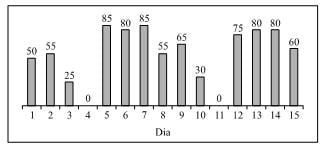
Considerando que o SAC trabalha os sete dias da semana, de acordo com o gráfico, pode-se afirmar que, na primeira quinzena de janeiro,
Considerando que o SAC trabalha os sete dias da semana, de acordo com o gráfico, pode-se afirmar que, na primeira quinzena de janeiro,
Q363261
Matemática
A tabela seguinte mostra os valores dos preços unitários de algumas peças de roupa em duas lojas.
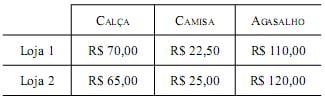
Se uma pessoa que comprou 2 calças, 3 camisas e 1 agasalho na loja 1 tivesse feito a mesma compra na loja 2, teria pago
Se uma pessoa que comprou 2 calças, 3 camisas e 1 agasalho na loja 1 tivesse feito a mesma compra na loja 2, teria pago
Q363252
Português
Texto associado
Nas questões de números 19 e 20, assinale a alternativa que preenche, correta e respectivamente, as lacunas das frases dadas.
Nós não estamos ________ _____ desconfiar _____ pessoas que pedem ajuda.
Q363251
Português
Texto associado
Nas questões de números 19 e 20, assinale a alternativa que preenche, correta e respectivamente, as lacunas das frases dadas.
________ que as esmolas não _____ ________, no final do mês ________ chegar a valores consideráveis.
Q363250
Português
Considere as frases:
I. O mendigo não interessou-se pelo trabalho.
II. Ele é o mesmo senhor que nos pediu dinheiro ontem.
III. Me informaram que a idosa não era tão pobre.
A colocação pronominal está de acordo com a norma culta apenas em
I. O mendigo não interessou-se pelo trabalho.
II. Ele é o mesmo senhor que nos pediu dinheiro ontem.
III. Me informaram que a idosa não era tão pobre.
A colocação pronominal está de acordo com a norma culta apenas em
Q363249
Português
Assinale a alternativa em que o acento indicador da crase está corretamente empregado.
Q363248
Português
Texto associado
Teatro das ruas
Há talentos dramáticos pelas ruas. Mais precisamente pelas esquinas. Os intérpretes têm variados estilos, encarnam numerosos papéis. O público-alvo é o dos automóveis que param nos sinais vermelhos do trânsito.
Os próprios artistas desenvolvem a maquiagem e o vestuário para as personagens que interpretam. Além de figurinistas e maquiadores, são diretores, criadores das falas e gestos.
De uns anos para cá, artistas circenses têm feito concorrência aos de teatro. Apresentam números com toscos malabares ou bolinhas, acreditando oferecer certa compensação pelos trocados que esperam receber.
Dos programas sociais brasileiros, o mais antigo, o mais amplo, o mais visível não é um daqueles criados pelos governos.
Seus beneficiários recebem a pensão pingada de mão em mão, direto do contribuinte. É o Bolsa Esquina.
(Ivan Ângelo, Veja, ago.2009. Adaptado)
Há talentos dramáticos pelas ruas. Mais precisamente pelas esquinas. Os intérpretes têm variados estilos, encarnam numerosos papéis. O público-alvo é o dos automóveis que param nos sinais vermelhos do trânsito.
Os próprios artistas desenvolvem a maquiagem e o vestuário para as personagens que interpretam. Além de figurinistas e maquiadores, são diretores, criadores das falas e gestos.
De uns anos para cá, artistas circenses têm feito concorrência aos de teatro. Apresentam números com toscos malabares ou bolinhas, acreditando oferecer certa compensação pelos trocados que esperam receber.
Dos programas sociais brasileiros, o mais antigo, o mais amplo, o mais visível não é um daqueles criados pelos governos.
Seus beneficiários recebem a pensão pingada de mão em mão, direto do contribuinte. É o Bolsa Esquina.
(Ivan Ângelo, Veja, ago.2009. Adaptado)
No trecho - Apresentam números comtoscos malabares... - o adjetivo destacado pode ser substituído, sem alteração de sentido, por
 Conheça nossos planos