Questões de Concurso
Comentadas para prefeitura de vista alegre do alto - sp
Foram encontradas 727 questões
Resolva questões gratuitamente!
Junte-se a mais de 4 milhões de concurseiros!


É comum que, durante um estudo do meio, os professores solicitem aos estudantes que mantenham cadernos de campo.
Para Lopes e Pontuschka (2009), essa prática é
Nóvoa (2009) propõe-se a discutir o que poderia definir o bom professor. Lista, então, certas “disposições” que entende serem importantes na “definição pública de uma posição com forte sentido cultural [...]”.
Assinale a alternativa que corretamente nomeia e descreve uma dessas disposições.
As discutir o currículo, Silva (2016) resgata as contribuições de Dussel e Caruso sobre a “prática que reflete sobre as formas de transmissão da cultura, e a própria prática de transmiti-la”
Essa prática é
Assinale a alternativa que preenche corretamente a lacuna do trecho extraído de Panizza (2006), acerca do ensino da matemática:
“ ________________ [são condições que], segundo os valores que assumem, modificam as estratégias de resolução e, consequentemente, o conhecimento necessário para resolver a situação”.
Frade, Araújo e Glória (2018) propõem uma discussão sobre a multimodalidade na alfabetização. Para tanto, utilizam a definição de modo, dada por Kress e Bezemer: “um recurso social e culturalmente configurado para criar significado; ou seja, é o produto de um trabalho semiótico- -social sobre um material específico no decorrer de períodos significativos”.
Na esteira desse conceito, é correto afirmar que a multimodalidade deve ser entendida como
A Educação tem um compromisso essencial com a democracia.
Assinale a alternativa que, de acordo com Paro (2001), articula corretamente essa característica com a dimensão da administração escolar.
Barbosa (2007) analisa uma concepção da escolarização que, no mundo industrializado, funcionou como um processo de “colonização”.
Qual das afirmações a seguir corretamente justifica essa caracterização, na leitura da autora?
Ainscow (2009) aponta que algumas pesquisas sugerem certos padrões na história da educação especial em diferentes países.
Assinale a alternativa correta sobre essa análise.
Um triângulo T tem um vértice em comum com um retângulo, um vértice sobre um dos lados desses retângulos e um vértice no interior desses retângulos, conforme mostra a figura.
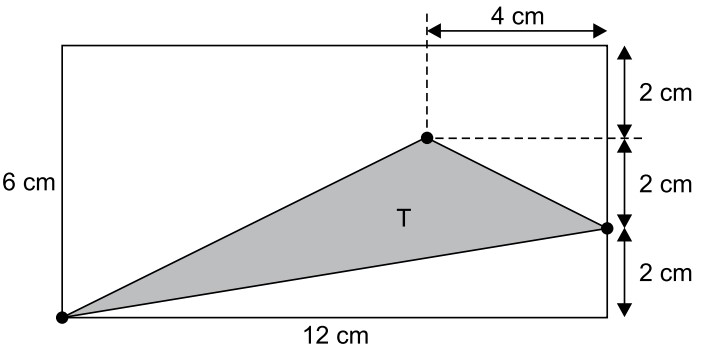
(Arquivo pessoal; imagem usada com autorização)
A área do triângulo T é
Leia o texto para responder à questão.
Com a seriedade que lhe conferiam seus poucos anos a mais, além de sua condição de bacharel em direito e professor, João Etienne Filho não embarcava nas estripulias dos companheiros. Sempre se mantinha sóbrio, conta, para cuidar deles. Entrou em pânico na madrugada em que viu Fernando Sabino encarapitado1 no arco do viaduto, na postura de quem se atiraria de um trampolim.
Hélio Pellegrino se aprazia em brincar com Etienne. Tinha mania de carregá-lo na avenida Afonso Pena – como, aliás, Paulo Mendes Campos fez um dia com Monteiro Lobato na avenida São João, no centro de São Paulo, na euforia de estar diante de um dos heróis de sua infância.
O convívio nem sempre era idílico2 , e houve momentos em que Etienne se magoou de verdade com os quatro amigos – a ponto de escrever uma carta a Mário de Andrade, queixando-se. Recebia mal as brincadeiras de Otto Lara Resende, por exemplo. Quando publicou seu primeiro livro, Dia e noite, Etienne morava no primeiro andar da farmácia de uns tios, em Copacabana, que se chamava exatamente Dia e Noite – e Otto espalhou que o título da obra visava promover o estabelecimento.
Nada o magoou mais, no entanto, que as insinuações de que seria ele o inspirador de Hugo, personagem de O encontro marcado a certa altura envolvido com um aluno, “um negócio meio escandaloso”. “Foi uma safadeza do Fernando”, reagiu Etienne, lembrando que Hugo foi basicamente inspirado em Otto Lara Resende, assim como Mauro é quase todo Hélio Pellegrino e Eduardo Marciano o próprio romancista.
(Humberto Werneck. O desatino da rapaziada.
Companhia das Letras, 1992. Adaptado)
Vocabulário:
1 encarapitar: pôr-se no alto.
2 idílico: de amor terno e delicado.
Leia o texto para responder à questão.
O avanço da inteligência artificial (IA), nos últimos anos, tem tirado o sono de profissionais de boa parte dos setores da economia e pode haver ainda mais motivos para se preocupar, segundo uma pesquisa.
A principal revelação do estudo é que oito em cada dez profissionais mulheres nos Estados Unidos (cerca de 59 milhões delas) estão em cargos altamente expostos às mudanças geradas pela IA – contra seis a cada dez homens. Isso não significa, é claro, que todas essas profissionais serão demitidas, mas parte de suas funções deve passar por automatização nos próximos anos.
“Isso acontece porque homens tendem a assumir mais trabalhos manuais, menos relacionados à tecnologia. Então, não se trata de a IA estar propositalmente desfavorecendo mulheres; se trata de elas ocuparem atualmente mais posições que no futuro serão automatizadas”, explica Mark McNeilly, professor de Marketing e coordenador da pesquisa, referindo-se a áreas como administração, vendas e ciências sociais, que podem sofrer transformações profundas.
Embora ainda não haja muitas pesquisas desse tipo, um outro estudo realizado por uma empresa britânica aponta uma diferença de gênero no próprio uso da tecnologia. Enquanto 54% dos homens britânicos estão abraçando a IA no seu cotidiano pessoal e profissional, apenas 35% das mulheres têm feito o mesmo. Na opinião de McNeilly, essa diferença tem a ver com a disparidade de objetivos de mulheres e homens no mercado de trabalho.
Mas ninguém precisa entrar em desespero. Em algumas áreas, por exemplo, recursos tecnológicos devem facilitar a vida dos trabalhadores, segundo McNeilly. Em outras, porém, a transformação pode sim ser radical. Para ele, o mais importante é começar a usar desde já tecnologias envolvendo IA, incorporando-as ao dia a dia. Por outro lado, num mundo ainda mais automatizado, McNeilly prevê que o contato humano deve se tornar cada vez mais importante: “Então dê asas às suas habilidades interpessoais, de criar contatos e de influenciar outras pessoas”.
(Leonardo Neiva. A Inteligência Artificial vai roubar os empregos das mulheres? https://gamarevista.uol.com.br, 03.03.2024. Adaptado)
Leia o texto para responder à questão.
O avanço da inteligência artificial (IA), nos últimos anos, tem tirado o sono de profissionais de boa parte dos setores da economia e pode haver ainda mais motivos para se preocupar, segundo uma pesquisa.
A principal revelação do estudo é que oito em cada dez profissionais mulheres nos Estados Unidos (cerca de 59 milhões delas) estão em cargos altamente expostos às mudanças geradas pela IA – contra seis a cada dez homens. Isso não significa, é claro, que todas essas profissionais serão demitidas, mas parte de suas funções deve passar por automatização nos próximos anos.
“Isso acontece porque homens tendem a assumir mais trabalhos manuais, menos relacionados à tecnologia. Então, não se trata de a IA estar propositalmente desfavorecendo mulheres; se trata de elas ocuparem atualmente mais posições que no futuro serão automatizadas”, explica Mark McNeilly, professor de Marketing e coordenador da pesquisa, referindo-se a áreas como administração, vendas e ciências sociais, que podem sofrer transformações profundas.
Embora ainda não haja muitas pesquisas desse tipo, um outro estudo realizado por uma empresa britânica aponta uma diferença de gênero no próprio uso da tecnologia. Enquanto 54% dos homens britânicos estão abraçando a IA no seu cotidiano pessoal e profissional, apenas 35% das mulheres têm feito o mesmo. Na opinião de McNeilly, essa diferença tem a ver com a disparidade de objetivos de mulheres e homens no mercado de trabalho.
Mas ninguém precisa entrar em desespero. Em algumas áreas, por exemplo, recursos tecnológicos devem facilitar a vida dos trabalhadores, segundo McNeilly. Em outras, porém, a transformação pode sim ser radical. Para ele, o mais importante é começar a usar desde já tecnologias envolvendo IA, incorporando-as ao dia a dia. Por outro lado, num mundo ainda mais automatizado, McNeilly prevê que o contato humano deve se tornar cada vez mais importante: “Então dê asas às suas habilidades interpessoais, de criar contatos e de influenciar outras pessoas”.
(Leonardo Neiva. A Inteligência Artificial vai roubar os empregos das mulheres? https://gamarevista.uol.com.br, 03.03.2024. Adaptado)
Read the text to answer question.
No one who speaks English has any difficulty understanding the meaning of a sentence like ‘It’s warm in here’. We all recognise that it is a comment on the temperature in some place or other. But why it is being said, and what the speaker wishes to convey by saying it, depends entirely on two things: the context in which it is said and what the speaker wants people to understand (...) The meaning of language depends on where it occurs within a larger stretch of discourse, and thus the relationship that the different language elements have with what comes before and after them. In other words, speakers and writers have to be able to operate with more than just words and grammar; they have to be able to string utterances together.
Our ability to function properly in conversation or writing depends not only on reacting to the context in which we are using the language, but also on the relationship between words and ideas in longer texts.
Words can also mean more than one thing, for example, ‘book’ (= something to read, to reserve, a list of bets, etc.), ‘beat’ (= to win, to hit, to mix, e.g. an egg, the ‘pulse’ of music/a heart) and ‘can’ (= ability, permission, probability – and a container made of metal). Notice that, in these examples, not only can the same form have many meanings, but it can also be different parts of speech.
With so many available meanings for words and grammatical forms, it is the context the word occurs in which determines which of these meanings is being referred to. If we say, ‘I beat him because I ran faster than he did’, ‘beat’ is likely to mean won rather than physically assaulted or mixed (though there is always the possibility of ambiguity, of course).
(Harmer, 1998. Adaptado)
Read the text to answer question.
No one who speaks English has any difficulty understanding the meaning of a sentence like ‘It’s warm in here’. We all recognise that it is a comment on the temperature in some place or other. But why it is being said, and what the speaker wishes to convey by saying it, depends entirely on two things: the context in which it is said and what the speaker wants people to understand (...) The meaning of language depends on where it occurs within a larger stretch of discourse, and thus the relationship that the different language elements have with what comes before and after them. In other words, speakers and writers have to be able to operate with more than just words and grammar; they have to be able to string utterances together.
Our ability to function properly in conversation or writing depends not only on reacting to the context in which we are using the language, but also on the relationship between words and ideas in longer texts.
Words can also mean more than one thing, for example, ‘book’ (= something to read, to reserve, a list of bets, etc.), ‘beat’ (= to win, to hit, to mix, e.g. an egg, the ‘pulse’ of music/a heart) and ‘can’ (= ability, permission, probability – and a container made of metal). Notice that, in these examples, not only can the same form have many meanings, but it can also be different parts of speech.
With so many available meanings for words and grammatical forms, it is the context the word occurs in which determines which of these meanings is being referred to. If we say, ‘I beat him because I ran faster than he did’, ‘beat’ is likely to mean won rather than physically assaulted or mixed (though there is always the possibility of ambiguity, of course).
(Harmer, 1998. Adaptado)
Read the text to answer question.
No one who speaks English has any difficulty understanding the meaning of a sentence like ‘It’s warm in here’. We all recognise that it is a comment on the temperature in some place or other. But why it is being said, and what the speaker wishes to convey by saying it, depends entirely on two things: the context in which it is said and what the speaker wants people to understand (...) The meaning of language depends on where it occurs within a larger stretch of discourse, and thus the relationship that the different language elements have with what comes before and after them. In other words, speakers and writers have to be able to operate with more than just words and grammar; they have to be able to string utterances together.
Our ability to function properly in conversation or writing depends not only on reacting to the context in which we are using the language, but also on the relationship between words and ideas in longer texts.
Words can also mean more than one thing, for example, ‘book’ (= something to read, to reserve, a list of bets, etc.), ‘beat’ (= to win, to hit, to mix, e.g. an egg, the ‘pulse’ of music/a heart) and ‘can’ (= ability, permission, probability – and a container made of metal). Notice that, in these examples, not only can the same form have many meanings, but it can also be different parts of speech.
With so many available meanings for words and grammatical forms, it is the context the word occurs in which determines which of these meanings is being referred to. If we say, ‘I beat him because I ran faster than he did’, ‘beat’ is likely to mean won rather than physically assaulted or mixed (though there is always the possibility of ambiguity, of course).
(Harmer, 1998. Adaptado)
Read the text to answer question.
No one who speaks English has any difficulty understanding the meaning of a sentence like ‘It’s warm in here’. We all recognise that it is a comment on the temperature in some place or other. But why it is being said, and what the speaker wishes to convey by saying it, depends entirely on two things: the context in which it is said and what the speaker wants people to understand (...) The meaning of language depends on where it occurs within a larger stretch of discourse, and thus the relationship that the different language elements have with what comes before and after them. In other words, speakers and writers have to be able to operate with more than just words and grammar; they have to be able to string utterances together.
Our ability to function properly in conversation or writing depends not only on reacting to the context in which we are using the language, but also on the relationship between words and ideas in longer texts.
Words can also mean more than one thing, for example, ‘book’ (= something to read, to reserve, a list of bets, etc.), ‘beat’ (= to win, to hit, to mix, e.g. an egg, the ‘pulse’ of music/a heart) and ‘can’ (= ability, permission, probability – and a container made of metal). Notice that, in these examples, not only can the same form have many meanings, but it can also be different parts of speech.
With so many available meanings for words and grammatical forms, it is the context the word occurs in which determines which of these meanings is being referred to. If we say, ‘I beat him because I ran faster than he did’, ‘beat’ is likely to mean won rather than physically assaulted or mixed (though there is always the possibility of ambiguity, of course).
(Harmer, 1998. Adaptado)
Read the text to answer question.
No one who speaks English has any difficulty understanding the meaning of a sentence like ‘It’s warm in here’. We all recognise that it is a comment on the temperature in some place or other. But why it is being said, and what the speaker wishes to convey by saying it, depends entirely on two things: the context in which it is said and what the speaker wants people to understand (...) The meaning of language depends on where it occurs within a larger stretch of discourse, and thus the relationship that the different language elements have with what comes before and after them. In other words, speakers and writers have to be able to operate with more than just words and grammar; they have to be able to string utterances together.
Our ability to function properly in conversation or writing depends not only on reacting to the context in which we are using the language, but also on the relationship between words and ideas in longer texts.
Words can also mean more than one thing, for example, ‘book’ (= something to read, to reserve, a list of bets, etc.), ‘beat’ (= to win, to hit, to mix, e.g. an egg, the ‘pulse’ of music/a heart) and ‘can’ (= ability, permission, probability – and a container made of metal). Notice that, in these examples, not only can the same form have many meanings, but it can also be different parts of speech.
With so many available meanings for words and grammatical forms, it is the context the word occurs in which determines which of these meanings is being referred to. If we say, ‘I beat him because I ran faster than he did’, ‘beat’ is likely to mean won rather than physically assaulted or mixed (though there is always the possibility of ambiguity, of course).
(Harmer, 1998. Adaptado)
 Conheça nossos planos