Foram encontradas 26.438 questões
Resolva questões gratuitamente!
Junte-se a mais de 4 milhões de concurseiros!


Considerando as regras previstas na Lei Complementar nº 60, de 1º de outubro de 2009, que dispõe sobre o estatuto dos servidores públicos do município de Patrocínio, assinale a alternativa incorreta.
Texto IV
Vacina contra o vírus zika será testada em Minas Gerais
Pesquisadores do Hospital das Clínicas da Universidade Federal de Minas Gerais (UFMG), da Universidade George Washington (EUA) e da Fiocruz Minas estão participando de um grande estudo clínico de fase 2/2b de uma vacina experimental contra a infecção pelo vírus zika, em Belo Horizonte. Feita com parte do material genético do vírus, a vacina poderá produzir anticorpos capazes de promover uma resposta contra a infecção num indivíduo que é imunizado.
Chamada de “vacina de DNA contra zika”, a substância experimental já foi testada em seres humanos nos EUA, e o estudo clínico foi aprovado pelos comitês de ética e agências regulatórias nacionais e internacionais. Agora, será avaliada numa população expandida com a finalidade de estudar novos dados sobre a sua eficácia e segurança. Para essa nova fase, serão recrutados voluntários sadios, entre 15 e 35 anos, que morem em Belo Horizonte ou Região Metropolitana e que tenham disponibilidade para participar do estudo pelos próximos dois anos.
Os voluntários serão selecionados após a realização de uma avaliação clínica e de exames laboratoriais que serão oferecidos gratuitamente pela equipe do Hospital das Clínicas. Já a Fiocruz Minas ficará responsável pelo processamento do sangue e urina de todos os participantes da pesquisa, que serão testados para avaliar a eficácia, a resposta imune, e os efeitos da vacina no organismo.
Disponível em:<https://portal.fiocruz.br/noticia/vacina-contra-ovirus-zika-sera-testada-em-minas-gerais>
TEXTO I
Para o futuro chegar mais rápido
É verdade: 15% de mulheres no Congresso é uma cifra constrangedora, e coloca o Brasil no rodapé dos rankings globais de participação feminina na política. Mas é motivo de orgulho o aumento de 50% registrado nas últimas eleições. [...]
Estaremos avançando? Na verdade, há bem pouco a se celebrar.
Se seguirmos no ritmo atual, ainda serão necessários 108 anos para que o mundo alcance a igualdade de gênero. A previsão – a maldição – é do Global Gender Report, estudo anual do Fórum Econômico Mundial. É uma projeção que precisa ser lida como um compêndio gigantesco de corpos estuprados – perto de 500.000 por ano só no Brasil, diz o IPEA –, de meninas sem acesso à educação básica, de barrigas de grávida em corpinhos ainda em formação, de noivas que deveriam estar brincando – de boneca ou de carrinho.
Cento e oito anos é muito tempo. É tempo demais. Mas há uma nova força entrando no tabuleiro. Uma palavra cujo novo significado ainda não foi compreendido pela geração que hoje está no poder: meninas.
Desde 2012, por iniciativa da ONU, 11 de outubro é o Dia Internacional da Menina. É uma palavra em transição, menina. Uma busca pelo termo no Google Images revela um sem fim de garotinhas maquiadas, quase sempre sozinhas e em um jogo de sedução com a câmera. Nada poderia estar mais distante do que vejo.
Sou a coordenadora nacional do Girl Up, um movimento global da Fundação ONU que treina, inspira e conecta meninas para que sejam líderes na mudança em direção a um mundo melhor, aqui definido pelos 17 Objetivos para o Desenvolvimento Sustentável da ONU. Se você está entre aqueles para quem o termo menina denota condescendência, permita-me contar o que elas andam aprontando.
Lia tem 16 anos e um dia me procurou com um contato dentro da Globosat na mão. Era Copa do Mundo e ela, que lidera o primeiro Clube Girl Up da capital fluminense, queria fazer um evento para algumas dezenas de meninas. Meia hora de Skype para pensar com ela o teor da reunião: foi tudo que ofereci. Os adultos da Globosat devem ter ficado embasbacados – como ficam os adultos que ainda não entenderam do que elas são capazes – quando um par de meninas sentou à sua frente para negociar os detalhes de uma tarde que envolveu tour pelos estúdios, jogo da Copa no telão da sede e bate-papo com Glenda Kozlowski, uma das maiores jornalistas esportivas do país.
Maria Antônia, 18 anos. Dinheiro da família para sair do país, nem em sonho. Assim mesmo, enfiou na cabeça que iria no Congresso de Liderança do Girl Up, que todos os anos reúne cerca de 400 meninas dos cinco continentes em Washington. Contando com uma rede enorme – elas aprendem cedo o poder das redes – Maria Antônia, idealizou e liderou o crowdfunding que viabilizou sua ida. Em setembro esteve entre os 78 estudantes selecionados para participar do Parlamento Jovem Brasileiro, sentando-se na cadeira da Presidência da Câmara.
Bruna, também 18. Me ligou em abril pra contar que havia agendado uma audiência pública na Câmara Municipal de Goiânia para discutir denúncias de assédio no ambiente escolar. O Clube que ela fundou na cidade tem particular interesse por advocacy, e essas meninas cavaram sozinhas o apoio da vereadora Dra. Cristina, que encampou o plano do Clube.
A Marina eu conheci no fim de agosto, quando ela nos procurou pelo Instagram pra falar de seu projeto. Ela preencheu com absoluta facilidade os requisitos que me permitiram justificar, à matriz americana do Girl Up, a viagem a São João Evangelista, cidadela de 14.000 habitantes a seis horas de ônibus ao norte de Belo Horizonte. Marina agendou visitas em cinco escolas públicas da região. Uma delas – a escola onde a Marina estudou – fica na zona rural. Ela tem 18 anos e a rotina espartana começa todos os dias às 3 da manhã com o estudo do inglês.
A diferença na renda familiar entre as quatro meninas é abismal. A cor da pele não é a mesma, e enquanto uma delas vive em um dos metros quadrados mais caros do país, outra não tinha energia elétrica em casa até cinco anos atrás. Mas não acredite nas imagens do Google: elas não estão sozinhas.
Lia, Maria Antônia, Bruna e Marina se conhecem e estão em um grupo de WhatsApp onde trocam informações sobre processos seletivos de universidades no exterior, um sonho partilhado pelas quatro. E elas são muitas, muito mais do que eu poderia contar. Quando garantimos às meninas uma vida livre de violências e asseguramos seus direitos básicos, todo o potencial que por séculos esteve enterrado aflora, originando um ciclo virtuoso benéfico para todos nós.
É hora de atualizar o navegador. A sueca de 16 anos que pode se tornar a pessoa mais jovem da História a ser laureada com o Nobel da Paz, se realizar o feito, ocupará o posto que hoje é de outra menina. Greta Thunberg e Malala não são exceções: são expoentes de uma onda poderosa, inteligente, conectada e crescente. Meninas: são elas a força capaz de acelerar os 108 anos que nos separam da igualdade de gênero.
Disponível em:<https://brasil.elpais.com/brasil/2019/10/10/opinion/1570715827_ 082487.html > . Acesso em: 14 out. 2019.
Texto II
Produção científica no Brasil: um salto no número de publicações
Além da participação de produtos inovadores e de alta tecnologia na matriz de exportações, outros dados, como a produção científica e o número de mestres, doutores e instituições de ensino, permitem avaliar a situação de um país em relação ao potencial de inovação.As publicações científicas e o número de estudantes, mestres e doutores são meios de avaliar o sistema acadêmico. Em franca evolução, a situação do Brasil nesses quesitos permite imaginar que existe uma base no país para, caso haja parceria com a indústria, deslanchar um período de inovação tecnológica.
Em 2008, 30.415 artigos e outros tipos de publicações científicas foram divulgados por brasileiros trabalhando no Brasil em revistas de circulação internacional cadastradas pelo Institute for Scientific Information (ISI). Foi um salto importante em relação aos cerca de 20 mil publicados em 2007.
Segundo o professor Carlos Cruz, da Fundação de Amparo à Pesquisa do Estado de São Paulo (Fapesp), esse salto, no entanto, deveu-se em grande parte ao cadastramento pelo ISI de novas publicações, editadas no Brasil, e não a um efetivo aumento da produção científica. Para analisar o desenvolvimento da publicação científica no Brasil ao longo dos anos, sem distorcer os dados, seria necessário, segundo Cruz, considerar apenas uma determinada coleção de revistas pelo período de tempo a ser analisado. Carlos Cruz afirma que, vista dessa maneira, a produção científica nacional vem crescendo sistematicamente desde 1994, exceto no período entre 2006 e 2009.
Outra observação feita pelo pesquisador da Fapesp é que a razão de crescimento do número de publicações vem caindo nos últimos anos. Enquanto o aumento na produção de trabalhos científicos entre 1994 e 1998 foi de 18% ao ano, entre 1998 e 2002 foi de 9,3%. Já no período entre 2003 e 2009, a produção científica no Brasil aumentou à razão de apenas 6% ao ano.
Outro dado revelador, segundo a análise de Carlos Cruz, é que 64% das publicações de cientistas brasileiros radicados no Brasil em periódicos científicos internacionais vêm de apenas oito universidades, quatro delas de São Paulo. A Universidade de São Paulo respondeu sozinha por 26% dessas publicações em 2008.
Se as estatísticas brasileiras cresceram, Espanha, Índia e Coreia do Sul mostram que seria possível um resultado ainda mais expressivo. Esses países produziram saltos espetaculares no mesmo período, consideradas as mesmas publicações. A produção científica da Coreia do Sul chama a atenção: até 1997, os acadêmicos daquele país publicavam menos do que os colegas do Brasil. No entanto, desde então, passaram à frente nos números e, a cada ano, aumentam a diferença.
Disponível em:<https://www.senado.gov.br/noticias/Jornal/emdiscussao/inovacao/ investimento-inovacao-tecnologicafinep-pesquisadores-brasil/producao-cientifica-no-brasil-umsalto-no-numero-de-publicacoes.aspx> . Acesso em: 10 out. 2019.
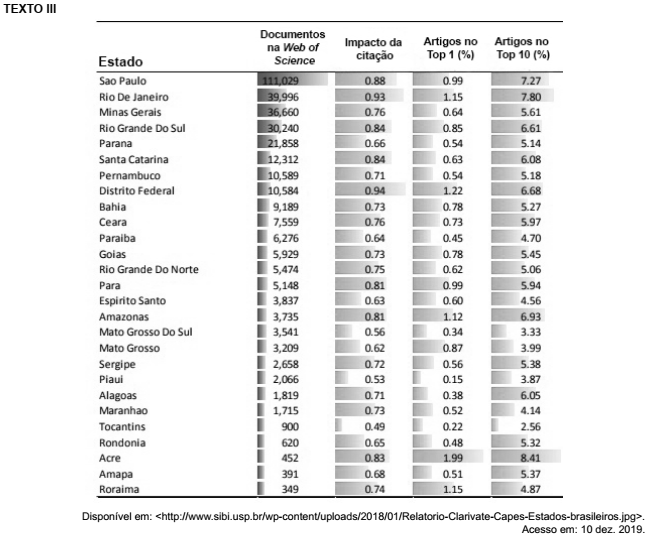
Texto IV
Vacina contra o vírus zika será testada em Minas Gerais
Pesquisadores do Hospital das Clínicas da Universidade Federal de Minas Gerais (UFMG), da Universidade George Washington (EUA) e da Fiocruz Minas estão participando de um grande estudo clínico de fase 2/2b de uma vacina experimental contra a infecção pelo vírus zika, em Belo Horizonte. Feita com parte do material genético do vírus, a vacina poderá produzir anticorpos capazes de promover uma resposta contra a infecção num indivíduo que é imunizado.
Chamada de “vacina de DNA contra zika”, a substância experimental já foi testada em seres humanos nos EUA, e o estudo clínico foi aprovado pelos comitês de ética e agências regulatórias nacionais e internacionais. Agora, será avaliada numa população expandida com a finalidade de estudar novos dados sobre a sua eficácia e segurança. Para essa nova fase, serão recrutados voluntários sadios, entre 15 e 35 anos, que morem em Belo Horizonte ou Região Metropolitana e que tenham disponibilidade para participar do estudo pelos próximos dois anos.
Os voluntários serão selecionados após a realização de uma avaliação clínica e de exames laboratoriais que serão oferecidos gratuitamente pela equipe do Hospital das Clínicas. Já a Fiocruz Minas ficará responsável pelo processamento do sangue e urina de todos os participantes da pesquisa, que serão testados para avaliar a eficácia, a resposta imune, e os efeitos da vacina no organismo.
Disponível em: .
Acesso em: 10 out. 2019 (Fragmentos).
Acerca do tipo textual predominante nos textos, assinale
a alternativa incorreta.
Texto IV
Vacina contra o vírus zika será testada em Minas Gerais
Pesquisadores do Hospital das Clínicas da Universidade Federal de Minas Gerais (UFMG), da Universidade George Washington (EUA) e da Fiocruz Minas estão participando de um grande estudo clínico de fase 2/2b de uma vacina experimental contra a infecção pelo vírus zika, em Belo Horizonte. Feita com parte do material genético do vírus, a vacina poderá produzir anticorpos capazes de promover uma resposta contra a infecção num indivíduo que é imunizado.
Chamada de “vacina de DNA contra zika”, a substância experimental já foi testada em seres humanos nos EUA, e o estudo clínico foi aprovado pelos comitês de ética e agências regulatórias nacionais e internacionais. Agora, será avaliada numa população expandida com a finalidade de estudar novos dados sobre a sua eficácia e segurança. Para essa nova fase, serão recrutados voluntários sadios, entre 15 e 35 anos, que morem em Belo Horizonte ou Região Metropolitana e que tenham disponibilidade para participar do estudo pelos próximos dois anos.
Os voluntários serão selecionados após a realização de uma avaliação clínica e de exames laboratoriais que serão oferecidos gratuitamente pela equipe do Hospital das Clínicas. Já a Fiocruz Minas ficará responsável pelo processamento do sangue e urina de todos os participantes da pesquisa, que serão testados para avaliar a eficácia, a resposta imune, e os efeitos da vacina no organismo.
Disponível em:<https://portal.fiocruz.br/noticia/vacina-contra-ovirus-zika-sera-testada-em-minas-gerais>
Texto IV
Vacina contra o vírus zika será testada em Minas Gerais
Pesquisadores do Hospital das Clínicas da Universidade Federal de Minas Gerais (UFMG), da Universidade George Washington (EUA) e da Fiocruz Minas estão participando de um grande estudo clínico de fase 2/2b de uma vacina experimental contra a infecção pelo vírus zika, em Belo Horizonte. Feita com parte do material genético do vírus, a vacina poderá produzir anticorpos capazes de promover uma resposta contra a infecção num indivíduo que é imunizado.
Chamada de “vacina de DNA contra zika”, a substância experimental já foi testada em seres humanos nos EUA, e o estudo clínico foi aprovado pelos comitês de ética e agências regulatórias nacionais e internacionais. Agora, será avaliada numa população expandida com a finalidade de estudar novos dados sobre a sua eficácia e segurança. Para essa nova fase, serão recrutados voluntários sadios, entre 15 e 35 anos, que morem em Belo Horizonte ou Região Metropolitana e que tenham disponibilidade para participar do estudo pelos próximos dois anos.
Os voluntários serão selecionados após a realização de uma avaliação clínica e de exames laboratoriais que serão oferecidos gratuitamente pela equipe do Hospital das Clínicas. Já a Fiocruz Minas ficará responsável pelo processamento do sangue e urina de todos os participantes da pesquisa, que serão testados para avaliar a eficácia, a resposta imune, e os efeitos da vacina no organismo.
Disponível em:<https://portal.fiocruz.br/noticia/vacina-contra-ovirus-zika-sera-testada-em-minas-gerais>
Assinale a alternativa que apresenta reescrita correta de concordância verbal e colocação pronominal do trecho a seguir, de acordo com a norma-padrão da língua portuguesa.
“Os voluntários serão selecionados após a realização de uma avaliação clínica e de exames laboratoriais que serão oferecidos gratuitamente pela equipe do Hospital das Clínicas.”
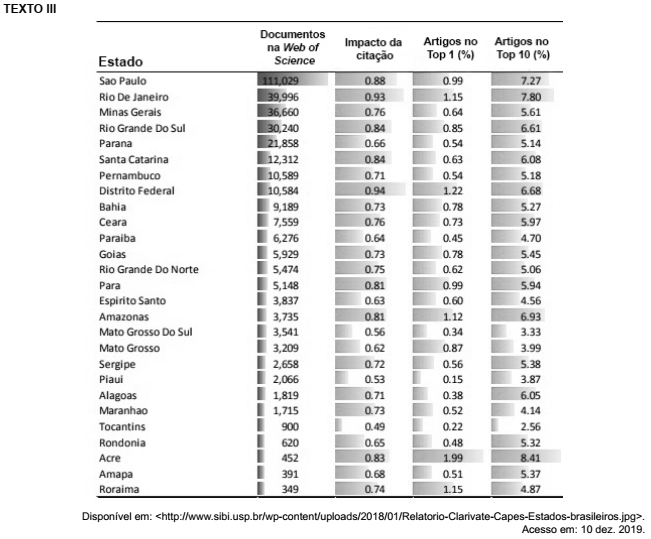
De acordo com a leitura desse texto, assinale a alternativa incorreta.
Texto II
Produção científica no Brasil: um salto no número de publicações
Além da participação de produtos inovadores e de alta tecnologia na matriz de exportações, outros dados, como a produção científica e o número de mestres, doutores e instituições de ensino, permitem avaliar a situação de um país em relação ao potencial de inovação.As publicações científicas e o número de estudantes, mestres e doutores são meios de avaliar o sistema acadêmico. Em franca evolução, a situação do Brasil nesses quesitos permite imaginar que existe uma base no país para, caso haja parceria com a indústria, deslanchar um período de inovação tecnológica.
Em 2008, 30.415 artigos e outros tipos de publicações científicas foram divulgados por brasileiros trabalhando no Brasil em revistas de circulação internacional cadastradas pelo Institute for Scientific Information (ISI). Foi um salto importante em relação aos cerca de 20 mil publicados em 2007.
Segundo o professor Carlos Cruz, da Fundação de Amparo à Pesquisa do Estado de São Paulo (Fapesp), esse salto, no entanto, deveu-se em grande parte ao cadastramento pelo ISI de novas publicações, editadas no Brasil, e não a um efetivo aumento da produção científica. Para analisar o desenvolvimento da publicação científica no Brasil ao longo dos anos, sem distorcer os dados, seria necessário, segundo Cruz, considerar apenas uma determinada coleção de revistas pelo período de tempo a ser analisado. Carlos Cruz afirma que, vista dessa maneira, a produção científica nacional vem crescendo sistematicamente desde 1994, exceto no período entre 2006 e 2009.
Outra observação feita pelo pesquisador da Fapesp é que a razão de crescimento do número de publicações vem caindo nos últimos anos. Enquanto o aumento na produção de trabalhos científicos entre 1994 e 1998 foi de 18% ao ano, entre 1998 e 2002 foi de 9,3%. Já no período entre 2003 e 2009, a produção científica no Brasil aumentou à razão de apenas 6% ao ano.
Outro dado revelador, segundo a análise de Carlos Cruz, é que 64% das publicações de cientistas brasileiros radicados no Brasil em periódicos científicos internacionais vêm de apenas oito universidades, quatro delas de São Paulo. A Universidade de São Paulo respondeu sozinha por 26% dessas publicações em 2008.
Se as estatísticas brasileiras cresceram, Espanha, Índia e Coreia do Sul mostram que seria possível um resultado ainda mais expressivo. Esses países produziram saltos espetaculares no mesmo período, consideradas as mesmas publicações. A produção científica da Coreia do Sul chama a atenção: até 1997, os acadêmicos daquele país publicavam menos do que os colegas do Brasil. No entanto, desde então, passaram à frente nos números e, a cada ano, aumentam a diferença.
Disponível em:<https://www.senado.gov.br/noticias/Jornal/emdiscussao/inovacao/ investimento-inovacao-tecnologicafinep-pesquisadores-brasil/producao-cientifica-no-brasil-umsalto-no-numero-de-publicacoes.aspx>
Texto II
Produção científica no Brasil: um salto no número de publicações
Além da participação de produtos inovadores e de alta tecnologia na matriz de exportações, outros dados, como a produção científica e o número de mestres, doutores e instituições de ensino, permitem avaliar a situação de um país em relação ao potencial de inovação.As publicações científicas e o número de estudantes, mestres e doutores são meios de avaliar o sistema acadêmico. Em franca evolução, a situação do Brasil nesses quesitos permite imaginar que existe uma base no país para, caso haja parceria com a indústria, deslanchar um período de inovação tecnológica.
Em 2008, 30.415 artigos e outros tipos de publicações científicas foram divulgados por brasileiros trabalhando no Brasil em revistas de circulação internacional cadastradas pelo Institute for Scientific Information (ISI). Foi um salto importante em relação aos cerca de 20 mil publicados em 2007.
Segundo o professor Carlos Cruz, da Fundação de Amparo à Pesquisa do Estado de São Paulo (Fapesp), esse salto, no entanto, deveu-se em grande parte ao cadastramento pelo ISI de novas publicações, editadas no Brasil, e não a um efetivo aumento da produção científica. Para analisar o desenvolvimento da publicação científica no Brasil ao longo dos anos, sem distorcer os dados, seria necessário, segundo Cruz, considerar apenas uma determinada coleção de revistas pelo período de tempo a ser analisado. Carlos Cruz afirma que, vista dessa maneira, a produção científica nacional vem crescendo sistematicamente desde 1994, exceto no período entre 2006 e 2009.
Outra observação feita pelo pesquisador da Fapesp é que a razão de crescimento do número de publicações vem caindo nos últimos anos. Enquanto o aumento na produção de trabalhos científicos entre 1994 e 1998 foi de 18% ao ano, entre 1998 e 2002 foi de 9,3%. Já no período entre 2003 e 2009, a produção científica no Brasil aumentou à razão de apenas 6% ao ano.
Outro dado revelador, segundo a análise de Carlos Cruz, é que 64% das publicações de cientistas brasileiros radicados no Brasil em periódicos científicos internacionais vêm de apenas oito universidades, quatro delas de São Paulo. A Universidade de São Paulo respondeu sozinha por 26% dessas publicações em 2008.
Se as estatísticas brasileiras cresceram, Espanha, Índia e Coreia do Sul mostram que seria possível um resultado ainda mais expressivo. Esses países produziram saltos espetaculares no mesmo período, consideradas as mesmas publicações. A produção científica da Coreia do Sul chama a atenção: até 1997, os acadêmicos daquele país publicavam menos do que os colegas do Brasil. No entanto, desde então, passaram à frente nos números e, a cada ano, aumentam a diferença.
Disponível em:<https://www.senado.gov.br/noticias/Jornal/emdiscussao/inovacao/ investimento-inovacao-tecnologicafinep-pesquisadores-brasil/producao-cientifica-no-brasil-umsalto-no-numero-de-publicacoes.aspx>
Texto II
Produção científica no Brasil: um salto no número de publicações
Além da participação de produtos inovadores e de alta tecnologia na matriz de exportações, outros dados, como a produção científica e o número de mestres, doutores e instituições de ensino, permitem avaliar a situação de um país em relação ao potencial de inovação.As publicações científicas e o número de estudantes, mestres e doutores são meios de avaliar o sistema acadêmico. Em franca evolução, a situação do Brasil nesses quesitos permite imaginar que existe uma base no país para, caso haja parceria com a indústria, deslanchar um período de inovação tecnológica.
Em 2008, 30.415 artigos e outros tipos de publicações científicas foram divulgados por brasileiros trabalhando no Brasil em revistas de circulação internacional cadastradas pelo Institute for Scientific Information (ISI). Foi um salto importante em relação aos cerca de 20 mil publicados em 2007.
Segundo o professor Carlos Cruz, da Fundação de Amparo à Pesquisa do Estado de São Paulo (Fapesp), esse salto, no entanto, deveu-se em grande parte ao cadastramento pelo ISI de novas publicações, editadas no Brasil, e não a um efetivo aumento da produção científica. Para analisar o desenvolvimento da publicação científica no Brasil ao longo dos anos, sem distorcer os dados, seria necessário, segundo Cruz, considerar apenas uma determinada coleção de revistas pelo período de tempo a ser analisado. Carlos Cruz afirma que, vista dessa maneira, a produção científica nacional vem crescendo sistematicamente desde 1994, exceto no período entre 2006 e 2009.
Outra observação feita pelo pesquisador da Fapesp é que a razão de crescimento do número de publicações vem caindo nos últimos anos. Enquanto o aumento na produção de trabalhos científicos entre 1994 e 1998 foi de 18% ao ano, entre 1998 e 2002 foi de 9,3%. Já no período entre 2003 e 2009, a produção científica no Brasil aumentou à razão de apenas 6% ao ano.
Outro dado revelador, segundo a análise de Carlos Cruz, é que 64% das publicações de cientistas brasileiros radicados no Brasil em periódicos científicos internacionais vêm de apenas oito universidades, quatro delas de São Paulo. A Universidade de São Paulo respondeu sozinha por 26% dessas publicações em 2008.
Se as estatísticas brasileiras cresceram, Espanha, Índia e Coreia do Sul mostram que seria possível um resultado ainda mais expressivo. Esses países produziram saltos espetaculares no mesmo período, consideradas as mesmas publicações. A produção científica da Coreia do Sul chama a atenção: até 1997, os acadêmicos daquele país publicavam menos do que os colegas do Brasil. No entanto, desde então, passaram à frente nos números e, a cada ano, aumentam a diferença.
Disponível em:<https://www.senado.gov.br/noticias/Jornal/emdiscussao/inovacao/ investimento-inovacao-tecnologicafinep-pesquisadores-brasil/producao-cientifica-no-brasil-umsalto-no-numero-de-publicacoes.aspx>
Texto II
Produção científica no Brasil: um salto no número de publicações
Além da participação de produtos inovadores e de alta tecnologia na matriz de exportações, outros dados, como a produção científica e o número de mestres, doutores e instituições de ensino, permitem avaliar a situação de um país em relação ao potencial de inovação.As publicações científicas e o número de estudantes, mestres e doutores são meios de avaliar o sistema acadêmico. Em franca evolução, a situação do Brasil nesses quesitos permite imaginar que existe uma base no país para, caso haja parceria com a indústria, deslanchar um período de inovação tecnológica.
Em 2008, 30.415 artigos e outros tipos de publicações científicas foram divulgados por brasileiros trabalhando no Brasil em revistas de circulação internacional cadastradas pelo Institute for Scientific Information (ISI). Foi um salto importante em relação aos cerca de 20 mil publicados em 2007.
Segundo o professor Carlos Cruz, da Fundação de Amparo à Pesquisa do Estado de São Paulo (Fapesp), esse salto, no entanto, deveu-se em grande parte ao cadastramento pelo ISI de novas publicações, editadas no Brasil, e não a um efetivo aumento da produção científica. Para analisar o desenvolvimento da publicação científica no Brasil ao longo dos anos, sem distorcer os dados, seria necessário, segundo Cruz, considerar apenas uma determinada coleção de revistas pelo período de tempo a ser analisado. Carlos Cruz afirma que, vista dessa maneira, a produção científica nacional vem crescendo sistematicamente desde 1994, exceto no período entre 2006 e 2009.
Outra observação feita pelo pesquisador da Fapesp é que a razão de crescimento do número de publicações vem caindo nos últimos anos. Enquanto o aumento na produção de trabalhos científicos entre 1994 e 1998 foi de 18% ao ano, entre 1998 e 2002 foi de 9,3%. Já no período entre 2003 e 2009, a produção científica no Brasil aumentou à razão de apenas 6% ao ano.
Outro dado revelador, segundo a análise de Carlos Cruz, é que 64% das publicações de cientistas brasileiros radicados no Brasil em periódicos científicos internacionais vêm de apenas oito universidades, quatro delas de São Paulo. A Universidade de São Paulo respondeu sozinha por 26% dessas publicações em 2008.
Se as estatísticas brasileiras cresceram, Espanha, Índia e Coreia do Sul mostram que seria possível um resultado ainda mais expressivo. Esses países produziram saltos espetaculares no mesmo período, consideradas as mesmas publicações. A produção científica da Coreia do Sul chama a atenção: até 1997, os acadêmicos daquele país publicavam menos do que os colegas do Brasil. No entanto, desde então, passaram à frente nos números e, a cada ano, aumentam a diferença.
Disponível em:<https://www.senado.gov.br/noticias/Jornal/emdiscussao/inovacao/ investimento-inovacao-tecnologicafinep-pesquisadores-brasil/producao-cientifica-no-brasil-umsalto-no-numero-de-publicacoes.aspx>
TEXTO I
Para o futuro chegar mais rápido
É verdade: 15% de mulheres no Congresso é uma cifra constrangedora, e coloca o Brasil no rodapé dos rankings globais de participação feminina na política. Mas é motivo de orgulho o aumento de 50% registrado nas últimas eleições. [...]
Estaremos avançando? Na verdade, há bem pouco a se celebrar.
Se seguirmos no ritmo atual, ainda serão necessários 108 anos para que o mundo alcance a igualdade de gênero. A previsão – a maldição – é do Global Gender Report, estudo anual do Fórum Econômico Mundial. É uma projeção que precisa ser lida como um compêndio gigantesco de corpos estuprados – perto de 500.000 por ano só no Brasil, diz o IPEA –, de meninas sem acesso à educação básica, de barrigas de grávida em corpinhos ainda em formação, de noivas que deveriam estar brincando – de boneca ou de carrinho.
Cento e oito anos é muito tempo. É tempo demais. Mas há uma nova força entrando no tabuleiro. Uma palavra cujo novo significado ainda não foi compreendido pela geração que hoje está no poder: meninas.
Desde 2012, por iniciativa da ONU, 11 de outubro é o Dia Internacional da Menina. É uma palavra em transição, menina. Uma busca pelo termo no Google Images revela um sem fim de garotinhas maquiadas, quase sempre sozinhas e em um jogo de sedução com a câmera. Nada poderia estar mais distante do que vejo.
Sou a coordenadora nacional do Girl Up, um movimento global da Fundação ONU que treina, inspira e conecta meninas para que sejam líderes na mudança em direção a um mundo melhor, aqui definido pelos 17 Objetivos para o Desenvolvimento Sustentável da ONU. Se você está entre aqueles para quem o termo menina denota condescendência, permita-me contar o que elas andam aprontando.
Lia tem 16 anos e um dia me procurou com um contato dentro da Globosat na mão. Era Copa do Mundo e ela, que lidera o primeiro Clube Girl Up da capital fluminense, queria fazer um evento para algumas dezenas de meninas. Meia hora de Skype para pensar com ela o teor da reunião: foi tudo que ofereci. Os adultos da Globosat devem ter ficado embasbacados – como ficam os adultos que ainda não entenderam do que elas são capazes – quando um par de meninas sentou à sua frente para negociar os detalhes de uma tarde que envolveu tour pelos estúdios, jogo da Copa no telão da sede e bate-papo com Glenda Kozlowski, uma das maiores jornalistas esportivas do país.
Maria Antônia, 18 anos. Dinheiro da família para sair do país, nem em sonho. Assim mesmo, enfiou na cabeça que iria no Congresso de Liderança do Girl Up, que todos os anos reúne cerca de 400 meninas dos cinco continentes em Washington. Contando com uma rede enorme – elas aprendem cedo o poder das redes – Maria Antônia, idealizou e liderou o crowdfunding que viabilizou sua ida. Em setembro esteve entre os 78 estudantes selecionados para participar do Parlamento Jovem Brasileiro, sentando-se na cadeira da Presidência da Câmara.
Bruna, também 18. Me ligou em abril pra contar que havia agendado uma audiência pública na Câmara Municipal de Goiânia para discutir denúncias de assédio no ambiente escolar. O Clube que ela fundou na cidade tem particular interesse por advocacy, e essas meninas cavaram sozinhas o apoio da vereadora Dra. Cristina, que encampou o plano do Clube.
A Marina eu conheci no fim de agosto, quando ela nos procurou pelo Instagram pra falar de seu projeto. Ela preencheu com absoluta facilidade os requisitos que me permitiram justificar, à matriz americana do Girl Up, a viagem a São João Evangelista, cidadela de 14.000 habitantes a seis horas de ônibus ao norte de Belo Horizonte. Marina agendou visitas em cinco escolas públicas da região. Uma delas – a escola onde a Marina estudou – fica na zona rural. Ela tem 18 anos e a rotina espartana começa todos os dias às 3 da manhã com o estudo do inglês.
A diferença na renda familiar entre as quatro meninas é abismal. A cor da pele não é a mesma, e enquanto uma delas vive em um dos metros quadrados mais caros do país, outra não tinha energia elétrica em casa até cinco anos atrás. Mas não acredite nas imagens do Google: elas não estão sozinhas.
Lia, Maria Antônia, Bruna e Marina se conhecem e estão em um grupo de WhatsApp onde trocam informações sobre processos seletivos de universidades no exterior, um sonho partilhado pelas quatro. E elas são muitas, muito mais do que eu poderia contar. Quando garantimos às meninas uma vida livre de violências e asseguramos seus direitos básicos, todo o potencial que por séculos esteve enterrado aflora, originando um ciclo virtuoso benéfico para todos nós.
É hora de atualizar o navegador. A sueca de 16 anos que pode se tornar a pessoa mais jovem da História a ser laureada com o Nobel da Paz, se realizar o feito, ocupará o posto que hoje é de outra menina. Greta Thunberg e Malala não são exceções: são expoentes de uma onda poderosa, inteligente, conectada e crescente. Meninas: são elas a força capaz de acelerar os 108 anos que nos separam da igualdade de gênero.
Disponível em:<https://brasil.elpais.com/brasil/2019/10/10/opinion/1570715827_ 082487.html >
TEXTO I
Para o futuro chegar mais rápido
É verdade: 15% de mulheres no Congresso é uma cifra constrangedora, e coloca o Brasil no rodapé dos rankings globais de participação feminina na política. Mas é motivo de orgulho o aumento de 50% registrado nas últimas eleições. [...]
Estaremos avançando? Na verdade, há bem pouco a se celebrar.
Se seguirmos no ritmo atual, ainda serão necessários 108 anos para que o mundo alcance a igualdade de gênero. A previsão – a maldição – é do Global Gender Report, estudo anual do Fórum Econômico Mundial. É uma projeção que precisa ser lida como um compêndio gigantesco de corpos estuprados – perto de 500.000 por ano só no Brasil, diz o IPEA –, de meninas sem acesso à educação básica, de barrigas de grávida em corpinhos ainda em formação, de noivas que deveriam estar brincando – de boneca ou de carrinho.
Cento e oito anos é muito tempo. É tempo demais. Mas há uma nova força entrando no tabuleiro. Uma palavra cujo novo significado ainda não foi compreendido pela geração que hoje está no poder: meninas.
Desde 2012, por iniciativa da ONU, 11 de outubro é o Dia Internacional da Menina. É uma palavra em transição, menina. Uma busca pelo termo no Google Images revela um sem fim de garotinhas maquiadas, quase sempre sozinhas e em um jogo de sedução com a câmera. Nada poderia estar mais distante do que vejo.
Sou a coordenadora nacional do Girl Up, um movimento global da Fundação ONU que treina, inspira e conecta meninas para que sejam líderes na mudança em direção a um mundo melhor, aqui definido pelos 17 Objetivos para o Desenvolvimento Sustentável da ONU. Se você está entre aqueles para quem o termo menina denota condescendência, permita-me contar o que elas andam aprontando.
Lia tem 16 anos e um dia me procurou com um contato dentro da Globosat na mão. Era Copa do Mundo e ela, que lidera o primeiro Clube Girl Up da capital fluminense, queria fazer um evento para algumas dezenas de meninas. Meia hora de Skype para pensar com ela o teor da reunião: foi tudo que ofereci. Os adultos da Globosat devem ter ficado embasbacados – como ficam os adultos que ainda não entenderam do que elas são capazes – quando um par de meninas sentou à sua frente para negociar os detalhes de uma tarde que envolveu tour pelos estúdios, jogo da Copa no telão da sede e bate-papo com Glenda Kozlowski, uma das maiores jornalistas esportivas do país.
Maria Antônia, 18 anos. Dinheiro da família para sair do país, nem em sonho. Assim mesmo, enfiou na cabeça que iria no Congresso de Liderança do Girl Up, que todos os anos reúne cerca de 400 meninas dos cinco continentes em Washington. Contando com uma rede enorme – elas aprendem cedo o poder das redes – Maria Antônia, idealizou e liderou o crowdfunding que viabilizou sua ida. Em setembro esteve entre os 78 estudantes selecionados para participar do Parlamento Jovem Brasileiro, sentando-se na cadeira da Presidência da Câmara.
Bruna, também 18. Me ligou em abril pra contar que havia agendado uma audiência pública na Câmara Municipal de Goiânia para discutir denúncias de assédio no ambiente escolar. O Clube que ela fundou na cidade tem particular interesse por advocacy, e essas meninas cavaram sozinhas o apoio da vereadora Dra. Cristina, que encampou o plano do Clube.
A Marina eu conheci no fim de agosto, quando ela nos procurou pelo Instagram pra falar de seu projeto. Ela preencheu com absoluta facilidade os requisitos que me permitiram justificar, à matriz americana do Girl Up, a viagem a São João Evangelista, cidadela de 14.000 habitantes a seis horas de ônibus ao norte de Belo Horizonte. Marina agendou visitas em cinco escolas públicas da região. Uma delas – a escola onde a Marina estudou – fica na zona rural. Ela tem 18 anos e a rotina espartana começa todos os dias às 3 da manhã com o estudo do inglês.
A diferença na renda familiar entre as quatro meninas é abismal. A cor da pele não é a mesma, e enquanto uma delas vive em um dos metros quadrados mais caros do país, outra não tinha energia elétrica em casa até cinco anos atrás. Mas não acredite nas imagens do Google: elas não estão sozinhas.
Lia, Maria Antônia, Bruna e Marina se conhecem e estão em um grupo de WhatsApp onde trocam informações sobre processos seletivos de universidades no exterior, um sonho partilhado pelas quatro. E elas são muitas, muito mais do que eu poderia contar. Quando garantimos às meninas uma vida livre de violências e asseguramos seus direitos básicos, todo o potencial que por séculos esteve enterrado aflora, originando um ciclo virtuoso benéfico para todos nós.
É hora de atualizar o navegador. A sueca de 16 anos que pode se tornar a pessoa mais jovem da História a ser laureada com o Nobel da Paz, se realizar o feito, ocupará o posto que hoje é de outra menina. Greta Thunberg e Malala não são exceções: são expoentes de uma onda poderosa, inteligente, conectada e crescente. Meninas: são elas a força capaz de acelerar os 108 anos que nos separam da igualdade de gênero.
Disponível em:<https://brasil.elpais.com/brasil/2019/10/10/opinion/1570715827_ 082487.html >
Leia este trecho, analisando o uso do diminutivo em “garotinhas”.
“Uma busca pelo termo no Google Images revela um sem fim de garotinhas maquiadas, quase sempre sozinhas e em um jogo de sedução com a câmera.”
O uso do diminutivo produz efeito de sentido de
TEXTO I
Para o futuro chegar mais rápido
É verdade: 15% de mulheres no Congresso é uma cifra constrangedora, e coloca o Brasil no rodapé dos rankings globais de participação feminina na política. Mas é motivo de orgulho o aumento de 50% registrado nas últimas eleições. [...]
Estaremos avançando? Na verdade, há bem pouco a se celebrar.
Se seguirmos no ritmo atual, ainda serão necessários 108 anos para que o mundo alcance a igualdade de gênero. A previsão – a maldição – é do Global Gender Report, estudo anual do Fórum Econômico Mundial. É uma projeção que precisa ser lida como um compêndio gigantesco de corpos estuprados – perto de 500.000 por ano só no Brasil, diz o IPEA –, de meninas sem acesso à educação básica, de barrigas de grávida em corpinhos ainda em formação, de noivas que deveriam estar brincando – de boneca ou de carrinho.
Cento e oito anos é muito tempo. É tempo demais. Mas há uma nova força entrando no tabuleiro. Uma palavra cujo novo significado ainda não foi compreendido pela geração que hoje está no poder: meninas.
Desde 2012, por iniciativa da ONU, 11 de outubro é o Dia Internacional da Menina. É uma palavra em transição, menina. Uma busca pelo termo no Google Images revela um sem fim de garotinhas maquiadas, quase sempre sozinhas e em um jogo de sedução com a câmera. Nada poderia estar mais distante do que vejo.
Sou a coordenadora nacional do Girl Up, um movimento global da Fundação ONU que treina, inspira e conecta meninas para que sejam líderes na mudança em direção a um mundo melhor, aqui definido pelos 17 Objetivos para o Desenvolvimento Sustentável da ONU. Se você está entre aqueles para quem o termo menina denota condescendência, permita-me contar o que elas andam aprontando.
Lia tem 16 anos e um dia me procurou com um contato dentro da Globosat na mão. Era Copa do Mundo e ela, que lidera o primeiro Clube Girl Up da capital fluminense, queria fazer um evento para algumas dezenas de meninas. Meia hora de Skype para pensar com ela o teor da reunião: foi tudo que ofereci. Os adultos da Globosat devem ter ficado embasbacados – como ficam os adultos que ainda não entenderam do que elas são capazes – quando um par de meninas sentou à sua frente para negociar os detalhes de uma tarde que envolveu tour pelos estúdios, jogo da Copa no telão da sede e bate-papo com Glenda Kozlowski, uma das maiores jornalistas esportivas do país.
Maria Antônia, 18 anos. Dinheiro da família para sair do país, nem em sonho. Assim mesmo, enfiou na cabeça que iria no Congresso de Liderança do Girl Up, que todos os anos reúne cerca de 400 meninas dos cinco continentes em Washington. Contando com uma rede enorme – elas aprendem cedo o poder das redes – Maria Antônia, idealizou e liderou o crowdfunding que viabilizou sua ida. Em setembro esteve entre os 78 estudantes selecionados para participar do Parlamento Jovem Brasileiro, sentando-se na cadeira da Presidência da Câmara.
Bruna, também 18. Me ligou em abril pra contar que havia agendado uma audiência pública na Câmara Municipal de Goiânia para discutir denúncias de assédio no ambiente escolar. O Clube que ela fundou na cidade tem particular interesse por advocacy, e essas meninas cavaram sozinhas o apoio da vereadora Dra. Cristina, que encampou o plano do Clube.
A Marina eu conheci no fim de agosto, quando ela nos procurou pelo Instagram pra falar de seu projeto. Ela preencheu com absoluta facilidade os requisitos que me permitiram justificar, à matriz americana do Girl Up, a viagem a São João Evangelista, cidadela de 14.000 habitantes a seis horas de ônibus ao norte de Belo Horizonte. Marina agendou visitas em cinco escolas públicas da região. Uma delas – a escola onde a Marina estudou – fica na zona rural. Ela tem 18 anos e a rotina espartana começa todos os dias às 3 da manhã com o estudo do inglês.
A diferença na renda familiar entre as quatro meninas é abismal. A cor da pele não é a mesma, e enquanto uma delas vive em um dos metros quadrados mais caros do país, outra não tinha energia elétrica em casa até cinco anos atrás. Mas não acredite nas imagens do Google: elas não estão sozinhas.
Lia, Maria Antônia, Bruna e Marina se conhecem e estão em um grupo de WhatsApp onde trocam informações sobre processos seletivos de universidades no exterior, um sonho partilhado pelas quatro. E elas são muitas, muito mais do que eu poderia contar. Quando garantimos às meninas uma vida livre de violências e asseguramos seus direitos básicos, todo o potencial que por séculos esteve enterrado aflora, originando um ciclo virtuoso benéfico para todos nós.
É hora de atualizar o navegador. A sueca de 16 anos que pode se tornar a pessoa mais jovem da História a ser laureada com o Nobel da Paz, se realizar o feito, ocupará o posto que hoje é de outra menina. Greta Thunberg e Malala não são exceções: são expoentes de uma onda poderosa, inteligente, conectada e crescente. Meninas: são elas a força capaz de acelerar os 108 anos que nos separam da igualdade de gênero.
Disponível em:<https://brasil.elpais.com/brasil/2019/10/10/opinion/1570715827_ 082487.html >
TEXTO I
Para o futuro chegar mais rápido
É verdade: 15% de mulheres no Congresso é uma cifra constrangedora, e coloca o Brasil no rodapé dos rankings globais de participação feminina na política. Mas é motivo de orgulho o aumento de 50% registrado nas últimas eleições. [...]
Estaremos avançando? Na verdade, há bem pouco a se celebrar.
Se seguirmos no ritmo atual, ainda serão necessários 108 anos para que o mundo alcance a igualdade de gênero. A previsão – a maldição – é do Global Gender Report, estudo anual do Fórum Econômico Mundial. É uma projeção que precisa ser lida como um compêndio gigantesco de corpos estuprados – perto de 500.000 por ano só no Brasil, diz o IPEA –, de meninas sem acesso à educação básica, de barrigas de grávida em corpinhos ainda em formação, de noivas que deveriam estar brincando – de boneca ou de carrinho.
Cento e oito anos é muito tempo. É tempo demais. Mas há uma nova força entrando no tabuleiro. Uma palavra cujo novo significado ainda não foi compreendido pela geração que hoje está no poder: meninas.
Desde 2012, por iniciativa da ONU, 11 de outubro é o Dia Internacional da Menina. É uma palavra em transição, menina. Uma busca pelo termo no Google Images revela um sem fim de garotinhas maquiadas, quase sempre sozinhas e em um jogo de sedução com a câmera. Nada poderia estar mais distante do que vejo.
Sou a coordenadora nacional do Girl Up, um movimento global da Fundação ONU que treina, inspira e conecta meninas para que sejam líderes na mudança em direção a um mundo melhor, aqui definido pelos 17 Objetivos para o Desenvolvimento Sustentável da ONU. Se você está entre aqueles para quem o termo menina denota condescendência, permita-me contar o que elas andam aprontando.
Lia tem 16 anos e um dia me procurou com um contato dentro da Globosat na mão. Era Copa do Mundo e ela, que lidera o primeiro Clube Girl Up da capital fluminense, queria fazer um evento para algumas dezenas de meninas. Meia hora de Skype para pensar com ela o teor da reunião: foi tudo que ofereci. Os adultos da Globosat devem ter ficado embasbacados – como ficam os adultos que ainda não entenderam do que elas são capazes – quando um par de meninas sentou à sua frente para negociar os detalhes de uma tarde que envolveu tour pelos estúdios, jogo da Copa no telão da sede e bate-papo com Glenda Kozlowski, uma das maiores jornalistas esportivas do país.
Maria Antônia, 18 anos. Dinheiro da família para sair do país, nem em sonho. Assim mesmo, enfiou na cabeça que iria no Congresso de Liderança do Girl Up, que todos os anos reúne cerca de 400 meninas dos cinco continentes em Washington. Contando com uma rede enorme – elas aprendem cedo o poder das redes – Maria Antônia, idealizou e liderou o crowdfunding que viabilizou sua ida. Em setembro esteve entre os 78 estudantes selecionados para participar do Parlamento Jovem Brasileiro, sentando-se na cadeira da Presidência da Câmara.
Bruna, também 18. Me ligou em abril pra contar que havia agendado uma audiência pública na Câmara Municipal de Goiânia para discutir denúncias de assédio no ambiente escolar. O Clube que ela fundou na cidade tem particular interesse por advocacy, e essas meninas cavaram sozinhas o apoio da vereadora Dra. Cristina, que encampou o plano do Clube.
A Marina eu conheci no fim de agosto, quando ela nos procurou pelo Instagram pra falar de seu projeto. Ela preencheu com absoluta facilidade os requisitos que me permitiram justificar, à matriz americana do Girl Up, a viagem a São João Evangelista, cidadela de 14.000 habitantes a seis horas de ônibus ao norte de Belo Horizonte. Marina agendou visitas em cinco escolas públicas da região. Uma delas – a escola onde a Marina estudou – fica na zona rural. Ela tem 18 anos e a rotina espartana começa todos os dias às 3 da manhã com o estudo do inglês.
A diferença na renda familiar entre as quatro meninas é abismal. A cor da pele não é a mesma, e enquanto uma delas vive em um dos metros quadrados mais caros do país, outra não tinha energia elétrica em casa até cinco anos atrás. Mas não acredite nas imagens do Google: elas não estão sozinhas.
Lia, Maria Antônia, Bruna e Marina se conhecem e estão em um grupo de WhatsApp onde trocam informações sobre processos seletivos de universidades no exterior, um sonho partilhado pelas quatro. E elas são muitas, muito mais do que eu poderia contar. Quando garantimos às meninas uma vida livre de violências e asseguramos seus direitos básicos, todo o potencial que por séculos esteve enterrado aflora, originando um ciclo virtuoso benéfico para todos nós.
É hora de atualizar o navegador. A sueca de 16 anos que pode se tornar a pessoa mais jovem da História a ser laureada com o Nobel da Paz, se realizar o feito, ocupará o posto que hoje é de outra menina. Greta Thunberg e Malala não são exceções: são expoentes de uma onda poderosa, inteligente, conectada e crescente. Meninas: são elas a força capaz de acelerar os 108 anos que nos separam da igualdade de gênero.
Disponível em:<https://brasil.elpais.com/brasil/2019/10/10/opinion/1570715827_ 082487.html >
Releia este trecho.
“Bruna, também 18. Me ligou em abril pra contar que havia agendado uma audiência pública na Câmara Municipal de Goiânia para discutir denúncias de assédio no ambiente escolar.”
Assinale a alternativa que apresenta explicação correta sobre esse trecho.
TEXTO I
Para o futuro chegar mais rápido
É verdade: 15% de mulheres no Congresso é uma cifra constrangedora, e coloca o Brasil no rodapé dos rankings globais de participação feminina na política. Mas é motivo de orgulho o aumento de 50% registrado nas últimas eleições. [...]
Estaremos avançando? Na verdade, há bem pouco a se celebrar.
Se seguirmos no ritmo atual, ainda serão necessários 108 anos para que o mundo alcance a igualdade de gênero. A previsão – a maldição – é do Global Gender Report, estudo anual do Fórum Econômico Mundial. É uma projeção que precisa ser lida como um compêndio gigantesco de corpos estuprados – perto de 500.000 por ano só no Brasil, diz o IPEA –, de meninas sem acesso à educação básica, de barrigas de grávida em corpinhos ainda em formação, de noivas que deveriam estar brincando – de boneca ou de carrinho.
Cento e oito anos é muito tempo. É tempo demais. Mas há uma nova força entrando no tabuleiro. Uma palavra cujo novo significado ainda não foi compreendido pela geração que hoje está no poder: meninas.
Desde 2012, por iniciativa da ONU, 11 de outubro é o Dia Internacional da Menina. É uma palavra em transição, menina. Uma busca pelo termo no Google Images revela um sem fim de garotinhas maquiadas, quase sempre sozinhas e em um jogo de sedução com a câmera. Nada poderia estar mais distante do que vejo.
Sou a coordenadora nacional do Girl Up, um movimento global da Fundação ONU que treina, inspira e conecta meninas para que sejam líderes na mudança em direção a um mundo melhor, aqui definido pelos 17 Objetivos para o Desenvolvimento Sustentável da ONU. Se você está entre aqueles para quem o termo menina denota condescendência, permita-me contar o que elas andam aprontando.
Lia tem 16 anos e um dia me procurou com um contato dentro da Globosat na mão. Era Copa do Mundo e ela, que lidera o primeiro Clube Girl Up da capital fluminense, queria fazer um evento para algumas dezenas de meninas. Meia hora de Skype para pensar com ela o teor da reunião: foi tudo que ofereci. Os adultos da Globosat devem ter ficado embasbacados – como ficam os adultos que ainda não entenderam do que elas são capazes – quando um par de meninas sentou à sua frente para negociar os detalhes de uma tarde que envolveu tour pelos estúdios, jogo da Copa no telão da sede e bate-papo com Glenda Kozlowski, uma das maiores jornalistas esportivas do país.
Maria Antônia, 18 anos. Dinheiro da família para sair do país, nem em sonho. Assim mesmo, enfiou na cabeça que iria no Congresso de Liderança do Girl Up, que todos os anos reúne cerca de 400 meninas dos cinco continentes em Washington. Contando com uma rede enorme – elas aprendem cedo o poder das redes – Maria Antônia, idealizou e liderou o crowdfunding que viabilizou sua ida. Em setembro esteve entre os 78 estudantes selecionados para participar do Parlamento Jovem Brasileiro, sentando-se na cadeira da Presidência da Câmara.
Bruna, também 18. Me ligou em abril pra contar que havia agendado uma audiência pública na Câmara Municipal de Goiânia para discutir denúncias de assédio no ambiente escolar. O Clube que ela fundou na cidade tem particular interesse por advocacy, e essas meninas cavaram sozinhas o apoio da vereadora Dra. Cristina, que encampou o plano do Clube.
A Marina eu conheci no fim de agosto, quando ela nos procurou pelo Instagram pra falar de seu projeto. Ela preencheu com absoluta facilidade os requisitos que me permitiram justificar, à matriz americana do Girl Up, a viagem a São João Evangelista, cidadela de 14.000 habitantes a seis horas de ônibus ao norte de Belo Horizonte. Marina agendou visitas em cinco escolas públicas da região. Uma delas – a escola onde a Marina estudou – fica na zona rural. Ela tem 18 anos e a rotina espartana começa todos os dias às 3 da manhã com o estudo do inglês.
A diferença na renda familiar entre as quatro meninas é abismal. A cor da pele não é a mesma, e enquanto uma delas vive em um dos metros quadrados mais caros do país, outra não tinha energia elétrica em casa até cinco anos atrás. Mas não acredite nas imagens do Google: elas não estão sozinhas.
Lia, Maria Antônia, Bruna e Marina se conhecem e estão em um grupo de WhatsApp onde trocam informações sobre processos seletivos de universidades no exterior, um sonho partilhado pelas quatro. E elas são muitas, muito mais do que eu poderia contar. Quando garantimos às meninas uma vida livre de violências e asseguramos seus direitos básicos, todo o potencial que por séculos esteve enterrado aflora, originando um ciclo virtuoso benéfico para todos nós.
É hora de atualizar o navegador. A sueca de 16 anos que pode se tornar a pessoa mais jovem da História a ser laureada com o Nobel da Paz, se realizar o feito, ocupará o posto que hoje é de outra menina. Greta Thunberg e Malala não são exceções: são expoentes de uma onda poderosa, inteligente, conectada e crescente. Meninas: são elas a força capaz de acelerar os 108 anos que nos separam da igualdade de gênero.
Disponível em:<https://brasil.elpais.com/brasil/2019/10/10/opinion/1570715827_ 082487.html >
TEXTO I
Para o futuro chegar mais rápido
É verdade: 15% de mulheres no Congresso é uma cifra constrangedora, e coloca o Brasil no rodapé dos rankings globais de participação feminina na política. Mas é motivo de orgulho o aumento de 50% registrado nas últimas eleições. [...]
Estaremos avançando? Na verdade, há bem pouco a se celebrar.
Se seguirmos no ritmo atual, ainda serão necessários 108 anos para que o mundo alcance a igualdade de gênero. A previsão – a maldição – é do Global Gender Report, estudo anual do Fórum Econômico Mundial. É uma projeção que precisa ser lida como um compêndio gigantesco de corpos estuprados – perto de 500.000 por ano só no Brasil, diz o IPEA –, de meninas sem acesso à educação básica, de barrigas de grávida em corpinhos ainda em formação, de noivas que deveriam estar brincando – de boneca ou de carrinho.
Cento e oito anos é muito tempo. É tempo demais. Mas há uma nova força entrando no tabuleiro. Uma palavra cujo novo significado ainda não foi compreendido pela geração que hoje está no poder: meninas.
Desde 2012, por iniciativa da ONU, 11 de outubro é o Dia Internacional da Menina. É uma palavra em transição, menina. Uma busca pelo termo no Google Images revela um sem fim de garotinhas maquiadas, quase sempre sozinhas e em um jogo de sedução com a câmera. Nada poderia estar mais distante do que vejo.
Sou a coordenadora nacional do Girl Up, um movimento global da Fundação ONU que treina, inspira e conecta meninas para que sejam líderes na mudança em direção a um mundo melhor, aqui definido pelos 17 Objetivos para o Desenvolvimento Sustentável da ONU. Se você está entre aqueles para quem o termo menina denota condescendência, permita-me contar o que elas andam aprontando.
Lia tem 16 anos e um dia me procurou com um contato dentro da Globosat na mão. Era Copa do Mundo e ela, que lidera o primeiro Clube Girl Up da capital fluminense, queria fazer um evento para algumas dezenas de meninas. Meia hora de Skype para pensar com ela o teor da reunião: foi tudo que ofereci. Os adultos da Globosat devem ter ficado embasbacados – como ficam os adultos que ainda não entenderam do que elas são capazes – quando um par de meninas sentou à sua frente para negociar os detalhes de uma tarde que envolveu tour pelos estúdios, jogo da Copa no telão da sede e bate-papo com Glenda Kozlowski, uma das maiores jornalistas esportivas do país.
Maria Antônia, 18 anos. Dinheiro da família para sair do país, nem em sonho. Assim mesmo, enfiou na cabeça que iria no Congresso de Liderança do Girl Up, que todos os anos reúne cerca de 400 meninas dos cinco continentes em Washington. Contando com uma rede enorme – elas aprendem cedo o poder das redes – Maria Antônia, idealizou e liderou o crowdfunding que viabilizou sua ida. Em setembro esteve entre os 78 estudantes selecionados para participar do Parlamento Jovem Brasileiro, sentando-se na cadeira da Presidência da Câmara.
Bruna, também 18. Me ligou em abril pra contar que havia agendado uma audiência pública na Câmara Municipal de Goiânia para discutir denúncias de assédio no ambiente escolar. O Clube que ela fundou na cidade tem particular interesse por advocacy, e essas meninas cavaram sozinhas o apoio da vereadora Dra. Cristina, que encampou o plano do Clube.
A Marina eu conheci no fim de agosto, quando ela nos procurou pelo Instagram pra falar de seu projeto. Ela preencheu com absoluta facilidade os requisitos que me permitiram justificar, à matriz americana do Girl Up, a viagem a São João Evangelista, cidadela de 14.000 habitantes a seis horas de ônibus ao norte de Belo Horizonte. Marina agendou visitas em cinco escolas públicas da região. Uma delas – a escola onde a Marina estudou – fica na zona rural. Ela tem 18 anos e a rotina espartana começa todos os dias às 3 da manhã com o estudo do inglês.
A diferença na renda familiar entre as quatro meninas é abismal. A cor da pele não é a mesma, e enquanto uma delas vive em um dos metros quadrados mais caros do país, outra não tinha energia elétrica em casa até cinco anos atrás. Mas não acredite nas imagens do Google: elas não estão sozinhas.
Lia, Maria Antônia, Bruna e Marina se conhecem e estão em um grupo de WhatsApp onde trocam informações sobre processos seletivos de universidades no exterior, um sonho partilhado pelas quatro. E elas são muitas, muito mais do que eu poderia contar. Quando garantimos às meninas uma vida livre de violências e asseguramos seus direitos básicos, todo o potencial que por séculos esteve enterrado aflora, originando um ciclo virtuoso benéfico para todos nós.
É hora de atualizar o navegador. A sueca de 16 anos que pode se tornar a pessoa mais jovem da História a ser laureada com o Nobel da Paz, se realizar o feito, ocupará o posto que hoje é de outra menina. Greta Thunberg e Malala não são exceções: são expoentes de uma onda poderosa, inteligente, conectada e crescente. Meninas: são elas a força capaz de acelerar os 108 anos que nos separam da igualdade de gênero.
Disponível em:<https://brasil.elpais.com/brasil/2019/10/10/opinion/1570715827_ 082487.html >
TEXTO I
Para o futuro chegar mais rápido
É verdade: 15% de mulheres no Congresso é uma cifra constrangedora, e coloca o Brasil no rodapé dos rankings globais de participação feminina na política. Mas é motivo de orgulho o aumento de 50% registrado nas últimas eleições. [...]
Estaremos avançando? Na verdade, há bem pouco a se celebrar.
Se seguirmos no ritmo atual, ainda serão necessários 108 anos para que o mundo alcance a igualdade de gênero. A previsão – a maldição – é do Global Gender Report, estudo anual do Fórum Econômico Mundial. É uma projeção que precisa ser lida como um compêndio gigantesco de corpos estuprados – perto de 500.000 por ano só no Brasil, diz o IPEA –, de meninas sem acesso à educação básica, de barrigas de grávida em corpinhos ainda em formação, de noivas que deveriam estar brincando – de boneca ou de carrinho.
Cento e oito anos é muito tempo. É tempo demais. Mas há uma nova força entrando no tabuleiro. Uma palavra cujo novo significado ainda não foi compreendido pela geração que hoje está no poder: meninas.
Desde 2012, por iniciativa da ONU, 11 de outubro é o Dia Internacional da Menina. É uma palavra em transição, menina. Uma busca pelo termo no Google Images revela um sem fim de garotinhas maquiadas, quase sempre sozinhas e em um jogo de sedução com a câmera. Nada poderia estar mais distante do que vejo.
Sou a coordenadora nacional do Girl Up, um movimento global da Fundação ONU que treina, inspira e conecta meninas para que sejam líderes na mudança em direção a um mundo melhor, aqui definido pelos 17 Objetivos para o Desenvolvimento Sustentável da ONU. Se você está entre aqueles para quem o termo menina denota condescendência, permita-me contar o que elas andam aprontando.
Lia tem 16 anos e um dia me procurou com um contato dentro da Globosat na mão. Era Copa do Mundo e ela, que lidera o primeiro Clube Girl Up da capital fluminense, queria fazer um evento para algumas dezenas de meninas. Meia hora de Skype para pensar com ela o teor da reunião: foi tudo que ofereci. Os adultos da Globosat devem ter ficado embasbacados – como ficam os adultos que ainda não entenderam do que elas são capazes – quando um par de meninas sentou à sua frente para negociar os detalhes de uma tarde que envolveu tour pelos estúdios, jogo da Copa no telão da sede e bate-papo com Glenda Kozlowski, uma das maiores jornalistas esportivas do país.
Maria Antônia, 18 anos. Dinheiro da família para sair do país, nem em sonho. Assim mesmo, enfiou na cabeça que iria no Congresso de Liderança do Girl Up, que todos os anos reúne cerca de 400 meninas dos cinco continentes em Washington. Contando com uma rede enorme – elas aprendem cedo o poder das redes – Maria Antônia, idealizou e liderou o crowdfunding que viabilizou sua ida. Em setembro esteve entre os 78 estudantes selecionados para participar do Parlamento Jovem Brasileiro, sentando-se na cadeira da Presidência da Câmara.
Bruna, também 18. Me ligou em abril pra contar que havia agendado uma audiência pública na Câmara Municipal de Goiânia para discutir denúncias de assédio no ambiente escolar. O Clube que ela fundou na cidade tem particular interesse por advocacy, e essas meninas cavaram sozinhas o apoio da vereadora Dra. Cristina, que encampou o plano do Clube.
A Marina eu conheci no fim de agosto, quando ela nos procurou pelo Instagram pra falar de seu projeto. Ela preencheu com absoluta facilidade os requisitos que me permitiram justificar, à matriz americana do Girl Up, a viagem a São João Evangelista, cidadela de 14.000 habitantes a seis horas de ônibus ao norte de Belo Horizonte. Marina agendou visitas em cinco escolas públicas da região. Uma delas – a escola onde a Marina estudou – fica na zona rural. Ela tem 18 anos e a rotina espartana começa todos os dias às 3 da manhã com o estudo do inglês.
A diferença na renda familiar entre as quatro meninas é abismal. A cor da pele não é a mesma, e enquanto uma delas vive em um dos metros quadrados mais caros do país, outra não tinha energia elétrica em casa até cinco anos atrás. Mas não acredite nas imagens do Google: elas não estão sozinhas.
Lia, Maria Antônia, Bruna e Marina se conhecem e estão em um grupo de WhatsApp onde trocam informações sobre processos seletivos de universidades no exterior, um sonho partilhado pelas quatro. E elas são muitas, muito mais do que eu poderia contar. Quando garantimos às meninas uma vida livre de violências e asseguramos seus direitos básicos, todo o potencial que por séculos esteve enterrado aflora, originando um ciclo virtuoso benéfico para todos nós.
É hora de atualizar o navegador. A sueca de 16 anos que pode se tornar a pessoa mais jovem da História a ser laureada com o Nobel da Paz, se realizar o feito, ocupará o posto que hoje é de outra menina. Greta Thunberg e Malala não são exceções: são expoentes de uma onda poderosa, inteligente, conectada e crescente. Meninas: são elas a força capaz de acelerar os 108 anos que nos separam da igualdade de gênero.
Disponível em:<https://brasil.elpais.com/brasil/2019/10/10/opinion/1570715827_ 082487.html >
Assinale a alternativa que apresenta a palavra que não substitui corretamente os dois pontos utilizados no período a seguir.
Meia hora de Skype para pensar com ela o teor da reunião: foi tudo que ofereci.
TEXTO I
Para o futuro chegar mais rápido
É verdade: 15% de mulheres no Congresso é uma cifra constrangedora, e coloca o Brasil no rodapé dos rankings globais de participação feminina na política. Mas é motivo de orgulho o aumento de 50% registrado nas últimas eleições. [...]
Estaremos avançando? Na verdade, há bem pouco a se celebrar.
Se seguirmos no ritmo atual, ainda serão necessários 108 anos para que o mundo alcance a igualdade de gênero. A previsão – a maldição – é do Global Gender Report, estudo anual do Fórum Econômico Mundial. É uma projeção que precisa ser lida como um compêndio gigantesco de corpos estuprados – perto de 500.000 por ano só no Brasil, diz o IPEA –, de meninas sem acesso à educação básica, de barrigas de grávida em corpinhos ainda em formação, de noivas que deveriam estar brincando – de boneca ou de carrinho.
Cento e oito anos é muito tempo. É tempo demais. Mas há uma nova força entrando no tabuleiro. Uma palavra cujo novo significado ainda não foi compreendido pela geração que hoje está no poder: meninas.
Desde 2012, por iniciativa da ONU, 11 de outubro é o Dia Internacional da Menina. É uma palavra em transição, menina. Uma busca pelo termo no Google Images revela um sem fim de garotinhas maquiadas, quase sempre sozinhas e em um jogo de sedução com a câmera. Nada poderia estar mais distante do que vejo.
Sou a coordenadora nacional do Girl Up, um movimento global da Fundação ONU que treina, inspira e conecta meninas para que sejam líderes na mudança em direção a um mundo melhor, aqui definido pelos 17 Objetivos para o Desenvolvimento Sustentável da ONU. Se você está entre aqueles para quem o termo menina denota condescendência, permita-me contar o que elas andam aprontando.
Lia tem 16 anos e um dia me procurou com um contato dentro da Globosat na mão. Era Copa do Mundo e ela, que lidera o primeiro Clube Girl Up da capital fluminense, queria fazer um evento para algumas dezenas de meninas. Meia hora de Skype para pensar com ela o teor da reunião: foi tudo que ofereci. Os adultos da Globosat devem ter ficado embasbacados – como ficam os adultos que ainda não entenderam do que elas são capazes – quando um par de meninas sentou à sua frente para negociar os detalhes de uma tarde que envolveu tour pelos estúdios, jogo da Copa no telão da sede e bate-papo com Glenda Kozlowski, uma das maiores jornalistas esportivas do país.
Maria Antônia, 18 anos. Dinheiro da família para sair do país, nem em sonho. Assim mesmo, enfiou na cabeça que iria no Congresso de Liderança do Girl Up, que todos os anos reúne cerca de 400 meninas dos cinco continentes em Washington. Contando com uma rede enorme – elas aprendem cedo o poder das redes – Maria Antônia, idealizou e liderou o crowdfunding que viabilizou sua ida. Em setembro esteve entre os 78 estudantes selecionados para participar do Parlamento Jovem Brasileiro, sentando-se na cadeira da Presidência da Câmara.
Bruna, também 18. Me ligou em abril pra contar que havia agendado uma audiência pública na Câmara Municipal de Goiânia para discutir denúncias de assédio no ambiente escolar. O Clube que ela fundou na cidade tem particular interesse por advocacy, e essas meninas cavaram sozinhas o apoio da vereadora Dra. Cristina, que encampou o plano do Clube.
A Marina eu conheci no fim de agosto, quando ela nos procurou pelo Instagram pra falar de seu projeto. Ela preencheu com absoluta facilidade os requisitos que me permitiram justificar, à matriz americana do Girl Up, a viagem a São João Evangelista, cidadela de 14.000 habitantes a seis horas de ônibus ao norte de Belo Horizonte. Marina agendou visitas em cinco escolas públicas da região. Uma delas – a escola onde a Marina estudou – fica na zona rural. Ela tem 18 anos e a rotina espartana começa todos os dias às 3 da manhã com o estudo do inglês.
A diferença na renda familiar entre as quatro meninas é abismal. A cor da pele não é a mesma, e enquanto uma delas vive em um dos metros quadrados mais caros do país, outra não tinha energia elétrica em casa até cinco anos atrás. Mas não acredite nas imagens do Google: elas não estão sozinhas.
Lia, Maria Antônia, Bruna e Marina se conhecem e estão em um grupo de WhatsApp onde trocam informações sobre processos seletivos de universidades no exterior, um sonho partilhado pelas quatro. E elas são muitas, muito mais do que eu poderia contar. Quando garantimos às meninas uma vida livre de violências e asseguramos seus direitos básicos, todo o potencial que por séculos esteve enterrado aflora, originando um ciclo virtuoso benéfico para todos nós.
É hora de atualizar o navegador. A sueca de 16 anos que pode se tornar a pessoa mais jovem da História a ser laureada com o Nobel da Paz, se realizar o feito, ocupará o posto que hoje é de outra menina. Greta Thunberg e Malala não são exceções: são expoentes de uma onda poderosa, inteligente, conectada e crescente. Meninas: são elas a força capaz de acelerar os 108 anos que nos separam da igualdade de gênero.
Disponível em:<https://brasil.elpais.com/brasil/2019/10/10/opinion/1570715827_ 082487.html >
A autora lança mão de um recurso recorrente nesse texto, que é apresentar o tema após discorrer sobre ele.
Assinale a alternativa em que esse recurso não foi utilizado.
TEXTO I
Para o futuro chegar mais rápido
É verdade: 15% de mulheres no Congresso é uma cifra constrangedora, e coloca o Brasil no rodapé dos rankings globais de participação feminina na política. Mas é motivo de orgulho o aumento de 50% registrado nas últimas eleições. [...]
Estaremos avançando? Na verdade, há bem pouco a se celebrar.
Se seguirmos no ritmo atual, ainda serão necessários 108 anos para que o mundo alcance a igualdade de gênero. A previsão – a maldição – é do Global Gender Report, estudo anual do Fórum Econômico Mundial. É uma projeção que precisa ser lida como um compêndio gigantesco de corpos estuprados – perto de 500.000 por ano só no Brasil, diz o IPEA –, de meninas sem acesso à educação básica, de barrigas de grávida em corpinhos ainda em formação, de noivas que deveriam estar brincando – de boneca ou de carrinho.
Cento e oito anos é muito tempo. É tempo demais. Mas há uma nova força entrando no tabuleiro. Uma palavra cujo novo significado ainda não foi compreendido pela geração que hoje está no poder: meninas.
Desde 2012, por iniciativa da ONU, 11 de outubro é o Dia Internacional da Menina. É uma palavra em transição, menina. Uma busca pelo termo no Google Images revela um sem fim de garotinhas maquiadas, quase sempre sozinhas e em um jogo de sedução com a câmera. Nada poderia estar mais distante do que vejo.
Sou a coordenadora nacional do Girl Up, um movimento global da Fundação ONU que treina, inspira e conecta meninas para que sejam líderes na mudança em direção a um mundo melhor, aqui definido pelos 17 Objetivos para o Desenvolvimento Sustentável da ONU. Se você está entre aqueles para quem o termo menina denota condescendência, permita-me contar o que elas andam aprontando.
Lia tem 16 anos e um dia me procurou com um contato dentro da Globosat na mão. Era Copa do Mundo e ela, que lidera o primeiro Clube Girl Up da capital fluminense, queria fazer um evento para algumas dezenas de meninas. Meia hora de Skype para pensar com ela o teor da reunião: foi tudo que ofereci. Os adultos da Globosat devem ter ficado embasbacados – como ficam os adultos que ainda não entenderam do que elas são capazes – quando um par de meninas sentou à sua frente para negociar os detalhes de uma tarde que envolveu tour pelos estúdios, jogo da Copa no telão da sede e bate-papo com Glenda Kozlowski, uma das maiores jornalistas esportivas do país.
Maria Antônia, 18 anos. Dinheiro da família para sair do país, nem em sonho. Assim mesmo, enfiou na cabeça que iria no Congresso de Liderança do Girl Up, que todos os anos reúne cerca de 400 meninas dos cinco continentes em Washington. Contando com uma rede enorme – elas aprendem cedo o poder das redes – Maria Antônia, idealizou e liderou o crowdfunding que viabilizou sua ida. Em setembro esteve entre os 78 estudantes selecionados para participar do Parlamento Jovem Brasileiro, sentando-se na cadeira da Presidência da Câmara.
Bruna, também 18. Me ligou em abril pra contar que havia agendado uma audiência pública na Câmara Municipal de Goiânia para discutir denúncias de assédio no ambiente escolar. O Clube que ela fundou na cidade tem particular interesse por advocacy, e essas meninas cavaram sozinhas o apoio da vereadora Dra. Cristina, que encampou o plano do Clube.
A Marina eu conheci no fim de agosto, quando ela nos procurou pelo Instagram pra falar de seu projeto. Ela preencheu com absoluta facilidade os requisitos que me permitiram justificar, à matriz americana do Girl Up, a viagem a São João Evangelista, cidadela de 14.000 habitantes a seis horas de ônibus ao norte de Belo Horizonte. Marina agendou visitas em cinco escolas públicas da região. Uma delas – a escola onde a Marina estudou – fica na zona rural. Ela tem 18 anos e a rotina espartana começa todos os dias às 3 da manhã com o estudo do inglês.
A diferença na renda familiar entre as quatro meninas é abismal. A cor da pele não é a mesma, e enquanto uma delas vive em um dos metros quadrados mais caros do país, outra não tinha energia elétrica em casa até cinco anos atrás. Mas não acredite nas imagens do Google: elas não estão sozinhas.
Lia, Maria Antônia, Bruna e Marina se conhecem e estão em um grupo de WhatsApp onde trocam informações sobre processos seletivos de universidades no exterior, um sonho partilhado pelas quatro. E elas são muitas, muito mais do que eu poderia contar. Quando garantimos às meninas uma vida livre de violências e asseguramos seus direitos básicos, todo o potencial que por séculos esteve enterrado aflora, originando um ciclo virtuoso benéfico para todos nós.
É hora de atualizar o navegador. A sueca de 16 anos que pode se tornar a pessoa mais jovem da História a ser laureada com o Nobel da Paz, se realizar o feito, ocupará o posto que hoje é de outra menina. Greta Thunberg e Malala não são exceções: são expoentes de uma onda poderosa, inteligente, conectada e crescente. Meninas: são elas a força capaz de acelerar os 108 anos que nos separam da igualdade de gênero.
Disponível em:<https://brasil.elpais.com/brasil/2019/10/10/opinion/1570715827_ 082487.html >
TEXTO I
Para o futuro chegar mais rápido
É verdade: 15% de mulheres no Congresso é uma cifra constrangedora, e coloca o Brasil no rodapé dos rankings globais de participação feminina na política. Mas é motivo de orgulho o aumento de 50% registrado nas últimas eleições. [...]
Estaremos avançando? Na verdade, há bem pouco a se celebrar.
Se seguirmos no ritmo atual, ainda serão necessários 108 anos para que o mundo alcance a igualdade de gênero. A previsão – a maldição – é do Global Gender Report, estudo anual do Fórum Econômico Mundial. É uma projeção que precisa ser lida como um compêndio gigantesco de corpos estuprados – perto de 500.000 por ano só no Brasil, diz o IPEA –, de meninas sem acesso à educação básica, de barrigas de grávida em corpinhos ainda em formação, de noivas que deveriam estar brincando – de boneca ou de carrinho.
Cento e oito anos é muito tempo. É tempo demais. Mas há uma nova força entrando no tabuleiro. Uma palavra cujo novo significado ainda não foi compreendido pela geração que hoje está no poder: meninas.
Desde 2012, por iniciativa da ONU, 11 de outubro é o Dia Internacional da Menina. É uma palavra em transição, menina. Uma busca pelo termo no Google Images revela um sem fim de garotinhas maquiadas, quase sempre sozinhas e em um jogo de sedução com a câmera. Nada poderia estar mais distante do que vejo.
Sou a coordenadora nacional do Girl Up, um movimento global da Fundação ONU que treina, inspira e conecta meninas para que sejam líderes na mudança em direção a um mundo melhor, aqui definido pelos 17 Objetivos para o Desenvolvimento Sustentável da ONU. Se você está entre aqueles para quem o termo menina denota condescendência, permita-me contar o que elas andam aprontando.
Lia tem 16 anos e um dia me procurou com um contato dentro da Globosat na mão. Era Copa do Mundo e ela, que lidera o primeiro Clube Girl Up da capital fluminense, queria fazer um evento para algumas dezenas de meninas. Meia hora de Skype para pensar com ela o teor da reunião: foi tudo que ofereci. Os adultos da Globosat devem ter ficado embasbacados – como ficam os adultos que ainda não entenderam do que elas são capazes – quando um par de meninas sentou à sua frente para negociar os detalhes de uma tarde que envolveu tour pelos estúdios, jogo da Copa no telão da sede e bate-papo com Glenda Kozlowski, uma das maiores jornalistas esportivas do país.
Maria Antônia, 18 anos. Dinheiro da família para sair do país, nem em sonho. Assim mesmo, enfiou na cabeça que iria no Congresso de Liderança do Girl Up, que todos os anos reúne cerca de 400 meninas dos cinco continentes em Washington. Contando com uma rede enorme – elas aprendem cedo o poder das redes – Maria Antônia, idealizou e liderou o crowdfunding que viabilizou sua ida. Em setembro esteve entre os 78 estudantes selecionados para participar do Parlamento Jovem Brasileiro, sentando-se na cadeira da Presidência da Câmara.
Bruna, também 18. Me ligou em abril pra contar que havia agendado uma audiência pública na Câmara Municipal de Goiânia para discutir denúncias de assédio no ambiente escolar. O Clube que ela fundou na cidade tem particular interesse por advocacy, e essas meninas cavaram sozinhas o apoio da vereadora Dra. Cristina, que encampou o plano do Clube.
A Marina eu conheci no fim de agosto, quando ela nos procurou pelo Instagram pra falar de seu projeto. Ela preencheu com absoluta facilidade os requisitos que me permitiram justificar, à matriz americana do Girl Up, a viagem a São João Evangelista, cidadela de 14.000 habitantes a seis horas de ônibus ao norte de Belo Horizonte. Marina agendou visitas em cinco escolas públicas da região. Uma delas – a escola onde a Marina estudou – fica na zona rural. Ela tem 18 anos e a rotina espartana começa todos os dias às 3 da manhã com o estudo do inglês.
A diferença na renda familiar entre as quatro meninas é abismal. A cor da pele não é a mesma, e enquanto uma delas vive em um dos metros quadrados mais caros do país, outra não tinha energia elétrica em casa até cinco anos atrás. Mas não acredite nas imagens do Google: elas não estão sozinhas.
Lia, Maria Antônia, Bruna e Marina se conhecem e estão em um grupo de WhatsApp onde trocam informações sobre processos seletivos de universidades no exterior, um sonho partilhado pelas quatro. E elas são muitas, muito mais do que eu poderia contar. Quando garantimos às meninas uma vida livre de violências e asseguramos seus direitos básicos, todo o potencial que por séculos esteve enterrado aflora, originando um ciclo virtuoso benéfico para todos nós.
É hora de atualizar o navegador. A sueca de 16 anos que pode se tornar a pessoa mais jovem da História a ser laureada com o Nobel da Paz, se realizar o feito, ocupará o posto que hoje é de outra menina. Greta Thunberg e Malala não são exceções: são expoentes de uma onda poderosa, inteligente, conectada e crescente. Meninas: são elas a força capaz de acelerar os 108 anos que nos separam da igualdade de gênero.
Disponível em:<https://brasil.elpais.com/brasil/2019/10/10/opinion/1570715827_ 082487.html >
TEXTO I
Para o futuro chegar mais rápido
É verdade: 15% de mulheres no Congresso é uma cifra constrangedora, e coloca o Brasil no rodapé dos rankings globais de participação feminina na política. Mas é motivo de orgulho o aumento de 50% registrado nas últimas eleições. [...]
Estaremos avançando? Na verdade, há bem pouco a se celebrar.
Se seguirmos no ritmo atual, ainda serão necessários 108 anos para que o mundo alcance a igualdade de gênero. A previsão – a maldição – é do Global Gender Report, estudo anual do Fórum Econômico Mundial. É uma projeção que precisa ser lida como um compêndio gigantesco de corpos estuprados – perto de 500.000 por ano só no Brasil, diz o IPEA –, de meninas sem acesso à educação básica, de barrigas de grávida em corpinhos ainda em formação, de noivas que deveriam estar brincando – de boneca ou de carrinho.
Cento e oito anos é muito tempo. É tempo demais. Mas há uma nova força entrando no tabuleiro. Uma palavra cujo novo significado ainda não foi compreendido pela geração que hoje está no poder: meninas.
Desde 2012, por iniciativa da ONU, 11 de outubro é o Dia Internacional da Menina. É uma palavra em transição, menina. Uma busca pelo termo no Google Images revela um sem fim de garotinhas maquiadas, quase sempre sozinhas e em um jogo de sedução com a câmera. Nada poderia estar mais distante do que vejo.
Sou a coordenadora nacional do Girl Up, um movimento global da Fundação ONU que treina, inspira e conecta meninas para que sejam líderes na mudança em direção a um mundo melhor, aqui definido pelos 17 Objetivos para o Desenvolvimento Sustentável da ONU. Se você está entre aqueles para quem o termo menina denota condescendência, permita-me contar o que elas andam aprontando.
Lia tem 16 anos e um dia me procurou com um contato dentro da Globosat na mão. Era Copa do Mundo e ela, que lidera o primeiro Clube Girl Up da capital fluminense, queria fazer um evento para algumas dezenas de meninas. Meia hora de Skype para pensar com ela o teor da reunião: foi tudo que ofereci. Os adultos da Globosat devem ter ficado embasbacados – como ficam os adultos que ainda não entenderam do que elas são capazes – quando um par de meninas sentou à sua frente para negociar os detalhes de uma tarde que envolveu tour pelos estúdios, jogo da Copa no telão da sede e bate-papo com Glenda Kozlowski, uma das maiores jornalistas esportivas do país.
Maria Antônia, 18 anos. Dinheiro da família para sair do país, nem em sonho. Assim mesmo, enfiou na cabeça que iria no Congresso de Liderança do Girl Up, que todos os anos reúne cerca de 400 meninas dos cinco continentes em Washington. Contando com uma rede enorme – elas aprendem cedo o poder das redes – Maria Antônia, idealizou e liderou o crowdfunding que viabilizou sua ida. Em setembro esteve entre os 78 estudantes selecionados para participar do Parlamento Jovem Brasileiro, sentando-se na cadeira da Presidência da Câmara.
Bruna, também 18. Me ligou em abril pra contar que havia agendado uma audiência pública na Câmara Municipal de Goiânia para discutir denúncias de assédio no ambiente escolar. O Clube que ela fundou na cidade tem particular interesse por advocacy, e essas meninas cavaram sozinhas o apoio da vereadora Dra. Cristina, que encampou o plano do Clube.
A Marina eu conheci no fim de agosto, quando ela nos procurou pelo Instagram pra falar de seu projeto. Ela preencheu com absoluta facilidade os requisitos que me permitiram justificar, à matriz americana do Girl Up, a viagem a São João Evangelista, cidadela de 14.000 habitantes a seis horas de ônibus ao norte de Belo Horizonte. Marina agendou visitas em cinco escolas públicas da região. Uma delas – a escola onde a Marina estudou – fica na zona rural. Ela tem 18 anos e a rotina espartana começa todos os dias às 3 da manhã com o estudo do inglês.
A diferença na renda familiar entre as quatro meninas é abismal. A cor da pele não é a mesma, e enquanto uma delas vive em um dos metros quadrados mais caros do país, outra não tinha energia elétrica em casa até cinco anos atrás. Mas não acredite nas imagens do Google: elas não estão sozinhas.
Lia, Maria Antônia, Bruna e Marina se conhecem e estão em um grupo de WhatsApp onde trocam informações sobre processos seletivos de universidades no exterior, um sonho partilhado pelas quatro. E elas são muitas, muito mais do que eu poderia contar. Quando garantimos às meninas uma vida livre de violências e asseguramos seus direitos básicos, todo o potencial que por séculos esteve enterrado aflora, originando um ciclo virtuoso benéfico para todos nós.
É hora de atualizar o navegador. A sueca de 16 anos que pode se tornar a pessoa mais jovem da História a ser laureada com o Nobel da Paz, se realizar o feito, ocupará o posto que hoje é de outra menina. Greta Thunberg e Malala não são exceções: são expoentes de uma onda poderosa, inteligente, conectada e crescente. Meninas: são elas a força capaz de acelerar os 108 anos que nos separam da igualdade de gênero.
Disponível em:<https://brasil.elpais.com/brasil/2019/10/10/opinion/1570715827_ 082487.html >

 Conheça nossos planos