Foram encontradas 3.697 questões
Resolva questões gratuitamente!
Junte-se a mais de 4 milhões de concurseiros!


O valor da fofoca
Walcyr Carrasco
Dos aspectos negativos da fofoca, todos sabemos. Em Os miseráveis, Victor Hugo conta a história de Fantine, que se torna prostituta. Quem só viu o filme ou só assistiu ao musical não sabe muito bem como ela vai para as ruas. O livro conta: fofoca! Fantine é operária. Mas tem uma filha, sendo solteira, em época de moral rígida. Paga uma família para cuidar da menina, Cosette. Mas não sabe ler. Para enviar os pagamentos e pedir notícias, usa os trabalhos de um homem, que escreve e envia o dinheiro. As amigas desconfiam. Especulam. O homem não conta, mas uma consegue ver o endereço numa carta. E se dá ao trabalho de ir até o local onde vive Cosette. Volta com a história completa e conta às amigas. A história chega à direção da fábrica e Fantine é demitida por ser mãe solteira. Vende os dentes, os cabelos, torna-se prostituta, morre no hospital. Jean Valjean, que se esconde da polícia, era o dono da fábrica. Culpa-se pela insensibilidade, busca Cosette e a cria. Mas a questão é que a pobre Fantine teve de vender os dentes e se prostituir devido à avidez da fofoca. Hoje, em tempos menos rígidos, a intimidade de uma pessoa, confidenciada entre lágrimas, pode virar piada no próximo jantar de amigos. Ou seja: longe de mim defender a fofoca em si. Mas ela tem seu valor, psicológico e criativo.
Simples. A fofoca é uma forma de criar.
Sempre digo que as pessoas têm tanta necessidade de ficção na vida como do ar que respiram. Por isso precisam ler romances, assistir a filmes, novelas. Até mesmo conferir revistas sobre celebridades, uma forma de exercitar a imaginação, já que a vida real é muito mais árdua do que aparece nas reportagens. Criar também faz parte da natureza humana. Alguns se contentam botando posts no Instagram, inventando uma vida que não têm, com a taça de vinho emprestada de alguém, num hotel onde não se hospedaram. Outras preferem criar sobre a vida alheia. Aquela mulher que conta à outra sobre uma terceira, colega de escritório.
– Sabe que ela está saindo com um rapaz 20 anos mais jovem? E sustenta!
Pode ser verdade. Ou ela apenas viu a moça com o sobrinho, saindo do trabalho. O resto, inventou. Nem todo mundo é escritor, mas todo mundo pode criar ficção. Eu mesmo aprendi muito com a fofoca. Morava em um prédio onde vivia uma mulher já madura. De dia, recebia um, que a sustentava, dava carro, conforto material. De noite, recebia outro, que amava. Era a fofoca do prédio.
Acontece que era feia. Garanto, feia de verdade. Os dois senhores, pavorosos. Aliás, o que ela amava, um velho bem mais feio que o outro, o rico. Eu, que tinha certo preconceito estético, aprendi que beleza não é o mais importante. Havia amor, dinheiro e paixão naquela história de pessoas maduras. A fofoca me fez entender mais da vida. Em outra época, soube que o filho da vizinha não era filho, mas neto. Filho da moça que considerava irmã, mãe solteira. Toda a vila onde morava sabia, menos o menino. Isso me fez entender mais sobre os pais, que são capazes de acolher, dar solidariedade num momento difícil. Suponho que o garoto deve ter levado um susto quando soube. Mas é outra história.
Minha mãe, quando eu era criança, tinha um bazar. Pequeno, típico de interior, em Marília. Era o centro de informações sobre a vida alheia do bairro. Todas as mulheres passavam, comentavam. Eu tentava ouvir. Mamãe me punha para fora quando a história era mais pesada. Isso me ajudou a desenvolver um certo talento. Quando fiz faculdade de jornalismo, e mais tarde trabalhei no ramo, era ótimo com as perguntas ao entrevistar. Destemido. Fiz sucesso com colunas, jornalismo comportamental. Isso me ajuda até hoje. Quando vou construir uma história, falo com pessoas, converso. Extraio segredos. Conto por meio dos personagens. Vejam que ligação bonita saber da vida alheia tem com o ato de criar.
O que é uma grande biografia, a não ser a vida de alguém? Uma fofoca autenticada, impressa e aplaudida pela crítica?
Há um porém: a fofoca, mesmo real, passa pelo crivo de quem conta. Pelo meu, pelo seu, pelo nosso olhar. É a velha história – alguém me oferece meio copo de suco de laranja e posso dizer.
– Adorei, ganhei meio copo de suco refrescante.
– Odiei, imagine, me dar só meio copo? Era resto!
Quando ouvir uma fofoca, abra as orelhas. O que alguém diz sobre o outro revela mais sobre quem fala do que sobre o alvo em questão. Uma fofoca, como todo ato de criação, tira a máscara do criador.
Disponível em: https://epoca.globo.com/sociedade/walcyr-carrasco/noticia/2017/10/o-valor-da-fofoca.html.
Acesso em: 08 maio 2018.
O valor da fofoca
Walcyr Carrasco
Dos aspectos negativos da fofoca, todos sabemos. Em Os miseráveis, Victor Hugo conta a história de Fantine, que se torna prostituta. Quem só viu o filme ou só assistiu ao musical não sabe muito bem como ela vai para as ruas. O livro conta: fofoca! Fantine é operária. Mas tem uma filha, sendo solteira, em época de moral rígida. Paga uma família para cuidar da menina, Cosette. Mas não sabe ler. Para enviar os pagamentos e pedir notícias, usa os trabalhos de um homem, que escreve e envia o dinheiro. As amigas desconfiam. Especulam. O homem não conta, mas uma consegue ver o endereço numa carta. E se dá ao trabalho de ir até o local onde vive Cosette. Volta com a história completa e conta às amigas. A história chega à direção da fábrica e Fantine é demitida por ser mãe solteira. Vende os dentes, os cabelos, torna-se prostituta, morre no hospital. Jean Valjean, que se esconde da polícia, era o dono da fábrica. Culpa-se pela insensibilidade, busca Cosette e a cria. Mas a questão é que a pobre Fantine teve de vender os dentes e se prostituir devido à avidez da fofoca. Hoje, em tempos menos rígidos, a intimidade de uma pessoa, confidenciada entre lágrimas, pode virar piada no próximo jantar de amigos. Ou seja: longe de mim defender a fofoca em si. Mas ela tem seu valor, psicológico e criativo.
Simples. A fofoca é uma forma de criar.
Sempre digo que as pessoas têm tanta necessidade de ficção na vida como do ar que respiram. Por isso precisam ler romances, assistir a filmes, novelas. Até mesmo conferir revistas sobre celebridades, uma forma de exercitar a imaginação, já que a vida real é muito mais árdua do que aparece nas reportagens. Criar também faz parte da natureza humana. Alguns se contentam botando posts no Instagram, inventando uma vida que não têm, com a taça de vinho emprestada de alguém, num hotel onde não se hospedaram. Outras preferem criar sobre a vida alheia. Aquela mulher que conta à outra sobre uma terceira, colega de escritório.
– Sabe que ela está saindo com um rapaz 20 anos mais jovem? E sustenta!
Pode ser verdade. Ou ela apenas viu a moça com o sobrinho, saindo do trabalho. O resto, inventou. Nem todo mundo é escritor, mas todo mundo pode criar ficção. Eu mesmo aprendi muito com a fofoca. Morava em um prédio onde vivia uma mulher já madura. De dia, recebia um, que a sustentava, dava carro, conforto material. De noite, recebia outro, que amava. Era a fofoca do prédio.
Acontece que era feia. Garanto, feia de verdade. Os dois senhores, pavorosos. Aliás, o que ela amava, um velho bem mais feio que o outro, o rico. Eu, que tinha certo preconceito estético, aprendi que beleza não é o mais importante. Havia amor, dinheiro e paixão naquela história de pessoas maduras. A fofoca me fez entender mais da vida. Em outra época, soube que o filho da vizinha não era filho, mas neto. Filho da moça que considerava irmã, mãe solteira. Toda a vila onde morava sabia, menos o menino. Isso me fez entender mais sobre os pais, que são capazes de acolher, dar solidariedade num momento difícil. Suponho que o garoto deve ter levado um susto quando soube. Mas é outra história.
Minha mãe, quando eu era criança, tinha um bazar. Pequeno, típico de interior, em Marília. Era o centro de informações sobre a vida alheia do bairro. Todas as mulheres passavam, comentavam. Eu tentava ouvir. Mamãe me punha para fora quando a história era mais pesada. Isso me ajudou a desenvolver um certo talento. Quando fiz faculdade de jornalismo, e mais tarde trabalhei no ramo, era ótimo com as perguntas ao entrevistar. Destemido. Fiz sucesso com colunas, jornalismo comportamental. Isso me ajuda até hoje. Quando vou construir uma história, falo com pessoas, converso. Extraio segredos. Conto por meio dos personagens. Vejam que ligação bonita saber da vida alheia tem com o ato de criar.
O que é uma grande biografia, a não ser a vida de alguém? Uma fofoca autenticada, impressa e aplaudida pela crítica?
Há um porém: a fofoca, mesmo real, passa pelo crivo de quem conta. Pelo meu, pelo seu, pelo nosso olhar. É a velha história – alguém me oferece meio copo de suco de laranja e posso dizer.
– Adorei, ganhei meio copo de suco refrescante.
– Odiei, imagine, me dar só meio copo? Era resto!
Quando ouvir uma fofoca, abra as orelhas. O que alguém diz sobre o outro revela mais sobre quem fala do que sobre o alvo em questão. Uma fofoca, como todo ato de criação, tira a máscara do criador.
Disponível em: https://epoca.globo.com/sociedade/walcyr-carrasco/noticia/2017/10/o-valor-da-fofoca.html.
Acesso em: 08 maio 2018.
O valor da fofoca
Walcyr Carrasco
Dos aspectos negativos da fofoca, todos sabemos. Em Os miseráveis, Victor Hugo conta a história de Fantine, que se torna prostituta. Quem só viu o filme ou só assistiu ao musical não sabe muito bem como ela vai para as ruas. O livro conta: fofoca! Fantine é operária. Mas tem uma filha, sendo solteira, em época de moral rígida. Paga uma família para cuidar da menina, Cosette. Mas não sabe ler. Para enviar os pagamentos e pedir notícias, usa os trabalhos de um homem, que escreve e envia o dinheiro. As amigas desconfiam. Especulam. O homem não conta, mas uma consegue ver o endereço numa carta. E se dá ao trabalho de ir até o local onde vive Cosette. Volta com a história completa e conta às amigas. A história chega à direção da fábrica e Fantine é demitida por ser mãe solteira. Vende os dentes, os cabelos, torna-se prostituta, morre no hospital. Jean Valjean, que se esconde da polícia, era o dono da fábrica. Culpa-se pela insensibilidade, busca Cosette e a cria. Mas a questão é que a pobre Fantine teve de vender os dentes e se prostituir devido à avidez da fofoca. Hoje, em tempos menos rígidos, a intimidade de uma pessoa, confidenciada entre lágrimas, pode virar piada no próximo jantar de amigos. Ou seja: longe de mim defender a fofoca em si. Mas ela tem seu valor, psicológico e criativo.
Simples. A fofoca é uma forma de criar.
Sempre digo que as pessoas têm tanta necessidade de ficção na vida como do ar que respiram. Por isso precisam ler romances, assistir a filmes, novelas. Até mesmo conferir revistas sobre celebridades, uma forma de exercitar a imaginação, já que a vida real é muito mais árdua do que aparece nas reportagens. Criar também faz parte da natureza humana. Alguns se contentam botando posts no Instagram, inventando uma vida que não têm, com a taça de vinho emprestada de alguém, num hotel onde não se hospedaram. Outras preferem criar sobre a vida alheia. Aquela mulher que conta à outra sobre uma terceira, colega de escritório.
– Sabe que ela está saindo com um rapaz 20 anos mais jovem? E sustenta!
Pode ser verdade. Ou ela apenas viu a moça com o sobrinho, saindo do trabalho. O resto, inventou. Nem todo mundo é escritor, mas todo mundo pode criar ficção. Eu mesmo aprendi muito com a fofoca. Morava em um prédio onde vivia uma mulher já madura. De dia, recebia um, que a sustentava, dava carro, conforto material. De noite, recebia outro, que amava. Era a fofoca do prédio.
Acontece que era feia. Garanto, feia de verdade. Os dois senhores, pavorosos. Aliás, o que ela amava, um velho bem mais feio que o outro, o rico. Eu, que tinha certo preconceito estético, aprendi que beleza não é o mais importante. Havia amor, dinheiro e paixão naquela história de pessoas maduras. A fofoca me fez entender mais da vida. Em outra época, soube que o filho da vizinha não era filho, mas neto. Filho da moça que considerava irmã, mãe solteira. Toda a vila onde morava sabia, menos o menino. Isso me fez entender mais sobre os pais, que são capazes de acolher, dar solidariedade num momento difícil. Suponho que o garoto deve ter levado um susto quando soube. Mas é outra história.
Minha mãe, quando eu era criança, tinha um bazar. Pequeno, típico de interior, em Marília. Era o centro de informações sobre a vida alheia do bairro. Todas as mulheres passavam, comentavam. Eu tentava ouvir. Mamãe me punha para fora quando a história era mais pesada. Isso me ajudou a desenvolver um certo talento. Quando fiz faculdade de jornalismo, e mais tarde trabalhei no ramo, era ótimo com as perguntas ao entrevistar. Destemido. Fiz sucesso com colunas, jornalismo comportamental. Isso me ajuda até hoje. Quando vou construir uma história, falo com pessoas, converso. Extraio segredos. Conto por meio dos personagens. Vejam que ligação bonita saber da vida alheia tem com o ato de criar.
O que é uma grande biografia, a não ser a vida de alguém? Uma fofoca autenticada, impressa e aplaudida pela crítica?
Há um porém: a fofoca, mesmo real, passa pelo crivo de quem conta. Pelo meu, pelo seu, pelo nosso olhar. É a velha história – alguém me oferece meio copo de suco de laranja e posso dizer.
– Adorei, ganhei meio copo de suco refrescante.
– Odiei, imagine, me dar só meio copo? Era resto!
Quando ouvir uma fofoca, abra as orelhas. O que alguém diz sobre o outro revela mais sobre quem fala do que sobre o alvo em questão. Uma fofoca, como todo ato de criação, tira a máscara do criador.
Disponível em: https://epoca.globo.com/sociedade/walcyr-carrasco/noticia/2017/10/o-valor-da-fofoca.html.
Acesso em: 08 maio 2018.
O valor da fofoca
Walcyr Carrasco
Dos aspectos negativos da fofoca, todos sabemos. Em Os miseráveis, Victor Hugo conta a história de Fantine, que se torna prostituta. Quem só viu o filme ou só assistiu ao musical não sabe muito bem como ela vai para as ruas. O livro conta: fofoca! Fantine é operária. Mas tem uma filha, sendo solteira, em época de moral rígida. Paga uma família para cuidar da menina, Cosette. Mas não sabe ler. Para enviar os pagamentos e pedir notícias, usa os trabalhos de um homem, que escreve e envia o dinheiro. As amigas desconfiam. Especulam. O homem não conta, mas uma consegue ver o endereço numa carta. E se dá ao trabalho de ir até o local onde vive Cosette. Volta com a história completa e conta às amigas. A história chega à direção da fábrica e Fantine é demitida por ser mãe solteira. Vende os dentes, os cabelos, torna-se prostituta, morre no hospital. Jean Valjean, que se esconde da polícia, era o dono da fábrica. Culpa-se pela insensibilidade, busca Cosette e a cria. Mas a questão é que a pobre Fantine teve de vender os dentes e se prostituir devido à avidez da fofoca. Hoje, em tempos menos rígidos, a intimidade de uma pessoa, confidenciada entre lágrimas, pode virar piada no próximo jantar de amigos. Ou seja: longe de mim defender a fofoca em si. Mas ela tem seu valor, psicológico e criativo.
Simples. A fofoca é uma forma de criar.
Sempre digo que as pessoas têm tanta necessidade de ficção na vida como do ar que respiram. Por isso precisam ler romances, assistir a filmes, novelas. Até mesmo conferir revistas sobre celebridades, uma forma de exercitar a imaginação, já que a vida real é muito mais árdua do que aparece nas reportagens. Criar também faz parte da natureza humana. Alguns se contentam botando posts no Instagram, inventando uma vida que não têm, com a taça de vinho emprestada de alguém, num hotel onde não se hospedaram. Outras preferem criar sobre a vida alheia. Aquela mulher que conta à outra sobre uma terceira, colega de escritório.
– Sabe que ela está saindo com um rapaz 20 anos mais jovem? E sustenta!
Pode ser verdade. Ou ela apenas viu a moça com o sobrinho, saindo do trabalho. O resto, inventou. Nem todo mundo é escritor, mas todo mundo pode criar ficção. Eu mesmo aprendi muito com a fofoca. Morava em um prédio onde vivia uma mulher já madura. De dia, recebia um, que a sustentava, dava carro, conforto material. De noite, recebia outro, que amava. Era a fofoca do prédio.
Acontece que era feia. Garanto, feia de verdade. Os dois senhores, pavorosos. Aliás, o que ela amava, um velho bem mais feio que o outro, o rico. Eu, que tinha certo preconceito estético, aprendi que beleza não é o mais importante. Havia amor, dinheiro e paixão naquela história de pessoas maduras. A fofoca me fez entender mais da vida. Em outra época, soube que o filho da vizinha não era filho, mas neto. Filho da moça que considerava irmã, mãe solteira. Toda a vila onde morava sabia, menos o menino. Isso me fez entender mais sobre os pais, que são capazes de acolher, dar solidariedade num momento difícil. Suponho que o garoto deve ter levado um susto quando soube. Mas é outra história.
Minha mãe, quando eu era criança, tinha um bazar. Pequeno, típico de interior, em Marília. Era o centro de informações sobre a vida alheia do bairro. Todas as mulheres passavam, comentavam. Eu tentava ouvir. Mamãe me punha para fora quando a história era mais pesada. Isso me ajudou a desenvolver um certo talento. Quando fiz faculdade de jornalismo, e mais tarde trabalhei no ramo, era ótimo com as perguntas ao entrevistar. Destemido. Fiz sucesso com colunas, jornalismo comportamental. Isso me ajuda até hoje. Quando vou construir uma história, falo com pessoas, converso. Extraio segredos. Conto por meio dos personagens. Vejam que ligação bonita saber da vida alheia tem com o ato de criar.
O que é uma grande biografia, a não ser a vida de alguém? Uma fofoca autenticada, impressa e aplaudida pela crítica?
Há um porém: a fofoca, mesmo real, passa pelo crivo de quem conta. Pelo meu, pelo seu, pelo nosso olhar. É a velha história – alguém me oferece meio copo de suco de laranja e posso dizer.
– Adorei, ganhei meio copo de suco refrescante.
– Odiei, imagine, me dar só meio copo? Era resto!
Quando ouvir uma fofoca, abra as orelhas. O que alguém diz sobre o outro revela mais sobre quem fala do que sobre o alvo em questão. Uma fofoca, como todo ato de criação, tira a máscara do criador.
Disponível em: https://epoca.globo.com/sociedade/walcyr-carrasco/noticia/2017/10/o-valor-da-fofoca.html.
Acesso em: 08 maio 2018.
Analise as seguintes afirmativas sobre as opções disponíveis na guia “MENSAGEM” quando uma mensagem enviada pelo Microsoft Outlook, versão português do Office 2013, estiver aberta na tela do computador:
I – Para “Encaminhar” a mensagem a outros destinatários, basta acionar o atalho de teclado “Ctrl + Shift + R”.
II – Para encaminhar a mensagem como um anexo de uma nova mensagem, basta selecionar a opção “Mais” do grupo “Responder” e, em seguida, selecionar a opção “Encaminhar como Anexo”.
III – Para cancelar uma mensagem enviada, basta acionar a opção “Ações” do grupo “Mover” e, em seguida, selecionar a opção “Cancelar Mensagem Enviada...”.
Estão CORRETAS as afirmativas:
Considere o seguinte gráfico do Microsoft Excel, versão português do Office 2013:
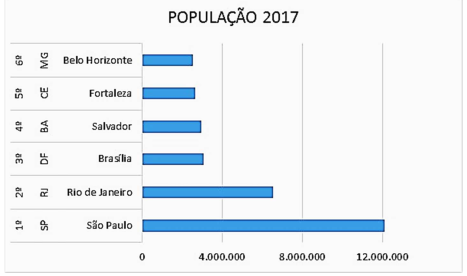
Todas as afirmativas a seguir estão corretas, EXCETO:
O texto abaixo apresenta em destaque um parágrafo do Microsoft Word, versão português do Office 2013, que começa com a palavra “Exemplo” e termina com a palavra “teclado”, no qual foram utilizadas as seguintes opções de formatação de parágrafo “Recuo” e “Espaçamento”, para se definir a posição inicial do parágrafo e o espaçamento entre as linhas do texto:
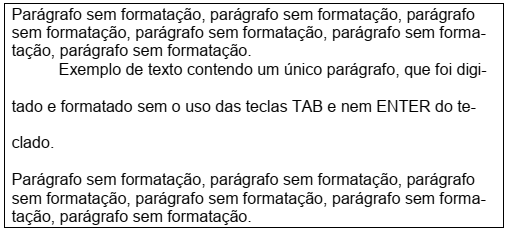
Analise as seguintes afirmativas sobre as opções disponíveis no grupo “Plano de Fundo da Página” da guia “DESIGN” do Microsoft Word, versão português do Office 2013:
I – O ícone  corresponde à opção “Marca D’água”.
II – O ícone  corresponde à opção “Cor da Página”.
III – O ícone  corresponde à opção “Margens da Página”.
Estão CORRETAS as afirmativas:
READ THE FOLLOWING TEXT AND CHOOSE THE OPTION WHICH BEST COMPLETES EACH QUESTION ACCORDING TO IT:
Technology has created more jobs than it has destroyed
The battle between men and machines goes back centuries. Are they taking
our jobs? Or are they easing our workload? A study by economists at the consultancy
Deloitte seeks to shed new light on the relationship between jobs and the
rise of technology by searching through census data for England and Wales going
back to 1871.
Their conclusion is that, rather than destroying jobs, technology has been a “great job-creating machine”. Findings by Deloitte such as rise in bar staff since the 1950s or a surge in the number of hairdressers this century suggest to the authors that technology has increased spending power, therefore creating new demand and new jobs. Their study argues that the debate has been twisted towards the job-destroying effects of technological change, which are more easily observed than its creative aspects.
Going back over past figures paints a more balanced picture, say authors Ian Stewart and Alex Cole. “The dominant trend is of contracting employment in agriculture and manufacturing being more than balanced by rapid growth in the caring, creative, technology and business services sectors,” they write. “Machines will take on more repetitive and laborious tasks, but they seem no closer to eliminating the need for human labor than at any time in the last 150 years.”
According to the study, hard, dangerous and dull jobs have declined. In some sectors, technology has quite clearly cost jobs, but they question whether they are really jobs we would want to hold on to. Technology directly substitutes human muscle power and, in so doing, raises productivity and shrinks employment. “In the UK the first sector to feel this effect on any scale was agriculture,” says the study.
The study also found out that ‘caring’ jobs have increased. The report cites a “profound shift”, with labor switching from its historic role, as a source of raw power, to the care, education and provision of services to others. Technological progress has cut the prices of essentials, such as food, and the price of bigger household items such as TVs and kitchen appliances, notes Stewart. That leaves more money to spend on leisure, and creates new demand and new jobs, which may explain the big rise in bar staff, he adds. “_______ the decline in the traditional pub, census data shows that the number of people employed in bars rose fourfold between 1951 and 2011,” the report says.
The Deloitte economists believe that rising incomes have allowed consumers to spend more on personal services, such as grooming. That in turn has driven employment of hairdressers. So, while in 1871 there was one hairdresser or barber for every 1,793 citizens of England and Wales; today there is one for every 287 people.
(Adapted from: https://goo.gl/7V5vuw. Access: 02/02/2018.)
READ THE FOLLOWING TEXT AND CHOOSE THE OPTION WHICH BEST COMPLETES EACH QUESTION ACCORDING TO IT:
Technology has created more jobs than it has destroyed
The battle between men and machines goes back centuries. Are they taking
our jobs? Or are they easing our workload? A study by economists at the consultancy
Deloitte seeks to shed new light on the relationship between jobs and the
rise of technology by searching through census data for England and Wales going
back to 1871.
Their conclusion is that, rather than destroying jobs, technology has been a “great job-creating machine”. Findings by Deloitte such as rise in bar staff since the 1950s or a surge in the number of hairdressers this century suggest to the authors that technology has increased spending power, therefore creating new demand and new jobs. Their study argues that the debate has been twisted towards the job-destroying effects of technological change, which are more easily observed than its creative aspects.
Going back over past figures paints a more balanced picture, say authors Ian Stewart and Alex Cole. “The dominant trend is of contracting employment in agriculture and manufacturing being more than balanced by rapid growth in the caring, creative, technology and business services sectors,” they write. “Machines will take on more repetitive and laborious tasks, but they seem no closer to eliminating the need for human labor than at any time in the last 150 years.”
According to the study, hard, dangerous and dull jobs have declined. In some sectors, technology has quite clearly cost jobs, but they question whether they are really jobs we would want to hold on to. Technology directly substitutes human muscle power and, in so doing, raises productivity and shrinks employment. “In the UK the first sector to feel this effect on any scale was agriculture,” says the study.
The study also found out that ‘caring’ jobs have increased. The report cites a “profound shift”, with labor switching from its historic role, as a source of raw power, to the care, education and provision of services to others. Technological progress has cut the prices of essentials, such as food, and the price of bigger household items such as TVs and kitchen appliances, notes Stewart. That leaves more money to spend on leisure, and creates new demand and new jobs, which may explain the big rise in bar staff, he adds. “_______ the decline in the traditional pub, census data shows that the number of people employed in bars rose fourfold between 1951 and 2011,” the report says.
The Deloitte economists believe that rising incomes have allowed consumers to spend more on personal services, such as grooming. That in turn has driven employment of hairdressers. So, while in 1871 there was one hairdresser or barber for every 1,793 citizens of England and Wales; today there is one for every 287 people.
(Adapted from: https://goo.gl/7V5vuw. Access: 02/02/2018.)
READ THE FOLLOWING TEXT AND CHOOSE THE OPTION WHICH BEST COMPLETES EACH QUESTION ACCORDING TO IT:
Technology has created more jobs than it has destroyed
The battle between men and machines goes back centuries. Are they taking
our jobs? Or are they easing our workload? A study by economists at the consultancy
Deloitte seeks to shed new light on the relationship between jobs and the
rise of technology by searching through census data for England and Wales going
back to 1871.
Their conclusion is that, rather than destroying jobs, technology has been a “great job-creating machine”. Findings by Deloitte such as rise in bar staff since the 1950s or a surge in the number of hairdressers this century suggest to the authors that technology has increased spending power, therefore creating new demand and new jobs. Their study argues that the debate has been twisted towards the job-destroying effects of technological change, which are more easily observed than its creative aspects.
Going back over past figures paints a more balanced picture, say authors Ian Stewart and Alex Cole. “The dominant trend is of contracting employment in agriculture and manufacturing being more than balanced by rapid growth in the caring, creative, technology and business services sectors,” they write. “Machines will take on more repetitive and laborious tasks, but they seem no closer to eliminating the need for human labor than at any time in the last 150 years.”
According to the study, hard, dangerous and dull jobs have declined. In some sectors, technology has quite clearly cost jobs, but they question whether they are really jobs we would want to hold on to. Technology directly substitutes human muscle power and, in so doing, raises productivity and shrinks employment. “In the UK the first sector to feel this effect on any scale was agriculture,” says the study.
The study also found out that ‘caring’ jobs have increased. The report cites a “profound shift”, with labor switching from its historic role, as a source of raw power, to the care, education and provision of services to others. Technological progress has cut the prices of essentials, such as food, and the price of bigger household items such as TVs and kitchen appliances, notes Stewart. That leaves more money to spend on leisure, and creates new demand and new jobs, which may explain the big rise in bar staff, he adds. “_______ the decline in the traditional pub, census data shows that the number of people employed in bars rose fourfold between 1951 and 2011,” the report says.
The Deloitte economists believe that rising incomes have allowed consumers to spend more on personal services, such as grooming. That in turn has driven employment of hairdressers. So, while in 1871 there was one hairdresser or barber for every 1,793 citizens of England and Wales; today there is one for every 287 people.
(Adapted from: https://goo.gl/7V5vuw. Access: 02/02/2018.)
READ THE FOLLOWING TEXT AND CHOOSE THE OPTION WHICH BEST COMPLETES EACH QUESTION ACCORDING TO IT:
Technology has created more jobs than it has destroyed
The battle between men and machines goes back centuries. Are they taking
our jobs? Or are they easing our workload? A study by economists at the consultancy
Deloitte seeks to shed new light on the relationship between jobs and the
rise of technology by searching through census data for England and Wales going
back to 1871.
Their conclusion is that, rather than destroying jobs, technology has been a “great job-creating machine”. Findings by Deloitte such as rise in bar staff since the 1950s or a surge in the number of hairdressers this century suggest to the authors that technology has increased spending power, therefore creating new demand and new jobs. Their study argues that the debate has been twisted towards the job-destroying effects of technological change, which are more easily observed than its creative aspects.
Going back over past figures paints a more balanced picture, say authors Ian Stewart and Alex Cole. “The dominant trend is of contracting employment in agriculture and manufacturing being more than balanced by rapid growth in the caring, creative, technology and business services sectors,” they write. “Machines will take on more repetitive and laborious tasks, but they seem no closer to eliminating the need for human labor than at any time in the last 150 years.”
According to the study, hard, dangerous and dull jobs have declined. In some sectors, technology has quite clearly cost jobs, but they question whether they are really jobs we would want to hold on to. Technology directly substitutes human muscle power and, in so doing, raises productivity and shrinks employment. “In the UK the first sector to feel this effect on any scale was agriculture,” says the study.
The study also found out that ‘caring’ jobs have increased. The report cites a “profound shift”, with labor switching from its historic role, as a source of raw power, to the care, education and provision of services to others. Technological progress has cut the prices of essentials, such as food, and the price of bigger household items such as TVs and kitchen appliances, notes Stewart. That leaves more money to spend on leisure, and creates new demand and new jobs, which may explain the big rise in bar staff, he adds. “_______ the decline in the traditional pub, census data shows that the number of people employed in bars rose fourfold between 1951 and 2011,” the report says.
The Deloitte economists believe that rising incomes have allowed consumers to spend more on personal services, such as grooming. That in turn has driven employment of hairdressers. So, while in 1871 there was one hairdresser or barber for every 1,793 citizens of England and Wales; today there is one for every 287 people.
(Adapted from: https://goo.gl/7V5vuw. Access: 02/02/2018.)
READ THE FOLLOWING TEXT AND CHOOSE THE OPTION WHICH BEST COMPLETES EACH QUESTION ACCORDING TO IT:
Technology has created more jobs than it has destroyed
The battle between men and machines goes back centuries. Are they taking
our jobs? Or are they easing our workload? A study by economists at the consultancy
Deloitte seeks to shed new light on the relationship between jobs and the
rise of technology by searching through census data for England and Wales going
back to 1871.
Their conclusion is that, rather than destroying jobs, technology has been a “great job-creating machine”. Findings by Deloitte such as rise in bar staff since the 1950s or a surge in the number of hairdressers this century suggest to the authors that technology has increased spending power, therefore creating new demand and new jobs. Their study argues that the debate has been twisted towards the job-destroying effects of technological change, which are more easily observed than its creative aspects.
Going back over past figures paints a more balanced picture, say authors Ian Stewart and Alex Cole. “The dominant trend is of contracting employment in agriculture and manufacturing being more than balanced by rapid growth in the caring, creative, technology and business services sectors,” they write. “Machines will take on more repetitive and laborious tasks, but they seem no closer to eliminating the need for human labor than at any time in the last 150 years.”
According to the study, hard, dangerous and dull jobs have declined. In some sectors, technology has quite clearly cost jobs, but they question whether they are really jobs we would want to hold on to. Technology directly substitutes human muscle power and, in so doing, raises productivity and shrinks employment. “In the UK the first sector to feel this effect on any scale was agriculture,” says the study.
The study also found out that ‘caring’ jobs have increased. The report cites a “profound shift”, with labor switching from its historic role, as a source of raw power, to the care, education and provision of services to others. Technological progress has cut the prices of essentials, such as food, and the price of bigger household items such as TVs and kitchen appliances, notes Stewart. That leaves more money to spend on leisure, and creates new demand and new jobs, which may explain the big rise in bar staff, he adds. “_______ the decline in the traditional pub, census data shows that the number of people employed in bars rose fourfold between 1951 and 2011,” the report says.
The Deloitte economists believe that rising incomes have allowed consumers to spend more on personal services, such as grooming. That in turn has driven employment of hairdressers. So, while in 1871 there was one hairdresser or barber for every 1,793 citizens of England and Wales; today there is one for every 287 people.
(Adapted from: https://goo.gl/7V5vuw. Access: 02/02/2018.)
READ THE FOLLOWING TEXT AND CHOOSE THE OPTION WHICH BEST COMPLETES EACH QUESTION ACCORDING TO IT:
Technology has created more jobs than it has destroyed
The battle between men and machines goes back centuries. Are they taking
our jobs? Or are they easing our workload? A study by economists at the consultancy
Deloitte seeks to shed new light on the relationship between jobs and the
rise of technology by searching through census data for England and Wales going
back to 1871.
Their conclusion is that, rather than destroying jobs, technology has been a “great job-creating machine”. Findings by Deloitte such as rise in bar staff since the 1950s or a surge in the number of hairdressers this century suggest to the authors that technology has increased spending power, therefore creating new demand and new jobs. Their study argues that the debate has been twisted towards the job-destroying effects of technological change, which are more easily observed than its creative aspects.
Going back over past figures paints a more balanced picture, say authors Ian Stewart and Alex Cole. “The dominant trend is of contracting employment in agriculture and manufacturing being more than balanced by rapid growth in the caring, creative, technology and business services sectors,” they write. “Machines will take on more repetitive and laborious tasks, but they seem no closer to eliminating the need for human labor than at any time in the last 150 years.”
According to the study, hard, dangerous and dull jobs have declined. In some sectors, technology has quite clearly cost jobs, but they question whether they are really jobs we would want to hold on to. Technology directly substitutes human muscle power and, in so doing, raises productivity and shrinks employment. “In the UK the first sector to feel this effect on any scale was agriculture,” says the study.
The study also found out that ‘caring’ jobs have increased. The report cites a “profound shift”, with labor switching from its historic role, as a source of raw power, to the care, education and provision of services to others. Technological progress has cut the prices of essentials, such as food, and the price of bigger household items such as TVs and kitchen appliances, notes Stewart. That leaves more money to spend on leisure, and creates new demand and new jobs, which may explain the big rise in bar staff, he adds. “_______ the decline in the traditional pub, census data shows that the number of people employed in bars rose fourfold between 1951 and 2011,” the report says.
The Deloitte economists believe that rising incomes have allowed consumers to spend more on personal services, such as grooming. That in turn has driven employment of hairdressers. So, while in 1871 there was one hairdresser or barber for every 1,793 citizens of England and Wales; today there is one for every 287 people.
(Adapted from: https://goo.gl/7V5vuw. Access: 02/02/2018.)
READ THE FOLLOWING TEXT AND CHOOSE THE OPTION WHICH BEST COMPLETES EACH QUESTION ACCORDING TO IT:
Technology has created more jobs than it has destroyed
The battle between men and machines goes back centuries. Are they taking
our jobs? Or are they easing our workload? A study by economists at the consultancy
Deloitte seeks to shed new light on the relationship between jobs and the
rise of technology by searching through census data for England and Wales going
back to 1871.
Their conclusion is that, rather than destroying jobs, technology has been a “great job-creating machine”. Findings by Deloitte such as rise in bar staff since the 1950s or a surge in the number of hairdressers this century suggest to the authors that technology has increased spending power, therefore creating new demand and new jobs. Their study argues that the debate has been twisted towards the job-destroying effects of technological change, which are more easily observed than its creative aspects.
Going back over past figures paints a more balanced picture, say authors Ian Stewart and Alex Cole. “The dominant trend is of contracting employment in agriculture and manufacturing being more than balanced by rapid growth in the caring, creative, technology and business services sectors,” they write. “Machines will take on more repetitive and laborious tasks, but they seem no closer to eliminating the need for human labor than at any time in the last 150 years.”
According to the study, hard, dangerous and dull jobs have declined. In some sectors, technology has quite clearly cost jobs, but they question whether they are really jobs we would want to hold on to. Technology directly substitutes human muscle power and, in so doing, raises productivity and shrinks employment. “In the UK the first sector to feel this effect on any scale was agriculture,” says the study.
The study also found out that ‘caring’ jobs have increased. The report cites a “profound shift”, with labor switching from its historic role, as a source of raw power, to the care, education and provision of services to others. Technological progress has cut the prices of essentials, such as food, and the price of bigger household items such as TVs and kitchen appliances, notes Stewart. That leaves more money to spend on leisure, and creates new demand and new jobs, which may explain the big rise in bar staff, he adds. “_______ the decline in the traditional pub, census data shows that the number of people employed in bars rose fourfold between 1951 and 2011,” the report says.
The Deloitte economists believe that rising incomes have allowed consumers to spend more on personal services, such as grooming. That in turn has driven employment of hairdressers. So, while in 1871 there was one hairdresser or barber for every 1,793 citizens of England and Wales; today there is one for every 287 people.
(Adapted from: https://goo.gl/7V5vuw. Access: 02/02/2018.)
 Conheça nossos planos