Questões de Concurso
Comentadas para ivin
Foram encontradas 6.313 questões
Resolva questões gratuitamente!
Junte-se a mais de 4 milhões de concurseiros!


Text 1
The Courage to Be Imperfect
Perfectionism, self-examination and the kissing of frogs
Michael J. Formica
Posted July 9, 2009
Someone once said that there are two kinds of people in the world - those who are right... And nowhere are we more inclined to want to be right than with regard to ourselves. In fact, more often than not, we want to be perfect. What this striving for perfection often leads to is a kind of social paralysis.
If we are constantly focused on making the right decision, we will sometimes find ourselves in a place ranging from morbid indecision to outright fear. Getting it right, making the good choice and avoiding the faux pas endorse in us a rigidity of character and action that is limiting and, in derailing our momentum, deflects our potential evolution.
The willingness to be wrong or, as more properly suggested here, the courage to be imperfect, allows us the opportunity to discover many things about ourselves. Without exercising this courage, we put ourselves into a straightjacket of sorts, setting our thoughts and actions in a dismally fettered pattern.
This line of thinking was prompted by a conversation that I had with a client yesterday where in she had come to the conclusion that she was a bit of a perfectionist. What she had puzzled out for herself was that her perfectionism, rather than serving her, was actually hindering her ability to be flexible, open to new possibilities and clear about what she wanted for herself and her life.
At some point, I suggested that the fairy tale about the princess kissing frogs to find the prince was a good metaphor for stepping outside of one's comfort zone and "trying something on for size' without an overly self-conscious regard for the potential consequences of the choice. She mentioned that a few days earlier she had seen the trailer for a movie in which the princess kissed a frog and turned into a frog herself. Brilliant.
If we are unwilling to kiss a few frogs - to explore the possibilities that are presented to us in anticipation of finding something unexpected - then we, ourselves, may turn into frogs. That is, become stuck in our place and condemned to something that is not us. We can, without the willingness to be open to making mistakes, limit ourselves right into a state of personal inauthenticity.
Available
in:<https://www.psychologytoday.com/intl/blog/enlightened-living/200907/the-courage-be-imperfect>
I. In the structure “The willingness to be wrong or” the word “willingness” is an adjective formed by suffix.
II. In the structure “many things about ourselves” has a reflexive pronoun and preposition.
III. The word “straightjacket” means a situation in which you feel comfortable and in which your ability and determination are not being tested.
IV. In the expression “dismally fettered pattern” the word “fettered” can be replace by “enchain”.
Which ones are correct?
Text 1
The Courage to Be Imperfect
Perfectionism, self-examination and the kissing of frogs
Michael J. Formica
Posted July 9, 2009
Someone once said that there are two kinds of people in the world - those who are right... And nowhere are we more inclined to want to be right than with regard to ourselves. In fact, more often than not, we want to be perfect. What this striving for perfection often leads to is a kind of social paralysis.
If we are constantly focused on making the right decision, we will sometimes find ourselves in a place ranging from morbid indecision to outright fear. Getting it right, making the good choice and avoiding the faux pas endorse in us a rigidity of character and action that is limiting and, in derailing our momentum, deflects our potential evolution.
The willingness to be wrong or, as more properly suggested here, the courage to be imperfect, allows us the opportunity to discover many things about ourselves. Without exercising this courage, we put ourselves into a straightjacket of sorts, setting our thoughts and actions in a dismally fettered pattern.
This line of thinking was prompted by a conversation that I had with a client yesterday where in she had come to the conclusion that she was a bit of a perfectionist. What she had puzzled out for herself was that her perfectionism, rather than serving her, was actually hindering her ability to be flexible, open to new possibilities and clear about what she wanted for herself and her life.
At some point, I suggested that the fairy tale about the princess kissing frogs to find the prince was a good metaphor for stepping outside of one's comfort zone and "trying something on for size' without an overly self-conscious regard for the potential consequences of the choice. She mentioned that a few days earlier she had seen the trailer for a movie in which the princess kissed a frog and turned into a frog herself. Brilliant.
If we are unwilling to kiss a few frogs - to explore the possibilities that are presented to us in anticipation of finding something unexpected - then we, ourselves, may turn into frogs. That is, become stuck in our place and condemned to something that is not us. We can, without the willingness to be open to making mistakes, limit ourselves right into a state of personal inauthenticity.
Available
in:<https://www.psychologytoday.com/intl/blog/enlightened-living/200907/the-courage-be-imperfect>
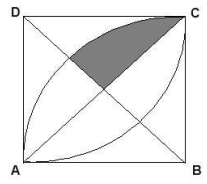
 e
 são as diagonais deste quadrado
e que
 é um arco de circunferência com centro
em B e
 é outro arco de circunferência com
centro em D. Podemos
afirmar que a área
destacada em cinza é
igual a:
Utilize π = 3
O cálcio é importante para o crescimento e manutenção de ossos e dentes fortes, funções neural e muscular saudáveis, coagulação sanguínea e liberação de hormônios. A ingestão diária é necessária para compensar as perdas obrigatórias na urina e nas fezes. Analise as afirmativas abaixo sobre a temática, julgando verdadeiro (V) ou falso (F):
( ) Níveis sanguíneos baixos de cálcio podem causar convulsões e tetania e formigamentos, decorrente da atividade neuromuscular aumentada.
( ) Quando as concentrações de cálcio estão altas os sais de cálcio podem precipitar-se nos tecidos moles e pode ocorrer a formação de cálculos renais.
( ) Quando as concentrações plasmáticas de cálcio ionizado forem elevadas, ocorre excreção de paratormônio para aumentar o aporte de cálcio pelos rins, ossos e estômago.
( ) O equilíbrio positivo do cálcio ocorre quando a sua excreção for maior que a ingestão de cálcio.
A sequência correta da analise das afirmativas é:
Considere o texto abaixo para responder a questão.
“Toda aprendizagem relevante é, no fundo, um processo de diálogo com a realidade social e natural ou com a realidade imaginada. (...) Esse diálogo criador requer, em nossa opinião, uma comunidade democrática de aprendizagem, aberta ao exame e à participação real dos membros que a compõem, até o ponto de aceitar que se questione sua própria razão, as normas que regem as trocas e a própria proposta curricular. (1998, p.97)
PÉREZ GÓMEZ, A .I. A cultura escolar na sociedade neoliberal.
Porto Alegre: Artes Médicas, 2000.
Um exemplo que bem ilustra como chamamos o tipo de palavra que a questão anterior mencionou está na opção:

 Conheça nossos planos