Questões de Concurso
Para consulplan
Foram encontradas 19.504 questões
Resolva questões gratuitamente!
Junte-se a mais de 4 milhões de concurseiros!


Analise as afirmativas a seguir.
I. Todo número primo tem dois divisores: o 1 e ele mesmo.
II. O número 70 decomposto em fatores primos é 2 x 5 x 7, onde 2, nessa fatoração, é o único número composto.
III. O número 2 é o único número natural par, primo.
IV. O número 144 tem 15 divisores.
V. A soma dos divisores de 144 é 403 que é um número composto.
Estão corretas apenas as afirmativas
Um entrevistador do setor de Recursos Humanos (RH) de uma empresa atendeu três candidatas numa entrevista, a fim de ocupar as três vagas de empregos existentes nessa empresa. Uma delas é graduada em Letras, a outra é graduada em Física e a outra é graduada em Direito. O entrevistador sabe que uma delas se chama Aline, a outra se chama Fernanda e a outra se chama Alice. Sabe, ainda, que cada uma delas concluiu seu curso em estados diferentes: uma delas concluiu no estado do Rio de Janeiro (RJ), a outra concluiu no estado do Espírito Santo (ES) e a outra concluiu no estado de Minas Gerais (MG). Ao entrevistador, que queria identificar o nome e o estado em que elas concluíram seus cursos, elas deram as seguintes informações:
• a graduada em Letras: “Não concluí meu curso no ES e nem em MG”;
• a graduada em Física: “Meu nome não é Fernanda e nem Alice”; e,
• a graduada em Direito: “Nem eu nem Fernanda concluímos nossos cursos no ES.
O entrevistador concluiu, então, acertadamente, que:
Considere as seguintes proposições:
p: o Brasil é um país democrático e o time do Real Madrid, que pertence à França, foi campeão da última copa do mundo.
q: O número 14 é um número par ou o número 35 é um número múltiplo.
Considerando V as proposições verdadeiras e F as falsas, é correto afirmar que as proposições p e q são, respectivamente:
Determinar a ordem de grandeza de uma medida consiste em fornecer, como resultado, a potência de 10 mais próxima do valor encontrado para a grandeza, partindo da notação científica N . 10n . Em resumo, temos:
N ≥ √10 ⇨ordem de grandeza: 10n + 1
N < 10 ⇨ ordem de grandeza: 10n
Considere o raio da Terra igual a 6,37. 106 m e a distância da Terra ao Sol igual a 1,49. 1011. A ordem de grandeza
desses valores respectivamente é
“Um gato preto a atravessar o meu caminho significa que o animal está a ir para algum lado.”
(Groucho Marx.)
70% dos gatos abandonados são pretos. Os números foram partilhados pela RSPCA, baseados em 1.000 gatos abandonados ao seu cuidado.
A principal causa apontada é a dificuldade dos donos em tirar fotografias com eles. Numa sociedade dominada pela exposição nas redes sociais e pelas selfies, ter um gato que parece sempre a silhueta de um gato, não parece cativar. Mas o fenômeno com os gatos pretos vai muito mais além de uma simples questão fotográfica. As superstições ainda estão muito vivas na nossa sociedade e os gatos pretos acabam por representar um enigma para muitas pessoas, que chegam a temê-los de forma irracional.
(Disponível em: https://www.mundodosanimais.pt/gatos/gato-preto/.)
Ao sair de casa, Silvana viu um gato preto e, logo a seguir, caiu e quebrou o braço. Maria viu o mesmo gato e, alguns minutos depois, foi assaltada. Joseph também viu o mesmo gato e, ao sair do estacionamento, bateu com o carro. Logo, o fato é
Analisando e completando a tabela-verdade da proposição P(p, q) = ~(p ^ ~q)
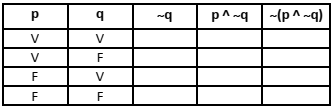
O resultado final da última coluna será
Observe a proposição a seguir.
xǂ 35 e y < 30
A sua NEGAÇÃO é
Wanderson, Marcos e Sérgio ocupam cargos de presidente, vice-presidente e supervisor numa determinada empresa. Cada um usa um meio de transporte para se dirigir ao trabalho: metrô, ônibus BRT e barca. Para descobrir que cargo cada um ocupa na empresa e o meio de transporte que cada um utiliza para se dirigir ao trabalho, temos as seguintes informações:
• Marcos anda de barca;
• Quem anda de metrô não é o presidente; e,
• Wanderson não é o vice-presidente e Sérgio é o supervisor.
Considerando as seguintes conclusões:
I. Sérgio anda de metrô.
II. Marcos é o vice-presidente da empresa.
III. Wanderson vai de ônibus BRT.
Está(ão) correta(s) a(s) afirmativa(s)
Trapezista
Querida, eu juro que não era eu. Que coisa ridícula! Se você estivesse aqui – Alô? Alô? – olha, se você estivesse aqui ia ver a minha cara, inocente como o Diabo. O quê? Mas como, ironia? “Como o Diabo” é força de expressão, que diabo. Você acha que eu ia brincar numa hora desta? Alô! Eu juro, pelo que há de mais sagrado, pelo túmulo de minha mãe, pela nossa conta no banco, pela cabeça dos nossos filhos que não era eu naquela foto de carnaval no Cascalho que saiu na Folha da Manhã. O quê? Alô! Alô! Como é que eu sei qual é a foto? Mas você não acaba de dizer... Ah, você não chegou a dizer... ah, você não chegou a dizer qual era o jornal. Bom, bem. Você não vai acreditar mas acontece que eu também vi a foto. Não desliga! Eu também vi a foto e tive a mesma reação. Que sujeito parecido comigo, pensei. Podia ser gêmeo. Agora, querida, nunca, em nenhum momento, está ouvindo? Em nenhum momento me passou pela cabeça a ideia de que você fosse pensar — querida, eu estou até começando a achar graça —, que você fosse pensar que aquele era eu. Por amor de Deus. Pra começo de conversa você pode me imaginar de pareô vermelho e colar havaiano, pulando no Cascalho com uma bandida em cada braço? Não, faça-me o favor. E a cara das bandidas! Francamente, já que você não confia na minha fidelidade, que confiasse no meu bom gosto, poxa! O quê? Querida, eu não disse “pareô vermelho”. Tenho a mais absoluta, a mais tranquila, a mais inabalável certeza que eu disse apenas “pareô”. Como é que eu podia saber que era vermelho se a fotografia não era em cores, certo? Alô? Alô? Não desliga! Não... Olha, se você desligar está tudo acabado. Tudo acabado. Você não precisa nem voltar da praia. Fica aí com as crianças e funda uma colônia de pescadores. Não, estou falando sério.
Perdi a paciência. Afinal, se você não confia em mim não adianta nada a gente continuar. Um casamento deve se... se... como é mesmo a palavra?... se alicerçar na confiança mútua. O casamento é como um número de trapézio, um precisa confiar no outro até de olhos fechados. É isso mesmo. E sabe de outra coisa? Eu não precisava ficar na cidade durante o carnaval. Foi tudo mentira. Eu não tinha trabalho acumulado no escritório coisíssima nenhuma. Eu fiquei sabe para quê? Para testar você. Ficar na cidade foi como dar um salto mortal, sem rede, só para saber se você me pegaria no ar. Um teste do nosso amor. E você falhou. Você me decepcionou. Não vou nem gritar por socorro. Não, não me interrompa.
Desculpas não adiantam mais. O próximo som que você ouvir será do meu corpo se estatelando, com o baque surdo da desilusão, no duro chão da realidade. Alô? Eu disse que o próximo som... que... O quê? Você não estava ouvindo nada? Qual foi a última coisa que você ouviu, coração?
Pois sim, eu não falei — tenho certeza absoluta que não falei — em “pareô vermelho”. Sei lá que cor era o pareô daquele cretino na foto. Você precisa acreditar em mim, querida. O casamento é como um número de...
Sim. Não. Claro. Como? Não. Certo. Quando você voltar pode perguntar para o... Você quer que eu jure? De novo? Pois eu juro. Passei sábado, domingo, segunda e terça no escritório. Não vi carnaval nem pela janela. Só vim em casa tomar um banho e comer um sanduíche e vou logo voltar para lá. Como? Você telefonou para o escritório. Meu bem, é claro que a telefonista não estava trabalhando, não é, bem. Ha, ha, você é demais. Olha, querida? Alô? Sábado eu estou aí. beijo nas crianças. Socorro. Eu disse, um beijo.
(In: Veríssimo, L. F. As mentiras que os homens contam. São Paulo, Objetiva: ????.)
Trapezista
Querida, eu juro que não era eu. Que coisa ridícula! Se você estivesse aqui – Alô? Alô? – olha, se você estivesse aqui ia ver a minha cara, inocente como o Diabo. O quê? Mas como, ironia? “Como o Diabo” é força de expressão, que diabo. Você acha que eu ia brincar numa hora desta? Alô! Eu juro, pelo que há de mais sagrado, pelo túmulo de minha mãe, pela nossa conta no banco, pela cabeça dos nossos filhos que não era eu naquela foto de carnaval no Cascalho que saiu na Folha da Manhã. O quê? Alô! Alô! Como é que eu sei qual é a foto? Mas você não acaba de dizer... Ah, você não chegou a dizer... ah, você não chegou a dizer qual era o jornal. Bom, bem. Você não vai acreditar mas acontece que eu também vi a foto. Não desliga! Eu também vi a foto e tive a mesma reação. Que sujeito parecido comigo, pensei. Podia ser gêmeo. Agora, querida, nunca, em nenhum momento, está ouvindo? Em nenhum momento me passou pela cabeça a ideia de que você fosse pensar — querida, eu estou até começando a achar graça —, que você fosse pensar que aquele era eu. Por amor de Deus. Pra começo de conversa você pode me imaginar de pareô vermelho e colar havaiano, pulando no Cascalho com uma bandida em cada braço? Não, faça-me o favor. E a cara das bandidas! Francamente, já que você não confia na minha fidelidade, que confiasse no meu bom gosto, poxa! O quê? Querida, eu não disse “pareô vermelho”. Tenho a mais absoluta, a mais tranquila, a mais inabalável certeza que eu disse apenas “pareô”. Como é que eu podia saber que era vermelho se a fotografia não era em cores, certo? Alô? Alô? Não desliga! Não... Olha, se você desligar está tudo acabado. Tudo acabado. Você não precisa nem voltar da praia. Fica aí com as crianças e funda uma colônia de pescadores. Não, estou falando sério.
Perdi a paciência. Afinal, se você não confia em mim não adianta nada a gente continuar. Um casamento deve se... se... como é mesmo a palavra?... se alicerçar na confiança mútua. O casamento é como um número de trapézio, um precisa confiar no outro até de olhos fechados. É isso mesmo. E sabe de outra coisa? Eu não precisava ficar na cidade durante o carnaval. Foi tudo mentira. Eu não tinha trabalho acumulado no escritório coisíssima nenhuma. Eu fiquei sabe para quê? Para testar você. Ficar na cidade foi como dar um salto mortal, sem rede, só para saber se você me pegaria no ar. Um teste do nosso amor. E você falhou. Você me decepcionou. Não vou nem gritar por socorro. Não, não me interrompa.
Desculpas não adiantam mais. O próximo som que você ouvir será do meu corpo se estatelando, com o baque surdo da desilusão, no duro chão da realidade. Alô? Eu disse que o próximo som... que... O quê? Você não estava ouvindo nada? Qual foi a última coisa que você ouviu, coração?
Pois sim, eu não falei — tenho certeza absoluta que não falei — em “pareô vermelho”. Sei lá que cor era o pareô daquele cretino na foto. Você precisa acreditar em mim, querida. O casamento é como um número de...
Sim. Não. Claro. Como? Não. Certo. Quando você voltar pode perguntar para o... Você quer que eu jure? De novo? Pois eu juro. Passei sábado, domingo, segunda e terça no escritório. Não vi carnaval nem pela janela. Só vim em casa tomar um banho e comer um sanduíche e vou logo voltar para lá. Como? Você telefonou para o escritório. Meu bem, é claro que a telefonista não estava trabalhando, não é, bem. Ha, ha, você é demais. Olha, querida? Alô? Sábado eu estou aí. beijo nas crianças. Socorro. Eu disse, um beijo.
(In: Veríssimo, L. F. As mentiras que os homens contam. São Paulo, Objetiva: ????.)
Trapezista
Querida, eu juro que não era eu. Que coisa ridícula! Se você estivesse aqui – Alô? Alô? – olha, se você estivesse aqui ia ver a minha cara, inocente como o Diabo. O quê? Mas como, ironia? “Como o Diabo” é força de expressão, que diabo. Você acha que eu ia brincar numa hora desta? Alô! Eu juro, pelo que há de mais sagrado, pelo túmulo de minha mãe, pela nossa conta no banco, pela cabeça dos nossos filhos que não era eu naquela foto de carnaval no Cascalho que saiu na Folha da Manhã. O quê? Alô! Alô! Como é que eu sei qual é a foto? Mas você não acaba de dizer... Ah, você não chegou a dizer... ah, você não chegou a dizer qual era o jornal. Bom, bem. Você não vai acreditar mas acontece que eu também vi a foto. Não desliga! Eu também vi a foto e tive a mesma reação. Que sujeito parecido comigo, pensei. Podia ser gêmeo. Agora, querida, nunca, em nenhum momento, está ouvindo? Em nenhum momento me passou pela cabeça a ideia de que você fosse pensar — querida, eu estou até começando a achar graça —, que você fosse pensar que aquele era eu. Por amor de Deus. Pra começo de conversa você pode me imaginar de pareô vermelho e colar havaiano, pulando no Cascalho com uma bandida em cada braço? Não, faça-me o favor. E a cara das bandidas! Francamente, já que você não confia na minha fidelidade, que confiasse no meu bom gosto, poxa! O quê? Querida, eu não disse “pareô vermelho”. Tenho a mais absoluta, a mais tranquila, a mais inabalável certeza que eu disse apenas “pareô”. Como é que eu podia saber que era vermelho se a fotografia não era em cores, certo? Alô? Alô? Não desliga! Não... Olha, se você desligar está tudo acabado. Tudo acabado. Você não precisa nem voltar da praia. Fica aí com as crianças e funda uma colônia de pescadores. Não, estou falando sério.
Perdi a paciência. Afinal, se você não confia em mim não adianta nada a gente continuar. Um casamento deve se... se... como é mesmo a palavra?... se alicerçar na confiança mútua. O casamento é como um número de trapézio, um precisa confiar no outro até de olhos fechados. É isso mesmo. E sabe de outra coisa? Eu não precisava ficar na cidade durante o carnaval. Foi tudo mentira. Eu não tinha trabalho acumulado no escritório coisíssima nenhuma. Eu fiquei sabe para quê? Para testar você. Ficar na cidade foi como dar um salto mortal, sem rede, só para saber se você me pegaria no ar. Um teste do nosso amor. E você falhou. Você me decepcionou. Não vou nem gritar por socorro. Não, não me interrompa.
Desculpas não adiantam mais. O próximo som que você ouvir será do meu corpo se estatelando, com o baque surdo da desilusão, no duro chão da realidade. Alô? Eu disse que o próximo som... que... O quê? Você não estava ouvindo nada? Qual foi a última coisa que você ouviu, coração?
Pois sim, eu não falei — tenho certeza absoluta que não falei — em “pareô vermelho”. Sei lá que cor era o pareô daquele cretino na foto. Você precisa acreditar em mim, querida. O casamento é como um número de...
Sim. Não. Claro. Como? Não. Certo. Quando você voltar pode perguntar para o... Você quer que eu jure? De novo? Pois eu juro. Passei sábado, domingo, segunda e terça no escritório. Não vi carnaval nem pela janela. Só vim em casa tomar um banho e comer um sanduíche e vou logo voltar para lá. Como? Você telefonou para o escritório. Meu bem, é claro que a telefonista não estava trabalhando, não é, bem. Ha, ha, você é demais. Olha, querida? Alô? Sábado eu estou aí. beijo nas crianças. Socorro. Eu disse, um beijo.
(In: Veríssimo, L. F. As mentiras que os homens contam. São Paulo, Objetiva: ????.)
Trapezista
Querida, eu juro que não era eu. Que coisa ridícula! Se você estivesse aqui – Alô? Alô? – olha, se você estivesse aqui ia ver a minha cara, inocente como o Diabo. O quê? Mas como, ironia? “Como o Diabo” é força de expressão, que diabo. Você acha que eu ia brincar numa hora desta? Alô! Eu juro, pelo que há de mais sagrado, pelo túmulo de minha mãe, pela nossa conta no banco, pela cabeça dos nossos filhos que não era eu naquela foto de carnaval no Cascalho que saiu na Folha da Manhã. O quê? Alô! Alô! Como é que eu sei qual é a foto? Mas você não acaba de dizer... Ah, você não chegou a dizer... ah, você não chegou a dizer qual era o jornal. Bom, bem. Você não vai acreditar mas acontece que eu também vi a foto. Não desliga! Eu também vi a foto e tive a mesma reação. Que sujeito parecido comigo, pensei. Podia ser gêmeo. Agora, querida, nunca, em nenhum momento, está ouvindo? Em nenhum momento me passou pela cabeça a ideia de que você fosse pensar — querida, eu estou até começando a achar graça —, que você fosse pensar que aquele era eu. Por amor de Deus. Pra começo de conversa você pode me imaginar de pareô vermelho e colar havaiano, pulando no Cascalho com uma bandida em cada braço? Não, faça-me o favor. E a cara das bandidas! Francamente, já que você não confia na minha fidelidade, que confiasse no meu bom gosto, poxa! O quê? Querida, eu não disse “pareô vermelho”. Tenho a mais absoluta, a mais tranquila, a mais inabalável certeza que eu disse apenas “pareô”. Como é que eu podia saber que era vermelho se a fotografia não era em cores, certo? Alô? Alô? Não desliga! Não... Olha, se você desligar está tudo acabado. Tudo acabado. Você não precisa nem voltar da praia. Fica aí com as crianças e funda uma colônia de pescadores. Não, estou falando sério.
Perdi a paciência. Afinal, se você não confia em mim não adianta nada a gente continuar. Um casamento deve se... se... como é mesmo a palavra?... se alicerçar na confiança mútua. O casamento é como um número de trapézio, um precisa confiar no outro até de olhos fechados. É isso mesmo. E sabe de outra coisa? Eu não precisava ficar na cidade durante o carnaval. Foi tudo mentira. Eu não tinha trabalho acumulado no escritório coisíssima nenhuma. Eu fiquei sabe para quê? Para testar você. Ficar na cidade foi como dar um salto mortal, sem rede, só para saber se você me pegaria no ar. Um teste do nosso amor. E você falhou. Você me decepcionou. Não vou nem gritar por socorro. Não, não me interrompa.
Desculpas não adiantam mais. O próximo som que você ouvir será do meu corpo se estatelando, com o baque surdo da desilusão, no duro chão da realidade. Alô? Eu disse que o próximo som... que... O quê? Você não estava ouvindo nada? Qual foi a última coisa que você ouviu, coração?
Pois sim, eu não falei — tenho certeza absoluta que não falei — em “pareô vermelho”. Sei lá que cor era o pareô daquele cretino na foto. Você precisa acreditar em mim, querida. O casamento é como um número de...
Sim. Não. Claro. Como? Não. Certo. Quando você voltar pode perguntar para o... Você quer que eu jure? De novo? Pois eu juro. Passei sábado, domingo, segunda e terça no escritório. Não vi carnaval nem pela janela. Só vim em casa tomar um banho e comer um sanduíche e vou logo voltar para lá. Como? Você telefonou para o escritório. Meu bem, é claro que a telefonista não estava trabalhando, não é, bem. Ha, ha, você é demais. Olha, querida? Alô? Sábado eu estou aí. beijo nas crianças. Socorro. Eu disse, um beijo.
(In: Veríssimo, L. F. As mentiras que os homens contam. São Paulo, Objetiva: ????.)
Trapezista
Querida, eu juro que não era eu. Que coisa ridícula! Se você estivesse aqui – Alô? Alô? – olha, se você estivesse aqui ia ver a minha cara, inocente como o Diabo. O quê? Mas como, ironia? “Como o Diabo” é força de expressão, que diabo. Você acha que eu ia brincar numa hora desta? Alô! Eu juro, pelo que há de mais sagrado, pelo túmulo de minha mãe, pela nossa conta no banco, pela cabeça dos nossos filhos que não era eu naquela foto de carnaval no Cascalho que saiu na Folha da Manhã. O quê? Alô! Alô! Como é que eu sei qual é a foto? Mas você não acaba de dizer... Ah, você não chegou a dizer... ah, você não chegou a dizer qual era o jornal. Bom, bem. Você não vai acreditar mas acontece que eu também vi a foto. Não desliga! Eu também vi a foto e tive a mesma reação. Que sujeito parecido comigo, pensei. Podia ser gêmeo. Agora, querida, nunca, em nenhum momento, está ouvindo? Em nenhum momento me passou pela cabeça a ideia de que você fosse pensar — querida, eu estou até começando a achar graça —, que você fosse pensar que aquele era eu. Por amor de Deus. Pra começo de conversa você pode me imaginar de pareô vermelho e colar havaiano, pulando no Cascalho com uma bandida em cada braço? Não, faça-me o favor. E a cara das bandidas! Francamente, já que você não confia na minha fidelidade, que confiasse no meu bom gosto, poxa! O quê? Querida, eu não disse “pareô vermelho”. Tenho a mais absoluta, a mais tranquila, a mais inabalável certeza que eu disse apenas “pareô”. Como é que eu podia saber que era vermelho se a fotografia não era em cores, certo? Alô? Alô? Não desliga! Não... Olha, se você desligar está tudo acabado. Tudo acabado. Você não precisa nem voltar da praia. Fica aí com as crianças e funda uma colônia de pescadores. Não, estou falando sério.
Perdi a paciência. Afinal, se você não confia em mim não adianta nada a gente continuar. Um casamento deve se... se... como é mesmo a palavra?... se alicerçar na confiança mútua. O casamento é como um número de trapézio, um precisa confiar no outro até de olhos fechados. É isso mesmo. E sabe de outra coisa? Eu não precisava ficar na cidade durante o carnaval. Foi tudo mentira. Eu não tinha trabalho acumulado no escritório coisíssima nenhuma. Eu fiquei sabe para quê? Para testar você. Ficar na cidade foi como dar um salto mortal, sem rede, só para saber se você me pegaria no ar. Um teste do nosso amor. E você falhou. Você me decepcionou. Não vou nem gritar por socorro. Não, não me interrompa.
Desculpas não adiantam mais. O próximo som que você ouvir será do meu corpo se estatelando, com o baque surdo da desilusão, no duro chão da realidade. Alô? Eu disse que o próximo som... que... O quê? Você não estava ouvindo nada? Qual foi a última coisa que você ouviu, coração?
Pois sim, eu não falei — tenho certeza absoluta que não falei — em “pareô vermelho”. Sei lá que cor era o pareô daquele cretino na foto. Você precisa acreditar em mim, querida. O casamento é como um número de...
Sim. Não. Claro. Como? Não. Certo. Quando você voltar pode perguntar para o... Você quer que eu jure? De novo? Pois eu juro. Passei sábado, domingo, segunda e terça no escritório. Não vi carnaval nem pela janela. Só vim em casa tomar um banho e comer um sanduíche e vou logo voltar para lá. Como? Você telefonou para o escritório. Meu bem, é claro que a telefonista não estava trabalhando, não é, bem. Ha, ha, você é demais. Olha, querida? Alô? Sábado eu estou aí. beijo nas crianças. Socorro. Eu disse, um beijo.
(In: Veríssimo, L. F. As mentiras que os homens contam. São Paulo, Objetiva: ????.)
Trapezista
Querida, eu juro que não era eu. Que coisa ridícula! Se você estivesse aqui – Alô? Alô? – olha, se você estivesse aqui ia ver a minha cara, inocente como o Diabo. O quê? Mas como, ironia? “Como o Diabo” é força de expressão, que diabo. Você acha que eu ia brincar numa hora desta? Alô! Eu juro, pelo que há de mais sagrado, pelo túmulo de minha mãe, pela nossa conta no banco, pela cabeça dos nossos filhos que não era eu naquela foto de carnaval no Cascalho que saiu na Folha da Manhã. O quê? Alô! Alô! Como é que eu sei qual é a foto? Mas você não acaba de dizer... Ah, você não chegou a dizer... ah, você não chegou a dizer qual era o jornal. Bom, bem. Você não vai acreditar mas acontece que eu também vi a foto. Não desliga! Eu também vi a foto e tive a mesma reação. Que sujeito parecido comigo, pensei. Podia ser gêmeo. Agora, querida, nunca, em nenhum momento, está ouvindo? Em nenhum momento me passou pela cabeça a ideia de que você fosse pensar — querida, eu estou até começando a achar graça —, que você fosse pensar que aquele era eu. Por amor de Deus. Pra começo de conversa você pode me imaginar de pareô vermelho e colar havaiano, pulando no Cascalho com uma bandida em cada braço? Não, faça-me o favor. E a cara das bandidas! Francamente, já que você não confia na minha fidelidade, que confiasse no meu bom gosto, poxa! O quê? Querida, eu não disse “pareô vermelho”. Tenho a mais absoluta, a mais tranquila, a mais inabalável certeza que eu disse apenas “pareô”. Como é que eu podia saber que era vermelho se a fotografia não era em cores, certo? Alô? Alô? Não desliga! Não... Olha, se você desligar está tudo acabado. Tudo acabado. Você não precisa nem voltar da praia. Fica aí com as crianças e funda uma colônia de pescadores. Não, estou falando sério.
Perdi a paciência. Afinal, se você não confia em mim não adianta nada a gente continuar. Um casamento deve se... se... como é mesmo a palavra?... se alicerçar na confiança mútua. O casamento é como um número de trapézio, um precisa confiar no outro até de olhos fechados. É isso mesmo. E sabe de outra coisa? Eu não precisava ficar na cidade durante o carnaval. Foi tudo mentira. Eu não tinha trabalho acumulado no escritório coisíssima nenhuma. Eu fiquei sabe para quê? Para testar você. Ficar na cidade foi como dar um salto mortal, sem rede, só para saber se você me pegaria no ar. Um teste do nosso amor. E você falhou. Você me decepcionou. Não vou nem gritar por socorro. Não, não me interrompa.
Desculpas não adiantam mais. O próximo som que você ouvir será do meu corpo se estatelando, com o baque surdo da desilusão, no duro chão da realidade. Alô? Eu disse que o próximo som... que... O quê? Você não estava ouvindo nada? Qual foi a última coisa que você ouviu, coração?
Pois sim, eu não falei — tenho certeza absoluta que não falei — em “pareô vermelho”. Sei lá que cor era o pareô daquele cretino na foto. Você precisa acreditar em mim, querida. O casamento é como um número de...
Sim. Não. Claro. Como? Não. Certo. Quando você voltar pode perguntar para o... Você quer que eu jure? De novo? Pois eu juro. Passei sábado, domingo, segunda e terça no escritório. Não vi carnaval nem pela janela. Só vim em casa tomar um banho e comer um sanduíche e vou logo voltar para lá. Como? Você telefonou para o escritório. Meu bem, é claro que a telefonista não estava trabalhando, não é, bem. Ha, ha, você é demais. Olha, querida? Alô? Sábado eu estou aí. beijo nas crianças. Socorro. Eu disse, um beijo.
(In: Veríssimo, L. F. As mentiras que os homens contam. São Paulo, Objetiva: ????.)
Trapezista
Querida, eu juro que não era eu. Que coisa ridícula! Se você estivesse aqui – Alô? Alô? – olha, se você estivesse aqui ia ver a minha cara, inocente como o Diabo. O quê? Mas como, ironia? “Como o Diabo” é força de expressão, que diabo. Você acha que eu ia brincar numa hora desta? Alô! Eu juro, pelo que há de mais sagrado, pelo túmulo de minha mãe, pela nossa conta no banco, pela cabeça dos nossos filhos que não era eu naquela foto de carnaval no Cascalho que saiu na Folha da Manhã. O quê? Alô! Alô! Como é que eu sei qual é a foto? Mas você não acaba de dizer... Ah, você não chegou a dizer... ah, você não chegou a dizer qual era o jornal. Bom, bem. Você não vai acreditar mas acontece que eu também vi a foto. Não desliga! Eu também vi a foto e tive a mesma reação. Que sujeito parecido comigo, pensei. Podia ser gêmeo. Agora, querida, nunca, em nenhum momento, está ouvindo? Em nenhum momento me passou pela cabeça a ideia de que você fosse pensar — querida, eu estou até começando a achar graça —, que você fosse pensar que aquele era eu. Por amor de Deus. Pra começo de conversa você pode me imaginar de pareô vermelho e colar havaiano, pulando no Cascalho com uma bandida em cada braço? Não, faça-me o favor. E a cara das bandidas! Francamente, já que você não confia na minha fidelidade, que confiasse no meu bom gosto, poxa! O quê? Querida, eu não disse “pareô vermelho”. Tenho a mais absoluta, a mais tranquila, a mais inabalável certeza que eu disse apenas “pareô”. Como é que eu podia saber que era vermelho se a fotografia não era em cores, certo? Alô? Alô? Não desliga! Não... Olha, se você desligar está tudo acabado. Tudo acabado. Você não precisa nem voltar da praia. Fica aí com as crianças e funda uma colônia de pescadores. Não, estou falando sério.
Perdi a paciência. Afinal, se você não confia em mim não adianta nada a gente continuar. Um casamento deve se... se... como é mesmo a palavra?... se alicerçar na confiança mútua. O casamento é como um número de trapézio, um precisa confiar no outro até de olhos fechados. É isso mesmo. E sabe de outra coisa? Eu não precisava ficar na cidade durante o carnaval. Foi tudo mentira. Eu não tinha trabalho acumulado no escritório coisíssima nenhuma. Eu fiquei sabe para quê? Para testar você. Ficar na cidade foi como dar um salto mortal, sem rede, só para saber se você me pegaria no ar. Um teste do nosso amor. E você falhou. Você me decepcionou. Não vou nem gritar por socorro. Não, não me interrompa.
Desculpas não adiantam mais. O próximo som que você ouvir será do meu corpo se estatelando, com o baque surdo da desilusão, no duro chão da realidade. Alô? Eu disse que o próximo som... que... O quê? Você não estava ouvindo nada? Qual foi a última coisa que você ouviu, coração?
Pois sim, eu não falei — tenho certeza absoluta que não falei — em “pareô vermelho”. Sei lá que cor era o pareô daquele cretino na foto. Você precisa acreditar em mim, querida. O casamento é como um número de...
Sim. Não. Claro. Como? Não. Certo. Quando você voltar pode perguntar para o... Você quer que eu jure? De novo? Pois eu juro. Passei sábado, domingo, segunda e terça no escritório. Não vi carnaval nem pela janela. Só vim em casa tomar um banho e comer um sanduíche e vou logo voltar para lá. Como? Você telefonou para o escritório. Meu bem, é claro que a telefonista não estava trabalhando, não é, bem. Ha, ha, você é demais. Olha, querida? Alô? Sábado eu estou aí. beijo nas crianças. Socorro. Eu disse, um beijo.
(In: Veríssimo, L. F. As mentiras que os homens contam. São Paulo, Objetiva: ????.)
Sobre a construção do texto, analise as afirmativas a seguir.
I. A personagem principal, para se fazer convencer, mantém, a todo momento, um discurso coerente e coeso.
II. O autor transgride, em alguns momentos, as normas da língua portuguesa culta escrita para construir com maior precisão o cenário desejado.
III. Embora não seja possível visualizar com exatidão uma de suas partes, o texto desenrola-se a partir de um diálogo entre duas personagens.
Está(ão) correta(s) apenas a(s) afirmativa(s)
Trapezista
Querida, eu juro que não era eu. Que coisa ridícula! Se você estivesse aqui – Alô? Alô? – olha, se você estivesse aqui ia ver a minha cara, inocente como o Diabo. O quê? Mas como, ironia? “Como o Diabo” é força de expressão, que diabo. Você acha que eu ia brincar numa hora desta? Alô! Eu juro, pelo que há de mais sagrado, pelo túmulo de minha mãe, pela nossa conta no banco, pela cabeça dos nossos filhos que não era eu naquela foto de carnaval no Cascalho que saiu na Folha da Manhã. O quê? Alô! Alô! Como é que eu sei qual é a foto? Mas você não acaba de dizer... Ah, você não chegou a dizer... ah, você não chegou a dizer qual era o jornal. Bom, bem. Você não vai acreditar mas acontece que eu também vi a foto. Não desliga! Eu também vi a foto e tive a mesma reação. Que sujeito parecido comigo, pensei. Podia ser gêmeo. Agora, querida, nunca, em nenhum momento, está ouvindo? Em nenhum momento me passou pela cabeça a ideia de que você fosse pensar — querida, eu estou até começando a achar graça —, que você fosse pensar que aquele era eu. Por amor de Deus. Pra começo de conversa você pode me imaginar de pareô vermelho e colar havaiano, pulando no Cascalho com uma bandida em cada braço? Não, faça-me o favor. E a cara das bandidas! Francamente, já que você não confia na minha fidelidade, que confiasse no meu bom gosto, poxa! O quê? Querida, eu não disse “pareô vermelho”. Tenho a mais absoluta, a mais tranquila, a mais inabalável certeza que eu disse apenas “pareô”. Como é que eu podia saber que era vermelho se a fotografia não era em cores, certo? Alô? Alô? Não desliga! Não... Olha, se você desligar está tudo acabado. Tudo acabado. Você não precisa nem voltar da praia. Fica aí com as crianças e funda uma colônia de pescadores. Não, estou falando sério.
Perdi a paciência. Afinal, se você não confia em mim não adianta nada a gente continuar. Um casamento deve se... se... como é mesmo a palavra?... se alicerçar na confiança mútua. O casamento é como um número de trapézio, um precisa confiar no outro até de olhos fechados. É isso mesmo. E sabe de outra coisa? Eu não precisava ficar na cidade durante o carnaval. Foi tudo mentira. Eu não tinha trabalho acumulado no escritório coisíssima nenhuma. Eu fiquei sabe para quê? Para testar você. Ficar na cidade foi como dar um salto mortal, sem rede, só para saber se você me pegaria no ar. Um teste do nosso amor. E você falhou. Você me decepcionou. Não vou nem gritar por socorro. Não, não me interrompa.
Desculpas não adiantam mais. O próximo som que você ouvir será do meu corpo se estatelando, com o baque surdo da desilusão, no duro chão da realidade. Alô? Eu disse que o próximo som... que... O quê? Você não estava ouvindo nada? Qual foi a última coisa que você ouviu, coração?
Pois sim, eu não falei — tenho certeza absoluta que não falei — em “pareô vermelho”. Sei lá que cor era o pareô daquele cretino na foto. Você precisa acreditar em mim, querida. O casamento é como um número de...
Sim. Não. Claro. Como? Não. Certo. Quando você voltar pode perguntar para o... Você quer que eu jure? De novo? Pois eu juro. Passei sábado, domingo, segunda e terça no escritório. Não vi carnaval nem pela janela. Só vim em casa tomar um banho e comer um sanduíche e vou logo voltar para lá. Como? Você telefonou para o escritório. Meu bem, é claro que a telefonista não estava trabalhando, não é, bem. Ha, ha, você é demais. Olha, querida? Alô? Sábado eu estou aí. beijo nas crianças. Socorro. Eu disse, um beijo.
(In: Veríssimo, L. F. As mentiras que os homens contam. São Paulo, Objetiva: ????.)
Trapezista
Querida, eu juro que não era eu. Que coisa ridícula! Se você estivesse aqui – Alô? Alô? – olha, se você estivesse aqui ia ver a minha cara, inocente como o Diabo. O quê? Mas como, ironia? “Como o Diabo” é força de expressão, que diabo. Você acha que eu ia brincar numa hora desta? Alô! Eu juro, pelo que há de mais sagrado, pelo túmulo de minha mãe, pela nossa conta no banco, pela cabeça dos nossos filhos que não era eu naquela foto de carnaval no Cascalho que saiu na Folha da Manhã. O quê? Alô! Alô! Como é que eu sei qual é a foto? Mas você não acaba de dizer... Ah, você não chegou a dizer... ah, você não chegou a dizer qual era o jornal. Bom, bem. Você não vai acreditar mas acontece que eu também vi a foto. Não desliga! Eu também vi a foto e tive a mesma reação. Que sujeito parecido comigo, pensei. Podia ser gêmeo. Agora, querida, nunca, em nenhum momento, está ouvindo? Em nenhum momento me passou pela cabeça a ideia de que você fosse pensar — querida, eu estou até começando a achar graça —, que você fosse pensar que aquele era eu. Por amor de Deus. Pra começo de conversa você pode me imaginar de pareô vermelho e colar havaiano, pulando no Cascalho com uma bandida em cada braço? Não, faça-me o favor. E a cara das bandidas! Francamente, já que você não confia na minha fidelidade, que confiasse no meu bom gosto, poxa! O quê? Querida, eu não disse “pareô vermelho”. Tenho a mais absoluta, a mais tranquila, a mais inabalável certeza que eu disse apenas “pareô”. Como é que eu podia saber que era vermelho se a fotografia não era em cores, certo? Alô? Alô? Não desliga! Não... Olha, se você desligar está tudo acabado. Tudo acabado. Você não precisa nem voltar da praia. Fica aí com as crianças e funda uma colônia de pescadores. Não, estou falando sério.
Perdi a paciência. Afinal, se você não confia em mim não adianta nada a gente continuar. Um casamento deve se... se... como é mesmo a palavra?... se alicerçar na confiança mútua. O casamento é como um número de trapézio, um precisa confiar no outro até de olhos fechados. É isso mesmo. E sabe de outra coisa? Eu não precisava ficar na cidade durante o carnaval. Foi tudo mentira. Eu não tinha trabalho acumulado no escritório coisíssima nenhuma. Eu fiquei sabe para quê? Para testar você. Ficar na cidade foi como dar um salto mortal, sem rede, só para saber se você me pegaria no ar. Um teste do nosso amor. E você falhou. Você me decepcionou. Não vou nem gritar por socorro. Não, não me interrompa.
Desculpas não adiantam mais. O próximo som que você ouvir será do meu corpo se estatelando, com o baque surdo da desilusão, no duro chão da realidade. Alô? Eu disse que o próximo som... que... O quê? Você não estava ouvindo nada? Qual foi a última coisa que você ouviu, coração?
Pois sim, eu não falei — tenho certeza absoluta que não falei — em “pareô vermelho”. Sei lá que cor era o pareô daquele cretino na foto. Você precisa acreditar em mim, querida. O casamento é como um número de...
Sim. Não. Claro. Como? Não. Certo. Quando você voltar pode perguntar para o... Você quer que eu jure? De novo? Pois eu juro. Passei sábado, domingo, segunda e terça no escritório. Não vi carnaval nem pela janela. Só vim em casa tomar um banho e comer um sanduíche e vou logo voltar para lá. Como? Você telefonou para o escritório. Meu bem, é claro que a telefonista não estava trabalhando, não é, bem. Ha, ha, você é demais. Olha, querida? Alô? Sábado eu estou aí. beijo nas crianças. Socorro. Eu disse, um beijo.
(In: Veríssimo, L. F. As mentiras que os homens contam. São Paulo, Objetiva: ????.)
Trapezista
Querida, eu juro que não era eu. Que coisa ridícula! Se você estivesse aqui – Alô? Alô? – olha, se você estivesse aqui ia ver a minha cara, inocente como o Diabo. O quê? Mas como, ironia? “Como o Diabo” é força de expressão, que diabo. Você acha que eu ia brincar numa hora desta? Alô! Eu juro, pelo que há de mais sagrado, pelo túmulo de minha mãe, pela nossa conta no banco, pela cabeça dos nossos filhos que não era eu naquela foto de carnaval no Cascalho que saiu na Folha da Manhã. O quê? Alô! Alô! Como é que eu sei qual é a foto? Mas você não acaba de dizer... Ah, você não chegou a dizer... ah, você não chegou a dizer qual era o jornal. Bom, bem. Você não vai acreditar mas acontece que eu também vi a foto. Não desliga! Eu também vi a foto e tive a mesma reação. Que sujeito parecido comigo, pensei. Podia ser gêmeo. Agora, querida, nunca, em nenhum momento, está ouvindo? Em nenhum momento me passou pela cabeça a ideia de que você fosse pensar — querida, eu estou até começando a achar graça —, que você fosse pensar que aquele era eu. Por amor de Deus. Pra começo de conversa você pode me imaginar de pareô vermelho e colar havaiano, pulando no Cascalho com uma bandida em cada braço? Não, faça-me o favor. E a cara das bandidas! Francamente, já que você não confia na minha fidelidade, que confiasse no meu bom gosto, poxa! O quê? Querida, eu não disse “pareô vermelho”. Tenho a mais absoluta, a mais tranquila, a mais inabalável certeza que eu disse apenas “pareô”. Como é que eu podia saber que era vermelho se a fotografia não era em cores, certo? Alô? Alô? Não desliga! Não... Olha, se você desligar está tudo acabado. Tudo acabado. Você não precisa nem voltar da praia. Fica aí com as crianças e funda uma colônia de pescadores. Não, estou falando sério.
Perdi a paciência. Afinal, se você não confia em mim não adianta nada a gente continuar. Um casamento deve se... se... como é mesmo a palavra?... se alicerçar na confiança mútua. O casamento é como um número de trapézio, um precisa confiar no outro até de olhos fechados. É isso mesmo. E sabe de outra coisa? Eu não precisava ficar na cidade durante o carnaval. Foi tudo mentira. Eu não tinha trabalho acumulado no escritório coisíssima nenhuma. Eu fiquei sabe para quê? Para testar você. Ficar na cidade foi como dar um salto mortal, sem rede, só para saber se você me pegaria no ar. Um teste do nosso amor. E você falhou. Você me decepcionou. Não vou nem gritar por socorro. Não, não me interrompa.
Desculpas não adiantam mais. O próximo som que você ouvir será do meu corpo se estatelando, com o baque surdo da desilusão, no duro chão da realidade. Alô? Eu disse que o próximo som... que... O quê? Você não estava ouvindo nada? Qual foi a última coisa que você ouviu, coração?
Pois sim, eu não falei — tenho certeza absoluta que não falei — em “pareô vermelho”. Sei lá que cor era o pareô daquele cretino na foto. Você precisa acreditar em mim, querida. O casamento é como um número de...
Sim. Não. Claro. Como? Não. Certo. Quando você voltar pode perguntar para o... Você quer que eu jure? De novo? Pois eu juro. Passei sábado, domingo, segunda e terça no escritório. Não vi carnaval nem pela janela. Só vim em casa tomar um banho e comer um sanduíche e vou logo voltar para lá. Como? Você telefonou para o escritório. Meu bem, é claro que a telefonista não estava trabalhando, não é, bem. Ha, ha, você é demais. Olha, querida? Alô? Sábado eu estou aí. beijo nas crianças. Socorro. Eu disse, um beijo.
(In: Veríssimo, L. F. As mentiras que os homens contam. São Paulo, Objetiva: ????.)
Por que Marte perdeu sua água e acabou não ficando parecido com a Terra?
Embora a superfície de Marte seja hoje árida e inóspita, há bilhões de anos provavelmente estava tão coberta de água quanto a Terra.
O que provocou o desaparecimento deste recurso crucial para o desenvolvimento da vida?
Uma das teorias vigentes é de que a água sumiu do planeta vermelho quando ele perdeu o campo magnético que o protegia dos ventos solares.
No entanto, um estudo recente feito por cientistas da Universidade de Oxford, no Reino Unido, mostrou que a perda do campo magnético não permite explicar o desaparecimento de toda a água que existia no planeta.
O resto, segundo a pesquisa, foi absorvido pelas rochas de basalto, que podem reter em seu interior aproximadamente 25% mais água que as pedras do mesmo tipo na Terra, já que são ricas em óxido de ferro.
Este processo foi tão intenso que é estimado que a crosta do planeta tenha consumido um oceano de mais de 3 km de profundidade.
Processo irreversível
Os pesquisadores da Universidade de Oxford chegaram a essa conclusão após calcular quanta água era possível de eliminar da superfície do planeta pela interação do líquido com os minerais das rochas.
O cálculo incluiu também fatores como a temperatura das pedras e a pressão atmosférica. Os resultados mostram que as rochas levaram grande parte da água da superfície para o interior do planeta.
Depois de absorvida, a água não pode ressurgir, porque as rochas basálticas não funcionam exatamente como uma esponja: elas quebram as moléculas, absorvendo apenas o oxigênio, enquanto o hidrogênio se espalha pelo espaço.
Essas rochas então se afundaram no manto (camada logo abaixo da superfície, assim como na Terra), deixando o planeta seco, sem a possibilidade de abrigar vida.
Diferenças sutis, mas importantes
Por que a Terra não passou por um processo parecido?
Segundo os pesquisadores de um estudo publicado na última edição da revista Nature, “Marte é um planeta muito menor que a Terra, com um perfil de temperatura diferente e uma quantidade maior de ferro em seu manto”. “São diferenças sutis, mas podem ter um efeito significativo, que aumenta com o tempo”, diz o paper.
Esses fatores permitiram que a superfície de Marte fosse mais reativa à água que a nossa, possibilitando a formação de minerais que absorveram água e se afundaram para o interior do manto.
Já na Terra, em seus primeiros anos de formação, as rochas hidratadas tendiam a flutuar até se desidratarem.
(Disponível em: http://www.bbc.com/portuguese/brasil-42445360.)

 Conheça nossos planos