Foram encontradas 459 questões
Resolva questões gratuitamente!
Junte-se a mais de 4 milhões de concurseiros!


Para responder a questão, considere o texto abaixo.
How to help your hangover
By Jen Christensen, CNN
Here's the secret to avoiding a hangover: Don't drink. Or at least drink in moderation, doctors say.
Thankfully, hangovers aren't all that serious.
Scientifically speaking, what cures a hangover is hard to know. That's because what we know about hangovers is still a little
murky, says Dr. Sharon Horesh Bergquist, a doctor at Emory Healthcare and an assistant professor of medicine.
What scientists do know about hangovers is that alcohol, when consumed in excess, can do a real number on your system.
It makes you want to run to the bathroom more and that can lead to dehydration. That process is what causes the thirst,
dizziness and the light-headedness you feel.
It can also trigger an inflammatory response from your immune system. That can hurt your ability to concentrate. It can hurt your
memory. It can make you feel lethargic.
Drinking alcohol in excess can cause your blood sugar to fall. If it dips too low it can cause a shakiness and weakness, even
seizures.
Alcohol can cause your blood vessels to expand, which can cause headaches.
It can irritate the lining of your stomach, making you nauseous.
You can't stop a hangover, says Bergquist, but there are a few ways you can improve your symptoms.
Drinking water as you consume alcohol can help with the dehydration issue.
"That does not improve your concentration or loss of spatial relation skills that come with a hangover, though," she says.
Eating a little something can help your stomach. But eating greasy food to soak up the alcohol better, as some people will tell
you, is a myth. In fact, that greasy stuff may irritate your stomach more. Instead, Bergquist suggests eating some healthy protein and
carbohydrates.
But other than avoiding alcohol altogether, the only other way to ease your symptoms is simple.
"Rest is the one way you can really help yourself," Bergquist said.
So try to sleep it off. You will feel better, eventually.
(Adapted from: https://edition.cnn.com)
Para responder a questão, considere o texto abaixo.
How to help your hangover
By Jen Christensen, CNN
Here's the secret to avoiding a hangover: Don't drink. Or at least drink in moderation, doctors say.
Thankfully, hangovers aren't all that serious.
Scientifically speaking, what cures a hangover is hard to know. That's because what we know about hangovers is still a little
murky, says Dr. Sharon Horesh Bergquist, a doctor at Emory Healthcare and an assistant professor of medicine.
What scientists do know about hangovers is that alcohol, when consumed in excess, can do a real number on your system.
It makes you want to run to the bathroom more and that can lead to dehydration. That process is what causes the thirst,
dizziness and the light-headedness you feel.
It can also trigger an inflammatory response from your immune system. That can hurt your ability to concentrate. It can hurt your
memory. It can make you feel lethargic.
Drinking alcohol in excess can cause your blood sugar to fall. If it dips too low it can cause a shakiness and weakness, even
seizures.
Alcohol can cause your blood vessels to expand, which can cause headaches.
It can irritate the lining of your stomach, making you nauseous.
You can't stop a hangover, says Bergquist, but there are a few ways you can improve your symptoms.
Drinking water as you consume alcohol can help with the dehydration issue.
"That does not improve your concentration or loss of spatial relation skills that come with a hangover, though," she says.
Eating a little something can help your stomach. But eating greasy food to soak up the alcohol better, as some people will tell
you, is a myth. In fact, that greasy stuff may irritate your stomach more. Instead, Bergquist suggests eating some healthy protein and
carbohydrates.
But other than avoiding alcohol altogether, the only other way to ease your symptoms is simple.
"Rest is the one way you can really help yourself," Bergquist said.
So try to sleep it off. You will feel better, eventually.
(Adapted from: https://edition.cnn.com)
Para responder a questão, considere o texto abaixo.
Testing for Caffeine Could Help Foil Fake Urine Scam
By Andy Extance on January 9, 2019
In a disturbing trend, scam artists are using commercially sold fake urine to fool doctors into prescribing pain medications such as hydrocodone − which can then be consumed or illegally sold. The synthetic pee lets patients pass tests intended to ensure they are not already taking opioid medications or drugs of abuse.
Hoping to address the situation, Patrick Kyle, director of clinical chemistry and toxicology at the University of Mississippi Medical Center and his pathologist colleague Jaswinder Kaur have now shown how legal indulgences − including chocolate, coffee and cigarettes − can help distinguish real pee from fake.
Past approaches to spotting fake specimens have included testing urine’s acidity and density and assessing concentration of a metabolic waste substance called creatinine. But some synthetic products now pass these evaluations, Kyle says.
The new method looks for four substances common in urine: caffeine and theobromine, both found in chocolate, tea and coffee; cotinine, produced as nicotine breaks down; and urobilin − degraded hemoglobin that gives urine its yellow color. The scientists studied the various substances in four different groups. One group of 100 urine samples came from people who had been observed providing them. A second set of 100 came from individuals seeking pain medication, who were not observed. A third came from 200 unobserved job applicants. And the final group consisted of 10 samples of commercially available synthetic urine. All samples provided by observed individuals were positive for at least one of the four test substances; three from the pain medication group and two from the job applicants lacked them. No synthetic urine samples contained any of the four substances. Negative results do not prove criminal activity − but they can indicate attempted deception, Kyle says. In such cases, he adds, “the clinic or the business should simply collect another specimen from the individual.”
(Adapted from: www.scientificamerican.com)
Para responder a questão, considere o texto abaixo.
Testing for Caffeine Could Help Foil Fake Urine Scam
By Andy Extance on January 9, 2019
In a disturbing trend, scam artists are using commercially sold fake urine to fool doctors into prescribing pain medications such as hydrocodone − which can then be consumed or illegally sold. The synthetic pee lets patients pass tests intended to ensure they are not already taking opioid medications or drugs of abuse.
Hoping to address the situation, Patrick Kyle, director of clinical chemistry and toxicology at the University of Mississippi Medical Center and his pathologist colleague Jaswinder Kaur have now shown how legal indulgences − including chocolate, coffee and cigarettes − can help distinguish real pee from fake.
Past approaches to spotting fake specimens have included testing urine’s acidity and density and assessing concentration of a metabolic waste substance called creatinine. But some synthetic products now pass these evaluations, Kyle says.
The new method looks for four substances common in urine: caffeine and theobromine, both found in chocolate, tea and coffee; cotinine, produced as nicotine breaks down; and urobilin − degraded hemoglobin that gives urine its yellow color. The scientists studied the various substances in four different groups. One group of 100 urine samples came from people who had been observed providing them. A second set of 100 came from individuals seeking pain medication, who were not observed. A third came from 200 unobserved job applicants. And the final group consisted of 10 samples of commercially available synthetic urine. All samples provided by observed individuals were positive for at least one of the four test substances; three from the pain medication group and two from the job applicants lacked them. No synthetic urine samples contained any of the four substances. Negative results do not prove criminal activity − but they can indicate attempted deception, Kyle says. In such cases, he adds, “the clinic or the business should simply collect another specimen from the individual.”
(Adapted from: www.scientificamerican.com)
Para responder a questão, considere o texto abaixo.
Testing for Caffeine Could Help Foil Fake Urine Scam
By Andy Extance on January 9, 2019
In a disturbing trend, scam artists are using commercially sold fake urine to fool doctors into prescribing pain medications such as hydrocodone − which can then be consumed or illegally sold. The synthetic pee lets patients pass tests intended to ensure they are not already taking opioid medications or drugs of abuse.
Hoping to address the situation, Patrick Kyle, director of clinical chemistry and toxicology at the University of Mississippi Medical Center and his pathologist colleague Jaswinder Kaur have now shown how legal indulgences − including chocolate, coffee and cigarettes − can help distinguish real pee from fake.
Past approaches to spotting fake specimens have included testing urine’s acidity and density and assessing concentration of a metabolic waste substance called creatinine. But some synthetic products now pass these evaluations, Kyle says.
The new method looks for four substances common in urine: caffeine and theobromine, both found in chocolate, tea and coffee; cotinine, produced as nicotine breaks down; and urobilin − degraded hemoglobin that gives urine its yellow color. The scientists studied the various substances in four different groups. One group of 100 urine samples came from people who had been observed providing them. A second set of 100 came from individuals seeking pain medication, who were not observed. A third came from 200 unobserved job applicants. And the final group consisted of 10 samples of commercially available synthetic urine. All samples provided by observed individuals were positive for at least one of the four test substances; three from the pain medication group and two from the job applicants lacked them. No synthetic urine samples contained any of the four substances. Negative results do not prove criminal activity − but they can indicate attempted deception, Kyle says. In such cases, he adds, “the clinic or the business should simply collect another specimen from the individual.”
(Adapted from: www.scientificamerican.com)
Em um momento de recuperação da economia brasileira, a indústria nacional investe pesado na robotização da produção. Em média, 1,5 mil robôs são instalados por ano no Brasil, o que representa, em nosso país, uma proporção de dez equipamentos para cada 10 mil trabalhadores.
(Adaptado de: https://jornal.usp.br)
Sobre o processo de robotização, considere as afirmações a seguir:
I. Além da indústria automobilística, a robotização no Brasil também atinge outros setores, como as indústrias de alimentos e bebidas, a química e a eletroeletrônica.
II. O Brasil está entre os países com maior utilização de robôs no mundo, o que garante elevada produtividade no setor industrial.
III. A crescente presença de robôs é fator importante para demonstrar que a quarta revolução industrial já se insere nos setores produtivos brasileiros.
Está correto o que se afirma APENAS em
Considere o mapa apresentado abaixo.
Atuação das massas de ar no verão

(Adaptado de: TUBELIS, A.; NASCIMENTO, F.L. do. Meteoteorologia descritiva: Fundamentos e aplicações brasileiras. São Paulo: Nobel, 1980)
A respeito das massas de ar que atuam no verão no Brasil, é correto afirmar que a massa de ar
Considere os gráficos abaixo.
Distribuição do PIB (Produto Interno Bruto) mundial
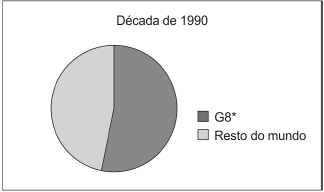
G8*: Grupo formado originalmente por EUA, Canadá, Alemanha, Itália, França, Reino Unido, Japão. A Rússia foi incorporada em 1998.
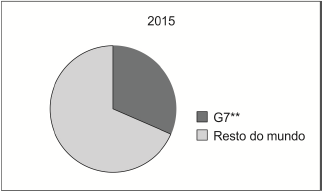
G7**: Grupo formado por: EUA, Canadá, Alemanha, Itália, França, Reino Unido e Japão.
(TÉTART, Frank. Grand Atlas 2018. Paris: Courrier International, 2017)
Se mantiverem o ritmo de expansão dos últimos anos, os países asiáticos deverão representar metade do PIB global em meados deste século XXI. Mas não faltam obstáculos para a região cumprir a promessa do “século da Ásia”.
(Exame Ceo − agosto 2014)
A alternativa que identifica um dos obstáculos enfrentados pelo continente é:
Considere o desenho abaixo.
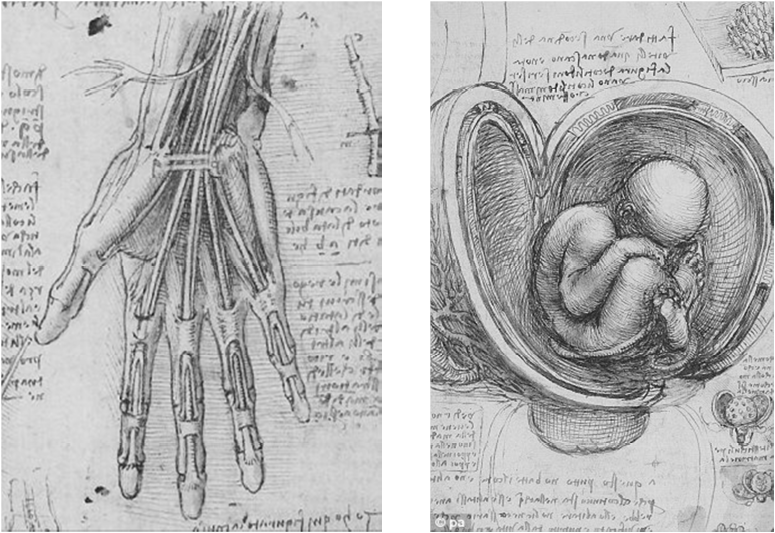
Os detalhes acima são de desenhos de Leonardo da Vinci (1452-1519), que, com múltiplos talentos, foi matemático, arquiteto,
escultor, poeta e estudioso do corpo humano. A disposição para a investigação científica e para a reflexão presente nos trabalhos deste e de outros pensadores renascentistas pode ser relacionada
Considere o circuito elétrico esquematizado abaixo.
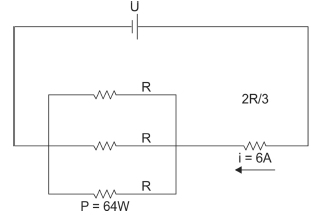
Nele, o resistor 2 R/3 é percorrido por uma corrente elétrica de intensidade 6 A, e em cada um dos resistores R a potência
dissipada é igual a 64 W. A tensão total U aplicada pela bateria no circuito e a potência dissipada no resistor 2 R/3, respectivamente, são:
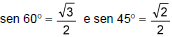
Uma onda plana de frequência 240 Hz e comprimento de onda igual a √6 cm, propagando-se em um meio 1, incide sobre a superfície de separação com um meio 2 numa direção que forma um ângulo de 60° com a reta normal. Se a onda refratada se propaga numa direção que forma um ângulo de 45° com a normal, a velocidade de propagação dessa onda no meio 2, em m/s, é:
Dados:
Numa viagem de São Paulo a Porto Seguro, um passageiro anotou os dados fornecidos pelo Mapa de voo do avião, obtendo os seguintes valores:
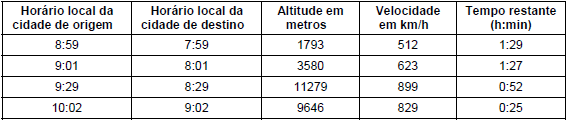
A velocidade média vertical de subida do avião, em metros por segundo, no intervalo entre os instantes de tempo restante iguais a 1:29 e 1:27 foi, aproximadamente, de:

 Conheça nossos planos