🎯 Saiba o que estudar

Avançado com Treinador a partir de R$ 0,76/dia

Questões Discursivas

Foram encontradas 25.461 questões

Resolva questões gratuitamente!

Junte-se a mais de 4 milhões de concurseiros!

Q4246832 Inglês
READ TEXTS V AND VI AND ANSWER THE  QUESTION THAT FOLLOW.


TEXT V

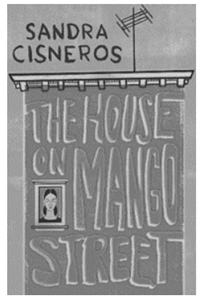
q32_40.png (212×296)


Acclaimed by critics, beloved by readers of all ages, taught everywhere from inner-city grade schools to universities across the country, and translated all over the world, The House on Mango Street is the remarkable story of Esperanza Cordero.

Told in a series of vignettes – sometimes heartbreaking, sometimes deeply joyous – it is the story of a young Latina girl growing up in Chicago, inventing for herself who and what she will become. Few other books in our time have touched so many readers.

From: https://www.amazon.com.br/dp/0679734775


TEXT VI


They always told us that one day we would move into a house, a real house that would be ours for always so we wouldn't have to move each year. And our house would have running water and pipes that worked. And inside it would have real stairs, not hallway stairs, but stairs inside like the houses on T.V. And we'd have a basement and at least three washrooms so when we took a bath we wouldn't have to tell everybody. Our house would be white with trees around it, a great big yard and grass growing without a fence. This was the house Papa talked about when he held a lottery ticket and this was the house Mama dreamed up in the stories she told us before we went to bed.

From: CISNEROS, Sandra. The House on Mango Street. New York: Vintage Books, 1991. p. 4. 
In Text V, the fragment “sometimes heartbreaking, sometimes deeply joyous” signals a 
Alternativas
Q4246831 Inglês
READ TEXTS V AND VI AND ANSWER THE  QUESTION THAT FOLLOW.


TEXT V

q32_40.png (212×296)


Acclaimed by critics, beloved by readers of all ages, taught everywhere from inner-city grade schools to universities across the country, and translated all over the world, The House on Mango Street is the remarkable story of Esperanza Cordero.

Told in a series of vignettes – sometimes heartbreaking, sometimes deeply joyous – it is the story of a young Latina girl growing up in Chicago, inventing for herself who and what she will become. Few other books in our time have touched so many readers.

From: https://www.amazon.com.br/dp/0679734775


TEXT VI


They always told us that one day we would move into a house, a real house that would be ours for always so we wouldn't have to move each year. And our house would have running water and pipes that worked. And inside it would have real stairs, not hallway stairs, but stairs inside like the houses on T.V. And we'd have a basement and at least three washrooms so when we took a bath we wouldn't have to tell everybody. Our house would be white with trees around it, a great big yard and grass growing without a fence. This was the house Papa talked about when he held a lottery ticket and this was the house Mama dreamed up in the stories she told us before we went to bed.

From: CISNEROS, Sandra. The House on Mango Street. New York: Vintage Books, 1991. p. 4. 
If the teacher asks a student to find a specific piece of information in the text, such as a date or a number, the reading strategy to be used is
Alternativas
Q4246829 Inglês
READ TEXTS V AND VI AND ANSWER THE  QUESTION THAT FOLLOW.


TEXT V

q32_40.png (212×296)


Acclaimed by critics, beloved by readers of all ages, taught everywhere from inner-city grade schools to universities across the country, and translated all over the world, The House on Mango Street is the remarkable story of Esperanza Cordero.

Told in a series of vignettes – sometimes heartbreaking, sometimes deeply joyous – it is the story of a young Latina girl growing up in Chicago, inventing for herself who and what she will become. Few other books in our time have touched so many readers.

From: https://www.amazon.com.br/dp/0679734775


TEXT VI


They always told us that one day we would move into a house, a real house that would be ours for always so we wouldn't have to move each year. And our house would have running water and pipes that worked. And inside it would have real stairs, not hallway stairs, but stairs inside like the houses on T.V. And we'd have a basement and at least three washrooms so when we took a bath we wouldn't have to tell everybody. Our house would be white with trees around it, a great big yard and grass growing without a fence. This was the house Papa talked about when he held a lottery ticket and this was the house Mama dreamed up in the stories she told us before we went to bed.

From: CISNEROS, Sandra. The House on Mango Street. New York: Vintage Books, 1991. p. 4. 
Regarding the actions and events described in Text VI, it is correct to state that one of the narrator’s routine was 
Alternativas
Q4246828 Inglês
READ TEXTS V AND VI AND ANSWER THE  QUESTION THAT FOLLOW.


TEXT V

q32_40.png (212×296)


Acclaimed by critics, beloved by readers of all ages, taught everywhere from inner-city grade schools to universities across the country, and translated all over the world, The House on Mango Street is the remarkable story of Esperanza Cordero.

Told in a series of vignettes – sometimes heartbreaking, sometimes deeply joyous – it is the story of a young Latina girl growing up in Chicago, inventing for herself who and what she will become. Few other books in our time have touched so many readers.

From: https://www.amazon.com.br/dp/0679734775


TEXT VI


They always told us that one day we would move into a house, a real house that would be ours for always so we wouldn't have to move each year. And our house would have running water and pipes that worked. And inside it would have real stairs, not hallway stairs, but stairs inside like the houses on T.V. And we'd have a basement and at least three washrooms so when we took a bath we wouldn't have to tell everybody. Our house would be white with trees around it, a great big yard and grass growing without a fence. This was the house Papa talked about when he held a lottery ticket and this was the house Mama dreamed up in the stories she told us before we went to bed.

From: CISNEROS, Sandra. The House on Mango Street. New York: Vintage Books, 1991. p. 4. 
Text VI implies that the family was looking for a(n) 
Alternativas
Q4246827 Inglês
READ TEXTS V AND VI AND ANSWER THE  QUESTION THAT FOLLOW.


TEXT V

q32_40.png (212×296)


Acclaimed by critics, beloved by readers of all ages, taught everywhere from inner-city grade schools to universities across the country, and translated all over the world, The House on Mango Street is the remarkable story of Esperanza Cordero.

Told in a series of vignettes – sometimes heartbreaking, sometimes deeply joyous – it is the story of a young Latina girl growing up in Chicago, inventing for herself who and what she will become. Few other books in our time have touched so many readers.

From: https://www.amazon.com.br/dp/0679734775


TEXT VI


They always told us that one day we would move into a house, a real house that would be ours for always so we wouldn't have to move each year. And our house would have running water and pipes that worked. And inside it would have real stairs, not hallway stairs, but stairs inside like the houses on T.V. And we'd have a basement and at least three washrooms so when we took a bath we wouldn't have to tell everybody. Our house would be white with trees around it, a great big yard and grass growing without a fence. This was the house Papa talked about when he held a lottery ticket and this was the house Mama dreamed up in the stories she told us before we went to bed.

From: CISNEROS, Sandra. The House on Mango Street. New York: Vintage Books, 1991. p. 4. 
In order to help students understand Text VI, the teacher could say that “would” indicates that the house described is
Alternativas
Q4246826 Inglês
READ TEXTS V AND VI AND ANSWER THE  QUESTION THAT FOLLOW.


TEXT V

q32_40.png (212×296)


Acclaimed by critics, beloved by readers of all ages, taught everywhere from inner-city grade schools to universities across the country, and translated all over the world, The House on Mango Street is the remarkable story of Esperanza Cordero.

Told in a series of vignettes – sometimes heartbreaking, sometimes deeply joyous – it is the story of a young Latina girl growing up in Chicago, inventing for herself who and what she will become. Few other books in our time have touched so many readers.

From: https://www.amazon.com.br/dp/0679734775


TEXT VI


They always told us that one day we would move into a house, a real house that would be ours for always so we wouldn't have to move each year. And our house would have running water and pipes that worked. And inside it would have real stairs, not hallway stairs, but stairs inside like the houses on T.V. And we'd have a basement and at least three washrooms so when we took a bath we wouldn't have to tell everybody. Our house would be white with trees around it, a great big yard and grass growing without a fence. This was the house Papa talked about when he held a lottery ticket and this was the house Mama dreamed up in the stories she told us before we went to bed.

From: CISNEROS, Sandra. The House on Mango Street. New York: Vintage Books, 1991. p. 4. 
According to Text V, The House on Mango Street
Alternativas
Q4246825 Inglês
READ TEXTS V AND VI AND ANSWER THE  QUESTION THAT FOLLOW.


TEXT V

q32_40.png (212×296)


Acclaimed by critics, beloved by readers of all ages, taught everywhere from inner-city grade schools to universities across the country, and translated all over the world, The House on Mango Street is the remarkable story of Esperanza Cordero.

Told in a series of vignettes – sometimes heartbreaking, sometimes deeply joyous – it is the story of a young Latina girl growing up in Chicago, inventing for herself who and what she will become. Few other books in our time have touched so many readers.

From: https://www.amazon.com.br/dp/0679734775


TEXT VI


They always told us that one day we would move into a house, a real house that would be ours for always so we wouldn't have to move each year. And our house would have running water and pipes that worked. And inside it would have real stairs, not hallway stairs, but stairs inside like the houses on T.V. And we'd have a basement and at least three washrooms so when we took a bath we wouldn't have to tell everybody. Our house would be white with trees around it, a great big yard and grass growing without a fence. This was the house Papa talked about when he held a lottery ticket and this was the house Mama dreamed up in the stories she told us before we went to bed.

From: CISNEROS, Sandra. The House on Mango Street. New York: Vintage Books, 1991. p. 4. 
The BNCC recommends that literary texts should be used in the ELF classroom (EF08LI06) to sensitize students to different discursive practices.

In this direction, a book such as The House on Mango Street would help increase their
Alternativas
Q4246824 Inglês
READ TEXTS V AND VI AND ANSWER THE  QUESTION THAT FOLLOW.


TEXT V

q32_40.png (212×296)


Acclaimed by critics, beloved by readers of all ages, taught everywhere from inner-city grade schools to universities across the country, and translated all over the world, The House on Mango Street is the remarkable story of Esperanza Cordero.

Told in a series of vignettes – sometimes heartbreaking, sometimes deeply joyous – it is the story of a young Latina girl growing up in Chicago, inventing for herself who and what she will become. Few other books in our time have touched so many readers.

From: https://www.amazon.com.br/dp/0679734775


TEXT VI


They always told us that one day we would move into a house, a real house that would be ours for always so we wouldn't have to move each year. And our house would have running water and pipes that worked. And inside it would have real stairs, not hallway stairs, but stairs inside like the houses on T.V. And we'd have a basement and at least three washrooms so when we took a bath we wouldn't have to tell everybody. Our house would be white with trees around it, a great big yard and grass growing without a fence. This was the house Papa talked about when he held a lottery ticket and this was the house Mama dreamed up in the stories she told us before we went to bed.

From: CISNEROS, Sandra. The House on Mango Street. New York: Vintage Books, 1991. p. 4. 
It is expected that an ELF teacher should be familiar with different genres. In this sense, Texts V and VI can be classified, respectively, as a
Alternativas
Q4246823 Inglês

READ TEXT IV AND ANSWER THE  QUESTION THAT FOLLOW.


TEXT IV


q30_31.png (328×220)


From: https://as2.ftcdn.net

The past tense and past participle of the verb “rise” in this context are, respectively
Alternativas
Q4246822 Inglês

READ TEXT IV AND ANSWER THE  QUESTION THAT FOLLOW.


TEXT IV


q30_31.png (328×220)


From: https://as2.ftcdn.net

An ELF-aware approach includes presenting current issues to students. In this sense, this poster may be used in a classroom to promote reflection on
Alternativas
Q4246821 Inglês

READ TEXT III AND ANSWER THE  QUESTION THAT FOLLOW


TEXT III


ELF and the Brazilian National Core Curriculum


The current Brazilian National Core Curriculum (BNCC) adopts English as a Lingua Franca (ELF) as a guiding concept for English Language Teaching (ELT) across the country’s basic education system. While the measure has sparked debate and controversy, ELF’s inclusion in the document is generally seen as an innovative step. However, its implementation has brought significant challenges, especially for teachers who often lack a clear understanding of the concept or how to incorporate ELF-aware practices into their classrooms. These challenges underscore the pivotal role of teacher education in effectively integrating ELF into ELT in local contexts.


Adapted from: https://periodicos.ufrb.edu.br

Text III refers to ELF as “a guiding concept for English Language Teaching (ELT)”.

From this perspective, the teaching practice that is closer to an ELF approach in Brazilian public schools is
Alternativas
Q4246820 Inglês

READ TEXT III AND ANSWER THE  QUESTION THAT FOLLOW


TEXT III


ELF and the Brazilian National Core Curriculum


The current Brazilian National Core Curriculum (BNCC) adopts English as a Lingua Franca (ELF) as a guiding concept for English Language Teaching (ELT) across the country’s basic education system. While the measure has sparked debate and controversy, ELF’s inclusion in the document is generally seen as an innovative step. However, its implementation has brought significant challenges, especially for teachers who often lack a clear understanding of the concept or how to incorporate ELF-aware practices into their classrooms. These challenges underscore the pivotal role of teacher education in effectively integrating ELF into ELT in local contexts.


Adapted from: https://periodicos.ufrb.edu.br

As part of the curriculum, the teacher should introduce students to possessive adjectives. One strategy that can be used is asking them to underline the possessive adjective in a sentence and discussing its use.

In the case of the sentence “its implementation has brought significant challenges”, the possessive adjective is in the
Alternativas
Q4246819 Inglês

READ TEXT III AND ANSWER THE  QUESTION THAT FOLLOW


TEXT III


ELF and the Brazilian National Core Curriculum


The current Brazilian National Core Curriculum (BNCC) adopts English as a Lingua Franca (ELF) as a guiding concept for English Language Teaching (ELT) across the country’s basic education system. While the measure has sparked debate and controversy, ELF’s inclusion in the document is generally seen as an innovative step. However, its implementation has brought significant challenges, especially for teachers who often lack a clear understanding of the concept or how to incorporate ELF-aware practices into their classrooms. These challenges underscore the pivotal role of teacher education in effectively integrating ELF into ELT in local contexts.


Adapted from: https://periodicos.ufrb.edu.br

In the sentence “These challenges underscore the pivotal role of teacher education”, the verb can be replaced, without significant change of meaning, by
Alternativas
Q4246818 Inglês

READ TEXT III AND ANSWER THE  QUESTION THAT FOLLOW


TEXT III


ELF and the Brazilian National Core Curriculum


The current Brazilian National Core Curriculum (BNCC) adopts English as a Lingua Franca (ELF) as a guiding concept for English Language Teaching (ELT) across the country’s basic education system. While the measure has sparked debate and controversy, ELF’s inclusion in the document is generally seen as an innovative step. However, its implementation has brought significant challenges, especially for teachers who often lack a clear understanding of the concept or how to incorporate ELF-aware practices into their classrooms. These challenges underscore the pivotal role of teacher education in effectively integrating ELF into ELT in local contexts.


Adapted from: https://periodicos.ufrb.edu.br

Teachers “who often lack a clear understanding of the concept” are those whose knowledge of the concept is
Alternativas
Q4246817 Inglês

READ TEXT III AND ANSWER THE  QUESTION THAT FOLLOW


TEXT III


ELF and the Brazilian National Core Curriculum


The current Brazilian National Core Curriculum (BNCC) adopts English as a Lingua Franca (ELF) as a guiding concept for English Language Teaching (ELT) across the country’s basic education system. While the measure has sparked debate and controversy, ELF’s inclusion in the document is generally seen as an innovative step. However, its implementation has brought significant challenges, especially for teachers who often lack a clear understanding of the concept or how to incorporate ELF-aware practices into their classrooms. These challenges underscore the pivotal role of teacher education in effectively integrating ELF into ELT in local contexts.


Adapted from: https://periodicos.ufrb.edu.br

The fragment “the measure has sparked debate and controversy” implies that the measure has
Alternativas
Q4246816 Inglês

READ TEXT III AND ANSWER THE  QUESTION THAT FOLLOW


TEXT III


ELF and the Brazilian National Core Curriculum


The current Brazilian National Core Curriculum (BNCC) adopts English as a Lingua Franca (ELF) as a guiding concept for English Language Teaching (ELT) across the country’s basic education system. While the measure has sparked debate and controversy, ELF’s inclusion in the document is generally seen as an innovative step. However, its implementation has brought significant challenges, especially for teachers who often lack a clear understanding of the concept or how to incorporate ELF-aware practices into their classrooms. These challenges underscore the pivotal role of teacher education in effectively integrating ELF into ELT in local contexts.


Adapted from: https://periodicos.ufrb.edu.br

The focus of Text III is to: 
Alternativas
Q4246815 Inglês
READ TEXT II AND ANSWER THE  QUESTION THAT FOLLOW.

TEXT II 


q20_23.png (213×194)

Taken from: https://ecdn.teacherspayteachers.com
The poster presents a sentence in the interrogative form and in the simple past tense.

According to the rules of standard grammar, to rephrase this question in the simple present, the teacher should choose 
Alternativas
Q4246814 Inglês
READ TEXT II AND ANSWER THE  QUESTION THAT FOLLOW.

TEXT II 


q20_23.png (213×194)

Taken from: https://ecdn.teacherspayteachers.com
Read the following phrases.

I. Hi there!
II. Take care!
III. Well done!
IV. See you soon!

The appropriate phrases for leave-taking are
Alternativas
Q4246813 Inglês
READ TEXT II AND ANSWER THE  QUESTION THAT FOLLOW.

TEXT II 


q20_23.png (213×194)

Taken from: https://ecdn.teacherspayteachers.com
A typical situation during a class is when a student asks to leave the room.

In this case, when granting permission, the teacher’s reply should be

Alternativas
Q4246811 Inglês
READ TEXT I AND ANSWER THE QUESTION THAT FOLLOW


TEXT I


Emotions inspire transformation: delving into EFL teachers’ emotions and professional identities


Emotions in education have attracted significant attention over the past few years, particularly in language teaching and learning. Emotions are not just fleeting states but also play a crucial role in classroom dynamics, influencing both student achievements and the quality of teaching. In particular, they are instrumental in influencing teachers’ professional identity, image, affective commitment level, and even classroom performance because the emotional experiences of teachers are deep, complex, and intertwined with their very professional identity. Teaching English as a Foreign Language (EFL) typically intensifies the emotional complexity. Subsequent research has extended beyond the understanding of emotions as solely psychological phenomena, and emotions are now also understood as sociocultural and political constructs. Viewed this way, teaching can be seen as emotional labor: an ongoing demand to demonstrate and regulate emotions in a way that aligns with professional norms but may lead to burnout and disillusionment if no coping mechanisms are provided. The challenges faced by teachers have led to an increased call for support to help them identify, process, and respond to emotions. This notion supports conscious emotional work, and as it is no longer viewed solely as remedial practice, it is a critical first step in developing coherent and resilient professional identities. The relationship between teacher emotions and identity is not a linear one; they are in constant and dynamic interplay with one another. As emotional experiences fluctuate, whether through student interactions, collegial relationships, or institutionalized approaches and policies, the teacher’s capacity to develop in a sense of professional identity also changes.


Adapted from https://www.frontiersin.org
The last sentence of Text I indicates that professional identity can be
Alternativas
Respostas
21: A
22: A
23: C
24: B
25: E
26: C
27: E
28: A
29: C
30: A
31: C
32: C
33: E
34: B
35: E
36: B
37: D
38: A
39: E
40: E