No trecho do primeiro parágrafo “Even though the Oakland bu...
Próximas questões
Com base no mesmo assunto
Q4136251
Inglês
Texto associado
How cities can better prevent fires
August 29, 2018
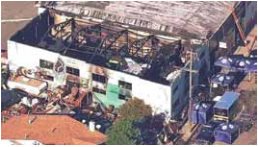
America’s deadliest building fire for more than a decade
struck Oakland, California, on December 2nd 2016, killing
36 people attending a dance party in a warehouse that had
become a cluttered artist collective. The disaster highlights an
open secret: many cities lack resources to inspect for fire risk
all the structures that they should. Even though the Oakland
building had no fire sprinklers and at least ten people lived
there illegally, no inspector had visited in about 30 years. How
might cities make better use of the inspectors they do have?
A handful of American cities have begun to seek help from
a new type of analytics software. By crunching diverse data
collected by government bodies and utilities, the software
works out which buildings are most likely to catch fire and
should therefore be inspected first. Plenty of factors play a
role. Older, wooden buildings, unsurprisingly, pose more risk,
as do those close to past fires and leaks of gas or oil. Poverty
also pushes up fire risk, especially if lots of children, who may
be attracted to mischief, live nearby. More telling are unpaid
taxes, foreclosure proceedings and recorded complaints
of mould, rats, crumbling plaster, accumulating rubbish,
and domestic fights, all of which hint at property neglect.
A building’s fire risk also increases the further it is from its
owner’s residence.
Predictive software designed at Harvard that Portland,
Oregon, will soon begin using will do that. Perhaps more
importantly, the city’s fire chief noticed that buildings marked
as being the biggest risks are clustered in areas lacking
good schools, public transport, health care and food options.
Healthier, happier people start fewer fires, he concluded.
He now lobbies officials to reduce Portland’s pockets of
deteriorated areas.
(The Economist. www.economist.com/the-economist-explains
/2018/08/29/how-cities-can-better-prevent-fires. Adaptado)
No trecho do primeiro parágrafo “Even though the Oakland
building had no fire sprinklers”, a expressão em destaque
equivale, em português, a
 Conheça nossos planos