O artigo é principalmente sobre
Text 7
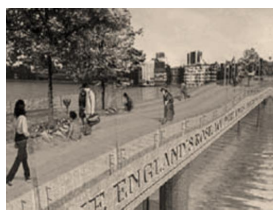
Imagine Joseph Paxton’s Great Victorian Way in Sydenham, a 10-mile stretch of glass and brightly painted iron arcades with its own snaking elevated railway. Or a National Cemetery on Primrose Hill, London’s answer to Paris’s Père Lachaise. Or Hyde Park Corner with a huge art deco music hall. Or White City with a vast expressionist towerscape designed by the German visionary Eric Mendelssohn. If architects’ imaginings had become reality, London could have been a completely different place.
The game of what-ifs in architecture is addictive. The organisers of a new Hayward Gallery touring exhibition had the brilliant idea of exploring the never-never land of building, drawing on the collections of the Royal Institute of British Architects and the Victoria and Albert museum. So many of these visions are a great deal more exciting than the buildings we actually got. In Liverpool, instead of Paddy’s wigwam and Gibberd’s gimcrack (and now sadly deteriorating) Roman Catholic cathedral, we might have had the grand and wonderful Metropolitan Cathedral of Christ the King by Lutyens. In the Strand, instead of George Edmund Street’s relatively makeshift Law Courts, we could have had Alfred Waterhouse’s much more ambitious and romantic urban concept: a magnificent assembly of pitched roofs, towers and walkways, Turneresque in its drama when viewed across the Thames. Waterhouse’s courts fell foul of the Victorian competition system. The designs remain to haunt us.
Source: The Guardian on the Web / April 15, 2004.
 Conheça nossos planos