Questões de Concurso Público Prefeitura de Peruíbe - SP 2023 para Professor de Educação Básica II (Língua Estrangeira Moderna - Inglês)
Foram encontradas 50 questões


Leia o texto para responder à questão.
Canada: Educating in and for climate emergency
Climate change is the most urgent crisis facing our planet today. Youth have repeatedly called for action on tackling this crisis, including the implementation of climate change curricula in schools.
Canadian students are among those demanding improvement to the sparse and inconsistent delivery of climate change education. A study published in 2019 found that only about half of Canada’s ministries of education and about 60 per cent of school divisions in the country had sustainabilityspecific policy, with this understood to include governance, curriculum, facilities, research, and community outreach. When climate change topics are taught, key concepts are often missing such as the scientific consensus that humans are causing climate change, or a focus on impacts or solutions.
A recent countrywide survey of 4,035 respondents across the country highlighted the consequences of inadequate climate change education in schools. One-third of Canadians failed a 10-question knowledge quiz. Only around half knew greenhouse gases were the main cause of climate change. Few responded correctly that the average temperature has already increased by more than one degree Celsius. Despite their gaps in knowledge, the majority of survey respondents agreed that we are experiencing a climate emergency and that climate change education should be a high priority.
Ten percent of survey respondents were educators (406 people), and among this group, half said a lack of time is a barrier when attempting to include climate change education within the classroom. In fact, respected international organizations have noted that implementing climate change education in schools cannot continue to fall on the shoulders of overburdened teachers.
The traditional way of teaching doesn’t work for complex topics like climate change. Teachers need to shift towards student-directed inquiry and active, real-world learning. It’s not enough to simply quote scientific facts, as a focus on “doom and gloom” can intensify eco-anxiety. Best practices for climate change education include the opportunity to take personal and collective action.
(Karen S. Acton. http://theconversation.com, 07.03.2023. Adaptado)
Leia o texto para responder à questão.
Canada: Educating in and for climate emergency
Climate change is the most urgent crisis facing our planet today. Youth have repeatedly called for action on tackling this crisis, including the implementation of climate change curricula in schools.
Canadian students are among those demanding improvement to the sparse and inconsistent delivery of climate change education. A study published in 2019 found that only about half of Canada’s ministries of education and about 60 per cent of school divisions in the country had sustainabilityspecific policy, with this understood to include governance, curriculum, facilities, research, and community outreach. When climate change topics are taught, key concepts are often missing such as the scientific consensus that humans are causing climate change, or a focus on impacts or solutions.
A recent countrywide survey of 4,035 respondents across the country highlighted the consequences of inadequate climate change education in schools. One-third of Canadians failed a 10-question knowledge quiz. Only around half knew greenhouse gases were the main cause of climate change. Few responded correctly that the average temperature has already increased by more than one degree Celsius. Despite their gaps in knowledge, the majority of survey respondents agreed that we are experiencing a climate emergency and that climate change education should be a high priority.
Ten percent of survey respondents were educators (406 people), and among this group, half said a lack of time is a barrier when attempting to include climate change education within the classroom. In fact, respected international organizations have noted that implementing climate change education in schools cannot continue to fall on the shoulders of overburdened teachers.
The traditional way of teaching doesn’t work for complex topics like climate change. Teachers need to shift towards student-directed inquiry and active, real-world learning. It’s not enough to simply quote scientific facts, as a focus on “doom and gloom” can intensify eco-anxiety. Best practices for climate change education include the opportunity to take personal and collective action.
(Karen S. Acton. http://theconversation.com, 07.03.2023. Adaptado)
Leia o texto para responder à questão.
Canada: Educating in and for climate emergency
Climate change is the most urgent crisis facing our planet today. Youth have repeatedly called for action on tackling this crisis, including the implementation of climate change curricula in schools.
Canadian students are among those demanding improvement to the sparse and inconsistent delivery of climate change education. A study published in 2019 found that only about half of Canada’s ministries of education and about 60 per cent of school divisions in the country had sustainabilityspecific policy, with this understood to include governance, curriculum, facilities, research, and community outreach. When climate change topics are taught, key concepts are often missing such as the scientific consensus that humans are causing climate change, or a focus on impacts or solutions.
A recent countrywide survey of 4,035 respondents across the country highlighted the consequences of inadequate climate change education in schools. One-third of Canadians failed a 10-question knowledge quiz. Only around half knew greenhouse gases were the main cause of climate change. Few responded correctly that the average temperature has already increased by more than one degree Celsius. Despite their gaps in knowledge, the majority of survey respondents agreed that we are experiencing a climate emergency and that climate change education should be a high priority.
Ten percent of survey respondents were educators (406 people), and among this group, half said a lack of time is a barrier when attempting to include climate change education within the classroom. In fact, respected international organizations have noted that implementing climate change education in schools cannot continue to fall on the shoulders of overburdened teachers.
The traditional way of teaching doesn’t work for complex topics like climate change. Teachers need to shift towards student-directed inquiry and active, real-world learning. It’s not enough to simply quote scientific facts, as a focus on “doom and gloom” can intensify eco-anxiety. Best practices for climate change education include the opportunity to take personal and collective action.
(Karen S. Acton. http://theconversation.com, 07.03.2023. Adaptado)
Leia o texto para responder à questão.
Canada: Educating in and for climate emergency
Climate change is the most urgent crisis facing our planet today. Youth have repeatedly called for action on tackling this crisis, including the implementation of climate change curricula in schools.
Canadian students are among those demanding improvement to the sparse and inconsistent delivery of climate change education. A study published in 2019 found that only about half of Canada’s ministries of education and about 60 per cent of school divisions in the country had sustainabilityspecific policy, with this understood to include governance, curriculum, facilities, research, and community outreach. When climate change topics are taught, key concepts are often missing such as the scientific consensus that humans are causing climate change, or a focus on impacts or solutions.
A recent countrywide survey of 4,035 respondents across the country highlighted the consequences of inadequate climate change education in schools. One-third of Canadians failed a 10-question knowledge quiz. Only around half knew greenhouse gases were the main cause of climate change. Few responded correctly that the average temperature has already increased by more than one degree Celsius. Despite their gaps in knowledge, the majority of survey respondents agreed that we are experiencing a climate emergency and that climate change education should be a high priority.
Ten percent of survey respondents were educators (406 people), and among this group, half said a lack of time is a barrier when attempting to include climate change education within the classroom. In fact, respected international organizations have noted that implementing climate change education in schools cannot continue to fall on the shoulders of overburdened teachers.
The traditional way of teaching doesn’t work for complex topics like climate change. Teachers need to shift towards student-directed inquiry and active, real-world learning. It’s not enough to simply quote scientific facts, as a focus on “doom and gloom” can intensify eco-anxiety. Best practices for climate change education include the opportunity to take personal and collective action.
(Karen S. Acton. http://theconversation.com, 07.03.2023. Adaptado)
Leia o texto para responder à questão.
Canada: Educating in and for climate emergency
Climate change is the most urgent crisis facing our planet today. Youth have repeatedly called for action on tackling this crisis, including the implementation of climate change curricula in schools.
Canadian students are among those demanding improvement to the sparse and inconsistent delivery of climate change education. A study published in 2019 found that only about half of Canada’s ministries of education and about 60 per cent of school divisions in the country had sustainabilityspecific policy, with this understood to include governance, curriculum, facilities, research, and community outreach. When climate change topics are taught, key concepts are often missing such as the scientific consensus that humans are causing climate change, or a focus on impacts or solutions.
A recent countrywide survey of 4,035 respondents across the country highlighted the consequences of inadequate climate change education in schools. One-third of Canadians failed a 10-question knowledge quiz. Only around half knew greenhouse gases were the main cause of climate change. Few responded correctly that the average temperature has already increased by more than one degree Celsius. Despite their gaps in knowledge, the majority of survey respondents agreed that we are experiencing a climate emergency and that climate change education should be a high priority.
Ten percent of survey respondents were educators (406 people), and among this group, half said a lack of time is a barrier when attempting to include climate change education within the classroom. In fact, respected international organizations have noted that implementing climate change education in schools cannot continue to fall on the shoulders of overburdened teachers.
The traditional way of teaching doesn’t work for complex topics like climate change. Teachers need to shift towards student-directed inquiry and active, real-world learning. It’s not enough to simply quote scientific facts, as a focus on “doom and gloom” can intensify eco-anxiety. Best practices for climate change education include the opportunity to take personal and collective action.
(Karen S. Acton. http://theconversation.com, 07.03.2023. Adaptado)
Leia o texto para responder à questão.
Canada: Educating in and for climate emergency
Climate change is the most urgent crisis facing our planet today. Youth have repeatedly called for action on tackling this crisis, including the implementation of climate change curricula in schools.
Canadian students are among those demanding improvement to the sparse and inconsistent delivery of climate change education. A study published in 2019 found that only about half of Canada’s ministries of education and about 60 per cent of school divisions in the country had sustainabilityspecific policy, with this understood to include governance, curriculum, facilities, research, and community outreach. When climate change topics are taught, key concepts are often missing such as the scientific consensus that humans are causing climate change, or a focus on impacts or solutions.
A recent countrywide survey of 4,035 respondents across the country highlighted the consequences of inadequate climate change education in schools. One-third of Canadians failed a 10-question knowledge quiz. Only around half knew greenhouse gases were the main cause of climate change. Few responded correctly that the average temperature has already increased by more than one degree Celsius. Despite their gaps in knowledge, the majority of survey respondents agreed that we are experiencing a climate emergency and that climate change education should be a high priority.
Ten percent of survey respondents were educators (406 people), and among this group, half said a lack of time is a barrier when attempting to include climate change education within the classroom. In fact, respected international organizations have noted that implementing climate change education in schools cannot continue to fall on the shoulders of overburdened teachers.
The traditional way of teaching doesn’t work for complex topics like climate change. Teachers need to shift towards student-directed inquiry and active, real-world learning. It’s not enough to simply quote scientific facts, as a focus on “doom and gloom” can intensify eco-anxiety. Best practices for climate change education include the opportunity to take personal and collective action.
(Karen S. Acton. http://theconversation.com, 07.03.2023. Adaptado)
Leia o texto para responder à questão.
Canada: Educating in and for climate emergency
Climate change is the most urgent crisis facing our planet today. Youth have repeatedly called for action on tackling this crisis, including the implementation of climate change curricula in schools.
Canadian students are among those demanding improvement to the sparse and inconsistent delivery of climate change education. A study published in 2019 found that only about half of Canada’s ministries of education and about 60 per cent of school divisions in the country had sustainabilityspecific policy, with this understood to include governance, curriculum, facilities, research, and community outreach. When climate change topics are taught, key concepts are often missing such as the scientific consensus that humans are causing climate change, or a focus on impacts or solutions.
A recent countrywide survey of 4,035 respondents across the country highlighted the consequences of inadequate climate change education in schools. One-third of Canadians failed a 10-question knowledge quiz. Only around half knew greenhouse gases were the main cause of climate change. Few responded correctly that the average temperature has already increased by more than one degree Celsius. Despite their gaps in knowledge, the majority of survey respondents agreed that we are experiencing a climate emergency and that climate change education should be a high priority.
Ten percent of survey respondents were educators (406 people), and among this group, half said a lack of time is a barrier when attempting to include climate change education within the classroom. In fact, respected international organizations have noted that implementing climate change education in schools cannot continue to fall on the shoulders of overburdened teachers.
The traditional way of teaching doesn’t work for complex topics like climate change. Teachers need to shift towards student-directed inquiry and active, real-world learning. It’s not enough to simply quote scientific facts, as a focus on “doom and gloom” can intensify eco-anxiety. Best practices for climate change education include the opportunity to take personal and collective action.
(Karen S. Acton. http://theconversation.com, 07.03.2023. Adaptado)
Leia o texto para responder à questão.
Canada: Educating in and for climate emergency
Climate change is the most urgent crisis facing our planet today. Youth have repeatedly called for action on tackling this crisis, including the implementation of climate change curricula in schools.
Canadian students are among those demanding improvement to the sparse and inconsistent delivery of climate change education. A study published in 2019 found that only about half of Canada’s ministries of education and about 60 per cent of school divisions in the country had sustainabilityspecific policy, with this understood to include governance, curriculum, facilities, research, and community outreach. When climate change topics are taught, key concepts are often missing such as the scientific consensus that humans are causing climate change, or a focus on impacts or solutions.
A recent countrywide survey of 4,035 respondents across the country highlighted the consequences of inadequate climate change education in schools. One-third of Canadians failed a 10-question knowledge quiz. Only around half knew greenhouse gases were the main cause of climate change. Few responded correctly that the average temperature has already increased by more than one degree Celsius. Despite their gaps in knowledge, the majority of survey respondents agreed that we are experiencing a climate emergency and that climate change education should be a high priority.
Ten percent of survey respondents were educators (406 people), and among this group, half said a lack of time is a barrier when attempting to include climate change education within the classroom. In fact, respected international organizations have noted that implementing climate change education in schools cannot continue to fall on the shoulders of overburdened teachers.
The traditional way of teaching doesn’t work for complex topics like climate change. Teachers need to shift towards student-directed inquiry and active, real-world learning. It’s not enough to simply quote scientific facts, as a focus on “doom and gloom” can intensify eco-anxiety. Best practices for climate change education include the opportunity to take personal and collective action.
(Karen S. Acton. http://theconversation.com, 07.03.2023. Adaptado)
Read the ad below.
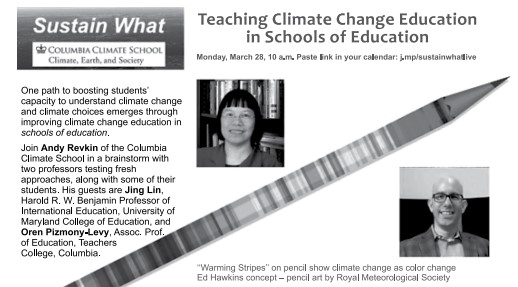
The meeting announced in the ad aims at
Leia o texto.
Bakhtin concebe os gêneros do discurso como tipos de enunciados criados dentro dos vários campos da atividade humana. Consoante tal perspectiva, a linguagem é aprendida por meio de enunciados concretos, ouvidos e reproduzidos na comunicação verbal. Cada um dos vários gêneros apresenta suas próprias exigências em termos de conteúdo, de estrutura e de sequências linguísticas que os compõem. Todos esses aspectos devem ser aprendidos mediante práticas sociais que desenvolvam as capacidades de linguagem dos indivíduos e as estratégias de aprendizagem.
(Abuêndia Padilha Pinto. Gêneros discursivos e ensino de
Língua Inglesa. In: Dionisio, A. P.; Machado, A. R e Bezerra,
M. A (orgs). Gêneros textuais e ensino. Rio de Janeiro:
Lucerna. 2005, p.48. Adaptado)
Orientações da BNCC para o ensino de Língua Inglesa na Escola Básica correspondem ao conteúdo no parágrafo ao afirmarem que
Leia a propaganda.
(https://www.adsoftheworld.com)
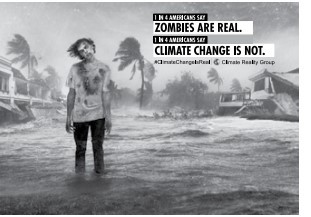
As duas frases destacadas na propaganda – “Zombies are real” e “Climate change is not” – podem ser corretamente combinadas por meio do marcador discursivo

 Conheça nossos planos