Questões de Concurso Público Prefeitura de Turvânia - GO 2024 para Professor de Inglês

Foram encontradas 50 questões

Q3396876 Inglês

Leia o Texto 2 para responder à questão


TEXTO 2
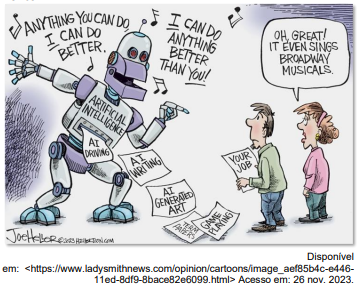

A partir da leitura do texto, infere-se que os sistemas de inteligência artificial 
Alternativas
Q3396877 Inglês

Leia o Texto 2 para responder à questão


TEXTO 2


The word “better” in “Anything you can do, I can do better” is
Alternativas
Q3396878 Pedagogia
Os Parâmetros Curriculares Nacionais (PCNs), terceiro e quarto ciclos do ensino fundamental: língua estrangeira propõem ênfase no desenvolvimento de uma habilidade linguística específica usando como argumentos o seu requerimento em exames formais como vestibulares e admissão em cursos de pós-graduação e ainda as condições das escolas brasileiras (carga horária reduzida, grande quantidade de alunos nas salas, formação precária do professor e material didático mínimo). Essa habilidade priorizada pelos PCNs é a habilidade 
Alternativas
Q3396879 Pedagogia
As abordagens e métodos de ensino de línguas evoluem e se adaptam ao longo do tempo, e o papel do professor pode variar de acordo com o contexto, a metodologia específica e as necessidades dos alunos. O método em que o professor adota uma abordagem mais passiva, de observador e facilitador, intervindo apenas quando necessário, fornecendo suporte individualizado, evitando a fala excessiva e encorajando os alunos a se expressarem e a corrigirem uns aos outros é o
Alternativas
Q3396880 Pedagogia

Texto 3


Texto 4


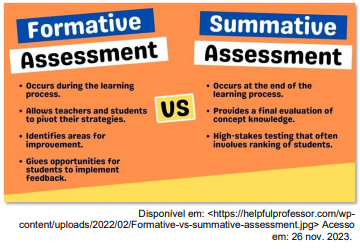
Assessment carried out by teachers during the learning process with the aim of using the results to improve instruction is known as formative assessment. Assessment at the end of a course, term, or school year - often for purposes of providing aggregated information on programme outcomes to educational authorities - is referred to as summative assessment.


GEOFF, B. Assessment. In: CARTER, R.; NUNAN, D. (Eds.) The Cambridge Guide to Teaching English to Speakers of Other Languages. Cambridge: Cambridge University Press, p. 137, 2001. 

Considering the descriptions, an example of an activity that represents the summative type of assessment would be one where 
Alternativas
Q3396881 Inglês

Texto 3


Texto 4


Assessment carried out by teachers during the learning process with the aim of using the results to improve instruction is known as formative assessment. Assessment at the end of a course, term, or school year - often for purposes of providing aggregated information on programme outcomes to educational authorities - is referred to as summative assessment.


GEOFF, B. Assessment. In: CARTER, R.; NUNAN, D. (Eds.) The Cambridge Guide to Teaching English to Speakers of Other Languages. Cambridge: Cambridge University Press, p. 137, 2001. 

Considering the structural elements of both texts,


Alternativas
Q3396882 Pedagogia
A teacher who recognizes the importance of social interactions, cultural contexts, and the active participation of learners in their language development, as well as promotes collaborative learning and the negotiation of meaning through interactive activities, is believed to hold the 
Alternativas
Q3396883 Inglês
Leia o Texto 5 para responder às questões 48 e 49.

Texto 5

This activity can be set up without the trainees opening their books

1. You need one copy of the text below for each pair of trainees. Stick the copies around the room. One person in each pair should run to the text, read a chunk, go back to their partner and dictate it. The listener should write down what they hear and the runner should go back for the next part. The winners are the first pair to finish. As pairs finish, take a copy of the text off the wall and ask them to compare what they have written with the original. Pairs who finish early can consider the question at the end of the text.

You get a text message, you read it and you text back. You read an interesting newspaper story and you tell someone about it. You go to a lecture and you take notes. And you pass on some juicy gossip that you just heard. So, outside the classroom, language skills are not always used in isolation. They tend to be combined. Think back so the last lesson you taught. Were any skills combined?

2. Allow the trainees a little time to gather their ideas before reporting back in open class.


THORNBURY, S.; WATKINS, P. The CELTA Course: Trainer's Manual, Cambridge University Press - ELT, 2007. p. 67.
O objetivo da atividade descrita no texto é fazer com que os professores em formação
Alternativas
Q3396884 Inglês
Leia o Texto 5 para responder às questões 48 e 49.

Texto 5

This activity can be set up without the trainees opening their books

1. You need one copy of the text below for each pair of trainees. Stick the copies around the room. One person in each pair should run to the text, read a chunk, go back to their partner and dictate it. The listener should write down what they hear and the runner should go back for the next part. The winners are the first pair to finish. As pairs finish, take a copy of the text off the wall and ask them to compare what they have written with the original. Pairs who finish early can consider the question at the end of the text.

You get a text message, you read it and you text back. You read an interesting newspaper story and you tell someone about it. You go to a lecture and you take notes. And you pass on some juicy gossip that you just heard. So, outside the classroom, language skills are not always used in isolation. They tend to be combined. Think back so the last lesson you taught. Were any skills combined?

2. Allow the trainees a little time to gather their ideas before reporting back in open class.


THORNBURY, S.; WATKINS, P. The CELTA Course: Trainer's Manual, Cambridge University Press - ELT, 2007. p. 67.
No contexto do trecho, a expressão “language skills” referese às habilidades de
Alternativas
Q3396885 Inglês

Leia o texto a seguir.  


LISTEN TO THE MUSTN'TS

Shel Silverstein

Listen to MUSTN'TS, child,

Listen to the DON'TS.

Listen to the SHOULDN'TS,

The IMPOSSIBLES,

the WON'TS.

Listen to the NEVER HAVES,

Then listen close to me...

Anything can happen, child,

ANYTHING can be.


Para trabalhar com o poema em sala de aula, o(a) professor(a) poderia explorar as características do gênero literário, trabalhar a interpretação de texto ou explorar o uso de capitalização no poema, além de focar nas palavras mustn'ts e shouldn'ts como introdução para uma aula sobre 

Alternativas
Respostas
21: B
22: C
23: A
24: C
25: D
26: A
27: D
28: C
29: B
30: D