Questões de Concurso Público Prefeitura de Orlândia - SP 2022 para Professor de Inglês PEB II 6º ao 9º ano
Foram encontradas 40 questões


Para Coll e Solé (1996, p. 294), “a aula configura um espaço comunicativo regido por uma série de regras, cujo respeito permite que os participantes [...] possam comunicar-se e alcançar os objetivos a que se propõem”. A apropriação do conhecimento implica um determinado processo de aprendizagem que depende da motivação e da capacidade do aluno em agir e interagir sobre esse conhecimento, que poderá resultar em apreensão. Nessa perspectiva, o professor é o orientador, o coordenador e o facilitador do processo de ensino-aprendizagem. Considerando o exposto, o professor, em sua prática docente, se depara com problemas e dificuldades de ordem formativa, epistemológica e pedagógica, porque apresenta:
I. Obstáculos encontrados na construção de vínculos pedagógicos com o aluno.
II. Dificuldade de analisar e interpretar mais profundamente certas questões da ciência que ministra.
III. Inadequação dos procedimentos didático-científicos que não permitem suprir as condições do aluno no exercício intelectual necessário para reconhecer a problematização de temas essenciais à análise e à investigação.
IV. Resultado da proibição da fala do aluno, para legitimar a fala unilateral do professor equivalendo à obstrução da própria dinâmica do processo de construção das estruturas do conhecimento e da produção do conhecimento-conteúdo.
Está correto o que se afirma em
A avaliação é um fenômeno que envolve múltiplos fatores, tanto conceituais quanto metodológicos, pois desde muito tempo passou por várias definições até chegar no âmbito educacional. Ela é uma atividade complexa que faz parte do cotidiano do estudante, do professor e das relações escolares. Do estudante, porque tão somente ele passa a ser alvo do sistema em ser considerado apto ou não de suas capacidades intelectuais e de seus níveis de estudo. Do professor, porque perpassa pelas suas práticas de ensino e de suas competências curriculares. E, por fim, das relações que são geradas entre esses sujeitos durante e após cada ciclo de aplicação dos mais variados instrumentos avaliativos estabelecidos pelo sistema educacional, com a visão de que “(…) ajuda o aluno aprender e o professor a ensinar”.
(Perrenoud, 1993, p. 173.)
Considerando o exposto e a avaliação da aprendizagem dentro das várias tendências pedagógicas em diferentes épocas e contextos educacionais, verifica-se que na tendência progressista crítico-social dos conteúdos o papel da avaliação na prática escolar:
Na década de 1920, o setor educacional foi induzido a participar do movimento de renovação educacional. Inúmeras reformas foram feitas no ensino. Nessa época, surgiu a primeira leva de geração de educadores brasileiros, dentre os quais podemos destacar Anísio Teixeira; Fernando de Azevedo; Lourenço Filho; Almeida Júnior; dentre outros. Dentre seus atributos maiores, lideraram movimentos, com o intuito de implantar, no Brasil, as ideologias da Escola Nova. A divulgação do “Manifesto dos Pioneiros”, em 1932, consta como um documento histórico que formalizava os pontos centrais desse movimento ideológico, redefinindo, assim, o papel elementar do Estado no quesito matéria educacional.
(Piletti, 1996.)
De acordo com o Manifesto dos Pioneiros, assinale a afirmativa INCORRETA.
Pensar o currículo é pensar a forma como o conhecimento escolar é estruturado, escolhido e desenvolvido em salas de aula. O currículo deve ser elaborado a partir de uma visão geral da educação, para chegar a uma visão local da sala de aula. Segundo Moreira (2009), existem vários conceitos para o que seja “currículo”. Dominam, entre eles, os que associam currículo a conteúdos e os que veem currículo como experiências de aprendizagem. Tendo em vista a multiplicidade de concepções existentes sobre o currículo, e o complexo objetivo de defini-lo, é importante destacar as três principais vertentes teóricas em relação a sua conceptualização: as teorias tradicionais; as teorias críticas; e, as teorias pós-críticas. Considerando as três vertentes teóricas de currículo, relacione adequadamente as colunas a seguir.
1. Tradicionais.
2. Críticas.
3. Pós-críticas.
( ) O currículo tem um papel decisivo na reprodução da estrutura de classes da sociedade capitalista e transmite a ideologia dominante.
( ) Defendem o reconhecimento da pluralidade cultural e da diversidade humana, elaborando uma concepção de currículo que dialoga com as categorias de identidade; alteridade; e, diferença.
( ) Centradas na essência do intelecto, no conhecimento; o ensino de caráter verbalista, autoritário e inibidor da participação do aluno com conteúdos enciclopédicos, descontextualizados.
( ) Trazem à tona a necessidade de formação humana integral em que seja possível o desenvolvimento da capacidade de olhar através do lugar social do outro, da capacidade de compreender e respeitar as diferenças étnicas; culturais; e, sexuais.
( ) Constituem-se de abordagens baseadas na crítica ao modelo de currículo profissional centrado na reprodução do modelo fabril, no monitoramento e no controle rigoroso dos processos de ensino-aprendizagem com base na sistematização de um currículo de base hegemônica.
A sequência está correta em
Um dos principais documentos norteadores do trabalho pedagógico de uma instituição de ensino é o Projeto Político-Pedagógico, também conhecido como PPP. Este documento corresponde a um conjunto de diretrizes organizacionais e operacionais que expressam e orientam as práticas pedagógicas e administrativas da escola, conforme as normas do sistema educacional. Ao projetar ações e intenções partindo do já existente e das possibilidades concretas, o PPP se apoia em concepções necessariamente ligadas ao caráter social da educação e que definem a opção educativa da escola, a partir da qual a escola organiza e registra as ações que serão realizadas pela comunidade escolar para atingir os objetivos educacionais.
(Disponível em: http://www.gestaoescolar.diaadia.pr.gov.br/arquivos/File/gestao_em_foco/gestao_escolar_unidade1.pd. Adaptado.)
O PPP é constituído por três marcos que se integram para traçar o projeto da escola; assinale o INCORRETO.
O resgate das experiências significativas do professor em formação serve de paradigma para que ele realize o mesmo em relação aos seus estudantes. Em simetria, o uso dos conhecimentos construídos pelos professores em formação serve para propor experiências significativas aos estudantes do ensino básico, que, do mesmo modo, podem resgatar aquilo que conhecem ao resolverem novas situações.
(Carvalho; Porto, 2005, p. 19.)
É possível afirmar que a pesquisa é consideravelmente importante para a prática pedagógica de qualidade dos professores, pois:
Ao longo da história da educação, várias abordagens de ensino foram disseminadas. Cada abordagem sofreu influências de diferentes teóricos, realizando, assim, os seus posicionamentos didáticos. Considerando os comportamentalistas ou behavioristas, assim como os denominadores instrumentalistas e os positivistas lógicos, consideram a experiência ou a experimentação planejada como a base do conhecimento. Evidencia-se, pois, sua origem empirista, ou seja, a consideração de que o conhecimento é o resultado direto da experiência. Para os behavioristas, a aprendizagem pode ser defendida como uma mudança relativamente permanente em uma tendência comportamental e/ou na vida mental do indivíduo, resultante de uma prática reforçada.
(Rocha, 1980, p. 28.)
Considerando as informações anteriores, é o teórico desta abordagem:
As teorias de Piaget, Vygotsky e Wallon apresentam afinidades e divergências sobre determinados temas, mas comungam de uma visão interacionista de desenvolvimento humano e aprendizagem. Considerando o exposto, marque V para as afirmativas verdadeiras e F para as falsas.
( ) Para Piaget, conhecimento é construído do individual para o social. Enquanto que para Vygotsky e Wallon, do social para o indivíduo.
( ) Para Wallon, os estágios de desenvolvimento são ordenados e universais; para Piaget, os estágios sofrem rupturas e retrocessos.
( ) Piaget privilegiava a maturação biológica como condição ao desenvolvimento cognitivo (aprendizagem); Vygotsky, a interação social; Wallon, a afetividade.
( ) Os três estudiosos tinham formação acadêmica em outras áreas que não a educação e deram contribuições valiosas à educação através das teorias psicogenéticas.
A sequência está correta em
Analyse the image to answwer

(Available in: https://www.youtube.com.)
The image illustrates the concept of learning English defended in the BNCC, which subscribes the learning process in a perspective of linguistic education that highlights its formative character. The item which does NOT encompass that refered character is:
Analyse the syllabuses that follow to answer.
Syllabus A
1. Simple Present Active.
2. Simple Present Passive.
3. Simple Present Active and Passive.
4. ING forms.
5. Present Perfect; Present Continuous.
6. Infinitives.
7. Anomalous Finites.
8. Past Perfect; Conditionals.
Syllabus B
1. Asking about travel.
2. Making travel arrangements.
3. Ordering a meal.
4. Asking the way.
5. Hiring a car.
6. Booking at a hotel.
7. Buying museum tickets.
8. Finding lost baggage.
Consider the assertions below to choose an option.
I. Syllabus A is based on language use.
II. Syllabus A is functional because simpler structures precede more complex ones.
III. Syllabus B is largely organized on pragmatic grounds and might lack systematic conceptual framework.
“Seldom __________________ effective teaching which skips full connection with active research, that is, teaching based on: Planning, Acting, Observing, Reflecting, Replanning.”

(Available in: https://www.dreamstime.com.)
Fill in the blank above the image with the appropriate verb form:
The proliferation of approaches and methods is a prominent characteristic of contemporary second and foreign language teaching. Invention of new classroom practices and approaches to designing language programs and materials reflects a commitment to finding more efficient and more effective ways of teaching languages. Read and analyse the list below to answer 08.
1. Drilling may occur, but peripherally.
2. Comprehensible pronunciation is sought.
3. Judicious use of native language is accepted where feasible.
4. Reading and writing can start from the first day, if desired.
5. Sequencing is determined by any consideration of content, function or meaning which maintains interest.
6. Linguistic variation is a central concept in materials and methodology.
7. Language is created by the individual often through trial and error.
The list above especifically describes some of the major distinctive features that oppose to the:
Read the text to answer.
The Prayer
(Celine Dion & Josh Groban.)
I pray you'll be our eyes
And watch us where we go
And help us to be wise
In times when we don't know.
Let this be our prayer
When we lose our way
Lead us to a place
Guide us with your grace
To a place where we'll be safe.
I pray we'll find your light
And hold it in our hearts
When stars go out each night
Remind us where you are.
Let this be our prayer
When shadows fill our day
Lead us to a place
Guide us with your grace
To a place where we'll be safe.
A world where pain and
Sorrow will be ended
And every heart that's
Broken will be mended
And we'll remember
We are all God's children
Reaching out to touch you
Reaching to the sky.
We ask that life be kind
And watch us from above
We hope each soul will find
Another soul to love.
Let this be our prayer
Just like every child
Needs to find a place
Guide us with your grace
Give us faith so we'll be safe.
(Available in: https://www.smule.com/song/celine-dion-josh-grobanthe-prayer. Adapted.)
However being the lyrics of a song, the text displays several of a prayer’s features, and its main elements seek to produce aesthetic sensations, since the way the message is communicated, how the code is used, not just the message itself, is a vital aim. Having considered the information previously given, point out the prevailing operative function explored in the text.
Read the text to answer.
Diversity and Inclusive Teaching
(The University of Delaware.)
Teaching to engage diversity, to include all learners, and to seek equity is essential for preparing civically engaged adults and for creating a campus and society that recognizes the contributions of all people. Teaching for diversity refers to acknowledging a range of differences in the classroom. Teaching for inclusion signifies embracing difference. Teaching for equity allows the differences to transform the way we think, teach, learn and act such that all experiences and ways of being are handled with fairness and justice. These ideas complement each other and enhance educational opportunities for all students when simultaneously engaged. Three imperatives make it essential for us to actively practice teaching for diversity, inclusion, and equity:
Difference is an essential part of our history and current reality. Dealing with human diversity and differential status isintractable in America due to our national history of racism and tensions between individual freedom and the common good.
Difference is an unstoppable part of our future. Classrooms are increasingly diverse and demography assures that this trend will continue.
Diversity and inclusion improve teaching and learning. People learn and enrich their abilities to think critically and creatively as they engage in conversations across difference, especially when all learners’ abilities and attributes and embraced.
Inclusive teaching strategies are intended to ensure that all students feel supported such that they freely learn and explore new ideas, feel safe to express their views in a civil manner, and respected as individuals and members of groups. Intentionally incorporating inclusive teaching strategies helps students view themselves as people who belong to the community of learners in a classroom and university.
(Available in: https://ctal.udel.edu.)
According to the text “Teaching to engage diversity, to include all learners, and to seek equity is essential”. Thus, inclusive teaching strategies emphasizing the pursuit for equity should be characterized by:
Read these two texts to answer.
Text A
Video transcript from a video-taped demonstration in using a lathe to drill a hole in a metal workpiece
Now I have to change to the final size drill I require, which is three-quarters of an inch diameter, and this is called a morse-taper sleeve.
A slower speed for a larger drill.
Nice even feed should give a reasonable finish to the hole.
Applying coolant periodically. This is mainly for lubrication rather than cooling.
Almost to depth now.
Right. Withdrawing the drill.
That's fine.
Text B
A set of instructions taken from a workshop manual for drilling a hole in a mental workpiece on a lathe
1. Select required drill.
2. Mount drill in tailstock. Use taper sleeves as necessary.
3. Set speed and start machine spindle.
4. Position tailstock to workpiece.
5. Apply firm even pressure to tailstock handwheel to feed drill into workpiece.
6. Apply coolant frequently.
7. Drill hole to depth.
8. Withdraw drill.
9. Stop machine.
Consider the assertions below to choose an option.
I. In text A there is less consistency, because it is a free- -flowing piece of oral discourse.
II. In text A there is an interpersonal dimension.
III. The grammar of text B is inconsistent because articles are omitted.
“The Civil Protection Agency (CPA) urged people to leave flooded homes, for it’s essential that those displaced persons __________________ in shelters, which will keep them away from endangered spots.”
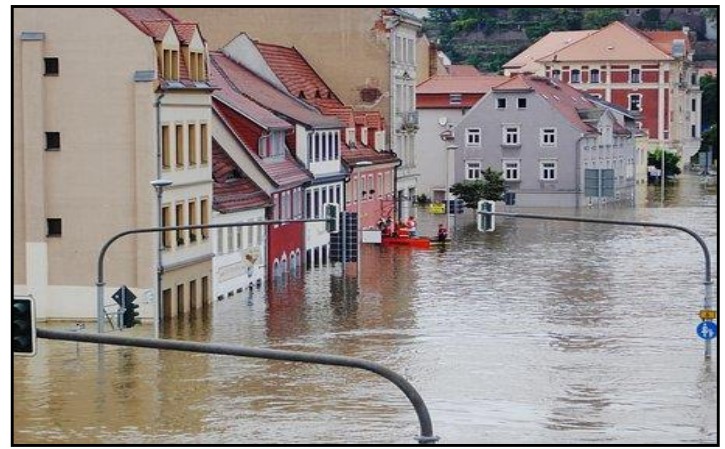
(Available in: https://pixabay.com.)
Fill in the blank above the image with the appropriate verb form:
The following handout was tabled for 9th graders of Ensino Fundamental as a research tool. Students should discover the meanings of the abbreviations. They received adequate support on how to perform the research activity, that is, indication of where to look for suitable/reliable information:

Point out the entailment, related to the language concept envisaged in the BNCC, whose work with the handout is meant to comprise.
Read the text to answer.
Abstract
Migration contributes significantly to the occurrence of language contact and language changes. Migrant communities as diaspora are always faced with choices whether maintaining the use of mother tongue in interacting, switching to using the word of the host, or using ethnic languages side by side with the host language in a new place. This research is intended to provide evidence of the phenomena of communication and social identity focusing on the language use and attitude of diaspora communities in Bali. It is a sociolinguistic study using descriptive qualitative methods on the Muslim community in three regencies that had lived in Bali for more than a generation.
The data were collected through questionnaires, in-depth interviews, and direct observation. The result shows that most diaspora communities see the mother tongue as an essential means of maintaining their social identity. From language choice and attitude perspective, the diaspora community leads to three categories, namely (1) the population that identifies themselves as more diaspora than Balinese; (2) the community claiming themselves as more Balinese than diaspora and (3) the community considering themselves as diaspora and Balinese (dual identity). Keywords: Diaspora community, language attitude, language choice, social identity.
(Available in: https://www.researchgate.ne.)
A transition word or phrase shows the relationship between paragraphs or sections of a text or speech. Transitions provide greater cohesion by making it more explicit or signaling how ideas relate to one another. As to the segment “From language choice and attitude perspective, the diaspora community leads to three categories, namely [...]”, NAMELY, in the context, brings the idea of:

 Conheça nossos planos