Questões de Concurso Público INEP 2025 para Letras - Inglês
Foram encontradas 45 questões


Ano: 2025
Banca:
INEP
Órgão:
INEP
Provas:
INEP - 2025 - INEP - Artes Visuais
|
INEP - 2025 - INEP - Ciências Biológicas |
INEP - 2025 - INEP - Educação Física |
INEP - 2025 - INEP - Matemática |
INEP - 2025 - INEP - Música |
INEP - 2025 - INEP - Ciências Sociais |
INEP - 2025 - INEP - Letras - Português |
INEP - 2025 - INEP - Filosofia |
INEP - 2025 - INEP - Física |
INEP - 2025 - INEP - Geografia |
INEP - 2025 - INEP - Computação |
INEP - 2025 - INEP - Letras - Português Espanhol |
INEP - 2025 - INEP - História |
INEP - 2025 - INEP - Letras - Inglês |
INEP - 2025 - INEP - Letras Português - Inglês |
INEP - 2025 - INEP - Química |
INEP - 2025 - INEP - Pedagogia |
Q4142434
Pedagogia
Um professor, diante de questionamentos acerca da eficácia das vacinas na comunidade, propõe aos estudantes a realização de
práticas pedagógicas sobre a relação entre o aumento da ocorrência de doenças que haviam sido erradicadas e o baixo índice
de vacinação referente aos imunizantes do Programa Nacional de Imunizações (PNI). Considerando o papel da escola como
espaço de promoção do letramento científico, o professor inicia um projeto de conscientização da comunidade escolar quanto
à importância da atualização das carteiras vacinais e do combate à desinformação. A fim de atender aos objetivos do projeto,
foi elaborada uma proposta de prática pedagógica.
Para que essa proposta promova o letramento científico, o professor deve
Para que essa proposta promova o letramento científico, o professor deve
Ano: 2025
Banca:
INEP
Órgão:
INEP
Provas:
INEP - 2025 - INEP - Artes Visuais
|
INEP - 2025 - INEP - Ciências Biológicas |
INEP - 2025 - INEP - Educação Física |
INEP - 2025 - INEP - Matemática |
INEP - 2025 - INEP - Música |
INEP - 2025 - INEP - Ciências Sociais |
INEP - 2025 - INEP - Letras - Português |
INEP - 2025 - INEP - Filosofia |
INEP - 2025 - INEP - Física |
INEP - 2025 - INEP - Geografia |
INEP - 2025 - INEP - Computação |
INEP - 2025 - INEP - Letras - Português Espanhol |
INEP - 2025 - INEP - História |
INEP - 2025 - INEP - Letras - Inglês |
INEP - 2025 - INEP - Letras Português - Inglês |
INEP - 2025 - INEP - Química |
INEP - 2025 - INEP - Pedagogia |
Q4142435
Pedagogia
A fim de cumprir a Lei n. 14 986/2024, que inclui na Lei de Diretrizes e Bases da Educação (LDB) a “obrigatoriedade de abordagens
fundamentadas nas experiências e nas perspectivas femininas nos conteúdos curriculares do ensino fundamental e médio”,
um professor do Ensino Médio apresentou aos estudantes dados do Relatório “Em direção à equidade de gênero no Brasil”
sobre a participação de mulheres em publicações científicas no Brasil entre 2018 e 2022:
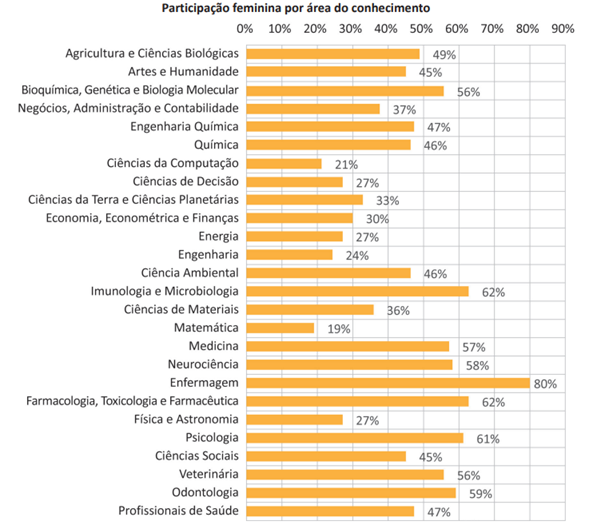
Participação feminina em cada área do conhecimento para publicações com autores no Brasil no período 2018 a 2022. Disponível em: www.static.poder360.com.br. Acesso em: 29 jul. 2025 (adaptado).
Os dados do gráfico seguem a classificação de áreas de pesquisa das revistas científicas em que as publicações foram editadas e revelam marcante presença feminina em áreas como Enfermagem (80%) e Psicologia (61%), mas baixos índices em Matemática (19%), Ciência da Computação (21%) e Engenharia (24%).
A partir desse material, a proposta pedagógica que representa uma ação do professor para estimular a equidade de gênero nas áreas do conhecimento é
Participação feminina em cada área do conhecimento para publicações com autores no Brasil no período 2018 a 2022. Disponível em: www.static.poder360.com.br. Acesso em: 29 jul. 2025 (adaptado).
Os dados do gráfico seguem a classificação de áreas de pesquisa das revistas científicas em que as publicações foram editadas e revelam marcante presença feminina em áreas como Enfermagem (80%) e Psicologia (61%), mas baixos índices em Matemática (19%), Ciência da Computação (21%) e Engenharia (24%).
A partir desse material, a proposta pedagógica que representa uma ação do professor para estimular a equidade de gênero nas áreas do conhecimento é
Ano: 2025
Banca:
INEP
Órgão:
INEP
Provas:
INEP - 2025 - INEP - Artes Visuais
|
INEP - 2025 - INEP - Ciências Biológicas |
INEP - 2025 - INEP - Educação Física |
INEP - 2025 - INEP - Matemática |
INEP - 2025 - INEP - Música |
INEP - 2025 - INEP - Ciências Sociais |
INEP - 2025 - INEP - Letras - Português |
INEP - 2025 - INEP - Filosofia |
INEP - 2025 - INEP - Física |
INEP - 2025 - INEP - Geografia |
INEP - 2025 - INEP - Computação |
INEP - 2025 - INEP - Letras - Português Espanhol |
INEP - 2025 - INEP - História |
INEP - 2025 - INEP - Letras - Inglês |
INEP - 2025 - INEP - Letras Português - Inglês |
INEP - 2025 - INEP - Química |
INEP - 2025 - INEP - Pedagogia |
Q4142437
Pedagogia
O espaço escolar é um lugar de convívio. Nele encontramos
não apenas as relações das pessoas com o conhecimento,
mas também o aprendizado de como as pessoas se relacionam
entre si e com o restante do mundo. Exatamente por isso os
conflitos aparecem, e a gestão da escola deve saber como
lidar com eles. Por reproduzir as lógicas sociais, encontramos,
também na escola, relações que desvalorizam o que é
entendido como contra-hegemônico nas culturas. E isso
impacta negativamente nas pessoas negras e nas praticantes
das Religiões de Matrizes Africanas. Talvez os signos de Exu e
de Ogum sejam boas pistas sobre como lidar com a escola na
busca de espaços menos opressivos. Essas duas divindades do
panteão iorubano são vinculadas aos caminhos, à comunicação,
à política, aos conflitos e, de algum modo, à própria educação.
Exu e Ogum nos ensinam que a convivência não precisa de
uma suposição de que todas e todos pensem do mesmo modo,
desejem do mesmo modo, caminhem pelos mesmos caminhos.
Mas ensinam que o mundo é criado coletivamente e que, entre
conflitos e andanças, devemos preservar as diferenças.
NASCIMENTO, W. F. As religiões de matrizes africanas, resistência e contexto escolar: entre encruzilhadas. In: Memórias do Baobá II. Fortaleza: Editora UFC, 2017 (adaptado).
Com base no texto e nas ações de enfrentamento ao racismo religioso no espaço escolar, é correto afirmar que a
NASCIMENTO, W. F. As religiões de matrizes africanas, resistência e contexto escolar: entre encruzilhadas. In: Memórias do Baobá II. Fortaleza: Editora UFC, 2017 (adaptado).
Com base no texto e nas ações de enfrentamento ao racismo religioso no espaço escolar, é correto afirmar que a
Q4147145
Pedagogia
Texto associado
In a high school EFL 50-minute lesson, the teacher selects a short authentic news article on climate change to introduce some
reading strategies. The teacher begins by activating students’ background knowledge through a quick discussion in English
about environmental issues. Then, she explains two key reading strategies — skimming and scanning — using visual aids and
simple English definitions.
Students are first asked to skim the text in pairs to get the main idea, take some notes, and discuss the overall topic. Then, they
scan the article to answer questions such as “What year was the article published?” or “Which countries are mentioned?”. The
teacher monitors the group work, encouraging students to interact in English and supporting them when needed. Afterwards,
the class discusses the purpose of each strategy and how they help understand texts more efficiently.
The teacher’s approach reveals a concept of language as
Q4147150
Pedagogia
Texto associado

FRANCO, C. English Vibes. São Paulo: FTD, 2020.
In light of Base Nacional Comum Curricular (BNCC) and Programa Nacional do Livro Didático (PNLD) guidelines for English
language teaching, how does the activity about cyberbullying reflect current educational policies and priorities?
Q4147153
Pedagogia
Texto associado
Garcia (2009) é quem expande o conceito de translinguagem, que parte de uma visão heteroglóssica, em que o sujeito possui
um único repertório linguístico e suas práticas linguísticas e dinâmicas semióticas são superiores às línguas convencionais de
países e estados. Liberali (2013) defende esta perspectiva e enfatiza a necessidade de termos que considerar o currículo da
educação multi/bilíngue a partir das atividades e práticas sociais e permitir aos alunos expandirem seu repertório e suas formas
de participação. A educação bilíngue consiste em um programa educacional formal que se faz presente pelo aprendizado de
componentes curriculares pela instrução em duas línguas e não manter o foco apenas no aprendizado da língua. Aqui no
Brasil, podemos distinguir a educação bilíngue em dois grandes grupos: dominante (educação bilíngue de línguas de prestígio,
frequentemente de escolas particulares de elite em que se objetiva o aprendizado de uma segunda língua, como o inglês) e
minoritários (educação indígena, migrantes de crise, educação em regiões de fronteiras, educação de surdos).
Projeto-piloto: escola bilíngue com adequações. Disponível em: www.ibipora.pr.gov.br. Acesso em: 2 maio 2025 (adaptado).
Which interdisciplinary project reflects the bilingual approach described in the text?
Q4147154
Pedagogia
Texto associado
O Google lançou esta semana uma coleção com experimentos de inteligência artificial — desenvolvida com o modelo Gemini.
Cada um dos experimentos da chamada Little Language Lessons, que ainda é uma exploração inicial, aborda uma maneira
diferente pela qual a inteligência artificial pode apoiar a aprendizagem no mundo real.
O primeiro é o Tiny Lesson. Com ele, o usuário descreve uma situação, por exemplo “pedir informações” ou “encontrar um
passaporte perdido”, e recebe vocabulário, frases e dicas gramaticais úteis, adaptados a esse contexto.
O segundo é o Slang Hang, que gera conversas autênticas para ajudar o usuário a aprender expressões e gírias. A pessoa pode
acompanhar o desenrolar de um diálogo entre falantes nativos, revelando uma mensagem de cada vez e desvendando termos
desconhecidos à medida que aparecem.
“Um dos aspectos mais interessantes deste experimento é o elemento da narrativa emergente. Cada cena é única e gerada
na hora — pode ser um vendedor ambulante conversando com um cliente, dois colegas de trabalho se encontrando no metrô
ou até mesmo um casal de amigos há muito perdidos se reencontrando inesperadamente em uma exposição de animais de
estimação exóticos”, pontuou Wade, acrescentando que pode haver erros de precisão. “Ocasionalmente, ele usa incorretamente
certas expressões e gírias, ou até mesmo as inventa. Os Large Language Models (LLM) ainda não são perfeitos e, por isso, é
importante fazer referências cruzadas com fontes confiáveis”.
VEIGA, C. Google Launches AI Tools to Teach Languages. Disponível em: https://epocanegocios.globo.com.
Acesso em: 2 maio 2025 (adaptado).
According to the text, what is the main pedagogical contribution of these new AI-based experiments to language learning?
Q4147160
Pedagogia
Texto associado

TEXT 1
“The Wolves are a free people,” said Father Wolf. “They take
orders from the Head of the Pack, and not from any striped
cattle-killer. The man’s cub is ours — to kill if we choose.”
“Ye choose and ye do not choose! What talk is this of choosing?
By the bull that I killed, am I to stand nosing into your dog’s
den for my fair dues? It is I, Shere Khan, who speak!”
KIPLING, R. The Jungle Book. S.l.: Project Gutenberg, 1894.
TEXT 2
For an activity involving The Jungle Book and its manga
adaptation to work with characters’ emotions in a 6th-grade
classroom, the teacher is aware that one student in the class is
autistic and prefers structured, visual tasks. Which alternative
supports this student’s engagement with the texts?
Q4147161
Pedagogia
Texto associado
TEXT 1
“The Wolves are a free people,” said Father Wolf. “They take
orders from the Head of the Pack, and not from any striped
cattle-killer. The man’s cub is ours — to kill if we choose.”
“Ye choose and ye do not choose! What talk is this of choosing?
By the bull that I killed, am I to stand nosing into your dog’s
den for my fair dues? It is I, Shere Khan, who speak!”
KIPLING, R. The Jungle Book. S.l.: Project Gutenberg, 1894.
TEXT 2
A 6th-grade English teacher is planning a lesson using an
excerpt from Text 1 and Text 2. Which alternative reflects
an appropriate learning goal and a corresponding classroom
strategy for using these materials?
Q4147165
Pedagogia
Texto associado
A Digital Learning Platform (DLP) is one effective avenue for enhancing language learning. It connects real learning resources with
the digital world for teaching and learning. By converting as many physical learning resources into digital formats as possible,
the DLP offers an innovative combination of different learning concepts and structures. It can also ensure that different groups
of learners have equal access to learning resources through interaction, communication, and knowledge sharing.
DLPs have transformed English language learning with their numerous advantages, although there are also some notable
drawbacks. These platforms offer unmatched accessibility and flexibility, enabling learners to access materials anytime and
anywhere and to progress at their own pace. They feature diverse resources such as videos, interactive exercises, quizzes, and
reading materials, with multimedia integration enhancing comprehension and retention. Personalized learning experiences are
supported through adaptive technologies and immediate feedback. Gamification and interactive activities boost engagement
and motivation, while cost-effectiveness and global networking opportunities are notable benefits.
However, there are downsides to consider. Digital platforms may lack the personal touch and immediate feedback of face-to-face
interactions, potentially reducing social learning opportunities. Technical issues such as internet reliability and online distractions
can pose barriers, requiring learners to stay disciplined and motivated. Quality and credibility can vary, raising concerns about
fraudulent or poorly designed courses. Assessment challenges, including cheating and assessing practical language skills, also
exist. Moreover, self-study can sometimes leave learners feeling isolated and struggling with complex topics. Balancing digital
resources with other learning methods can help address these challenges and ensure a more comprehensive language learning
experience.
POONPON, K. et al. TIGA-Based English Learning Platform for Language Learner Competency Development in a Digital
Environment. International Journal of Learning, Teaching and Educational Research, n. 6, June 30, 2024 (adapted).
Student self-assessment is a powerful tool for increasing motivation and engagement because it provides them with the ability
to take charge of their own education. Digital Learning Platforms (DLP) enable the teacher to help students evaluate their
knowledge and learning processes. In order to promote students’ self-assessment, the teacher could
Q4147168
Pedagogia
Texto associado
TEXT 1
Situar a língua inglesa em seu status de língua franca implica
compreender que determinadas crenças — como a de que há
um inglês melhor para se ensinar, ou um nível de proficiência
específico a ser alcançado pelo aluno — precisam ser
relativizadas. Ou seja, o status de Inglês como Língua Franca
implica deslocá-la de um modelo ideal de falante, considerando
a importância da cultura no ensino-aprendizagem da língua e
buscando romper com aspectos relativos à correção, precisão
e proficiência linguística.
Base Nacional Comum Curricular: Ensino Fundamental.
Disponível
em: www.gov.br/mec. Acesso em: 28 maio 2025 (adaptado).
TEXT 2
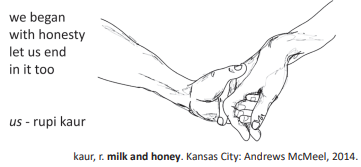
Kendrick Lamar’s song Not Like Us, which gained prominence
during the 2025 Super Bowl halftime show, includes the
repeated phrase: “they not like us”. As part of an 8th-grade
English class, how could a teacher use this chorus line to
address linguistic diversity while still engaging students with
formal aspects of language, in line with the Base Nacional
Comum Curricular (BNCC) guidelines?
Q4147172
Pedagogia
Texto associado
Some authors deepen the understanding of scaffolding from the perspective of sociocultural learning theories, highlighting
it as a form of dialogic and adaptive mediation that emerges through interaction between learners and more experienced
interlocutors. Scaffolding is presented as an essential pedagogical tool that enables learners to perform linguistic tasks that are
not yet within their autonomous reach, as long as they fall within the Zone of Proximal Development (ZPD). The support provided
is responsive to the learner’s momentary needs and should be gradually withdrawn as the learner becomes more competent.
What distinguishes these authors’ approach is their view of scaffolding not as mere assisted instruction, but as a dynamic process
of co-constructing meaning in socially situated contexts. They emphasize that in order to foster genuine linguistic development,
teaching must go beyond the transmission of grammatical rules and actively create opportunities for authentic language use,
where error and negotiation are integral to the learning process. Thus, scaffolding becomes a link between participation,
interaction, and development, enabling learners to appropriate language as a cultural tool.
LANTOLF, J. P.; POEHNER, M. E.; THORNE, S. L. Sociocultural Theory and L2 Development. In: VANPATTEN, B.; KEATING, G.;
WULFF, S. (Eds.). Theories in Second Language Acquisition: An Introduction. New York: Routledge, 2020 (adapted).
Considering the learning theory presented in the text, a pedagogically grounded proposal for application in the school context
involves the
Q4147173
Pedagogia
Texto associado
Some authors deepen the understanding of scaffolding from the perspective of sociocultural learning theories, highlighting
it as a form of dialogic and adaptive mediation that emerges through interaction between learners and more experienced
interlocutors. Scaffolding is presented as an essential pedagogical tool that enables learners to perform linguistic tasks that are
not yet within their autonomous reach, as long as they fall within the Zone of Proximal Development (ZPD). The support provided
is responsive to the learner’s momentary needs and should be gradually withdrawn as the learner becomes more competent.
What distinguishes these authors’ approach is their view of scaffolding not as mere assisted instruction, but as a dynamic process
of co-constructing meaning in socially situated contexts. They emphasize that in order to foster genuine linguistic development,
teaching must go beyond the transmission of grammatical rules and actively create opportunities for authentic language use,
where error and negotiation are integral to the learning process. Thus, scaffolding becomes a link between participation,
interaction, and development, enabling learners to appropriate language as a cultural tool.
LANTOLF, J. P.; POEHNER, M. E.; THORNE, S. L. Sociocultural Theory and L2 Development. In: VANPATTEN, B.; KEATING, G.;
WULFF, S. (Eds.). Theories in Second Language Acquisition: An Introduction. New York: Routledge, 2020 (adapted).
A teacher in middle school wishes to promote the linguistic development of their students based on the learning theory
underlying the text. In this sense, it is coherent for them to develop as a pedagogical practice
Q4147174
Pedagogia
Texto associado
Some authors deepen the understanding of scaffolding from the perspective of sociocultural learning theories, highlighting
it as a form of dialogic and adaptive mediation that emerges through interaction between learners and more experienced
interlocutors. Scaffolding is presented as an essential pedagogical tool that enables learners to perform linguistic tasks that are
not yet within their autonomous reach, as long as they fall within the Zone of Proximal Development (ZPD). The support provided
is responsive to the learner’s momentary needs and should be gradually withdrawn as the learner becomes more competent.
What distinguishes these authors’ approach is their view of scaffolding not as mere assisted instruction, but as a dynamic process
of co-constructing meaning in socially situated contexts. They emphasize that in order to foster genuine linguistic development,
teaching must go beyond the transmission of grammatical rules and actively create opportunities for authentic language use,
where error and negotiation are integral to the learning process. Thus, scaffolding becomes a link between participation,
interaction, and development, enabling learners to appropriate language as a cultural tool.
LANTOLF, J. P.; POEHNER, M. E.; THORNE, S. L. Sociocultural Theory and L2 Development. In: VANPATTEN, B.; KEATING, G.;
WULFF, S. (Eds.). Theories in Second Language Acquisition: An Introduction. New York: Routledge, 2020 (adapted).
Based on the concept of learning presented in the text, the pedagogical intervention which promotes curricular accessibility
for students with disabilities is the one that
Q4147175
Pedagogia
Texto associado
During a 9th-grade English class, the teacher designs a
lesson around the theme Local Heroes. The students begin
by watching a short subtitled documentary about Mestre
João, a capoeira master who offers free classes to children
in the school’s neighborhood. Working in groups, they then
create posters and voice recordings in English to present
other individuals they know who make a difference in their
community. Some students choose sports figures, others
highlight musicians or teachers. In order to support the lesson,
the teacher prepares a didactic sequence that incorporates
elements of digital literacy. Throughout the activities, she
encourages students to express themselves meaningfully
in English, prioritizing authentic communication and social
relevance over grammatical perfection and form-focused drills.
Which linguistic theory supports the teaching approach
demonstrated in the text?
Q4147176
Pedagogia
Texto associado
During a 9th-grade English class, the teacher designs a
lesson around the theme Local Heroes. The students begin
by watching a short subtitled documentary about Mestre
João, a capoeira master who offers free classes to children
in the school’s neighborhood. Working in groups, they then
create posters and voice recordings in English to present
other individuals they know who make a difference in their
community. Some students choose sports figures, others
highlight musicians or teachers. In order to support the lesson,
the teacher prepares a didactic sequence that incorporates
elements of digital literacy. Throughout the activities, she
encourages students to express themselves meaningfully
in English, prioritizing authentic communication and social
relevance over grammatical perfection and form-focused drills.
With reference to the lesson described, which of the following
activities is consistent with the pedagogical principles guiding
the teacher´s actions?
Q4147178
Pedagogia
Texto associado
According to Rojo (2009), literacy involves social practices
of reading and writing that are historically and culturally
situated. Thus, it is understood as a set of practices that enables
individuals to effectively participate in society by interpreting
and producing texts in various social contexts. Additionally, the
Base Nacional Comum Curricular (BNCC) defines multiliteracies
as the practices of reading and producing texts that are
constructed through different languages or semioses.
Which of the activities takes into account the concept of
multiliteracies?
Q4147180
Pedagogia
Texto associado
FIGUEIREDO, F. J. Q. Aprendendo com os erros: uma perspectiva comunicativa do ensino de línguas. São Paulo: Parábola, 2023 (adapted).
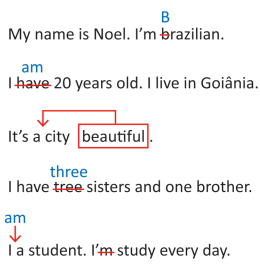
To encourage students to reflect on their textual production and play an active role in their learning process, what is the
alternative for assessing the presented written activity?
Q4147181
Pedagogia
Texto associado
FIGUEIREDO, F. J. Q. Aprendendo com os erros: uma perspectiva comunicativa do ensino de línguas. São Paulo: Parábola, 2023 (adapted).
A student has a composition corrected by her high school teacher with markings as the ones in the text. In order to promote
autonomous learning and content mastery, the student should be able to
Q4147183
Pedagogia
TEXTO 1
O letramento literário faz parte da expansão do uso do termo letramento, isto é, integra o plural dos letramentos, sendo um dos usos sociais da escrita. Em primeiro lugar, o letramento literário é diferente dos outros tipos de letramento porque a literatura ocupa um lugar único em relação à linguagem, ou seja, cabe à literatura tornar o mundo compreensível transformando a sua materialidade em palavras de cores, odores, sabores e formas intensamente humanas. Depois, o letramento feito com textos literários proporciona um modo privilegiado de inserção no mundo da escrita, posto que conduz ao domínio da palavra a partir dela mesma.
SOUZA, R.; COSSON, R. Letramento literário: uma proposta para sala de aula. Disponível em: https://acervodigital.unesp.br. Acesso em: 23 maio 2025 (adaptado).
TEXTO 2
(EF08LI18) Construir repertório cultural por meio do contato com manifestações artístico-culturais vinculadas à língua inglesa (artes plásticas e visuais, literatura, música, cinema, dança, festividades, entre outros), valorizando a diversidade entre culturas.
Base Nacional Comum Curricular: Ensino Fundamental. Disponível em: www.gov.br/mec. Acesso em: 28 maio 2025 (adaptado).
An English teacher decides to bring a poem to her students based on the assumptions of literary literacy and the Base Nacional Comum Curricular (BNCC). Which of the pedagogical proposals is aligned with these assumptions?
O letramento literário faz parte da expansão do uso do termo letramento, isto é, integra o plural dos letramentos, sendo um dos usos sociais da escrita. Em primeiro lugar, o letramento literário é diferente dos outros tipos de letramento porque a literatura ocupa um lugar único em relação à linguagem, ou seja, cabe à literatura tornar o mundo compreensível transformando a sua materialidade em palavras de cores, odores, sabores e formas intensamente humanas. Depois, o letramento feito com textos literários proporciona um modo privilegiado de inserção no mundo da escrita, posto que conduz ao domínio da palavra a partir dela mesma.
SOUZA, R.; COSSON, R. Letramento literário: uma proposta para sala de aula. Disponível em: https://acervodigital.unesp.br. Acesso em: 23 maio 2025 (adaptado).
TEXTO 2
(EF08LI18) Construir repertório cultural por meio do contato com manifestações artístico-culturais vinculadas à língua inglesa (artes plásticas e visuais, literatura, música, cinema, dança, festividades, entre outros), valorizando a diversidade entre culturas.
Base Nacional Comum Curricular: Ensino Fundamental. Disponível em: www.gov.br/mec. Acesso em: 28 maio 2025 (adaptado).
An English teacher decides to bring a poem to her students based on the assumptions of literary literacy and the Base Nacional Comum Curricular (BNCC). Which of the pedagogical proposals is aligned with these assumptions?

 Conheça nossos planos