Questões de Concurso Público Prefeitura de Guarabira - PB 2026 para Professor de Inglês
Foram encontradas 15 questões


Ano: 2026
Banca:
CPCON
Órgão:
Prefeitura de Guarabira - PB
Prova:
CPCON - 2026 - Prefeitura de Guarabira - PB - Professor de Inglês |
Q4405109
Inglês
Texto associado
Read the Text I to answer the question.
Text I
Students using A.I. over humans to learn English (23rd December 2024)
More and more students in Japan are using artificial intelligence (AI) to learn English and other languages. The languagelearning app Duolingo conducted a survey on how students study languages. More than 4,700 Japanese students answered questions
about their language-learning habits. The survey found that the number of people using ChatGPTand other AI tools increased by more
than 80 per cent in 2024. AI was particularly popular with younger people. The researchers said more young people used AI than took
face-to-face lessons. However, some people in their 20s were not totally happy with AI lessons. They said AI lacked natural responses
and was a little boring.
Duolingo said: "We're in the midst of an AI revolution.…Technology has long had an impact on language learning." It found
that apps were the most popular method in Japan to learn languages. English was the most studied language, followed by Korean.
People are studying Korean "to understand the language as spoken by…favourite artists and celebrities." Duolingo said around 58 per
cent of people who took the survey used language-learning apps. This was followed by video streaming platforms like YouTube and
Netflix (37%), textbooks (36%) and online lessons (16%). The number of people going to a language school is decreasing. Just 13.8 per
cent of people went to classes with a teacher.
Sources: https://mainichi.jp/english/articles/20241218/p2a/00m/0li/017000c; https://blog.duolingo.com/2024-duolingo-language-report/
According to the text, which of the following statements is true regarding the language-learning habits of students in Japan?
Ano: 2026
Banca:
CPCON
Órgão:
Prefeitura de Guarabira - PB
Prova:
CPCON - 2026 - Prefeitura de Guarabira - PB - Professor de Inglês |
Q4405110
Inglês
Texto associado
Read the Text I to answer the question.
Text I
Students using A.I. over humans to learn English (23rd December 2024)
More and more students in Japan are using artificial intelligence (AI) to learn English and other languages. The languagelearning app Duolingo conducted a survey on how students study languages. More than 4,700 Japanese students answered questions
about their language-learning habits. The survey found that the number of people using ChatGPTand other AI tools increased by more
than 80 per cent in 2024. AI was particularly popular with younger people. The researchers said more young people used AI than took
face-to-face lessons. However, some people in their 20s were not totally happy with AI lessons. They said AI lacked natural responses
and was a little boring.
Duolingo said: "We're in the midst of an AI revolution.…Technology has long had an impact on language learning." It found
that apps were the most popular method in Japan to learn languages. English was the most studied language, followed by Korean.
People are studying Korean "to understand the language as spoken by…favourite artists and celebrities." Duolingo said around 58 per
cent of people who took the survey used language-learning apps. This was followed by video streaming platforms like YouTube and
Netflix (37%), textbooks (36%) and online lessons (16%). The number of people going to a language school is decreasing. Just 13.8 per
cent of people went to classes with a teacher.
Sources: https://mainichi.jp/english/articles/20241218/p2a/00m/0li/017000c; https://blog.duolingo.com/2024-duolingo-language-report/
In the phrase “We're in the midst of an AI revolution”, the expression “in the midst of” can be best replaced, without changing the
original meaning of the text, by:
Ano: 2026
Banca:
CPCON
Órgão:
Prefeitura de Guarabira - PB
Prova:
CPCON - 2026 - Prefeitura de Guarabira - PB - Professor de Inglês |
Q4405111
Inglês
Texto associado
Read the Text I to answer the question.
Text I
Students using A.I. over humans to learn English (23rd December 2024)
More and more students in Japan are using artificial intelligence (AI) to learn English and other languages. The languagelearning app Duolingo conducted a survey on how students study languages. More than 4,700 Japanese students answered questions
about their language-learning habits. The survey found that the number of people using ChatGPTand other AI tools increased by more
than 80 per cent in 2024. AI was particularly popular with younger people. The researchers said more young people used AI than took
face-to-face lessons. However, some people in their 20s were not totally happy with AI lessons. They said AI lacked natural responses
and was a little boring.
Duolingo said: "We're in the midst of an AI revolution.…Technology has long had an impact on language learning." It found
that apps were the most popular method in Japan to learn languages. English was the most studied language, followed by Korean.
People are studying Korean "to understand the language as spoken by…favourite artists and celebrities." Duolingo said around 58 per
cent of people who took the survey used language-learning apps. This was followed by video streaming platforms like YouTube and
Netflix (37%), textbooks (36%) and online lessons (16%). The number of people going to a language school is decreasing. Just 13.8 per
cent of people went to classes with a teacher.
Sources: https://mainichi.jp/english/articles/20241218/p2a/00m/0li/017000c; https://blog.duolingo.com/2024-duolingo-language-report/
Analyze the word “learning” in the excerpt: “The language-learning app Duolingo conducted a survey on how students study
languages.". From a morphological and syntactic perspective, the suffix -ing can perform different grammatical functions. In the
specific compound expression “language-learning apps” found in the text, the word “learning” functions morphosyntactically as:
Ano: 2026
Banca:
CPCON
Órgão:
Prefeitura de Guarabira - PB
Prova:
CPCON - 2026 - Prefeitura de Guarabira - PB - Professor de Inglês |
Q4405112
Inglês
Texto associado
Read the Text I to answer the question.
Text I
Students using A.I. over humans to learn English (23rd December 2024)
More and more students in Japan are using artificial intelligence (AI) to learn English and other languages. The languagelearning app Duolingo conducted a survey on how students study languages. More than 4,700 Japanese students answered questions
about their language-learning habits. The survey found that the number of people using ChatGPTand other AI tools increased by more
than 80 per cent in 2024. AI was particularly popular with younger people. The researchers said more young people used AI than took
face-to-face lessons. However, some people in their 20s were not totally happy with AI lessons. They said AI lacked natural responses
and was a little boring.
Duolingo said: "We're in the midst of an AI revolution.…Technology has long had an impact on language learning." It found
that apps were the most popular method in Japan to learn languages. English was the most studied language, followed by Korean.
People are studying Korean "to understand the language as spoken by…favourite artists and celebrities." Duolingo said around 58 per
cent of people who took the survey used language-learning apps. This was followed by video streaming platforms like YouTube and
Netflix (37%), textbooks (36%) and online lessons (16%). The number of people going to a language school is decreasing. Just 13.8 per
cent of people went to classes with a teacher.
Sources: https://mainichi.jp/english/articles/20241218/p2a/00m/0li/017000c; https://blog.duolingo.com/2024-duolingo-language-report/
Analyze the syntactic structure of the following extract from the text: “...around 58 per cent of people who took the survey used
language-learning apps.” Considering the prescriptive grammar rules regarding relative clauses and relative pronouns, select the
option that CORRECTLYanalyzes or replaces the underlined pronoun “who” within this specific context.
Ano: 2026
Banca:
CPCON
Órgão:
Prefeitura de Guarabira - PB
Prova:
CPCON - 2026 - Prefeitura de Guarabira - PB - Professor de Inglês |
Q4405113
Inglês
Texto associado
Read the Text I to answer the question.
Text I
Students using A.I. over humans to learn English (23rd December 2024)
More and more students in Japan are using artificial intelligence (AI) to learn English and other languages. The languagelearning app Duolingo conducted a survey on how students study languages. More than 4,700 Japanese students answered questions
about their language-learning habits. The survey found that the number of people using ChatGPTand other AI tools increased by more
than 80 per cent in 2024. AI was particularly popular with younger people. The researchers said more young people used AI than took
face-to-face lessons. However, some people in their 20s were not totally happy with AI lessons. They said AI lacked natural responses
and was a little boring.
Duolingo said: "We're in the midst of an AI revolution.…Technology has long had an impact on language learning." It found
that apps were the most popular method in Japan to learn languages. English was the most studied language, followed by Korean.
People are studying Korean "to understand the language as spoken by…favourite artists and celebrities." Duolingo said around 58 per
cent of people who took the survey used language-learning apps. This was followed by video streaming platforms like YouTube and
Netflix (37%), textbooks (36%) and online lessons (16%). The number of people going to a language school is decreasing. Just 13.8 per
cent of people went to classes with a teacher.
Sources: https://mainichi.jp/english/articles/20241218/p2a/00m/0li/017000c; https://blog.duolingo.com/2024-duolingo-language-report/
The text contains the following statement in direct speech: Duolingo said: “We're in the midst of an AI revolution.…Technology has
long had an impact on language learning.” If this passage were to be converted into reported speech, strictly maintaining the
grammatical conventions of backshifting and formal register, the proper transcription would be:
Ano: 2026
Banca:
CPCON
Órgão:
Prefeitura de Guarabira - PB
Prova:
CPCON - 2026 - Prefeitura de Guarabira - PB - Professor de Inglês |
Q4405114
Inglês
Texto associado
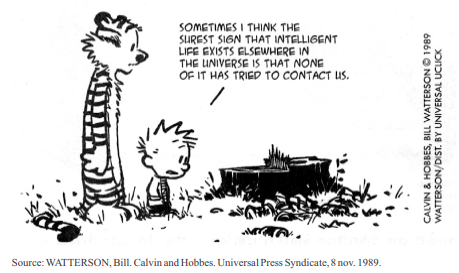
Read the Text II to answer the question.
Text II
Based on the comic strip, analyze the underlying meaning of Calvin's statement in relation to the visual context provided by the
illustrator. Which of the following options best interprets the central irony of the text?
Ano: 2026
Banca:
CPCON
Órgão:
Prefeitura de Guarabira - PB
Prova:
CPCON - 2026 - Prefeitura de Guarabira - PB - Professor de Inglês |
Q4405115
Inglês
Texto associado
Read the Text II to answer the question.
Text II
In the comic strip, Calvin says: “Sometimes I think the surest sign that intelligent life exists elsewhere in the universe is that none of it
has tried to contact us.” Focus specifically on the underlined phrase “has tried”. From a morphosyntactic and semantic perspective,
why is the Present Perfect tense used here instead of the Simple Past?
Ano: 2026
Banca:
CPCON
Órgão:
Prefeitura de Guarabira - PB
Prova:
CPCON - 2026 - Prefeitura de Guarabira - PB - Professor de Inglês |
Q4405116
Inglês
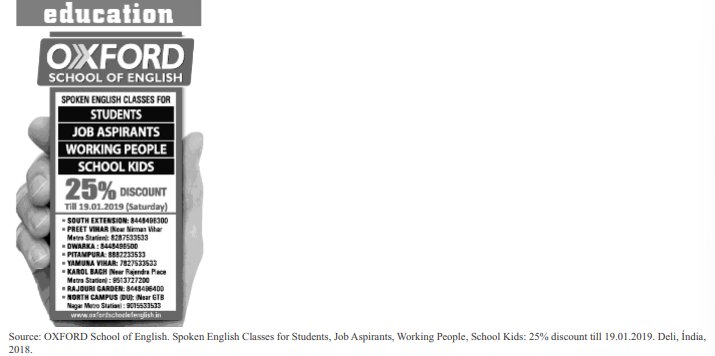
Based on the textual and visual elements of the promotional advertisement featured in the advertisement, what is the primary communicative purpose of this text and who is its intended audience?
Ano: 2026
Banca:
CPCON
Órgão:
Prefeitura de Guarabira - PB
Prova:
CPCON - 2026 - Prefeitura de Guarabira - PB - Professor de Inglês |
Q4405117
Inglês
“Standardized testing has become the measuring stick of modern education – precise, efficient, and deeply inadequate. It tells us what
students can recall under pressure, not what they can think when no one is watching. The highest-performing countries in international
rankings have, paradoxically, begun dismantling their test-heavy curricula in search of something harder to measure: genuine
understanding.”
Source: adapted from an opinion column on education policy — genre: op-ed
The author's primary rhetorical strategy in the passage above is best described as:
The author's primary rhetorical strategy in the passage above is best described as:
Ano: 2026
Banca:
CPCON
Órgão:
Prefeitura de Guarabira - PB
Prova:
CPCON - 2026 - Prefeitura de Guarabira - PB - Professor de Inglês |
Q4405118
Inglês
Read the following statements about the use of linking words in English and their logical functions, based on the framework proposed
by Halliday & Hasan (1976). The authors classify linking words (conjunctive adjuncts) into four semantic categories: additive,
adversative, causal, and temporal. This classification underpins the analysis required in this question.
I- “Furthermore” is an additive linking word used to introduce an idea that reinforces or expands upon a previously stated point, and it is typically found in formal or academic registers.
II- “Nevertheless” and “however” are both adversative connectives that establish a contrast with the preceding clause or sentence; they are interchangeable in all contexts without difference in emphasis or position.
III- “Therefore” is a causal-resultative connective: it introduces a conclusion or consequence that logically follows from information already presented.
IV- “Meanwhile” belongs to the temporal category of linking words and is used to indicate that two actions or situations occur simultaneously or overlap in time.
Considering the semantic functions of linking words as classified by Halliday & Hasan (1976), mark the CORRECTalternative:
Ano: 2026
Banca:
CPCON
Órgão:
Prefeitura de Guarabira - PB
Prova:
CPCON - 2026 - Prefeitura de Guarabira - PB - Professor de Inglês |
Q4405119
Inglês
Consider the following sentences regarding the use of comparative and superlative structures in English:
I- The more you practice speaking English, the more confident you will become.
II- Of all the candidates who interviewed for the position, Sarah was the most qualified.
III- This smartphone model is twice as expensive than the one I bought last year.
Which of the statement(s) is/are grammatically CORRECT?
Ano: 2026
Banca:
CPCON
Órgão:
Prefeitura de Guarabira - PB
Prova:
CPCON - 2026 - Prefeitura de Guarabira - PB - Professor de Inglês |
Q4405120
Inglês
Consider the following sentences regarding the use of the passive voice in English:
I- The new community center is currently being built by the local council.
II- Delicious chocolate chip cookies were baked by Grandma yesterday afternoon.
III- The ancient ruins visited by thousands of tourists every summer.
Which of the statement(s) is/are grammatically CORRECT?
I- The new community center is currently being built by the local council.
II- Delicious chocolate chip cookies were baked by Grandma yesterday afternoon.
III- The ancient ruins visited by thousands of tourists every summer.
Which of the statement(s) is/are grammatically CORRECT?
Ano: 2026
Banca:
CPCON
Órgão:
Prefeitura de Guarabira - PB
Prova:
CPCON - 2026 - Prefeitura de Guarabira - PB - Professor de Inglês |
Q4405121
Inglês
My father speaks Urdu
language of dancing peacocks
rosewater fountains
even its curses are beautiful.
He speaks Hindi
suave and melodic
earthy Punjabi
salty rich as saag paneer
coastal Kiswahili
laced with Arabic, he speaks Gujarati
solid ancestral pride.
Five languages
five different worlds
yet English
shrinks
him
down
before white men
who think their flat cold spiky words
make the only reality.
Source: PATEL, S. Migritude. San Francisco: Kaya Books, 2010.
Based on the poem, analyze the author's portrayal of the father's relationship with languages and choose the CORRECTstatement.
Based on the poem, analyze the author's portrayal of the father's relationship with languages and choose the CORRECTstatement.
Ano: 2026
Banca:
CPCON
Órgão:
Prefeitura de Guarabira - PB
Prova:
CPCON - 2026 - Prefeitura de Guarabira - PB - Professor de Inglês |
Q4405122
Inglês
Texto associado
Read the Text III to answer the question.
Text III
The Brazilian National Common Curricular Base (BNCC) introduced a significant paradigm shift by framing the English
language as a mandatory curriculum component within an English as a Lingua Franca (ELF) perspective. This framework recognizes
English as a global language used dynamically in multilingual settings, meaning that its instruction does not need to adhere strictly to
the linguistic or cultural norms of native speakers from hegemonic countries. Consequently, English is no longer categorized merely as
a traditional "foreign language" in Brazil, but rather as a widespread instrument of international communication.
Furthermore, the BNCC justifies the inclusion of English within the curriculum as an essential element of a critical education
agenda. Instead of focusing on a purely instrumental or mechanical view of grammar, the official guidelines underscore the formative
function of the language, linking it to the social and political dimensions of communication. Learning English under this light is
equated with equipping students with the necessary knowledge to enable wider global interaction, social mobility, and active
citizenship.
Sources: GIMENEZ, T. English as a lingua franca in the Brazilian National Curriculum: a literature review (2018-2024). Rizomas, v. 12, n. 1, 2024; BRASIL. Ministério
da Educação. Base Nacional Comum Curricular. Brasília, DF: MEC, 2018.
Based on the text regarding the role of the English language in the Brazilian National Common Curricular Base (BNCC), choose the
CORRECTstatement.
Ano: 2026
Banca:
CPCON
Órgão:
Prefeitura de Guarabira - PB
Prova:
CPCON - 2026 - Prefeitura de Guarabira - PB - Professor de Inglês |
Q4405123
Inglês
Texto associado
Read the Text III to answer the question.
Text III
The Brazilian National Common Curricular Base (BNCC) introduced a significant paradigm shift by framing the English
language as a mandatory curriculum component within an English as a Lingua Franca (ELF) perspective. This framework recognizes
English as a global language used dynamically in multilingual settings, meaning that its instruction does not need to adhere strictly to
the linguistic or cultural norms of native speakers from hegemonic countries. Consequently, English is no longer categorized merely as
a traditional "foreign language" in Brazil, but rather as a widespread instrument of international communication.
Furthermore, the BNCC justifies the inclusion of English within the curriculum as an essential element of a critical education
agenda. Instead of focusing on a purely instrumental or mechanical view of grammar, the official guidelines underscore the formative
function of the language, linking it to the social and political dimensions of communication. Learning English under this light is
equated with equipping students with the necessary knowledge to enable wider global interaction, social mobility, and active
citizenship.
Sources: GIMENEZ, T. English as a lingua franca in the Brazilian National Curriculum: a literature review (2018-2024). Rizomas, v. 12, n. 1, 2024; BRASIL. Ministério
da Educação. Base Nacional Comum Curricular. Brasília, DF: MEC, 2018.
Consider the following excerpt from the text:
“Learning English under this light is equated with equipping students with the necessary knowledge to enable wider global interaction, social mobility, and active citizenship. Instead of focusing on a purely instrumental or mechanical view of grammar, the official guidelines underscore the formative function of the language, linking it to the social and political dimensions of communication.”
In the second sentence, the pronoun “it” refers back to:

 Conheça nossos planos