Questões de Concurso Público Prefeitura de Ubatuba - SP 2026 para Professor da Educação Básica II - Inglês
Foram encontradas 21 questões


Ano: 2026
Banca:
Avança SP
Órgão:
Prefeitura de Ubatuba - SP
Prova:
Avança SP - 2026 - Prefeitura de Ubatuba - SP - Professor da Educação Básica II - Inglês |
Q4247243
Inglês
Texto associado
Read the text to answer question.
Using Machine Learning to Develop
Personalized Vaccines for Cancer
Yale researchers have developed a machine
learning model, called Immunostruct, that can
help scientists create more personalized
vaccines, including vaccines for cancer. They
described the tool in Nature Machine
Intelligence along with findings from applying
it to cancer and immunology data.
When a potential threat, such as a virus
or tumor, arises in our body, our immune cells
recognize peptides---essentially short
proteins---on the surface of the invader and
mount a defensive response. This small region
that the immune system interacts with is known
as an epitope.
Epitope-based vaccines are an emerging
technology that contain specific peptides in
order to trigger immune responses that
precisely target particular diseases. Ongoing
studies show that these vaccines are a
promising potential immunotherapy for a range
of cancers including melanomas, breast
cancers, and glioblastomas. Researchers are
also investigating whether these vaccines could
more effectively combat new variants of
infectious diseases.
To develop these vaccines, scientists
can use models that help them predict which
peptides are most likely to trigger a strong immune response to a particular antigen. A
limitation of many of these models, the
researchers say, is that they treat peptides as a
one-dimensional sequence of amino acids, not
the three-dimensional, active structures that
they are.
Now, Yale researchers have created a
model that also incorporates structural and
biochemical properties of peptides. In the new
study, they show that the multimodal model is
more effective at identifying peptide candidates
than its predecessors.
"Cancer is extremely heterogeneous---which often makes it very hard to treat
effectively," says Kevin B. Givechian, PhD, an
MD-PhD student at Yale and co-first author on
the study. “We have built a deep-learning model
that integrates more information than had
previously been combined to help us improve
the identification of vaccine targets that
stimulate people's immune system against their
own tumor. Doing so would enable a more
effective and less toxic method of treatment."
ВАCKMAN, Isabella. Using Machine Learning to
Develop Personalized Vaccines for Cancer. Yale School
of Medicine, 24 fev. 2026. Acesso em: 28 june. 2026.
According to the text, the main purpose of
Immunostruct is to help scientists:
Ano: 2026
Banca:
Avança SP
Órgão:
Prefeitura de Ubatuba - SP
Prova:
Avança SP - 2026 - Prefeitura de Ubatuba - SP - Professor da Educação Básica II - Inglês |
Q4247244
Inglês
Texto associado
Read the text to answer question.
Using Machine Learning to Develop
Personalized Vaccines for Cancer
Yale researchers have developed a machine
learning model, called Immunostruct, that can
help scientists create more personalized
vaccines, including vaccines for cancer. They
described the tool in Nature Machine
Intelligence along with findings from applying
it to cancer and immunology data.
When a potential threat, such as a virus
or tumor, arises in our body, our immune cells
recognize peptides---essentially short
proteins---on the surface of the invader and
mount a defensive response. This small region
that the immune system interacts with is known
as an epitope.
Epitope-based vaccines are an emerging
technology that contain specific peptides in
order to trigger immune responses that
precisely target particular diseases. Ongoing
studies show that these vaccines are a
promising potential immunotherapy for a range
of cancers including melanomas, breast
cancers, and glioblastomas. Researchers are
also investigating whether these vaccines could
more effectively combat new variants of
infectious diseases.
To develop these vaccines, scientists
can use models that help them predict which
peptides are most likely to trigger a strong immune response to a particular antigen. A
limitation of many of these models, the
researchers say, is that they treat peptides as a
one-dimensional sequence of amino acids, not
the three-dimensional, active structures that
they are.
Now, Yale researchers have created a
model that also incorporates structural and
biochemical properties of peptides. In the new
study, they show that the multimodal model is
more effective at identifying peptide candidates
than its predecessors.
"Cancer is extremely heterogeneous---which often makes it very hard to treat
effectively," says Kevin B. Givechian, PhD, an
MD-PhD student at Yale and co-first author on
the study. “We have built a deep-learning model
that integrates more information than had
previously been combined to help us improve
the identification of vaccine targets that
stimulate people's immune system against their
own tumor. Doing so would enable a more
effective and less toxic method of treatment."
ВАCKMAN, Isabella. Using Machine Learning to
Develop Personalized Vaccines for Cancer. Yale School
of Medicine, 24 fev. 2026. Acesso em: 28 june. 2026.
In the excerpt "our immune cells recognize
peptides... and mount a defensive response," the
word "mount" could be replaced, without
changing its meaning, by:
Ano: 2026
Banca:
Avança SP
Órgão:
Prefeitura de Ubatuba - SP
Prova:
Avança SP - 2026 - Prefeitura de Ubatuba - SP - Professor da Educação Básica II - Inglês |
Q4247245
Inglês
Texto associado
Read the text to answer question.
Using Machine Learning to Develop
Personalized Vaccines for Cancer
Yale researchers have developed a machine
learning model, called Immunostruct, that can
help scientists create more personalized
vaccines, including vaccines for cancer. They
described the tool in Nature Machine
Intelligence along with findings from applying
it to cancer and immunology data.
When a potential threat, such as a virus
or tumor, arises in our body, our immune cells
recognize peptides---essentially short
proteins---on the surface of the invader and
mount a defensive response. This small region
that the immune system interacts with is known
as an epitope.
Epitope-based vaccines are an emerging
technology that contain specific peptides in
order to trigger immune responses that
precisely target particular diseases. Ongoing
studies show that these vaccines are a
promising potential immunotherapy for a range
of cancers including melanomas, breast
cancers, and glioblastomas. Researchers are
also investigating whether these vaccines could
more effectively combat new variants of
infectious diseases.
To develop these vaccines, scientists
can use models that help them predict which
peptides are most likely to trigger a strong immune response to a particular antigen. A
limitation of many of these models, the
researchers say, is that they treat peptides as a
one-dimensional sequence of amino acids, not
the three-dimensional, active structures that
they are.
Now, Yale researchers have created a
model that also incorporates structural and
biochemical properties of peptides. In the new
study, they show that the multimodal model is
more effective at identifying peptide candidates
than its predecessors.
"Cancer is extremely heterogeneous---which often makes it very hard to treat
effectively," says Kevin B. Givechian, PhD, an
MD-PhD student at Yale and co-first author on
the study. “We have built a deep-learning model
that integrates more information than had
previously been combined to help us improve
the identification of vaccine targets that
stimulate people's immune system against their
own tumor. Doing so would enable a more
effective and less toxic method of treatment."
ВАCKMAN, Isabella. Using Machine Learning to
Develop Personalized Vaccines for Cancer. Yale School
of Medicine, 24 fev. 2026. Acesso em: 28 june. 2026.
In the sentence "Cancer is extremely
heterogeneous," the adjective heterogeneous
suggests that cancer is:
Ano: 2026
Banca:
Avança SP
Órgão:
Prefeitura de Ubatuba - SP
Prova:
Avança SP - 2026 - Prefeitura de Ubatuba - SP - Professor da Educação Básica II - Inglês |
Q4247246
Inglês
Texto associado
Read the text to answer question.
Using Machine Learning to Develop
Personalized Vaccines for Cancer
Yale researchers have developed a machine
learning model, called Immunostruct, that can
help scientists create more personalized
vaccines, including vaccines for cancer. They
described the tool in Nature Machine
Intelligence along with findings from applying
it to cancer and immunology data.
When a potential threat, such as a virus
or tumor, arises in our body, our immune cells
recognize peptides---essentially short
proteins---on the surface of the invader and
mount a defensive response. This small region
that the immune system interacts with is known
as an epitope.
Epitope-based vaccines are an emerging
technology that contain specific peptides in
order to trigger immune responses that
precisely target particular diseases. Ongoing
studies show that these vaccines are a
promising potential immunotherapy for a range
of cancers including melanomas, breast
cancers, and glioblastomas. Researchers are
also investigating whether these vaccines could
more effectively combat new variants of
infectious diseases.
To develop these vaccines, scientists
can use models that help them predict which
peptides are most likely to trigger a strong immune response to a particular antigen. A
limitation of many of these models, the
researchers say, is that they treat peptides as a
one-dimensional sequence of amino acids, not
the three-dimensional, active structures that
they are.
Now, Yale researchers have created a
model that also incorporates structural and
biochemical properties of peptides. In the new
study, they show that the multimodal model is
more effective at identifying peptide candidates
than its predecessors.
"Cancer is extremely heterogeneous---which often makes it very hard to treat
effectively," says Kevin B. Givechian, PhD, an
MD-PhD student at Yale and co-first author on
the study. “We have built a deep-learning model
that integrates more information than had
previously been combined to help us improve
the identification of vaccine targets that
stimulate people's immune system against their
own tumor. Doing so would enable a more
effective and less toxic method of treatment."
ВАCKMAN, Isabella. Using Machine Learning to
Develop Personalized Vaccines for Cancer. Yale School
of Medicine, 24 fev. 2026. Acesso em: 28 june. 2026.
The verb tense in "Yale researchers have
developed a machine learning model" is used
to indicate that:
Ano: 2026
Banca:
Avança SP
Órgão:
Prefeitura de Ubatuba - SP
Prova:
Avança SP - 2026 - Prefeitura de Ubatuba - SP - Professor da Educação Básica II - Inglês |
Q4247247
Inglês
Texto associado
Read the text to answer question.
Using Machine Learning to Develop
Personalized Vaccines for Cancer
Yale researchers have developed a machine
learning model, called Immunostruct, that can
help scientists create more personalized
vaccines, including vaccines for cancer. They
described the tool in Nature Machine
Intelligence along with findings from applying
it to cancer and immunology data.
When a potential threat, such as a virus
or tumor, arises in our body, our immune cells
recognize peptides---essentially short
proteins---on the surface of the invader and
mount a defensive response. This small region
that the immune system interacts with is known
as an epitope.
Epitope-based vaccines are an emerging
technology that contain specific peptides in
order to trigger immune responses that
precisely target particular diseases. Ongoing
studies show that these vaccines are a
promising potential immunotherapy for a range
of cancers including melanomas, breast
cancers, and glioblastomas. Researchers are
also investigating whether these vaccines could
more effectively combat new variants of
infectious diseases.
To develop these vaccines, scientists
can use models that help them predict which
peptides are most likely to trigger a strong immune response to a particular antigen. A
limitation of many of these models, the
researchers say, is that they treat peptides as a
one-dimensional sequence of amino acids, not
the three-dimensional, active structures that
they are.
Now, Yale researchers have created a
model that also incorporates structural and
biochemical properties of peptides. In the new
study, they show that the multimodal model is
more effective at identifying peptide candidates
than its predecessors.
"Cancer is extremely heterogeneous---which often makes it very hard to treat
effectively," says Kevin B. Givechian, PhD, an
MD-PhD student at Yale and co-first author on
the study. “We have built a deep-learning model
that integrates more information than had
previously been combined to help us improve
the identification of vaccine targets that
stimulate people's immune system against their
own tumor. Doing so would enable a more
effective and less toxic method of treatment."
ВАCKMAN, Isabella. Using Machine Learning to
Develop Personalized Vaccines for Cancer. Yale School
of Medicine, 24 fev. 2026. Acesso em: 28 june. 2026.
Read the excerpt: "these vaccines could more
effectively combat new variants of infectious
diseases."
The modal verb "could" in this context primarily expresses:
The modal verb "could" in this context primarily expresses:
Ano: 2026
Banca:
Avança SP
Órgão:
Prefeitura de Ubatuba - SP
Prova:
Avança SP - 2026 - Prefeitura de Ubatuba - SP - Professor da Educação Básica II - Inglês |
Q4247249
Inglês
Choose the option that completes the sentence
with the correct particle to form the appropriate
phrasal verb.
"Despite the initial tension between the two departments, the new employees managed to get ______ well with everyone during their first week."
"Despite the initial tension between the two departments, the new employees managed to get ______ well with everyone during their first week."
Ano: 2026
Banca:
Avança SP
Órgão:
Prefeitura de Ubatuba - SP
Prova:
Avança SP - 2026 - Prefeitura de Ubatuba - SP - Professor da Educação Básica II - Inglês |
Q4247250
Inglês
Choose the option that completes the sentence
with the correct preposition of time.
"The annual shareholders' meeting is always held _______ the morning, so that international participants can join before their working day ends."
"The annual shareholders' meeting is always held _______ the morning, so that international participants can join before their working day ends."
Ano: 2026
Banca:
Avança SP
Órgão:
Prefeitura de Ubatuba - SP
Prova:
Avança SP - 2026 - Prefeitura de Ubatuba - SP - Professor da Educação Básica II - Inglês |
Q4247251
Inglês
Choose the option that completes the sentence
with the correct article.
"During the selection process, the applicant proved to be _______ honest and competent professional."
"During the selection process, the applicant proved to be _______ honest and competent professional."
Ano: 2026
Banca:
Avança SP
Órgão:
Prefeitura de Ubatuba - SP
Prova:
Avança SP - 2026 - Prefeitura de Ubatuba - SP - Professor da Educação Básica II - Inglês |
Q4247254
Inglês
According to the National Education
Guidelines and Bases Law (LDB), regarding
special education, mark the correct alternative.
Ano: 2026
Banca:
Avança SP
Órgão:
Prefeitura de Ubatuba - SP
Prova:
Avança SP - 2026 - Prefeitura de Ubatuba - SP - Professor da Educação Básica II - Inglês |
Q4247255
Inglês
Choose the option that completes the sentence
with the correct negative prefix.
"The candidate's argument was completely _________ relevant to the topic under discussion, so the committee decided to ignore it."
"The candidate's argument was completely _________ relevant to the topic under discussion, so the committee decided to ignore it."
Ano: 2026
Banca:
Avança SP
Órgão:
Prefeitura de Ubatuba - SP
Prova:
Avança SP - 2026 - Prefeitura de Ubatuba - SP - Professor da Educação Básica II - Inglês |
Q4247256
Inglês
Choose the option that correctly completes the
sentence with the appropriate words, in the
order they appear.
"Our department will (1) the additional equipment, (2) the finance team approves the budget and the supplier sends the full (3) by the end of the week."
"Our department will (1) the additional equipment, (2) the finance team approves the budget and the supplier sends the full (3) by the end of the week."
Ano: 2026
Banca:
Avança SP
Órgão:
Prefeitura de Ubatuba - SP
Prova:
Avança SP - 2026 - Prefeitura de Ubatuba - SP - Professor da Educação Básica II - Inglês |
Q4247257
Inglês
Mark the alternative in which the conditional
sentence is grammatically correct.
Ano: 2026
Banca:
Avança SP
Órgão:
Prefeitura de Ubatuba - SP
Prova:
Avança SP - 2026 - Prefeitura de Ubatuba - SP - Professor da Educação Básica II - Inglês |
Q4247258
Inglês
In the passive voice, the focus shifts from who
performs the action to what receives it. To
transform an active sentence into a passive one,
the object of the active sentence becomes the
subject; the verb is formed with the appropriate
tense of the verb "to be" + the past participle of
the main verb; and the original subject (the
agent) may be introduced by "by," when
relevant. The verb tense of the active sentence
must be preserved in the passive construction.
Consider the following sentence in the active voice:
"The manager approved the new project last week."
Mark the alternative that correctly transforms the sentence above into the passive voice.
Consider the following sentence in the active voice:
"The manager approved the new project last week."
Mark the alternative that correctly transforms the sentence above into the passive voice.
Ano: 2026
Banca:
Avança SP
Órgão:
Prefeitura de Ubatuba - SP
Prova:
Avança SP - 2026 - Prefeitura de Ubatuba - SP - Professor da Educação Básica II - Inglês |
Q4247259
Inglês
In a genre-based approach to English teaching,
the key link established in the learning process
is between language learning and:
Ano: 2026
Banca:
Avança SP
Órgão:
Prefeitura de Ubatuba - SP
Prova:
Avança SP - 2026 - Prefeitura de Ubatuba - SP - Professor da Educação Básica II - Inglês |
Q4247260
Inglês
Match each sentence in Column I to its
conditional type in Column II. Then choose the
alternative with the correct sequence.
Column I
1 - If you don't water plants, they die.
2 - If I win the lottery, I will buy a house.
3 - If I had a car, I would drive to work.
4 - If we had booked earlier, we would have paid less.
Column II
( ) First conditional
( ) Third conditional
( ) Zero conditional
( ) Second conditional
Column I
1 - If you don't water plants, they die.
2 - If I win the lottery, I will buy a house.
3 - If I had a car, I would drive to work.
4 - If we had booked earlier, we would have paid less.
Column II
( ) First conditional
( ) Third conditional
( ) Zero conditional
( ) Second conditional
Ano: 2026
Banca:
Avança SP
Órgão:
Prefeitura de Ubatuba - SP
Prova:
Avança SP - 2026 - Prefeitura de Ubatuba - SP - Professor da Educação Básica II - Inglês |
Q4247261
Inglês
Mark the alternative in which the highlighted
word shows a pronunciation pattern different
from the others regarding the sound of the
vowel(s).
Ano: 2026
Banca:
Avança SP
Órgão:
Prefeitura de Ubatuba - SP
Prova:
Avança SP - 2026 - Prefeitura de Ubatuba - SP - Professor da Educação Básica II - Inglês |
Q4247262
Inglês
Mark the alternative in which the "-ed" ending of the highlighted word is pronounced as /1d/.
Ano: 2026
Banca:
Avança SP
Órgão:
Prefeitura de Ubatuba - SP
Prova:
Avança SP - 2026 - Prefeitura de Ubatuba - SP - Professor da Educação Básica II - Inglês |
Q4247264
Inglês
The sentence must report a completed action that occurred at a definite time in the past. Choose the
correct alternative.
Ano: 2026
Banca:
Avança SP
Órgão:
Prefeitura de Ubatuba - SP
Prova:
Avança SP - 2026 - Prefeitura de Ubatuba - SP - Professor da Educação Básica II - Inglês |
Q4247265
Inglês

Available at: https://www.gocomics.com/garfield/2026/06/23
In the last panel, the cat says the man is funny, "but sadly, not on purpose." In this context, the expression "not on purpose" suggests that the man's comic effect is:
Ano: 2026
Banca:
Avança SP
Órgão:
Prefeitura de Ubatuba - SP
Prova:
Avança SP - 2026 - Prefeitura de Ubatuba - SP - Professor da Educação Básica II - Inglês |
Q4247266
Inglês
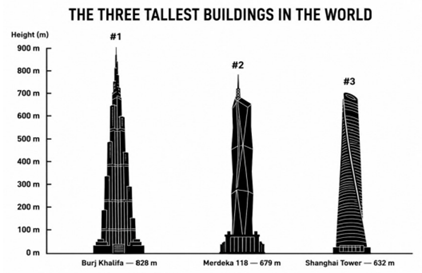
Observe the image, which shows the three tallest buildings in the world, and mark the alternative that uses comparatives and superlatives correctly, according to the information shown in the image.

 Conheça nossos planos