Questões de Concurso Público Prefeitura de Lindóia do Sul - SC 2022 para Professor - Língua Estrangeira - Inglês
Foram encontradas 40 questões


Ano: 2022
Banca:
AMAUC
Órgão:
Prefeitura de Lindóia do Sul - SC
Prova:
AMAUC - 2022 - Prefeitura de Lindóia do Sul - SC - Professor - Língua Estrangeira - Inglês |
Q4367304
Português
A voz passiva sintética está presente em todos os itens,
EXCETO.
Ano: 2022
Banca:
AMAUC
Órgão:
Prefeitura de Lindóia do Sul - SC
Prova:
AMAUC - 2022 - Prefeitura de Lindóia do Sul - SC - Professor - Língua Estrangeira - Inglês |
Q4367305
Português
Leia a tirinha que segue:
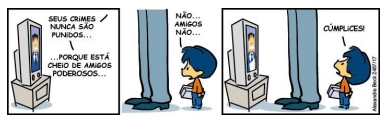
Fonte: https://tirasarmandinho.tumblr.com/
Observe o emprego do termo sublinhado na frase "Seus crimes nunca serão punidos porque está cheio de amigos poderosos..."
Sabendo-se que o termo em negrito acima tem quatro formas distintas de grafia, pode-se afirmar que há incorreção na frase:
Ano: 2022
Banca:
AMAUC
Órgão:
Prefeitura de Lindóia do Sul - SC
Prova:
AMAUC - 2022 - Prefeitura de Lindóia do Sul - SC - Professor - Língua Estrangeira - Inglês |
Q4367306
Português
Indique a alternativa CORRETA:
Ano: 2022
Banca:
AMAUC
Órgão:
Prefeitura de Lindóia do Sul - SC
Prova:
AMAUC - 2022 - Prefeitura de Lindóia do Sul - SC - Professor - Língua Estrangeira - Inglês |
Q4367307
Português
No trecho "Se um homem não descobriu nada pelo qual morreria, não está pronto para viver (Martin Luther King)", a vírgula foi empregada para:
Ano: 2022
Banca:
AMAUC
Órgão:
Prefeitura de Lindóia do Sul - SC
Prova:
AMAUC - 2022 - Prefeitura de Lindóia do Sul - SC - Professor - Língua Estrangeira - Inglês |
Q4367308
Português
Indique a alternativa em que há erro de colocação
pronominal.
Ano: 2022
Banca:
AMAUC
Órgão:
Prefeitura de Lindóia do Sul - SC
Prova:
AMAUC - 2022 - Prefeitura de Lindóia do Sul - SC - Professor - Língua Estrangeira - Inglês |
Q4367309
Matemática
Nanda contou em seu cofre x moedas de R$ 0,25 e y
moedas de R$ 0,50, totalizando 380 moedas e R$
152,50. Quantas moedas Nanda tem de cada valor?
Ano: 2022
Banca:
AMAUC
Órgão:
Prefeitura de Lindóia do Sul - SC
Prova:
AMAUC - 2022 - Prefeitura de Lindóia do Sul - SC - Professor - Língua Estrangeira - Inglês |
Q4367310
Matemática
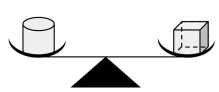
O esquema abaixo mostra duas peças maciças em uma
balança que está em perfeito equilíbrio. Se o volume do
cilindro é de 27.000 cm³, quanto mede a aresta do cubo?
Marque a alternativa CORRETA:
Marque a alternativa CORRETA:
Ano: 2022
Banca:
AMAUC
Órgão:
Prefeitura de Lindóia do Sul - SC
Prova:
AMAUC - 2022 - Prefeitura de Lindóia do Sul - SC - Professor - Língua Estrangeira - Inglês |
Q4367311
Matemática
Breno fez uma viagem de 540 km, em 6 horas, viajando
a 90 km/h. Mantendo a mesma média, quanto tempo ele
gasta para percorrer 400 km a 80 km/h?
Ano: 2022
Banca:
AMAUC
Órgão:
Prefeitura de Lindóia do Sul - SC
Prova:
AMAUC - 2022 - Prefeitura de Lindóia do Sul - SC - Professor - Língua Estrangeira - Inglês |
Q4367312
Raciocínio Lógico
A professora Célia tem 15 borrachas, 30 lápis e 45
canetas e vai montar kits para seus alunos. Quantos kits
ela conseguirá montar, com pelo menos um item de
cada?
Ano: 2022
Banca:
AMAUC
Órgão:
Prefeitura de Lindóia do Sul - SC
Prova:
AMAUC - 2022 - Prefeitura de Lindóia do Sul - SC - Professor - Língua Estrangeira - Inglês |
Q4367313
Matemática
Se Carlos recebeu R$ 14.000,00 pela comissão de 5%
da venda de uma casa, por quanto a casa foi vendida?
Ano: 2022
Banca:
AMAUC
Órgão:
Prefeitura de Lindóia do Sul - SC
Prova:
AMAUC - 2022 - Prefeitura de Lindóia do Sul - SC - Professor - Língua Estrangeira - Inglês |
Q4367314
Pedagogia
A liberação da prática do homeschooling, que tramita no
Congresso Nacional, chegou a ser aprovada no estado
de Santa Catarina, mas logo foi suspensa, pois segundo
o tribunal, trata-se de assunto exclusivo da esfera
federal. O que é o homeschooling?
Ano: 2022
Banca:
AMAUC
Órgão:
Prefeitura de Lindóia do Sul - SC
Prova:
AMAUC - 2022 - Prefeitura de Lindóia do Sul - SC - Professor - Língua Estrangeira - Inglês |
Q4367315
Atualidades
Em uma ano eleitoral, como 2022, os alertas sobre as
chamadas Fake News são intensificados, pois sua
divulgação é uma prática que infelizmente ainda
acontece no meio político quando um candidato deseja
sujar a imagem de seu oponente. Mas, o que é uma
Fake News?
Ano: 2022
Banca:
AMAUC
Órgão:
Prefeitura de Lindóia do Sul - SC
Prova:
AMAUC - 2022 - Prefeitura de Lindóia do Sul - SC - Professor - Língua Estrangeira - Inglês |
Q4367316
Atualidades
Os acontecimentos no campo da política são sempre
carregados de polêmicas, principalmente quando
envolvem questões ideológicas. Neste contexto, o termo
"polarização" surgiu no Brasil ganhando ares de
neologismo por causa do fim para o qual é usado. O que
é a "polarização" no contexto político brasileiro?
Ano: 2022
Banca:
AMAUC
Órgão:
Prefeitura de Lindóia do Sul - SC
Prova:
AMAUC - 2022 - Prefeitura de Lindóia do Sul - SC - Professor - Língua Estrangeira - Inglês |
Q4367317
História e Geografia de Estados e Municípios
Qual é o nome do rio que, segundo conta a história de
Lindóia do Sul/SC, provocou admiração nos imigrantes
que ali chegavam por seu formato de serpente e sua
beleza, levando-os a usar a expressão "Lindo! Olha!, que
deu origem ao nome de Lindóia?
Ano: 2022
Banca:
AMAUC
Órgão:
Prefeitura de Lindóia do Sul - SC
Prova:
AMAUC - 2022 - Prefeitura de Lindóia do Sul - SC - Professor - Língua Estrangeira - Inglês |
Q4367318
Geografia
"O Brasil passou em 2021 pela pior crise hídrica em mais
de 90 anos, que resultou em outra crise, a energética".
Disponível em: https://www.cnnbrasil.com.br/business/crise-energetica
Por que a crise hídrica acaba ocasionando uma crise energética no Brasil?
Disponível em: https://www.cnnbrasil.com.br/business/crise-energetica
Por que a crise hídrica acaba ocasionando uma crise energética no Brasil?
Ano: 2022
Banca:
AMAUC
Órgão:
Prefeitura de Lindóia do Sul - SC
Prova:
AMAUC - 2022 - Prefeitura de Lindóia do Sul - SC - Professor - Língua Estrangeira - Inglês |
Q4367319
Inglês
Texto associado
Roman mosaic and villa complex found in Rutland
farmer's field
(1º§) The mosaic, found in Rutland, has been described
as the first example of its kind in the UK. It was
discovered by the landowner's son and investigated by
archaeologists from the University of Leicester. Historic
England described the mosaic as "one of the most
remarkable and significant... ever found in Britain".
(2º§) The mosaic and surrounding villa complex have
now been protected as a Scheduled Monument by the
Department for Digital, Culture, Media and Sport (DCMS)
on the advice of Historic England. The complex is
thought to have been occupied by a wealthy individual
from the late Roman period.
(3º§) Jim Irvine, son of landowner Brian Naylor, made the
initial discovery after spotting "unusual pottery" on a walk
during the 2020 lockdown, and contacted the
archaeological team at Leicestershire County Council. He
said: "My family have been farming this land for 50 or 60
years. "During lockdown last year, I noticed some pottery
on the ground which didn't look like any pottery I'd seen
before. "We came down here with a spade and I dug a
shallow trench and I was in exactly the right place. "To
see something that has been undisturbed for 1700 years
or so has been amazing. "The thing that has been
keeping me interested is what's the state of the next thing
to come out of the site because it's all been amazing so
far." Historic England funded urgent excavation work at
the site by the University of Leicester.
(4º§) The mosaic, which forms the floor of what was
thought to be a dining or entertaining area of the villa,
measures 11m x 7m (36ft x 23ft). Mosaics were regularly
used in private and public buildings across the Roman
Empire, and often featured famous figures from
mythology. However, the Rutland mosaic is thought to be
unique in the UK as it features Achilles and his battle with
Hector at the conclusion of the Trojan War.
Analysis - By Phil Mackie, BBC Midlands correspondent
at the scene
(5º§) I know where the villa was found but I'm not allowed
to give away too many details. It's because they don't
want anyone coming along and trying to carry out their
own investigations and disturbing the site.
(6º§) For now, the mosaic has been covered back up. It's
been well protected for more than a millennium and a half
beneath a 2ft (0.6m) layer of soil, and it won't come to
any further harm now it's back underground. Jim Irvine
really hopes that people will be able to come to visit in
situ one day but decisions about its long-term future
haven't been made yet. The site is so big that only a tiny
part of the complex has been excavated. There are likely
to be more discoveries in the digging seasons to come.
(7º§) Investigations have revealed the large villa is
surrounded by barns, circular structures and possibly a
bath house. The complex is likely to have been occupied
by someone with a knowledge of classical literature,
between the 3rd and 4th Century AD. John Thomas,
deputy director of the University of Leicester
Archaeological Services and project manager on the excavations, said: "This is certainly the most exciting
Roman mosaic discovery in the UK in the last century. "It
gives us fresh perspectives on the attitudes of people at
the time, their links to classical literature, and it also tells
us an enormous amount about the individual who
commissioned this piece. "This is someone with a
knowledge of the classics, who had the money to
commission a piece of such detail, and it's the very first
depiction of these stories that we've ever found in
Britain."
(8º§) Duncan Wilson, chief executive of Historic England,
added: "To have uncovered such a rare mosaic of this
size, as well as a surrounding villa, is remarkable.
"Discoveries like this are so important in helping us piece
together our shared history. By protecting this site we are
able to continue learning from it, and look forward to what
future excavations may teach us about the people who
lived there over 1,500 years ago." The site is on private
land and not accessible to the public but discussions are
ongoing with Rutland County Council to set up an off-site
display of the villa complex and its finds, Historic England
said. Further excavations are planned on the site in 2022.
Mr Irvine said the field will no longer be used for farming
so the area can be protected.
(adapted) https://www.bbc.com/news/uk-england-leicestershire-59391650
In which paragraph we find information about the future of excavations in Rutland village?
Ano: 2022
Banca:
AMAUC
Órgão:
Prefeitura de Lindóia do Sul - SC
Prova:
AMAUC - 2022 - Prefeitura de Lindóia do Sul - SC - Professor - Língua Estrangeira - Inglês |
Q4367320
Inglês
Texto associado
Roman mosaic and villa complex found in Rutland
farmer's field
(1º§) The mosaic, found in Rutland, has been described
as the first example of its kind in the UK. It was
discovered by the landowner's son and investigated by
archaeologists from the University of Leicester. Historic
England described the mosaic as "one of the most
remarkable and significant... ever found in Britain".
(2º§) The mosaic and surrounding villa complex have
now been protected as a Scheduled Monument by the
Department for Digital, Culture, Media and Sport (DCMS)
on the advice of Historic England. The complex is
thought to have been occupied by a wealthy individual
from the late Roman period.
(3º§) Jim Irvine, son of landowner Brian Naylor, made the
initial discovery after spotting "unusual pottery" on a walk
during the 2020 lockdown, and contacted the
archaeological team at Leicestershire County Council. He
said: "My family have been farming this land for 50 or 60
years. "During lockdown last year, I noticed some pottery
on the ground which didn't look like any pottery I'd seen
before. "We came down here with a spade and I dug a
shallow trench and I was in exactly the right place. "To
see something that has been undisturbed for 1700 years
or so has been amazing. "The thing that has been
keeping me interested is what's the state of the next thing
to come out of the site because it's all been amazing so
far." Historic England funded urgent excavation work at
the site by the University of Leicester.
(4º§) The mosaic, which forms the floor of what was
thought to be a dining or entertaining area of the villa,
measures 11m x 7m (36ft x 23ft). Mosaics were regularly
used in private and public buildings across the Roman
Empire, and often featured famous figures from
mythology. However, the Rutland mosaic is thought to be
unique in the UK as it features Achilles and his battle with
Hector at the conclusion of the Trojan War.
Analysis - By Phil Mackie, BBC Midlands correspondent
at the scene
(5º§) I know where the villa was found but I'm not allowed
to give away too many details. It's because they don't
want anyone coming along and trying to carry out their
own investigations and disturbing the site.
(6º§) For now, the mosaic has been covered back up. It's
been well protected for more than a millennium and a half
beneath a 2ft (0.6m) layer of soil, and it won't come to
any further harm now it's back underground. Jim Irvine
really hopes that people will be able to come to visit in
situ one day but decisions about its long-term future
haven't been made yet. The site is so big that only a tiny
part of the complex has been excavated. There are likely
to be more discoveries in the digging seasons to come.
(7º§) Investigations have revealed the large villa is
surrounded by barns, circular structures and possibly a
bath house. The complex is likely to have been occupied
by someone with a knowledge of classical literature,
between the 3rd and 4th Century AD. John Thomas,
deputy director of the University of Leicester
Archaeological Services and project manager on the excavations, said: "This is certainly the most exciting
Roman mosaic discovery in the UK in the last century. "It
gives us fresh perspectives on the attitudes of people at
the time, their links to classical literature, and it also tells
us an enormous amount about the individual who
commissioned this piece. "This is someone with a
knowledge of the classics, who had the money to
commission a piece of such detail, and it's the very first
depiction of these stories that we've ever found in
Britain."
(8º§) Duncan Wilson, chief executive of Historic England,
added: "To have uncovered such a rare mosaic of this
size, as well as a surrounding villa, is remarkable.
"Discoveries like this are so important in helping us piece
together our shared history. By protecting this site we are
able to continue learning from it, and look forward to what
future excavations may teach us about the people who
lived there over 1,500 years ago." The site is on private
land and not accessible to the public but discussions are
ongoing with Rutland County Council to set up an off-site
display of the villa complex and its finds, Historic England
said. Further excavations are planned on the site in 2022.
Mr Irvine said the field will no longer be used for farming
so the area can be protected.
(adapted) https://www.bbc.com/news/uk-england-leicestershire-59391650
According to the text, who discovered the mosaic?
Ano: 2022
Banca:
AMAUC
Órgão:
Prefeitura de Lindóia do Sul - SC
Prova:
AMAUC - 2022 - Prefeitura de Lindóia do Sul - SC - Professor - Língua Estrangeira - Inglês |
Q4367321
Inglês
Texto associado
Roman mosaic and villa complex found in Rutland
farmer's field
(1º§) The mosaic, found in Rutland, has been described
as the first example of its kind in the UK. It was
discovered by the landowner's son and investigated by
archaeologists from the University of Leicester. Historic
England described the mosaic as "one of the most
remarkable and significant... ever found in Britain".
(2º§) The mosaic and surrounding villa complex have
now been protected as a Scheduled Monument by the
Department for Digital, Culture, Media and Sport (DCMS)
on the advice of Historic England. The complex is
thought to have been occupied by a wealthy individual
from the late Roman period.
(3º§) Jim Irvine, son of landowner Brian Naylor, made the
initial discovery after spotting "unusual pottery" on a walk
during the 2020 lockdown, and contacted the
archaeological team at Leicestershire County Council. He
said: "My family have been farming this land for 50 or 60
years. "During lockdown last year, I noticed some pottery
on the ground which didn't look like any pottery I'd seen
before. "We came down here with a spade and I dug a
shallow trench and I was in exactly the right place. "To
see something that has been undisturbed for 1700 years
or so has been amazing. "The thing that has been
keeping me interested is what's the state of the next thing
to come out of the site because it's all been amazing so
far." Historic England funded urgent excavation work at
the site by the University of Leicester.
(4º§) The mosaic, which forms the floor of what was
thought to be a dining or entertaining area of the villa,
measures 11m x 7m (36ft x 23ft). Mosaics were regularly
used in private and public buildings across the Roman
Empire, and often featured famous figures from
mythology. However, the Rutland mosaic is thought to be
unique in the UK as it features Achilles and his battle with
Hector at the conclusion of the Trojan War.
Analysis - By Phil Mackie, BBC Midlands correspondent
at the scene
(5º§) I know where the villa was found but I'm not allowed
to give away too many details. It's because they don't
want anyone coming along and trying to carry out their
own investigations and disturbing the site.
(6º§) For now, the mosaic has been covered back up. It's
been well protected for more than a millennium and a half
beneath a 2ft (0.6m) layer of soil, and it won't come to
any further harm now it's back underground. Jim Irvine
really hopes that people will be able to come to visit in
situ one day but decisions about its long-term future
haven't been made yet. The site is so big that only a tiny
part of the complex has been excavated. There are likely
to be more discoveries in the digging seasons to come.
(7º§) Investigations have revealed the large villa is
surrounded by barns, circular structures and possibly a
bath house. The complex is likely to have been occupied
by someone with a knowledge of classical literature,
between the 3rd and 4th Century AD. John Thomas,
deputy director of the University of Leicester
Archaeological Services and project manager on the excavations, said: "This is certainly the most exciting
Roman mosaic discovery in the UK in the last century. "It
gives us fresh perspectives on the attitudes of people at
the time, their links to classical literature, and it also tells
us an enormous amount about the individual who
commissioned this piece. "This is someone with a
knowledge of the classics, who had the money to
commission a piece of such detail, and it's the very first
depiction of these stories that we've ever found in
Britain."
(8º§) Duncan Wilson, chief executive of Historic England,
added: "To have uncovered such a rare mosaic of this
size, as well as a surrounding villa, is remarkable.
"Discoveries like this are so important in helping us piece
together our shared history. By protecting this site we are
able to continue learning from it, and look forward to what
future excavations may teach us about the people who
lived there over 1,500 years ago." The site is on private
land and not accessible to the public but discussions are
ongoing with Rutland County Council to set up an off-site
display of the villa complex and its finds, Historic England
said. Further excavations are planned on the site in 2022.
Mr Irvine said the field will no longer be used for farming
so the area can be protected.
(adapted) https://www.bbc.com/news/uk-england-leicestershire-59391650
Considering the context, the words "depiction" (7º§),
"pottery" (3º§) and "set up" (8º§) can be translated
respectively as:
Ano: 2022
Banca:
AMAUC
Órgão:
Prefeitura de Lindóia do Sul - SC
Prova:
AMAUC - 2022 - Prefeitura de Lindóia do Sul - SC - Professor - Língua Estrangeira - Inglês |
Q4367322
Inglês
Texto associado
Roman mosaic and villa complex found in Rutland
farmer's field
(1º§) The mosaic, found in Rutland, has been described
as the first example of its kind in the UK. It was
discovered by the landowner's son and investigated by
archaeologists from the University of Leicester. Historic
England described the mosaic as "one of the most
remarkable and significant... ever found in Britain".
(2º§) The mosaic and surrounding villa complex have
now been protected as a Scheduled Monument by the
Department for Digital, Culture, Media and Sport (DCMS)
on the advice of Historic England. The complex is
thought to have been occupied by a wealthy individual
from the late Roman period.
(3º§) Jim Irvine, son of landowner Brian Naylor, made the
initial discovery after spotting "unusual pottery" on a walk
during the 2020 lockdown, and contacted the
archaeological team at Leicestershire County Council. He
said: "My family have been farming this land for 50 or 60
years. "During lockdown last year, I noticed some pottery
on the ground which didn't look like any pottery I'd seen
before. "We came down here with a spade and I dug a
shallow trench and I was in exactly the right place. "To
see something that has been undisturbed for 1700 years
or so has been amazing. "The thing that has been
keeping me interested is what's the state of the next thing
to come out of the site because it's all been amazing so
far." Historic England funded urgent excavation work at
the site by the University of Leicester.
(4º§) The mosaic, which forms the floor of what was
thought to be a dining or entertaining area of the villa,
measures 11m x 7m (36ft x 23ft). Mosaics were regularly
used in private and public buildings across the Roman
Empire, and often featured famous figures from
mythology. However, the Rutland mosaic is thought to be
unique in the UK as it features Achilles and his battle with
Hector at the conclusion of the Trojan War.
Analysis - By Phil Mackie, BBC Midlands correspondent
at the scene
(5º§) I know where the villa was found but I'm not allowed
to give away too many details. It's because they don't
want anyone coming along and trying to carry out their
own investigations and disturbing the site.
(6º§) For now, the mosaic has been covered back up. It's
been well protected for more than a millennium and a half
beneath a 2ft (0.6m) layer of soil, and it won't come to
any further harm now it's back underground. Jim Irvine
really hopes that people will be able to come to visit in
situ one day but decisions about its long-term future
haven't been made yet. The site is so big that only a tiny
part of the complex has been excavated. There are likely
to be more discoveries in the digging seasons to come.
(7º§) Investigations have revealed the large villa is
surrounded by barns, circular structures and possibly a
bath house. The complex is likely to have been occupied
by someone with a knowledge of classical literature,
between the 3rd and 4th Century AD. John Thomas,
deputy director of the University of Leicester
Archaeological Services and project manager on the excavations, said: "This is certainly the most exciting
Roman mosaic discovery in the UK in the last century. "It
gives us fresh perspectives on the attitudes of people at
the time, their links to classical literature, and it also tells
us an enormous amount about the individual who
commissioned this piece. "This is someone with a
knowledge of the classics, who had the money to
commission a piece of such detail, and it's the very first
depiction of these stories that we've ever found in
Britain."
(8º§) Duncan Wilson, chief executive of Historic England,
added: "To have uncovered such a rare mosaic of this
size, as well as a surrounding villa, is remarkable.
"Discoveries like this are so important in helping us piece
together our shared history. By protecting this site we are
able to continue learning from it, and look forward to what
future excavations may teach us about the people who
lived there over 1,500 years ago." The site is on private
land and not accessible to the public but discussions are
ongoing with Rutland County Council to set up an off-site
display of the villa complex and its finds, Historic England
said. Further excavations are planned on the site in 2022.
Mr Irvine said the field will no longer be used for farming
so the area can be protected.
(adapted) https://www.bbc.com/news/uk-england-leicestershire-59391650
Consider the following assertives:
I.The place where the mosaic is located is open to the public for visitation.
II.The place where the mosaic was found has already been completely excavated by archaeologists and many pieces have been removed.
III.The mosaic raises clues about people's connection with classical literature during the period of the Roman Empire.
Which one(s) is(are) CORRECT?
I.The place where the mosaic is located is open to the public for visitation.
II.The place where the mosaic was found has already been completely excavated by archaeologists and many pieces have been removed.
III.The mosaic raises clues about people's connection with classical literature during the period of the Roman Empire.
Which one(s) is(are) CORRECT?
Ano: 2022
Banca:
AMAUC
Órgão:
Prefeitura de Lindóia do Sul - SC
Prova:
AMAUC - 2022 - Prefeitura de Lindóia do Sul - SC - Professor - Língua Estrangeira - Inglês |
Q4367323
Inglês
Texto associado
Roman mosaic and villa complex found in Rutland
farmer's field
(1º§) The mosaic, found in Rutland, has been described
as the first example of its kind in the UK. It was
discovered by the landowner's son and investigated by
archaeologists from the University of Leicester. Historic
England described the mosaic as "one of the most
remarkable and significant... ever found in Britain".
(2º§) The mosaic and surrounding villa complex have
now been protected as a Scheduled Monument by the
Department for Digital, Culture, Media and Sport (DCMS)
on the advice of Historic England. The complex is
thought to have been occupied by a wealthy individual
from the late Roman period.
(3º§) Jim Irvine, son of landowner Brian Naylor, made the
initial discovery after spotting "unusual pottery" on a walk
during the 2020 lockdown, and contacted the
archaeological team at Leicestershire County Council. He
said: "My family have been farming this land for 50 or 60
years. "During lockdown last year, I noticed some pottery
on the ground which didn't look like any pottery I'd seen
before. "We came down here with a spade and I dug a
shallow trench and I was in exactly the right place. "To
see something that has been undisturbed for 1700 years
or so has been amazing. "The thing that has been
keeping me interested is what's the state of the next thing
to come out of the site because it's all been amazing so
far." Historic England funded urgent excavation work at
the site by the University of Leicester.
(4º§) The mosaic, which forms the floor of what was
thought to be a dining or entertaining area of the villa,
measures 11m x 7m (36ft x 23ft). Mosaics were regularly
used in private and public buildings across the Roman
Empire, and often featured famous figures from
mythology. However, the Rutland mosaic is thought to be
unique in the UK as it features Achilles and his battle with
Hector at the conclusion of the Trojan War.
Analysis - By Phil Mackie, BBC Midlands correspondent
at the scene
(5º§) I know where the villa was found but I'm not allowed
to give away too many details. It's because they don't
want anyone coming along and trying to carry out their
own investigations and disturbing the site.
(6º§) For now, the mosaic has been covered back up. It's
been well protected for more than a millennium and a half
beneath a 2ft (0.6m) layer of soil, and it won't come to
any further harm now it's back underground. Jim Irvine
really hopes that people will be able to come to visit in
situ one day but decisions about its long-term future
haven't been made yet. The site is so big that only a tiny
part of the complex has been excavated. There are likely
to be more discoveries in the digging seasons to come.
(7º§) Investigations have revealed the large villa is
surrounded by barns, circular structures and possibly a
bath house. The complex is likely to have been occupied
by someone with a knowledge of classical literature,
between the 3rd and 4th Century AD. John Thomas,
deputy director of the University of Leicester
Archaeological Services and project manager on the excavations, said: "This is certainly the most exciting
Roman mosaic discovery in the UK in the last century. "It
gives us fresh perspectives on the attitudes of people at
the time, their links to classical literature, and it also tells
us an enormous amount about the individual who
commissioned this piece. "This is someone with a
knowledge of the classics, who had the money to
commission a piece of such detail, and it's the very first
depiction of these stories that we've ever found in
Britain."
(8º§) Duncan Wilson, chief executive of Historic England,
added: "To have uncovered such a rare mosaic of this
size, as well as a surrounding villa, is remarkable.
"Discoveries like this are so important in helping us piece
together our shared history. By protecting this site we are
able to continue learning from it, and look forward to what
future excavations may teach us about the people who
lived there over 1,500 years ago." The site is on private
land and not accessible to the public but discussions are
ongoing with Rutland County Council to set up an off-site
display of the villa complex and its finds, Historic England
said. Further excavations are planned on the site in 2022.
Mr Irvine said the field will no longer be used for farming
so the area can be protected.
(adapted) https://www.bbc.com/news/uk-england-leicestershire-59391650
According to the text, one of the researchers' hypotheses
is that the area was occupied by:

 Conheça nossos planos