Questões de Concurso Público Prefeitura de Jaborá - SC 2022 para Professor Língua Inglesa - Edital nº 01
Foram encontradas 20 questões


Ano: 2022
Banca:
AMAUC
Órgão:
Prefeitura de Jaborá - SC
Prova:
AMAUC - 2022 - Prefeitura de Jaborá - SC - Professor Língua Inglesa - Edital nº 01 |
Q4410746
Pedagogia
Segundo a Base Nacional Comum Curricular - BNCC, o
desenvolvimento das habilidades de raciocinar,
representar, comunicar e argumentar matematicamente
está intrinsecamente relacionado a algumas formas de
organização da aprendizagem matemática, com base na
análise de situações da vida cotidiana, de outras áreas
do conhecimento e da própria Matemática. A prática
letiva que usa das circunstâncias cotidianas para
ambientar os conteúdos no cenário real,
problematizando e buscando solução para os conflitos é
a:
Ano: 2022
Banca:
AMAUC
Órgão:
Prefeitura de Jaborá - SC
Prova:
AMAUC - 2022 - Prefeitura de Jaborá - SC - Professor Língua Inglesa - Edital nº 01 |
Q4410747
Matemática
Em três dias de trabalho um pedreiro consegue assentar
75 m² de piso, nessa proporção, se ele contratar um
ajudante para fazer o mesmo trabalho em 250 m² de
piso, em quantos dias o serviço será feito?
Ano: 2022
Banca:
AMAUC
Órgão:
Prefeitura de Jaborá - SC
Prova:
AMAUC - 2022 - Prefeitura de Jaborá - SC - Professor Língua Inglesa - Edital nº 01 |
Q4410748
Raciocínio Lógico
Analise a frase abaixo e escolha a opção que indica a
sua negação.
Todo lar, onde mora uma criança, é feliz.
Todo lar, onde mora uma criança, é feliz.
Ano: 2022
Banca:
AMAUC
Órgão:
Prefeitura de Jaborá - SC
Prova:
AMAUC - 2022 - Prefeitura de Jaborá - SC - Professor Língua Inglesa - Edital nº 01 |
Q4410749
Matemática Financeira
Em uma aplicação com taxa de juros simples de 8% ao
ano, feita por 2 anos, Marta recebeu R$ 4.000,00 de
juros. Qual foi o valor que ela aplicou?
Ano: 2022
Banca:
AMAUC
Órgão:
Prefeitura de Jaborá - SC
Prova:
AMAUC - 2022 - Prefeitura de Jaborá - SC - Professor Língua Inglesa - Edital nº 01 |
Q4410750
Matemática
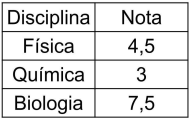
A tabela abaixo traz as notas de Guto na área de
Ciências da Natureza. Analise-a e indique a alternativa
que informa a média (M) de Guto nesta área de
conhecimento.
Ano: 2022
Banca:
AMAUC
Órgão:
Prefeitura de Jaborá - SC
Prova:
AMAUC - 2022 - Prefeitura de Jaborá - SC - Professor Língua Inglesa - Edital nº 01 |
Q4410751
Português
Texto associado
O texto seguinte servirá de base para responder à questão.
DIFERENÇAS ENTRE A INTERPRETAÇÃO E A
COMPREENSÃO DE TEXTOS
(1º§) A compreensão e a interpretação de texto
dependem do contexto de produção, além do
conhecimento de mundo e dos conhecimentos
linguísticos e literários do(a leitor(a). Interpretação de
texto consiste em explicar um texto. Para isso, é
necessário que, antes, o(a) leitor(a), o tenha
compreendido.
(2º§) A compreensão e a interpretação de texto seguem
um percurso. Nesse percurso, entre o processo
inconsciente de compreensão e a ação consciente de
interpretação da obra, ele(a) vai depender do
conhecimento de mundo. Além dos conhecimentos
linguísticos e/ ou literários para encontrar o(s) sentido(s)
do texto e explicá-lo(s), tudo requer também bom nível
de concentração de atenção. Pense nestes detalhes que
são imprescindíveis!
(3º§) A compreensão e a interpretação de texto têm a
visão de alguns pesquisadores que as consideram
"compreensão" e "interpretação" como uma coisa só. Já
outros entendem que esses termos não são apenas
sinônimos, mas que possuem diferenças entre si. É o
caso do linguista Vilson J. Leffa, o qual defende que
"compreender é relacionar", pois cada texto é "um
quebra-cabeça que precisa ser montado".
(4º§) Assim, a compreensão depende do(s) contexto(s),
de forma que o sentido, no processo de leitura, só é
alcançado a partir da interação entre o texto e o(a) leitor(a). Porém, o(a) leitor(a) conta com seu
conhecimento de mundo, além de seu conhecimento
linguístico, para "montar o quebra-cabeça", de forma
rápida, instantânea e inconsciente.
(5º§) Segundo Leffa, interpretar "é explicar para o leitor
de que modo cada quebra-cabeça pode ser montado".
Assim, a interpretação seria um processo consciente,
associado ao ato de explicar o texto. Então, para sermos
mais claros, compreensão seria ler e entender um texto.
Mas a interpretação seria explicar o objetivo desse texto,
o motivo de ele ter sido produzido.
(6º§) Entende-se, portanto, que: interpretação de texto é
o ato de explicar um texto após a sua compreensão. A
compreensão e a interpretação dependem,
principalmente, do contexto. Há diferenças na
interpretação de um texto literário e de um texto não
literário. A interpretação de texto nos eventos em busca
de uma vaga, a exemplo do Enem ou de um concurso
público, exige do(a) candidato(a), além de conhecimento
de mundo, conhecimentos linguísticos e literários. A
compreensão é um processo inconsciente, já a
interpretação, um processo consciente.
(7º§) Você compreendeu? Leia com atenção e aproveite
sua bagagem cultural para conseguir interpretar algo que
está lendo ou mesmo ouvinte. Aproprie-se do contexto!
(https://brasilescola.uol.com.br/redacao/a-interpretacao-textual.htm) - (Adaptado)
Marque a alternativa com análise INCORRETA.
Ano: 2022
Banca:
AMAUC
Órgão:
Prefeitura de Jaborá - SC
Prova:
AMAUC - 2022 - Prefeitura de Jaborá - SC - Professor Língua Inglesa - Edital nº 01 |
Q4410752
Português
Texto associado
O texto seguinte servirá de base para responder à questão.
DIFERENÇAS ENTRE A INTERPRETAÇÃO E A
COMPREENSÃO DE TEXTOS
(1º§) A compreensão e a interpretação de texto
dependem do contexto de produção, além do
conhecimento de mundo e dos conhecimentos
linguísticos e literários do(a leitor(a). Interpretação de
texto consiste em explicar um texto. Para isso, é
necessário que, antes, o(a) leitor(a), o tenha
compreendido.
(2º§) A compreensão e a interpretação de texto seguem
um percurso. Nesse percurso, entre o processo
inconsciente de compreensão e a ação consciente de
interpretação da obra, ele(a) vai depender do
conhecimento de mundo. Além dos conhecimentos
linguísticos e/ ou literários para encontrar o(s) sentido(s)
do texto e explicá-lo(s), tudo requer também bom nível
de concentração de atenção. Pense nestes detalhes que
são imprescindíveis!
(3º§) A compreensão e a interpretação de texto têm a
visão de alguns pesquisadores que as consideram
"compreensão" e "interpretação" como uma coisa só. Já
outros entendem que esses termos não são apenas
sinônimos, mas que possuem diferenças entre si. É o
caso do linguista Vilson J. Leffa, o qual defende que
"compreender é relacionar", pois cada texto é "um
quebra-cabeça que precisa ser montado".
(4º§) Assim, a compreensão depende do(s) contexto(s),
de forma que o sentido, no processo de leitura, só é
alcançado a partir da interação entre o texto e o(a) leitor(a). Porém, o(a) leitor(a) conta com seu
conhecimento de mundo, além de seu conhecimento
linguístico, para "montar o quebra-cabeça", de forma
rápida, instantânea e inconsciente.
(5º§) Segundo Leffa, interpretar "é explicar para o leitor
de que modo cada quebra-cabeça pode ser montado".
Assim, a interpretação seria um processo consciente,
associado ao ato de explicar o texto. Então, para sermos
mais claros, compreensão seria ler e entender um texto.
Mas a interpretação seria explicar o objetivo desse texto,
o motivo de ele ter sido produzido.
(6º§) Entende-se, portanto, que: interpretação de texto é
o ato de explicar um texto após a sua compreensão. A
compreensão e a interpretação dependem,
principalmente, do contexto. Há diferenças na
interpretação de um texto literário e de um texto não
literário. A interpretação de texto nos eventos em busca
de uma vaga, a exemplo do Enem ou de um concurso
público, exige do(a) candidato(a), além de conhecimento
de mundo, conhecimentos linguísticos e literários. A
compreensão é um processo inconsciente, já a
interpretação, um processo consciente.
(7º§) Você compreendeu? Leia com atenção e aproveite
sua bagagem cultural para conseguir interpretar algo que
está lendo ou mesmo ouvinte. Aproprie-se do contexto!
(https://brasilescola.uol.com.br/redacao/a-interpretacao-textual.htm) - (Adaptado)
Marque o que NÃO se comprova na estrutura textual.
Ano: 2022
Banca:
AMAUC
Órgão:
Prefeitura de Jaborá - SC
Prova:
AMAUC - 2022 - Prefeitura de Jaborá - SC - Professor Língua Inglesa - Edital nº 01 |
Q4410753
Português
Texto associado
O texto seguinte servirá de base para responder à questão.
DIFERENÇAS ENTRE A INTERPRETAÇÃO E A
COMPREENSÃO DE TEXTOS
(1º§) A compreensão e a interpretação de texto
dependem do contexto de produção, além do
conhecimento de mundo e dos conhecimentos
linguísticos e literários do(a leitor(a). Interpretação de
texto consiste em explicar um texto. Para isso, é
necessário que, antes, o(a) leitor(a), o tenha
compreendido.
(2º§) A compreensão e a interpretação de texto seguem
um percurso. Nesse percurso, entre o processo
inconsciente de compreensão e a ação consciente de
interpretação da obra, ele(a) vai depender do
conhecimento de mundo. Além dos conhecimentos
linguísticos e/ ou literários para encontrar o(s) sentido(s)
do texto e explicá-lo(s), tudo requer também bom nível
de concentração de atenção. Pense nestes detalhes que
são imprescindíveis!
(3º§) A compreensão e a interpretação de texto têm a
visão de alguns pesquisadores que as consideram
"compreensão" e "interpretação" como uma coisa só. Já
outros entendem que esses termos não são apenas
sinônimos, mas que possuem diferenças entre si. É o
caso do linguista Vilson J. Leffa, o qual defende que
"compreender é relacionar", pois cada texto é "um
quebra-cabeça que precisa ser montado".
(4º§) Assim, a compreensão depende do(s) contexto(s),
de forma que o sentido, no processo de leitura, só é
alcançado a partir da interação entre o texto e o(a) leitor(a). Porém, o(a) leitor(a) conta com seu
conhecimento de mundo, além de seu conhecimento
linguístico, para "montar o quebra-cabeça", de forma
rápida, instantânea e inconsciente.
(5º§) Segundo Leffa, interpretar "é explicar para o leitor
de que modo cada quebra-cabeça pode ser montado".
Assim, a interpretação seria um processo consciente,
associado ao ato de explicar o texto. Então, para sermos
mais claros, compreensão seria ler e entender um texto.
Mas a interpretação seria explicar o objetivo desse texto,
o motivo de ele ter sido produzido.
(6º§) Entende-se, portanto, que: interpretação de texto é
o ato de explicar um texto após a sua compreensão. A
compreensão e a interpretação dependem,
principalmente, do contexto. Há diferenças na
interpretação de um texto literário e de um texto não
literário. A interpretação de texto nos eventos em busca
de uma vaga, a exemplo do Enem ou de um concurso
público, exige do(a) candidato(a), além de conhecimento
de mundo, conhecimentos linguísticos e literários. A
compreensão é um processo inconsciente, já a
interpretação, um processo consciente.
(7º§) Você compreendeu? Leia com atenção e aproveite
sua bagagem cultural para conseguir interpretar algo que
está lendo ou mesmo ouvinte. Aproprie-se do contexto!
(https://brasilescola.uol.com.br/redacao/a-interpretacao-textual.htm) - (Adaptado)
Analise as assertivas com (V) verdadeiro ou falso (F):
(__) A repetição da expressão: "A compreensão e a interpretação de texto" exemplifica uso de anáfora.
(__) O acento circunflexo de: "têm" deve-se à concordância do verbo na terceira pessoa do plural.
(__) O (6º§) inicia com verbo de segunda conjugação no presente do modo indicativo seguido de pronome pessoal oblíquo enclítico.
(__) O período: "A compreensão é um processo inconsciente, já a interpretação, um processo consciente". - está escrito com exemplo de paradoxo comprovado com uso do prefixo "in".
Após análise, assinale a alternativa que apresenta a sequência CORRETA dos itens acima, de cima para baixo:
Ano: 2022
Banca:
AMAUC
Órgão:
Prefeitura de Jaborá - SC
Prova:
AMAUC - 2022 - Prefeitura de Jaborá - SC - Professor Língua Inglesa - Edital nº 01 |
Q4410754
Português
Texto associado
O texto seguinte servirá de base para responder à questão.
DIFERENÇAS ENTRE A INTERPRETAÇÃO E A
COMPREENSÃO DE TEXTOS
(1º§) A compreensão e a interpretação de texto
dependem do contexto de produção, além do
conhecimento de mundo e dos conhecimentos
linguísticos e literários do(a leitor(a). Interpretação de
texto consiste em explicar um texto. Para isso, é
necessário que, antes, o(a) leitor(a), o tenha
compreendido.
(2º§) A compreensão e a interpretação de texto seguem
um percurso. Nesse percurso, entre o processo
inconsciente de compreensão e a ação consciente de
interpretação da obra, ele(a) vai depender do
conhecimento de mundo. Além dos conhecimentos
linguísticos e/ ou literários para encontrar o(s) sentido(s)
do texto e explicá-lo(s), tudo requer também bom nível
de concentração de atenção. Pense nestes detalhes que
são imprescindíveis!
(3º§) A compreensão e a interpretação de texto têm a
visão de alguns pesquisadores que as consideram
"compreensão" e "interpretação" como uma coisa só. Já
outros entendem que esses termos não são apenas
sinônimos, mas que possuem diferenças entre si. É o
caso do linguista Vilson J. Leffa, o qual defende que
"compreender é relacionar", pois cada texto é "um
quebra-cabeça que precisa ser montado".
(4º§) Assim, a compreensão depende do(s) contexto(s),
de forma que o sentido, no processo de leitura, só é
alcançado a partir da interação entre o texto e o(a) leitor(a). Porém, o(a) leitor(a) conta com seu
conhecimento de mundo, além de seu conhecimento
linguístico, para "montar o quebra-cabeça", de forma
rápida, instantânea e inconsciente.
(5º§) Segundo Leffa, interpretar "é explicar para o leitor
de que modo cada quebra-cabeça pode ser montado".
Assim, a interpretação seria um processo consciente,
associado ao ato de explicar o texto. Então, para sermos
mais claros, compreensão seria ler e entender um texto.
Mas a interpretação seria explicar o objetivo desse texto,
o motivo de ele ter sido produzido.
(6º§) Entende-se, portanto, que: interpretação de texto é
o ato de explicar um texto após a sua compreensão. A
compreensão e a interpretação dependem,
principalmente, do contexto. Há diferenças na
interpretação de um texto literário e de um texto não
literário. A interpretação de texto nos eventos em busca
de uma vaga, a exemplo do Enem ou de um concurso
público, exige do(a) candidato(a), além de conhecimento
de mundo, conhecimentos linguísticos e literários. A
compreensão é um processo inconsciente, já a
interpretação, um processo consciente.
(7º§) Você compreendeu? Leia com atenção e aproveite
sua bagagem cultural para conseguir interpretar algo que
está lendo ou mesmo ouvinte. Aproprie-se do contexto!
(https://brasilescola.uol.com.br/redacao/a-interpretacao-textual.htm) - (Adaptado)
Analise as assertivas com verdadeiro (V) ou falso (F):
(__) As palavras: "linguístico" e "rápida" - diferem quanto à quantidade de sílabas gramaticais, mas convergem na classificação da tonicidade e por serem adjetivos.
(__) Em: "e explicá-lo(s), tudo requer também bom nível de concentração de atenção".
(__) Se o verbo de: "Pense nestes detalhes" - for conjugado na segunda pessoa do plural no mesmo modo imperativo afirmativo, obtém-se corretamente: "Pensai nestes detalhes".
(__) O período: "Cada texto é "'um quebra-cabeça'" - conota jogo com diversas e diferentes peças que devem ser ligadas de modo a formar um todo".
Após análise, assinale a alternativa que apresenta a sequência CORRETA dos itens acima, de cima para baixo:
Ano: 2022
Banca:
AMAUC
Órgão:
Prefeitura de Jaborá - SC
Prova:
AMAUC - 2022 - Prefeitura de Jaborá - SC - Professor Língua Inglesa - Edital nº 01 |
Q4410755
Literatura
Marque a alternativa com análise INCORRETA.
Ano: 2022
Banca:
AMAUC
Órgão:
Prefeitura de Jaborá - SC
Prova:
AMAUC - 2022 - Prefeitura de Jaborá - SC - Professor Língua Inglesa - Edital nº 01 |
Q4410756
Inglês
Texto associado
O texto seguinte servirá de base para responder à questão.
Juicy Thanksgiving Turkey
1º§ My grandmother and mother passed this recipe on to
me. It changes just a little every year, because we've
never written it down before. But it is always incredibly
juicy and succulent!
2º§ Ingredients
2 tablespoons dried parsley;
2 tablespoons ground dried rosemary;
2 tablespoons rubbed dried sage;
2 tablespoons dried thyme leaves;
1 tablespoon lemon pepper;
1 tablespoon salt;
1 (15 pound) whole turkey, neck and giblets removed;
2 stalks celery, chopped;
1 orange, cut into wedges;
1 onion, chopped;
1 carrot, chopped;
1 (14.5 ounce) can chicken broth;
1 (750 milliliter) bottle champagne.
3º§ Directions
Step 1
Preheat an oven to 350 degrees F (175 degrees C). Line
a turkey roaster with long sheets of aluminum foil that will
be long enough to wrap over the turkey.
Step 2
Stir together the parsley, rosemary, sage, thyme, lemon
pepper, and salt in a small bowl. Rub the herb mixture
into the cavity of the turkey, then stuff with the celery,
orange, onion, and carrot. Truss if desired, and place the
turkey into the roasting pan. Pour the chicken broth and
champagne over the turkey, making sure to get some
champagne in the cavity. Bring the aluminum foil over the
top of the turkey, and seal. Try to keep the foil from
touching the skin of the turkey breast or legs.
Step 3
Bake the turkey in the preheated oven for 2 1/2 to 3
hours until no longer pink at the bone and the juices run
clear. Uncover the turkey, and continue baking until the
skin turns golden brown, 30 minutes to 1 hour longer. An
instant-read thermometer inserted into the thickest part of
the thigh, near the bone should read 180 degrees F (82
degrees C). Remove the turkey from the oven, cover with
a doubled sheet of aluminum foil, and allow to rest in a
warm area 10 to 15 minutes before slicing.
https://www.allrecipes.com/recipe/166160/juicy-thanksgiving-turkey/
The text above can be classified as:
Ano: 2022
Banca:
AMAUC
Órgão:
Prefeitura de Jaborá - SC
Prova:
AMAUC - 2022 - Prefeitura de Jaborá - SC - Professor Língua Inglesa - Edital nº 01 |
Q4410757
Inglês
Texto associado
O texto seguinte servirá de base para responder à questão.
Juicy Thanksgiving Turkey
1º§ My grandmother and mother passed this recipe on to
me. It changes just a little every year, because we've
never written it down before. But it is always incredibly
juicy and succulent!
2º§ Ingredients
2 tablespoons dried parsley;
2 tablespoons ground dried rosemary;
2 tablespoons rubbed dried sage;
2 tablespoons dried thyme leaves;
1 tablespoon lemon pepper;
1 tablespoon salt;
1 (15 pound) whole turkey, neck and giblets removed;
2 stalks celery, chopped;
1 orange, cut into wedges;
1 onion, chopped;
1 carrot, chopped;
1 (14.5 ounce) can chicken broth;
1 (750 milliliter) bottle champagne.
3º§ Directions
Step 1
Preheat an oven to 350 degrees F (175 degrees C). Line
a turkey roaster with long sheets of aluminum foil that will
be long enough to wrap over the turkey.
Step 2
Stir together the parsley, rosemary, sage, thyme, lemon
pepper, and salt in a small bowl. Rub the herb mixture
into the cavity of the turkey, then stuff with the celery,
orange, onion, and carrot. Truss if desired, and place the
turkey into the roasting pan. Pour the chicken broth and
champagne over the turkey, making sure to get some
champagne in the cavity. Bring the aluminum foil over the
top of the turkey, and seal. Try to keep the foil from
touching the skin of the turkey breast or legs.
Step 3
Bake the turkey in the preheated oven for 2 1/2 to 3
hours until no longer pink at the bone and the juices run
clear. Uncover the turkey, and continue baking until the
skin turns golden brown, 30 minutes to 1 hour longer. An
instant-read thermometer inserted into the thickest part of
the thigh, near the bone should read 180 degrees F (82
degrees C). Remove the turkey from the oven, cover with
a doubled sheet of aluminum foil, and allow to rest in a
warm area 10 to 15 minutes before slicing.
https://www.allrecipes.com/recipe/166160/juicy-thanksgiving-turkey/
"[...] 2 tablespoons dried parsley" (2º§) could be
translated as:
Ano: 2022
Banca:
AMAUC
Órgão:
Prefeitura de Jaborá - SC
Prova:
AMAUC - 2022 - Prefeitura de Jaborá - SC - Professor Língua Inglesa - Edital nº 01 |
Q4410758
Inglês
Texto associado
O texto seguinte servirá de base para responder à questão.
Juicy Thanksgiving Turkey
1º§ My grandmother and mother passed this recipe on to
me. It changes just a little every year, because we've
never written it down before. But it is always incredibly
juicy and succulent!
2º§ Ingredients
2 tablespoons dried parsley;
2 tablespoons ground dried rosemary;
2 tablespoons rubbed dried sage;
2 tablespoons dried thyme leaves;
1 tablespoon lemon pepper;
1 tablespoon salt;
1 (15 pound) whole turkey, neck and giblets removed;
2 stalks celery, chopped;
1 orange, cut into wedges;
1 onion, chopped;
1 carrot, chopped;
1 (14.5 ounce) can chicken broth;
1 (750 milliliter) bottle champagne.
3º§ Directions
Step 1
Preheat an oven to 350 degrees F (175 degrees C). Line
a turkey roaster with long sheets of aluminum foil that will
be long enough to wrap over the turkey.
Step 2
Stir together the parsley, rosemary, sage, thyme, lemon
pepper, and salt in a small bowl. Rub the herb mixture
into the cavity of the turkey, then stuff with the celery,
orange, onion, and carrot. Truss if desired, and place the
turkey into the roasting pan. Pour the chicken broth and
champagne over the turkey, making sure to get some
champagne in the cavity. Bring the aluminum foil over the
top of the turkey, and seal. Try to keep the foil from
touching the skin of the turkey breast or legs.
Step 3
Bake the turkey in the preheated oven for 2 1/2 to 3
hours until no longer pink at the bone and the juices run
clear. Uncover the turkey, and continue baking until the
skin turns golden brown, 30 minutes to 1 hour longer. An
instant-read thermometer inserted into the thickest part of
the thigh, near the bone should read 180 degrees F (82
degrees C). Remove the turkey from the oven, cover with
a doubled sheet of aluminum foil, and allow to rest in a
warm area 10 to 15 minutes before slicing.
https://www.allrecipes.com/recipe/166160/juicy-thanksgiving-turkey/
Mark the alternative that have a synonym to the word
"stir" (3º§).
Ano: 2022
Banca:
AMAUC
Órgão:
Prefeitura de Jaborá - SC
Prova:
AMAUC - 2022 - Prefeitura de Jaborá - SC - Professor Língua Inglesa - Edital nº 01 |
Q4410759
Inglês
Texto associado
O texto seguinte servirá de base para responder à questão.
Juicy Thanksgiving Turkey
1º§ My grandmother and mother passed this recipe on to
me. It changes just a little every year, because we've
never written it down before. But it is always incredibly
juicy and succulent!
2º§ Ingredients
2 tablespoons dried parsley;
2 tablespoons ground dried rosemary;
2 tablespoons rubbed dried sage;
2 tablespoons dried thyme leaves;
1 tablespoon lemon pepper;
1 tablespoon salt;
1 (15 pound) whole turkey, neck and giblets removed;
2 stalks celery, chopped;
1 orange, cut into wedges;
1 onion, chopped;
1 carrot, chopped;
1 (14.5 ounce) can chicken broth;
1 (750 milliliter) bottle champagne.
3º§ Directions
Step 1
Preheat an oven to 350 degrees F (175 degrees C). Line
a turkey roaster with long sheets of aluminum foil that will
be long enough to wrap over the turkey.
Step 2
Stir together the parsley, rosemary, sage, thyme, lemon
pepper, and salt in a small bowl. Rub the herb mixture
into the cavity of the turkey, then stuff with the celery,
orange, onion, and carrot. Truss if desired, and place the
turkey into the roasting pan. Pour the chicken broth and
champagne over the turkey, making sure to get some
champagne in the cavity. Bring the aluminum foil over the
top of the turkey, and seal. Try to keep the foil from
touching the skin of the turkey breast or legs.
Step 3
Bake the turkey in the preheated oven for 2 1/2 to 3
hours until no longer pink at the bone and the juices run
clear. Uncover the turkey, and continue baking until the
skin turns golden brown, 30 minutes to 1 hour longer. An
instant-read thermometer inserted into the thickest part of
the thigh, near the bone should read 180 degrees F (82
degrees C). Remove the turkey from the oven, cover with
a doubled sheet of aluminum foil, and allow to rest in a
warm area 10 to 15 minutes before slicing.
https://www.allrecipes.com/recipe/166160/juicy-thanksgiving-turkey/
Consider the following assertives:
I. The word "chopped" (2º§) could be translated as "picado".
II. The word "broth" (2º-3º§) has the same pronunciation as "brought".
III. The word "line" (3º§) could be replaced by "rate".
Which one(s) is(are) CORRECT?
I. The word "chopped" (2º§) could be translated as "picado".
II. The word "broth" (2º-3º§) has the same pronunciation as "brought".
III. The word "line" (3º§) could be replaced by "rate".
Which one(s) is(are) CORRECT?
Ano: 2022
Banca:
AMAUC
Órgão:
Prefeitura de Jaborá - SC
Prova:
AMAUC - 2022 - Prefeitura de Jaborá - SC - Professor Língua Inglesa - Edital nº 01 |
Q4410760
Inglês
Texto associado
O texto seguinte servirá de base para responder à questão.
Juicy Thanksgiving Turkey
1º§ My grandmother and mother passed this recipe on to
me. It changes just a little every year, because we've
never written it down before. But it is always incredibly
juicy and succulent!
2º§ Ingredients
2 tablespoons dried parsley;
2 tablespoons ground dried rosemary;
2 tablespoons rubbed dried sage;
2 tablespoons dried thyme leaves;
1 tablespoon lemon pepper;
1 tablespoon salt;
1 (15 pound) whole turkey, neck and giblets removed;
2 stalks celery, chopped;
1 orange, cut into wedges;
1 onion, chopped;
1 carrot, chopped;
1 (14.5 ounce) can chicken broth;
1 (750 milliliter) bottle champagne.
3º§ Directions
Step 1
Preheat an oven to 350 degrees F (175 degrees C). Line
a turkey roaster with long sheets of aluminum foil that will
be long enough to wrap over the turkey.
Step 2
Stir together the parsley, rosemary, sage, thyme, lemon
pepper, and salt in a small bowl. Rub the herb mixture
into the cavity of the turkey, then stuff with the celery,
orange, onion, and carrot. Truss if desired, and place the
turkey into the roasting pan. Pour the chicken broth and
champagne over the turkey, making sure to get some
champagne in the cavity. Bring the aluminum foil over the
top of the turkey, and seal. Try to keep the foil from
touching the skin of the turkey breast or legs.
Step 3
Bake the turkey in the preheated oven for 2 1/2 to 3
hours until no longer pink at the bone and the juices run
clear. Uncover the turkey, and continue baking until the
skin turns golden brown, 30 minutes to 1 hour longer. An
instant-read thermometer inserted into the thickest part of
the thigh, near the bone should read 180 degrees F (82
degrees C). Remove the turkey from the oven, cover with
a doubled sheet of aluminum foil, and allow to rest in a
warm area 10 to 15 minutes before slicing.
https://www.allrecipes.com/recipe/166160/juicy-thanksgiving-turkey/
According to the text, champagne is an ingredient that
serves to:
Ano: 2022
Banca:
AMAUC
Órgão:
Prefeitura de Jaborá - SC
Prova:
AMAUC - 2022 - Prefeitura de Jaborá - SC - Professor Língua Inglesa - Edital nº 01 |
Q4410761
Inglês
Texto associado
O texto seguinte servirá de base para responder à questão.
Juicy Thanksgiving Turkey
1º§ My grandmother and mother passed this recipe on to
me. It changes just a little every year, because we've
never written it down before. But it is always incredibly
juicy and succulent!
2º§ Ingredients
2 tablespoons dried parsley;
2 tablespoons ground dried rosemary;
2 tablespoons rubbed dried sage;
2 tablespoons dried thyme leaves;
1 tablespoon lemon pepper;
1 tablespoon salt;
1 (15 pound) whole turkey, neck and giblets removed;
2 stalks celery, chopped;
1 orange, cut into wedges;
1 onion, chopped;
1 carrot, chopped;
1 (14.5 ounce) can chicken broth;
1 (750 milliliter) bottle champagne.
3º§ Directions
Step 1
Preheat an oven to 350 degrees F (175 degrees C). Line
a turkey roaster with long sheets of aluminum foil that will
be long enough to wrap over the turkey.
Step 2
Stir together the parsley, rosemary, sage, thyme, lemon
pepper, and salt in a small bowl. Rub the herb mixture
into the cavity of the turkey, then stuff with the celery,
orange, onion, and carrot. Truss if desired, and place the
turkey into the roasting pan. Pour the chicken broth and
champagne over the turkey, making sure to get some
champagne in the cavity. Bring the aluminum foil over the
top of the turkey, and seal. Try to keep the foil from
touching the skin of the turkey breast or legs.
Step 3
Bake the turkey in the preheated oven for 2 1/2 to 3
hours until no longer pink at the bone and the juices run
clear. Uncover the turkey, and continue baking until the
skin turns golden brown, 30 minutes to 1 hour longer. An
instant-read thermometer inserted into the thickest part of
the thigh, near the bone should read 180 degrees F (82
degrees C). Remove the turkey from the oven, cover with
a doubled sheet of aluminum foil, and allow to rest in a
warm area 10 to 15 minutes before slicing.
https://www.allrecipes.com/recipe/166160/juicy-thanksgiving-turkey/
Check the alternative that has an uncountable noun.
Ano: 2022
Banca:
AMAUC
Órgão:
Prefeitura de Jaborá - SC
Prova:
AMAUC - 2022 - Prefeitura de Jaborá - SC - Professor Língua Inglesa - Edital nº 01 |
Q4410762
História
Acerca do uso da Língua Inglesa no Brasil, julgue as
frases abaixo:
I. No período colonial, alguns navegadores ingleses aportaram no Brasil, permitindo que a população residente no Brasil entrasse em contato com a Língua Inglesa.
II. A fuga de D. João VI ao Brasil teve apoio da Inglaterra o que, de certa forma, ampliou a influência da Língua Inglesa no Brasil, principalmente, no âmbito comercial.
III. A chegada de pastores protestantes ingleses, nos séculos XIX e XX, não cooperaram para a ampliação do uso da Língua Inglesa no Brasil.
Está (ão) CORRETA (S) a(s) seguinte (s) proposição (ões):
Ano: 2022
Banca:
AMAUC
Órgão:
Prefeitura de Jaborá - SC
Prova:
AMAUC - 2022 - Prefeitura de Jaborá - SC - Professor Língua Inglesa - Edital nº 01 |
Q4410763
Pedagogia
Sobre as teorias de aquisição da linguagem, assinale a
alternativa INCORRETA.
Ano: 2022
Banca:
AMAUC
Órgão:
Prefeitura de Jaborá - SC
Prova:
AMAUC - 2022 - Prefeitura de Jaborá - SC - Professor Língua Inglesa - Edital nº 01 |
Q4410764
Linguística
Julgue as sentenças abaixo como VERDADEIRAS ou
FALSAS:
1.(__) A habilidade de escrita presume a compreensão das especificidades que compõem o sistema ortográfico.
2.(__) As habilidades de leitura e escrita são atos isolados que não requer, necessariamente, conhecimentos dos símbolos visuais próprios da linguagem utilizada.
3.(__) O processo de leitura exige, além da decodificar do que foi escrito, a contextualização do texto.
Após análise, assinale a alternativa que apresenta a sequência CORRETA dos itens acima, de cima para baixo:
Ano: 2022
Banca:
AMAUC
Órgão:
Prefeitura de Jaborá - SC
Prova:
AMAUC - 2022 - Prefeitura de Jaborá - SC - Professor Língua Inglesa - Edital nº 01 |
Q4410765
Pedagogia
São competências específicas de Língua Inglesa para o
Ensino Fundamental de acordo com a Base Nacional
Comum Curricular (BNCC), EXCETO:

 Conheça nossos planos