Questões de Concurso
Comentadas sobre vocabulário | vocabulary em inglês
Foram encontradas 2.365 questões


Read Text II and answer the question that follows.
Text II
June 15, 2023 - Debates over Diversity, Equity and Inclusion (DEI) efforts are currently thriving, including debates over the degree to which corporate diversity efforts are valuable, whether chief diversity officers can succeed, and whether corporate diversity commitments can produce lasting change.
Over the past year, at least a dozen U.S. state legislatures have proposed or passed laws targeting DEI efforts, including laws aimed at limiting DEI roles and efforts in businesses and higher education and laws eliminating DEI spending, trainings, and statements at public institutions. Moreover, with the U.S. Supreme Court poised to address affirmative action in two cases involving the consideration of race in higher education admissions this summer, debates in the U.S. regarding DEI initiatives are likely far from over.
At the same time, DEI-related legal requirements continue to grow in other jurisdictions, and with global financial institutions facing expanding environmental, social, and governance (ESG)- related trends and regulations in the EU and other jurisdictions, as well as global expectations regarding their role in ESG, including DEI-related corporate developments and initiatives, these matters are likely to continue to work their way into capital allocations and the costs of doing business, as well as into the expectations of certain stakeholders.
This widening gap between global expectations and regulation regarding DEI-related matters and the concerns of some constituents in the U.S. over the role of DEI in corporate decision-making is likely to continue growing for the foreseeable future, putting companies between the proverbial rock and hard place.
What these developments make clear is that corporate DEI efforts are, and likely have been for some time, riskier than many companies may initially appreciate. And the risks associated with DEI initiatives are only positioned to grow and expand as companies look to thread the DEI needle and make a broader and potentially more divergent set of stakeholders happy, or at least less annoyed, with their DEI-related commitments and initiatives. In this article, we discuss the top four legal risks that companies often fail to address in their DEI efforts.
[…]
(From https://www.reuters.com/legal/legalindustry/diversity-matters-four-scarylegal-risks-hiding-your-dei-program-2023-06-15/)
Read Text II and answer the question that follows.
Text II
June 15, 2023 - Debates over Diversity, Equity and Inclusion (DEI) efforts are currently thriving, including debates over the degree to which corporate diversity efforts are valuable, whether chief diversity officers can succeed, and whether corporate diversity commitments can produce lasting change.
Over the past year, at least a dozen U.S. state legislatures have proposed or passed laws targeting DEI efforts, including laws aimed at limiting DEI roles and efforts in businesses and higher education and laws eliminating DEI spending, trainings, and statements at public institutions. Moreover, with the U.S. Supreme Court poised to address affirmative action in two cases involving the consideration of race in higher education admissions this summer, debates in the U.S. regarding DEI initiatives are likely far from over.
At the same time, DEI-related legal requirements continue to grow in other jurisdictions, and with global financial institutions facing expanding environmental, social, and governance (ESG)- related trends and regulations in the EU and other jurisdictions, as well as global expectations regarding their role in ESG, including DEI-related corporate developments and initiatives, these matters are likely to continue to work their way into capital allocations and the costs of doing business, as well as into the expectations of certain stakeholders.
This widening gap between global expectations and regulation regarding DEI-related matters and the concerns of some constituents in the U.S. over the role of DEI in corporate decision-making is likely to continue growing for the foreseeable future, putting companies between the proverbial rock and hard place.
What these developments make clear is that corporate DEI efforts are, and likely have been for some time, riskier than many companies may initially appreciate. And the risks associated with DEI initiatives are only positioned to grow and expand as companies look to thread the DEI needle and make a broader and potentially more divergent set of stakeholders happy, or at least less annoyed, with their DEI-related commitments and initiatives. In this article, we discuss the top four legal risks that companies often fail to address in their DEI efforts.
[…]
(From https://www.reuters.com/legal/legalindustry/diversity-matters-four-scarylegal-risks-hiding-your-dei-program-2023-06-15/)
Read the text and answer the following question.
Cultural behaviour in business
Much of today's business is conducted across international borders, and while the majority of the global business community might _______ the use of English as a common language, the nuances and expectations of business communication might differ greatly from culture to culture. A lack of understanding of the cultural norms and practices of our business acquaintances can result in unfair judgments, misunderstandings and breakdowns in communication. Here are three basic areas of differences in business etiquette around the world that could help stand you in good stead when you next find yourself working with someone from a different culture.
Addressing someone
When discussing this topic in a training course, a German trainee and a British trainee got into a hot debate about _______ it was appropriate for someone with a doctorate to use the corresponding title on their business card. The British trainee maintained that anyone who wasn't a medical doctor expecting to be addressed as 'Dr' was disgustingly pompous and full of themselves. The German trainee, however, argued that the hard work and years of education put into earning that PhD should give them full rights to expect to be addressed as 'Dr'.
This stark difference in opinion over something that could be conceived as minor and thus easily _______ goes to show that we often attach meaning to even the most mundane practices. When things that we are used to are done differently, it could spark the strongest reactions in us. While many Continental Europeans and Latin Americans prefer to be addressed with a title, for example Mr or Ms and their surname when meeting someone in a business context for the first time, Americans, and increasingly the British, now tend to prefer using their first names. The best thing to do is to listen and observe how your conversation partner addresses you and, if you are still unsure, do not be afraid to ask them how they would like to be addressed.
Smiling
A famous Russian proverb states that 'a smile without reason is a sign of idiocy' and a so-called 'smile of respect' is seen as insincere and often regarded with suspicion in Russia. Yet in countries like the United States, Australia and Britain, smiling is often interpreted as a sign of openness, friendship and respect, and is frequently used to break the ice.
In a piece of research done on smiles across cultures, the researchers found that smiling individuals were considered more intelligent than non-smiling people in countries such as Germany, Switzerland, China and Malaysia. However, in countries like Russia, Japan, South Korea and Iran, pictures of smiling faces were rated as less intelligent than the non-smiling ones. Meanwhile, in countries like India, Argentina and the Maldives, smiling was associated with dishonesty.
Eye contact
An American or British person might be looking their client in the eye to show that they are paying full attention to what is being said, but if that client is from Japan or Korea, they might find the direct eye contact awkward or even disrespectful. In parts of South America and Africa, _______ eye contact could also be seen as challenging authority. In the Middle East, eye contact across genders is considered inappropriate, although eye contact within a gender could signify honesty and truthfulness.
Having an increased awareness of the possible differences in expectations and _______ can help us avoid cases of miscommunication, but it is vital that we also remember that cultural stereotypes can be detrimental to building good business relationships. Although national cultures could play a part in shaping the way we behave and think, we are also largely influenced by the region we come from, the communities we associate with, our age and gender, our corporate culture and our individual experiences of the world. The knowledge of the potential differences should therefore be something we keep at the back of our minds, rather than something that we use to pigeonhole the individuals of an entire nation.
(Available at: https://learnenglish.britishcouncil.org/skills/reading/c1-reading/cultural-behaviour-business, Accessed September, 2023)
Read the excerpt.
“The knowledge of the potential differences should therefore be something we keep at the back of our minds, rather than something that we use to pigeonhole the individuals of an entire nation.”
The synonym for “therefore” is:
Read the text and answer the following question.
Cultural behaviour in business
Much of today's business is conducted across international borders, and while the majority of the global business community might _______ the use of English as a common language, the nuances and expectations of business communication might differ greatly from culture to culture. A lack of understanding of the cultural norms and practices of our business acquaintances can result in unfair judgments, misunderstandings and breakdowns in communication. Here are three basic areas of differences in business etiquette around the world that could help stand you in good stead when you next find yourself working with someone from a different culture.
Addressing someone
When discussing this topic in a training course, a German trainee and a British trainee got into a hot debate about _______ it was appropriate for someone with a doctorate to use the corresponding title on their business card. The British trainee maintained that anyone who wasn't a medical doctor expecting to be addressed as 'Dr' was disgustingly pompous and full of themselves. The German trainee, however, argued that the hard work and years of education put into earning that PhD should give them full rights to expect to be addressed as 'Dr'.
This stark difference in opinion over something that could be conceived as minor and thus easily _______ goes to show that we often attach meaning to even the most mundane practices. When things that we are used to are done differently, it could spark the strongest reactions in us. While many Continental Europeans and Latin Americans prefer to be addressed with a title, for example Mr or Ms and their surname when meeting someone in a business context for the first time, Americans, and increasingly the British, now tend to prefer using their first names. The best thing to do is to listen and observe how your conversation partner addresses you and, if you are still unsure, do not be afraid to ask them how they would like to be addressed.
Smiling
A famous Russian proverb states that 'a smile without reason is a sign of idiocy' and a so-called 'smile of respect' is seen as insincere and often regarded with suspicion in Russia. Yet in countries like the United States, Australia and Britain, smiling is often interpreted as a sign of openness, friendship and respect, and is frequently used to break the ice.
In a piece of research done on smiles across cultures, the researchers found that smiling individuals were considered more intelligent than non-smiling people in countries such as Germany, Switzerland, China and Malaysia. However, in countries like Russia, Japan, South Korea and Iran, pictures of smiling faces were rated as less intelligent than the non-smiling ones. Meanwhile, in countries like India, Argentina and the Maldives, smiling was associated with dishonesty.
Eye contact
An American or British person might be looking their client in the eye to show that they are paying full attention to what is being said, but if that client is from Japan or Korea, they might find the direct eye contact awkward or even disrespectful. In parts of South America and Africa, _______ eye contact could also be seen as challenging authority. In the Middle East, eye contact across genders is considered inappropriate, although eye contact within a gender could signify honesty and truthfulness.
Having an increased awareness of the possible differences in expectations and _______ can help us avoid cases of miscommunication, but it is vital that we also remember that cultural stereotypes can be detrimental to building good business relationships. Although national cultures could play a part in shaping the way we behave and think, we are also largely influenced by the region we come from, the communities we associate with, our age and gender, our corporate culture and our individual experiences of the world. The knowledge of the potential differences should therefore be something we keep at the back of our minds, rather than something that we use to pigeonhole the individuals of an entire nation.
(Available at: https://learnenglish.britishcouncil.org/skills/reading/c1-reading/cultural-behaviour-business, Accessed September, 2023)
Read the excerpt.
“A lack of understanding of the cultural norms and practices of our business acquaintances can result in unfair judgments, misunderstandings and breakdowns in communication.” The word “ acquaintances”, according to its definition, refers to:
Read the text and answer the following question.
Cultural behaviour in business
Much of today's business is conducted across international borders, and while the majority of the global business community might _______ the use of English as a common language, the nuances and expectations of business communication might differ greatly from culture to culture. A lack of understanding of the cultural norms and practices of our business acquaintances can result in unfair judgments, misunderstandings and breakdowns in communication. Here are three basic areas of differences in business etiquette around the world that could help stand you in good stead when you next find yourself working with someone from a different culture.
Addressing someone
When discussing this topic in a training course, a German trainee and a British trainee got into a hot debate about _______ it was appropriate for someone with a doctorate to use the corresponding title on their business card. The British trainee maintained that anyone who wasn't a medical doctor expecting to be addressed as 'Dr' was disgustingly pompous and full of themselves. The German trainee, however, argued that the hard work and years of education put into earning that PhD should give them full rights to expect to be addressed as 'Dr'.
This stark difference in opinion over something that could be conceived as minor and thus easily _______ goes to show that we often attach meaning to even the most mundane practices. When things that we are used to are done differently, it could spark the strongest reactions in us. While many Continental Europeans and Latin Americans prefer to be addressed with a title, for example Mr or Ms and their surname when meeting someone in a business context for the first time, Americans, and increasingly the British, now tend to prefer using their first names. The best thing to do is to listen and observe how your conversation partner addresses you and, if you are still unsure, do not be afraid to ask them how they would like to be addressed.
Smiling
A famous Russian proverb states that 'a smile without reason is a sign of idiocy' and a so-called 'smile of respect' is seen as insincere and often regarded with suspicion in Russia. Yet in countries like the United States, Australia and Britain, smiling is often interpreted as a sign of openness, friendship and respect, and is frequently used to break the ice.
In a piece of research done on smiles across cultures, the researchers found that smiling individuals were considered more intelligent than non-smiling people in countries such as Germany, Switzerland, China and Malaysia. However, in countries like Russia, Japan, South Korea and Iran, pictures of smiling faces were rated as less intelligent than the non-smiling ones. Meanwhile, in countries like India, Argentina and the Maldives, smiling was associated with dishonesty.
Eye contact
An American or British person might be looking their client in the eye to show that they are paying full attention to what is being said, but if that client is from Japan or Korea, they might find the direct eye contact awkward or even disrespectful. In parts of South America and Africa, _______ eye contact could also be seen as challenging authority. In the Middle East, eye contact across genders is considered inappropriate, although eye contact within a gender could signify honesty and truthfulness.
Having an increased awareness of the possible differences in expectations and _______ can help us avoid cases of miscommunication, but it is vital that we also remember that cultural stereotypes can be detrimental to building good business relationships. Although national cultures could play a part in shaping the way we behave and think, we are also largely influenced by the region we come from, the communities we associate with, our age and gender, our corporate culture and our individual experiences of the world. The knowledge of the potential differences should therefore be something we keep at the back of our minds, rather than something that we use to pigeonhole the individuals of an entire nation.
(Available at: https://learnenglish.britishcouncil.org/skills/reading/c1-reading/cultural-behaviour-business, Accessed September, 2023)
Read the sentences below.
I. I’m ready to paint the town red with my best friends.
II. Being always busy is part and parcel of my occupation.
III. Don’t you call me a liar - that’s the pot calling the kettle black.
IV. I shouldn’t have trusted you my secret. You’ve let the cat out of the bag again!
V. He never wears his heart on his sleeve so it’s hard to tell what he’s feeling.
Now mark the option that contains the accordingly definition:
Based on the vocabulary and linguistic aspects of text CB1A2-I, judge the following item.
The word “overshadowed” (first sentence of the second
paragraph) means, in the context of text CB1A2-I, “made
less noticeable”.
"Up to 38 percent of the remaining Amazon has been affected by human actions, researchers from Brazil's University of Campinas (Unicamp), the Amazon Environmental Research Institute (IPAM), National Institute for Space Research (INPE), and Lancaster University found"
Assinale a alternativa que apresenta sentença cujo uso da expressão "up to" é semelhante ao empregado no trecho apresentado.
'A Spiraling Loop of Feedbacks':
Worst-Case Scenario for Amazon Rainforest
A paper to be published in the Journal Science on January 27 has found that humans have degraded more than one-third of the remaining trees in the Amazon rainforest. This degradation could eventually lead to "a spiraling loop of feedbacks," Jos Barlow, a professor of conservation science at Lancaster University in the U.K. and co-author of the paper, told Newsweek.
Up to 38 percent of the remaining Amazon has been affected by human actions, researchers from Brazil's University of Campinas (Unicamp), the Amazon Environmental Research Institute (IPAM), National Institute for Space Research (INPE), and Lancaster University found.
The degradation of this area-equivalent to 5.5 times the size of the state of California-releases carbon emissions equivalent to or greater than those from deforestation.
The Amazon contributes 16 percent of all the land-based photosynthesis in the world, and strongly regulates global carbon and water cycles, sucking in carbon dioxide and producing oxygen. Additionally, despite only covering around 0.5 percent of the Earth's surface, the Amazon is home to over 10 percent of all named plant and vertebrate species on Earth.
"Healthy rainforests provide amazing habitat for biodiversity-this is what the Amazon is most famous for," Sally Thompson, an ecohydrologist at The University of Western Australia, told Newsweek. "They usually support clean water in rivers, make it rain, and cool the surrounding area. You can hunt, harvest timber or foods sustainably from healthy and well-managed forests. And a healthy forest can often recover from disturbance. Degraded forests aren't as good at doing any of those things, and often they struggle to recover from disturbance."
Deforestation involves a loss of the forest canopy and a change in land use (e.g., from forest to agriculture or urban land use), while degradation is a process affecting the remaining forests. Degradation essentially means that there is still forest in place but it is not as healthy or as good at providing benefits for the environment or for people.
THOMSON, Jess. 'A Spiraling Loop of Feedbacks': Worst-Case Scenario for Amazon Rainforest. Newsweek (online), 26jan. 2023 (adaptado).
"Up to 38 percent of the remaining Amazon has been affected by human actions, researchers from Brazil's University of Campinas (Unicamp), the Amazon Environmental Research Institute (IPAM), National Institute for Space Research (INPE), and Lancaster University found."
Assinale a alternativa que apresenta sentença cujo uso da expressão "up to" é semelhante ao empregado no trecho apresentado.
TEXT III – Tema: As novas tecnologias na sala de aula de Língua Inglesa
Is Technology Taking Over Classrooms?
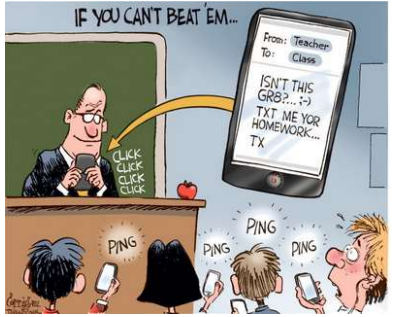
(Available from: https://citedatthecrossroads.net/eng101f13/2013/10/27/is-technology-taking-over-classrooms/ Accessed on July 8th , 2023)

 Conheça nossos planos