Questões de Concurso
Comentadas sobre verbos | verbs em inglês
Foram encontradas 2.457 questões


Cultural diversity and cultural identity in globalization
In the process of globalization winners are the countries with highly developed mass media as complex systems which are able to broadcast and receive diverse information which are used as basic development resource. On the other side are the developing countries which suffer their impact. Their characteristic is the small capacity to adapt to innovations that came from outside and that is why their cultural identity is called into question. Mass media are not only instruments for spreading popular culture and industries, but at the same time, their use enables cultural hegemony. Mass media, society, local culture, and media content are closely related. By exhibiting TV shows, movies, dramas etc. media will reflect values specific to local culture. So, we can talk about displaying commerciality as feature of American culture, Japanese aesthetic values, French tendency to philosophize... One of the main functions of mass media is to transfer cultural inheritance, information about the past, values of a given society, and to furnish cultural directive for life, action, and behavior. Despite the globalization of the economy, and the emergence of international political institutions, global dissemination of culture (mass media, education, modernization, urbanization, the spread of literacy) from the late 20th century has strengthened national identities. Modern nationalism is less focused on defending the country and more inclined to defend the established cultural identity. The identities represent the defense against unpredictability, disorder, and changes of globalization. In the last three decades there is strong trend to resisting globalization and cosmopolitanism as a form of defense of cultural identity. “God, nations, families and communities will ensure eternal figures that cannot be broken down and around which society will develop a counter-culture of real virtuality”. Castells considers that individuals carry with them the eternal truth, the values that cannot be virtualized or destroyed. As the globalization process strengthens the coming of cultural integrity and identity problems are more prevalent. Dominant monoculture stands against local, national and traditional cultures with the progressive disintegration of traditional culture value patterns.
(Available: www.wseas.us/e-library/conferences/2013. Adapted.)
Gerund use does NOT follow the same pattern of “spreading” (L04) in
23rd June, 2018
Algeria has turned off its Internet all over the country to stop students cheating in high school exams. Algeria's government said it wanted to do something to stop students secretly going online during nationwide school tests. All Internet service was stopped for an hour after the start of each of the exams. The government will shut the Internet down during the whole exam season, between June 20 and June 25. In addition, all electronic devices with Internet access have been banned from the country's 2,000 exam centers. Even teachers cannot take phones into the exam halls. There were many problems in 2016 when test questions were leaked online both before and during exams.
Algeria's Education Minister Nouria Benghabrit told the Algerian newspaper Annahar that Facebook would also be blocked across the country for the six days the exams were taking place. She said she did not like doing this but she could not do anything and give opportunities to students to cheat in tests. As an added security measure, metal detectors will be placed in all exam halls, and security cameras and mobile-phone blockers have been set up at the printing companies where the exams are printed. Many students thought the government was doing the right thing. Rania Salim, 16, said it wasn't fair that students who didn't study could get help in exams by using their mobile phone to cheat.
Taken from: https://breakingnewsenglish.com
“Algeria has turned off its Internet all over the country.” (1st paragraph)
The opposite of the phrasal verb TURNED OFF is:
23rd June, 2018
Algeria has turned off its Internet all over the country to stop students cheating in high school exams. Algeria's government said it wanted to do something to stop students secretly going online during nationwide school tests. All Internet service was stopped for an hour after the start of each of the exams. The government will shut the Internet down during the whole exam season, between June 20 and June 25. In addition, all electronic devices with Internet access have been banned from the country's 2,000 exam centers. Even teachers cannot take phones into the exam halls. There were many problems in 2016 when test questions were leaked online both before and during exams.
Algeria's Education Minister Nouria Benghabrit told the Algerian newspaper Annahar that Facebook would also be blocked across the country for the six days the exams were taking place. She said she did not like doing this but she could not do anything and give opportunities to students to cheat in tests. As an added security measure, metal detectors will be placed in all exam halls, and security cameras and mobile-phone blockers have been set up at the printing companies where the exams are printed. Many students thought the government was doing the right thing. Rania Salim, 16, said it wasn't fair that students who didn't study could get help in exams by using their mobile phone to cheat.
Taken from: https://breakingnewsenglish.com
According to the text, the Algerian government will shut the Internet down during the whole exam season. (1st paragraph)
The phrasal verb SHUT DOWN in the sentence above means that the Internet access will be:
They had to explain all the money that had gone missing.
Mark the item corresponding to the inconsistent underlined part correction.
I wonder if dad will ever let me to drive his new car, I don’t think he will. A B C D
Text 3:
Simple Steps to Improve Your English Reading Comprehension
1- Read the right books
If you dislike science fiction, you might not want to read a book about a man stuck on Mars. When you're choosing books (and other texts) to read, keep two things in mind:
1st. What you're interested in
2nd. Your reading level
Whenever you can, you should read things that you enjoy. You should also choose books that are at an English level just above the one you're most comfortable with. You want to challenge yourself just enough to learn new things, but not enough to get frustrated with your reading.
2. Ask yourself questions while reading and after reading
There's more to understanding a book than just reading the words!
There are a few things you can do before, during and after you read to help you better understand the text.
Before you read, browse the text. Take some time after you read too, to browse again and summarize what you remember. Try to quickly say or write a few sentences that describe what the text was all about.
Thinking about what you read will show you how much of it you really understood, and help you figure out if you still have questions.
Adapted from:
https://www.fluentu.com/blog/english/how-to-improve-englishreading/
The modal verb SHOULD in this context indicates:
They used (1) Internet access, but now they don't any more.
They are used (2) Internet access, and they log on to the Internet every day.
The verbs that complete the sentences above correctly are, respectively:
Choose the only sentence in which this verb was also used correctly:
Choose the verb form that best completes the following conditional sentence:
They would be able to know what is happening all over the world if ...
Text for the item.
A long and healthy life?
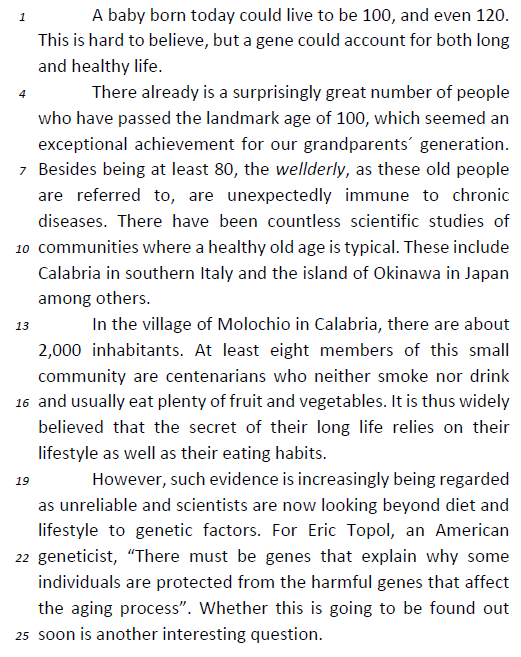
Internet: <www.ngllife.com> (adapted).
Based on the text, judge the following item.
The modal auxiliary would can be used instead of “could” in “A baby born today could live” (line 1) without affecting the meaning of the sentence.
Text for the question.
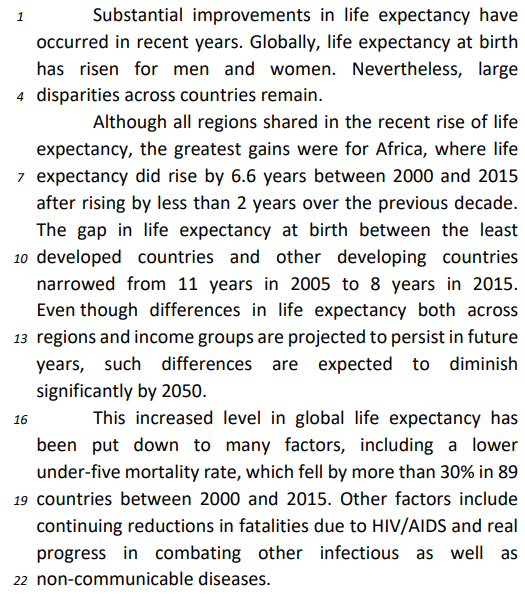
Higher life expectancy worldwide
Text for the question.
Higher life expectancy worldwide
Text for the question.
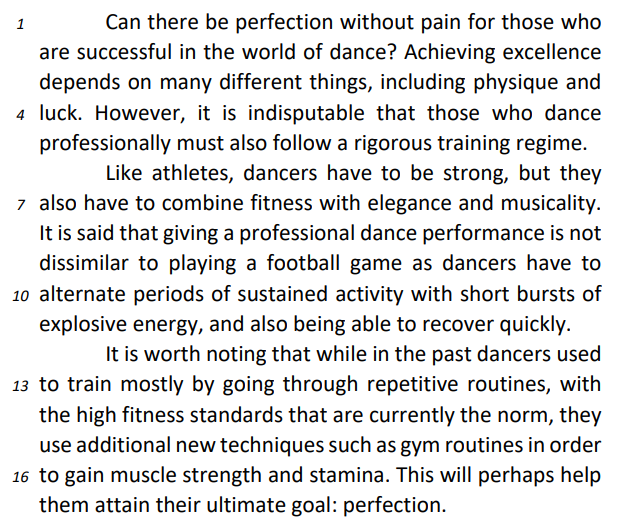
The route to perfection
Text for the question.
The route to perfection
Text for the question.
The route to perfection
Choose the right answer to the question:
How old is Kate now?
Choose the sentence in which the verb MAKE was correctly used.

 Conheça nossos planos