Questões de Concurso
Comentadas sobre verbos frasais | phrasal verbs em inglês
Foram encontradas 204 questões


TEXT 1
Why is music good for the brain?
October 7, 2020
By Andrew E. Budson, MD, Editorial Advisory Board Member, Harvard Health Publishing
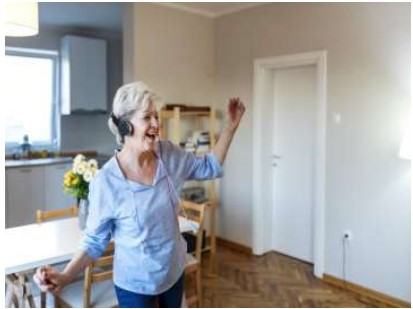
1. Can music really affect your well-being, learning, cognitive function, quality of life, and even happiness? Hand in a recent survey on music and brain health conducted by AARP revealed some interesting findings about the impact of music on cognitive and emotional well-being: music listeners had higher scores for mental well-being and slightly reduced levels of anxiety and depression compared to people overall.
2. Of survey respondents who currently go to musical performances, 69% rated their brain health as “excellent” or “very good,” compared to 58% for those who went in the past and 52% for those who never attended. Of those who reported often being exposed to music as a child, 68% rated their ability to learn new things as “excellent” or “very good,” compared to 50% of those who were not exposed to music.
3. Active musical engagement, including those over age 50, was associated with higher rates of happiness and good cognitive function. Adults with no early music exposure but who currently engage in some music appreciation show above average mental well-being scores. Those are pretty impressive results, to be sure. However, this 20-minute online survey has some limitations. For one, it included 3,185 US adults ages 18 and older; that is a small number if you are extrapolating to 328 million people across the country. For another, it is really a survey of people’s opinions. For example, although people might report their brain health as “excellent,” there was no objective measure of brain health such as an MRI scan, or even a test to measure their cognition.
4. Lastly, even if the ratings were true, the findings are only correlations. They do not prove that, for example, it was the exposure to music as a child that led to one’s improved ability to learn new things. It may be equally likely that those children brought up in more affluent households were both more likely to be exposed to music and to be given a good education that led to their being able to easily learn new things later in life.
5. Music has been shown to activate some of the broadest and most diverse networks of the brain. Of course, music activates the auditory cortex in the temporal lobes close to your ears, but that’s just the beginning. The parts of the brain involved in emotion are not only activated during emotional music, they are also synchronized. Music also activates a variety of memory regions. And, interestingly, music activates the motor system. In fact, it has been theorized that it is the activation of the brain’s motor system that allows us to pick out the beat of the music even before we start tapping our foot to it!
6. Okay, get along! so music activates just about all of the brain. Why is that so important? Well, have you ever heard the expression, “If you don’t use it, you’ll lose it”? It turns out this is actually true in the brain. Brain pathways — and even whole networks — are strengthened when they are used and are weakened when they are not used. The reason is that the brain is efficient; it isn’t going to bother keeping a brain pathway strong when it hasn’t been used in many years. The brain will use the neurons in that pathway for something else. These types of changes should be intuitively obvious to you — that’s why it is harder to speak that foreign language if you haven’t used it in 20 years; many of the old pathways have degraded and the neurons are being used for other purposes.
BUDSON, Andrew E. Why is music good for the brain? Harvard Health Publishing, 7 out. 2020. Disponível em:
“The professional of Teaching English as a Foreign Language”
Author: Anderson Francisco Guimarães Maia
Read the song lyrics below and answer the question.
Hand In My Pocket
Alanis Morissette
I'm broke, but I'm happy
I'm poor, but
I'm kind I'm short, but
I'm healthy, yeah
I'm high, but
I'm grounded
I'm sane, but
I'm overwhelmed
I'm lost, bu
t I'm hopeful, baby
And what it all comes down to
Is that everything's gonna be fine, fine, fine
'Cause I've got one hand in my pocket
And the other one is giving a: High five
I feel drunk, but
I'm sober I'm young and
I'm underpaid
I'm tired, but
I'm working, yeah I care, but
I'm restless
I'm here, but
I'm really gone
I'm wrong and
I'm sorry, baby
And what it all comes down to
Is that everything's gonna be quite alright
'Cause I've got one hand in my pocket
And the other is flicking a cigarette
And what is all comes down to
Is that I haven't got it all figured out just yet
'Cause I've got one hand in my pocket
And the other one is giving the peace sign
I'm free, but
I'm focused
I'm green, but
I'm wise
I'm hard, but
I'm friendly, baby
I'm sad, but
I'm laughing
I'm brave, but
I'm chicken shit
I'm sick, but
I'm pretty, baby
And what it all boils down to
Is that no one's really got it figured out just yet
Well, I've got one hand in my pocket
And the other one is playing a piano
What it all comes down to, my friends, yeah
Is that everything's just fine, fine, fine
'Cause I've got one hand in my pocket
And the other one is hailing a taxi cab
1. The phrasal verb took place (1st paragraph) means happened, occurred.
2. The underlined words in th first paragraph mainly, completely, and occasionally are examples of adverbs of manner.
3. In the 3rd paragraph, the pronoun They (in bold), refers to the rings.
4. Women (1st paragraph) is the plural form of woman.
Choose the alternative which contains the correct sentences.
I. Carla always pretends to care.
II. I can’t stand his comments, they’re full of all types of prejudice.
III. It’s an important topic to discuss.
IV. How much times do we have to go over this project?
Mark these statements as True (T) or False (F).
( ) “Care” and “stand” are regular verbs in sentences I and II, respectively.
( ) “Go over” is a phrasal verb in sentence IV.
( ) Even though “pretend”, “important” and “prejudice” are similar in spelling to words in Portuguese, they are all false cognates.
( ) In sentences II and IV, the use of quantifiers is correct.
The statements are, in the order presented, respectively:
I. “… or to take care of oneself” [Reflexive pronoun].
II. “In 2020, the COVID-19 pandemic …” [Preposition].
III. “… with a glaring loophole that allows…” [Superlative adverb].
IV. “…and professional lives differently to manage burnout” [Phrasal verb].
The information in brackets correctly describes the underlined word/expression in the excerpt(s):
I will postopone the trip.
Que phrasal verb substituiu corretamente o postpone?
The couple had been driving the car for 3 hours. Then the wife says: _ I think the gasoline will end.
Qual é o phrasal verb que pode substituir corretamente o verbo “end”?
“Roma’s friendly with Toulouse called off due to concerns of public order”
Available at: https://romapress.net/romas-friendly-with-toulouse-called-off-due-to-concerns-of-public-order/. Accessed: July 23, 2024.
Identifying phrasal verbs and their meanings when reading a text plays an important role in reading comprehension. A suitable synonym for the PHRASAL VERB presented in the headline above is:
Uma das diferenças entre verbos frasais e verbos preposicionais é que os verbos preposicionais não podem ser separados. Como no exemplo em português, que temos o caso do verbo gostar, que precisa da preposição "de".
Na frase: He took his jacket off. O verbo frasal "Took off" está empregado de forma errada, pois os verbos frasais não podem ser separados.
Text 1
The Courage to Be Imperfect
Perfectionism, self-examination and the kissing of frogs
Michael J. Formica
Posted July 9, 2009
Someone once said that there are two kinds of people in the world - those who are right... And nowhere are we more inclined to want to be right than with regard to ourselves. In fact, more often than not, we want to be perfect. What this striving for perfection often leads to is a kind of social paralysis.
If we are constantly focused on making the right decision, we will sometimes find ourselves in a place ranging from morbid indecision to outright fear. Getting it right, making the good choice and avoiding the faux pas endorse in us a rigidity of character and action that is limiting and, in derailing our momentum, deflects our potential evolution.
The willingness to be wrong or, as more properly suggested here, the courage to be imperfect, allows us the opportunity to discover many things about ourselves. Without exercising this courage, we put ourselves into a straightjacket of sorts, setting our thoughts and actions in a dismally fettered pattern.
This line of thinking was prompted by a conversation that I had with a client yesterday where in she had come to the conclusion that she was a bit of a perfectionist. What she had puzzled out for herself was that her perfectionism, rather than serving her, was actually hindering her ability to be flexible, open to new possibilities and clear about what she wanted for herself and her life.
At some point, I suggested that the fairy tale about the princess kissing frogs to find the prince was a good metaphor for stepping outside of one's comfort zone and "trying something on for size' without an overly self-conscious regard for the potential consequences of the choice. She mentioned that a few days earlier she had seen the trailer for a movie in which the princess kissed a frog and turned into a frog herself. Brilliant.
If we are unwilling to kiss a few frogs - to explore the possibilities that are presented to us in anticipation of finding something unexpected - then we, ourselves, may turn into frogs. That is, become stuck in our place and condemned to something that is not us. We can, without the willingness to be open to making mistakes, limit ourselves right into a state of personal inauthenticity.
Available
in:<https://www.psychologytoday.com/intl/blog/enlightened-living/200907/the-courage-be-imperfect>
Analyze the assertions below.
I - "In" correctly fills the gap in the text. II - There is a phrasal verb in the sentence “(…) which included laying off more than (…)”. III - The words in italics are respectively: an uncountable noun; a personal pronoun; the comparative form of the adjective “quart”.
It is correct to affirm that:
Read Text I and answer question.
Text I
How to have a healthier relationship with your phone
A few years ago, a Google employee sent an email to thousands of her co-workers: What if for six weeks straight, you spent one night per week without technology? The email was from Laura Mae Martin, Google’s executive productivity adviser, a role that, among other things, was created to help staff members foster healthier relationships with their gadgets and apps. After she sent the note, Ms. Martin was flooded with responses from coworkers eager for a respite from some of the very products they helped build. Thousands of employees have since participated in the annual “No-Tech Tuesday Night Challenge,” said Ms. Martin.
The problem she was trying to solve isn’t unique to Google workers. One survey found that Americans say they spend too much time on their phones. But dramatic solutions – a digital detox, a phone downgrade or a complete exit from social media – may feel impractical.
Is it possible to have a healthy relationship with technology while still using it daily? Fortunately, according to experts, the answer is a resounding ‘yes’ and here are a few things you can try:
First, start with one simple question.
You know that urge you get to reach for your phone without realizing it? And then, before you know it, you’re an hour into a social media binge? If you want to peacefully coexist with technology, you need to get a handle on those impulses, said Richard J. Davidson, the founder and director of the Center for Healthy Minds at the University of Wisconsin-Madison. According to him, people should start by noticing when they have an urge to lift their phone or open social media on their browser window. By becoming conscious of what you’re about to do, you’re interrupting an automatic behavior and awakening the part of your brain that governs self-control, he added. As one research article suggests, awareness of your actions can help you rein in bad habits.
Secondly, take the “mobile” out of your mobile devices.
Dr. Anna Lembke, a professor of psychiatry and addiction medicine at Stanford University School of Medicine, said one of the biggest problems with smartphones is what she calls “texting while running to catch a bus.” Using our devices while we’re on the move – walking from meeting to meeting, taking a child to school or catching a bus – prevents us from being more engaged in our lives, Dr. Lembke said.
One way to create harmony with technology is to limit your phone use when you’re on the move. Headed out for a walk? Turn off your notifications. Going to grab a coffee? Leave your phone on your desk. If you’re feeling brave, try powering down your phone while in transit. It won’t buzz with notifications, text messages or phone calls, which Dr. Lembke said could help you focus on the world around you.
Last of all, make technology work for you.
One thing experts agree on: To forge a healthy relationship with technology, you need to be in control of it and not the other way around. Think about your gadgets as tools that you decide how to use.
“Make it work for you, not against you; whether it’s an email program or your dishwasher, it’s the intention behind how you’re using it that really makes the big difference”, said Ms. Martin, the productivity expert at Google.
(Adapted from:
https://www.nytimes.com/2024/03/21/well/social-media-phone-addiction.html)
I - “(…) here are a few things you can try”. II - “Turn off your notifications”. III - “(…) of your actions can help you rein in bad habits.” IV - “(…) the part of your brain that governs self-control, he added.”
The sentence(s) in which there is a phrasal verb is/are:
Text 02
British Accents and Dialects: A Rough Guide

Have you ever tried to put on a British accent? The chances are the accent you’re trying to copy is ‘Received Pronunciation’, or standard English – also known as the Queen’s English. Received Pronunciation, or RP, is what most non-Brits are used to hearing as a British accent, often when you switch on the BBC or World Service.
But it’s called the Queen’s English for a reason – hardly anyone in the UK apart from the Queen speaks this way.
The truth is, although it may be called Standard English, it is anything but standard. The British Isles is made up many, many different accents and dialects – more than 37 dialects at the last count. A dialect is a Variety of a language that differs from the standard language, in this case RP. Dialects can vary regionally – depending on where in the country a person is from, as well as socially.
[…]
Types of British Accents – Cockney
This is one of the UK’s most famous dialects, and it goes hand in hand with London. It came about as the dialect of the London working classes, especially in the poorer East End of the city. The Cockney dialect also gave us Rhyming Slang, and you can still hear plenty of market traders round the East End shouting out in Cockney from their stalls. With the Cockney accent, there are lots of ‘glottal stops’, and the ‘th’ sound frequently changes to an ‘f’ sound. There have also been some famously terrible attempts at the Cockney dialect – here’s Dick Van Dyke to show you how not to do it!
Text adapted from: <https:englishlive.ef.com/en/blog/English-in-the-real-world/rough-guide-british-dialects/>
Text 3
Digital habits across generations
Today’s grandparents are joining their grandchildren on social media, but the different generations’ online habits couldn’t be more different. In the UK the over55s are joining Facebook in increasing numbers, meaning that they will soon be the site’s second biggest user group, with 3.5 million users aged 55-64 and 2.9 million over-65s.
Sheila, aged 59, says, ‘I joined to see what my grandchildren are doing, as my daughter posts videos and photos of them. It’s a much better way to see what they’re doing than waiting for letters and photos in the post. That’s how we did it when I was a child, but I think I’m lucky I get to see so much more of their lives than my grandparents did.’ Ironically, Sheila’s grandchildren are less likely to use Facebook themselves. Children under 17 in the UK are leaving the site – only 2.2 million users are under 17 – but they’re not going far from their smartphones.
Chloe, aged 15, even sleeps with her phone. ‘It’s my alarm clock so I have to,’ she says. ‘I look at it before I go to sleep and as soon as I wake up.’ Unlike her grandmother’s generation, Chloe’s age group is spending so much time on their phones at home that they are missing out on spending time with their friends in real life. Sheila, on the other hand, has made contact with old friends from school she hasn’t heard from in forty years. ‘We use Facebook to arrange to meet all over the country,’ she says. ‘It’s changed my social life completely.’ Teenagers might have their parents to thank for their smartphone and social media addiction as their parents were the early adopters of the smartphone. Peter, 38 and father of two teenagers, reports that he used to be on his phone or laptop constantly. ‘I was always connected and I felt like I was always working,’ he says. ‘How could I tell my kids to get off their phones if I was always in front of a screen myself?’ So, in the evenings and at weekends, he takes his SIM card out of his smartphone and puts it into an old-style mobile phone that can only make calls and send text messages. ‘I’m not completely cut off from the world in case of emergencies, but the important thing is I’m setting a better example to my kids and spending more quality time with them.’ Is it only a matter of time until the generation above and below Peter catches up with the new trend for a less digital life?
Source: https://learnenglish.britishcouncil.org
Analyze the sentences from text 3 below according to structure and grammar use.
1. The phrasal verb in: Unlike her grandmother’s generation, Chloe’s age group is spending so much time on their phones at home that they are missing out on spending time with their friends in real life. means in its context that they are not be able to experience an opportunity or chance.
2. The word Ironically, in bold in the second paragraph is being used as an adverb to express irony.
3. The reference words in bold in the first paragraph their and they, create cohesion that
precedes coherence.
4. In the following sentence from the third paragraph: Unlike her grandmother’s generation, Chloe’s age group is spending so… the (‘s) in grandmother’s and Chloe’s indicates the short form of the verb to be in the present tense.
5. The conjunctive adverb Unlike in bold in the third paragraph, is used to introduce a statement that contrasts with a previous statement.
Choose the alternative which contains the correct
sentences.
Complete the sentences with the correct phrasal verbs:
- I _____________his phone number in my contacts list, but I didn't find it.
- I need you to _____________ my kids while I'm on vacation.
- _____________! The car is coming in your direction!
- I’m _____________ going to my favorite band's concert next week.

 Conheça nossos planos