Questões de Concurso
Comentadas sobre sinônimos | synonyms em inglês
Foram encontradas 1.061 questões


Q128030
Inglês

A synonym for “increases” (line 6) is
Q128028
Inglês
A synonym for “threshold” (line 2) is
Q128024
Inglês

In the text, a synonym for “charged with” (line 15) is
Q122510
Inglês
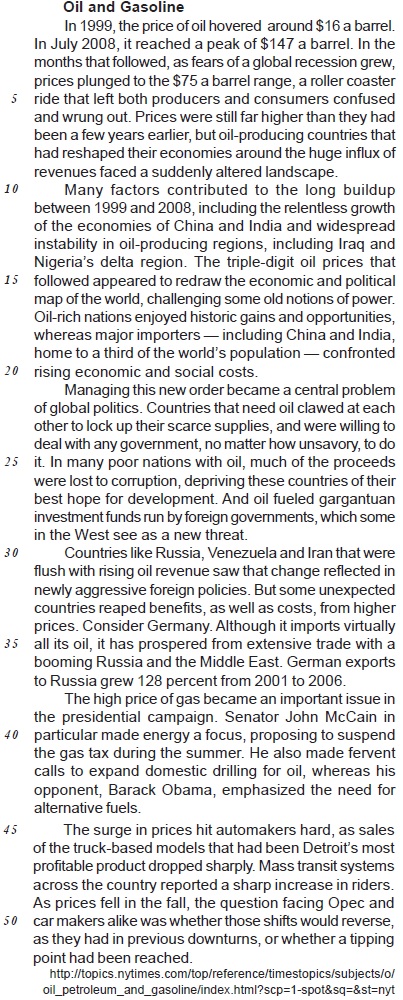
In the sentence “Countries that need oil clawed at each other to lock up their scarce supplies,” (lines 22-23), lock up means the same as
Q77851
Inglês
Texto associado
Para responder às questões de números 32 a 45, considere o texto abaixo.


A synonym for taking over from in the text is
Q46747
Inglês


Based on the meanings in the text, mark the only option in which the two words are synonymous.
Ano: 2009
Banca:
ESAF
Órgão:
Receita Federal
Prova:
ESAF - 2009 - Receita Federal - Analista Tributário da Receita Federal - Prova 1 |
Q22374
Inglês
Texto associado
In June this year, the BRICs, the world's newest economic
grouping, ended their fi rst major summit by calling for a
stable, predictable and more diversifi ed international
monetary system. But the leaders of Brazil, Russia, India
and China, stopped short of criticising the world's dominant
currency, the US dollar. The group repeated calls for a
bigger say in the global fi nancial system through greater
representation at major institutions, such as the World
Bank.
But the fi nal statement issued by the leaders made no
reference to developing new reserve currencies to challenge
the dollar, which Russia had called for at a separate event
earlier in the day.
Analysts say that as the global recession bites, the four Bric
nations are showing a growing willingness to work together.
One expert claimed the signifi cance of the summit would
be political rather than economic
(BBC News 16/6/09, adapted)
grouping, ended their fi rst major summit by calling for a
stable, predictable and more diversifi ed international
monetary system. But the leaders of Brazil, Russia, India
and China, stopped short of criticising the world's dominant
currency, the US dollar. The group repeated calls for a
bigger say in the global fi nancial system through greater
representation at major institutions, such as the World
Bank.
But the fi nal statement issued by the leaders made no
reference to developing new reserve currencies to challenge
the dollar, which Russia had called for at a separate event
earlier in the day.
Analysts say that as the global recession bites, the four Bric
nations are showing a growing willingness to work together.
One expert claimed the signifi cance of the summit would
be political rather than economic
(BBC News 16/6/09, adapted)
The phrase "stopped short of" in paragraph 1 means
Ano: 2009
Banca:
CESPE / CEBRASPE
Órgão:
ANAC
Provas:
CESPE - 2009 - ANAC - Analista Administrativo
|
CESPE - 2009 - ANAC - Analista Administrativo - Tecnologia da Informação |
Q17636
Inglês
Texto associado

Judge the following items about the ideas and the linguistic
structures of the text above.
Judge the following items about the ideas and the linguistic
structures of the text above.
The word "rowdy" ( .5) is synonymous with quiet.
.5) is synonymous with quiet.
Ano: 2009
Banca:
CESPE / CEBRASPE
Órgão:
ANAC
Provas:
CESPE - 2009 - ANAC - Analista Administrativo
|
CESPE - 2009 - ANAC - Analista Administrativo - Tecnologia da Informação |
Q17631
Inglês
Texto associado

Judge the following items about the ideas and the linguistic structures
of the text above.
Judge the following items about the ideas and the linguistic structures
of the text above.
The verb to plunge in "Airbus A330 plunged mysteriously into the southern Atlantic Ocean" ( .1-2) means to thrust or throw (something or oneself) forcibly or suddenly downwards.
.1-2) means to thrust or throw (something or oneself) forcibly or suddenly downwards.
Ano: 2009
Banca:
CESPE / CEBRASPE
Órgão:
ANAC
Provas:
CESPE - 2009 - ANAC - Analista Administrativo
|
CESPE - 2009 - ANAC - Analista Administrativo - Tecnologia da Informação |
Q17630
Inglês
Texto associado
Judge the following items about the ideas and the linguistic structures
of the text above.
Judge the following items about the ideas and the linguistic structures
of the text above.
The word "ill-fated" ( .1) is synonymous with doomed.
.1) is synonymous with doomed.
Ano: 2008
Banca:
CONSULPLAN
Órgão:
CODEVASF
Provas:
CONSULPLAN - 2008 - CODEVASF - Técnico em Informática
|
CONSULPLAN - 2008 - CODEVASF - Técnico em Saneamento |
Q205467
Inglês
Texto associado
The uses for oil
Oil is the largest source of liquid fuel and, in spite of attempts to develop synthetic fuels, world consumption of oil
products in increasing.
The oil industry is not much more than a hundred years old. It began when the first oil well was drilled in 1859. In the
early days, oil was used to light houses because there was no electricity and gas was very scarce. Later, people began to use oil
for heating too.
Most industries use machinery to make things. Every machine needs oil in order to run easily. Even a small clock or watch
needs a little oil from time to time.
The engines of many machines use oil fuels petrol, kerosene or diesel. Cars, buses, trucks, tractors, and small aircraft use
petroleum chemicals: synthetic rubber, plastics, synthetic fiber materials for clothes and for the home, paints, materials which
help to stop rust, photographic materials, soap and cleaning materials (detergents), drugs, fertilizers for farms and gardens, food
containers, and may others.
In 1900 the world’s oil production was less than 2 million tons a year. Today the oil industry is one of the world’s largest
and most important suppliers of raw materials.
Oil is the largest source of liquid fuel and, in spite of attempts to develop synthetic fuels, world consumption of oil
products in increasing.
The oil industry is not much more than a hundred years old. It began when the first oil well was drilled in 1859. In the
early days, oil was used to light houses because there was no electricity and gas was very scarce. Later, people began to use oil
for heating too.
Most industries use machinery to make things. Every machine needs oil in order to run easily. Even a small clock or watch
needs a little oil from time to time.
The engines of many machines use oil fuels petrol, kerosene or diesel. Cars, buses, trucks, tractors, and small aircraft use
petroleum chemicals: synthetic rubber, plastics, synthetic fiber materials for clothes and for the home, paints, materials which
help to stop rust, photographic materials, soap and cleaning materials (detergents), drugs, fertilizers for farms and gardens, food
containers, and may others.
In 1900 the world’s oil production was less than 2 million tons a year. Today the oil industry is one of the world’s largest
and most important suppliers of raw materials.
“…In spite of attempts to develop synthetic fuels…” In spite of is the same as:
Ano: 2008
Banca:
FGV
Órgão:
Senado Federal
Prova:
FGV - 2008 - Senado Federal - Analista Legislativo - Processo Legislativo |
Q174496
Inglês

When the text states that “the published reasons for decision lend themselves to objective analysis” (lines 15-16) this means they
Ano: 2008
Banca:
CESGRANRIO
Órgão:
BNDES
Prova:
CESGRANRIO - 2008 - BNDES - Técnico Administrativo - Inglês |
Q162157
Inglês

Mark the sentence in which “take off” has the same meaning as in “One reason why partnerships between companies and social entrepreneurs are yet to take off could be mutual ignorance of each other.” (lines 60-62)
Ano: 2008
Banca:
CESGRANRIO
Órgão:
BNDES
Prova:
CESGRANRIO - 2008 - BNDES - Técnico Administrativo - Inglês |
Q162155
Inglês
Which option expresses an accurate relationship between the items?
Ano: 2008
Banca:
FGV
Órgão:
Senado Federal
Provas:
FGV - 2008 - Senado Federal - Operador de TV
|
FGV - 2008 - Senado Federal - Produtor de Infografia Jornalística |
FGV - 2008 - Senado Federal - Produtor de Desenvolvimento de Conteúdos Jornalísticos para Internet |
FGV - 2008 - Senado Federal - Produtor de TV |
FGV - 2008 - Senado Federal - Produtor de Rádio |
Q97643
Inglês
Texto associado
Read text II and answer questions 37 to 40.
TEXT II
If you think that there’s something oddly familiar about
descriptions of social media, it may be that you recall some of
the discussions in the 1990s about what the web would
become. And many of its emerging manifestations are close to
the idealistic imaginings from that time. A good way to think
about social media is that all of this is actually just about being
human beings. Sharing ideas, cooperating and collaborating to
create art, thinking and commerce, vigorous debate and
discourse, finding people who might be good friends, allies and
lovers – it’s what our species has built several civilisations on.
That’s why it is spreading so quickly, not because it’s great
shiny, whizzy new technology, but because it lets us be
ourselves – only more so. And it is in the “more so” that the
power of this revolution lies. People can find information,
inspiration, like-minded people, communities and collaborators
faster than ever before. New ideas, services, business models
and technologies emerge and evolve at dizzying speed in social
media.
(http://www.icrossing.co.uk/fileadmin/uploads}
/eBooks/What_is_social_media_Nov_2007.pdf
TEXT II
If you think that there’s something oddly familiar about
descriptions of social media, it may be that you recall some of
the discussions in the 1990s about what the web would
become. And many of its emerging manifestations are close to
the idealistic imaginings from that time. A good way to think
about social media is that all of this is actually just about being
human beings. Sharing ideas, cooperating and collaborating to
create art, thinking and commerce, vigorous debate and
discourse, finding people who might be good friends, allies and
lovers – it’s what our species has built several civilisations on.
That’s why it is spreading so quickly, not because it’s great
shiny, whizzy new technology, but because it lets us be
ourselves – only more so. And it is in the “more so” that the
power of this revolution lies. People can find information,
inspiration, like-minded people, communities and collaborators
faster than ever before. New ideas, services, business models
and technologies emerge and evolve at dizzying speed in social
media.
(http://www.icrossing.co.uk/fileadmin/uploads}
/eBooks/What_is_social_media_Nov_2007.pdf
The underlined expression in “evolve at dizzying speed” can be replaced by
Ano: 2008
Banca:
FGV
Órgão:
Senado Federal
Provas:
FGV - 2008 - Senado Federal - Operador de TV
|
FGV - 2008 - Senado Federal - Produtor de Infografia Jornalística |
FGV - 2008 - Senado Federal - Produtor de Desenvolvimento de Conteúdos Jornalísticos para Internet |
FGV - 2008 - Senado Federal - Produtor de TV |
FGV - 2008 - Senado Federal - Produtor de Rádio |
Q97642
Inglês
Texto associado
Read text II and answer questions 37 to 40.
TEXT II
If you think that there’s something oddly familiar about
descriptions of social media, it may be that you recall some of
the discussions in the 1990s about what the web would
become. And many of its emerging manifestations are close to
the idealistic imaginings from that time. A good way to think
about social media is that all of this is actually just about being
human beings. Sharing ideas, cooperating and collaborating to
create art, thinking and commerce, vigorous debate and
discourse, finding people who might be good friends, allies and
lovers – it’s what our species has built several civilisations on.
That’s why it is spreading so quickly, not because it’s great
shiny, whizzy new technology, but because it lets us be
ourselves – only more so. And it is in the “more so” that the
power of this revolution lies. People can find information,
inspiration, like-minded people, communities and collaborators
faster than ever before. New ideas, services, business models
and technologies emerge and evolve at dizzying speed in social
media.
(http://www.icrossing.co.uk/fileadmin/uploads}
/eBooks/What_is_social_media_Nov_2007.pdf
TEXT II
If you think that there’s something oddly familiar about
descriptions of social media, it may be that you recall some of
the discussions in the 1990s about what the web would
become. And many of its emerging manifestations are close to
the idealistic imaginings from that time. A good way to think
about social media is that all of this is actually just about being
human beings. Sharing ideas, cooperating and collaborating to
create art, thinking and commerce, vigorous debate and
discourse, finding people who might be good friends, allies and
lovers – it’s what our species has built several civilisations on.
That’s why it is spreading so quickly, not because it’s great
shiny, whizzy new technology, but because it lets us be
ourselves – only more so. And it is in the “more so” that the
power of this revolution lies. People can find information,
inspiration, like-minded people, communities and collaborators
faster than ever before. New ideas, services, business models
and technologies emerge and evolve at dizzying speed in social
media.
(http://www.icrossing.co.uk/fileadmin/uploads}
/eBooks/What_is_social_media_Nov_2007.pdf
The expression “like-minded people” means people who
Q51554
Inglês

When "mortgage companies seize properties" (lines 13-14) this means they
Ano: 2008
Banca:
CESPE / CEBRASPE
Órgão:
SERPRO
Provas:
CESPE - 2008 - SERPRO - Analista - Desenvolvimento de Sistemas
|
CESPE - 2008 - SERPRO - Analista - Redes |
Q43309
Inglês
Texto associado
One frequently overlooked area in planning is technical
reviews and inspections. A technical review requires substantial
preparation on the part of the presenters. Documents must be
published and distributed and presentation material organized and
made into slides or overheads. Practice sessions are conducted by
presenters with an audience of critics to prepare for the review.
The reviewers should read the material, attend the
presentations, and write reports. On large projects with many
reviews and walk-throughs involving many participants, a
substantial number of labor hours can be consumed analyzing
documents, attending meetings, and writing reports. For example,
a system design review for one module or unit can require 150
labor hours. When overlooked, this labor can result in a very
large error in resource and schedule estimation.
Many projects include risk assessment and risk
management as a key part of the planning process and expect the
plan to identify specific risk areas. The plan is expected to
quantify both probability of failure and consequences of failure
and to describe what will be done to contain development risk.
A. Behforooz and F. Hudson. Software engineering
fundamentals. Ed. Oxford (adapted).
Based on the text above, judge the following items.
reviews and inspections. A technical review requires substantial
preparation on the part of the presenters. Documents must be
published and distributed and presentation material organized and
made into slides or overheads. Practice sessions are conducted by
presenters with an audience of critics to prepare for the review.
The reviewers should read the material, attend the
presentations, and write reports. On large projects with many
reviews and walk-throughs involving many participants, a
substantial number of labor hours can be consumed analyzing
documents, attending meetings, and writing reports. For example,
a system design review for one module or unit can require 150
labor hours. When overlooked, this labor can result in a very
large error in resource and schedule estimation.
Many projects include risk assessment and risk
management as a key part of the planning process and expect the
plan to identify specific risk areas. The plan is expected to
quantify both probability of failure and consequences of failure
and to describe what will be done to contain development risk.
A. Behforooz and F. Hudson. Software engineering
fundamentals. Ed. Oxford (adapted).
Based on the text above, judge the following items.
At the beginning of the second paragraph, "should" can be correctly replaced by ought to.
Ano: 2008
Banca:
CESGRANRIO
Órgão:
CAPES
Provas:
CESGRANRIO - 2008 - CAPES - Analista de Sistemas
|
CESGRANRIO - 2008 - CAPES - Engenheiro Civil |
CESGRANRIO - 2008 - CAPES - Contador |
CESGRANRIO - 2008 - CAPES - Comunicação Social (Bacharelado) |
Q9617
Inglês
Texto associado
How to dig out from the information avalanche
Majority of workers feel overwhelmed by deluge of data,
survey finds
By Eve Tahmincioglu
updated 8:18 p.m. ET March 16, 2008
Don't expect Shaun Osher, the CEO of Core Group
Marketing in New York, to answer your e-mail right away.
He has stopped responding to e-mails every minute and
only checks his e-mail account twice a day. He also started
turning off his BlackBerry during meetings.
This tactic has made him so much more productive
that earlier this year he held a meeting with his staff of 50
and "strongly suggested" that they stop relying so heavily
on e-mail and actually start calling clients on the phone.
And, he requested his employees put cell phones and
PDAs on silent mode during meetings, as well as curtail
the common practice of cc-ing everybody when sending
out an e-mail. "There was so much redundancy, so much
unnecessary work," he explains. "One person could handle
an issue that should take two minutes, but when an email
goes out and five people get cc-ed, then everybody
responds to it and there's a snowball effect."
It's not that Osher has anything against technology. In
fact, he loves it. The problem is, last year he realized he
was inundated with so many e-mails and so much
information in general that he began to experience data
overload. "In the beginning, e-mail and all this data was a
great phenomenon, revolutionizing what we do. But the
pendulum has swung way too much to the other side," he
maintains. "We're less productive."
Osher isn't the only one out there under a data
avalanche. Thanks to technological innovations, you can
be talking to a customer on your cell phone, answering a
LinkedIn invitation on your laptop, and responding to email
on your PDA all at the same time. Besides, during
tough economic times, who will want to miss any
information when your job could be on the line if you indulge
in the luxury of being offline? Turns out, seven out of 10
office workers in the United States feel overwhelmed by
information in the workplace, and more than two in five
say they are headed for a data "breaking point," according
to a recently released Workplace Productivity Survey.
Mike Walsh, CEO of LexisNexis U.S. Legal Markets,
says there are a host of reasons we're all on the information
brink: "exponential growth of the size of the information
'haystack,' the immensity and immediacy of digital
communications, and the fact that professionals are not
being provided with sufficient tools and training to help
them keep pace with the growing information burden."
Ellen Kossek, a professor from Michigan State, believes
we are less productive in this age of 24-7 technology, and
our multitasking mentality has spawned a "not-mentallypresent"
society. "We're becoming an attention-deficit
disorder society switching back and forth like crazy,"
Kossek says. "We're connected all the time. We're
working on planes, in coffee shops, working on the
weekends. Work is very seductive, but yet we're actually
less effective."
The key to getting your head above the data flood,
according to workplace experts, is managing and reducing
the information you're bombarded with.
© 2008 MSNBC Interactive - (slightly adapted)
http://www.msnbc.msn.com/id/23636252/
Majority of workers feel overwhelmed by deluge of data,
survey finds
By Eve Tahmincioglu
updated 8:18 p.m. ET March 16, 2008
Don't expect Shaun Osher, the CEO of Core Group
Marketing in New York, to answer your e-mail right away.
He has stopped responding to e-mails every minute and
only checks his e-mail account twice a day. He also started
turning off his BlackBerry during meetings.
This tactic has made him so much more productive
that earlier this year he held a meeting with his staff of 50
and "strongly suggested" that they stop relying so heavily
on e-mail and actually start calling clients on the phone.
And, he requested his employees put cell phones and
PDAs on silent mode during meetings, as well as curtail
the common practice of cc-ing everybody when sending
out an e-mail. "There was so much redundancy, so much
unnecessary work," he explains. "One person could handle
an issue that should take two minutes, but when an email
goes out and five people get cc-ed, then everybody
responds to it and there's a snowball effect."
It's not that Osher has anything against technology. In
fact, he loves it. The problem is, last year he realized he
was inundated with so many e-mails and so much
information in general that he began to experience data
overload. "In the beginning, e-mail and all this data was a
great phenomenon, revolutionizing what we do. But the
pendulum has swung way too much to the other side," he
maintains. "We're less productive."
Osher isn't the only one out there under a data
avalanche. Thanks to technological innovations, you can
be talking to a customer on your cell phone, answering a
LinkedIn invitation on your laptop, and responding to email
on your PDA all at the same time. Besides, during
tough economic times, who will want to miss any
information when your job could be on the line if you indulge
in the luxury of being offline? Turns out, seven out of 10
office workers in the United States feel overwhelmed by
information in the workplace, and more than two in five
say they are headed for a data "breaking point," according
to a recently released Workplace Productivity Survey.
Mike Walsh, CEO of LexisNexis U.S. Legal Markets,
says there are a host of reasons we're all on the information
brink: "exponential growth of the size of the information
'haystack,' the immensity and immediacy of digital
communications, and the fact that professionals are not
being provided with sufficient tools and training to help
them keep pace with the growing information burden."
Ellen Kossek, a professor from Michigan State, believes
we are less productive in this age of 24-7 technology, and
our multitasking mentality has spawned a "not-mentallypresent"
society. "We're becoming an attention-deficit
disorder society switching back and forth like crazy,"
Kossek says. "We're connected all the time. We're
working on planes, in coffee shops, working on the
weekends. Work is very seductive, but yet we're actually
less effective."
The key to getting your head above the data flood,
according to workplace experts, is managing and reducing
the information you're bombarded with.
© 2008 MSNBC Interactive - (slightly adapted)
http://www.msnbc.msn.com/id/23636252/
Which option describes accurately the meaning relationship between the pairs of words?
Ano: 2008
Banca:
CESGRANRIO
Órgão:
CAPES
Provas:
CESGRANRIO - 2008 - CAPES - Analista de Sistemas
|
CESGRANRIO - 2008 - CAPES - Engenheiro Civil |
CESGRANRIO - 2008 - CAPES - Contador |
CESGRANRIO - 2008 - CAPES - Comunicação Social (Bacharelado) |
Q9614
Inglês
Texto associado
How to dig out from the information avalanche
Majority of workers feel overwhelmed by deluge of data,
survey finds
By Eve Tahmincioglu
updated 8:18 p.m. ET March 16, 2008
Don't expect Shaun Osher, the CEO of Core Group
Marketing in New York, to answer your e-mail right away.
He has stopped responding to e-mails every minute and
only checks his e-mail account twice a day. He also started
turning off his BlackBerry during meetings.
This tactic has made him so much more productive
that earlier this year he held a meeting with his staff of 50
and "strongly suggested" that they stop relying so heavily
on e-mail and actually start calling clients on the phone.
And, he requested his employees put cell phones and
PDAs on silent mode during meetings, as well as curtail
the common practice of cc-ing everybody when sending
out an e-mail. "There was so much redundancy, so much
unnecessary work," he explains. "One person could handle
an issue that should take two minutes, but when an email
goes out and five people get cc-ed, then everybody
responds to it and there's a snowball effect."
It's not that Osher has anything against technology. In
fact, he loves it. The problem is, last year he realized he
was inundated with so many e-mails and so much
information in general that he began to experience data
overload. "In the beginning, e-mail and all this data was a
great phenomenon, revolutionizing what we do. But the
pendulum has swung way too much to the other side," he
maintains. "We're less productive."
Osher isn't the only one out there under a data
avalanche. Thanks to technological innovations, you can
be talking to a customer on your cell phone, answering a
LinkedIn invitation on your laptop, and responding to email
on your PDA all at the same time. Besides, during
tough economic times, who will want to miss any
information when your job could be on the line if you indulge
in the luxury of being offline? Turns out, seven out of 10
office workers in the United States feel overwhelmed by
information in the workplace, and more than two in five
say they are headed for a data "breaking point," according
to a recently released Workplace Productivity Survey.
Mike Walsh, CEO of LexisNexis U.S. Legal Markets,
says there are a host of reasons we're all on the information
brink: "exponential growth of the size of the information
'haystack,' the immensity and immediacy of digital
communications, and the fact that professionals are not
being provided with sufficient tools and training to help
them keep pace with the growing information burden."
Ellen Kossek, a professor from Michigan State, believes
we are less productive in this age of 24-7 technology, and
our multitasking mentality has spawned a "not-mentallypresent"
society. "We're becoming an attention-deficit
disorder society switching back and forth like crazy,"
Kossek says. "We're connected all the time. We're
working on planes, in coffee shops, working on the
weekends. Work is very seductive, but yet we're actually
less effective."
The key to getting your head above the data flood,
according to workplace experts, is managing and reducing
the information you're bombarded with.
© 2008 MSNBC Interactive - (slightly adapted)
http://www.msnbc.msn.com/id/23636252/
Majority of workers feel overwhelmed by deluge of data,
survey finds
By Eve Tahmincioglu
updated 8:18 p.m. ET March 16, 2008
Don't expect Shaun Osher, the CEO of Core Group
Marketing in New York, to answer your e-mail right away.
He has stopped responding to e-mails every minute and
only checks his e-mail account twice a day. He also started
turning off his BlackBerry during meetings.
This tactic has made him so much more productive
that earlier this year he held a meeting with his staff of 50
and "strongly suggested" that they stop relying so heavily
on e-mail and actually start calling clients on the phone.
And, he requested his employees put cell phones and
PDAs on silent mode during meetings, as well as curtail
the common practice of cc-ing everybody when sending
out an e-mail. "There was so much redundancy, so much
unnecessary work," he explains. "One person could handle
an issue that should take two minutes, but when an email
goes out and five people get cc-ed, then everybody
responds to it and there's a snowball effect."
It's not that Osher has anything against technology. In
fact, he loves it. The problem is, last year he realized he
was inundated with so many e-mails and so much
information in general that he began to experience data
overload. "In the beginning, e-mail and all this data was a
great phenomenon, revolutionizing what we do. But the
pendulum has swung way too much to the other side," he
maintains. "We're less productive."
Osher isn't the only one out there under a data
avalanche. Thanks to technological innovations, you can
be talking to a customer on your cell phone, answering a
LinkedIn invitation on your laptop, and responding to email
on your PDA all at the same time. Besides, during
tough economic times, who will want to miss any
information when your job could be on the line if you indulge
in the luxury of being offline? Turns out, seven out of 10
office workers in the United States feel overwhelmed by
information in the workplace, and more than two in five
say they are headed for a data "breaking point," according
to a recently released Workplace Productivity Survey.
Mike Walsh, CEO of LexisNexis U.S. Legal Markets,
says there are a host of reasons we're all on the information
brink: "exponential growth of the size of the information
'haystack,' the immensity and immediacy of digital
communications, and the fact that professionals are not
being provided with sufficient tools and training to help
them keep pace with the growing information burden."
Ellen Kossek, a professor from Michigan State, believes
we are less productive in this age of 24-7 technology, and
our multitasking mentality has spawned a "not-mentallypresent"
society. "We're becoming an attention-deficit
disorder society switching back and forth like crazy,"
Kossek says. "We're connected all the time. We're
working on planes, in coffee shops, working on the
weekends. Work is very seductive, but yet we're actually
less effective."
The key to getting your head above the data flood,
according to workplace experts, is managing and reducing
the information you're bombarded with.
© 2008 MSNBC Interactive - (slightly adapted)
http://www.msnbc.msn.com/id/23636252/
In "...your job could be on the line if you indulge in the luxury of being offline?" (lines 32-33) the expressions 'on the line' and 'offline', respectively, mean

 Conheça nossos planos