Questões de Concurso Sobre inglês
Foram encontradas 25.506 questões
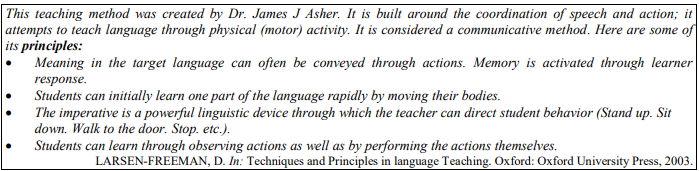
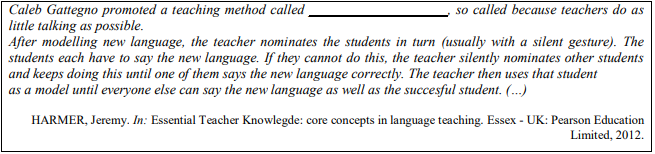
I - TPR emphasizes the association of language with physical actions, using the imperative mood and a command-response technique.
II - TPR is often employed in language instruction for young children and beginners, aiming to create a stress-free and enjoyable learning environment.
III - TPR primarily focuses on developing advanced language skills, making it suitable for learners at higher proficiency levels.
IV - The TPR method discourages the use of repetition and reinforcement in language learning, as it relies solely on physical actions for understanding.
V - TPR was developed in the early 2000s as a response to the limitations of traditional language teaching methods.
The correct order is:

In the comic strip, how does Snoopy(the dog) feel about the mention of "Penny pancakes"?
What is the season mentioned in the text, and which month is associated with
O texto seguinte servirá de base para responder à questão.
New generation of Indigenous activists battle to save the Amazon
Campaigners in Brazil use drones to document work of self-defence teams trying to stop environmental destruction caused by illegal mining
Batista, who belongs to South America's Macuxi people, is part of a new generation of Indigenous journalists helping chronicle an age-old battle against outside aggression. For centuries, non-Indigenous writers and reporters have flocked to the rainforest region to tell their version of that ancestral fight for survival. Now, a growing cohort of Indigenous communicators are telling their own stories, providing first-hand dispatches from some of the Amazon's most inaccessible and under-reported corners.
"It's dangerous work and we suffer a lot when we're out in the field," said Batista, one of about 26,000 inhabitants of Raposa Serra do Sol, Brazil's second most populous Indigenous territory. "But it really gives me strength because I'm showing the reality of our lives to the world."
"It's my job to monitor the territory: to see who's coming in and who is leaving, to find areas being invaded, and to defend the territory because we cannot live without it," said Batista, who was trained by a local Indigenous association, the Conselho Indígena de Roraima, as part of an initiative called Rede Wakywai, which means "our news" in the local Wapichana language.
The Guardian
O texto seguinte servirá de base para responder à questão.
New generation of Indigenous activists battle to save the Amazon
Campaigners in Brazil use drones to document work of self-defence teams trying to stop environmental destruction caused by illegal mining
Batista, who belongs to South America's Macuxi people, is part of a new generation of Indigenous journalists helping chronicle an age-old battle against outside aggression. For centuries, non-Indigenous writers and reporters have flocked to the rainforest region to tell their version of that ancestral fight for survival. Now, a growing cohort of Indigenous communicators are telling their own stories, providing first-hand dispatches from some of the Amazon's most inaccessible and under-reported corners.
"It's dangerous work and we suffer a lot when we're out in the field," said Batista, one of about 26,000 inhabitants of Raposa Serra do Sol, Brazil's second most populous Indigenous territory. "But it really gives me strength because I'm showing the reality of our lives to the world."
"It's my job to monitor the territory: to see who's coming in and who is leaving, to find areas being invaded, and to defend the territory because we cannot live without it," said Batista, who was trained by a local Indigenous association, the Conselho Indígena de Roraima, as part of an initiative called Rede Wakywai, which means "our news" in the local Wapichana language.
The Guardian
O texto seguinte servirá de base para responder à questão.
New generation of Indigenous activists battle to save the Amazon
Campaigners in Brazil use drones to document work of self-defence teams trying to stop environmental destruction caused by illegal mining
Batista, who belongs to South America's Macuxi people, is part of a new generation of Indigenous journalists helping chronicle an age-old battle against outside aggression. For centuries, non-Indigenous writers and reporters have flocked to the rainforest region to tell their version of that ancestral fight for survival. Now, a growing cohort of Indigenous communicators are telling their own stories, providing first-hand dispatches from some of the Amazon's most inaccessible and under-reported corners.
"It's dangerous work and we suffer a lot when we're out in the field," said Batista, one of about 26,000 inhabitants of Raposa Serra do Sol, Brazil's second most populous Indigenous territory. "But it really gives me strength because I'm showing the reality of our lives to the world."
"It's my job to monitor the territory: to see who's coming in and who is leaving, to find areas being invaded, and to defend the territory because we cannot live without it," said Batista, who was trained by a local Indigenous association, the Conselho Indígena de Roraima, as part of an initiative called Rede Wakywai, which means "our news" in the local Wapichana language.
The Guardian
O texto seguinte servirá de base para responder à questão.
New generation of Indigenous activists battle to save the Amazon
Campaigners in Brazil use drones to document work of self-defence teams trying to stop environmental destruction caused by illegal mining
Batista, who belongs to South America's Macuxi people, is part of a new generation of Indigenous journalists helping chronicle an age-old battle against outside aggression. For centuries, non-Indigenous writers and reporters have flocked to the rainforest region to tell their version of that ancestral fight for survival. Now, a growing cohort of Indigenous communicators are telling their own stories, providing first-hand dispatches from some of the Amazon's most inaccessible and under-reported corners.
"It's dangerous work and we suffer a lot when we're out in the field," said Batista, one of about 26,000 inhabitants of Raposa Serra do Sol, Brazil's second most populous Indigenous territory. "But it really gives me strength because I'm showing the reality of our lives to the world."
"It's my job to monitor the territory: to see who's coming in and who is leaving, to find areas being invaded, and to defend the territory because we cannot live without it," said Batista, who was trained by a local Indigenous association, the Conselho Indígena de Roraima, as part of an initiative called Rede Wakywai, which means "our news" in the local Wapichana language.
The Guardian
O texto seguinte servirá de base para responder à questão.
New generation of Indigenous activists battle to save the Amazon
Campaigners in Brazil use drones to document work of self-defence teams trying to stop environmental destruction caused by illegal mining
Batista, who belongs to South America's Macuxi people, is part of a new generation of Indigenous journalists helping chronicle an age-old battle against outside aggression. For centuries, non-Indigenous writers and reporters have flocked to the rainforest region to tell their version of that ancestral fight for survival. Now, a growing cohort of Indigenous communicators are telling their own stories, providing first-hand dispatches from some of the Amazon's most inaccessible and under-reported corners.
"It's dangerous work and we suffer a lot when we're out in the field," said Batista, one of about 26,000 inhabitants of Raposa Serra do Sol, Brazil's second most populous Indigenous territory. "But it really gives me strength because I'm showing the reality of our lives to the world."
"It's my job to monitor the territory: to see who's coming in and who is leaving, to find areas being invaded, and to defend the territory because we cannot live without it," said Batista, who was trained by a local Indigenous association, the Conselho Indígena de Roraima, as part of an initiative called Rede Wakywai, which means "our news" in the local Wapichana language.
The Guardian
O texto seguinte servirá de base para responder à questão.
New generation of Indigenous activists battle to save the Amazon
Campaigners in Brazil use drones to document work of self-defence teams trying to stop environmental destruction caused by illegal mining
Batista, who belongs to South America's Macuxi people, is part of a new generation of Indigenous journalists helping chronicle an age-old battle against outside aggression. For centuries, non-Indigenous writers and reporters have flocked to the rainforest region to tell their version of that ancestral fight for survival. Now, a growing cohort of Indigenous communicators are telling their own stories, providing first-hand dispatches from some of the Amazon's most inaccessible and under-reported corners.
"It's dangerous work and we suffer a lot when we're out in the field," said Batista, one of about 26,000 inhabitants of Raposa Serra do Sol, Brazil's second most populous Indigenous territory. "But it really gives me strength because I'm showing the reality of our lives to the world."
"It's my job to monitor the territory: to see who's coming in and who is leaving, to find areas being invaded, and to defend the territory because we cannot live without it," said Batista, who was trained by a local Indigenous association, the Conselho Indígena de Roraima, as part of an initiative called Rede Wakywai, which means "our news" in the local Wapichana language.
The Guardian
O texto seguinte servirá de base para responder à questão.
New generation of Indigenous activists battle to save the Amazon
Campaigners in Brazil use drones to document work of self-defence teams trying to stop environmental destruction caused by illegal mining
Batista, who belongs to South America's Macuxi people, is part of a new generation of Indigenous journalists helping chronicle an age-old battle against outside aggression. For centuries, non-Indigenous writers and reporters have flocked to the rainforest region to tell their version of that ancestral fight for survival. Now, a growing cohort of Indigenous communicators are telling their own stories, providing first-hand dispatches from some of the Amazon's most inaccessible and under-reported corners.
"It's dangerous work and we suffer a lot when we're out in the field," said Batista, one of about 26,000 inhabitants of Raposa Serra do Sol, Brazil's second most populous Indigenous territory. "But it really gives me strength because I'm showing the reality of our lives to the world."
"It's my job to monitor the territory: to see who's coming in and who is leaving, to find areas being invaded, and to defend the territory because we cannot live without it," said Batista, who was trained by a local Indigenous association, the Conselho Indígena de Roraima, as part of an initiative called Rede Wakywai, which means "our news" in the local Wapichana language.
The Guardian
O texto seguinte servirá de base para responder à questão.
New generation of Indigenous activists battle to save the Amazon
Campaigners in Brazil use drones to document work of self-defence teams trying to stop environmental destruction caused by illegal mining
Batista, who belongs to South America's Macuxi people, is part of a new generation of Indigenous journalists helping chronicle an age-old battle against outside aggression. For centuries, non-Indigenous writers and reporters have flocked to the rainforest region to tell their version of that ancestral fight for survival. Now, a growing cohort of Indigenous communicators are telling their own stories, providing first-hand dispatches from some of the Amazon's most inaccessible and under-reported corners.
"It's dangerous work and we suffer a lot when we're out in the field," said Batista, one of about 26,000 inhabitants of Raposa Serra do Sol, Brazil's second most populous Indigenous territory. "But it really gives me strength because I'm showing the reality of our lives to the world."
"It's my job to monitor the territory: to see who's coming in and who is leaving, to find areas being invaded, and to defend the territory because we cannot live without it," said Batista, who was trained by a local Indigenous association, the Conselho Indígena de Roraima, as part of an initiative called Rede Wakywai, which means "our news" in the local Wapichana language.
The Guardian
(__) "to save" em "activists battle to save".
(__) "to stop" em "trying to stop environmental destruction".
(__) "to suffer" em "we suffer a lot".
O texto seguinte servirá de base para responder à questão.
New generation of Indigenous activists battle to save the Amazon
Campaigners in Brazil use drones to document work of self-defence teams trying to stop environmental destruction caused by illegal mining
Batista, who belongs to South America's Macuxi people, is part of a new generation of Indigenous journalists helping chronicle an age-old battle against outside aggression. For centuries, non-Indigenous writers and reporters have flocked to the rainforest region to tell their version of that ancestral fight for survival. Now, a growing cohort of Indigenous communicators are telling their own stories, providing first-hand dispatches from some of the Amazon's most inaccessible and under-reported corners.
"It's dangerous work and we suffer a lot when we're out in the field," said Batista, one of about 26,000 inhabitants of Raposa Serra do Sol, Brazil's second most populous Indigenous territory. "But it really gives me strength because I'm showing the reality of our lives to the world."
"It's my job to monitor the territory: to see who's coming in and who is leaving, to find areas being invaded, and to defend the territory because we cannot live without it," said Batista, who was trained by a local Indigenous association, the Conselho Indígena de Roraima, as part of an initiative called Rede Wakywai, which means "our news" in the local Wapichana language.
The Guardian
Assinale a alternativa correta quanto ao plural irregular dos substantivos.
O plural de mouse, knife, child e hero é:
Escolha a resposta correta quanto ao comparativo de superioridade.
Russia is much _________________________ Brazil.