Questões de Concurso Sobre inglês
Foram encontradas 26.001 questões


Read Text I to answer the question.
TEXT I
“One very active research tradition in the field of second language acquisition (SLA) attempts to establish causal relationships between environmental factors and learning. These include the type and quantity of input, instruction and feedback, and the interactional context of learning (Larsen-Freeman and Long 1991). A second very influential line of research and theory in SLA that came to fruition during the 1980s investigates the possible role of universal grammar (UG) in SLA (Eubank 1991b, White 1989). In the Chomskyan tradition, UG refers not to properties of language as the external object of learning but to innate properties of mind that direct the course of primary language acquisition. One question asked within this tradition has been whether or not second language this tradition learners still “have access” to UG, but it is assumed that UG principles are not accessible to learner awareness for any kind of conscious analysis of input. It is possible that SLA is the result of UG (a deep internal factor) acting upon input (an external factor), as proposed by White (1989), but what seems to be left out of such an account is the role of the learner's conscious mental processes.” […]
Available at: https://www.cambridge.org/core/journals/annual-review-of-applied-linguistics/ (adapted)
Read Text I to answer the question.
TEXT I
“One very active research tradition in the field of second language acquisition (SLA) attempts to establish causal relationships between environmental factors and learning. These include the type and quantity of input, instruction and feedback, and the interactional context of learning (Larsen-Freeman and Long 1991). A second very influential line of research and theory in SLA that came to fruition during the 1980s investigates the possible role of universal grammar (UG) in SLA (Eubank 1991b, White 1989). In the Chomskyan tradition, UG refers not to properties of language as the external object of learning but to innate properties of mind that direct the course of primary language acquisition. One question asked within this tradition has been whether or not second language this tradition learners still “have access” to UG, but it is assumed that UG principles are not accessible to learner awareness for any kind of conscious analysis of input. It is possible that SLA is the result of UG (a deep internal factor) acting upon input (an external factor), as proposed by White (1989), but what seems to be left out of such an account is the role of the learner's conscious mental processes.” […]
Available at: https://www.cambridge.org/core/journals/annual-review-of-applied-linguistics/ (adapted)
Read Text I to answer the question.
TEXT I
“One very active research tradition in the field of second language acquisition (SLA) attempts to establish causal relationships between environmental factors and learning. These include the type and quantity of input, instruction and feedback, and the interactional context of learning (Larsen-Freeman and Long 1991). A second very influential line of research and theory in SLA that came to fruition during the 1980s investigates the possible role of universal grammar (UG) in SLA (Eubank 1991b, White 1989). In the Chomskyan tradition, UG refers not to properties of language as the external object of learning but to innate properties of mind that direct the course of primary language acquisition. One question asked within this tradition has been whether or not second language this tradition learners still “have access” to UG, but it is assumed that UG principles are not accessible to learner awareness for any kind of conscious analysis of input. It is possible that SLA is the result of UG (a deep internal factor) acting upon input (an external factor), as proposed by White (1989), but what seems to be left out of such an account is the role of the learner's conscious mental processes.” […]
Available at: https://www.cambridge.org/core/journals/annual-review-of-applied-linguistics/ (adapted)
Read Text I to answer the question.
TEXT I
“One very active research tradition in the field of second language acquisition (SLA) attempts to establish causal relationships between environmental factors and learning. These include the type and quantity of input, instruction and feedback, and the interactional context of learning (Larsen-Freeman and Long 1991). A second very influential line of research and theory in SLA that came to fruition during the 1980s investigates the possible role of universal grammar (UG) in SLA (Eubank 1991b, White 1989). In the Chomskyan tradition, UG refers not to properties of language as the external object of learning but to innate properties of mind that direct the course of primary language acquisition. One question asked within this tradition has been whether or not second language this tradition learners still “have access” to UG, but it is assumed that UG principles are not accessible to learner awareness for any kind of conscious analysis of input. It is possible that SLA is the result of UG (a deep internal factor) acting upon input (an external factor), as proposed by White (1989), but what seems to be left out of such an account is the role of the learner's conscious mental processes.” […]
Available at: https://www.cambridge.org/core/journals/annual-review-of-applied-linguistics/ (adapted)
Elephant Calf Separated From Herd in India is Reunited With Its Mother

(Available at: https://www.theguardian.com/world/2024/jan/03/elephant-calf-separated-from-herd-in-india-isreunited-with-mother – text especially adapted for this test).
Elephant Calf Separated From Herd in India is Reunited With Its Mother
(Available at: https://www.theguardian.com/world/2024/jan/03/elephant-calf-separated-from-herd-in-india-isreunited-with-mother – text especially adapted for this test).
Elephant Calf Separated From Herd in India is Reunited With Its Mother
(Available at: https://www.theguardian.com/world/2024/jan/03/elephant-calf-separated-from-herd-in-india-isreunited-with-mother – text especially adapted for this test).
Elephant Calf Separated From Herd in India is Reunited With Its Mother
(Available at: https://www.theguardian.com/world/2024/jan/03/elephant-calf-separated-from-herd-in-india-isreunited-with-mother – text especially adapted for this test).
Elephant Calf Separated From Herd in India is Reunited With Its Mother
(Available at: https://www.theguardian.com/world/2024/jan/03/elephant-calf-separated-from-herd-in-india-isreunited-with-mother – text especially adapted for this test).
Text 2
Pre-Communicative and Communicative Activities
[…] The development of communicative competence involves the acquisition and use of so-called language skills, which are promoted from the communicative approach in an integrated manner and with real communication purposes. To contribute to the development of these communicative language skills, the English teacher has a continuum of options ranging from so-called pre-communicative activities to proper communication activities. According to Littlewood (1998), the first are based on accuracy and present structures, functions, and vocabulary; the latter focus on fluency and involve information sharing and exchange.
The pre-communicative activities are subdivided into
structural activities and quasi-communicative activities. Structural activities are described as machining
and practical structures. The quasi-communicative ones are based on communication and the structure of the language. […]
English as a second Language teaching has methods ways in which teachers use to teach English.
Study the affirmatives below about Methods and Approaches, and mark the correct option.
Text 2
Pre-Communicative and Communicative Activities
[…] The development of communicative competence involves the acquisition and use of so-called language skills, which are promoted from the communicative approach in an integrated manner and with real communication purposes. To contribute to the development of these communicative language skills, the English teacher has a continuum of options ranging from so-called pre-communicative activities to proper communication activities. According to Littlewood (1998), the first are based on accuracy and present structures, functions, and vocabulary; the latter focus on fluency and involve information sharing and exchange.
The pre-communicative activities are subdivided into
structural activities and quasi-communicative activities. Structural activities are described as machining
and practical structures. The quasi-communicative ones are based on communication and the structure of the language. […]
Study these sentences below and decide if they are true ( T ) or false ( F ), according to the Communicative Language Teaching (CLT).
( ) People learn a language best when using it to do things rather than through studying how language works and practicing rules.
( ) Learners participate in classroom activities that are based on an individualistic approach to learning.
( ) Communicative language teaching methodology makes real communication the focus of language learning.
( ) One of the goals of Communicative Language Teaching is to develop fluency in language use.
Choose the alternative which presents the correct sequence, from top to bottom.
Text 2
Pre-Communicative and Communicative Activities
[…] The development of communicative competence involves the acquisition and use of so-called language skills, which are promoted from the communicative approach in an integrated manner and with real communication purposes. To contribute to the development of these communicative language skills, the English teacher has a continuum of options ranging from so-called pre-communicative activities to proper communication activities. According to Littlewood (1998), the first are based on accuracy and present structures, functions, and vocabulary; the latter focus on fluency and involve information sharing and exchange.
The pre-communicative activities are subdivided into
structural activities and quasi-communicative activities. Structural activities are described as machining
and practical structures. The quasi-communicative ones are based on communication and the structure of the language. […]
Study the sentences bellow from text 2.
1. Languages skills are used to develop communicative competence as well as their acquisition.
2. Pre-communicative activities are based on information sharing and exchange.
3. Structural activities are related to the structure of the language, machining and practical structures.
4. The language skill based on accuracy and proper communication activities is called Pre-Communicative.
Choose the alternative which contains the correct sentences.
Text 1
Youth and Adult Literacy in Brazil:
learning from practice
The Concept of functional ILLITERACY
[…] A person is considered functionally literate ..................... he or she is capable ................. using reading and writing skills ........................ meet the demands of his or her social context, using them to continue learning and developing over their lifetimes. With the expansion of the access to schooling beyond literacy, the focus was shifted to the quality of the educational process offered to all. The issue here is not simply whether people know how to read or write, but what they are capable of doing with those skills. This means that, besides the issue of illiteracy, a social problem that still persists in Brazil, there is also the issue of functional illiteracy; in other words, the inability to effectively use reading and writing skills in the various areas of social life after a certain number of years of schooling. According to census criteria, individuals with less than 4 years of schooling are considered functionally illiterate. […]
Source: https://unesdoc.unesco.org
Study these sentences below and decide if they are true ( T ) or false ( F ), according to structure and use of grammar and lexical aspects of language use.
( ) The words in bold, them and their in text 1, are respectively an object pronoun and a possessive adjective.
( ) In the sentence: The issue here is not simply whether people know how to read or write… the underlined word whether can be replaced by if without changing its meaning.
( ) The noun criteria in: According to census criteria, individuals with less than 4 years of schooling are considered functionally illiterate; is the singular form of criterium.
( ) In the following sentence from text 1: … the inability to effectively use reading and writing skills in the various areas of social life after a certain number of years of schooling; the underlined words reading, writing and schooling are examples of present participle.
Choose the alternative which presents the correct sequence, from top to bottom.
Text 02
British Accents and Dialects: A Rough Guide

Have you ever tried to put on a British accent? The chances are the accent you’re trying to copy is ‘Received Pronunciation’, or standard English – also known as the Queen’s English. Received Pronunciation, or RP, is what most non-Brits are used to hearing as a British accent, often when you switch on the BBC or World Service.
But it’s called the Queen’s English for a reason – hardly anyone in the UK apart from the Queen speaks this way.
The truth is, although it may be called Standard English, it is anything but standard. The British Isles is made up many, many different accents and dialects – more than 37 dialects at the last count. A dialect is a Variety of a language that differs from the standard language, in this case RP. Dialects can vary regionally – depending on where in the country a person is from, as well as socially.
[…]
Types of British Accents – Cockney
This is one of the UK’s most famous dialects, and it goes hand in hand with London. It came about as the dialect of the London working classes, especially in the poorer East End of the city. The Cockney dialect also gave us Rhyming Slang, and you can still hear plenty of market traders round the East End shouting out in Cockney from their stalls. With the Cockney accent, there are lots of ‘glottal stops’, and the ‘th’ sound frequently changes to an ‘f’ sound. There have also been some famously terrible attempts at the Cockney dialect – here’s Dick Van Dyke to show you how not to do it!
Text adapted from: <https:englishlive.ef.com/en/blog/English-in-the-real-world/rough-guide-british-dialects/>
Text 02
British Accents and Dialects: A Rough Guide
Have you ever tried to put on a British accent? The chances are the accent you’re trying to copy is ‘Received Pronunciation’, or standard English – also known as the Queen’s English. Received Pronunciation, or RP, is what most non-Brits are used to hearing as a British accent, often when you switch on the BBC or World Service.
But it’s called the Queen’s English for a reason – hardly anyone in the UK apart from the Queen speaks this way.
The truth is, although it may be called Standard English, it is anything but standard. The British Isles is made up many, many different accents and dialects – more than 37 dialects at the last count. A dialect is a Variety of a language that differs from the standard language, in this case RP. Dialects can vary regionally – depending on where in the country a person is from, as well as socially.
[…]
Types of British Accents – Cockney
This is one of the UK’s most famous dialects, and it goes hand in hand with London. It came about as the dialect of the London working classes, especially in the poorer East End of the city. The Cockney dialect also gave us Rhyming Slang, and you can still hear plenty of market traders round the East End shouting out in Cockney from their stalls. With the Cockney accent, there are lots of ‘glottal stops’, and the ‘th’ sound frequently changes to an ‘f’ sound. There have also been some famously terrible attempts at the Cockney dialect – here’s Dick Van Dyke to show you how not to do it!
Text adapted from: <https:englishlive.ef.com/en/blog/English-in-the-real-world/rough-guide-british-dialects/>
Text 02
British Accents and Dialects: A Rough Guide
Have you ever tried to put on a British accent? The chances are the accent you’re trying to copy is ‘Received Pronunciation’, or standard English – also known as the Queen’s English. Received Pronunciation, or RP, is what most non-Brits are used to hearing as a British accent, often when you switch on the BBC or World Service.
But it’s called the Queen’s English for a reason – hardly anyone in the UK apart from the Queen speaks this way.
The truth is, although it may be called Standard English, it is anything but standard. The British Isles is made up many, many different accents and dialects – more than 37 dialects at the last count. A dialect is a Variety of a language that differs from the standard language, in this case RP. Dialects can vary regionally – depending on where in the country a person is from, as well as socially.
[…]
Types of British Accents – Cockney
This is one of the UK’s most famous dialects, and it goes hand in hand with London. It came about as the dialect of the London working classes, especially in the poorer East End of the city. The Cockney dialect also gave us Rhyming Slang, and you can still hear plenty of market traders round the East End shouting out in Cockney from their stalls. With the Cockney accent, there are lots of ‘glottal stops’, and the ‘th’ sound frequently changes to an ‘f’ sound. There have also been some famously terrible attempts at the Cockney dialect – here’s Dick Van Dyke to show you how not to do it!
Text adapted from: <https:englishlive.ef.com/en/blog/English-in-the-real-world/rough-guide-british-dialects/>
Text 02
British Accents and Dialects: A Rough Guide
Have you ever tried to put on a British accent? The chances are the accent you’re trying to copy is ‘Received Pronunciation’, or standard English – also known as the Queen’s English. Received Pronunciation, or RP, is what most non-Brits are used to hearing as a British accent, often when you switch on the BBC or World Service.
But it’s called the Queen’s English for a reason – hardly anyone in the UK apart from the Queen speaks this way.
The truth is, although it may be called Standard English, it is anything but standard. The British Isles is made up many, many different accents and dialects – more than 37 dialects at the last count. A dialect is a Variety of a language that differs from the standard language, in this case RP. Dialects can vary regionally – depending on where in the country a person is from, as well as socially.
[…]
Types of British Accents – Cockney
This is one of the UK’s most famous dialects, and it goes hand in hand with London. It came about as the dialect of the London working classes, especially in the poorer East End of the city. The Cockney dialect also gave us Rhyming Slang, and you can still hear plenty of market traders round the East End shouting out in Cockney from their stalls. With the Cockney accent, there are lots of ‘glottal stops’, and the ‘th’ sound frequently changes to an ‘f’ sound. There have also been some famously terrible attempts at the Cockney dialect – here’s Dick Van Dyke to show you how not to do it!
Text adapted from: <https:englishlive.ef.com/en/blog/English-in-the-real-world/rough-guide-british-dialects/>
Text 02
British Accents and Dialects: A Rough Guide
Have you ever tried to put on a British accent? The chances are the accent you’re trying to copy is ‘Received Pronunciation’, or standard English – also known as the Queen’s English. Received Pronunciation, or RP, is what most non-Brits are used to hearing as a British accent, often when you switch on the BBC or World Service.
But it’s called the Queen’s English for a reason – hardly anyone in the UK apart from the Queen speaks this way.
The truth is, although it may be called Standard English, it is anything but standard. The British Isles is made up many, many different accents and dialects – more than 37 dialects at the last count. A dialect is a Variety of a language that differs from the standard language, in this case RP. Dialects can vary regionally – depending on where in the country a person is from, as well as socially.
[…]
Types of British Accents – Cockney
This is one of the UK’s most famous dialects, and it goes hand in hand with London. It came about as the dialect of the London working classes, especially in the poorer East End of the city. The Cockney dialect also gave us Rhyming Slang, and you can still hear plenty of market traders round the East End shouting out in Cockney from their stalls. With the Cockney accent, there are lots of ‘glottal stops’, and the ‘th’ sound frequently changes to an ‘f’ sound. There have also been some famously terrible attempts at the Cockney dialect – here’s Dick Van Dyke to show you how not to do it!
Text adapted from: <https:englishlive.ef.com/en/blog/English-in-the-real-world/rough-guide-british-dialects/>
Phonetics and Phonology –the image below brings examples of:
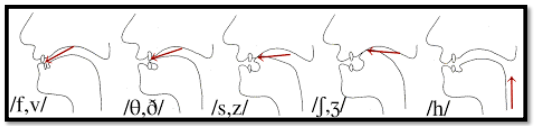
Source: <pt.quora.com>

 Conheça nossos planos