Questões de Concurso Sobre inglês

Foram encontradas 25.994 questões

Q4292313 Inglês

Leia o texto a seguir para responder à questão: 


        In the Star Trek universe, the audience occasionally gets a glimpse inside schools on the planet Vulcan. Young children stand alone in “capsules” surrounded by 360-degree digital screens. Adults walk around but do not talk to the students. Instead, each child interacts only with a sophisticated artificial intelligence (AI). Although this is not the reality in today’s classrooms on Earth, there are people for whom a vision of personalized learning conducted by artificial intelligence has considerable appeal.


        Individualized learning has its place. But decades of educational research also demonstrate that learning is essentially a social endeavor. Classrooms that privilege personalized AI chatbots overlook that fact.


        Generative AI is quickly coming to classrooms. If decades ago educators worldwide promoted the benefits of “One Laptop per Child”, today we may be approaching the model “one chatbot per child.” What does educational research tell us about what this model could mean for children’s learning and well-being?


        During much of the 20th century, learning was understood as mainly as a matter of individual cognition. A misconception, if compared to today’s comprehension of what learning involves. Scientists now understand that apparently individual processes – such as building new knowledge – are actually social interactions with the world around us. In classrooms, this suggests that opportunities for daily personal interaction can strongly support brain health and academic learning.


        Therefore, it is important to understand generative AI’s real-life impact on students.


        For example: How does it feel to learn from a chatbot, day after day? How will long-term use of AI affect children’s mental health? How does AI use affect children’s relationships with each other and with their teachers? What kinds of relationships might children form with the chatbots themselves? More broadly, we could also ask: What do we, as a society, actually want children to learn?


        Good teaching and learning blends social and individual processes. I see the beneficial application of any new technology in the classroom – AI or otherwise – as a way to build upon the social fabric of human learning. My concern about personalized AI tutors is how they might displace already infrequent opportunities for social interaction, further isolating children in classrooms.


(Niral Shah. www.converstion.com, 15.12.2025. Adaptado)

The text, mainly,
Alternativas
Q4291189 Inglês
Durante uma atividade de interação em Língua Inglesa, os alunos precisam negociar sentidos, expressar opiniões e chegar a um acordo para organizar uma situação proposta pelo professor. Nesse contexto, a atuação docente deve:
Alternativas
Q4291187 Inglês
Ao organizar uma proposta de produção textual em Língua Inglesa, o professor deve considerar que a escrita:
Alternativas
Q4285579 Inglês

Observe o infográfico:


50.jpg (731×508)


A leitura eficiente de gêneros textuais multimodais e de alta densidade informativa, como o infográfico apresentado, pressupõe a mobilização de diferentes estratégias de processamento de texto. Considerando a arquitetura visual do documento e as técnicas de skimming e scanning, assinale a alternativa que descreve corretamente a aplicação dessas estratégias na reconstrução dos sentidos do texto.

Alternativas
Q4285578 Inglês

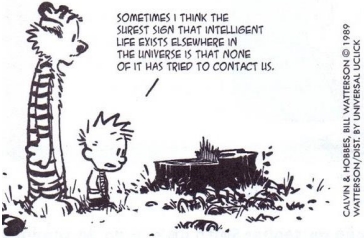
Observe a tirinha a seguir.


49.jpg (364×238)


A construção do humor na tirinha decorre da combinação entre recursos linguísticos e inferências do leitor. Nesse contexto, os advérbios sometimes e elsewhere contribuem para a organização do enunciado e para a construção de seu sentido. Assinale a alternativa correta. 

Alternativas
Q4285577 Inglês
 Leia o excerto a seguir:
"The local council approved the funding for the new library. ________, they slashed the budget for the municipal arts center; ________, the community's reaction was deeply divided." (Adaptado de notícias locais do portal BBC News).
Considerando as relações lógico-discursivas estabelecidas entre as orações, as lacunas devem ser preenchidas, respectivamente, por um conector de contraste e por um conector de consequência. Assinale a alternativa correta.
Alternativas
Q4285576 Inglês

Observe a peça publicitária a seguir.


47.jpg (310×309)


A publicidade emprega recursos verbais e visuais para construir um efeito persuasivo. Na expressão "a bigger bed", o emprego do adjetivo bigger desempenha papel relevante tanto na organização gramatical quanto na construção do sentido do anúncio. Assinale a alternativa correta.

Alternativas
Q4285575 Inglês

Observe as tirinhas da série Peanuts, de Charles Schulz:
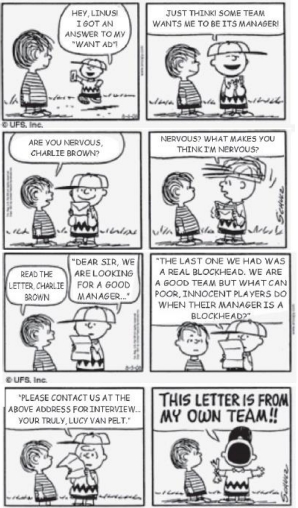

46.jpg (298×508)


A carta enviada por Lucy van Pelt a um anúncio de jornal apresenta uma crítica irônica à liderança de Charlie Brown. No início da leitura da carta, lê-se o seguinte trecho em discurso direto:


“Dear Sir, we are looking for a good manager... The last one we had was a real blockhead.”


Assinale a alternativa que apresenta a reescrita desse trecho em discurso indireto, mantendo a fidelidade ao texto original e aplicando rigorosamente as regras de concordância e sequência temporal da norma-padrão da língua inglesa.

Alternativas
Q4285574 Inglês
Leia a estrofe a seguir:
"A chilly Peace infests the Grass The Sun respectful lies – Not any Trance of industry These shadows scrutinize –" Whose Allies go no more astray For service or for Glee - But all mankind deliver here From whatsoever sea -
(DICKINSON, Emily. Poem 1444. In: The Complete Poems of Emily Dickinson. Boston: Little, Brown, 1924)
No primeiro verso, a poetisa constrói o sintagma nominal "A chilly Peace" que atua como sujeito da oração. Sob a perspectiva da análise sintática e do recurso estilístico empregado, assinale a alternativa correta.
Alternativas
Q4285573 Inglês
Leia o excerto abaixo:
"Whether weather be the frost Or the violence of the dog days I'm on waves, out being tossed Is there a line that I could just go cross?
/…/
Hey, December, guess I'm feeling unmoored Can't remember what I used to fight for I rewind the tape, but all it does is pause On the very moment all was lost Sending signals to be double-crossed"
(SWIFT, Taylor. evermore. In: evermore. Republic Records, 2020).
No trecho, a construção imagética reforça sentimentos de instabilidade emocional, perda de pertencimento e dificuldade de encontrar direção. Nesse contexto, a palavra unmoored expressa esse estado metafórico da narradora. Assinale a alternativa que apresenta, respectivamente, um sinônimo e um antônimo contextualmente adequados para unmoored.
Alternativas
Q4285572 Inglês
Considere o texto base:
"Neuroscientists have demonstrated that bilingualism sharpens the brain's executive functions. This cognitive advantage, however, is not static; it requires continuous linguistic exercise, ensuring that the former remains active well into old age." (Adaptado de Scientific American.)
No excerto, os elementos coesivos destacados retomam, respectivamente:
Alternativas
Q4285570 Inglês
Leia o excerto abaixo:
"The status of English as a lingua franca (ELF) means that the language can no longer be regarded as the exclusive property of its native speakers. Instead, it belongs to everyone who uses it. In Brazil, the National Common Curricular Base (BNCC) embraces this perspective to promote linguistic democracy and intercultural dialogue." (Adaptado de: British Council Brazil, Online Articles).
Considerando as reflexões do fragmento textual e os pressupostos teórico-metodológicos que orientam o componente curricular de Língua Inglesa na Base Nacional Comum Curricular (BNCC), assinale a alternativa que apresenta de forma correta uma implicação pedagógica decorrente da concepção do inglês como língua franca na Educação Básica.
Alternativas
Q4282307 Inglês
Leia o texto a seguir.

I had worked hard for nearly two years, for the sole purpose of infusing life into an inanimate body. For this I had deprived myself of rest and health. I had desired it with an ardour that far exceeded moderation; but now that I had finished, the beauty of the dream vanished, and breathless horror and disgust filled my heart.

SHELLEY, Mary. Frankenstein. New York: Signet Classics, 1965. p. 56.

A mudança de percepção do narrador em relação ao próprio experimento contribui para a construção de uma tensão associada  

Alternativas
Q4282306 Inglês
No ensino de Língua Inglesa, estratégias de leitura podem mobilizar diferentes formas de processamento textual, dependendo dos objetivos comunicativos envolvidos na atividade. Em situações em que o leitor busca compreender sentidos não explicitamente formulados no texto, a leitura exige
Alternativas
Q4282293 Inglês
Leia o Texto 4 para responder à questão.


Texto 4

New surgeon general’s advisory raises alarm about screen time risks for kids and teens


Too much screen use among kids and teens – including endless social media scrolling, nonstop texting and hours of video games – can be harmful, and it has become a public health concern in the United States, according to a surgeon general’s advisory released Wednesday.

Officials at the US Department of Health and Human Services collaborated on the new advisory, as there is no confirmed surgeon general within the Trump administration.

The advisory warns that exposure to screens often begins before a child’s first birthday and increases with age […].


Disponível em: https://edition.cnn.com/2026/05/20/health/surgeon-generaladvisory-screen-time-wellness. Acesso em: 20 mai. 2026.
No primeiro parágrafo do Texto 4, a inclusão de exemplos como “social media scrolling”, “texting” e “video games” cumpre a função discursiva de
Alternativas
Q4282292 Inglês
Leia o Texto 4 para responder à questão.


Texto 4

New surgeon general’s advisory raises alarm about screen time risks for kids and teens


Too much screen use among kids and teens – including endless social media scrolling, nonstop texting and hours of video games – can be harmful, and it has become a public health concern in the United States, according to a surgeon general’s advisory released Wednesday.

Officials at the US Department of Health and Human Services collaborated on the new advisory, as there is no confirmed surgeon general within the Trump administration.

The advisory warns that exposure to screens often begins before a child’s first birthday and increases with age […].


Disponível em: https://edition.cnn.com/2026/05/20/health/surgeon-generaladvisory-screen-time-wellness. Acesso em: 20 mai. 2026.
No primeiro parágrafo do Texto 4, o emprego da expressão “according to” estabelece uma relação de 
Alternativas
Q4282291 Inglês
Leia o Texto 4 para responder à questão.


Texto 4

New surgeon general’s advisory raises alarm about screen time risks for kids and teens


Too much screen use among kids and teens – including endless social media scrolling, nonstop texting and hours of video games – can be harmful, and it has become a public health concern in the United States, according to a surgeon general’s advisory released Wednesday.

Officials at the US Department of Health and Human Services collaborated on the new advisory, as there is no confirmed surgeon general within the Trump administration.

The advisory warns that exposure to screens often begins before a child’s first birthday and increases with age […].


Disponível em: https://edition.cnn.com/2026/05/20/health/surgeon-generaladvisory-screen-time-wellness. Acesso em: 20 mai. 2026.
O emprego da forma verbal “has become” cumpre uma função determinada na organização temporal dos fatos relatados. Esse tempo verbal é utilizado no fragmento porque
Alternativas
Q4282290 Inglês
No planejamento de atividades de Língua Inglesa para a educação básica, diferentes abordagens metodológicas atribuem funções distintas ao uso da oralidade em sala de aula. Em propostas voltadas à construção da competência comunicativa, a interação verbal assume papel relevante na negociação de sentidos e na utilização contextualizada da língua. Uma prática pedagógica alinhada a essa perspectiva consiste na 
Alternativas
Q4279250 Inglês
The Hidden History of Women Game Designers


Educational games were all the rage in the early ninteenth century. As the narrator of Sir Walter Scott's 1814 novel, Waverley, observed, "the history of England is now reduced to a game at cards, the problems of mathematics to puzzles and riddles." This bemusement reflects the burgeoning industry of instructional card, dice, and board games that sprang up in the late 1700s, partly in response to changing attitudes towards juvenile education outlined early on by the philosopher John Locke a century before.

Women at the time were, of course, generally barred from attending college and generally discouraged from the pursuit of learning beyond acquiring the skills of a governess. Yet the wave of enthusiasm for educational games nevertheless created an opportunity for some enterprising women—despite significant structural obstacles—to find an intellectual and creative outlet. Standout figures in the history of game design include Margaret Bryan, who directed a girl's school in Blackheath in southeastern London. A writer on science with a particular interest in astronomy, Bryan produced the boardgame Science in Sport, or the Pleasures of Astronomy in collaboration with the well-known game publisher John Wallis.

This game, a variation on the staple of the Game of the Goose (akin to Chutes and Ladders), requires players to spin a teetotum and race their pieces along the board. Most of the squares illustrate scientific phenomena, explained in an accompanying rule booklet, but some depict bad behavior, such as square six, which features "The County Gaol...for those who attend to the motion of Billiard Balls, more than to the motion of the Planets," and square twelve, which features "a blockhead." Landing on these meant losing a turn or worse, a player's place on the board.

Learning the rules of music theory by rote could seem tedious. But the subject itself—with its principles, prohibitions, and occasional exceptions—lent itself to gamification.

Other pioneering game designers include children's author Alicia Catherine Mant, who also published an astronomy-themed board game, while the ludic inventions of the poet and schoolteacher Elizabeth Rowse encompassed A Grammatical Game, in Rhyme, by a Lady (1802) and Mythological Amusement (1804).

Perhaps the most creative arena for female game designers, however, was music, and more specifically, music theory. Among the middle and upper classes, music was generally seen as a female accomplishment, and teaching its rudiments to children was typically left to mothers, governesses, or schoolmistresses. Learning the rules of music theory by rote could seem difficult and tedious. But the subject itself—with its principles, prohibitions, and occasional exceptions—lent itself remarkably well to gamification.

The nineteenth century's best-known musical game designer was the Edinburgh-based pianist and music teacher Anne Young. In 1801, she received a royal patent for a set of games intended to "render familiar and impress upon the memory, the fundamental principles of the science of music." The first British patent ever granted for a game, it was also the only one awarded that year to a female inventor, as David Ghere and Fred Amram have discovered. Two years after the launch of the Musical Games, Young, now the respectably married Mrs. Gunn, published a two-hundred-fifty page companion treatise entitled An Introduction to Music, which explained music theory fundamentals via instructions for playing her Musical Games. The treatise is organized as seven sections, each corresponding to a different set of games, and includes a number of optional variations, outlining twenty-two different games in total.

A handful of Young's Musical Games can be found in libraries, museums, and private collections today. They're luxury items: the boards were made of mahogany, while most of the nearly two hundred parts in each game—pins, dice, plates, and counters—were carved out of ivory and ebony. Priced originally at seven guineas, which was more than the annual wages of a laborer at the time, this game set would have been affordable only for the very wealthy.

Unlike earlier musical dice games, which were designed to encourage composition, Musical Games aimed to teach the rudiments of theory. Some of the games that can be played on the set involve racing, with players competing to move their pieces up and down various configurations on the board. Others involve the acquisition of points for correct answers, tallied with delicate ivory counters. A child following the treatise's progression of games would engage many of the fundamentals of music theory, ranging from notation through more advanced topics in harmony including chord resolution and modulation.

Young's invention haunted musical journals throughout the nineteenth century, resurfacing from time to time in newspaper queries, sometimes from readers intrigued by the warm endorsement it got from her husband John Gunn, a distinguished Scottish music pedagogue who wroteinstructional treatises. (In his writings, Gunn protested "without having ever previously heard the name of the ingenious and scientific Inventor, I was struck with the merits of these Games.") Interestingly, the Musical Games reappear nearly a century later in the essay "Games of Music," published in 1907 in the London-based magazine The Musical Times by Bertha Harrison, who was very likely the anti-suffrage activist also known as Ethel Bertha Harrison. Harrison was interested in music history—her earlier writings in The Musical Times had treated topics such as child prodigies and historic concert venues—but it was only in her essay on musical games that she revealed her political leanings.

In what may be one of the earliest pieces of ludomusicology, the study of music and games, Harrison's essay surveys the role of musical games from the eighteenth century to her present day. Although she ostensibly examines musical games in general, most of her article is dedicated to Young, whom she characterizes as a woman "possessed of an uncommon order of mind." Harrison describes Young's games as "so clever and ingenious, so full of nice detail, that all the music games of the present day seem poor in design and clumsy in execution in comparison with it."

However, the crux of Harrison's argument appears in a subsequent paragraph, where she struggles to put a positive spin on the striking disparity in the quality of games designed by women and men, writing that "is a curious and interesting fact that, among musical games, those invented by women are very complicated and extraordinarily full of detail, while those invented by men are, with very rare exceptions, quite simple and generally adaptations from other games. From this we may draw one of two conclusions: either that in this particular line woman has more originality than man, or that when she begins to invent, her mind becomes so engrossed with details as to lose sight of the main issue, and, in the words of the proverb, she cannot see the wood for the trees."

Conceding that women might be intrinsically better at musical game design, Harrison immediately undercuts this notion with the claim that women are overly concerned with details, and that is why their games tend to be more complex. The stereotype of the detail-oriented woman, as exemplified in this example, is a trope that, as Naomi Schor reminds us, has informed and limited understandings of female ability for centuries.

Harrison's critique notwithstanding, the nineteenth century saw many impressive music educational games invented by women. The 1851 Great Exhibition in London featured Gioco di Euterpe, (a game whose name invokes the Greek goddess of music) designed by Abelinde Prince and "intended to assist beginners in the knowledge of the relative value of musical characters, and to render them good timeists." The editor of The Girl's Own Book (1869) described a game developed by an anonymous female friend, entitled "Sir Samuel Semibreve," which taught sight-singing and could be ordered from a music shop in Middlesex.

Across the Atlantic, Abbie T. Hays, principal of a music school in Wichita, Kansas, filed a patent in 1895 for a "musical game device" designed to teach notation with pictures depicting the words spelled out by note-names (think B-A-G or B-E-E). Later that year, Sarah W. Featherstone, a schoolteacher in Toledo, Ohio, filed a patent for Nota Bene, which used a spinning wheel to teach children rhythm. And in 1897, the enterpreneurial Evelyn Fletcher of Toronto filed both Canadian and US patents for a Music Block Game. Her "Fletcher Music Method" would later be endorsed by luminaries such as John Philip Sousa and Hugo Riemann, and it was highly popular with schoolteachers. This is just a small selection of the names and devices that pop out of the archive. In my experience searching historical patent records, one is more likely to come across games designed by women than by men. Bertha Harrison seems to have gotten that right, at least!

Today, using gamification to teach music seems like a no-brainer. Indeed, many music videogames have become wildly popular—think instrument-based rhythm games like Guitar Hero. While these games generally teach synchronization, there are also plenty of music theory games available to try online, such as ToneGym, Solfege Story, or Chet — Ear Training. Although these modern creations would have been unthinkable a hundred years ago, these games are still part of an unusual—and unusually female—tradition.

https://daily.jstor.org/the-hidden-history-of-women-game-designers/
The article states that Anne Young's game set cost more than a laborer's annual wages and "would have been affordable only for the very wealthy." The modal construction expresses a conclusion based on historical economic evidence. Mark the alternative that presents the CORRECT interpretation of "would have been affordable." 
Alternativas
Q4279249 Inglês
The Hidden History of Women Game Designers


Educational games were all the rage in the early ninteenth century. As the narrator of Sir Walter Scott's 1814 novel, Waverley, observed, "the history of England is now reduced to a game at cards, the problems of mathematics to puzzles and riddles." This bemusement reflects the burgeoning industry of instructional card, dice, and board games that sprang up in the late 1700s, partly in response to changing attitudes towards juvenile education outlined early on by the philosopher John Locke a century before.

Women at the time were, of course, generally barred from attending college and generally discouraged from the pursuit of learning beyond acquiring the skills of a governess. Yet the wave of enthusiasm for educational games nevertheless created an opportunity for some enterprising women—despite significant structural obstacles—to find an intellectual and creative outlet. Standout figures in the history of game design include Margaret Bryan, who directed a girl's school in Blackheath in southeastern London. A writer on science with a particular interest in astronomy, Bryan produced the boardgame Science in Sport, or the Pleasures of Astronomy in collaboration with the well-known game publisher John Wallis.

This game, a variation on the staple of the Game of the Goose (akin to Chutes and Ladders), requires players to spin a teetotum and race their pieces along the board. Most of the squares illustrate scientific phenomena, explained in an accompanying rule booklet, but some depict bad behavior, such as square six, which features "The County Gaol...for those who attend to the motion of Billiard Balls, more than to the motion of the Planets," and square twelve, which features "a blockhead." Landing on these meant losing a turn or worse, a player's place on the board.

Learning the rules of music theory by rote could seem tedious. But the subject itself—with its principles, prohibitions, and occasional exceptions—lent itself to gamification.

Other pioneering game designers include children's author Alicia Catherine Mant, who also published an astronomy-themed board game, while the ludic inventions of the poet and schoolteacher Elizabeth Rowse encompassed A Grammatical Game, in Rhyme, by a Lady (1802) and Mythological Amusement (1804).

Perhaps the most creative arena for female game designers, however, was music, and more specifically, music theory. Among the middle and upper classes, music was generally seen as a female accomplishment, and teaching its rudiments to children was typically left to mothers, governesses, or schoolmistresses. Learning the rules of music theory by rote could seem difficult and tedious. But the subject itself—with its principles, prohibitions, and occasional exceptions—lent itself remarkably well to gamification.

The nineteenth century's best-known musical game designer was the Edinburgh-based pianist and music teacher Anne Young. In 1801, she received a royal patent for a set of games intended to "render familiar and impress upon the memory, the fundamental principles of the science of music." The first British patent ever granted for a game, it was also the only one awarded that year to a female inventor, as David Ghere and Fred Amram have discovered. Two years after the launch of the Musical Games, Young, now the respectably married Mrs. Gunn, published a two-hundred-fifty page companion treatise entitled An Introduction to Music, which explained music theory fundamentals via instructions for playing her Musical Games. The treatise is organized as seven sections, each corresponding to a different set of games, and includes a number of optional variations, outlining twenty-two different games in total.

A handful of Young's Musical Games can be found in libraries, museums, and private collections today. They're luxury items: the boards were made of mahogany, while most of the nearly two hundred parts in each game—pins, dice, plates, and counters—were carved out of ivory and ebony. Priced originally at seven guineas, which was more than the annual wages of a laborer at the time, this game set would have been affordable only for the very wealthy.

Unlike earlier musical dice games, which were designed to encourage composition, Musical Games aimed to teach the rudiments of theory. Some of the games that can be played on the set involve racing, with players competing to move their pieces up and down various configurations on the board. Others involve the acquisition of points for correct answers, tallied with delicate ivory counters. A child following the treatise's progression of games would engage many of the fundamentals of music theory, ranging from notation through more advanced topics in harmony including chord resolution and modulation.

Young's invention haunted musical journals throughout the nineteenth century, resurfacing from time to time in newspaper queries, sometimes from readers intrigued by the warm endorsement it got from her husband John Gunn, a distinguished Scottish music pedagogue who wroteinstructional treatises. (In his writings, Gunn protested "without having ever previously heard the name of the ingenious and scientific Inventor, I was struck with the merits of these Games.") Interestingly, the Musical Games reappear nearly a century later in the essay "Games of Music," published in 1907 in the London-based magazine The Musical Times by Bertha Harrison, who was very likely the anti-suffrage activist also known as Ethel Bertha Harrison. Harrison was interested in music history—her earlier writings in The Musical Times had treated topics such as child prodigies and historic concert venues—but it was only in her essay on musical games that she revealed her political leanings.

In what may be one of the earliest pieces of ludomusicology, the study of music and games, Harrison's essay surveys the role of musical games from the eighteenth century to her present day. Although she ostensibly examines musical games in general, most of her article is dedicated to Young, whom she characterizes as a woman "possessed of an uncommon order of mind." Harrison describes Young's games as "so clever and ingenious, so full of nice detail, that all the music games of the present day seem poor in design and clumsy in execution in comparison with it."

However, the crux of Harrison's argument appears in a subsequent paragraph, where she struggles to put a positive spin on the striking disparity in the quality of games designed by women and men, writing that "is a curious and interesting fact that, among musical games, those invented by women are very complicated and extraordinarily full of detail, while those invented by men are, with very rare exceptions, quite simple and generally adaptations from other games. From this we may draw one of two conclusions: either that in this particular line woman has more originality than man, or that when she begins to invent, her mind becomes so engrossed with details as to lose sight of the main issue, and, in the words of the proverb, she cannot see the wood for the trees."

Conceding that women might be intrinsically better at musical game design, Harrison immediately undercuts this notion with the claim that women are overly concerned with details, and that is why their games tend to be more complex. The stereotype of the detail-oriented woman, as exemplified in this example, is a trope that, as Naomi Schor reminds us, has informed and limited understandings of female ability for centuries.

Harrison's critique notwithstanding, the nineteenth century saw many impressive music educational games invented by women. The 1851 Great Exhibition in London featured Gioco di Euterpe, (a game whose name invokes the Greek goddess of music) designed by Abelinde Prince and "intended to assist beginners in the knowledge of the relative value of musical characters, and to render them good timeists." The editor of The Girl's Own Book (1869) described a game developed by an anonymous female friend, entitled "Sir Samuel Semibreve," which taught sight-singing and could be ordered from a music shop in Middlesex.

Across the Atlantic, Abbie T. Hays, principal of a music school in Wichita, Kansas, filed a patent in 1895 for a "musical game device" designed to teach notation with pictures depicting the words spelled out by note-names (think B-A-G or B-E-E). Later that year, Sarah W. Featherstone, a schoolteacher in Toledo, Ohio, filed a patent for Nota Bene, which used a spinning wheel to teach children rhythm. And in 1897, the enterpreneurial Evelyn Fletcher of Toronto filed both Canadian and US patents for a Music Block Game. Her "Fletcher Music Method" would later be endorsed by luminaries such as John Philip Sousa and Hugo Riemann, and it was highly popular with schoolteachers. This is just a small selection of the names and devices that pop out of the archive. In my experience searching historical patent records, one is more likely to come across games designed by women than by men. Bertha Harrison seems to have gotten that right, at least!

Today, using gamification to teach music seems like a no-brainer. Indeed, many music videogames have become wildly popular—think instrument-based rhythm games like Guitar Hero. While these games generally teach synchronization, there are also plenty of music theory games available to try online, such as ToneGym, Solfege Story, or Chet — Ear Training. Although these modern creations would have been unthinkable a hundred years ago, these games are still part of an unusual—and unusually female—tradition.

https://daily.jstor.org/the-hidden-history-of-women-game-designers/
The article explains that an industry of instructional games "sprang up" in the late eighteenth century. The verb phrase describes the appearance of a new commercial and educational activity in response to changing ideas about childhood education. Mark the alternative that replaces "sprang up" without changing the meaning of the passage. 
Alternativas
Respostas
421: B
422: C
423: D
424: A
425: A
426: E
427: D
428: C
429: B
430: D
431: A
432: C
433: D
434: C
435: D
436: B
437: C
438: A
439: C
440: B