Questões de Concurso Comentadas sobre inglês
Foram encontradas 19.377 questões


Ano: 2010
Banca:
FCC
Órgão:
AL-SP
Provas:
FCC - 2010 - AL-SP - Agente Técnico Legislativo Especializado - Tecnologia da Informação
|
FCC - 2010 - AL-SP - Agente Técnico Legislativo Especializado - Análise de Infraestrutura de Redes |
FCC - 2010 - AL-SP - Agente Técnico Legislativo Especializado - Segurança de Redes |
FCC - 2010 - AL-SP - Agente Técnico Legislativo Especializado - Admin e Arquitetura de Dados |
Q40371
Inglês
Texto associado
Old Tray, New Tricks: Windows 7's Taskbar and window
management tweaks are nice. But its changes to the
System Tray - aka the Notification Area - have a huge
positive effect.
Changes in Windows 7 transform the System Tray from
an intrusive eyesore (in Windows Vista) into a useful set of
shortcuts and other controls.
In the past, no feature of Windows packed more
frustration per square inch than the System Tray. It quickly grew
dense with applets that users did not want in the first place, and
many of the uninvited guests employed word balloons and
other intrusive methods to alert users to uninteresting facts at
inopportune moments. At their worst, System Tray applets
behaved like belligerent squatters, and Windows did little to put
users [PARTICLE] in charge.
In Windows 7, applets can't pester you unbidden
because software installers can't dump them into the System
Tray. Instead, applets land in a holding pen that appears only
when you click it, a much-improved version of the overflow area
used in previous incarnations of the Tray. Applets in the pen
can't float word balloons at you unless you permit them to do so.
In Windows 7, applets can't pester you unbidden
because software installers can't dump them into the System
Tray. Instead, applets land in a holding pen that appears only
when you click it, a much-improved version of the overflow area
used in previous incarnations of the Tray. Applets in the pen
can't float word balloons at you unless you permit them to do so.
It's a cinch to drag them into the System Tray or out of it again,
so you enjoy complete control over which applets reside there.
More good news: Windows 7 largely dispenses with the
onslaught of word-balloon warnings from the OS about
troubleshooting issues, potential security problems, and the like.
A new area called Action Center - a revamped version of Vista's
Security Center - queues up such alerts so you can deal with
them at your convenience. Action Center does issue
notifications of its own from the System Tray, but you can shut
these off if you don't want them pestering you.
All of this helps make Windows 7 the least distracting,
least intrusive Microsoft OS in a very long time. It's a giant step
forward from the days when Windows thought nothing of
interrupting your work to inform you that it had detected unused
icons on your desktop.
(Adapted from
http://www.pcworld.com/article/172602/windows_7_review.html)
management tweaks are nice. But its changes to the
System Tray - aka the Notification Area - have a huge
positive effect.
Changes in Windows 7 transform the System Tray from
an intrusive eyesore (in Windows Vista) into a useful set of
shortcuts and other controls.
In the past, no feature of Windows packed more
frustration per square inch than the System Tray. It quickly grew
dense with applets that users did not want in the first place, and
many of the uninvited guests employed word balloons and
other intrusive methods to alert users to uninteresting facts at
inopportune moments. At their worst, System Tray applets
behaved like belligerent squatters, and Windows did little to put
users [PARTICLE] in charge.
In Windows 7, applets can't pester you unbidden
because software installers can't dump them into the System
Tray. Instead, applets land in a holding pen that appears only
when you click it, a much-improved version of the overflow area
used in previous incarnations of the Tray. Applets in the pen
can't float word balloons at you unless you permit them to do so.
In Windows 7, applets can't pester you unbidden
because software installers can't dump them into the System
Tray. Instead, applets land in a holding pen that appears only
when you click it, a much-improved version of the overflow area
used in previous incarnations of the Tray. Applets in the pen
can't float word balloons at you unless you permit them to do so.
It's a cinch to drag them into the System Tray or out of it again,
so you enjoy complete control over which applets reside there.
More good news: Windows 7 largely dispenses with the
onslaught of word-balloon warnings from the OS about
troubleshooting issues, potential security problems, and the like.
A new area called Action Center - a revamped version of Vista's
Security Center - queues up such alerts so you can deal with
them at your convenience. Action Center does issue
notifications of its own from the System Tray, but you can shut
these off if you don't want them pestering you.
All of this helps make Windows 7 the least distracting,
least intrusive Microsoft OS in a very long time. It's a giant step
forward from the days when Windows thought nothing of
interrupting your work to inform you that it had detected unused
icons on your desktop.
(Adapted from
http://www.pcworld.com/article/172602/windows_7_review.html)
In the text, a cinch means
Ano: 2010
Banca:
FCC
Órgão:
AL-SP
Provas:
FCC - 2010 - AL-SP - Agente Técnico Legislativo Especializado - Tecnologia da Informação
|
FCC - 2010 - AL-SP - Agente Técnico Legislativo Especializado - Análise de Infraestrutura de Redes |
FCC - 2010 - AL-SP - Agente Técnico Legislativo Especializado - Segurança de Redes |
FCC - 2010 - AL-SP - Agente Técnico Legislativo Especializado - Admin e Arquitetura de Dados |
Q40370
Inglês
Texto associado
Old Tray, New Tricks: Windows 7's Taskbar and window
management tweaks are nice. But its changes to the
System Tray - aka the Notification Area - have a huge
positive effect.
Changes in Windows 7 transform the System Tray from
an intrusive eyesore (in Windows Vista) into a useful set of
shortcuts and other controls.
In the past, no feature of Windows packed more
frustration per square inch than the System Tray. It quickly grew
dense with applets that users did not want in the first place, and
many of the uninvited guests employed word balloons and
other intrusive methods to alert users to uninteresting facts at
inopportune moments. At their worst, System Tray applets
behaved like belligerent squatters, and Windows did little to put
users [PARTICLE] in charge.
In Windows 7, applets can't pester you unbidden
because software installers can't dump them into the System
Tray. Instead, applets land in a holding pen that appears only
when you click it, a much-improved version of the overflow area
used in previous incarnations of the Tray. Applets in the pen
can't float word balloons at you unless you permit them to do so.
In Windows 7, applets can't pester you unbidden
because software installers can't dump them into the System
Tray. Instead, applets land in a holding pen that appears only
when you click it, a much-improved version of the overflow area
used in previous incarnations of the Tray. Applets in the pen
can't float word balloons at you unless you permit them to do so.
It's a cinch to drag them into the System Tray or out of it again,
so you enjoy complete control over which applets reside there.
More good news: Windows 7 largely dispenses with the
onslaught of word-balloon warnings from the OS about
troubleshooting issues, potential security problems, and the like.
A new area called Action Center - a revamped version of Vista's
Security Center - queues up such alerts so you can deal with
them at your convenience. Action Center does issue
notifications of its own from the System Tray, but you can shut
these off if you don't want them pestering you.
All of this helps make Windows 7 the least distracting,
least intrusive Microsoft OS in a very long time. It's a giant step
forward from the days when Windows thought nothing of
interrupting your work to inform you that it had detected unused
icons on your desktop.
(Adapted from
http://www.pcworld.com/article/172602/windows_7_review.html)
management tweaks are nice. But its changes to the
System Tray - aka the Notification Area - have a huge
positive effect.
Changes in Windows 7 transform the System Tray from
an intrusive eyesore (in Windows Vista) into a useful set of
shortcuts and other controls.
In the past, no feature of Windows packed more
frustration per square inch than the System Tray. It quickly grew
dense with applets that users did not want in the first place, and
many of the uninvited guests employed word balloons and
other intrusive methods to alert users to uninteresting facts at
inopportune moments. At their worst, System Tray applets
behaved like belligerent squatters, and Windows did little to put
users [PARTICLE] in charge.
In Windows 7, applets can't pester you unbidden
because software installers can't dump them into the System
Tray. Instead, applets land in a holding pen that appears only
when you click it, a much-improved version of the overflow area
used in previous incarnations of the Tray. Applets in the pen
can't float word balloons at you unless you permit them to do so.
In Windows 7, applets can't pester you unbidden
because software installers can't dump them into the System
Tray. Instead, applets land in a holding pen that appears only
when you click it, a much-improved version of the overflow area
used in previous incarnations of the Tray. Applets in the pen
can't float word balloons at you unless you permit them to do so.
It's a cinch to drag them into the System Tray or out of it again,
so you enjoy complete control over which applets reside there.
More good news: Windows 7 largely dispenses with the
onslaught of word-balloon warnings from the OS about
troubleshooting issues, potential security problems, and the like.
A new area called Action Center - a revamped version of Vista's
Security Center - queues up such alerts so you can deal with
them at your convenience. Action Center does issue
notifications of its own from the System Tray, but you can shut
these off if you don't want them pestering you.
All of this helps make Windows 7 the least distracting,
least intrusive Microsoft OS in a very long time. It's a giant step
forward from the days when Windows thought nothing of
interrupting your work to inform you that it had detected unused
icons on your desktop.
(Adapted from
http://www.pcworld.com/article/172602/windows_7_review.html)
The underlined sentence Applets in the pen can't float word balloons at you unless you permit them to do so can be paraphrased as "Applets in the pen
Ano: 2010
Banca:
FCC
Órgão:
AL-SP
Provas:
FCC - 2010 - AL-SP - Agente Técnico Legislativo Especializado - Tecnologia da Informação
|
FCC - 2010 - AL-SP - Agente Técnico Legislativo Especializado - Análise de Infraestrutura de Redes |
FCC - 2010 - AL-SP - Agente Técnico Legislativo Especializado - Segurança de Redes |
FCC - 2010 - AL-SP - Agente Técnico Legislativo Especializado - Admin e Arquitetura de Dados |
Q40369
Inglês
Texto associado
Old Tray, New Tricks: Windows 7's Taskbar and window
management tweaks are nice. But its changes to the
System Tray - aka the Notification Area - have a huge
positive effect.
Changes in Windows 7 transform the System Tray from
an intrusive eyesore (in Windows Vista) into a useful set of
shortcuts and other controls.
In the past, no feature of Windows packed more
frustration per square inch than the System Tray. It quickly grew
dense with applets that users did not want in the first place, and
many of the uninvited guests employed word balloons and
other intrusive methods to alert users to uninteresting facts at
inopportune moments. At their worst, System Tray applets
behaved like belligerent squatters, and Windows did little to put
users [PARTICLE] in charge.
In Windows 7, applets can't pester you unbidden
because software installers can't dump them into the System
Tray. Instead, applets land in a holding pen that appears only
when you click it, a much-improved version of the overflow area
used in previous incarnations of the Tray. Applets in the pen
can't float word balloons at you unless you permit them to do so.
In Windows 7, applets can't pester you unbidden
because software installers can't dump them into the System
Tray. Instead, applets land in a holding pen that appears only
when you click it, a much-improved version of the overflow area
used in previous incarnations of the Tray. Applets in the pen
can't float word balloons at you unless you permit them to do so.
It's a cinch to drag them into the System Tray or out of it again,
so you enjoy complete control over which applets reside there.
More good news: Windows 7 largely dispenses with the
onslaught of word-balloon warnings from the OS about
troubleshooting issues, potential security problems, and the like.
A new area called Action Center - a revamped version of Vista's
Security Center - queues up such alerts so you can deal with
them at your convenience. Action Center does issue
notifications of its own from the System Tray, but you can shut
these off if you don't want them pestering you.
All of this helps make Windows 7 the least distracting,
least intrusive Microsoft OS in a very long time. It's a giant step
forward from the days when Windows thought nothing of
interrupting your work to inform you that it had detected unused
icons on your desktop.
(Adapted from
http://www.pcworld.com/article/172602/windows_7_review.html)
management tweaks are nice. But its changes to the
System Tray - aka the Notification Area - have a huge
positive effect.
Changes in Windows 7 transform the System Tray from
an intrusive eyesore (in Windows Vista) into a useful set of
shortcuts and other controls.
In the past, no feature of Windows packed more
frustration per square inch than the System Tray. It quickly grew
dense with applets that users did not want in the first place, and
many of the uninvited guests employed word balloons and
other intrusive methods to alert users to uninteresting facts at
inopportune moments. At their worst, System Tray applets
behaved like belligerent squatters, and Windows did little to put
users [PARTICLE] in charge.
In Windows 7, applets can't pester you unbidden
because software installers can't dump them into the System
Tray. Instead, applets land in a holding pen that appears only
when you click it, a much-improved version of the overflow area
used in previous incarnations of the Tray. Applets in the pen
can't float word balloons at you unless you permit them to do so.
In Windows 7, applets can't pester you unbidden
because software installers can't dump them into the System
Tray. Instead, applets land in a holding pen that appears only
when you click it, a much-improved version of the overflow area
used in previous incarnations of the Tray. Applets in the pen
can't float word balloons at you unless you permit them to do so.
It's a cinch to drag them into the System Tray or out of it again,
so you enjoy complete control over which applets reside there.
More good news: Windows 7 largely dispenses with the
onslaught of word-balloon warnings from the OS about
troubleshooting issues, potential security problems, and the like.
A new area called Action Center - a revamped version of Vista's
Security Center - queues up such alerts so you can deal with
them at your convenience. Action Center does issue
notifications of its own from the System Tray, but you can shut
these off if you don't want them pestering you.
All of this helps make Windows 7 the least distracting,
least intrusive Microsoft OS in a very long time. It's a giant step
forward from the days when Windows thought nothing of
interrupting your work to inform you that it had detected unused
icons on your desktop.
(Adapted from
http://www.pcworld.com/article/172602/windows_7_review.html)
In the text, the meaning of pen is
Ano: 2010
Banca:
FCC
Órgão:
AL-SP
Provas:
FCC - 2010 - AL-SP - Agente Técnico Legislativo Especializado - Tecnologia da Informação
|
FCC - 2010 - AL-SP - Agente Técnico Legislativo Especializado - Análise de Infraestrutura de Redes |
FCC - 2010 - AL-SP - Agente Técnico Legislativo Especializado - Segurança de Redes |
FCC - 2010 - AL-SP - Agente Técnico Legislativo Especializado - Admin e Arquitetura de Dados |
Q40368
Inglês
Texto associado
Old Tray, New Tricks: Windows 7's Taskbar and window
management tweaks are nice. But its changes to the
System Tray - aka the Notification Area - have a huge
positive effect.
Changes in Windows 7 transform the System Tray from
an intrusive eyesore (in Windows Vista) into a useful set of
shortcuts and other controls.
In the past, no feature of Windows packed more
frustration per square inch than the System Tray. It quickly grew
dense with applets that users did not want in the first place, and
many of the uninvited guests employed word balloons and
other intrusive methods to alert users to uninteresting facts at
inopportune moments. At their worst, System Tray applets
behaved like belligerent squatters, and Windows did little to put
users [PARTICLE] in charge.
In Windows 7, applets can't pester you unbidden
because software installers can't dump them into the System
Tray. Instead, applets land in a holding pen that appears only
when you click it, a much-improved version of the overflow area
used in previous incarnations of the Tray. Applets in the pen
can't float word balloons at you unless you permit them to do so.
In Windows 7, applets can't pester you unbidden
because software installers can't dump them into the System
Tray. Instead, applets land in a holding pen that appears only
when you click it, a much-improved version of the overflow area
used in previous incarnations of the Tray. Applets in the pen
can't float word balloons at you unless you permit them to do so.
It's a cinch to drag them into the System Tray or out of it again,
so you enjoy complete control over which applets reside there.
More good news: Windows 7 largely dispenses with the
onslaught of word-balloon warnings from the OS about
troubleshooting issues, potential security problems, and the like.
A new area called Action Center - a revamped version of Vista's
Security Center - queues up such alerts so you can deal with
them at your convenience. Action Center does issue
notifications of its own from the System Tray, but you can shut
these off if you don't want them pestering you.
All of this helps make Windows 7 the least distracting,
least intrusive Microsoft OS in a very long time. It's a giant step
forward from the days when Windows thought nothing of
interrupting your work to inform you that it had detected unused
icons on your desktop.
(Adapted from
http://www.pcworld.com/article/172602/windows_7_review.html)
management tweaks are nice. But its changes to the
System Tray - aka the Notification Area - have a huge
positive effect.
Changes in Windows 7 transform the System Tray from
an intrusive eyesore (in Windows Vista) into a useful set of
shortcuts and other controls.
In the past, no feature of Windows packed more
frustration per square inch than the System Tray. It quickly grew
dense with applets that users did not want in the first place, and
many of the uninvited guests employed word balloons and
other intrusive methods to alert users to uninteresting facts at
inopportune moments. At their worst, System Tray applets
behaved like belligerent squatters, and Windows did little to put
users [PARTICLE] in charge.
In Windows 7, applets can't pester you unbidden
because software installers can't dump them into the System
Tray. Instead, applets land in a holding pen that appears only
when you click it, a much-improved version of the overflow area
used in previous incarnations of the Tray. Applets in the pen
can't float word balloons at you unless you permit them to do so.
In Windows 7, applets can't pester you unbidden
because software installers can't dump them into the System
Tray. Instead, applets land in a holding pen that appears only
when you click it, a much-improved version of the overflow area
used in previous incarnations of the Tray. Applets in the pen
can't float word balloons at you unless you permit them to do so.
It's a cinch to drag them into the System Tray or out of it again,
so you enjoy complete control over which applets reside there.
More good news: Windows 7 largely dispenses with the
onslaught of word-balloon warnings from the OS about
troubleshooting issues, potential security problems, and the like.
A new area called Action Center - a revamped version of Vista's
Security Center - queues up such alerts so you can deal with
them at your convenience. Action Center does issue
notifications of its own from the System Tray, but you can shut
these off if you don't want them pestering you.
All of this helps make Windows 7 the least distracting,
least intrusive Microsoft OS in a very long time. It's a giant step
forward from the days when Windows thought nothing of
interrupting your work to inform you that it had detected unused
icons on your desktop.
(Adapted from
http://www.pcworld.com/article/172602/windows_7_review.html)
In the text, uninvited guests refers to
Ano: 2010
Banca:
FCC
Órgão:
AL-SP
Provas:
FCC - 2010 - AL-SP - Agente Técnico Legislativo Especializado - Tecnologia da Informação
|
FCC - 2010 - AL-SP - Agente Técnico Legislativo Especializado - Análise de Infraestrutura de Redes |
FCC - 2010 - AL-SP - Agente Técnico Legislativo Especializado - Segurança de Redes |
FCC - 2010 - AL-SP - Agente Técnico Legislativo Especializado - Admin e Arquitetura de Dados |
Q40367
Inglês
Texto associado
Old Tray, New Tricks: Windows 7's Taskbar and window
management tweaks are nice. But its changes to the
System Tray - aka the Notification Area - have a huge
positive effect.
Changes in Windows 7 transform the System Tray from
an intrusive eyesore (in Windows Vista) into a useful set of
shortcuts and other controls.
In the past, no feature of Windows packed more
frustration per square inch than the System Tray. It quickly grew
dense with applets that users did not want in the first place, and
many of the uninvited guests employed word balloons and
other intrusive methods to alert users to uninteresting facts at
inopportune moments. At their worst, System Tray applets
behaved like belligerent squatters, and Windows did little to put
users [PARTICLE] in charge.
In Windows 7, applets can't pester you unbidden
because software installers can't dump them into the System
Tray. Instead, applets land in a holding pen that appears only
when you click it, a much-improved version of the overflow area
used in previous incarnations of the Tray. Applets in the pen
can't float word balloons at you unless you permit them to do so.
In Windows 7, applets can't pester you unbidden
because software installers can't dump them into the System
Tray. Instead, applets land in a holding pen that appears only
when you click it, a much-improved version of the overflow area
used in previous incarnations of the Tray. Applets in the pen
can't float word balloons at you unless you permit them to do so.
It's a cinch to drag them into the System Tray or out of it again,
so you enjoy complete control over which applets reside there.
More good news: Windows 7 largely dispenses with the
onslaught of word-balloon warnings from the OS about
troubleshooting issues, potential security problems, and the like.
A new area called Action Center - a revamped version of Vista's
Security Center - queues up such alerts so you can deal with
them at your convenience. Action Center does issue
notifications of its own from the System Tray, but you can shut
these off if you don't want them pestering you.
All of this helps make Windows 7 the least distracting,
least intrusive Microsoft OS in a very long time. It's a giant step
forward from the days when Windows thought nothing of
interrupting your work to inform you that it had detected unused
icons on your desktop.
(Adapted from
http://www.pcworld.com/article/172602/windows_7_review.html)
management tweaks are nice. But its changes to the
System Tray - aka the Notification Area - have a huge
positive effect.
Changes in Windows 7 transform the System Tray from
an intrusive eyesore (in Windows Vista) into a useful set of
shortcuts and other controls.
In the past, no feature of Windows packed more
frustration per square inch than the System Tray. It quickly grew
dense with applets that users did not want in the first place, and
many of the uninvited guests employed word balloons and
other intrusive methods to alert users to uninteresting facts at
inopportune moments. At their worst, System Tray applets
behaved like belligerent squatters, and Windows did little to put
users [PARTICLE] in charge.
In Windows 7, applets can't pester you unbidden
because software installers can't dump them into the System
Tray. Instead, applets land in a holding pen that appears only
when you click it, a much-improved version of the overflow area
used in previous incarnations of the Tray. Applets in the pen
can't float word balloons at you unless you permit them to do so.
In Windows 7, applets can't pester you unbidden
because software installers can't dump them into the System
Tray. Instead, applets land in a holding pen that appears only
when you click it, a much-improved version of the overflow area
used in previous incarnations of the Tray. Applets in the pen
can't float word balloons at you unless you permit them to do so.
It's a cinch to drag them into the System Tray or out of it again,
so you enjoy complete control over which applets reside there.
More good news: Windows 7 largely dispenses with the
onslaught of word-balloon warnings from the OS about
troubleshooting issues, potential security problems, and the like.
A new area called Action Center - a revamped version of Vista's
Security Center - queues up such alerts so you can deal with
them at your convenience. Action Center does issue
notifications of its own from the System Tray, but you can shut
these off if you don't want them pestering you.
All of this helps make Windows 7 the least distracting,
least intrusive Microsoft OS in a very long time. It's a giant step
forward from the days when Windows thought nothing of
interrupting your work to inform you that it had detected unused
icons on your desktop.
(Adapted from
http://www.pcworld.com/article/172602/windows_7_review.html)
The alternative which correctly replaces [PARTICLE] is
Ano: 2010
Banca:
FCC
Órgão:
TRT - 20ª REGIÃO (SE)
Prova:
FCC - 2010 - TRT - 20ª REGIÃO (SE) - Analista Judiciário - Tecnologia da Informação |
Q39638
Inglês
Texto associado
WINDOWS 7 REVIEW
Windows 7 gets the basics right. Here's what you need to know
about the new OS.
Harry McCracken, PC World
Monday, October 19, 2009 2:00 pm
What if a new version of Windows didn't try to dazzle
you? What if, instead, it tried to disappear except when you
needed it? Such an operating system would dispense with glitzy
effects in favor of low-key, useful new features. Rather than
pelting you with alerts, warnings, and requests, it would try to
stay out of your face. And if any bundled applications weren't
essential, it would dump 'em.
It's not a what-if scenario. Windows 7, set to arrive on
new PCs and as a shrinkwrapped upgrade on October 22, has a
minimalist feel and attempts to fix annoyances old and new. In
contrast, Windows Vista offered a flashy new interface, but its
poor performance, compatibility gotchas, and lack of compelling
features made some folks regret upgrading and others refuse to
leave Windows XP.
Windows 7 is hardly flawless. Some features feel
unfinished; others won't realize their potential without heavy
lifting by third parties. And some long-standing annoyances
remain intact. But overall, the final shipping version I test-drove
appears to be the worthy successor to Windows XP that Vista
never was.
(Adapted from
http://www.pcworld.com/article/172602/windows_7_review.html
Windows 7 gets the basics right. Here's what you need to know
about the new OS.
Harry McCracken, PC World
Monday, October 19, 2009 2:00 pm
What if a new version of Windows didn't try to dazzle
you? What if, instead, it tried to disappear except when you
needed it? Such an operating system would dispense with glitzy
effects in favor of low-key, useful new features. Rather than
pelting you with alerts, warnings, and requests, it would try to
stay out of your face. And if any bundled applications weren't
essential, it would dump 'em.
It's not a what-if scenario. Windows 7, set to arrive on
new PCs and as a shrinkwrapped upgrade on October 22, has a
minimalist feel and attempts to fix annoyances old and new. In
contrast, Windows Vista offered a flashy new interface, but its
poor performance, compatibility gotchas, and lack of compelling
features made some folks regret upgrading and others refuse to
leave Windows XP.
Windows 7 is hardly flawless. Some features feel
unfinished; others won't realize their potential without heavy
lifting by third parties. And some long-standing annoyances
remain intact. But overall, the final shipping version I test-drove
appears to be the worthy successor to Windows XP that Vista
never was.
(Adapted from
http://www.pcworld.com/article/172602/windows_7_review.html
De acordo com o texto,
Ano: 2010
Banca:
FCC
Órgão:
TRT - 20ª REGIÃO (SE)
Prova:
FCC - 2010 - TRT - 20ª REGIÃO (SE) - Analista Judiciário - Tecnologia da Informação |
Q39637
Inglês
Texto associado
WINDOWS 7 REVIEW
Windows 7 gets the basics right. Here's what you need to know
about the new OS.
Harry McCracken, PC World
Monday, October 19, 2009 2:00 pm
What if a new version of Windows didn't try to dazzle
you? What if, instead, it tried to disappear except when you
needed it? Such an operating system would dispense with glitzy
effects in favor of low-key, useful new features. Rather than
pelting you with alerts, warnings, and requests, it would try to
stay out of your face. And if any bundled applications weren't
essential, it would dump 'em.
It's not a what-if scenario. Windows 7, set to arrive on
new PCs and as a shrinkwrapped upgrade on October 22, has a
minimalist feel and attempts to fix annoyances old and new. In
contrast, Windows Vista offered a flashy new interface, but its
poor performance, compatibility gotchas, and lack of compelling
features made some folks regret upgrading and others refuse to
leave Windows XP.
Windows 7 is hardly flawless. Some features feel
unfinished; others won't realize their potential without heavy
lifting by third parties. And some long-standing annoyances
remain intact. But overall, the final shipping version I test-drove
appears to be the worthy successor to Windows XP that Vista
never was.
(Adapted from
http://www.pcworld.com/article/172602/windows_7_review.html
Windows 7 gets the basics right. Here's what you need to know
about the new OS.
Harry McCracken, PC World
Monday, October 19, 2009 2:00 pm
What if a new version of Windows didn't try to dazzle
you? What if, instead, it tried to disappear except when you
needed it? Such an operating system would dispense with glitzy
effects in favor of low-key, useful new features. Rather than
pelting you with alerts, warnings, and requests, it would try to
stay out of your face. And if any bundled applications weren't
essential, it would dump 'em.
It's not a what-if scenario. Windows 7, set to arrive on
new PCs and as a shrinkwrapped upgrade on October 22, has a
minimalist feel and attempts to fix annoyances old and new. In
contrast, Windows Vista offered a flashy new interface, but its
poor performance, compatibility gotchas, and lack of compelling
features made some folks regret upgrading and others refuse to
leave Windows XP.
Windows 7 is hardly flawless. Some features feel
unfinished; others won't realize their potential without heavy
lifting by third parties. And some long-standing annoyances
remain intact. But overall, the final shipping version I test-drove
appears to be the worthy successor to Windows XP that Vista
never was.
(Adapted from
http://www.pcworld.com/article/172602/windows_7_review.html
Segundo o texto, o Windows 7
Ano: 2010
Banca:
FCC
Órgão:
TRT - 20ª REGIÃO (SE)
Prova:
FCC - 2010 - TRT - 20ª REGIÃO (SE) - Analista Judiciário - Tecnologia da Informação |
Q39636
Inglês
Texto associado
WINDOWS 7 REVIEW
Windows 7 gets the basics right. Here's what you need to know
about the new OS.
Harry McCracken, PC World
Monday, October 19, 2009 2:00 pm
What if a new version of Windows didn't try to dazzle
you? What if, instead, it tried to disappear except when you
needed it? Such an operating system would dispense with glitzy
effects in favor of low-key, useful new features. Rather than
pelting you with alerts, warnings, and requests, it would try to
stay out of your face. And if any bundled applications weren't
essential, it would dump 'em.
It's not a what-if scenario. Windows 7, set to arrive on
new PCs and as a shrinkwrapped upgrade on October 22, has a
minimalist feel and attempts to fix annoyances old and new. In
contrast, Windows Vista offered a flashy new interface, but its
poor performance, compatibility gotchas, and lack of compelling
features made some folks regret upgrading and others refuse to
leave Windows XP.
Windows 7 is hardly flawless. Some features feel
unfinished; others won't realize their potential without heavy
lifting by third parties. And some long-standing annoyances
remain intact. But overall, the final shipping version I test-drove
appears to be the worthy successor to Windows XP that Vista
never was.
(Adapted from
http://www.pcworld.com/article/172602/windows_7_review.html
Windows 7 gets the basics right. Here's what you need to know
about the new OS.
Harry McCracken, PC World
Monday, October 19, 2009 2:00 pm
What if a new version of Windows didn't try to dazzle
you? What if, instead, it tried to disappear except when you
needed it? Such an operating system would dispense with glitzy
effects in favor of low-key, useful new features. Rather than
pelting you with alerts, warnings, and requests, it would try to
stay out of your face. And if any bundled applications weren't
essential, it would dump 'em.
It's not a what-if scenario. Windows 7, set to arrive on
new PCs and as a shrinkwrapped upgrade on October 22, has a
minimalist feel and attempts to fix annoyances old and new. In
contrast, Windows Vista offered a flashy new interface, but its
poor performance, compatibility gotchas, and lack of compelling
features made some folks regret upgrading and others refuse to
leave Windows XP.
Windows 7 is hardly flawless. Some features feel
unfinished; others won't realize their potential without heavy
lifting by third parties. And some long-standing annoyances
remain intact. But overall, the final shipping version I test-drove
appears to be the worthy successor to Windows XP that Vista
never was.
(Adapted from
http://www.pcworld.com/article/172602/windows_7_review.html
Windows 7 is hardly flawless pode ser traduzido como
Ano: 2010
Banca:
FCC
Órgão:
TRT - 20ª REGIÃO (SE)
Prova:
FCC - 2010 - TRT - 20ª REGIÃO (SE) - Analista Judiciário - Tecnologia da Informação |
Q39635
Inglês
Texto associado
WINDOWS 7 REVIEW
Windows 7 gets the basics right. Here's what you need to know
about the new OS.
Harry McCracken, PC World
Monday, October 19, 2009 2:00 pm
What if a new version of Windows didn't try to dazzle
you? What if, instead, it tried to disappear except when you
needed it? Such an operating system would dispense with glitzy
effects in favor of low-key, useful new features. Rather than
pelting you with alerts, warnings, and requests, it would try to
stay out of your face. And if any bundled applications weren't
essential, it would dump 'em.
It's not a what-if scenario. Windows 7, set to arrive on
new PCs and as a shrinkwrapped upgrade on October 22, has a
minimalist feel and attempts to fix annoyances old and new. In
contrast, Windows Vista offered a flashy new interface, but its
poor performance, compatibility gotchas, and lack of compelling
features made some folks regret upgrading and others refuse to
leave Windows XP.
Windows 7 is hardly flawless. Some features feel
unfinished; others won't realize their potential without heavy
lifting by third parties. And some long-standing annoyances
remain intact. But overall, the final shipping version I test-drove
appears to be the worthy successor to Windows XP that Vista
never was.
(Adapted from
http://www.pcworld.com/article/172602/windows_7_review.html
Windows 7 gets the basics right. Here's what you need to know
about the new OS.
Harry McCracken, PC World
Monday, October 19, 2009 2:00 pm
What if a new version of Windows didn't try to dazzle
you? What if, instead, it tried to disappear except when you
needed it? Such an operating system would dispense with glitzy
effects in favor of low-key, useful new features. Rather than
pelting you with alerts, warnings, and requests, it would try to
stay out of your face. And if any bundled applications weren't
essential, it would dump 'em.
It's not a what-if scenario. Windows 7, set to arrive on
new PCs and as a shrinkwrapped upgrade on October 22, has a
minimalist feel and attempts to fix annoyances old and new. In
contrast, Windows Vista offered a flashy new interface, but its
poor performance, compatibility gotchas, and lack of compelling
features made some folks regret upgrading and others refuse to
leave Windows XP.
Windows 7 is hardly flawless. Some features feel
unfinished; others won't realize their potential without heavy
lifting by third parties. And some long-standing annoyances
remain intact. But overall, the final shipping version I test-drove
appears to be the worthy successor to Windows XP that Vista
never was.
(Adapted from
http://www.pcworld.com/article/172602/windows_7_review.html
No texto, to stay out of your face significa
Ano: 2010
Banca:
FCC
Órgão:
TRT - 20ª REGIÃO (SE)
Prova:
FCC - 2010 - TRT - 20ª REGIÃO (SE) - Analista Judiciário - Tecnologia da Informação |
Q39634
Inglês
Texto associado
WINDOWS 7 REVIEW
Windows 7 gets the basics right. Here's what you need to know
about the new OS.
Harry McCracken, PC World
Monday, October 19, 2009 2:00 pm
What if a new version of Windows didn't try to dazzle
you? What if, instead, it tried to disappear except when you
needed it? Such an operating system would dispense with glitzy
effects in favor of low-key, useful new features. Rather than
pelting you with alerts, warnings, and requests, it would try to
stay out of your face. And if any bundled applications weren't
essential, it would dump 'em.
It's not a what-if scenario. Windows 7, set to arrive on
new PCs and as a shrinkwrapped upgrade on October 22, has a
minimalist feel and attempts to fix annoyances old and new. In
contrast, Windows Vista offered a flashy new interface, but its
poor performance, compatibility gotchas, and lack of compelling
features made some folks regret upgrading and others refuse to
leave Windows XP.
Windows 7 is hardly flawless. Some features feel
unfinished; others won't realize their potential without heavy
lifting by third parties. And some long-standing annoyances
remain intact. But overall, the final shipping version I test-drove
appears to be the worthy successor to Windows XP that Vista
never was.
(Adapted from
http://www.pcworld.com/article/172602/windows_7_review.html
Windows 7 gets the basics right. Here's what you need to know
about the new OS.
Harry McCracken, PC World
Monday, October 19, 2009 2:00 pm
What if a new version of Windows didn't try to dazzle
you? What if, instead, it tried to disappear except when you
needed it? Such an operating system would dispense with glitzy
effects in favor of low-key, useful new features. Rather than
pelting you with alerts, warnings, and requests, it would try to
stay out of your face. And if any bundled applications weren't
essential, it would dump 'em.
It's not a what-if scenario. Windows 7, set to arrive on
new PCs and as a shrinkwrapped upgrade on October 22, has a
minimalist feel and attempts to fix annoyances old and new. In
contrast, Windows Vista offered a flashy new interface, but its
poor performance, compatibility gotchas, and lack of compelling
features made some folks regret upgrading and others refuse to
leave Windows XP.
Windows 7 is hardly flawless. Some features feel
unfinished; others won't realize their potential without heavy
lifting by third parties. And some long-standing annoyances
remain intact. But overall, the final shipping version I test-drove
appears to be the worthy successor to Windows XP that Vista
never was.
(Adapted from
http://www.pcworld.com/article/172602/windows_7_review.html
No texto, Rather than pode ser substituído, sem alteração de sentido, por
Q38113
Inglês

According to the text, large losses
Q29735
Inglês
Texto associado
Minister calls for wider fl exible working rights
British government ministers are considering giving all
employees the right to ask for fl exible working hours "from
the beginning" of a new job as part of plans to encourage a
fundamental shift in working habits.
The Work and Pensions Secretary, Yvette Cooper, says her
offi ce is working with employers and organisations such as
the federation of small businesses to draw up new ways of
supporting men as well as women and non-parents as well
as parents working more fl exible hours.
The current rules are limited to parents of children under 16
and carers, and Cooper wants to extend them. "You want
people to offer fl exible working from the beginning and
we need to look again at how the legislation can support
different ways of doing that," she said.
"There will be some areas where it's not possible to fi t
round particular school hours or particular things where the
nature of the business makes it hard - but what you need
is the cultural change for everybody to think differently."
Cooper's proposals come as the government announced
that fathers will be given the right to six months' paternity
leave.
There will be a legal right to take the mother's place at
home for the last three months of a nine-month maternity
break; they would receive £123 a week in statutory pay.
Fathers would then be entitled to take a further three
months' unpaid leave. The move was criticised by some
business leaders.
(From: The Guardian, Friday 29 January 2010 -slightly adapted)
British government ministers are considering giving all
employees the right to ask for fl exible working hours "from
the beginning" of a new job as part of plans to encourage a
fundamental shift in working habits.
The Work and Pensions Secretary, Yvette Cooper, says her
offi ce is working with employers and organisations such as
the federation of small businesses to draw up new ways of
supporting men as well as women and non-parents as well
as parents working more fl exible hours.
The current rules are limited to parents of children under 16
and carers, and Cooper wants to extend them. "You want
people to offer fl exible working from the beginning and
we need to look again at how the legislation can support
different ways of doing that," she said.
"There will be some areas where it's not possible to fi t
round particular school hours or particular things where the
nature of the business makes it hard - but what you need
is the cultural change for everybody to think differently."
Cooper's proposals come as the government announced
that fathers will be given the right to six months' paternity
leave.
There will be a legal right to take the mother's place at
home for the last three months of a nine-month maternity
break; they would receive £123 a week in statutory pay.
Fathers would then be entitled to take a further three
months' unpaid leave. The move was criticised by some
business leaders.
(From: The Guardian, Friday 29 January 2010 -slightly adapted)
Ms Cooper hopes her new proposals will give more fl exible working hours
Q29734
Inglês
Texto associado
Minister calls for wider fl exible working rights
British government ministers are considering giving all
employees the right to ask for fl exible working hours "from
the beginning" of a new job as part of plans to encourage a
fundamental shift in working habits.
The Work and Pensions Secretary, Yvette Cooper, says her
offi ce is working with employers and organisations such as
the federation of small businesses to draw up new ways of
supporting men as well as women and non-parents as well
as parents working more fl exible hours.
The current rules are limited to parents of children under 16
and carers, and Cooper wants to extend them. "You want
people to offer fl exible working from the beginning and
we need to look again at how the legislation can support
different ways of doing that," she said.
"There will be some areas where it's not possible to fi t
round particular school hours or particular things where the
nature of the business makes it hard - but what you need
is the cultural change for everybody to think differently."
Cooper's proposals come as the government announced
that fathers will be given the right to six months' paternity
leave.
There will be a legal right to take the mother's place at
home for the last three months of a nine-month maternity
break; they would receive £123 a week in statutory pay.
Fathers would then be entitled to take a further three
months' unpaid leave. The move was criticised by some
business leaders.
(From: The Guardian, Friday 29 January 2010 -slightly adapted)
British government ministers are considering giving all
employees the right to ask for fl exible working hours "from
the beginning" of a new job as part of plans to encourage a
fundamental shift in working habits.
The Work and Pensions Secretary, Yvette Cooper, says her
offi ce is working with employers and organisations such as
the federation of small businesses to draw up new ways of
supporting men as well as women and non-parents as well
as parents working more fl exible hours.
The current rules are limited to parents of children under 16
and carers, and Cooper wants to extend them. "You want
people to offer fl exible working from the beginning and
we need to look again at how the legislation can support
different ways of doing that," she said.
"There will be some areas where it's not possible to fi t
round particular school hours or particular things where the
nature of the business makes it hard - but what you need
is the cultural change for everybody to think differently."
Cooper's proposals come as the government announced
that fathers will be given the right to six months' paternity
leave.
There will be a legal right to take the mother's place at
home for the last three months of a nine-month maternity
break; they would receive £123 a week in statutory pay.
Fathers would then be entitled to take a further three
months' unpaid leave. The move was criticised by some
business leaders.
(From: The Guardian, Friday 29 January 2010 -slightly adapted)
The Work and Pensions Secretary
Q29733
Inglês
Texto associado
Minister calls for wider fl exible working rights
British government ministers are considering giving all
employees the right to ask for fl exible working hours "from
the beginning" of a new job as part of plans to encourage a
fundamental shift in working habits.
The Work and Pensions Secretary, Yvette Cooper, says her
offi ce is working with employers and organisations such as
the federation of small businesses to draw up new ways of
supporting men as well as women and non-parents as well
as parents working more fl exible hours.
The current rules are limited to parents of children under 16
and carers, and Cooper wants to extend them. "You want
people to offer fl exible working from the beginning and
we need to look again at how the legislation can support
different ways of doing that," she said.
"There will be some areas where it's not possible to fi t
round particular school hours or particular things where the
nature of the business makes it hard - but what you need
is the cultural change for everybody to think differently."
Cooper's proposals come as the government announced
that fathers will be given the right to six months' paternity
leave.
There will be a legal right to take the mother's place at
home for the last three months of a nine-month maternity
break; they would receive £123 a week in statutory pay.
Fathers would then be entitled to take a further three
months' unpaid leave. The move was criticised by some
business leaders.
(From: The Guardian, Friday 29 January 2010 -slightly adapted)
British government ministers are considering giving all
employees the right to ask for fl exible working hours "from
the beginning" of a new job as part of plans to encourage a
fundamental shift in working habits.
The Work and Pensions Secretary, Yvette Cooper, says her
offi ce is working with employers and organisations such as
the federation of small businesses to draw up new ways of
supporting men as well as women and non-parents as well
as parents working more fl exible hours.
The current rules are limited to parents of children under 16
and carers, and Cooper wants to extend them. "You want
people to offer fl exible working from the beginning and
we need to look again at how the legislation can support
different ways of doing that," she said.
"There will be some areas where it's not possible to fi t
round particular school hours or particular things where the
nature of the business makes it hard - but what you need
is the cultural change for everybody to think differently."
Cooper's proposals come as the government announced
that fathers will be given the right to six months' paternity
leave.
There will be a legal right to take the mother's place at
home for the last three months of a nine-month maternity
break; they would receive £123 a week in statutory pay.
Fathers would then be entitled to take a further three
months' unpaid leave. The move was criticised by some
business leaders.
(From: The Guardian, Friday 29 January 2010 -slightly adapted)
With regard to paternity leave, the government has given men the right to
Q29732
Inglês
Texto associado
Minister calls for wider fl exible working rights
British government ministers are considering giving all
employees the right to ask for fl exible working hours "from
the beginning" of a new job as part of plans to encourage a
fundamental shift in working habits.
The Work and Pensions Secretary, Yvette Cooper, says her
offi ce is working with employers and organisations such as
the federation of small businesses to draw up new ways of
supporting men as well as women and non-parents as well
as parents working more fl exible hours.
The current rules are limited to parents of children under 16
and carers, and Cooper wants to extend them. "You want
people to offer fl exible working from the beginning and
we need to look again at how the legislation can support
different ways of doing that," she said.
"There will be some areas where it's not possible to fi t
round particular school hours or particular things where the
nature of the business makes it hard - but what you need
is the cultural change for everybody to think differently."
Cooper's proposals come as the government announced
that fathers will be given the right to six months' paternity
leave.
There will be a legal right to take the mother's place at
home for the last three months of a nine-month maternity
break; they would receive £123 a week in statutory pay.
Fathers would then be entitled to take a further three
months' unpaid leave. The move was criticised by some
business leaders.
(From: The Guardian, Friday 29 January 2010 -slightly adapted)
British government ministers are considering giving all
employees the right to ask for fl exible working hours "from
the beginning" of a new job as part of plans to encourage a
fundamental shift in working habits.
The Work and Pensions Secretary, Yvette Cooper, says her
offi ce is working with employers and organisations such as
the federation of small businesses to draw up new ways of
supporting men as well as women and non-parents as well
as parents working more fl exible hours.
The current rules are limited to parents of children under 16
and carers, and Cooper wants to extend them. "You want
people to offer fl exible working from the beginning and
we need to look again at how the legislation can support
different ways of doing that," she said.
"There will be some areas where it's not possible to fi t
round particular school hours or particular things where the
nature of the business makes it hard - but what you need
is the cultural change for everybody to think differently."
Cooper's proposals come as the government announced
that fathers will be given the right to six months' paternity
leave.
There will be a legal right to take the mother's place at
home for the last three months of a nine-month maternity
break; they would receive £123 a week in statutory pay.
Fathers would then be entitled to take a further three
months' unpaid leave. The move was criticised by some
business leaders.
(From: The Guardian, Friday 29 January 2010 -slightly adapted)
According to the text, current British laws on working timetables are designed mainly for
Q29731
Inglês
Texto associado
Companies in the rich world are confronted with a rapidly
ageing workforce. Nearly one in three American workers
will be over 50 by 2012, and America is a young country
compared with Japan and Germany. China is also ageing
rapidly, thanks to its one-child policy. This means that
companies will have to learn how to manage older workers
better.
Most companies are remarkably ill-prepared. There was a
fl icker of interest in the problem a few years ago but it was
snuffed out by the recession. The management literature
on older workers is a mere molehill compared with the
mountain devoted to recruiting and retaining the young.
Companies are still stuck with an antiquated model for
dealing with ageing, which assumes that people should
get pay rises and promotions on the basis of age. They
have dealt with the burdens of this model by periodically
"downsizing" older workers or encouraging them to take
early retirement. This has created a dual labour market for
older workers, of cosseted insiders on the one hand and
unemployed or retired outsiders on the other.
But this model cannot last. The number of young people,
particularly those with valuable science and engineering
skills, is shrinking. And governments are raising retirement
ages and making it more diffi cult for companies to shed
older workers, in a desperate attempt to cope with their
underfunded pension systems.
Feb 4th 2010 | From The Economist print edition [adapted]
ageing workforce. Nearly one in three American workers
will be over 50 by 2012, and America is a young country
compared with Japan and Germany. China is also ageing
rapidly, thanks to its one-child policy. This means that
companies will have to learn how to manage older workers
better.
Most companies are remarkably ill-prepared. There was a
fl icker of interest in the problem a few years ago but it was
snuffed out by the recession. The management literature
on older workers is a mere molehill compared with the
mountain devoted to recruiting and retaining the young.
Companies are still stuck with an antiquated model for
dealing with ageing, which assumes that people should
get pay rises and promotions on the basis of age. They
have dealt with the burdens of this model by periodically
"downsizing" older workers or encouraging them to take
early retirement. This has created a dual labour market for
older workers, of cosseted insiders on the one hand and
unemployed or retired outsiders on the other.
But this model cannot last. The number of young people,
particularly those with valuable science and engineering
skills, is shrinking. And governments are raising retirement
ages and making it more diffi cult for companies to shed
older workers, in a desperate attempt to cope with their
underfunded pension systems.
Feb 4th 2010 | From The Economist print edition [adapted]
The text suggests that the governments of industrialized countries are
Q29730
Inglês
Texto associado
Companies in the rich world are confronted with a rapidly
ageing workforce. Nearly one in three American workers
will be over 50 by 2012, and America is a young country
compared with Japan and Germany. China is also ageing
rapidly, thanks to its one-child policy. This means that
companies will have to learn how to manage older workers
better.
Most companies are remarkably ill-prepared. There was a
fl icker of interest in the problem a few years ago but it was
snuffed out by the recession. The management literature
on older workers is a mere molehill compared with the
mountain devoted to recruiting and retaining the young.
Companies are still stuck with an antiquated model for
dealing with ageing, which assumes that people should
get pay rises and promotions on the basis of age. They
have dealt with the burdens of this model by periodically
"downsizing" older workers or encouraging them to take
early retirement. This has created a dual labour market for
older workers, of cosseted insiders on the one hand and
unemployed or retired outsiders on the other.
But this model cannot last. The number of young people,
particularly those with valuable science and engineering
skills, is shrinking. And governments are raising retirement
ages and making it more diffi cult for companies to shed
older workers, in a desperate attempt to cope with their
underfunded pension systems.
Feb 4th 2010 | From The Economist print edition [adapted]
ageing workforce. Nearly one in three American workers
will be over 50 by 2012, and America is a young country
compared with Japan and Germany. China is also ageing
rapidly, thanks to its one-child policy. This means that
companies will have to learn how to manage older workers
better.
Most companies are remarkably ill-prepared. There was a
fl icker of interest in the problem a few years ago but it was
snuffed out by the recession. The management literature
on older workers is a mere molehill compared with the
mountain devoted to recruiting and retaining the young.
Companies are still stuck with an antiquated model for
dealing with ageing, which assumes that people should
get pay rises and promotions on the basis of age. They
have dealt with the burdens of this model by periodically
"downsizing" older workers or encouraging them to take
early retirement. This has created a dual labour market for
older workers, of cosseted insiders on the one hand and
unemployed or retired outsiders on the other.
But this model cannot last. The number of young people,
particularly those with valuable science and engineering
skills, is shrinking. And governments are raising retirement
ages and making it more diffi cult for companies to shed
older workers, in a desperate attempt to cope with their
underfunded pension systems.
Feb 4th 2010 | From The Economist print edition [adapted]
In paragraph 2, the author claims that the recent economic recession has
Q29729
Inglês
Texto associado
Companies in the rich world are confronted with a rapidly
ageing workforce. Nearly one in three American workers
will be over 50 by 2012, and America is a young country
compared with Japan and Germany. China is also ageing
rapidly, thanks to its one-child policy. This means that
companies will have to learn how to manage older workers
better.
Most companies are remarkably ill-prepared. There was a
fl icker of interest in the problem a few years ago but it was
snuffed out by the recession. The management literature
on older workers is a mere molehill compared with the
mountain devoted to recruiting and retaining the young.
Companies are still stuck with an antiquated model for
dealing with ageing, which assumes that people should
get pay rises and promotions on the basis of age. They
have dealt with the burdens of this model by periodically
"downsizing" older workers or encouraging them to take
early retirement. This has created a dual labour market for
older workers, of cosseted insiders on the one hand and
unemployed or retired outsiders on the other.
But this model cannot last. The number of young people,
particularly those with valuable science and engineering
skills, is shrinking. And governments are raising retirement
ages and making it more diffi cult for companies to shed
older workers, in a desperate attempt to cope with their
underfunded pension systems.
Feb 4th 2010 | From The Economist print edition [adapted]
ageing workforce. Nearly one in three American workers
will be over 50 by 2012, and America is a young country
compared with Japan and Germany. China is also ageing
rapidly, thanks to its one-child policy. This means that
companies will have to learn how to manage older workers
better.
Most companies are remarkably ill-prepared. There was a
fl icker of interest in the problem a few years ago but it was
snuffed out by the recession. The management literature
on older workers is a mere molehill compared with the
mountain devoted to recruiting and retaining the young.
Companies are still stuck with an antiquated model for
dealing with ageing, which assumes that people should
get pay rises and promotions on the basis of age. They
have dealt with the burdens of this model by periodically
"downsizing" older workers or encouraging them to take
early retirement. This has created a dual labour market for
older workers, of cosseted insiders on the one hand and
unemployed or retired outsiders on the other.
But this model cannot last. The number of young people,
particularly those with valuable science and engineering
skills, is shrinking. And governments are raising retirement
ages and making it more diffi cult for companies to shed
older workers, in a desperate attempt to cope with their
underfunded pension systems.
Feb 4th 2010 | From The Economist print edition [adapted]
According to the text, businesses
Ano: 2010
Banca:
CESPE / CEBRASPE
Órgão:
Instituto Rio Branco
Prova:
CESPE - 2010 - Instituto Rio Branco - Diplomata - 2ª Etapa C |
Q29306
Inglês

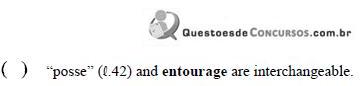
In the text,
Ano: 2010
Banca:
CESPE / CEBRASPE
Órgão:
Instituto Rio Branco
Prova:
CESPE - 2010 - Instituto Rio Branco - Diplomata - 2ª Etapa C |
Q29305
Inglês
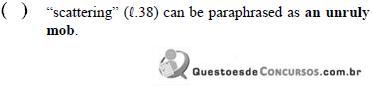
In the text,

 Conheça nossos planos