Questões de Concurso Comentadas sobre inglês
Foram encontradas 19.378 questões


Read Text II and answer the question that follow it.
Text II
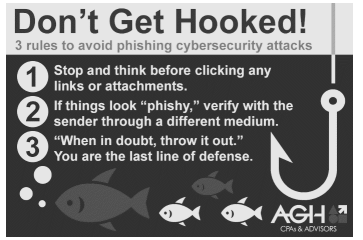
From: https://aghlc.com/resources/articles/2016/how-to-prevent-phishing-attacks160812.aspx?hss_channel=tw-2432542152
Read Text II and answer the question that follow it.
Text II
From: https://aghlc.com/resources/articles/2016/how-to-prevent-phishing-attacks160812.aspx?hss_channel=tw-2432542152
Read Text II and answer the question that follow it.
Text II
From: https://aghlc.com/resources/articles/2016/how-to-prevent-phishing-attacks160812.aspx?hss_channel=tw-2432542152
( ) The “spray-and-pray” business model belongs to a late period in the history of ransomware.
( ) The analysis indicates that cybercrime is far from mushrooming.
( ) The text argues that solutions to cybercrime can be reached in a jiffy.
The statements are, respectively
Read Text II and answer the question that follow it.
Text II
Read Text II and answer the question that follow it.
Text II
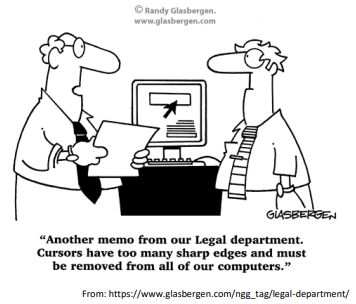
From: https://www.glasbergen.com/ngg_tag/legal-department/
Read text I and answer the question that follow it.
Text I
The New Rules of Data Privacy
The data harvested from our personal devices, along with our trail of electronic transactions and data from other sources, now provides the foundation for some of the world’s largest companies. […] For the past two decades, the commercial use of personal data has grown in wild-west fashion. But now, because of consumer mistrust, government actions, and competition for customers, those days are quickly coming to an end.
For most of its existence, the data economy was structured around a “digital curtain” designed to obscure the industry’s practices from lawmakers and the public. Data was considered company property and a proprietary secret, even though the data originated from customers’ private behavior. That curtain has since been lifted and a convergence of consumer, government, and market forces are now giving users more control over the data they generate. Instead of serving as a resource that can be freely harvested, countries in every region of the world have begun to treat personal data as an asset owned by individuals and held in trust by firms.
This will be a far better organizing principle for the data economy. Giving individuals more control has the potential to curtail the sector’s worst excesses while generating a new wave of customer-driven innovation, as customers begin to express what sort of personalization and opportunity they want their data to enable. And while Adtech firms in particular will be hardest hit, any firm with substantial troves of customer data will have to make sweeping changes to its practices, particularly large firms such as financial institutions, healthcare firms, utilities, and major manufacturers and retailers.
Leading firms are already adapting to the new reality as it unfolds. The key to this transition — based upon our research on data and trust, and our experience working on this issue with a wide variety of firms— is for companies to reorganize their data operations around the new fundamental rules of consent, insight, and flow.
[…]
Federal lawmakers are moving to curtail the power of big tech. Meanwhile, in 2021 state legislatures proposed or passed at least 27 online privacy bills regulating data markets and protecting personal digital rights. Lawmakers from California to China are implementing legislation that mirrors Europe’s GDPR, while the EU itself has turned its attention to regulating the use of AI. Where once companies were always ahead of regulators, now they struggle to keep up with compliance requirements across multiple jurisdictions.
Adapted from: https://hbr.org/2022/02/the-new-rules-of-data-privacy
February 25, 2022 – Retrieved September 6, 2022
Read text I and answer the question that follow it.
Text I
The New Rules of Data Privacy
The data harvested from our personal devices, along with our trail of electronic transactions and data from other sources, now provides the foundation for some of the world’s largest companies. […] For the past two decades, the commercial use of personal data has grown in wild-west fashion. But now, because of consumer mistrust, government actions, and competition for customers, those days are quickly coming to an end.
For most of its existence, the data economy was structured around a “digital curtain” designed to obscure the industry’s practices from lawmakers and the public. Data was considered company property and a proprietary secret, even though the data originated from customers’ private behavior. That curtain has since been lifted and a convergence of consumer, government, and market forces are now giving users more control over the data they generate. Instead of serving as a resource that can be freely harvested, countries in every region of the world have begun to treat personal data as an asset owned by individuals and held in trust by firms.
This will be a far better organizing principle for the data economy. Giving individuals more control has the potential to curtail the sector’s worst excesses while generating a new wave of customer-driven innovation, as customers begin to express what sort of personalization and opportunity they want their data to enable. And while Adtech firms in particular will be hardest hit, any firm with substantial troves of customer data will have to make sweeping changes to its practices, particularly large firms such as financial institutions, healthcare firms, utilities, and major manufacturers and retailers.
Leading firms are already adapting to the new reality as it unfolds. The key to this transition — based upon our research on data and trust, and our experience working on this issue with a wide variety of firms— is for companies to reorganize their data operations around the new fundamental rules of consent, insight, and flow.
[…]
Federal lawmakers are moving to curtail the power of big tech. Meanwhile, in 2021 state legislatures proposed or passed at least 27 online privacy bills regulating data markets and protecting personal digital rights. Lawmakers from California to China are implementing legislation that mirrors Europe’s GDPR, while the EU itself has turned its attention to regulating the use of AI. Where once companies were always ahead of regulators, now they struggle to keep up with compliance requirements across multiple jurisdictions.
Adapted from: https://hbr.org/2022/02/the-new-rules-of-data-privacy
February 25, 2022 – Retrieved September 6, 2022
Read text I and answer the question that follow it.
Text I
The New Rules of Data Privacy
The data harvested from our personal devices, along with our trail of electronic transactions and data from other sources, now provides the foundation for some of the world’s largest companies. […] For the past two decades, the commercial use of personal data has grown in wild-west fashion. But now, because of consumer mistrust, government actions, and competition for customers, those days are quickly coming to an end.
For most of its existence, the data economy was structured around a “digital curtain” designed to obscure the industry’s practices from lawmakers and the public. Data was considered company property and a proprietary secret, even though the data originated from customers’ private behavior. That curtain has since been lifted and a convergence of consumer, government, and market forces are now giving users more control over the data they generate. Instead of serving as a resource that can be freely harvested, countries in every region of the world have begun to treat personal data as an asset owned by individuals and held in trust by firms.
This will be a far better organizing principle for the data economy. Giving individuals more control has the potential to curtail the sector’s worst excesses while generating a new wave of customer-driven innovation, as customers begin to express what sort of personalization and opportunity they want their data to enable. And while Adtech firms in particular will be hardest hit, any firm with substantial troves of customer data will have to make sweeping changes to its practices, particularly large firms such as financial institutions, healthcare firms, utilities, and major manufacturers and retailers.
Leading firms are already adapting to the new reality as it unfolds. The key to this transition — based upon our research on data and trust, and our experience working on this issue with a wide variety of firms— is for companies to reorganize their data operations around the new fundamental rules of consent, insight, and flow.
[…]
Federal lawmakers are moving to curtail the power of big tech. Meanwhile, in 2021 state legislatures proposed or passed at least 27 online privacy bills regulating data markets and protecting personal digital rights. Lawmakers from California to China are implementing legislation that mirrors Europe’s GDPR, while the EU itself has turned its attention to regulating the use of AI. Where once companies were always ahead of regulators, now they struggle to keep up with compliance requirements across multiple jurisdictions.
Adapted from: https://hbr.org/2022/02/the-new-rules-of-data-privacy
February 25, 2022 – Retrieved September 6, 2022
Read text I and answer the question that follow it.
Text I
The New Rules of Data Privacy
The data harvested from our personal devices, along with our trail of electronic transactions and data from other sources, now provides the foundation for some of the world’s largest companies. […] For the past two decades, the commercial use of personal data has grown in wild-west fashion. But now, because of consumer mistrust, government actions, and competition for customers, those days are quickly coming to an end.
For most of its existence, the data economy was structured around a “digital curtain” designed to obscure the industry’s practices from lawmakers and the public. Data was considered company property and a proprietary secret, even though the data originated from customers’ private behavior. That curtain has since been lifted and a convergence of consumer, government, and market forces are now giving users more control over the data they generate. Instead of serving as a resource that can be freely harvested, countries in every region of the world have begun to treat personal data as an asset owned by individuals and held in trust by firms.
This will be a far better organizing principle for the data economy. Giving individuals more control has the potential to curtail the sector’s worst excesses while generating a new wave of customer-driven innovation, as customers begin to express what sort of personalization and opportunity they want their data to enable. And while Adtech firms in particular will be hardest hit, any firm with substantial troves of customer data will have to make sweeping changes to its practices, particularly large firms such as financial institutions, healthcare firms, utilities, and major manufacturers and retailers.
Leading firms are already adapting to the new reality as it unfolds. The key to this transition — based upon our research on data and trust, and our experience working on this issue with a wide variety of firms— is for companies to reorganize their data operations around the new fundamental rules of consent, insight, and flow.
[…]
Federal lawmakers are moving to curtail the power of big tech. Meanwhile, in 2021 state legislatures proposed or passed at least 27 online privacy bills regulating data markets and protecting personal digital rights. Lawmakers from California to China are implementing legislation that mirrors Europe’s GDPR, while the EU itself has turned its attention to regulating the use of AI. Where once companies were always ahead of regulators, now they struggle to keep up with compliance requirements across multiple jurisdictions.
Adapted from: https://hbr.org/2022/02/the-new-rules-of-data-privacy
February 25, 2022 – Retrieved September 6, 2022
( ) Empresas de publicidade serão fortemente afetadas por mudanças nas regras de privacidade de dados.
( ) Anteriormente, o controle de dados pessoais para fins comerciais seguia diretrizes rígidas.
( ) Atualmente, os legisladores têm sido negligentes com o consentimento dos usuários para seus dados.
As declarações são, respectivamente,

“Despite” in “Despite young people around the world being more educated” can be replaced without change in meaning by

 Conheça nossos planos