Questões de Concurso Comentadas sobre inglês

Questões Discursivas

Foram encontradas 19.285 questões

Q2538943 Inglês

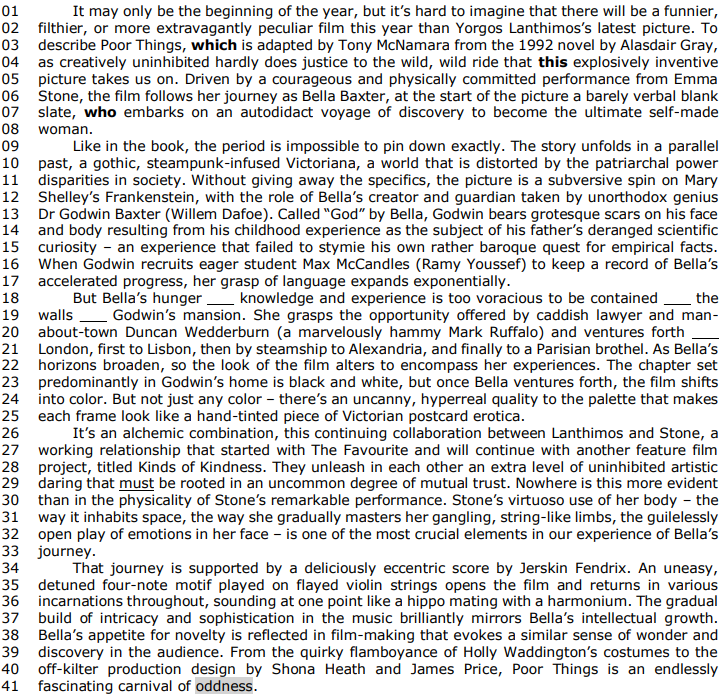
Elephant Calf Separated From Herd in India is Reunited With Its Mother 


(Available at: https://www.theguardian.com/world/2024/jan/03/elephant-calf-separated-from-herd-in-india-isreunited-with-mother – text especially adapted for this test).

Mark the option below that correctly fills out the gaps in the first paragraph (lines 01, both occurrences, 02 and 04, both occurrences), in the order they appear in the text. 
Alternativas
Q2538691 Inglês
According to the Base Curricular da Rede Municipal de Ensino de Palhoça, Matriz curricular 16, choose the alternative that presents the Grammar topics for the 6th grade.
Alternativas
Q2538689 Inglês

Text 2


Pre-Communicative and Communicative Activities 


[…] The development of communicative competence involves the acquisition and use of so-called language skills, which are promoted from the communicative approach in an integrated manner and with real communication purposes. To contribute to the development of these communicative language skills, the English teacher has a continuum of options ranging from so-called pre-communicative activities to proper communication activities. According to Littlewood (1998), the first are based on accuracy and present structures, functions, and vocabulary; the latter focus on fluency and involve information sharing and exchange.


The pre-communicative activities are subdivided into structural activities and quasi-communicative activities. Structural activities are described as machining and practical structures. The quasi-communicative ones are based on communication and the structure of the language. […]

English as a second Language teaching has methods ways in which teachers use to teach English.


Study the affirmatives below about Methods and Approaches, and mark the correct option.

Alternativas
Q2538688 Inglês

Text 2


Pre-Communicative and Communicative Activities 


[…] The development of communicative competence involves the acquisition and use of so-called language skills, which are promoted from the communicative approach in an integrated manner and with real communication purposes. To contribute to the development of these communicative language skills, the English teacher has a continuum of options ranging from so-called pre-communicative activities to proper communication activities. According to Littlewood (1998), the first are based on accuracy and present structures, functions, and vocabulary; the latter focus on fluency and involve information sharing and exchange.


The pre-communicative activities are subdivided into structural activities and quasi-communicative activities. Structural activities are described as machining and practical structures. The quasi-communicative ones are based on communication and the structure of the language. […]

Study these sentences below and decide if they are true ( T ) or false ( F ), according to the Communicative Language Teaching (CLT).


( ) People learn a language best when using it to do things rather than through studying how language works and practicing rules.


( ) Learners participate in classroom activities that are based on an individualistic approach to learning.


( ) Communicative language teaching methodology makes real communication the focus of language learning.


( ) One of the goals of Communicative Language Teaching is to develop fluency in language use.


Choose the alternative which presents the correct sequence, from top to bottom.

Alternativas
Q2538687 Inglês

Text 2


Pre-Communicative and Communicative Activities 


[…] The development of communicative competence involves the acquisition and use of so-called language skills, which are promoted from the communicative approach in an integrated manner and with real communication purposes. To contribute to the development of these communicative language skills, the English teacher has a continuum of options ranging from so-called pre-communicative activities to proper communication activities. According to Littlewood (1998), the first are based on accuracy and present structures, functions, and vocabulary; the latter focus on fluency and involve information sharing and exchange.


The pre-communicative activities are subdivided into structural activities and quasi-communicative activities. Structural activities are described as machining and practical structures. The quasi-communicative ones are based on communication and the structure of the language. […]

Study the sentences bellow from text 2.


1. Languages skills are used to develop communicative competence as well as their acquisition.


2. Pre-communicative activities are based on information sharing and exchange.


3. Structural activities are related to the structure of the language, machining and practical structures.


4. The language skill based on accuracy and proper communication activities is called Pre-Communicative.


Choose the alternative which contains the correct sentences.

Alternativas
Q2538684 Inglês

Text 1


Youth and Adult Literacy in Brazil:

learning from practice


The Concept of functional ILLITERACY


[…] A person is considered functionally literate ..................... he or she is capable ................. using reading and writing skills ........................ meet the demands of his or her social context, using them to continue learning and developing over their lifetimes. With the expansion of the access to schooling beyond literacy, the focus was shifted to the quality of the educational process offered to all. The issue here is not simply whether people know how to read or write, but what they are capable of doing with those skills. This means that, besides the issue of illiteracy, a social problem that still persists in Brazil, there is also the issue of functional illiteracy; in other words, the inability to effectively use reading and writing skills in the various areas of social life after a certain number of years of schooling. According to census criteria, individuals with less than 4 years of schooling are considered functionally illiterate. […]


Source: https://unesdoc.unesco.org

Study these sentences below and decide if they are true ( T ) or false ( F ), according to structure and use of grammar and lexical aspects of language use.


( ) The words in bold, them and their in text 1, are respectively an object pronoun and a possessive adjective.


( ) In the sentence: The issue here is not simply whether people know how to read or write… the underlined word whether can be replaced by if without changing its meaning.


( ) The noun criteria in: According to census criteria, individuals with less than 4 years of schooling are considered functionally illiterate; is the singular form of criterium.


( ) In the following sentence from text 1: … the inability to effectively use reading and writing skills in the various areas of social life after a certain number of years of schooling; the underlined words reading, writing and schooling are examples of present participle.


Choose the alternative which presents the correct sequence, from top to bottom.

Alternativas
Q2536233 Inglês

Text 02


British Accents and Dialects: A Rough Guide 


Have you ever tried to put on a British accent? The chances are the accent you’re trying to copy is ‘Received Pronunciation’, or standard English – also known as the Queen’s English. Received Pronunciation, or RP, is what most non-Brits are used to hearing as a British accent, often when you switch on the BBC or World Service.

But it’s called the Queen’s English for a reason – hardly anyone in the UK apart from the Queen speaks this way.

The truth is, although it may be called Standard English, it is anything but standard. The British Isles is made up many, many different accents and dialects – more than 37 dialects at the last count. A dialect is a Variety of a language that differs from the standard language, in this case RP. Dialects can vary regionally – depending on where in the country a person is from, as well as socially.

[…]

Types of British Accents – Cockney

This is one of the UK’s most famous dialects, and it goes hand in hand with London. It came about as the dialect of the London working classes, especially in the poorer East End of the city. The Cockney dialect also gave us Rhyming Slang, and you can still hear plenty of market traders round the East End shouting out in Cockney from their stalls. With the Cockney accent, there are lots of ‘glottal stops’, and the ‘th’ sound frequently changes to an ‘f’ sound. There have also been some famously terrible attempts at the Cockney dialect – here’s Dick Van Dyke to show you how not to do it! 


Text adapted from: <https:englishlive.ef.com/en/blog/English-in-the-real-world/rough-guide-british-dialects/>

Based on the underlined phrasal verb in text 02, we have it employed in a similar context in:
Alternativas
Q2536230 Inglês

Phonetics and Phonology –the image below brings examples of:


Imagem associada para resolução da questão

Source: <pt.quora.com>

Alternativas
Q2536229 Inglês
Phonetics and Phonology – According to Phonetics and Phonology Theories, an Allophone is:
Alternativas
Q2536228 Inglês
Read the transcription of the teacher-student interaction below and answer the question.
About the teaching approach used in the dialogue above between the teacher and student A:
Alternativas
Q2536227 Inglês
Read the transcription of the teacher-student interaction below and answer the question.
Read the dialogue below and check the alternative that best describes the role of the teacher represented by his/her speech.
Imagem associada para resolução da questão
Alternativas
Q2536226 Inglês

For question, consider the following collocation: “Congratulations on” and choose the best-suited alternatives.


Collocations can be classified as: 
Alternativas
Q2536225 Inglês

For question, consider the following collocation: “Congratulations on” and choose the best-suited alternatives.


When a learner mistakes “Congratulations on your birthday.” for “Congratulations for your birthday.” The collocation is inadequate because:
Alternativas
Q2536224 Inglês

Read text 1 and answer question.


The Times They Are A-Changin' - By Bob Dylan


Come gather 'round, people

Wherever you roam

And admit that the waters around you have

grown

And accept it that soon you'll be drenched to the

bone

If your time to you is worth saving

Then you better start swimmin' or you'll sink like

a stone

For the times, they are a-changin'

Come writers and critics who prophesize with

your pen

And keep your eyes wide, the chance won't

come again

And don't speak too soon, for the wheel's still in

spin 

And there's no tellin' who that it's namin'

For the loser now will be later to win

For the times, they are a-changin'

Come senators, congressmen, please heed the

call

Don't stand in the doorway

Don't block up the hall

For he that gets hurt will be he who has stalled

The battle outside ragin'

Will soon shake your windows and rattle your

walls 

For the times, they are a-changin'

Come mothers and fathers

Throughout the land

And don't criticize what you can't understand

Your sons and your daughters

Are beyond your command

Your old road is rapidly aging

Please get out of the new one if you can't lend

your hand

The line, it is drawn

The curse, it is cast

The slow one now will later be fast

As the present now will later be past

The order is rapidly fading

And the first one now will later be last

For the times, they are a-changin'

For the times, they are a-changin'

About the underlined lexical items in text 1, it is correct to state that: 
Alternativas
Q2536223 Inglês

Read text 1 and answer question.


The Times They Are A-Changin' - By Bob Dylan


Come gather 'round, people

Wherever you roam

And admit that the waters around you have

grown

And accept it that soon you'll be drenched to the

bone

If your time to you is worth saving

Then you better start swimmin' or you'll sink like

a stone

For the times, they are a-changin'

Come writers and critics who prophesize with

your pen

And keep your eyes wide, the chance won't

come again

And don't speak too soon, for the wheel's still in

spin 

And there's no tellin' who that it's namin'

For the loser now will be later to win

For the times, they are a-changin'

Come senators, congressmen, please heed the

call

Don't stand in the doorway

Don't block up the hall

For he that gets hurt will be he who has stalled

The battle outside ragin'

Will soon shake your windows and rattle your

walls 

For the times, they are a-changin'

Come mothers and fathers

Throughout the land

And don't criticize what you can't understand

Your sons and your daughters

Are beyond your command

Your old road is rapidly aging

Please get out of the new one if you can't lend

your hand

The line, it is drawn

The curse, it is cast

The slow one now will later be fast

As the present now will later be past

The order is rapidly fading

And the first one now will later be last

For the times, they are a-changin'

For the times, they are a-changin'

About the highlighted words “lend a hand” in text 1 we can say that: 
Alternativas
Q2536222 Inglês

Read text 1 and answer question.


The Times They Are A-Changin' - By Bob Dylan


Come gather 'round, people

Wherever you roam

And admit that the waters around you have

grown

And accept it that soon you'll be drenched to the

bone

If your time to you is worth saving

Then you better start swimmin' or you'll sink like

a stone

For the times, they are a-changin'

Come writers and critics who prophesize with

your pen

And keep your eyes wide, the chance won't

come again

And don't speak too soon, for the wheel's still in

spin 

And there's no tellin' who that it's namin'

For the loser now will be later to win

For the times, they are a-changin'

Come senators, congressmen, please heed the

call

Don't stand in the doorway

Don't block up the hall

For he that gets hurt will be he who has stalled

The battle outside ragin'

Will soon shake your windows and rattle your

walls 

For the times, they are a-changin'

Come mothers and fathers

Throughout the land

And don't criticize what you can't understand

Your sons and your daughters

Are beyond your command

Your old road is rapidly aging

Please get out of the new one if you can't lend

your hand

The line, it is drawn

The curse, it is cast

The slow one now will later be fast

As the present now will later be past

The order is rapidly fading

And the first one now will later be last

For the times, they are a-changin'

For the times, they are a-changin'

Within the context of a reading assessment, the objective of question 1 is to: 
Alternativas
Q2536221 Inglês

Read text 1 and answer question.


The Times They Are A-Changin' - By Bob Dylan


Come gather 'round, people

Wherever you roam

And admit that the waters around you have

grown

And accept it that soon you'll be drenched to the

bone

If your time to you is worth saving

Then you better start swimmin' or you'll sink like

a stone

For the times, they are a-changin'

Come writers and critics who prophesize with

your pen

And keep your eyes wide, the chance won't

come again

And don't speak too soon, for the wheel's still in

spin 

And there's no tellin' who that it's namin'

For the loser now will be later to win

For the times, they are a-changin'

Come senators, congressmen, please heed the

call

Don't stand in the doorway

Don't block up the hall

For he that gets hurt will be he who has stalled

The battle outside ragin'

Will soon shake your windows and rattle your

walls 

For the times, they are a-changin'

Come mothers and fathers

Throughout the land

And don't criticize what you can't understand

Your sons and your daughters

Are beyond your command

Your old road is rapidly aging

Please get out of the new one if you can't lend

your hand

The line, it is drawn

The curse, it is cast

The slow one now will later be fast

As the present now will later be past

The order is rapidly fading

And the first one now will later be last

For the times, they are a-changin'

For the times, they are a-changin'

The song “The Times They are a-Changin’” resonated in the ’60s as a reflection of the many specific events happening at the time. And since the song is considered a classic, is it valid to state that the song’s lyrics apply to any context and time? Select the statement that best represents the relevance of the song to society.
Alternativas
Q2535870 Inglês

Text 3

Digital habits across generations 


Today’s grandparents are joining their grandchildren on social media, but the different generations’ online habits couldn’t be more different. In the UK the over55s are joining Facebook in increasing numbers, meaning that they will soon be the site’s second biggest user group, with 3.5 million users aged 55-64 and 2.9 million over-65s.


Sheila, aged 59, says, ‘I joined to see what my grandchildren are doing, as my daughter posts videos and photos of them. It’s a much better way to see what they’re doing than waiting for letters and photos in the post. That’s how we did it when I was a child, but I think I’m lucky I get to see so much more of their lives than my grandparents did.’ Ironically, Sheila’s grandchildren are less likely to use Facebook themselves. Children under 17 in the UK are leaving the site – only 2.2 million users are under 17 – but they’re not going far from their smartphones.


Chloe, aged 15, even sleeps with her phone. ‘It’s my alarm clock so I have to,’ she says. ‘I look at it before I go to sleep and as soon as I wake up.’ Unlike her grandmother’s generation, Chloe’s age group is spending so much time on their phones at home that they are missing out on spending time with their friends in real life. Sheila, on the other hand, has made contact with old friends from school she hasn’t heard from in forty years. ‘We use Facebook to arrange to meet all over the country,’ she says. ‘It’s changed my social life completely.’ Teenagers might have their parents to thank for their smartphone and social media addiction as their parents were the early adopters of the smartphone. Peter, 38 and father of two teenagers, reports that he used to be on his phone or laptop constantly. ‘I was always connected and I felt like I was always working,’ he says. ‘How could I tell my kids to get off their phones if I was always in front of a screen myself?’ So, in the evenings and at weekends, he takes his SIM card out of his smartphone and puts it into an old-style mobile phone that can only make calls and send text messages. ‘I’m not completely cut off from the world in case of emergencies, but the important thing is I’m setting a better example to my kids and spending more quality time with them.’ Is it only a matter of time until the generation above and below Peter catches up with the new trend for a less digital life?

Source: https://learnenglish.britishcouncil.org


Study these sentences below and decide if they are true ( T ) or false ( F ), according to the information in text 3.


( ) Grandparents are your parents’ parents.


( ) In the following sentence: It’s changed my social life completely. The (‘s) is the contracted form of has.


( ) The word media (underlined in the first paragraph) is the singular form of medium and it is a countable noun.


( ) The underlined words in the second paragraph them and themselves are, respectively an object pronoun and a reflexive pronoun.


( ) In the following sentence Chloe’s age group is spending so much time on their phones at home that they are missing out on spending time with their friends in real life., the words spending, missing and spending are being used as nouns.


Choose the alternative which presents the correct sequence, from top to bottom.

Alternativas
Q2535869 Inglês

Text 3

Digital habits across generations 


Today’s grandparents are joining their grandchildren on social media, but the different generations’ online habits couldn’t be more different. In the UK the over55s are joining Facebook in increasing numbers, meaning that they will soon be the site’s second biggest user group, with 3.5 million users aged 55-64 and 2.9 million over-65s.


Sheila, aged 59, says, ‘I joined to see what my grandchildren are doing, as my daughter posts videos and photos of them. It’s a much better way to see what they’re doing than waiting for letters and photos in the post. That’s how we did it when I was a child, but I think I’m lucky I get to see so much more of their lives than my grandparents did.’ Ironically, Sheila’s grandchildren are less likely to use Facebook themselves. Children under 17 in the UK are leaving the site – only 2.2 million users are under 17 – but they’re not going far from their smartphones.


Chloe, aged 15, even sleeps with her phone. ‘It’s my alarm clock so I have to,’ she says. ‘I look at it before I go to sleep and as soon as I wake up.’ Unlike her grandmother’s generation, Chloe’s age group is spending so much time on their phones at home that they are missing out on spending time with their friends in real life. Sheila, on the other hand, has made contact with old friends from school she hasn’t heard from in forty years. ‘We use Facebook to arrange to meet all over the country,’ she says. ‘It’s changed my social life completely.’ Teenagers might have their parents to thank for their smartphone and social media addiction as their parents were the early adopters of the smartphone. Peter, 38 and father of two teenagers, reports that he used to be on his phone or laptop constantly. ‘I was always connected and I felt like I was always working,’ he says. ‘How could I tell my kids to get off their phones if I was always in front of a screen myself?’ So, in the evenings and at weekends, he takes his SIM card out of his smartphone and puts it into an old-style mobile phone that can only make calls and send text messages. ‘I’m not completely cut off from the world in case of emergencies, but the important thing is I’m setting a better example to my kids and spending more quality time with them.’ Is it only a matter of time until the generation above and below Peter catches up with the new trend for a less digital life?

Source: https://learnenglish.britishcouncil.org


Analyze the sentences from text 3 below according to structure and grammar use.


1. The phrasal verb in: Unlike her grandmother’s generation, Chloe’s age group is spending so much time on their phones at home that they are missing out on spending time with their friends in real life. means in its context that they are not be able to experience an opportunity or chance.


2. The word Ironically, in bold in the second paragraph is being used as an adverb to express irony.


3. The reference words in bold in the first paragraph their and they, create cohesion that precedes coherence.


4. In the following sentence from the third paragraph: Unlike her grandmother’s generation, Chloe’s age group is spending so… the (‘s) in grandmother’s and Chloe’s indicates the short form of the verb to be in the present tense.


5. The conjunctive adverb Unlike in bold in the third paragraph, is used to introduce a statement that contrasts with a previous statement.


Choose the alternative which contains the correct sentences.


Alternativas
Q2535868 Inglês

English for Specific Purposes, or ESP, refers to learning English because students have a specific need. To develop a specific need such as Reading Comprehension, readers will need to use some strategies.


Study the sentences bellow about the topic.


1. A rapid look over a text in order to extract some general ideas from it is called the Skimming Strategy.


2. When the students look for some information in an encyclopedia or an ad in a newspaper, or use a Portuguese monolingual dictionary, they are scanning.


3. An ESP approach a great part of students is aware that English and Portuguese have few words in common.


4. Looking for repeated words is the reading strategy that is not very used by Brazilian students because it may be difficult to locate and understand these words at the beginning of the process.


Choose the alternative which contains the correct sentences.

Alternativas
Respostas
7061: A
7062: E
7063: A
7064: B
7065: C
7066: A
7067: B
7068: D
7069: A
7070: B
7071: D
7072: B
7073: C
7074: D
7075: D
7076: B
7077: A
7078: A
7079: B
7080: C