Questões de Concurso Comentadas sobre inglês
Foram encontradas 19.378 questões


I. ZERO CONDITIONAL: If you don’t study it, you fail. II. FIRST CONDITIONAL: If you don’t study it, you’ll fail. III. SECOND CONDITIONAL: If you didn’t study it, you would fail. IV. THIRD CONDITIONAL: If you hadn’t studied, you would’ve failed.
Now mark the correct option.
“Roma’s friendly with Toulouse called off due to concerns of public order”
Available at: https://romapress.net/romas-friendly-with-toulouse-called-off-due-to-concerns-of-public-order/. Accessed: July 23, 2024.
Identifying phrasal verbs and their meanings when reading a text plays an important role in reading comprehension. A suitable synonym for the PHRASAL VERB presented in the headline above is:
Teens feel more complex feelings more deeply
Once puberty has started, the characters that make up Riley’s emotions find that pressing any buttons gets a bigger reaction. And psychologically, that makes sense.
“One of the main features of emotional development in adolescence is this easy arousability of both positive and negative emotions,” Steinberg said. Their feelings are stronger than those of either children or adults.
And in adolescence, the brain has developed more of a capacity for abstract thought, bringing with it more complex emotions, said Damour, author of “The Emotional Lives of Teenagers: Raising Connected, Capable, and Compassionate Adolescents.”
They have more anxiety because they can more easily imagine future problems. They become more embarrassed because they better understand what others may be thinking of them. They become envious because they can see comparisons better between themselves and others, she added.
And ennui isn’t just a funny side effect. Acting like they don’t care is often an important escape hatch for teens in a social conundrum, Damour said.
“These are sophisticated emotions that require neurological development to come on the scene,” she said.
Available at: https://edition.cnn.com/2024/06/15/entertainment/teen-emotions-inside-out-wellness/index.html. Accessed: July 23, 2024.
It is possible to affirm that the term “has developed” extracted from the passage above is classified as
I. Identificar o assunto de um texto, reconhecendo sua organização textual e palavras cognatas. II. Explorar ambientes virtuais e/ou aplicativos para construir repertório lexical na língua inglesa. III. Mobilizar conhecimentos prévios para compreender um texto oral. IV. Identificar argumentos principais e as evidências/exemplos que os sustentam. V. Escrever palavras e frases simples, utilizando um modelo e vocabulário estudado previamente.
Considerando que o Documento Curricular elaborado tem a preocupação de progressão didática para o desenvolvimento das competências e habilidades do aprendizado de Língua Inglesa, assinale a alternativa que representa as habilidades pensadas para os Anos Finais.
Leia o fragmento de texto a seguir e responda a questão.
Cultural stereotypes are fixed ideas that people have about what specific social groups or individuals are like, especially an idea that is wrong. Other terms that are associated with the term stereotype are prejudice and cliché. The term has a Greek origin: stereos means solid or firm and typos mean blow, impression, engraved, or mark. The term was first used in the printing business. The first modern English use of the term was in 1850, meaning “image perpetuated without change.”
Because stereotypes are standardized and simplified ideas of groups based on some prejudices, they are not derived from objective facts but rather from subjective and often unverifiable ideas. As Sociologist Charles E. Hurst states, “one reason for stereotypes is the lack of personal, concrete familiarity that individuals have with persons in other racial or ethnic groups. Lack of familiarity encourages the lumping together of unknown individuals”.
The existence of stereotypes may be explained by the need for groups of people to view themselves as more normal or superior to other groups. Consequently, stereotypes may be used to justify ill-founded prejudices or ignorance and prevent people of stereotyped groups from entering or succeeding in various activities or fields. The stereotyping group is, generally, reluctant to reconsider their attitudes and behavior towards the stereotyped group.
Stereotypes may affect people negatively. This includes forming inaccurate and distorted images and opinions of people. Stereotypes may also be used for scapegoating or for making general erroneous judgments about people. Some stereotyping people may feel comfortable when they prevent themselves from emotional identification with the stereotyped group, which leads to xenophobic or racist behavior. Finally, another serious consequence of stereotypes is the feeling of inferiority that the stereotyped people may have, which may impair their performance.
Fonte: HURST, Charles. Social Inequality: Forms, Causes
and Consequences. Boston: Pearson Education, 2007.
Leia o fragmento de texto a seguir e responda a questão.
Cultural stereotypes are fixed ideas that people have about what specific social groups or individuals are like, especially an idea that is wrong. Other terms that are associated with the term stereotype are prejudice and cliché. The term has a Greek origin: stereos means solid or firm and typos mean blow, impression, engraved, or mark. The term was first used in the printing business. The first modern English use of the term was in 1850, meaning “image perpetuated without change.”
Because stereotypes are standardized and simplified ideas of groups based on some prejudices, they are not derived from objective facts but rather from subjective and often unverifiable ideas. As Sociologist Charles E. Hurst states, “one reason for stereotypes is the lack of personal, concrete familiarity that individuals have with persons in other racial or ethnic groups. Lack of familiarity encourages the lumping together of unknown individuals”.
The existence of stereotypes may be explained by the need for groups of people to view themselves as more normal or superior to other groups. Consequently, stereotypes may be used to justify ill-founded prejudices or ignorance and prevent people of stereotyped groups from entering or succeeding in various activities or fields. The stereotyping group is, generally, reluctant to reconsider their attitudes and behavior towards the stereotyped group.
Stereotypes may affect people negatively. This includes forming inaccurate and distorted images and opinions of people. Stereotypes may also be used for scapegoating or for making general erroneous judgments about people. Some stereotyping people may feel comfortable when they prevent themselves from emotional identification with the stereotyped group, which leads to xenophobic or racist behavior. Finally, another serious consequence of stereotypes is the feeling of inferiority that the stereotyped people may have, which may impair their performance.
Fonte: HURST, Charles. Social Inequality: Forms, Causes
and Consequences. Boston: Pearson Education, 2007.
I. Estereótipos são ideias padronizadas e derivadas de fatos objetivos sobre grupos ou indivíduos que se comportam de maneira errada na sociedade. II. Vem do grego a origem do termo estereótipo, sendo que o uso do termo teve início no contexto do ramo gráfico. III. O sentimento de inferioridade é uma das consequências que as pessoas que sofrem por estereótipos podem vir a sentir. IV. Há pessoas que são estereotipadas porque, por vezes, aparentam se mostrar superiores a outras pessoas. V. Segundo o sociólogo Charles E. Hurst, a falta de familiaridade com indivíduos de outros grupos étnicos e raciais é uma causa para a construção de estereótipos.
Assinale a alternativa CORRETA.
( ) Similar kinds of analyses can diagnose two other forms of complexity. (Times, Sunday Times, 2009). ( ) The sanctuary needed more humdrum fowl, more farmyard ducks and geese. (Ballard, J. G. Rushing to Paradise, 2002). ( ) The animals closely resemble wolfes, howl, and are more likely to be aggressive. (Times, Sunday Times, 2012). ( ) The iris of their eyes have an unusual lacy appearance. (Wills, C. The Runaway Brain: the Evolution of Human Uniqueness, 1993). ( ) Your older brother has been thrown in jail for his political beliefs. (Times, Sunday Times, 2007).
Assinale a alternativa que apresenta a sequência CORRETA.
Caring for Puppies
Larry was a kind-hearted boy. He was known for his compassion and love for animals. One sunny morning, he found a cardboard box near the park. To his surprise, it was filled with a litter of adorable puppies. The puppies were shivering and hungry, their eyes barely open. Without hesitation, Larry scooped them up and took them home. He knew he had to care for them. As the time passed by, Larry's bond with the puppies deepened. He spent hours playing with them, making sure they were happy and healthy. He watched them grow. Each time he walked into the room, their tiny tails wagged in excitement. Word quickly spread about a boy caring for the abandoned puppies. Soon, the neighborhood kids joined in to help. They assisted Larry in finding loving homes for the puppies. When the day came to say goodbye, Larry felt a mix of emotions. He knew he would miss them dearly as the new owners took the puppies home. But he felt happy when he thought his small acts of love had made a difference in the world.
Fonte: www.eslfast.com/gradedread3/gr3/gr3011.htm
Assinale a alternativa que classifica CORRETAMENTE as palavras em destaque.
Com base na definição apresentada, analise a sentença a seguir:
John sent me a letter.
Assinale a alternativa que apresenta a estrutura CORRETA da sentença.
I. Consists of having an idea about the content and goals of a reading text before starting to read. To do so, readers look at the title, subtitles, a picture or read the first sentence of each paragraph. II. Reading a text quickly to locate a specific fact or piece of information. This may be a date, a name or a figure. III. Readers relate the content of the passage to self, to other texts or to the world. IV. Making meaning of the text by reading between the lines and using personal knowledge. The aim is to construct meaning beyond what is literally expressed. V. Reading a text quickly to get its general idea of the content.
Fonte: https://www.myenglishpages.com (adaptado).
Assinale a alternativa que representa a ordem CORRETA das estratégias apresentadas nas afirmativas.
I. Audiolingual Approach está baseada em uma concepção estruturalista de linguagem e na visão behaviorista de aprendizagem (estímuloresposta). Sua técnica inclui exercícios orais de ouvir e repetir para se alcançar um nível de precisão das formas e padrões linguísticos. II. Communicative Language Teaching (CLT) é uma abordagem centrada no desenvolvimento da competência comunicativa, ou seja, desenvolver a competência comunicativa dos alunos em todas as quatro habilidades. III. Natural Approach é uma abordagem usada para preparar os alunos para leitura de textos. Seu método e técnica dão pouca ênfase na fala, consistindo no aprendizado de regras gramaticais e lista de vocabulário aplicadas à tradução escrita de textos. IV. Content and Language Integrated Learning (CLIL) é uma abordagem que combina a aprendizagem de um assunto específico com a aprendizagem da língua-alvo. As atividades buscam integrar as quatro competências, levando o aluno ao uso significativo da linguagem e ao desenvolvimento de competências transferíveis para utilização no mundo real. V. Dogme é uma abordagem baseada na noção de que a linguagem compreende unidades lexicais (partes, frases fixas, colocações). Seu método concentra-se no aprendizado de vocabulário e quadros linguísticos em nível de frase que podem ser manipulados pelo aluno realizando substituições e adaptações.
Fonte: https://tefl-toolkit.com (adaptado).
Assinale a alternativa CORRETA.
Read the following text to answer the question.
By Leo Selivan
In this article, informed by the Lexical Approach, I reflect on grammar instruction in the classroom […]. I consider the problems with ‘traditional’ grammar teaching before arguing that what we actually need is more grammar input as well as showing how lexis can provide necessary ‘crutches’ for the learner.
Lexis = vocabulary + grammar
The shift in ELT from grammar to lexis mirrors a similar change in the attitude of linguists. In the past linguists were preoccupied with the grammar of language; however the advances in corpus linguistics have pushed lexis to the forefront. The term ‘lexis’, which was traditionally used by linguists, is a common word these days and frequently used even in textbooks.
Why use a technical term borrowed from the realm of linguistics instead of the word ‘vocabulary’? Quite simply because vocabulary is typically seen as individual words (often presented in lists) whereas lexis is a somewhat wider concept and consists of collocations, chunks and formulaic expressions. It also includes certain patterns that were traditionally associated with the grammar of a language, e.g. If I were you…, I haven’t seen you for ages etc.
Recognising certain grammar structures as lexical
items means that they can be introduced much earlier,
without structural analysis or elaboration. Indeed, since the
concept of notions and functions made its way into language
teaching, particularly as Communicative Language Teaching
(CLT) gained prominence, some structures associated with
grammar started to be taught lexically (or functionally). I’d like
to is not taught as ‹the conditional› but as a chunk expressing
desire. Similarly many other ‹traditional› grammar items can
be introduced lexically relatively early on.
Less grammar or more grammar?
You are, no doubt, all familiar with students who on one hand seem to know the ‘rules’ of grammar but still fail to produce grammatically correct sentences when speaking or, on the other, sound unnatural and foreign-like even when their sentences are grammatically correct. Michael Lewis, who might be considered the founder of the Lexical Approach, once claimed that there was no direct relationship between the knowledge of grammar and speaking. In contrast, the knowledge of formulaic language has been shown by research to have a significant bearing on the natural language production.
Furthermore, certain grammar rules are practically impossible to learn. Dave Willis cites the grammar of orientation (which includes the notoriously difficult present perfect and the uses of certain modal verbs) as particularly resistant to teaching. The only way to grasp their meaning is through continuous exposure and use.
Finally, even the most authoritative English grammars never claim to provide a comprehensive description of all the grammar, hence the word ‘introduction’ often used in their titles (for instance, Huddleston & Pullum’s A Student’s Introduction to English Grammar or Halliday’s An Introduction to Functional Grammar).
If grammarians do not even attempt to address all areas of grammar, how can we, practitioners, cover all the aspects of grammar in our teaching, especially if all we seem to focus on is a limited selection of discrete items, comprised mostly of tenses and a handful of modal verbs? It would seem that we need to expose our students to a lot of naturally occurring language and frequently draw their attention to various grammar points as they arise.
For example, while teaching the expression fall asleep / be asleep you can ask your students:
• Don’t make any noise – she’s fallen asleep.
• Don’t make any noise – she’s asleep.
What does’s stand for in each of these cases (is or has)?
One of the fathers of the Communicative Language Teaching Henry Widdowson advocated using lexical items as a starting point and then ‘showing how they need to be grammatically modified to be communicatively effective’ (1990:95). For example, when exploring a text with your students, you may come across a sentence like this:
• They’ve been married for seven years.
You can ask your students: When did they get married? How should you change the sentence if the couple you are talking about is no longer married?
The above demonstrates how the teacher should be constantly on the ball and take every opportunity to draw students’ attention to grammar. Such short but frequent ‘grammar spots’ will help to slowly raise students’ awareness and build their understanding of the English grammar system.
[…]
Conclusion
So is there room for grammar instruction in the classroom? Certainly yes. But the grammar practice should always start with the exploitation of lexical items. Exposing students to a lot of natural and contextualised examples will offer a lexical way into the grammar of the language.
To sum up, grammar should play some role in language teaching but should not occupy a big part of class time. Instead grammar should be delivered in small but frequent portions. Students should be encouraged to collect a lot of examples of a particular structure before being invited to analyse it. Hence, analysis should be preceded by synthesis.
Lastly, language practitioners should bear in mind that grammar acquisition is an incremental process which requires frequent focus and refocus on the items already studied.
Available at: https://www.teachingenglish.org.uk/professionaldevelopment/teachers/knowing-subject/articles/grammar-vs-lexisor-grammar-through. Accessed on: April 29, 2024.
Read the following text to answer the question.
By Leo Selivan
In this article, informed by the Lexical Approach, I reflect on grammar instruction in the classroom […]. I consider the problems with ‘traditional’ grammar teaching before arguing that what we actually need is more grammar input as well as showing how lexis can provide necessary ‘crutches’ for the learner.
Lexis = vocabulary + grammar
The shift in ELT from grammar to lexis mirrors a similar change in the attitude of linguists. In the past linguists were preoccupied with the grammar of language; however the advances in corpus linguistics have pushed lexis to the forefront. The term ‘lexis’, which was traditionally used by linguists, is a common word these days and frequently used even in textbooks.
Why use a technical term borrowed from the realm of linguistics instead of the word ‘vocabulary’? Quite simply because vocabulary is typically seen as individual words (often presented in lists) whereas lexis is a somewhat wider concept and consists of collocations, chunks and formulaic expressions. It also includes certain patterns that were traditionally associated with the grammar of a language, e.g. If I were you…, I haven’t seen you for ages etc.
Recognising certain grammar structures as lexical
items means that they can be introduced much earlier,
without structural analysis or elaboration. Indeed, since the
concept of notions and functions made its way into language
teaching, particularly as Communicative Language Teaching
(CLT) gained prominence, some structures associated with
grammar started to be taught lexically (or functionally). I’d like
to is not taught as ‹the conditional› but as a chunk expressing
desire. Similarly many other ‹traditional› grammar items can
be introduced lexically relatively early on.
Less grammar or more grammar?
You are, no doubt, all familiar with students who on one hand seem to know the ‘rules’ of grammar but still fail to produce grammatically correct sentences when speaking or, on the other, sound unnatural and foreign-like even when their sentences are grammatically correct. Michael Lewis, who might be considered the founder of the Lexical Approach, once claimed that there was no direct relationship between the knowledge of grammar and speaking. In contrast, the knowledge of formulaic language has been shown by research to have a significant bearing on the natural language production.
Furthermore, certain grammar rules are practically impossible to learn. Dave Willis cites the grammar of orientation (which includes the notoriously difficult present perfect and the uses of certain modal verbs) as particularly resistant to teaching. The only way to grasp their meaning is through continuous exposure and use.
Finally, even the most authoritative English grammars never claim to provide a comprehensive description of all the grammar, hence the word ‘introduction’ often used in their titles (for instance, Huddleston & Pullum’s A Student’s Introduction to English Grammar or Halliday’s An Introduction to Functional Grammar).
If grammarians do not even attempt to address all areas of grammar, how can we, practitioners, cover all the aspects of grammar in our teaching, especially if all we seem to focus on is a limited selection of discrete items, comprised mostly of tenses and a handful of modal verbs? It would seem that we need to expose our students to a lot of naturally occurring language and frequently draw their attention to various grammar points as they arise.
For example, while teaching the expression fall asleep / be asleep you can ask your students:
• Don’t make any noise – she’s fallen asleep.
• Don’t make any noise – she’s asleep.
What does’s stand for in each of these cases (is or has)?
One of the fathers of the Communicative Language Teaching Henry Widdowson advocated using lexical items as a starting point and then ‘showing how they need to be grammatically modified to be communicatively effective’ (1990:95). For example, when exploring a text with your students, you may come across a sentence like this:
• They’ve been married for seven years.
You can ask your students: When did they get married? How should you change the sentence if the couple you are talking about is no longer married?
The above demonstrates how the teacher should be constantly on the ball and take every opportunity to draw students’ attention to grammar. Such short but frequent ‘grammar spots’ will help to slowly raise students’ awareness and build their understanding of the English grammar system.
[…]
Conclusion
So is there room for grammar instruction in the classroom? Certainly yes. But the grammar practice should always start with the exploitation of lexical items. Exposing students to a lot of natural and contextualised examples will offer a lexical way into the grammar of the language.
To sum up, grammar should play some role in language teaching but should not occupy a big part of class time. Instead grammar should be delivered in small but frequent portions. Students should be encouraged to collect a lot of examples of a particular structure before being invited to analyse it. Hence, analysis should be preceded by synthesis.
Lastly, language practitioners should bear in mind that grammar acquisition is an incremental process which requires frequent focus and refocus on the items already studied.
Available at: https://www.teachingenglish.org.uk/professionaldevelopment/teachers/knowing-subject/articles/grammar-vs-lexisor-grammar-through. Accessed on: April 29, 2024.
Read the following text to answer the question.
By Leo Selivan
In this article, informed by the Lexical Approach, I reflect on grammar instruction in the classroom […]. I consider the problems with ‘traditional’ grammar teaching before arguing that what we actually need is more grammar input as well as showing how lexis can provide necessary ‘crutches’ for the learner.
Lexis = vocabulary + grammar
The shift in ELT from grammar to lexis mirrors a similar change in the attitude of linguists. In the past linguists were preoccupied with the grammar of language; however the advances in corpus linguistics have pushed lexis to the forefront. The term ‘lexis’, which was traditionally used by linguists, is a common word these days and frequently used even in textbooks.
Why use a technical term borrowed from the realm of linguistics instead of the word ‘vocabulary’? Quite simply because vocabulary is typically seen as individual words (often presented in lists) whereas lexis is a somewhat wider concept and consists of collocations, chunks and formulaic expressions. It also includes certain patterns that were traditionally associated with the grammar of a language, e.g. If I were you…, I haven’t seen you for ages etc.
Recognising certain grammar structures as lexical
items means that they can be introduced much earlier,
without structural analysis or elaboration. Indeed, since the
concept of notions and functions made its way into language
teaching, particularly as Communicative Language Teaching
(CLT) gained prominence, some structures associated with
grammar started to be taught lexically (or functionally). I’d like
to is not taught as ‹the conditional› but as a chunk expressing
desire. Similarly many other ‹traditional› grammar items can
be introduced lexically relatively early on.
Less grammar or more grammar?
You are, no doubt, all familiar with students who on one hand seem to know the ‘rules’ of grammar but still fail to produce grammatically correct sentences when speaking or, on the other, sound unnatural and foreign-like even when their sentences are grammatically correct. Michael Lewis, who might be considered the founder of the Lexical Approach, once claimed that there was no direct relationship between the knowledge of grammar and speaking. In contrast, the knowledge of formulaic language has been shown by research to have a significant bearing on the natural language production.
Furthermore, certain grammar rules are practically impossible to learn. Dave Willis cites the grammar of orientation (which includes the notoriously difficult present perfect and the uses of certain modal verbs) as particularly resistant to teaching. The only way to grasp their meaning is through continuous exposure and use.
Finally, even the most authoritative English grammars never claim to provide a comprehensive description of all the grammar, hence the word ‘introduction’ often used in their titles (for instance, Huddleston & Pullum’s A Student’s Introduction to English Grammar or Halliday’s An Introduction to Functional Grammar).
If grammarians do not even attempt to address all areas of grammar, how can we, practitioners, cover all the aspects of grammar in our teaching, especially if all we seem to focus on is a limited selection of discrete items, comprised mostly of tenses and a handful of modal verbs? It would seem that we need to expose our students to a lot of naturally occurring language and frequently draw their attention to various grammar points as they arise.
For example, while teaching the expression fall asleep / be asleep you can ask your students:
• Don’t make any noise – she’s fallen asleep.
• Don’t make any noise – she’s asleep.
What does’s stand for in each of these cases (is or has)?
One of the fathers of the Communicative Language Teaching Henry Widdowson advocated using lexical items as a starting point and then ‘showing how they need to be grammatically modified to be communicatively effective’ (1990:95). For example, when exploring a text with your students, you may come across a sentence like this:
• They’ve been married for seven years.
You can ask your students: When did they get married? How should you change the sentence if the couple you are talking about is no longer married?
The above demonstrates how the teacher should be constantly on the ball and take every opportunity to draw students’ attention to grammar. Such short but frequent ‘grammar spots’ will help to slowly raise students’ awareness and build their understanding of the English grammar system.
[…]
Conclusion
So is there room for grammar instruction in the classroom? Certainly yes. But the grammar practice should always start with the exploitation of lexical items. Exposing students to a lot of natural and contextualised examples will offer a lexical way into the grammar of the language.
To sum up, grammar should play some role in language teaching but should not occupy a big part of class time. Instead grammar should be delivered in small but frequent portions. Students should be encouraged to collect a lot of examples of a particular structure before being invited to analyse it. Hence, analysis should be preceded by synthesis.
Lastly, language practitioners should bear in mind that grammar acquisition is an incremental process which requires frequent focus and refocus on the items already studied.
Available at: https://www.teachingenglish.org.uk/professionaldevelopment/teachers/knowing-subject/articles/grammar-vs-lexisor-grammar-through. Accessed on: April 29, 2024.
Read the following text to answer the question.
By Leo Selivan
In this article, informed by the Lexical Approach, I reflect on grammar instruction in the classroom […]. I consider the problems with ‘traditional’ grammar teaching before arguing that what we actually need is more grammar input as well as showing how lexis can provide necessary ‘crutches’ for the learner.
Lexis = vocabulary + grammar
The shift in ELT from grammar to lexis mirrors a similar change in the attitude of linguists. In the past linguists were preoccupied with the grammar of language; however the advances in corpus linguistics have pushed lexis to the forefront. The term ‘lexis’, which was traditionally used by linguists, is a common word these days and frequently used even in textbooks.
Why use a technical term borrowed from the realm of linguistics instead of the word ‘vocabulary’? Quite simply because vocabulary is typically seen as individual words (often presented in lists) whereas lexis is a somewhat wider concept and consists of collocations, chunks and formulaic expressions. It also includes certain patterns that were traditionally associated with the grammar of a language, e.g. If I were you…, I haven’t seen you for ages etc.
Recognising certain grammar structures as lexical
items means that they can be introduced much earlier,
without structural analysis or elaboration. Indeed, since the
concept of notions and functions made its way into language
teaching, particularly as Communicative Language Teaching
(CLT) gained prominence, some structures associated with
grammar started to be taught lexically (or functionally). I’d like
to is not taught as ‹the conditional› but as a chunk expressing
desire. Similarly many other ‹traditional› grammar items can
be introduced lexically relatively early on.
Less grammar or more grammar?
You are, no doubt, all familiar with students who on one hand seem to know the ‘rules’ of grammar but still fail to produce grammatically correct sentences when speaking or, on the other, sound unnatural and foreign-like even when their sentences are grammatically correct. Michael Lewis, who might be considered the founder of the Lexical Approach, once claimed that there was no direct relationship between the knowledge of grammar and speaking. In contrast, the knowledge of formulaic language has been shown by research to have a significant bearing on the natural language production.
Furthermore, certain grammar rules are practically impossible to learn. Dave Willis cites the grammar of orientation (which includes the notoriously difficult present perfect and the uses of certain modal verbs) as particularly resistant to teaching. The only way to grasp their meaning is through continuous exposure and use.
Finally, even the most authoritative English grammars never claim to provide a comprehensive description of all the grammar, hence the word ‘introduction’ often used in their titles (for instance, Huddleston & Pullum’s A Student’s Introduction to English Grammar or Halliday’s An Introduction to Functional Grammar).
If grammarians do not even attempt to address all areas of grammar, how can we, practitioners, cover all the aspects of grammar in our teaching, especially if all we seem to focus on is a limited selection of discrete items, comprised mostly of tenses and a handful of modal verbs? It would seem that we need to expose our students to a lot of naturally occurring language and frequently draw their attention to various grammar points as they arise.
For example, while teaching the expression fall asleep / be asleep you can ask your students:
• Don’t make any noise – she’s fallen asleep.
• Don’t make any noise – she’s asleep.
What does’s stand for in each of these cases (is or has)?
One of the fathers of the Communicative Language Teaching Henry Widdowson advocated using lexical items as a starting point and then ‘showing how they need to be grammatically modified to be communicatively effective’ (1990:95). For example, when exploring a text with your students, you may come across a sentence like this:
• They’ve been married for seven years.
You can ask your students: When did they get married? How should you change the sentence if the couple you are talking about is no longer married?
The above demonstrates how the teacher should be constantly on the ball and take every opportunity to draw students’ attention to grammar. Such short but frequent ‘grammar spots’ will help to slowly raise students’ awareness and build their understanding of the English grammar system.
[…]
Conclusion
So is there room for grammar instruction in the classroom? Certainly yes. But the grammar practice should always start with the exploitation of lexical items. Exposing students to a lot of natural and contextualised examples will offer a lexical way into the grammar of the language.
To sum up, grammar should play some role in language teaching but should not occupy a big part of class time. Instead grammar should be delivered in small but frequent portions. Students should be encouraged to collect a lot of examples of a particular structure before being invited to analyse it. Hence, analysis should be preceded by synthesis.
Lastly, language practitioners should bear in mind that grammar acquisition is an incremental process which requires frequent focus and refocus on the items already studied.
Available at: https://www.teachingenglish.org.uk/professionaldevelopment/teachers/knowing-subject/articles/grammar-vs-lexisor-grammar-through. Accessed on: April 29, 2024.
Empowering language learning through assessment
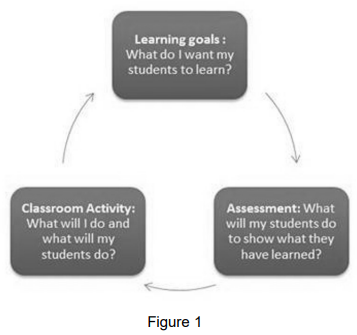
Assessment of, as, and for learning
Empowering language learning through assessment
Assessment of, as, and for learning

 Conheça nossos planos