Questões de Concurso Sobre inglês

Foram encontradas 26.290 questões

Q1387322 Inglês
Mark the best alternative to complete the blank.
“Phoebe hurt ______ last game, then, she might not play tomorrow.”
Alternativas
Q1387320 Inglês
Choose the correct alternative.
Alternativas
Q1387318 Inglês
Find the incorrect alternative.
Alternativas
Q1387317 Inglês

Find an alternative to complete the blank.


“Zoey ____ helping Drake with his homework.”

Alternativas
Q1387316 Inglês
Mark an alternative to complete the sentence.
“Elephants _____ supposed to stay in the forest.”
Alternativas
Q1387315 Inglês

Choose an alternative to complete the sentence.


“Hiking ________ me to feel better."

Alternativas
Q1387314 Inglês
Find the alternative that completes the blanks.
“Kylie ____ classical music, her friends ______.”
Alternativas
Q1387313 Inglês

Mark the alternative that best completes the blank.


“The Kardashiars __ waiting for you.”

Alternativas
Q1335085 Inglês

Read the text below and answer the following question based on it.  


Disponível em:<https://baneofyourresistance.com/2012/09/14/break-the-urgency-induced-block/>. Acessado em 15 de outubro de 2017. 

From what the doctor says, one can infer that
Alternativas
Q1335084 Inglês

Read the text below and answer the following question based on it. 

Is gene editing ethical?


Gene editing is the modification of DNA sequences in living cells. What that means in reality is that researchers can either add mutations or substitute genes in cells or organisms. 
Gene editing holds the key to preventing or treating debilitating genetic diseases, giving hope to millions of people around the world. Yet the same technology could unlock the path to designing our future children, enhancing their genome by selecting desirable traits such as height, eye color, and intelligence. 
While this concept is not new, a real breakthrough came 5 years ago when several scientists saw the potential of a system called CRISPR/Cas9 to edit the human genome.
CRISPR/Cas9 allows us to target specific locations in the genome with much more precision than previous techniques. This process allows a faulty gene to be replaced with a non-faulty copy, making this technology attractive to those looking to cure genetic diseases. 
The technology is not foolproof, however. Scientists have been modifying genes for decades, but there are always trade-offs. We have yet to develop a technique that works 100 percent and doesn't lead to unwanted and uncontrollable mutations in other locations in the genome.
In a laboratory experiment, these so-called off-target effects are not the end of the world. But when it comes to gene editing in humans, this is a major stumbling block.
The fact that gene editing is possible in human embryos has opened a Pandora's box of ethical issues.
Here, the ethical debate around gene editing really gets off the ground. 
When gene editing is used in embryos — or earlier, on the sperm or egg of carriers of genetic mutations — it is called germline gene editing. The big issue here is that it affects both the individual receiving the treatment and their future children. 
This is a potential game-changer as it implies that we may be able to change the genetic makeup of entire generations on a permanent basis. 


Adaptado de:<https://www.medicalnewstoday.com/articles/319817  (Acessado em 21 de outubro de 2017)
The ethical issue involving gene editing used in embryos or prior stages
Alternativas
Q1335083 Inglês

Read the text below and answer the following question based on it. 


Is gene editing ethical?


Gene editing is the modification of DNA sequences in living cells. What that means in reality is that researchers can either add mutations or substitute genes in cells or organisms. 
Gene editing holds the key to preventing or treating debilitating genetic diseases, giving hope to millions of people around the world. Yet the same technology could unlock the path to designing our future children, enhancing their genome by selecting desirable traits such as height, eye color, and intelligence. 
While this concept is not new, a real breakthrough came 5 years ago when several scientists saw the potential of a system called CRISPR/Cas9 to edit the human genome.
CRISPR/Cas9 allows us to target specific locations in the genome with much more precision than previous techniques. This process allows a faulty gene to be replaced with a non-faulty copy, making this technology attractive to those looking to cure genetic diseases. 
The technology is not foolproof, however. Scientists have been modifying genes for decades, but there are always trade-offs. We have yet to develop a technique that works 100 percent and doesn't lead to unwanted and uncontrollable mutations in other locations in the genome.
In a laboratory experiment, these so-called off-target effects are not the end of the world. But when it comes to gene editing in humans, this is a major stumbling block.
The fact that gene editing is possible in human embryos has opened a Pandora's box of ethical issues.
Here, the ethical debate around gene editing really gets off the ground. 
When gene editing is used in embryos — or earlier, on the sperm or egg of carriers of genetic mutations — it is called germline gene editing. The big issue here is that it affects both the individual receiving the treatment and their future children. 
This is a potential game-changer as it implies that we may be able to change the genetic makeup of entire generations on a permanent basis. 


Adaptado de:<https://www.medicalnewstoday.com/articles/319817  (Acessado em 21 de outubro de 2017)
As for the new CRISPR/Cas9 system technique,
Alternativas
Q1335082 Inglês

Read the text below and answer the following question based on it. 


Is gene editing ethical?


Gene editing is the modification of DNA sequences in living cells. What that means in reality is that researchers can either add mutations or substitute genes in cells or organisms. 
Gene editing holds the key to preventing or treating debilitating genetic diseases, giving hope to millions of people around the world. Yet the same technology could unlock the path to designing our future children, enhancing their genome by selecting desirable traits such as height, eye color, and intelligence. 
While this concept is not new, a real breakthrough came 5 years ago when several scientists saw the potential of a system called CRISPR/Cas9 to edit the human genome.
CRISPR/Cas9 allows us to target specific locations in the genome with much more precision than previous techniques. This process allows a faulty gene to be replaced with a non-faulty copy, making this technology attractive to those looking to cure genetic diseases. 
The technology is not foolproof, however. Scientists have been modifying genes for decades, but there are always trade-offs. We have yet to develop a technique that works 100 percent and doesn't lead to unwanted and uncontrollable mutations in other locations in the genome.
In a laboratory experiment, these so-called off-target effects are not the end of the world. But when it comes to gene editing in humans, this is a major stumbling block.
The fact that gene editing is possible in human embryos has opened a Pandora's box of ethical issues.
Here, the ethical debate around gene editing really gets off the ground. 
When gene editing is used in embryos — or earlier, on the sperm or egg of carriers of genetic mutations — it is called germline gene editing. The big issue here is that it affects both the individual receiving the treatment and their future children. 
This is a potential game-changer as it implies that we may be able to change the genetic makeup of entire generations on a permanent basis. 


Adaptado de:<https://www.medicalnewstoday.com/articles/319817  (Acessado em 21 de outubro de 2017)
One could state that
Alternativas
Q1335081 Inglês
Read the text below and answer the following question based on it. 

Indian surgeons separate twins joined at the head 


Two-year-old Jaga and Kalia underwent 16 hours of surgery, and are now in the intensive care unit, doctors said. 
A team of 30 doctors carried out the surgery - the first of its kind in India - at a state-run hospital. 
The boys were born with shared blood vessels and brain tissues, a very rare condition that occurs once in about three million births. 
The director of the All India Institute of Medical Sciences, Randeep Guleria, told the Press Trust of India that the "next 18 days would be extremely critical to ascertain the success of the surgery". 
The twins, hailing from a village in eastern Orissa state, were joined at the head - a condition known as craniopagus. 
Even before the operation they had defeated the odds; craniopagus occurs in one in three million births, and 50% of those affected die within 24 hours, doctors say. 
"Both the children have other health issues as well. While Jaga has heart issues, Kalia has kidney problems," neurosurgeon A K Mahapatra said. 
"Though initially Jaga was healthier, now his condition has deteriorated. Kalia is better," he added. 
Doctors said the most challenging job after the separation was to "provide a skin cover on both sides of the brain for the children as the surgery had left large holes on their heads". 
"If the twins make it, the next step will be reconstructing their skulls," plastic surgeon Maneesh Singhal said. 
The first surgery was performed on 28 August when the doctors created a bypass to separate the shared veins that return blood to the heart from the brain. 

Adaptado de: <http://www.bbc.com/news/world-asia-india-41772987>Acessado em 27 de outubro de 2017. 
One of the greatest difficulties after the surgery
Alternativas
Q1335080 Inglês
Read the text below and answer the following question based on it. 

Indian surgeons separate twins joined at the head 


Two-year-old Jaga and Kalia underwent 16 hours of surgery, and are now in the intensive care unit, doctors said. 
A team of 30 doctors carried out the surgery - the first of its kind in India - at a state-run hospital. 
The boys were born with shared blood vessels and brain tissues, a very rare condition that occurs once in about three million births. 
The director of the All India Institute of Medical Sciences, Randeep Guleria, told the Press Trust of India that the "next 18 days would be extremely critical to ascertain the success of the surgery". 
The twins, hailing from a village in eastern Orissa state, were joined at the head - a condition known as craniopagus. 
Even before the operation they had defeated the odds; craniopagus occurs in one in three million births, and 50% of those affected die within 24 hours, doctors say. 
"Both the children have other health issues as well. While Jaga has heart issues, Kalia has kidney problems," neurosurgeon A K Mahapatra said. 
"Though initially Jaga was healthier, now his condition has deteriorated. Kalia is better," he added. 
Doctors said the most challenging job after the separation was to "provide a skin cover on both sides of the brain for the children as the surgery had left large holes on their heads". 
"If the twins make it, the next step will be reconstructing their skulls," plastic surgeon Maneesh Singhal said. 
The first surgery was performed on 28 August when the doctors created a bypass to separate the shared veins that return blood to the heart from the brain. 

Adaptado de: <http://www.bbc.com/news/world-asia-india-41772987>Acessado em 27 de outubro de 2017. 
The surgery to separate the twin brothers
Alternativas
Q1335079 Inglês
Read the text below and answer the following question based on it.  

Virtual reality may help relieve phantom limb pain.

In a recent study, patients experienced reduced phantom limb pain after playing an augmented reality car racing game that required them to move the missing limb. Phantom limb pain is the experience of pain in a limb after it has been amputated. 
The underlying mechanisms responsible for phantom limb pain remain unclear. However, it appears that it may arise as a consequence of abnormal neural circuitry in central areas of the brain.
Limited success has been achieved with mirror therapy in which reflections of the unaffected limb can be used to create the illusion that the amputated limb is moving. 
The latest study has taken the mirror therapy concept a step further; patients visualise and 'move' the phantom limb using augmented reality—‘phantom motor execution’. It was conducted in 14 patients who had been experiencing phantom limb pain since the amputation of an arm. 
Sensors that could detect muscular activity were attached to the stump of the missing arm. The signals received by these sensors were then used to produce an image of an active arm on a computer screen. 
Patients were trained to use these signals to control the virtual arm, drive a virtual race car around a track and to copy the movements of an arm on screen with their phantom movements. After twelve 2-hour treatment sessions, the patients underwent follow-up interviews 1, 3 and 6 months later. 
Based on the patients' ratings, the intensity, quality, and frequency of pain had reduced by 50% after the treatment.
At the start of the study, 12 patients reported feeling constant pain whereas only 6 did 6months after the treatment. However, one patient thought that there was not a considerable difference in the levels of phantom pain before and after treatment.


The experiment can be said to have been
Alternativas
Q1335078 Inglês
Read the text below and answer the following question based on it.  

Virtual reality may help relieve phantom limb pain.

In a recent study, patients experienced reduced phantom limb pain after playing an augmented reality car racing game that required them to move the missing limb. Phantom limb pain is the experience of pain in a limb after it has been amputated. 
The underlying mechanisms responsible for phantom limb pain remain unclear. However, it appears that it may arise as a consequence of abnormal neural circuitry in central areas of the brain.
Limited success has been achieved with mirror therapy in which reflections of the unaffected limb can be used to create the illusion that the amputated limb is moving. 
The latest study has taken the mirror therapy concept a step further; patients visualise and 'move' the phantom limb using augmented reality—‘phantom motor execution’. It was conducted in 14 patients who had been experiencing phantom limb pain since the amputation of an arm. 
Sensors that could detect muscular activity were attached to the stump of the missing arm. The signals received by these sensors were then used to produce an image of an active arm on a computer screen. 
Patients were trained to use these signals to control the virtual arm, drive a virtual race car around a track and to copy the movements of an arm on screen with their phantom movements. After twelve 2-hour treatment sessions, the patients underwent follow-up interviews 1, 3 and 6 months later. 
Based on the patients' ratings, the intensity, quality, and frequency of pain had reduced by 50% after the treatment.
At the start of the study, 12 patients reported feeling constant pain whereas only 6 did 6months after the treatment. However, one patient thought that there was not a considerable difference in the levels of phantom pain before and after treatment.


Phantom limb pain
Alternativas
Q1331215 Inglês

Read the text below and answer the following question based on it.

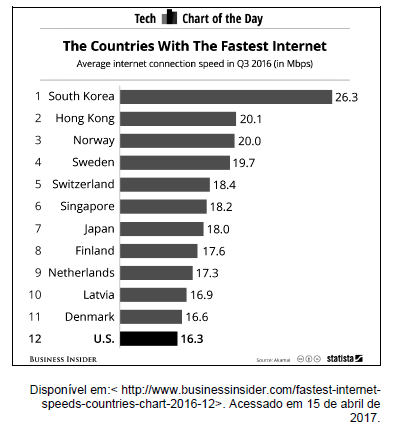
Imagem associada para resolução da questão

According to the graphic, it is true to assert that

Alternativas
Q1331214 Inglês
Read the text below and answer the following  question based on it.

Most Teenagers happy with their lives but schoolwork anxiety and bullying an issue


Most teenagers happy with their lives but schoolwork anxiety and bullying an issue

Teenagers who feel part of a school community and enjoy good relations with their parents and teachers are more likely to perform better academically and be happier with their lives, according to the first OECD PISA assessment of students’ well-being.

PISA 2015 Results analyses for the first time students’ motivation to perform well in school, their relationships with peers and teachers, their home life, and how they spend their time outside of school. The findings are based on a survey of 540,000 students in 72 participating countries and economies who also completed the main OECD PISA 2015 test on science, mathematics and reading.

Many students are very anxious about school work and tests and the analysis reveals this is not related to the number of school hours or the frequency of tests but with how supportive they feel their teachers and schools to be: on average across OECD countries, 59% of students reported they often worry that taking a test will be difficult, and 66% reported feeling stressed about poor grades. Some 55% of students say they are very anxious for a test even if they are well prepared. In all countries, girls reported greater schoolwork-related anxiety than boys; and anxiety about schoolwork, homework and tests is negatively related to performance.

Teachers play a big role in creating the conditions for students’ well-being at school and governments should not define the role of teachers solely through the number of instruction hours. Happier students tend to report positive relations with their teachers. Students in schools where life satisfaction is above the national average reported a higher level of support from their teacher than students in schools where life satisfaction is below average.

“These findings show how teachers, schools and parents can make a real difference to children’s well-being,” said OECD Chief of Staff Gabriela Ramos, launching the report in London. “Together they can help young people develop a sense of control over their future and the resilience they need to be successful in life. There is no secret, you perform better if you feel valued, if you feel well treated, if you are given a hand to succeed!”


Adaptado de: Acessado em 19 de abril de 2017. 

The findings suggest that students’ well-being also depend on their teachers’

Alternativas
Q1331213 Inglês
Read the text below and answer the following  question based on it.

Most Teenagers happy with their lives but schoolwork anxiety and bullying an issue


Most teenagers happy with their lives but schoolwork anxiety and bullying an issue

Teenagers who feel part of a school community and enjoy good relations with their parents and teachers are more likely to perform better academically and be happier with their lives, according to the first OECD PISA assessment of students’ well-being.

PISA 2015 Results analyses for the first time students’ motivation to perform well in school, their relationships with peers and teachers, their home life, and how they spend their time outside of school. The findings are based on a survey of 540,000 students in 72 participating countries and economies who also completed the main OECD PISA 2015 test on science, mathematics and reading.

Many students are very anxious about school work and tests and the analysis reveals this is not related to the number of school hours or the frequency of tests but with how supportive they feel their teachers and schools to be: on average across OECD countries, 59% of students reported they often worry that taking a test will be difficult, and 66% reported feeling stressed about poor grades. Some 55% of students say they are very anxious for a test even if they are well prepared. In all countries, girls reported greater schoolwork-related anxiety than boys; and anxiety about schoolwork, homework and tests is negatively related to performance.

Teachers play a big role in creating the conditions for students’ well-being at school and governments should not define the role of teachers solely through the number of instruction hours. Happier students tend to report positive relations with their teachers. Students in schools where life satisfaction is above the national average reported a higher level of support from their teacher than students in schools where life satisfaction is below average.

“These findings show how teachers, schools and parents can make a real difference to children’s well-being,” said OECD Chief of Staff Gabriela Ramos, launching the report in London. “Together they can help young people develop a sense of control over their future and the resilience they need to be successful in life. There is no secret, you perform better if you feel valued, if you feel well treated, if you are given a hand to succeed!”


Adaptado de: Acessado em 19 de abril de 2017. 
The survey showed girls tend to respond to schoolwork-related anxiety
Alternativas
Q1331212 Inglês
Read the text below and answer the following  question based on it.

Most Teenagers happy with their lives but schoolwork anxiety and bullying an issue


Most teenagers happy with their lives but schoolwork anxiety and bullying an issue

Teenagers who feel part of a school community and enjoy good relations with their parents and teachers are more likely to perform better academically and be happier with their lives, according to the first OECD PISA assessment of students’ well-being.

PISA 2015 Results analyses for the first time students’ motivation to perform well in school, their relationships with peers and teachers, their home life, and how they spend their time outside of school. The findings are based on a survey of 540,000 students in 72 participating countries and economies who also completed the main OECD PISA 2015 test on science, mathematics and reading.

Many students are very anxious about school work and tests and the analysis reveals this is not related to the number of school hours or the frequency of tests but with how supportive they feel their teachers and schools to be: on average across OECD countries, 59% of students reported they often worry that taking a test will be difficult, and 66% reported feeling stressed about poor grades. Some 55% of students say they are very anxious for a test even if they are well prepared. In all countries, girls reported greater schoolwork-related anxiety than boys; and anxiety about schoolwork, homework and tests is negatively related to performance.

Teachers play a big role in creating the conditions for students’ well-being at school and governments should not define the role of teachers solely through the number of instruction hours. Happier students tend to report positive relations with their teachers. Students in schools where life satisfaction is above the national average reported a higher level of support from their teacher than students in schools where life satisfaction is below average.

“These findings show how teachers, schools and parents can make a real difference to children’s well-being,” said OECD Chief of Staff Gabriela Ramos, launching the report in London. “Together they can help young people develop a sense of control over their future and the resilience they need to be successful in life. There is no secret, you perform better if you feel valued, if you feel well treated, if you are given a hand to succeed!”


Adaptado de: Acessado em 19 de abril de 2017. 
The first OECD PISA assessment of students’ wellbeing
Alternativas
Respostas
19621: A
19622: C
19623: B
19624: D
19625: A
19626: D
19627: B
19628: C
19629: D
19630: A
19631: D
19632: B
19633: D
19634: B
19635: A
19636: E
19637: B
19638: A
19639: D
19640: C