Questões de Concurso Sobre inglês
Foram encontradas 25.355 questões


What is blended learning and how does it work?
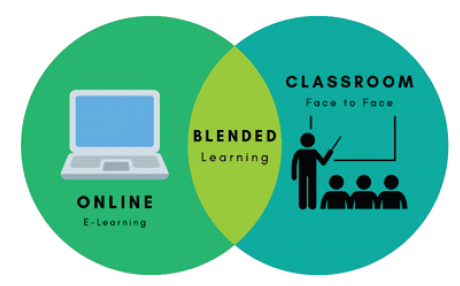

TEXT IV

(Available at: https://www.teachthought.com/learning/what-is-competency-based-learning/ Accessed on October 22 , 2019).
TEXT IV
(Available at: https://www.teachthought.com/learning/what-is-competency-based-learning/ Accessed on October 22 , 2019).
TEXT III

(Available at: https://www.glasbergen.com/gallery-search/?tag=learning. Accessed on October 26 , 2019)
TEXT III
(Available at: https://www.glasbergen.com/gallery-search/?tag=learning. Accessed on October 26 , 2019)
TEXT III
(Available at: https://www.glasbergen.com/gallery-search/?tag=learning. Accessed on October 26 , 2019)
TEXT II
Another Brick In The Wall (Pink Floyd)
We don't need no education
We don't need no thought control
No dark sarcasm in the classroom
Teachers, leave them kids alone
Hey! Teacher! Leave them kids alone!
All in all, it's just another brick in the wall
All in all, you're just another brick in the wall
(Adapted from: https://www.letras.mus.br/pink-floyd/64541/. Accessed on October 31 , 2019).
TEXT II
Another Brick In The Wall (Pink Floyd)
We don't need no education
We don't need no thought control
No dark sarcasm in the classroom
Teachers, leave them kids alone
Hey! Teacher! Leave them kids alone!
All in all, it's just another brick in the wall
All in all, you're just another brick in the wall
(Adapted from: https://www.letras.mus.br/pink-floyd/64541/. Accessed on October 31 , 2019).
TEXT II
Another Brick In The Wall (Pink Floyd)
We don't need no education
We don't need no thought control
No dark sarcasm in the classroom
Teachers, leave them kids alone
Hey! Teacher! Leave them kids alone!
All in all, it's just another brick in the wall
All in all, you're just another brick in the wall
(Adapted from: https://www.letras.mus.br/pink-floyd/64541/. Accessed on October 31 , 2019).
TEXT I-
ENEM and the Language Policy forEnglish in the Brazilian Context
Andrea Barros Carvalho de Oliveira
1.INTRODUCTION
In the present article, I report the results of a doctoral research that focused on the language policy for English in Brazil, considering specifically the role of Exame Nacional do Ensino Médio (hereinafter ENEM) in this policy. Thus, taking into account the sociopolitical aspects of the teaching processes, learning, and use of English as a foreign language, we sought to identify the possible impact of ENEM on the status of English language as a school subject.
ENEM was initially conceived as a final exam to evaluate students at the end of basic education. However, it has been modified over the last few years to work as an entrance examination for public and private universities. In addition, the use of this exam in several governmental programs aimed at higher education access was preponderant to make it a high stakes exam in the educational scenario.
According to the literature on language examination exams, especially those considered to be high stakes, are seen as an intrinsically political activity (ALDERSON; BANERJEE, 2001). These exams can be used as educational policy tools as well as to promote a specific language related to local language policy objectives.
The theoretical conception of Language Policy (hereinafter LP) adopted in this investigation refers to Shohamy (2006). This author postulates that, although there is an official LP established in legislation and official documents, it is also necessary to consider the existence of a “real” LP, or “de facto” LP, which is put into practice through mechanisms, resources such as traffic signs, rules and laws related to official bodies, language exams, among others. Besides mechanisms, the beliefs or representations about the language that are shared in the community ought to be considered as well. The importance of mechanisms is that they reveal the true aims of LPas established by the government for a specific language, which are not always explicit in Brazilian law.
The research, the results of which are presented in this article, covered the three components of Shohamy’s theoretical model, namely: legislation, mechanisms (in this case, an exam, ENEM), and representations or beliefs about language. To obtain a sample of representations about English language, interviews were conducted with the students from an ENEM preparatory course for university entrance, with two teachers of English and two coordinators from public schools.
In the present article, I begin with a review of the expanded conception of LPelaborated by Shohamy, as it is the theoretical basis of this research. Second, I analyze some documents and laws regarding English teaching in Brazil. In addition to these documents, the English questions of ENEM (2016) were taken in consideration. Finally, I present an overview of the representations about English language that emerged from the interviews which constituted the empirical data of my doctoral thesis.
ALDERSON, J. C; BANERJEE, J. Language Testing and Assessment. Language Testing, [S.l.], n. 34, 2001, p. 213-236.
SHOHAMY, E. Language Policy: Hidden Agendas and New Approaches. London; New York: Routledge, 2006. (Adapted from: OLIVEIRA, A.B.C. ENEM and the Language Policy for English in the Brazilian Context. In.: Revista Brasileira de Linguística Aplicada. vol.19 no.2 th Belo Horizonte Apr./June 2019 Available at: http://www.scielo.br/scielo.php?script=sci_arttext&pid=S1984-63982019000200361 Accessed on October 20 , 2019)
TEXT I-
ENEM and the Language Policy forEnglish in the Brazilian Context
Andrea Barros Carvalho de Oliveira
1.INTRODUCTION
In the present article, I report the results of a doctoral research that focused on the language policy for English in Brazil, considering specifically the role of Exame Nacional do Ensino Médio (hereinafter ENEM) in this policy. Thus, taking into account the sociopolitical aspects of the teaching processes, learning, and use of English as a foreign language, we sought to identify the possible impact of ENEM on the status of English language as a school subject.
ENEM was initially conceived as a final exam to evaluate students at the end of basic education. However, it has been modified over the last few years to work as an entrance examination for public and private universities. In addition, the use of this exam in several governmental programs aimed at higher education access was preponderant to make it a high stakes exam in the educational scenario.
According to the literature on language examination exams, especially those considered to be high stakes, are seen as an intrinsically political activity (ALDERSON; BANERJEE, 2001). These exams can be used as educational policy tools as well as to promote a specific language related to local language policy objectives.
The theoretical conception of Language Policy (hereinafter LP) adopted in this investigation refers to Shohamy (2006). This author postulates that, although there is an official LP established in legislation and official documents, it is also necessary to consider the existence of a “real” LP, or “de facto” LP, which is put into practice through mechanisms, resources such as traffic signs, rules and laws related to official bodies, language exams, among others. Besides mechanisms, the beliefs or representations about the language that are shared in the community ought to be considered as well. The importance of mechanisms is that they reveal the true aims of LPas established by the government for a specific language, which are not always explicit in Brazilian law.
The research, the results of which are presented in this article, covered the three components of Shohamy’s theoretical model, namely: legislation, mechanisms (in this case, an exam, ENEM), and representations or beliefs about language. To obtain a sample of representations about English language, interviews were conducted with the students from an ENEM preparatory course for university entrance, with two teachers of English and two coordinators from public schools.
In the present article, I begin with a review of the expanded conception of LPelaborated by Shohamy, as it is the theoretical basis of this research. Second, I analyze some documents and laws regarding English teaching in Brazil. In addition to these documents, the English questions of ENEM (2016) were taken in consideration. Finally, I present an overview of the representations about English language that emerged from the interviews which constituted the empirical data of my doctoral thesis.
ALDERSON, J. C; BANERJEE, J. Language Testing and Assessment. Language Testing, [S.l.], n. 34, 2001, p. 213-236.
SHOHAMY, E. Language Policy: Hidden Agendas and New Approaches. London; New York: Routledge, 2006. (Adapted from: OLIVEIRA, A.B.C. ENEM and the Language Policy for English in the Brazilian Context. In.: Revista Brasileira de Linguística Aplicada. vol.19 no.2 th Belo Horizonte Apr./June 2019 Available at: http://www.scielo.br/scielo.php?script=sci_arttext&pid=S1984-63982019000200361 Accessed on October 20 , 2019)
TEXT I-
ENEM and the Language Policy forEnglish in the Brazilian Context
Andrea Barros Carvalho de Oliveira
1.INTRODUCTION
In the present article, I report the results of a doctoral research that focused on the language policy for English in Brazil, considering specifically the role of Exame Nacional do Ensino Médio (hereinafter ENEM) in this policy. Thus, taking into account the sociopolitical aspects of the teaching processes, learning, and use of English as a foreign language, we sought to identify the possible impact of ENEM on the status of English language as a school subject.
ENEM was initially conceived as a final exam to evaluate students at the end of basic education. However, it has been modified over the last few years to work as an entrance examination for public and private universities. In addition, the use of this exam in several governmental programs aimed at higher education access was preponderant to make it a high stakes exam in the educational scenario.
According to the literature on language examination exams, especially those considered to be high stakes, are seen as an intrinsically political activity (ALDERSON; BANERJEE, 2001). These exams can be used as educational policy tools as well as to promote a specific language related to local language policy objectives.
The theoretical conception of Language Policy (hereinafter LP) adopted in this investigation refers to Shohamy (2006). This author postulates that, although there is an official LP established in legislation and official documents, it is also necessary to consider the existence of a “real” LP, or “de facto” LP, which is put into practice through mechanisms, resources such as traffic signs, rules and laws related to official bodies, language exams, among others. Besides mechanisms, the beliefs or representations about the language that are shared in the community ought to be considered as well. The importance of mechanisms is that they reveal the true aims of LPas established by the government for a specific language, which are not always explicit in Brazilian law.
The research, the results of which are presented in this article, covered the three components of Shohamy’s theoretical model, namely: legislation, mechanisms (in this case, an exam, ENEM), and representations or beliefs about language. To obtain a sample of representations about English language, interviews were conducted with the students from an ENEM preparatory course for university entrance, with two teachers of English and two coordinators from public schools.
In the present article, I begin with a review of the expanded conception of LPelaborated by Shohamy, as it is the theoretical basis of this research. Second, I analyze some documents and laws regarding English teaching in Brazil. In addition to these documents, the English questions of ENEM (2016) were taken in consideration. Finally, I present an overview of the representations about English language that emerged from the interviews which constituted the empirical data of my doctoral thesis.
ALDERSON, J. C; BANERJEE, J. Language Testing and Assessment. Language Testing, [S.l.], n. 34, 2001, p. 213-236.
SHOHAMY, E. Language Policy: Hidden Agendas and New Approaches. London; New York: Routledge, 2006. (Adapted from: OLIVEIRA, A.B.C. ENEM and the Language Policy for English in the Brazilian Context. In.: Revista Brasileira de Linguística Aplicada. vol.19 no.2 th Belo Horizonte Apr./June 2019 Available at: http://www.scielo.br/scielo.php?script=sci_arttext&pid=S1984-63982019000200361 Accessed on October 20 , 2019)
TEXT I-
ENEM and the Language Policy forEnglish in the Brazilian Context
Andrea Barros Carvalho de Oliveira
1.INTRODUCTION
In the present article, I report the results of a doctoral research that focused on the language policy for English in Brazil, considering specifically the role of Exame Nacional do Ensino Médio (hereinafter ENEM) in this policy. Thus, taking into account the sociopolitical aspects of the teaching processes, learning, and use of English as a foreign language, we sought to identify the possible impact of ENEM on the status of English language as a school subject.
ENEM was initially conceived as a final exam to evaluate students at the end of basic education. However, it has been modified over the last few years to work as an entrance examination for public and private universities. In addition, the use of this exam in several governmental programs aimed at higher education access was preponderant to make it a high stakes exam in the educational scenario.
According to the literature on language examination exams, especially those considered to be high stakes, are seen as an intrinsically political activity (ALDERSON; BANERJEE, 2001). These exams can be used as educational policy tools as well as to promote a specific language related to local language policy objectives.
The theoretical conception of Language Policy (hereinafter LP) adopted in this investigation refers to Shohamy (2006). This author postulates that, although there is an official LP established in legislation and official documents, it is also necessary to consider the existence of a “real” LP, or “de facto” LP, which is put into practice through mechanisms, resources such as traffic signs, rules and laws related to official bodies, language exams, among others. Besides mechanisms, the beliefs or representations about the language that are shared in the community ought to be considered as well. The importance of mechanisms is that they reveal the true aims of LPas established by the government for a specific language, which are not always explicit in Brazilian law.
The research, the results of which are presented in this article, covered the three components of Shohamy’s theoretical model, namely: legislation, mechanisms (in this case, an exam, ENEM), and representations or beliefs about language. To obtain a sample of representations about English language, interviews were conducted with the students from an ENEM preparatory course for university entrance, with two teachers of English and two coordinators from public schools.
In the present article, I begin with a review of the expanded conception of LPelaborated by Shohamy, as it is the theoretical basis of this research. Second, I analyze some documents and laws regarding English teaching in Brazil. In addition to these documents, the English questions of ENEM (2016) were taken in consideration. Finally, I present an overview of the representations about English language that emerged from the interviews which constituted the empirical data of my doctoral thesis.
ALDERSON, J. C; BANERJEE, J. Language Testing and Assessment. Language Testing, [S.l.], n. 34, 2001, p. 213-236.
SHOHAMY, E. Language Policy: Hidden Agendas and New Approaches. London; New York: Routledge, 2006. (Adapted from: OLIVEIRA, A.B.C. ENEM and the Language Policy for English in the Brazilian Context. In.: Revista Brasileira de Linguística Aplicada. vol.19 no.2 th Belo Horizonte Apr./June 2019 Available at: http://www.scielo.br/scielo.php?script=sci_arttext&pid=S1984-63982019000200361 Accessed on October 20 , 2019)
Complete the sentences with the correct form of the verb in parenthesis:
1.She ____ the text frequently.(to forget)
2.I_______a new bicycle two months ago. (to buy)
Respectively the order is:
CRIMINALS HAVE SMALLER BRAIN SIZE, SAYS STUDY
A new study has found that antisocial people are more likely to have smaller areas of their brain. Researchers said criminals' brains had a different structure to the brains of people who followed the law. The study is published in the journal "Lancet Psychiatry". Researchers used data from 672 people born in 1972-73. They looked at records of the people's antisocial behaviour between the ages of seven and 26. At the age of 45, the researchers scanned the people's brains. Eighty of the people had a history of criminal and antisocial behaviour from being early teenagers. Researchers found that the areas of the brain linked to emotions, motivation and behaviour control were smaller in the long-term criminals' brains.
Professor Terrie Moffitt, a co-author of the research, said the research could help doctors understand what is behind long-term antisocial behaviour. She said the antisocial people in the study may have behaved badly because of their brain structure. She said: "They are actually operating under some [disability] at the level of the brain." She added that because of this, we needed to care for these people in a kinder way. Lead author Dr Christina Carlisi said: "Differences in brain structure might make it difficult for people to develop social skills. This may prevent them from engaging in antisocial behaviour. These people could benefit from more support throughout their lives."
Available on: https://breakingnewsenglish.com/2002/200221-brain-size.html Accessed on: March, 20th 2020.
CRIMINALS HAVE SMALLER BRAIN SIZE, SAYS STUDY
A new study has found that antisocial people are more likely to have smaller areas of their brain. Researchers said criminals' brains had a different structure to the brains of people who followed the law. The study is published in the journal "Lancet Psychiatry". Researchers used data from 672 people born in 1972-73. They looked at records of the people's antisocial behaviour between the ages of seven and 26. At the age of 45, the researchers scanned the people's brains. Eighty of the people had a history of criminal and antisocial behaviour from being early teenagers. Researchers found that the areas of the brain linked to emotions, motivation and behaviour control were smaller in the long-term criminals' brains.
Professor Terrie Moffitt, a co-author of the research, said the research could help doctors understand what is behind long-term antisocial behaviour. She said the antisocial people in the study may have behaved badly because of their brain structure. She said: "They are actually operating under some [disability] at the level of the brain." She added that because of this, we needed to care for these people in a kinder way. Lead author Dr Christina Carlisi said: "Differences in brain structure might make it difficult for people to develop social skills. This may prevent them from engaging in antisocial behaviour. These people could benefit from more support throughout their lives."
Available on: https://breakingnewsenglish.com/2002/200221-brain-size.html Accessed on: March, 20th 2020.

 Conheça nossos planos