Questões de Concurso Sobre inglês
Foram encontradas 25.340 questões


Ano: 2021
Banca:
Avança SP
Órgão:
Prefeitura de Rio Claro - SP
Prova:
Avança SP - 2021 - Prefeitura de Rio Claro - SP - Professor de Educação Básica II - Inglês |
Q2101327
Inglês
Texto associado
Investment in primary health care urgently needed to ensure COVID-19 recovery in the
Americas.
Increased public health spending must continue to improve hardest-hit primary care services such as
routine immunization programs, says PAHO Director.
Washington, DC, November 10, 2021 (PAHO) – With countries in the Americas reporting severe
disruptions in essential primary health care services, urgent investment is key to improving health
systems continuously weakened by the pandemic, said Pan American Health Organization (PAHO)
Director Carissa F. Etienne.
With cases rising in some parts of the region following a two-month decline, it is vital that countries
remain vigilant and prioritize public spending in heath so that no one is left behind.
“Few countries invest as much public spending in their health services as they should, leaving them
prone to shortages in health personnel and essential supplies.”
With the pandemic siphoning off financial and human resources, many countries have reported
interruptions in vital areas, such as routine immunization programs, support for chronic conditions
and mental- and reproductive health services.
Despite these disruptions, public investment in health has risen in many countries to ramp up ICU
capacity, increase hospital services, and deploy COVID-19 vaccines. But these increases cannot be a
short-term trend, the Director said.
All countries should increase public expenditures in their health systems to the recommended 6% of
national GDP or higher and should ensure that 30% of this funding goes to first level care.
“Primary care, as you have heard us say over and over again, is the backbone of our health systems,”
Dr. Etienne said, and more important than ever. “It’s at the primary care level that COVID testing,
contact tracking and tracing and immunizations take place.”
As economies remain strained, countries face difficult choices about how to spend limited funds. “We
cannot forget that health is an investment, not an expense,” the Director said. “As we learned with
COVID-19, health is at the core of vibrant societies. It keeps people working, kids in schools,
companies productive and economies growing.”
Turning to the COVID-19 situation in the region, Dr. Etienne said that in the past week countries
reported 700,000 new COVID infections and 13,000 deaths.
Several countries, including parts of Colombia and Bolivia and the Southern Cone countries, are
seeing upward trends after relaxing public health measures.
In the Caribbean, Cuba, Jamaica, and Puerto Rico have reported a drop in new infections while cases
are rising in the Dominican Republic, Trinidad and Tobago and Barbados. High numbers of cases are
also being seen in the Cayman Islands and Dominica.
Vaccination rates, however, continue to pick up pace, reaching an overall coverage of 48% in Latin
America and the Caribbean.
PAHO continues to work with manufacturers to secure additional doses, the Director added. The
organization has signed supply agreements with three manufacturers of WHO Emergency Use Listing
(EUL) vaccines and is in final negotiations with a fourth supplier of mRNA vaccines.
Available at: https://www.paho.org/en/news/10-11-2021-investment-primary-health-care-urgentlyneeded-ensure-covid-19-recovery-americas
No texto, [...] o investimento público em saúde aumentou em muitos países para aumentar a
capacidade da UTI, aumentar os serviços hospitalares e implantar as vacinas COVID-19. Sobre esse
trecho, o que disse a Diretora da Organização Pan-americana de Saúde Carissa F. Etienne?
Ano: 2021
Banca:
Avança SP
Órgão:
Prefeitura de Rio Claro - SP
Prova:
Avança SP - 2021 - Prefeitura de Rio Claro - SP - Professor de Educação Básica II - Inglês |
Q2101326
Inglês
Texto associado
Investment in primary health care urgently needed to ensure COVID-19 recovery in the
Americas.
Increased public health spending must continue to improve hardest-hit primary care services such as
routine immunization programs, says PAHO Director.
Washington, DC, November 10, 2021 (PAHO) – With countries in the Americas reporting severe
disruptions in essential primary health care services, urgent investment is key to improving health
systems continuously weakened by the pandemic, said Pan American Health Organization (PAHO)
Director Carissa F. Etienne.
With cases rising in some parts of the region following a two-month decline, it is vital that countries
remain vigilant and prioritize public spending in heath so that no one is left behind.
“Few countries invest as much public spending in their health services as they should, leaving them
prone to shortages in health personnel and essential supplies.”
With the pandemic siphoning off financial and human resources, many countries have reported
interruptions in vital areas, such as routine immunization programs, support for chronic conditions
and mental- and reproductive health services.
Despite these disruptions, public investment in health has risen in many countries to ramp up ICU
capacity, increase hospital services, and deploy COVID-19 vaccines. But these increases cannot be a
short-term trend, the Director said.
All countries should increase public expenditures in their health systems to the recommended 6% of
national GDP or higher and should ensure that 30% of this funding goes to first level care.
“Primary care, as you have heard us say over and over again, is the backbone of our health systems,”
Dr. Etienne said, and more important than ever. “It’s at the primary care level that COVID testing,
contact tracking and tracing and immunizations take place.”
As economies remain strained, countries face difficult choices about how to spend limited funds. “We
cannot forget that health is an investment, not an expense,” the Director said. “As we learned with
COVID-19, health is at the core of vibrant societies. It keeps people working, kids in schools,
companies productive and economies growing.”
Turning to the COVID-19 situation in the region, Dr. Etienne said that in the past week countries
reported 700,000 new COVID infections and 13,000 deaths.
Several countries, including parts of Colombia and Bolivia and the Southern Cone countries, are
seeing upward trends after relaxing public health measures.
In the Caribbean, Cuba, Jamaica, and Puerto Rico have reported a drop in new infections while cases
are rising in the Dominican Republic, Trinidad and Tobago and Barbados. High numbers of cases are
also being seen in the Cayman Islands and Dominica.
Vaccination rates, however, continue to pick up pace, reaching an overall coverage of 48% in Latin
America and the Caribbean.
PAHO continues to work with manufacturers to secure additional doses, the Director added. The
organization has signed supply agreements with three manufacturers of WHO Emergency Use Listing
(EUL) vaccines and is in final negotiations with a fourth supplier of mRNA vaccines.
Available at: https://www.paho.org/en/news/10-11-2021-investment-primary-health-care-urgentlyneeded-ensure-covid-19-recovery-americas
Segundo o texto, muitos países relataram interrupções em áreas vitais, como programas de vacinação
de rotina, apoio para doenças crônicas e serviços de saúde mental e reprodutiva. Assinale a alternativa
que apresenta a causa para essas interrupções.
Ano: 2021
Banca:
Avança SP
Órgão:
Prefeitura de Rio Claro - SP
Prova:
Avança SP - 2021 - Prefeitura de Rio Claro - SP - Professor de Educação Básica II - Inglês |
Q2101325
Inglês
Texto associado
Investment in primary health care urgently needed to ensure COVID-19 recovery in the
Americas.
Increased public health spending must continue to improve hardest-hit primary care services such as
routine immunization programs, says PAHO Director.
Washington, DC, November 10, 2021 (PAHO) – With countries in the Americas reporting severe
disruptions in essential primary health care services, urgent investment is key to improving health
systems continuously weakened by the pandemic, said Pan American Health Organization (PAHO)
Director Carissa F. Etienne.
With cases rising in some parts of the region following a two-month decline, it is vital that countries
remain vigilant and prioritize public spending in heath so that no one is left behind.
“Few countries invest as much public spending in their health services as they should, leaving them
prone to shortages in health personnel and essential supplies.”
With the pandemic siphoning off financial and human resources, many countries have reported
interruptions in vital areas, such as routine immunization programs, support for chronic conditions
and mental- and reproductive health services.
Despite these disruptions, public investment in health has risen in many countries to ramp up ICU
capacity, increase hospital services, and deploy COVID-19 vaccines. But these increases cannot be a
short-term trend, the Director said.
All countries should increase public expenditures in their health systems to the recommended 6% of
national GDP or higher and should ensure that 30% of this funding goes to first level care.
“Primary care, as you have heard us say over and over again, is the backbone of our health systems,”
Dr. Etienne said, and more important than ever. “It’s at the primary care level that COVID testing,
contact tracking and tracing and immunizations take place.”
As economies remain strained, countries face difficult choices about how to spend limited funds. “We
cannot forget that health is an investment, not an expense,” the Director said. “As we learned with
COVID-19, health is at the core of vibrant societies. It keeps people working, kids in schools,
companies productive and economies growing.”
Turning to the COVID-19 situation in the region, Dr. Etienne said that in the past week countries
reported 700,000 new COVID infections and 13,000 deaths.
Several countries, including parts of Colombia and Bolivia and the Southern Cone countries, are
seeing upward trends after relaxing public health measures.
In the Caribbean, Cuba, Jamaica, and Puerto Rico have reported a drop in new infections while cases
are rising in the Dominican Republic, Trinidad and Tobago and Barbados. High numbers of cases are
also being seen in the Cayman Islands and Dominica.
Vaccination rates, however, continue to pick up pace, reaching an overall coverage of 48% in Latin
America and the Caribbean.
PAHO continues to work with manufacturers to secure additional doses, the Director added. The
organization has signed supply agreements with three manufacturers of WHO Emergency Use Listing
(EUL) vaccines and is in final negotiations with a fourth supplier of mRNA vaccines.
Available at: https://www.paho.org/en/news/10-11-2021-investment-primary-health-care-urgentlyneeded-ensure-covid-19-recovery-americas
Segundo o texto, por que é vital que os países permaneçam vigilantes e priorizem os gastos públicos
com saúde?
Ano: 2021
Banca:
AMEOSC
Órgão:
Prefeitura de Iporã do Oeste - SC
Prova:
AMEOSC - 2021 - Prefeitura de Iporã do Oeste - SC - Professor de Inglês |
Q2016764
Inglês
Considere o trecho a seguir.
"É papel fundamental do professor trazer para sala de aula a cultura de seus alunos assim como mostrar um inglês internacional que não pertence apenas a um povo ou cultura. Para tanto, é importante que o professor esteja pronto para questionar o que o livro traz e incitar que seus alunos façam o mesmo. Também é importante trazer exemplos que mostrem a existência de outras versões diferentes da que o livro propõe [...]." Fonte: DAGIOS, M. G.; BRUZ I. M.; MULIK, K. B.; FERNANDES, K. A. R. C. de M. O livro didático de língua inglesa e questões de cultura e interculturalidade. XI Congresso Nacional de Educação . Educere, 2013, p. 17046.
Disponível em: <http://educere.bruc.com.br/ANAIS2013/pdf/9605_6126.pdf>
O trecho acima enfatiza a importância do ensino e aprendizagem de Língua Inglesa com ênfase no/na:
"É papel fundamental do professor trazer para sala de aula a cultura de seus alunos assim como mostrar um inglês internacional que não pertence apenas a um povo ou cultura. Para tanto, é importante que o professor esteja pronto para questionar o que o livro traz e incitar que seus alunos façam o mesmo. Também é importante trazer exemplos que mostrem a existência de outras versões diferentes da que o livro propõe [...]." Fonte: DAGIOS, M. G.; BRUZ I. M.; MULIK, K. B.; FERNANDES, K. A. R. C. de M. O livro didático de língua inglesa e questões de cultura e interculturalidade. XI Congresso Nacional de Educação . Educere, 2013, p. 17046.
Disponível em: <http://educere.bruc.com.br/ANAIS2013/pdf/9605_6126.pdf>
O trecho acima enfatiza a importância do ensino e aprendizagem de Língua Inglesa com ênfase no/na:
Ano: 2021
Banca:
AMEOSC
Órgão:
Prefeitura de Iporã do Oeste - SC
Prova:
AMEOSC - 2021 - Prefeitura de Iporã do Oeste - SC - Professor de Inglês |
Q2016756
Inglês
Texto associado
TEXTO 01
O texto seguinte servirá de base para responder à questão.
Seven secrets to savvy packing before you head
off on your holidays
(1º§) 1.Tuck and roll clothes
ITEMS like sarongs and dresses are vulnerable to
creasing, but rolling them up and tucking them in
tightly is the way to beat wrinkling. Or follow tidying
guru Marie Kondo's advice and pack all of your
clothes upright, rather than in a pile, so that you can
see all of the outfits in your case.
(2º§) 2. Keep hats in shape
WHAT'S a holiday without a hat? If you need to put
yours in a suitcase, make sure it's one of the first
things you pack, and stuff it! A swimsuit works well as
the cossie will keep its shape no matter what you
pack it in. Then place small items such as underwear
around it.
(3º§) 3. Stuff sandals to keep shape
YOU don't want your sandals to be bent out of shape
while en route, so stuff them with a small item such as
a pair of socks. That way they will also take up less
room in your suitcase. You can also slot the ends of
your sandals together to help preserve their shape
even more.
(4º§) 4. The rule off three fold
THE rule of three is an effective way to keep smaller
items such as T-shirts folded nice and tightly. Think of
your T-shirt split into three equal parts down the
middle. Fold each side into the centre, fold in half and
then again until your item is small and compact.
(5º§) 5. Tie belts around shorts
IF you have a pair of shorts or trousers that have a
tie, use it to your advantage. Remove it from the belt
loops and once your item is rolled, wrap the tie
around as many times as needed before tucking ends
in. It will stop clothing unrolling and has the extra
benefit of keeping the tie crease-free.
(6º§) 6. Fold up bag and add trinkets
FOLD your bag in half before placing it flat at the
bottom of the suitcase. Then add your larger, rolleditems on top of the bag. It will stay as flat as possible
and so avoid becoming misshapen. Add smaller items
such as jewellery inside your rolled clothes to keep
them safe.
(7º§) 7. Sunglasses protection
IF your sunglasses don't come with a protective case,
then they need to be protected from being damaged
during the journey, it's horribly easy to scratch the
lenses. A soft sarong, which is all one fabric, is
perfect for this. Pop your sunnies in, roll to the end,
and pack it up.
https://www.thesun.co.uk/travel/15855247/seven-secrets-to-savvy-packing/
According to the text, what could happen if the
sunglasses are not packed well?
Ano: 2021
Banca:
AMEOSC
Órgão:
Prefeitura de Iporã do Oeste - SC
Prova:
AMEOSC - 2021 - Prefeitura de Iporã do Oeste - SC - Professor de Inglês |
Q2016755
Inglês
Texto associado
TEXTO 01
O texto seguinte servirá de base para responder à questão.
Seven secrets to savvy packing before you head
off on your holidays
(1º§) 1.Tuck and roll clothes
ITEMS like sarongs and dresses are vulnerable to
creasing, but rolling them up and tucking them in
tightly is the way to beat wrinkling. Or follow tidying
guru Marie Kondo's advice and pack all of your
clothes upright, rather than in a pile, so that you can
see all of the outfits in your case.
(2º§) 2. Keep hats in shape
WHAT'S a holiday without a hat? If you need to put
yours in a suitcase, make sure it's one of the first
things you pack, and stuff it! A swimsuit works well as
the cossie will keep its shape no matter what you
pack it in. Then place small items such as underwear
around it.
(3º§) 3. Stuff sandals to keep shape
YOU don't want your sandals to be bent out of shape
while en route, so stuff them with a small item such as
a pair of socks. That way they will also take up less
room in your suitcase. You can also slot the ends of
your sandals together to help preserve their shape
even more.
(4º§) 4. The rule off three fold
THE rule of three is an effective way to keep smaller
items such as T-shirts folded nice and tightly. Think of
your T-shirt split into three equal parts down the
middle. Fold each side into the centre, fold in half and
then again until your item is small and compact.
(5º§) 5. Tie belts around shorts
IF you have a pair of shorts or trousers that have a
tie, use it to your advantage. Remove it from the belt
loops and once your item is rolled, wrap the tie
around as many times as needed before tucking ends
in. It will stop clothing unrolling and has the extra
benefit of keeping the tie crease-free.
(6º§) 6. Fold up bag and add trinkets
FOLD your bag in half before placing it flat at the
bottom of the suitcase. Then add your larger, rolleditems on top of the bag. It will stay as flat as possible
and so avoid becoming misshapen. Add smaller items
such as jewellery inside your rolled clothes to keep
them safe.
(7º§) 7. Sunglasses protection
IF your sunglasses don't come with a protective case,
then they need to be protected from being damaged
during the journey, it's horribly easy to scratch the
lenses. A soft sarong, which is all one fabric, is
perfect for this. Pop your sunnies in, roll to the end,
and pack it up.
https://www.thesun.co.uk/travel/15855247/seven-secrets-to-savvy-packing/
According to the text, the secret to packing clothes is:
Ano: 2021
Banca:
AMEOSC
Órgão:
Prefeitura de Iporã do Oeste - SC
Prova:
AMEOSC - 2021 - Prefeitura de Iporã do Oeste - SC - Professor de Inglês |
Q2016754
Inglês
Texto associado
TEXTO 01
O texto seguinte servirá de base para responder à questão.
Seven secrets to savvy packing before you head
off on your holidays
(1º§) 1.Tuck and roll clothes
ITEMS like sarongs and dresses are vulnerable to
creasing, but rolling them up and tucking them in
tightly is the way to beat wrinkling. Or follow tidying
guru Marie Kondo's advice and pack all of your
clothes upright, rather than in a pile, so that you can
see all of the outfits in your case.
(2º§) 2. Keep hats in shape
WHAT'S a holiday without a hat? If you need to put
yours in a suitcase, make sure it's one of the first
things you pack, and stuff it! A swimsuit works well as
the cossie will keep its shape no matter what you
pack it in. Then place small items such as underwear
around it.
(3º§) 3. Stuff sandals to keep shape
YOU don't want your sandals to be bent out of shape
while en route, so stuff them with a small item such as
a pair of socks. That way they will also take up less
room in your suitcase. You can also slot the ends of
your sandals together to help preserve their shape
even more.
(4º§) 4. The rule off three fold
THE rule of three is an effective way to keep smaller
items such as T-shirts folded nice and tightly. Think of
your T-shirt split into three equal parts down the
middle. Fold each side into the centre, fold in half and
then again until your item is small and compact.
(5º§) 5. Tie belts around shorts
IF you have a pair of shorts or trousers that have a
tie, use it to your advantage. Remove it from the belt
loops and once your item is rolled, wrap the tie
around as many times as needed before tucking ends
in. It will stop clothing unrolling and has the extra
benefit of keeping the tie crease-free.
(6º§) 6. Fold up bag and add trinkets
FOLD your bag in half before placing it flat at the
bottom of the suitcase. Then add your larger, rolleditems on top of the bag. It will stay as flat as possible
and so avoid becoming misshapen. Add smaller items
such as jewellery inside your rolled clothes to keep
them safe.
(7º§) 7. Sunglasses protection
IF your sunglasses don't come with a protective case,
then they need to be protected from being damaged
during the journey, it's horribly easy to scratch the
lenses. A soft sarong, which is all one fabric, is
perfect for this. Pop your sunnies in, roll to the end,
and pack it up.
https://www.thesun.co.uk/travel/15855247/seven-secrets-to-savvy-packing/
Mark the alternative that has a synonym to the word
"misshapen" (6º§).
Ano: 2021
Banca:
AMEOSC
Órgão:
Prefeitura de Iporã do Oeste - SC
Prova:
AMEOSC - 2021 - Prefeitura de Iporã do Oeste - SC - Professor de Inglês |
Q2016753
Inglês
Texto associado
TEXTO 01
O texto seguinte servirá de base para responder à questão.
Seven secrets to savvy packing before you head
off on your holidays
(1º§) 1.Tuck and roll clothes
ITEMS like sarongs and dresses are vulnerable to
creasing, but rolling them up and tucking them in
tightly is the way to beat wrinkling. Or follow tidying
guru Marie Kondo's advice and pack all of your
clothes upright, rather than in a pile, so that you can
see all of the outfits in your case.
(2º§) 2. Keep hats in shape
WHAT'S a holiday without a hat? If you need to put
yours in a suitcase, make sure it's one of the first
things you pack, and stuff it! A swimsuit works well as
the cossie will keep its shape no matter what you
pack it in. Then place small items such as underwear
around it.
(3º§) 3. Stuff sandals to keep shape
YOU don't want your sandals to be bent out of shape
while en route, so stuff them with a small item such as
a pair of socks. That way they will also take up less
room in your suitcase. You can also slot the ends of
your sandals together to help preserve their shape
even more.
(4º§) 4. The rule off three fold
THE rule of three is an effective way to keep smaller
items such as T-shirts folded nice and tightly. Think of
your T-shirt split into three equal parts down the
middle. Fold each side into the centre, fold in half and
then again until your item is small and compact.
(5º§) 5. Tie belts around shorts
IF you have a pair of shorts or trousers that have a
tie, use it to your advantage. Remove it from the belt
loops and once your item is rolled, wrap the tie
around as many times as needed before tucking ends
in. It will stop clothing unrolling and has the extra
benefit of keeping the tie crease-free.
(6º§) 6. Fold up bag and add trinkets
FOLD your bag in half before placing it flat at the
bottom of the suitcase. Then add your larger, rolleditems on top of the bag. It will stay as flat as possible
and so avoid becoming misshapen. Add smaller items
such as jewellery inside your rolled clothes to keep
them safe.
(7º§) 7. Sunglasses protection
IF your sunglasses don't come with a protective case,
then they need to be protected from being damaged
during the journey, it's horribly easy to scratch the
lenses. A soft sarong, which is all one fabric, is
perfect for this. Pop your sunnies in, roll to the end,
and pack it up.
https://www.thesun.co.uk/travel/15855247/seven-secrets-to-savvy-packing/
"Fold your bag in half [...]" (6º§) could be translated
as:
Ano: 2021
Banca:
AMEOSC
Órgão:
Prefeitura de Iporã do Oeste - SC
Prova:
AMEOSC - 2021 - Prefeitura de Iporã do Oeste - SC - Professor de Inglês |
Q2016752
Inglês
Texto associado
TEXTO 01
O texto seguinte servirá de base para responder à questão.
Seven secrets to savvy packing before you head
off on your holidays
(1º§) 1.Tuck and roll clothes
ITEMS like sarongs and dresses are vulnerable to
creasing, but rolling them up and tucking them in
tightly is the way to beat wrinkling. Or follow tidying
guru Marie Kondo's advice and pack all of your
clothes upright, rather than in a pile, so that you can
see all of the outfits in your case.
(2º§) 2. Keep hats in shape
WHAT'S a holiday without a hat? If you need to put
yours in a suitcase, make sure it's one of the first
things you pack, and stuff it! A swimsuit works well as
the cossie will keep its shape no matter what you
pack it in. Then place small items such as underwear
around it.
(3º§) 3. Stuff sandals to keep shape
YOU don't want your sandals to be bent out of shape
while en route, so stuff them with a small item such as
a pair of socks. That way they will also take up less
room in your suitcase. You can also slot the ends of
your sandals together to help preserve their shape
even more.
(4º§) 4. The rule off three fold
THE rule of three is an effective way to keep smaller
items such as T-shirts folded nice and tightly. Think of
your T-shirt split into three equal parts down the
middle. Fold each side into the centre, fold in half and
then again until your item is small and compact.
(5º§) 5. Tie belts around shorts
IF you have a pair of shorts or trousers that have a
tie, use it to your advantage. Remove it from the belt
loops and once your item is rolled, wrap the tie
around as many times as needed before tucking ends
in. It will stop clothing unrolling and has the extra
benefit of keeping the tie crease-free.
(6º§) 6. Fold up bag and add trinkets
FOLD your bag in half before placing it flat at the
bottom of the suitcase. Then add your larger, rolleditems on top of the bag. It will stay as flat as possible
and so avoid becoming misshapen. Add smaller items
such as jewellery inside your rolled clothes to keep
them safe.
(7º§) 7. Sunglasses protection
IF your sunglasses don't come with a protective case,
then they need to be protected from being damaged
during the journey, it's horribly easy to scratch the
lenses. A soft sarong, which is all one fabric, is
perfect for this. Pop your sunnies in, roll to the end,
and pack it up.
https://www.thesun.co.uk/travel/15855247/seven-secrets-to-savvy-packing/
Consider the following assertives:
I.The word "trinkets" could be translated as "bugigangas" (6º§).
II."Rule off" is a phrasal verb (4º§).
III."Belt loops" could be replaced by "Strap tied" (5º§).
Which one(s) is(are) CORRECT?
I.The word "trinkets" could be translated as "bugigangas" (6º§).
II."Rule off" is a phrasal verb (4º§).
III."Belt loops" could be replaced by "Strap tied" (5º§).
Which one(s) is(are) CORRECT?
Ano: 2021
Banca:
AMEOSC
Órgão:
Prefeitura de Iporã do Oeste - SC
Prova:
AMEOSC - 2021 - Prefeitura de Iporã do Oeste - SC - Professor de Inglês |
Q2016751
Inglês
Texto associado
TEXTO 01
O texto seguinte servirá de base para responder à questão.
Seven secrets to savvy packing before you head
off on your holidays
(1º§) 1.Tuck and roll clothes
ITEMS like sarongs and dresses are vulnerable to
creasing, but rolling them up and tucking them in
tightly is the way to beat wrinkling. Or follow tidying
guru Marie Kondo's advice and pack all of your
clothes upright, rather than in a pile, so that you can
see all of the outfits in your case.
(2º§) 2. Keep hats in shape
WHAT'S a holiday without a hat? If you need to put
yours in a suitcase, make sure it's one of the first
things you pack, and stuff it! A swimsuit works well as
the cossie will keep its shape no matter what you
pack it in. Then place small items such as underwear
around it.
(3º§) 3. Stuff sandals to keep shape
YOU don't want your sandals to be bent out of shape
while en route, so stuff them with a small item such as
a pair of socks. That way they will also take up less
room in your suitcase. You can also slot the ends of
your sandals together to help preserve their shape
even more.
(4º§) 4. The rule off three fold
THE rule of three is an effective way to keep smaller
items such as T-shirts folded nice and tightly. Think of
your T-shirt split into three equal parts down the
middle. Fold each side into the centre, fold in half and
then again until your item is small and compact.
(5º§) 5. Tie belts around shorts
IF you have a pair of shorts or trousers that have a
tie, use it to your advantage. Remove it from the belt
loops and once your item is rolled, wrap the tie
around as many times as needed before tucking ends
in. It will stop clothing unrolling and has the extra
benefit of keeping the tie crease-free.
(6º§) 6. Fold up bag and add trinkets
FOLD your bag in half before placing it flat at the
bottom of the suitcase. Then add your larger, rolleditems on top of the bag. It will stay as flat as possible
and so avoid becoming misshapen. Add smaller items
such as jewellery inside your rolled clothes to keep
them safe.
(7º§) 7. Sunglasses protection
IF your sunglasses don't come with a protective case,
then they need to be protected from being damaged
during the journey, it's horribly easy to scratch the
lenses. A soft sarong, which is all one fabric, is
perfect for this. Pop your sunnies in, roll to the end,
and pack it up.
https://www.thesun.co.uk/travel/15855247/seven-secrets-to-savvy-packing/
According to the text, one of the first things you pack
is (are):
Ano: 2021
Banca:
Fundação FAPEC
Órgão:
SAD-MS
Prova:
FAPEC - 2021 - SAD-MS - Professor - Língua Estrangeira - Inglês |
Q2012933
Inglês
Read the text and answers the question.
“I met Mary and some Other friends for lunch and gave her the earrings. Mary thought They were great. Mary’s brother, John, take a lot of photographs. He has a car and he drove us to the beach. We built a big castle with sand from the beach, and we swam in the ocean. Fantastic!”
“I met Mary and some Other friends for lunch and gave her the earrings. Mary thought They were great. Mary’s brother, John, take a lot of photographs. He has a car and he drove us to the beach. We built a big castle with sand from the beach, and we swam in the ocean. Fantastic!”
Ano: 2021
Banca:
Fundação FAPEC
Órgão:
SAD-MS
Prova:
FAPEC - 2021 - SAD-MS - Professor - Língua Estrangeira - Inglês |
Q2012932
Inglês
Choose one of the alternatives.
Castiel: "I'm almost dozing off. I can’t sleep, I
need to wake up!"
Pearl: "I will get for you some coffee."
Ano: 2021
Banca:
Fundação FAPEC
Órgão:
SAD-MS
Prova:
FAPEC - 2021 - SAD-MS - Professor - Língua Estrangeira - Inglês |
Q2012931
Inglês
Check the alternative that correctly
completes the following conditionals:
“If I were you, I would get a new dress for the dinner”.
“If I were you, I would get a new dress for the dinner”.
Ano: 2021
Banca:
Fundação FAPEC
Órgão:
SAD-MS
Prova:
FAPEC - 2021 - SAD-MS - Professor - Língua Estrangeira - Inglês |
Q2012930
Inglês
Qual das alternativas abaixo corresponde
a sentença: “Brian cooks the Crhistmas meal
Every year”, na voz passiva?
Ano: 2021
Banca:
Fundação FAPEC
Órgão:
SAD-MS
Prova:
FAPEC - 2021 - SAD-MS - Professor - Língua Estrangeira - Inglês |
Q2012929
Inglês
According to the English grammar by
adding the suffix "able" to the word: "accept":
Ano: 2021
Banca:
Fundação FAPEC
Órgão:
SAD-MS
Prova:
FAPEC - 2021 - SAD-MS - Professor - Língua Estrangeira - Inglês |
Q2012928
Inglês
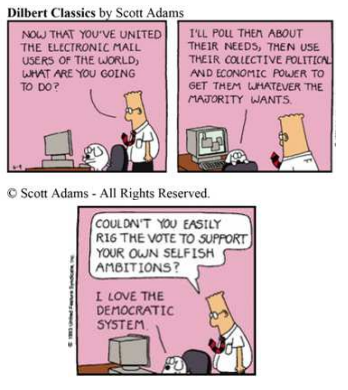
In the sentence: “Couldn't you easily rig
the vote to support your own selfish ambitions?
Refers to:
Ano: 2021
Banca:
Fundação FAPEC
Órgão:
SAD-MS
Prova:
FAPEC - 2021 - SAD-MS - Professor - Língua Estrangeira - Inglês |
Q2012927
Inglês
In the second square, the possessive
adjective "their" refers to:
Ano: 2021
Banca:
Fundação FAPEC
Órgão:
SAD-MS
Prova:
FAPEC - 2021 - SAD-MS - Professor - Língua Estrangeira - Inglês |
Q2012926
Inglês
Texto associado
POLLUTION
Pollution is the degradation of natural
environment by external substances introduced
directly or indirectly. Human health, ecosystem
quality and aquatic and terrestrial biodiversity
may be affected and altered permanently by
pollution.
Pollution occurs when ecosystems cannot
get rid of substances introduced into the
environment. The critical threshold of its ability
to naturally eliminate substances is compromised
and the balance of the ecosystem is broken.
The sources of pollution are numerous.
The identification of these different pollutants
and their effects on ecosystems is complex. They
can come from natural disasters or the result of
human activity, such as oil spills, chemical spills,
nuclear accidents. These can have terrible
consequences on people and the planet where
they live: destruction of the biodiversity,
increased mortality of the human and animal
species, destruction of natural habitat, damage
caused to the quality of soil, water, and air.
Preventing pollution and protecting the
environment necessitate the application of the
principles of sustainable development. We must
consider satisfying the needs of today without
compromising the ability of future generations to
meet their needs. This means that we should
remedy existing pollution, but also anticipate and
prevent future pollution sources to protect the
environment and public health. Any
environmental damage must be punishable by
law, and polluters should pay compensation for
the damage caused to the environment.
Fonte: University Mentouri Bros. Constantine.
Department of Lettres and the English Language.
English for Science and Technology Practice. Prepared
and presented by Prof. Nacif Labed, April 2020.
The sentence: “Preventing pollution and
protecting the environment necessitate the
application of the principles of sustainable
development” means that:
Ano: 2021
Banca:
Fundação FAPEC
Órgão:
SAD-MS
Prova:
FAPEC - 2021 - SAD-MS - Professor - Língua Estrangeira - Inglês |
Q2012925
Inglês
Texto associado
POLLUTION
Pollution is the degradation of natural
environment by external substances introduced
directly or indirectly. Human health, ecosystem
quality and aquatic and terrestrial biodiversity
may be affected and altered permanently by
pollution.
Pollution occurs when ecosystems cannot
get rid of substances introduced into the
environment. The critical threshold of its ability
to naturally eliminate substances is compromised
and the balance of the ecosystem is broken.
The sources of pollution are numerous.
The identification of these different pollutants
and their effects on ecosystems is complex. They
can come from natural disasters or the result of
human activity, such as oil spills, chemical spills,
nuclear accidents. These can have terrible
consequences on people and the planet where
they live: destruction of the biodiversity,
increased mortality of the human and animal
species, destruction of natural habitat, damage
caused to the quality of soil, water, and air.
Preventing pollution and protecting the
environment necessitate the application of the
principles of sustainable development. We must
consider satisfying the needs of today without
compromising the ability of future generations to
meet their needs. This means that we should
remedy existing pollution, but also anticipate and
prevent future pollution sources to protect the
environment and public health. Any
environmental damage must be punishable by
law, and polluters should pay compensation for
the damage caused to the environment.
Fonte: University Mentouri Bros. Constantine.
Department of Lettres and the English Language.
English for Science and Technology Practice. Prepared
and presented by Prof. Nacif Labed, April 2020.
A expressão “such as” destacada em
negrito no texto, em português é o mesmo que:
Ano: 2021
Banca:
Fundação FAPEC
Órgão:
SAD-MS
Prova:
FAPEC - 2021 - SAD-MS - Professor - Língua Estrangeira - Inglês |
Q2012924
Inglês
Texto associado
POLLUTION
Pollution is the degradation of natural
environment by external substances introduced
directly or indirectly. Human health, ecosystem
quality and aquatic and terrestrial biodiversity
may be affected and altered permanently by
pollution.
Pollution occurs when ecosystems cannot
get rid of substances introduced into the
environment. The critical threshold of its ability
to naturally eliminate substances is compromised
and the balance of the ecosystem is broken.
The sources of pollution are numerous.
The identification of these different pollutants
and their effects on ecosystems is complex. They
can come from natural disasters or the result of
human activity, such as oil spills, chemical spills,
nuclear accidents. These can have terrible
consequences on people and the planet where
they live: destruction of the biodiversity,
increased mortality of the human and animal
species, destruction of natural habitat, damage
caused to the quality of soil, water, and air.
Preventing pollution and protecting the
environment necessitate the application of the
principles of sustainable development. We must
consider satisfying the needs of today without
compromising the ability of future generations to
meet their needs. This means that we should
remedy existing pollution, but also anticipate and
prevent future pollution sources to protect the
environment and public health. Any
environmental damage must be punishable by
law, and polluters should pay compensation for
the damage caused to the environment.
Fonte: University Mentouri Bros. Constantine.
Department of Lettres and the English Language.
English for Science and Technology Practice. Prepared
and presented by Prof. Nacif Labed, April 2020.
“Get rid of” highlighted in the text, what
does it express?

 Conheça nossos planos