Questões de Concurso Sobre inglês
Foram encontradas 26.102 questões


Ano: 2026
Banca:
INSTITUTO AOCP
Órgão:
Prefeitura de Vitória da Conquista - BA
Prova:
INSTITUTO AOCP - 2026 - Prefeitura de Vitória da Conquista - BA - Professor Fundamental II - Nível II - Inglês |
Q4219690
Inglês
Texto associado
Underground library in Warsaw metro invites
commuters to trade scrolling for stories
In Warsaw’s Targówek district, a metro ride has
become more than a daily routine. Now it offers a
chance to escape into a story. Thanks to Metroteka, a
newly opened subterranean library inside the
Kondratowicza M2 metro station, commuters can now
trade mindless scrolling for meaningful reading.
The 150-square-meter space is stocked with more than
16,000 books, all available through a fast self-checkout
system. Visitors can also borrow laptops, sip
complimentary coffee, and unwind in a cozy communal
area, all while waiting for their train.
“Our dream is for Metroteka to become an educational
and cultural center, and not just a place where you can
borrow your books from,” says Grażyna StrzelczakBatkowska, deputy director of the Targówek library.
A modern space that breathes life into books
Metroteka’s design is as inviting as its mission. A lush
hydroponic garden wall filled with herbs and flowers
gives the underground space a breath of fresh air,
literally. Basil, oregano, and other plants grow without
soil or sunlight, infusing the library with an unexpected
sense of vitality. The bookshelves, shaped like soft,
undulating waves, add to the organic feel.
“I always joke that books are not made of glass,”
Strzelczak-Batkowska says. “You can just pop in, grab
a few, throw them on a self-checkout machine, and
that’s it—you’re out on a new adventure.”
Aiming to reverse a national trend
Poland’s reading habits have been in steady decline for
years. A 2024 survey by the National Library of Poland
found that only 41 percent of respondents had read at
least one book in the past year. According to Tomasz
Makowski, director of the National Library, the legacy
of war has shaped these numbers. During World War
II, Poland lost 70 percent of its libraries.
“We had several generations that did not see their
parents or grandparents in front of a wall of books,”
Makowski says. “Reading is [also] not something
associated with adulthood, but with schools, teachers,
librarians, and usually mothers reading to children.”
By placing literature in the path of everyday
commuters, Metroteka hopes to shift that cultural
perception.
An open invitation to all
For Makowski, the location is just as important as the
books. “Opening a library in a metro station is like a
dream for us,” he says. “Libraries should be beautiful
and open; inviting, not intimidating. It’s not a shrine, but
a place where you can spend time freely, take part in
discussions, public consultations, or meet people.”
In the coming months, Metroteka plans to host author
readings, workshops, and classes to further engage the
community. Books can be returned either directly to the
library or via parcel lockers outside the station,
available around the clock.
As commuters pass through Kondratowicza station
with coffee in hand and a novel tucked under one arm,
Metroteka quietly transforms daily routines into cultural
moments. By meeting people where they are, literally
underground, the library isn’t just promoting reading.
It’s redefining what public space can offer.
Source: https://www.optimistdaily.com/2025/09/underground-libraryin-warsaw-metro-invites-commuters-to-trade-scrolling-for-stories/.
Access on May 4th 2026.
Consider the first part of the article to answer
question.
In Warsaw’s Targówek district, a metro ride has become more than a daily routine. Now it offers a chance to escape into a story. Thanks to Metroteka, a newly opened subterranean library inside the Kondratowicza M2 metro station, commuters can now trade mindless scrolling for meaningful reading.
The 150-square-meter space is stocked with more than 16,000 books, all available through a fast self-checkout system. Visitors can also borrow laptops, sip complimentary coffee, and unwind in a cozy communal area, all while waiting for their train.
“Our dream is for Metroteka to become an educational and cultural center, and not just a place where you can borrow your books from,” says Grażyna Strzelczak-Batkowska, deputy director of the Targówek library.
Choose the alternative that best describes Metroteka.
Considering paragraphs 01, 02 and 03 of the article, choose the alternative that best describes Metroteka.
In Warsaw’s Targówek district, a metro ride has become more than a daily routine. Now it offers a chance to escape into a story. Thanks to Metroteka, a newly opened subterranean library inside the Kondratowicza M2 metro station, commuters can now trade mindless scrolling for meaningful reading.
The 150-square-meter space is stocked with more than 16,000 books, all available through a fast self-checkout system. Visitors can also borrow laptops, sip complimentary coffee, and unwind in a cozy communal area, all while waiting for their train.
“Our dream is for Metroteka to become an educational and cultural center, and not just a place where you can borrow your books from,” says Grażyna Strzelczak-Batkowska, deputy director of the Targówek library.
Choose the alternative that best describes Metroteka.
Considering paragraphs 01, 02 and 03 of the article, choose the alternative that best describes Metroteka.
Ano: 2026
Banca:
INSTITUTO AOCP
Órgão:
Prefeitura de Vitória da Conquista - BA
Prova:
INSTITUTO AOCP - 2026 - Prefeitura de Vitória da Conquista - BA - Professor Fundamental II - Nível II - Inglês |
Q4219688
Inglês
Texto associado
Why art gallery visits may be one of the healthiest
habits you can build
This year’s top Health stories celebrate the kind of
progress that hits close to home: advances that help
us live longer, feel better, and take care of one
another. From mental health wins to medical
innovations, these 2025 highlights are all about
healing, hope, and human potential.
Most of us know the feeling of standing in front of a
painting that makes us pause. Maybe it’s a burst of
color that lifts our mood or a quiet scene that steadies
the mind. Either way, a new study from King’s College
London suggests that these moments are doing far
more than sparking emotion. Researchers have found
measurable evidence that viewing original art can
support both mental health and long-term physical wellbeing.
Their findings point to something powerful: spending
even a short amount of time with original artworks may
reduce stress, improve emotional balance, and
potentially contribute to a longer, healthier life. And the
best part is that you do not need to be an art expert to
benefit.
What the study actually measured
To explore the connection between art and health,
researchers invited fifty healthy adults between the
ages of eighteen and forty to take part in an experiment.
One group visited The Courtauld Gallery in London,
where they viewed original masterpieces by artists
including Vincent van Gogh and Édouard Manet. A
second group viewed high-quality reproductions in a
non-gallery setting.
Participants wore sensors that tracked heart rate, skin
temperature, and other subtle responses. They also
provided saliva samples before and after the
experience so researchers could measure changes in
stress and inflammation.
The results were striking:
Cortisol, better known as the body’s primary stress
hormone, fell by 22 percent among gallery visitors.
Those who saw reproductions saw only an eight
percent drop.
Pro-inflammatory cytokines decreased by 30 percent
in the gallery group and 28 percent in the reproduction
group.
Gallery visitors also showed signs of emotional
engagement, including small drops in skin temperature
and variation in heart-rate patterns.
These shifts matter because high cortisol and
inflammation are linked to chronic conditions such as
anxiety, heart disease, and diabetes. In other words,
your quiet moment with an original painting could be
supporting your long-term health in ways you cannot
feel immediately.
Why original art matters even more
Although both groups experienced some positive
changes, the impact was stronger for those who viewed
original artworks. Researchers believe that the
immersive environment of a gallery adds layers of
sensory experience with elements that highlight space,
scale, texture, and atmosphere. These aspects work
together to deepen the body’s response.
Importantly, the researchers emphasized that the
benefits appeared regardless of art knowledge or
emotional intelligence. You do not need to understand
an artist’s entire catalog or even consider yourself an
“art person” to gain something meaningful.
A simple, accessible step toward wellbeing
The implications of this study reach beyond museum
walls. These findings help pave the way for broader
integration of art and wellbeing, offering a low-cost and
accessible option for reducing loneliness, easing
depression, and improving life satisfaction.
And while art may not replace clinical care, it can be a
gentle, joyful tool to add to your wellness routine. The
next time you find yourself lingering in front of a
painting, know that your body is responding in ways
that support you; calming, stimulating, and restoring at
the same time.
Source: https://www.optimistdaily.com/2026/01/why-art-galleryvisits-may-be-one-of-the-healthiest-habits-you-can-build-2/. Access
on May 4th 2026.
You, an English teacher, decided to use the article
“Why art gallery visits may be one of the healthiest
habits you can build” to teach and practice the
Passive Voice. After teaching it, you ask the
students to choose an example from the article in
Active Voice and turn it into Passive Voice. Choose
the alternative with the only INCORRECT answer
you got.
Ano: 2026
Banca:
INSTITUTO AOCP
Órgão:
Prefeitura de Vitória da Conquista - BA
Prova:
INSTITUTO AOCP - 2026 - Prefeitura de Vitória da Conquista - BA - Professor Fundamental II - Nível II - Inglês |
Q4219686
Inglês
Texto associado
Why art gallery visits may be one of the healthiest
habits you can build
This year’s top Health stories celebrate the kind of
progress that hits close to home: advances that help
us live longer, feel better, and take care of one
another. From mental health wins to medical
innovations, these 2025 highlights are all about
healing, hope, and human potential.
Most of us know the feeling of standing in front of a
painting that makes us pause. Maybe it’s a burst of
color that lifts our mood or a quiet scene that steadies
the mind. Either way, a new study from King’s College
London suggests that these moments are doing far
more than sparking emotion. Researchers have found
measurable evidence that viewing original art can
support both mental health and long-term physical wellbeing.
Their findings point to something powerful: spending
even a short amount of time with original artworks may
reduce stress, improve emotional balance, and
potentially contribute to a longer, healthier life. And the
best part is that you do not need to be an art expert to
benefit.
What the study actually measured
To explore the connection between art and health,
researchers invited fifty healthy adults between the
ages of eighteen and forty to take part in an experiment.
One group visited The Courtauld Gallery in London,
where they viewed original masterpieces by artists
including Vincent van Gogh and Édouard Manet. A
second group viewed high-quality reproductions in a
non-gallery setting.
Participants wore sensors that tracked heart rate, skin
temperature, and other subtle responses. They also
provided saliva samples before and after the
experience so researchers could measure changes in
stress and inflammation.
The results were striking:
Cortisol, better known as the body’s primary stress
hormone, fell by 22 percent among gallery visitors.
Those who saw reproductions saw only an eight
percent drop.
Pro-inflammatory cytokines decreased by 30 percent
in the gallery group and 28 percent in the reproduction
group.
Gallery visitors also showed signs of emotional
engagement, including small drops in skin temperature
and variation in heart-rate patterns.
These shifts matter because high cortisol and
inflammation are linked to chronic conditions such as
anxiety, heart disease, and diabetes. In other words,
your quiet moment with an original painting could be
supporting your long-term health in ways you cannot
feel immediately.
Why original art matters even more
Although both groups experienced some positive
changes, the impact was stronger for those who viewed
original artworks. Researchers believe that the
immersive environment of a gallery adds layers of
sensory experience with elements that highlight space,
scale, texture, and atmosphere. These aspects work
together to deepen the body’s response.
Importantly, the researchers emphasized that the
benefits appeared regardless of art knowledge or
emotional intelligence. You do not need to understand
an artist’s entire catalog or even consider yourself an
“art person” to gain something meaningful.
A simple, accessible step toward wellbeing
The implications of this study reach beyond museum
walls. These findings help pave the way for broader
integration of art and wellbeing, offering a low-cost and
accessible option for reducing loneliness, easing
depression, and improving life satisfaction.
And while art may not replace clinical care, it can be a
gentle, joyful tool to add to your wellness routine. The
next time you find yourself lingering in front of a
painting, know that your body is responding in ways
that support you; calming, stimulating, and restoring at
the same time.
Source: https://www.optimistdaily.com/2026/01/why-art-galleryvisits-may-be-one-of-the-healthiest-habits-you-can-build-2/. Access
on May 4th 2026.
Consider the following excerpt from the article to
answer question (paragraphs 09 and
10).
“A simple, accessible step toward wellbeing
The implications of this study reach beyond museum walls. These findings help pave the way for broader integration of art and wellbeing, offering a low-cost and accessible option for reducing loneliness, easing depression, and improving life satisfaction.
And while art may not replace clinical care, it can be a gentle, joyful tool to add to your wellness routine. The next time you find yourself lingering in front of a painting, know that your body is responding in ways that support you; calming, stimulating, and restoring at the same time.”
Choose the alternative that is completely correct about the underlined words in the context of the excerpt.
“A simple, accessible step toward wellbeing
The implications of this study reach beyond museum walls. These findings help pave the way for broader integration of art and wellbeing, offering a low-cost and accessible option for reducing loneliness, easing depression, and improving life satisfaction.
And while art may not replace clinical care, it can be a gentle, joyful tool to add to your wellness routine. The next time you find yourself lingering in front of a painting, know that your body is responding in ways that support you; calming, stimulating, and restoring at the same time.”
Choose the alternative that is completely correct about the underlined words in the context of the excerpt.
Ano: 2026
Banca:
INSTITUTO AOCP
Órgão:
Prefeitura de Vitória da Conquista - BA
Prova:
INSTITUTO AOCP - 2026 - Prefeitura de Vitória da Conquista - BA - Professor Fundamental II - Nível II - Inglês |
Q4219684
Inglês
Texto associado
Why art gallery visits may be one of the healthiest
habits you can build
This year’s top Health stories celebrate the kind of
progress that hits close to home: advances that help
us live longer, feel better, and take care of one
another. From mental health wins to medical
innovations, these 2025 highlights are all about
healing, hope, and human potential.
Most of us know the feeling of standing in front of a
painting that makes us pause. Maybe it’s a burst of
color that lifts our mood or a quiet scene that steadies
the mind. Either way, a new study from King’s College
London suggests that these moments are doing far
more than sparking emotion. Researchers have found
measurable evidence that viewing original art can
support both mental health and long-term physical wellbeing.
Their findings point to something powerful: spending
even a short amount of time with original artworks may
reduce stress, improve emotional balance, and
potentially contribute to a longer, healthier life. And the
best part is that you do not need to be an art expert to
benefit.
What the study actually measured
To explore the connection between art and health,
researchers invited fifty healthy adults between the
ages of eighteen and forty to take part in an experiment.
One group visited The Courtauld Gallery in London,
where they viewed original masterpieces by artists
including Vincent van Gogh and Édouard Manet. A
second group viewed high-quality reproductions in a
non-gallery setting.
Participants wore sensors that tracked heart rate, skin
temperature, and other subtle responses. They also
provided saliva samples before and after the
experience so researchers could measure changes in
stress and inflammation.
The results were striking:
Cortisol, better known as the body’s primary stress
hormone, fell by 22 percent among gallery visitors.
Those who saw reproductions saw only an eight
percent drop.
Pro-inflammatory cytokines decreased by 30 percent
in the gallery group and 28 percent in the reproduction
group.
Gallery visitors also showed signs of emotional
engagement, including small drops in skin temperature
and variation in heart-rate patterns.
These shifts matter because high cortisol and
inflammation are linked to chronic conditions such as
anxiety, heart disease, and diabetes. In other words,
your quiet moment with an original painting could be
supporting your long-term health in ways you cannot
feel immediately.
Why original art matters even more
Although both groups experienced some positive
changes, the impact was stronger for those who viewed
original artworks. Researchers believe that the
immersive environment of a gallery adds layers of
sensory experience with elements that highlight space,
scale, texture, and atmosphere. These aspects work
together to deepen the body’s response.
Importantly, the researchers emphasized that the
benefits appeared regardless of art knowledge or
emotional intelligence. You do not need to understand
an artist’s entire catalog or even consider yourself an
“art person” to gain something meaningful.
A simple, accessible step toward wellbeing
The implications of this study reach beyond museum
walls. These findings help pave the way for broader
integration of art and wellbeing, offering a low-cost and
accessible option for reducing loneliness, easing
depression, and improving life satisfaction.
And while art may not replace clinical care, it can be a
gentle, joyful tool to add to your wellness routine. The
next time you find yourself lingering in front of a
painting, know that your body is responding in ways
that support you; calming, stimulating, and restoring at
the same time.
Source: https://www.optimistdaily.com/2026/01/why-art-galleryvisits-may-be-one-of-the-healthiest-habits-you-can-build-2/. Access
on May 4th 2026.
Read the fifth and sixth paragraphs of the text and
analyze the statements below.
I. In ‘Those who saw reproductions saw only an eight percent drop’, ‘who’ is a relative pronoun.
II. In ‘your quiet moment with an original painting could be supporting your long-term health in ways you cannot feel immediately’, there are two examples of modal verbs.
III. In ‘Those who saw reproductions saw only an eight percent drop’, ‘an’ is an example of preposition.
IV. In ‘The results were striking’, ‘the’ is an example of indefinite article.
Which statements are completely accurate?
I. In ‘Those who saw reproductions saw only an eight percent drop’, ‘who’ is a relative pronoun.
II. In ‘your quiet moment with an original painting could be supporting your long-term health in ways you cannot feel immediately’, there are two examples of modal verbs.
III. In ‘Those who saw reproductions saw only an eight percent drop’, ‘an’ is an example of preposition.
IV. In ‘The results were striking’, ‘the’ is an example of indefinite article.
Which statements are completely accurate?
Ano: 2026
Banca:
INSTITUTO AOCP
Órgão:
Prefeitura de Vitória da Conquista - BA
Prova:
INSTITUTO AOCP - 2026 - Prefeitura de Vitória da Conquista - BA - Professor Fundamental II - Nível II - Inglês |
Q4219683
Inglês
Texto associado
Why art gallery visits may be one of the healthiest
habits you can build
This year’s top Health stories celebrate the kind of
progress that hits close to home: advances that help
us live longer, feel better, and take care of one
another. From mental health wins to medical
innovations, these 2025 highlights are all about
healing, hope, and human potential.
Most of us know the feeling of standing in front of a
painting that makes us pause. Maybe it’s a burst of
color that lifts our mood or a quiet scene that steadies
the mind. Either way, a new study from King’s College
London suggests that these moments are doing far
more than sparking emotion. Researchers have found
measurable evidence that viewing original art can
support both mental health and long-term physical wellbeing.
Their findings point to something powerful: spending
even a short amount of time with original artworks may
reduce stress, improve emotional balance, and
potentially contribute to a longer, healthier life. And the
best part is that you do not need to be an art expert to
benefit.
What the study actually measured
To explore the connection between art and health,
researchers invited fifty healthy adults between the
ages of eighteen and forty to take part in an experiment.
One group visited The Courtauld Gallery in London,
where they viewed original masterpieces by artists
including Vincent van Gogh and Édouard Manet. A
second group viewed high-quality reproductions in a
non-gallery setting.
Participants wore sensors that tracked heart rate, skin
temperature, and other subtle responses. They also
provided saliva samples before and after the
experience so researchers could measure changes in
stress and inflammation.
The results were striking:
Cortisol, better known as the body’s primary stress
hormone, fell by 22 percent among gallery visitors.
Those who saw reproductions saw only an eight
percent drop.
Pro-inflammatory cytokines decreased by 30 percent
in the gallery group and 28 percent in the reproduction
group.
Gallery visitors also showed signs of emotional
engagement, including small drops in skin temperature
and variation in heart-rate patterns.
These shifts matter because high cortisol and
inflammation are linked to chronic conditions such as
anxiety, heart disease, and diabetes. In other words,
your quiet moment with an original painting could be
supporting your long-term health in ways you cannot
feel immediately.
Why original art matters even more
Although both groups experienced some positive
changes, the impact was stronger for those who viewed
original artworks. Researchers believe that the
immersive environment of a gallery adds layers of
sensory experience with elements that highlight space,
scale, texture, and atmosphere. These aspects work
together to deepen the body’s response.
Importantly, the researchers emphasized that the
benefits appeared regardless of art knowledge or
emotional intelligence. You do not need to understand
an artist’s entire catalog or even consider yourself an
“art person” to gain something meaningful.
A simple, accessible step toward wellbeing
The implications of this study reach beyond museum
walls. These findings help pave the way for broader
integration of art and wellbeing, offering a low-cost and
accessible option for reducing loneliness, easing
depression, and improving life satisfaction.
And while art may not replace clinical care, it can be a
gentle, joyful tool to add to your wellness routine. The
next time you find yourself lingering in front of a
painting, know that your body is responding in ways
that support you; calming, stimulating, and restoring at
the same time.
Source: https://www.optimistdaily.com/2026/01/why-art-galleryvisits-may-be-one-of-the-healthiest-habits-you-can-build-2/. Access
on May 4th 2026.
About the verbs in Past Simple in the third and
fourth paragraphs of the article, it is correct to say
that
Ano: 2026
Banca:
INSTITUTO AOCP
Órgão:
Prefeitura de Vitória da Conquista - BA
Prova:
INSTITUTO AOCP - 2026 - Prefeitura de Vitória da Conquista - BA - Professor Fundamental II - Nível II - Inglês |
Q4219682
Inglês
Texto associado
Why art gallery visits may be one of the healthiest
habits you can build
This year’s top Health stories celebrate the kind of
progress that hits close to home: advances that help
us live longer, feel better, and take care of one
another. From mental health wins to medical
innovations, these 2025 highlights are all about
healing, hope, and human potential.
Most of us know the feeling of standing in front of a
painting that makes us pause. Maybe it’s a burst of
color that lifts our mood or a quiet scene that steadies
the mind. Either way, a new study from King’s College
London suggests that these moments are doing far
more than sparking emotion. Researchers have found
measurable evidence that viewing original art can
support both mental health and long-term physical wellbeing.
Their findings point to something powerful: spending
even a short amount of time with original artworks may
reduce stress, improve emotional balance, and
potentially contribute to a longer, healthier life. And the
best part is that you do not need to be an art expert to
benefit.
What the study actually measured
To explore the connection between art and health,
researchers invited fifty healthy adults between the
ages of eighteen and forty to take part in an experiment.
One group visited The Courtauld Gallery in London,
where they viewed original masterpieces by artists
including Vincent van Gogh and Édouard Manet. A
second group viewed high-quality reproductions in a
non-gallery setting.
Participants wore sensors that tracked heart rate, skin
temperature, and other subtle responses. They also
provided saliva samples before and after the
experience so researchers could measure changes in
stress and inflammation.
The results were striking:
Cortisol, better known as the body’s primary stress
hormone, fell by 22 percent among gallery visitors.
Those who saw reproductions saw only an eight
percent drop.
Pro-inflammatory cytokines decreased by 30 percent
in the gallery group and 28 percent in the reproduction
group.
Gallery visitors also showed signs of emotional
engagement, including small drops in skin temperature
and variation in heart-rate patterns.
These shifts matter because high cortisol and
inflammation are linked to chronic conditions such as
anxiety, heart disease, and diabetes. In other words,
your quiet moment with an original painting could be
supporting your long-term health in ways you cannot
feel immediately.
Why original art matters even more
Although both groups experienced some positive
changes, the impact was stronger for those who viewed
original artworks. Researchers believe that the
immersive environment of a gallery adds layers of
sensory experience with elements that highlight space,
scale, texture, and atmosphere. These aspects work
together to deepen the body’s response.
Importantly, the researchers emphasized that the
benefits appeared regardless of art knowledge or
emotional intelligence. You do not need to understand
an artist’s entire catalog or even consider yourself an
“art person” to gain something meaningful.
A simple, accessible step toward wellbeing
The implications of this study reach beyond museum
walls. These findings help pave the way for broader
integration of art and wellbeing, offering a low-cost and
accessible option for reducing loneliness, easing
depression, and improving life satisfaction.
And while art may not replace clinical care, it can be a
gentle, joyful tool to add to your wellness routine. The
next time you find yourself lingering in front of a
painting, know that your body is responding in ways
that support you; calming, stimulating, and restoring at
the same time.
Source: https://www.optimistdaily.com/2026/01/why-art-galleryvisits-may-be-one-of-the-healthiest-habits-you-can-build-2/. Access
on May 4th 2026.
Consider the third and fourth paragraphs of the
article to answer question.
Choose the correct alternative about the way the study was conducted.
Choose the correct alternative about the way the study was conducted.
Ano: 2026
Banca:
INSTITUTO AOCP
Órgão:
Prefeitura de Vitória da Conquista - BA
Prova:
INSTITUTO AOCP - 2026 - Prefeitura de Vitória da Conquista - BA - Professor Fundamental II - Nível II - Inglês |
Q4219681
Inglês
Texto associado
Why art gallery visits may be one of the healthiest
habits you can build
This year’s top Health stories celebrate the kind of
progress that hits close to home: advances that help
us live longer, feel better, and take care of one
another. From mental health wins to medical
innovations, these 2025 highlights are all about
healing, hope, and human potential.
Most of us know the feeling of standing in front of a
painting that makes us pause. Maybe it’s a burst of
color that lifts our mood or a quiet scene that steadies
the mind. Either way, a new study from King’s College
London suggests that these moments are doing far
more than sparking emotion. Researchers have found
measurable evidence that viewing original art can
support both mental health and long-term physical wellbeing.
Their findings point to something powerful: spending
even a short amount of time with original artworks may
reduce stress, improve emotional balance, and
potentially contribute to a longer, healthier life. And the
best part is that you do not need to be an art expert to
benefit.
What the study actually measured
To explore the connection between art and health,
researchers invited fifty healthy adults between the
ages of eighteen and forty to take part in an experiment.
One group visited The Courtauld Gallery in London,
where they viewed original masterpieces by artists
including Vincent van Gogh and Édouard Manet. A
second group viewed high-quality reproductions in a
non-gallery setting.
Participants wore sensors that tracked heart rate, skin
temperature, and other subtle responses. They also
provided saliva samples before and after the
experience so researchers could measure changes in
stress and inflammation.
The results were striking:
Cortisol, better known as the body’s primary stress
hormone, fell by 22 percent among gallery visitors.
Those who saw reproductions saw only an eight
percent drop.
Pro-inflammatory cytokines decreased by 30 percent
in the gallery group and 28 percent in the reproduction
group.
Gallery visitors also showed signs of emotional
engagement, including small drops in skin temperature
and variation in heart-rate patterns.
These shifts matter because high cortisol and
inflammation are linked to chronic conditions such as
anxiety, heart disease, and diabetes. In other words,
your quiet moment with an original painting could be
supporting your long-term health in ways you cannot
feel immediately.
Why original art matters even more
Although both groups experienced some positive
changes, the impact was stronger for those who viewed
original artworks. Researchers believe that the
immersive environment of a gallery adds layers of
sensory experience with elements that highlight space,
scale, texture, and atmosphere. These aspects work
together to deepen the body’s response.
Importantly, the researchers emphasized that the
benefits appeared regardless of art knowledge or
emotional intelligence. You do not need to understand
an artist’s entire catalog or even consider yourself an
“art person” to gain something meaningful.
A simple, accessible step toward wellbeing
The implications of this study reach beyond museum
walls. These findings help pave the way for broader
integration of art and wellbeing, offering a low-cost and
accessible option for reducing loneliness, easing
depression, and improving life satisfaction.
And while art may not replace clinical care, it can be a
gentle, joyful tool to add to your wellness routine. The
next time you find yourself lingering in front of a
painting, know that your body is responding in ways
that support you; calming, stimulating, and restoring at
the same time.
Source: https://www.optimistdaily.com/2026/01/why-art-galleryvisits-may-be-one-of-the-healthiest-habits-you-can-build-2/. Access
on May 4th 2026.
Read the second paragraph of the text. Choose the
alternative that presents an accurate analysis of
word formation of the underlined words.
“Their findings point to something powerful: spending even a short amount of time with original artworks may reduce stress, improve emotional balance, and potentially contribute to a longer, healthier life. And the best part is that you do not need to be an art expert to benefit.”
“Their findings point to something powerful: spending even a short amount of time with original artworks may reduce stress, improve emotional balance, and potentially contribute to a longer, healthier life. And the best part is that you do not need to be an art expert to benefit.”
Ano: 2026
Banca:
INSTITUTO AOCP
Órgão:
Prefeitura de Vitória da Conquista - BA
Prova:
INSTITUTO AOCP - 2026 - Prefeitura de Vitória da Conquista - BA - Professor Fundamental II - Nível II - Inglês |
Q4219680
Inglês
Texto associado
Why art gallery visits may be one of the healthiest
habits you can build
This year’s top Health stories celebrate the kind of
progress that hits close to home: advances that help
us live longer, feel better, and take care of one
another. From mental health wins to medical
innovations, these 2025 highlights are all about
healing, hope, and human potential.
Most of us know the feeling of standing in front of a
painting that makes us pause. Maybe it’s a burst of
color that lifts our mood or a quiet scene that steadies
the mind. Either way, a new study from King’s College
London suggests that these moments are doing far
more than sparking emotion. Researchers have found
measurable evidence that viewing original art can
support both mental health and long-term physical wellbeing.
Their findings point to something powerful: spending
even a short amount of time with original artworks may
reduce stress, improve emotional balance, and
potentially contribute to a longer, healthier life. And the
best part is that you do not need to be an art expert to
benefit.
What the study actually measured
To explore the connection between art and health,
researchers invited fifty healthy adults between the
ages of eighteen and forty to take part in an experiment.
One group visited The Courtauld Gallery in London,
where they viewed original masterpieces by artists
including Vincent van Gogh and Édouard Manet. A
second group viewed high-quality reproductions in a
non-gallery setting.
Participants wore sensors that tracked heart rate, skin
temperature, and other subtle responses. They also
provided saliva samples before and after the
experience so researchers could measure changes in
stress and inflammation.
The results were striking:
Cortisol, better known as the body’s primary stress
hormone, fell by 22 percent among gallery visitors.
Those who saw reproductions saw only an eight
percent drop.
Pro-inflammatory cytokines decreased by 30 percent
in the gallery group and 28 percent in the reproduction
group.
Gallery visitors also showed signs of emotional
engagement, including small drops in skin temperature
and variation in heart-rate patterns.
These shifts matter because high cortisol and
inflammation are linked to chronic conditions such as
anxiety, heart disease, and diabetes. In other words,
your quiet moment with an original painting could be
supporting your long-term health in ways you cannot
feel immediately.
Why original art matters even more
Although both groups experienced some positive
changes, the impact was stronger for those who viewed
original artworks. Researchers believe that the
immersive environment of a gallery adds layers of
sensory experience with elements that highlight space,
scale, texture, and atmosphere. These aspects work
together to deepen the body’s response.
Importantly, the researchers emphasized that the
benefits appeared regardless of art knowledge or
emotional intelligence. You do not need to understand
an artist’s entire catalog or even consider yourself an
“art person” to gain something meaningful.
A simple, accessible step toward wellbeing
The implications of this study reach beyond museum
walls. These findings help pave the way for broader
integration of art and wellbeing, offering a low-cost and
accessible option for reducing loneliness, easing
depression, and improving life satisfaction.
And while art may not replace clinical care, it can be a
gentle, joyful tool to add to your wellness routine. The
next time you find yourself lingering in front of a
painting, know that your body is responding in ways
that support you; calming, stimulating, and restoring at
the same time.
Source: https://www.optimistdaily.com/2026/01/why-art-galleryvisits-may-be-one-of-the-healthiest-habits-you-can-build-2/. Access
on May 4th 2026.
Read the first paragraph of the article and choose
the option that best summarizes the King’s College
London’s new study’s results.
Ano: 2026
Banca:
Instituto Legalle
Órgão:
Prefeitura de Campestre da Serra - RS
Prova:
Instituto Legalle - 2026 - Prefeitura de Campestre da Serra - RS - Professor de Letras - Inglês/Espanhol/Literatura |
Q4219572
Inglês
Texto associado
Para responder à questão, leia o texto abaixo.
Examples of Professional Ethics
Professional ethics are principles of professional behavior
that are adopted by an individual in their work. To be
considered ethics, these must go beyond what is required
by laws, regulations and reasonable expectations.
Key examples include:
Accountability
Honesty & Candor
Integrity & Moral
Conduct
Confidentiality & Privacy
Respect For Individuals
Transparency
Objectivity
Fairness
Responsibility
Do the Right Thing
Fonte: https://simplicable.com/talent/professional-ethics.
The inclusion of Do the Right Thing at the
end of the list suggests that:
I. Ethical conduct cannot always be reduced to fixed rules.
II. Professionals may need to apply judgment in situations not explicitly regulated.
III. Personal benefit should guide ethical decisions whenever rules are absent.
Which of the following statements is/are CORRECT?
I. Ethical conduct cannot always be reduced to fixed rules.
II. Professionals may need to apply judgment in situations not explicitly regulated.
III. Personal benefit should guide ethical decisions whenever rules are absent.
Which of the following statements is/are CORRECT?
Ano: 2026
Banca:
Instituto Legalle
Órgão:
Prefeitura de Campestre da Serra - RS
Prova:
Instituto Legalle - 2026 - Prefeitura de Campestre da Serra - RS - Professor de Letras - Inglês/Espanhol/Literatura |
Q4219571
Inglês
Texto associado
Para responder à questão, leia o texto abaixo.
Examples of Professional Ethics
Professional ethics are principles of professional behavior
that are adopted by an individual in their work. To be
considered ethics, these must go beyond what is required
by laws, regulations and reasonable expectations.
Key examples include:
Accountability
Honesty & Candor
Integrity & Moral
Conduct
Confidentiality & Privacy
Respect For Individuals
Transparency
Objectivity
Fairness
Responsibility
Do the Right Thing
Fonte: https://simplicable.com/talent/professional-ethics.
In the expression Honesty & Candor, the
word candor MOST nearly suggests:
Ano: 2026
Banca:
Instituto Legalle
Órgão:
Prefeitura de Campestre da Serra - RS
Prova:
Instituto Legalle - 2026 - Prefeitura de Campestre da Serra - RS - Professor de Letras - Inglês/Espanhol/Literatura |
Q4219570
Inglês
Texto associado
Para responder à questão, leia o texto abaixo.
Examples of Professional Ethics
Professional ethics are principles of professional behavior
that are adopted by an individual in their work. To be
considered ethics, these must go beyond what is required
by laws, regulations and reasonable expectations.
Key examples include:
Accountability
Honesty & Candor
Integrity & Moral
Conduct
Confidentiality & Privacy
Respect For Individuals
Transparency
Objectivity
Fairness
Responsibility
Do the Right Thing
Fonte: https://simplicable.com/talent/professional-ethics.
According to the text, which statement BEST
reflects the relationship between professional ethics and
formal obligations?
Ano: 2026
Banca:
FGV
Órgão:
NAV Brasil
Prova:
FGV - 2026 - NAV Brasil - Profissional Técnico de Navegação Aérea - Operador de Torre de Controle |
Q4217997
Inglês
Texto associado
Read Text IV and answer the question that follow it.
TEXT IV
Flights resume in Sao Paulo after
brief airspace closure due to technical issue
SAO PAULO, April 9 (Reuters) - The airspace of Sao Paulo has
been reopened following a brief closure on Thursday morning,
the Congonhas and Guarulhos airports' operators and the
Brazilian Air Force said in separate statements.
Operators for the local Congonhas Airport and Guarulhos
International Airport had said earlier that all landings and
takeoffs had been suspended in the city due to what the
Congonhas' operator said was an "electrical failure."
Brazil's Air Force, which is responsible for national air traffic,
said the suspension lasted just over half an hour, adding it found
a "technical operational issue" as the reason for the incident,
without providing further details.
Guarulhos' operator said the issue did not happen at its
airport, the busiest in Latin America.
As operators rushed to mitigate the impacts, Brazil's civil
aviation regulator said it implemented a series of initial measures
outlined in its pre-crisis protocol, with the aim of monitoring the
consequences of the incident.
Adapted from: https://www.reuters.com/world/americas/sao-paulos-airspacetemporarily-closed-one-airport-cites-electrical-failure-2026-04-09
Due to” in “due to what the Congonhas' operator said”
(2nd paragraph) means
Ano: 2026
Banca:
FGV
Órgão:
NAV Brasil
Prova:
FGV - 2026 - NAV Brasil - Profissional Técnico de Navegação Aérea - Operador de Torre de Controle |
Q4217996
Inglês
Texto associado
Read Text IV and answer the question that follow it.
TEXT IV
Flights resume in Sao Paulo after
brief airspace closure due to technical issue
SAO PAULO, April 9 (Reuters) - The airspace of Sao Paulo has
been reopened following a brief closure on Thursday morning,
the Congonhas and Guarulhos airports' operators and the
Brazilian Air Force said in separate statements.
Operators for the local Congonhas Airport and Guarulhos
International Airport had said earlier that all landings and
takeoffs had been suspended in the city due to what the
Congonhas' operator said was an "electrical failure."
Brazil's Air Force, which is responsible for national air traffic,
said the suspension lasted just over half an hour, adding it found
a "technical operational issue" as the reason for the incident,
without providing further details.
Guarulhos' operator said the issue did not happen at its
airport, the busiest in Latin America.
As operators rushed to mitigate the impacts, Brazil's civil
aviation regulator said it implemented a series of initial measures
outlined in its pre-crisis protocol, with the aim of monitoring the
consequences of the incident.
Adapted from: https://www.reuters.com/world/americas/sao-paulos-airspacetemporarily-closed-one-airport-cites-electrical-failure-2026-04-09
The opposite of “earlier” (2nd paragraph) is
Ano: 2026
Banca:
FGV
Órgão:
NAV Brasil
Prova:
FGV - 2026 - NAV Brasil - Profissional Técnico de Navegação Aérea - Operador de Torre de Controle |
Q4217995
Inglês
Texto associado
Read Text IV and answer the question that follow it.
TEXT IV
Flights resume in Sao Paulo after
brief airspace closure due to technical issue
SAO PAULO, April 9 (Reuters) - The airspace of Sao Paulo has
been reopened following a brief closure on Thursday morning,
the Congonhas and Guarulhos airports' operators and the
Brazilian Air Force said in separate statements.
Operators for the local Congonhas Airport and Guarulhos
International Airport had said earlier that all landings and
takeoffs had been suspended in the city due to what the
Congonhas' operator said was an "electrical failure."
Brazil's Air Force, which is responsible for national air traffic,
said the suspension lasted just over half an hour, adding it found
a "technical operational issue" as the reason for the incident,
without providing further details.
Guarulhos' operator said the issue did not happen at its
airport, the busiest in Latin America.
As operators rushed to mitigate the impacts, Brazil's civil
aviation regulator said it implemented a series of initial measures
outlined in its pre-crisis protocol, with the aim of monitoring the
consequences of the incident.
Adapted from: https://www.reuters.com/world/americas/sao-paulos-airspacetemporarily-closed-one-airport-cites-electrical-failure-2026-04-09
In the title, the word “resume” means that flights have been
Ano: 2026
Banca:
FGV
Órgão:
NAV Brasil
Prova:
FGV - 2026 - NAV Brasil - Profissional Técnico de Navegação Aérea - Operador de Torre de Controle |
Q4217994
Inglês
Texto associado
Read Text IV and answer the question that follow it.
TEXT IV
Flights resume in Sao Paulo after
brief airspace closure due to technical issue
SAO PAULO, April 9 (Reuters) - The airspace of Sao Paulo has
been reopened following a brief closure on Thursday morning,
the Congonhas and Guarulhos airports' operators and the
Brazilian Air Force said in separate statements.
Operators for the local Congonhas Airport and Guarulhos
International Airport had said earlier that all landings and
takeoffs had been suspended in the city due to what the
Congonhas' operator said was an "electrical failure."
Brazil's Air Force, which is responsible for national air traffic,
said the suspension lasted just over half an hour, adding it found
a "technical operational issue" as the reason for the incident,
without providing further details.
Guarulhos' operator said the issue did not happen at its
airport, the busiest in Latin America.
As operators rushed to mitigate the impacts, Brazil's civil
aviation regulator said it implemented a series of initial measures
outlined in its pre-crisis protocol, with the aim of monitoring the
consequences of the incident.
Adapted from: https://www.reuters.com/world/americas/sao-paulos-airspacetemporarily-closed-one-airport-cites-electrical-failure-2026-04-09
This text intends to
Ano: 2026
Banca:
FGV
Órgão:
NAV Brasil
Prova:
FGV - 2026 - NAV Brasil - Profissional Técnico de Navegação Aérea - Operador de Torre de Controle |
Q4217993
Inglês
Texto associado
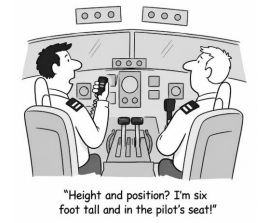
Read Text III and answer the question that follow it.
TEXT III
Adapted from: https://www.cartoonstock.com/
directory/a/air_traffic_controling.asp?srsltid=AfmBOoogl4jSzz4-hNw44StCYVtESDTxd2Sgllw5q-_f0z2OVOumYVI
The apostrophe in “In the pilot’s seat” indicates a(n):
Ano: 2026
Banca:
FGV
Órgão:
NAV Brasil
Prova:
FGV - 2026 - NAV Brasil - Profissional Técnico de Navegação Aérea - Operador de Torre de Controle |
Q4217992
Inglês
Texto associado
Read Text III and answer the question that follow it.
TEXT III
Adapted from: https://www.cartoonstock.com/
directory/a/air_traffic_controling.asp?srsltid=AfmBOoogl4jSzz4-hNw44StCYVtESDTxd2Sgllw5q-_f0z2OVOumYVI
“Height” is to “high” as
Ano: 2026
Banca:
FGV
Órgão:
NAV Brasil
Prova:
FGV - 2026 - NAV Brasil - Profissional Técnico de Navegação Aérea - Operador de Torre de Controle |
Q4217991
Inglês
Texto associado
Read Text III and answer the question that follow it.
TEXT III
Adapted from: https://www.cartoonstock.com/
directory/a/air_traffic_controling.asp?srsltid=AfmBOoogl4jSzz4-hNw44StCYVtESDTxd2Sgllw5q-_f0z2OVOumYVI
This cartoon illustrates a situation in which there has been a(n):
Ano: 2026
Banca:
FGV
Órgão:
NAV Brasil
Prova:
FGV - 2026 - NAV Brasil - Profissional Técnico de Navegação Aérea - Operador de Torre de Controle |
Q4217990
Inglês
Texto associado

Read Text II and answer the question that follow it.
TEXT II
From: https://www.redbubble.com/i/poster/Air-Traffic-Controller-Funny-QuotePilots-Need-Heroes-Too-by-jaygo/35226788/flk2
The last word in the poster can be replaced, without significant
change of meaning, by
Ano: 2026
Banca:
FGV
Órgão:
NAV Brasil
Prova:
FGV - 2026 - NAV Brasil - Profissional Técnico de Navegação Aérea - Operador de Torre de Controle |
Q4217989
Inglês
Texto associado
Read Text II and answer the question that follow it.
TEXT II
From: https://www.redbubble.com/i/poster/Air-Traffic-Controller-Funny-QuotePilots-Need-Heroes-Too-by-jaygo/35226788/flk2
In relation to air traffic controllers, this poster expresses

 Conheça nossos planos