Questões de Concurso Sobre inglês
Foram encontradas 26.077 questões


Leia o texto a seguir para responder à questão:
In the Star Trek universe, the audience occasionally gets a glimpse inside schools on the planet Vulcan. Young children stand alone in “capsules” surrounded by 360-degree digital screens. Adults walk around but do not talk to the students. Instead, each child interacts only with a sophisticated artificial intelligence (AI). Although this is not the reality in today’s classrooms on Earth, there are people for whom a vision of personalized learning conducted by artificial intelligence has considerable appeal.
Individualized learning has its place. But decades of educational research also demonstrate that learning is essentially a social endeavor. Classrooms that privilege personalized AI chatbots overlook that fact.
Generative AI is quickly coming to classrooms. If decades ago educators worldwide promoted the benefits of “One Laptop per Child”, today we may be approaching the model “one chatbot per child.” What does educational research tell us about what this model could mean for children’s learning and well-being?
During much of the 20th century, learning was understood as mainly as a matter of individual cognition. A misconception, if compared to today’s comprehension of what learning involves. Scientists now understand that apparently individual processes – such as building new knowledge – are actually social interactions with the world around us. In classrooms, this suggests that opportunities for daily personal interaction can strongly support brain health and academic learning.
Therefore, it is important to understand generative AI’s real-life impact on students.
For example: How does it feel to learn from a chatbot, day after day? How will long-term use of AI affect children’s mental health? How does AI use affect children’s relationships with each other and with their teachers? What kinds of relationships might children form with the chatbots themselves? More broadly, we could also ask: What do we, as a society, actually want children to learn?
Good teaching and learning blends social and individual processes. I see the beneficial application of any new technology in the classroom – AI or otherwise – as a way to build upon the social fabric of human learning. My concern about personalized AI tutors is how they might displace already infrequent opportunities for social interaction, further isolating children in classrooms.
(Niral Shah. www.converstion.com, 15.12.2025. Adaptado)
During much of the 20th century, learning was understood mainly as a matter of individual cognition. In contrast, scientists now understand that apparently individual processes – such as building new knowledge – are actually social interactions with the world around us. In classrooms, this suggests that opportunities for daily personal interaction can strongly support brain health and academic learning. (paragraph 4)
Leia o texto a seguir para responder à questão:
In the Star Trek universe, the audience occasionally gets a glimpse inside schools on the planet Vulcan. Young children stand alone in “capsules” surrounded by 360-degree digital screens. Adults walk around but do not talk to the students. Instead, each child interacts only with a sophisticated artificial intelligence (AI). Although this is not the reality in today’s classrooms on Earth, there are people for whom a vision of personalized learning conducted by artificial intelligence has considerable appeal.
Individualized learning has its place. But decades of educational research also demonstrate that learning is essentially a social endeavor. Classrooms that privilege personalized AI chatbots overlook that fact.
Generative AI is quickly coming to classrooms. If decades ago educators worldwide promoted the benefits of “One Laptop per Child”, today we may be approaching the model “one chatbot per child.” What does educational research tell us about what this model could mean for children’s learning and well-being?
During much of the 20th century, learning was understood as mainly as a matter of individual cognition. A misconception, if compared to today’s comprehension of what learning involves. Scientists now understand that apparently individual processes – such as building new knowledge – are actually social interactions with the world around us. In classrooms, this suggests that opportunities for daily personal interaction can strongly support brain health and academic learning.
Therefore, it is important to understand generative AI’s real-life impact on students.
For example: How does it feel to learn from a chatbot, day after day? How will long-term use of AI affect children’s mental health? How does AI use affect children’s relationships with each other and with their teachers? What kinds of relationships might children form with the chatbots themselves? More broadly, we could also ask: What do we, as a society, actually want children to learn?
Good teaching and learning blends social and individual processes. I see the beneficial application of any new technology in the classroom – AI or otherwise – as a way to build upon the social fabric of human learning. My concern about personalized AI tutors is how they might displace already infrequent opportunities for social interaction, further isolating children in classrooms.
(Niral Shah. www.converstion.com, 15.12.2025. Adaptado)
Observe o infográfico:

A leitura eficiente de gêneros textuais multimodais e de alta densidade informativa, como o infográfico apresentado, pressupõe a mobilização de diferentes estratégias de processamento de texto. Considerando a arquitetura visual do documento e as técnicas de skimming e scanning, assinale a alternativa que descreve corretamente a aplicação dessas estratégias na reconstrução dos sentidos do texto.
Observe a tirinha a seguir.
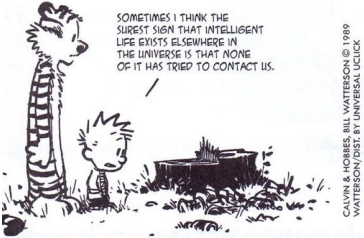
A construção do humor na tirinha decorre da combinação entre recursos linguísticos e inferências do leitor. Nesse contexto, os advérbios sometimes e elsewhere contribuem para a organização do enunciado e para a construção de seu sentido. Assinale a alternativa correta.
"The local council approved the funding for the new library. ________, they slashed the budget for the municipal arts center; ________, the community's reaction was deeply divided." (Adaptado de notícias locais do portal BBC News).
Considerando as relações lógico-discursivas estabelecidas entre as orações, as lacunas devem ser preenchidas, respectivamente, por um conector de contraste e por um conector de consequência. Assinale a alternativa correta.
Observe a peça publicitária a seguir.

A publicidade emprega recursos verbais e visuais para construir um efeito persuasivo. Na expressão "a bigger bed", o emprego do adjetivo bigger desempenha papel relevante tanto na organização gramatical quanto na construção do sentido do anúncio. Assinale a alternativa correta.
Observe as tirinhas da série Peanuts, de Charles Schulz:
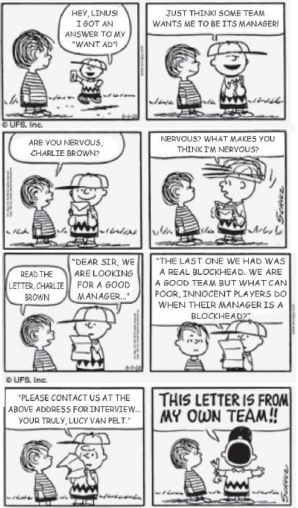
A carta enviada por Lucy van Pelt a um anúncio de jornal apresenta uma crítica irônica à liderança de Charlie Brown. No início da leitura da carta, lê-se o seguinte trecho em discurso direto:
“Dear Sir, we are looking for a good manager... The last one we had was a real blockhead.”
Assinale a alternativa que apresenta a reescrita desse trecho em discurso indireto, mantendo a fidelidade ao texto original e aplicando rigorosamente as regras de concordância e sequência temporal da norma-padrão da língua inglesa.
"A chilly Peace infests the Grass The Sun respectful lies – Not any Trance of industry These shadows scrutinize –" Whose Allies go no more astray For service or for Glee - But all mankind deliver here From whatsoever sea -
(DICKINSON, Emily. Poem 1444. In: The Complete Poems of Emily Dickinson. Boston: Little, Brown, 1924)
No primeiro verso, a poetisa constrói o sintagma nominal "A chilly Peace" que atua como sujeito da oração. Sob a perspectiva da análise sintática e do recurso estilístico empregado, assinale a alternativa correta.
"Whether weather be the frost Or the violence of the dog days I'm on waves, out being tossed Is there a line that I could just go cross?
/…/
Hey, December, guess I'm feeling unmoored Can't remember what I used to fight for I rewind the tape, but all it does is pause On the very moment all was lost Sending signals to be double-crossed"
(SWIFT, Taylor. evermore. In: evermore. Republic Records, 2020).
No trecho, a construção imagética reforça sentimentos de instabilidade emocional, perda de pertencimento e dificuldade de encontrar direção. Nesse contexto, a palavra unmoored expressa esse estado metafórico da narradora. Assinale a alternativa que apresenta, respectivamente, um sinônimo e um antônimo contextualmente adequados para unmoored.
"Neuroscientists have demonstrated that bilingualism sharpens the brain's executive functions. This cognitive advantage, however, is not static; it requires continuous linguistic exercise, ensuring that the former remains active well into old age." (Adaptado de Scientific American.)
No excerto, os elementos coesivos destacados retomam, respectivamente:
"The status of English as a lingua franca (ELF) means that the language can no longer be regarded as the exclusive property of its native speakers. Instead, it belongs to everyone who uses it. In Brazil, the National Common Curricular Base (BNCC) embraces this perspective to promote linguistic democracy and intercultural dialogue." (Adaptado de: British Council Brazil, Online Articles).
Considerando as reflexões do fragmento textual e os pressupostos teórico-metodológicos que orientam o componente curricular de Língua Inglesa na Base Nacional Comum Curricular (BNCC), assinale a alternativa que apresenta de forma correta uma implicação pedagógica decorrente da concepção do inglês como língua franca na Educação Básica.
I had worked hard for nearly two years, for the sole purpose of infusing life into an inanimate body. For this I had deprived myself of rest and health. I had desired it with an ardour that far exceeded moderation; but now that I had finished, the beauty of the dream vanished, and breathless horror and disgust filled my heart.
SHELLEY, Mary. Frankenstein. New York: Signet Classics, 1965. p. 56.
A mudança de percepção do narrador em relação ao próprio experimento contribui para a construção de uma tensão associada

 Conheça nossos planos