Questões de Concurso Sobre inglês
Foram encontradas 25.454 questões


Q499763
Inglês
Texto associado
Leia o texto a seguir para responder a questão.
.
Fundamental competencies for
Special Collections Professionals
Today's special collections environments are increasingly diverse. They vary significantly with regard to institutional setting, nature of collections, scope of functions and services, and audience. A special collections professional may experience much of this variety over the course of his/her career, taking on different public and technical service duties, curatorial functions, and management responsibilities. Even those who remain focused on a single functional specialty within one institution will best contribute to that institution's vitality and success by developing broad awareness of the full
array of responsibilities that define the field as a whole. We assume a professional who gradually achieves such general proficiency over the course of his/her career; full mastery in all areas, however, is by no means expected.
(http://www.ala.org/acrl/standards/comp4specollect. Adaptado)
.
Fundamental competencies for
Special Collections Professionals
Today's special collections environments are increasingly diverse. They vary significantly with regard to institutional setting, nature of collections, scope of functions and services, and audience. A special collections professional may experience much of this variety over the course of his/her career, taking on different public and technical service duties, curatorial functions, and management responsibilities. Even those who remain focused on a single functional specialty within one institution will best contribute to that institution's vitality and success by developing broad awareness of the full
array of responsibilities that define the field as a whole. We assume a professional who gradually achieves such general proficiency over the course of his/her career; full mastery in all areas, however, is by no means expected.
(http://www.ala.org/acrl/standards/comp4specollect. Adaptado)
De acordo com o trecho, as chamadas Coleções Especiais em bibliotecas
Ano: 2015
Banca:
IDECAN
Órgão:
INMETRO
Provas:
IDECAN - 2015 - INMETRO - Pesquisador - Tecnologista em Metrologia e Qualidade - Engenharia Química
|
IDECAN - 2015 - INMETRO - Analista Executivo em Metrologia e Qualidade - Administração Geral e Pública |
IDECAN - 2015 - INMETRO - Analista Executivo em Metrologia e Qualidade - Análise e Desenvolvimento de Sistemas |
IDECAN - 2015 - INMETRO - Analista Executivo em Metrologia e Qualidade - Ciências Contábeis |
Q499577
Inglês
A man stepped onto the overnight train and told the conductor, “I need you to wake me up in Philadelphia. I'm a deep sleeper and can be angry when I get up, but no matter what, I want you to help me make that stop. Here's $100 to make sure".
The conductor agreed. The man fell asleep, and when he awoke he heard the announcement that the train was approaching New York, which meant they had passed Philadelphia a long time ago. Furious, he ran to the conductor. “I gave you $100 to make sure I got off in Philadelphia, you idiot!" “Wow," another passenger said to his traveling companion. “Is that guy mad!" “Yeah," his companion replied. “But not half as mad as that guy they forced off the train in Philadelphia."
(English2Go, No 7,The Reader's Digest Association, 2005. P. 80.)
In “ ...the train was approaching New York" a gerund is used as a/an
The conductor agreed. The man fell asleep, and when he awoke he heard the announcement that the train was approaching New York, which meant they had passed Philadelphia a long time ago. Furious, he ran to the conductor. “I gave you $100 to make sure I got off in Philadelphia, you idiot!" “Wow," another passenger said to his traveling companion. “Is that guy mad!" “Yeah," his companion replied. “But not half as mad as that guy they forced off the train in Philadelphia."
(English2Go, No 7,The Reader's Digest Association, 2005. P. 80.)
In “ ...the train was approaching New York" a gerund is used as a/an
Ano: 2015
Banca:
IDECAN
Órgão:
INMETRO
Provas:
IDECAN - 2015 - INMETRO - Pesquisador - Tecnologista em Metrologia e Qualidade - Engenharia Química
|
IDECAN - 2015 - INMETRO - Analista Executivo em Metrologia e Qualidade - Administração Geral e Pública |
IDECAN - 2015 - INMETRO - Analista Executivo em Metrologia e Qualidade - Análise e Desenvolvimento de Sistemas |
IDECAN - 2015 - INMETRO - Analista Executivo em Metrologia e Qualidade - Ciências Contábeis |
Q499576
Inglês
A man stepped onto the overnight train and told the conductor, “I need you to wake me up in Philadelphia. I'm a deep sleeper and can be angry when I get up, but no matter what, I want you to help me make that stop. Here's $100 to make sure".
The conductor agreed. The man fell asleep, and when he awoke he heard the announcement that the train was approaching New York, which meant they had passed Philadelphia a long time ago. Furious, he ran to the conductor. “I gave you $100 to make sure I got off in Philadelphia, you idiot!" “Wow," another passenger said to his traveling companion. “Is that guy mad!" “Yeah," his companion replied. “But not half as mad as that guy they forced off the train in Philadelphia."
(English2Go, No 7,The Reader's Digest Association, 2005. P. 80.)
In “They had passed Philadelphia a long time ago" the verb tense is a:
The conductor agreed. The man fell asleep, and when he awoke he heard the announcement that the train was approaching New York, which meant they had passed Philadelphia a long time ago. Furious, he ran to the conductor. “I gave you $100 to make sure I got off in Philadelphia, you idiot!" “Wow," another passenger said to his traveling companion. “Is that guy mad!" “Yeah," his companion replied. “But not half as mad as that guy they forced off the train in Philadelphia."
(English2Go, No 7,The Reader's Digest Association, 2005. P. 80.)
In “They had passed Philadelphia a long time ago" the verb tense is a:
Ano: 2015
Banca:
IDECAN
Órgão:
INMETRO
Provas:
IDECAN - 2015 - INMETRO - Analista Executivo em Metrologia e Qualidade - Administração Geral e Pública
|
IDECAN - 2015 - INMETRO - Analista Executivo em Metrologia e Qualidade - Análise e Desenvolvimento de Sistemas |
Q499575
Inglês
A man stepped onto the overnight train and told the conductor, “I need you to wake me up in Philadelphia. I'm a deep sleeper and can be angry when I get up, but no matter what, I want you to help me make that stop. Here's $100 to make sure".
The conductor agreed. The man fell asleep, and when he awoke he heard the announcement that the train was approaching New York, which meant they had passed Philadelphia a long time ago. Furious, he ran to the conductor. “I gave you $100 to make sure I got off in Philadelphia, you idiot!" “Wow," another passenger said to his traveling companion. “Is that guy mad!" “Yeah," his companion replied. “But not half as mad as that guy they forced off the train in Philadelphia."
(English2Go, No 7,The Reader's Digest Association, 2005. P. 80.)
In “Here's $100 to make sure" MAKE SURE is closest in meaning to:
The conductor agreed. The man fell asleep, and when he awoke he heard the announcement that the train was approaching New York, which meant they had passed Philadelphia a long time ago. Furious, he ran to the conductor. “I gave you $100 to make sure I got off in Philadelphia, you idiot!" “Wow," another passenger said to his traveling companion. “Is that guy mad!" “Yeah," his companion replied. “But not half as mad as that guy they forced off the train in Philadelphia."
(English2Go, No 7,The Reader's Digest Association, 2005. P. 80.)
In “Here's $100 to make sure" MAKE SURE is closest in meaning to:
Ano: 2015
Banca:
IDECAN
Órgão:
INMETRO
Provas:
IDECAN - 2015 - INMETRO - Pesquisador - Tecnologista em Metrologia e Qualidade - Engenharia Química
|
IDECAN - 2015 - INMETRO - Analista Executivo em Metrologia e Qualidade - Administração Geral e Pública |
IDECAN - 2015 - INMETRO - Analista Executivo em Metrologia e Qualidade - Análise e Desenvolvimento de Sistemas |
IDECAN - 2015 - INMETRO - Analista Executivo em Metrologia e Qualidade - Ciências Contábeis |
Q499573
Inglês
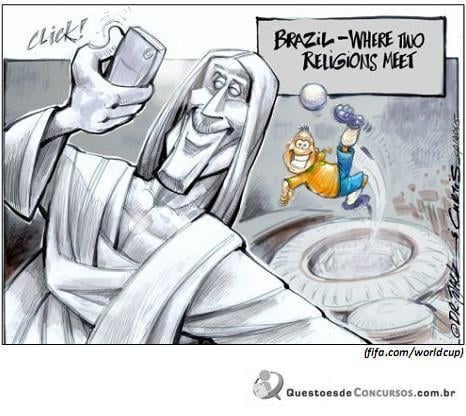
The item that matches the image is:
Ano: 2015
Banca:
IDECAN
Órgão:
INMETRO
Provas:
IDECAN - 2015 - INMETRO - Pesquisador - Tecnologista em Metrologia e Qualidade - Engenharia Química
|
IDECAN - 2015 - INMETRO - Analista Executivo em Metrologia e Qualidade - Administração Geral e Pública |
IDECAN - 2015 - INMETRO - Analista Executivo em Metrologia e Qualidade - Análise e Desenvolvimento de Sistemas |
IDECAN - 2015 - INMETRO - Analista Executivo em Metrologia e Qualidade - Ciências Contábeis |
Q499572
Inglês
Texto associado
The Office of Weights and Measures
The Office of Weights and Measures promotes uniformity in U.S. weights and measures laws, regulations, and standards to achieve equity between buyers and sellers in the marketplace. This enhances consumer confidence, enables U.S. businesses to compete fairly at home and abroad, and strengthens the U.S. economy.
OWM partners with the National Conference on Weights and Measures (NCWM), an organization of State and local weights and measures officials and representatives of business, industry, consumer groups, and Federal agencies, to develop U.S. standards in the form of uniform laws, regulations, and methods of practice. OWM serves as the U.S. representative to the International Organization of Legal Metrology (OIML) to bring efficiency and cost savings to U.S. manufacturers and other stakeholders doing business overseas, through the promotion of harmonized international standards and regulatory practices.
OWM ensures traceability of state weights and measures standards to the International System of Units (SI); develops procedures for legal metrology tests and inspections, and conducts training for laboratory metrologists and weights and measures officials. OWM provides guidance on the model weights and measures laws and regulations adopted by the NCWM and coordinates the development and publication of key NCWM publications.
It is estimated that sales of products or services impacted by weights and measures laws in the United States represent approximately 50 percent of the U.S. Gross Domestic Product. Industry sectors potentially affected by the decisions of the NCWM include retail food sales, other retail sales, petroleum products, transportation, and chemicals.
The NIST Office of Weights and Measures analyzes weights and measures training needs, obtains input from the weights and measures community, designs and delivers training for laboratory metrologists and weights and measures officials, measures the impact and effectiveness of training to ensure ongoing continual improvement, and consults with the weights and measures community to ensure ongoing professional development.
(Available in: http://www.nist.gov/pml/wmd.)
The Office of Weights and Measures promotes uniformity in U.S. weights and measures laws, regulations, and standards to achieve equity between buyers and sellers in the marketplace. This enhances consumer confidence, enables U.S. businesses to compete fairly at home and abroad, and strengthens the U.S. economy.
OWM partners with the National Conference on Weights and Measures (NCWM), an organization of State and local weights and measures officials and representatives of business, industry, consumer groups, and Federal agencies, to develop U.S. standards in the form of uniform laws, regulations, and methods of practice. OWM serves as the U.S. representative to the International Organization of Legal Metrology (OIML) to bring efficiency and cost savings to U.S. manufacturers and other stakeholders doing business overseas, through the promotion of harmonized international standards and regulatory practices.
OWM ensures traceability of state weights and measures standards to the International System of Units (SI); develops procedures for legal metrology tests and inspections, and conducts training for laboratory metrologists and weights and measures officials. OWM provides guidance on the model weights and measures laws and regulations adopted by the NCWM and coordinates the development and publication of key NCWM publications.
It is estimated that sales of products or services impacted by weights and measures laws in the United States represent approximately 50 percent of the U.S. Gross Domestic Product. Industry sectors potentially affected by the decisions of the NCWM include retail food sales, other retail sales, petroleum products, transportation, and chemicals.
The NIST Office of Weights and Measures analyzes weights and measures training needs, obtains input from the weights and measures community, designs and delivers training for laboratory metrologists and weights and measures officials, measures the impact and effectiveness of training to ensure ongoing continual improvement, and consults with the weights and measures community to ensure ongoing professional development.
(Available in: http://www.nist.gov/pml/wmd.)
Choose the item which is a measure:
Ano: 2015
Banca:
IDECAN
Órgão:
INMETRO
Provas:
IDECAN - 2015 - INMETRO - Pesquisador - Tecnologista em Metrologia e Qualidade - Engenharia Química
|
IDECAN - 2015 - INMETRO - Analista Executivo em Metrologia e Qualidade - Administração Geral e Pública |
IDECAN - 2015 - INMETRO - Analista Executivo em Metrologia e Qualidade - Análise e Desenvolvimento de Sistemas |
IDECAN - 2015 - INMETRO - Analista Executivo em Metrologia e Qualidade - Ciências Contábeis |
Q499571
Inglês
Texto associado
The Office of Weights and Measures
The Office of Weights and Measures promotes uniformity in U.S. weights and measures laws, regulations, and standards to achieve equity between buyers and sellers in the marketplace. This enhances consumer confidence, enables U.S. businesses to compete fairly at home and abroad, and strengthens the U.S. economy.
OWM partners with the National Conference on Weights and Measures (NCWM), an organization of State and local weights and measures officials and representatives of business, industry, consumer groups, and Federal agencies, to develop U.S. standards in the form of uniform laws, regulations, and methods of practice. OWM serves as the U.S. representative to the International Organization of Legal Metrology (OIML) to bring efficiency and cost savings to U.S. manufacturers and other stakeholders doing business overseas, through the promotion of harmonized international standards and regulatory practices.
OWM ensures traceability of state weights and measures standards to the International System of Units (SI); develops procedures for legal metrology tests and inspections, and conducts training for laboratory metrologists and weights and measures officials. OWM provides guidance on the model weights and measures laws and regulations adopted by the NCWM and coordinates the development and publication of key NCWM publications.
It is estimated that sales of products or services impacted by weights and measures laws in the United States represent approximately 50 percent of the U.S. Gross Domestic Product. Industry sectors potentially affected by the decisions of the NCWM include retail food sales, other retail sales, petroleum products, transportation, and chemicals.
The NIST Office of Weights and Measures analyzes weights and measures training needs, obtains input from the weights and measures community, designs and delivers training for laboratory metrologists and weights and measures officials, measures the impact and effectiveness of training to ensure ongoing continual improvement, and consults with the weights and measures community to ensure ongoing professional development.
(Available in: http://www.nist.gov/pml/wmd.)
The Office of Weights and Measures promotes uniformity in U.S. weights and measures laws, regulations, and standards to achieve equity between buyers and sellers in the marketplace. This enhances consumer confidence, enables U.S. businesses to compete fairly at home and abroad, and strengthens the U.S. economy.
OWM partners with the National Conference on Weights and Measures (NCWM), an organization of State and local weights and measures officials and representatives of business, industry, consumer groups, and Federal agencies, to develop U.S. standards in the form of uniform laws, regulations, and methods of practice. OWM serves as the U.S. representative to the International Organization of Legal Metrology (OIML) to bring efficiency and cost savings to U.S. manufacturers and other stakeholders doing business overseas, through the promotion of harmonized international standards and regulatory practices.
OWM ensures traceability of state weights and measures standards to the International System of Units (SI); develops procedures for legal metrology tests and inspections, and conducts training for laboratory metrologists and weights and measures officials. OWM provides guidance on the model weights and measures laws and regulations adopted by the NCWM and coordinates the development and publication of key NCWM publications.
It is estimated that sales of products or services impacted by weights and measures laws in the United States represent approximately 50 percent of the U.S. Gross Domestic Product. Industry sectors potentially affected by the decisions of the NCWM include retail food sales, other retail sales, petroleum products, transportation, and chemicals.
The NIST Office of Weights and Measures analyzes weights and measures training needs, obtains input from the weights and measures community, designs and delivers training for laboratory metrologists and weights and measures officials, measures the impact and effectiveness of training to ensure ongoing continual improvement, and consults with the weights and measures community to ensure ongoing professional development.
(Available in: http://www.nist.gov/pml/wmd.)
“Weights and Measures represent approximately 50 percent…" APPROXIMATELY is closest in meaning tolaws in the US
Ano: 2015
Banca:
IDECAN
Órgão:
INMETRO
Provas:
IDECAN - 2015 - INMETRO - Pesquisador - Tecnologista em Metrologia e Qualidade - Engenharia Química
|
IDECAN - 2015 - INMETRO - Analista Executivo em Metrologia e Qualidade - Administração Geral e Pública |
IDECAN - 2015 - INMETRO - Analista Executivo em Metrologia e Qualidade - Análise e Desenvolvimento de Sistemas |
IDECAN - 2015 - INMETRO - Analista Executivo em Metrologia e Qualidade - Ciências Contábeis |
Q499570
Inglês
Texto associado
The Office of Weights and Measures
The Office of Weights and Measures promotes uniformity in U.S. weights and measures laws, regulations, and standards to achieve equity between buyers and sellers in the marketplace. This enhances consumer confidence, enables U.S. businesses to compete fairly at home and abroad, and strengthens the U.S. economy.
OWM partners with the National Conference on Weights and Measures (NCWM), an organization of State and local weights and measures officials and representatives of business, industry, consumer groups, and Federal agencies, to develop U.S. standards in the form of uniform laws, regulations, and methods of practice. OWM serves as the U.S. representative to the International Organization of Legal Metrology (OIML) to bring efficiency and cost savings to U.S. manufacturers and other stakeholders doing business overseas, through the promotion of harmonized international standards and regulatory practices.
OWM ensures traceability of state weights and measures standards to the International System of Units (SI); develops procedures for legal metrology tests and inspections, and conducts training for laboratory metrologists and weights and measures officials. OWM provides guidance on the model weights and measures laws and regulations adopted by the NCWM and coordinates the development and publication of key NCWM publications.
It is estimated that sales of products or services impacted by weights and measures laws in the United States represent approximately 50 percent of the U.S. Gross Domestic Product. Industry sectors potentially affected by the decisions of the NCWM include retail food sales, other retail sales, petroleum products, transportation, and chemicals.
The NIST Office of Weights and Measures analyzes weights and measures training needs, obtains input from the weights and measures community, designs and delivers training for laboratory metrologists and weights and measures officials, measures the impact and effectiveness of training to ensure ongoing continual improvement, and consults with the weights and measures community to ensure ongoing professional development.
(Available in: http://www.nist.gov/pml/wmd.)
The Office of Weights and Measures promotes uniformity in U.S. weights and measures laws, regulations, and standards to achieve equity between buyers and sellers in the marketplace. This enhances consumer confidence, enables U.S. businesses to compete fairly at home and abroad, and strengthens the U.S. economy.
OWM partners with the National Conference on Weights and Measures (NCWM), an organization of State and local weights and measures officials and representatives of business, industry, consumer groups, and Federal agencies, to develop U.S. standards in the form of uniform laws, regulations, and methods of practice. OWM serves as the U.S. representative to the International Organization of Legal Metrology (OIML) to bring efficiency and cost savings to U.S. manufacturers and other stakeholders doing business overseas, through the promotion of harmonized international standards and regulatory practices.
OWM ensures traceability of state weights and measures standards to the International System of Units (SI); develops procedures for legal metrology tests and inspections, and conducts training for laboratory metrologists and weights and measures officials. OWM provides guidance on the model weights and measures laws and regulations adopted by the NCWM and coordinates the development and publication of key NCWM publications.
It is estimated that sales of products or services impacted by weights and measures laws in the United States represent approximately 50 percent of the U.S. Gross Domestic Product. Industry sectors potentially affected by the decisions of the NCWM include retail food sales, other retail sales, petroleum products, transportation, and chemicals.
The NIST Office of Weights and Measures analyzes weights and measures training needs, obtains input from the weights and measures community, designs and delivers training for laboratory metrologists and weights and measures officials, measures the impact and effectiveness of training to ensure ongoing continual improvement, and consults with the weights and measures community to ensure ongoing professional development.
(Available in: http://www.nist.gov/pml/wmd.)
One of the outcomes of the OWM action is:
Ano: 2015
Banca:
IDECAN
Órgão:
INMETRO
Provas:
IDECAN - 2015 - INMETRO - Pesquisador - Tecnologista em Metrologia e Qualidade - Engenharia Química
|
IDECAN - 2015 - INMETRO - Analista Executivo em Metrologia e Qualidade - Administração Geral e Pública |
IDECAN - 2015 - INMETRO - Analista Executivo em Metrologia e Qualidade - Análise e Desenvolvimento de Sistemas |
IDECAN - 2015 - INMETRO - Analista Executivo em Metrologia e Qualidade - Ciências Contábeis |
Q499569
Inglês
Texto associado
The Office of Weights and Measures
The Office of Weights and Measures promotes uniformity in U.S. weights and measures laws, regulations, and standards to achieve equity between buyers and sellers in the marketplace. This enhances consumer confidence, enables U.S. businesses to compete fairly at home and abroad, and strengthens the U.S. economy.
OWM partners with the National Conference on Weights and Measures (NCWM), an organization of State and local weights and measures officials and representatives of business, industry, consumer groups, and Federal agencies, to develop U.S. standards in the form of uniform laws, regulations, and methods of practice. OWM serves as the U.S. representative to the International Organization of Legal Metrology (OIML) to bring efficiency and cost savings to U.S. manufacturers and other stakeholders doing business overseas, through the promotion of harmonized international standards and regulatory practices.
OWM ensures traceability of state weights and measures standards to the International System of Units (SI); develops procedures for legal metrology tests and inspections, and conducts training for laboratory metrologists and weights and measures officials. OWM provides guidance on the model weights and measures laws and regulations adopted by the NCWM and coordinates the development and publication of key NCWM publications.
It is estimated that sales of products or services impacted by weights and measures laws in the United States represent approximately 50 percent of the U.S. Gross Domestic Product. Industry sectors potentially affected by the decisions of the NCWM include retail food sales, other retail sales, petroleum products, transportation, and chemicals.
The NIST Office of Weights and Measures analyzes weights and measures training needs, obtains input from the weights and measures community, designs and delivers training for laboratory metrologists and weights and measures officials, measures the impact and effectiveness of training to ensure ongoing continual improvement, and consults with the weights and measures community to ensure ongoing professional development.
(Available in: http://www.nist.gov/pml/wmd.)
The Office of Weights and Measures promotes uniformity in U.S. weights and measures laws, regulations, and standards to achieve equity between buyers and sellers in the marketplace. This enhances consumer confidence, enables U.S. businesses to compete fairly at home and abroad, and strengthens the U.S. economy.
OWM partners with the National Conference on Weights and Measures (NCWM), an organization of State and local weights and measures officials and representatives of business, industry, consumer groups, and Federal agencies, to develop U.S. standards in the form of uniform laws, regulations, and methods of practice. OWM serves as the U.S. representative to the International Organization of Legal Metrology (OIML) to bring efficiency and cost savings to U.S. manufacturers and other stakeholders doing business overseas, through the promotion of harmonized international standards and regulatory practices.
OWM ensures traceability of state weights and measures standards to the International System of Units (SI); develops procedures for legal metrology tests and inspections, and conducts training for laboratory metrologists and weights and measures officials. OWM provides guidance on the model weights and measures laws and regulations adopted by the NCWM and coordinates the development and publication of key NCWM publications.
It is estimated that sales of products or services impacted by weights and measures laws in the United States represent approximately 50 percent of the U.S. Gross Domestic Product. Industry sectors potentially affected by the decisions of the NCWM include retail food sales, other retail sales, petroleum products, transportation, and chemicals.
The NIST Office of Weights and Measures analyzes weights and measures training needs, obtains input from the weights and measures community, designs and delivers training for laboratory metrologists and weights and measures officials, measures the impact and effectiveness of training to ensure ongoing continual improvement, and consults with the weights and measures community to ensure ongoing professional development.
(Available in: http://www.nist.gov/pml/wmd.)
All of the itens fit into the same category EXCEPT:
Ano: 2015
Banca:
IDECAN
Órgão:
INMETRO
Provas:
IDECAN - 2015 - INMETRO - Pesquisador - Tecnologista em Metrologia e Qualidade - Engenharia Química
|
IDECAN - 2015 - INMETRO - Analista Executivo em Metrologia e Qualidade - Administração Geral e Pública |
IDECAN - 2015 - INMETRO - Analista Executivo em Metrologia e Qualidade - Análise e Desenvolvimento de Sistemas |
IDECAN - 2015 - INMETRO - Analista Executivo em Metrologia e Qualidade - Ciências Contábeis |
Q499568
Inglês
Texto associado
The Office of Weights and Measures
The Office of Weights and Measures promotes uniformity in U.S. weights and measures laws, regulations, and standards to achieve equity between buyers and sellers in the marketplace. This enhances consumer confidence, enables U.S. businesses to compete fairly at home and abroad, and strengthens the U.S. economy.
OWM partners with the National Conference on Weights and Measures (NCWM), an organization of State and local weights and measures officials and representatives of business, industry, consumer groups, and Federal agencies, to develop U.S. standards in the form of uniform laws, regulations, and methods of practice. OWM serves as the U.S. representative to the International Organization of Legal Metrology (OIML) to bring efficiency and cost savings to U.S. manufacturers and other stakeholders doing business overseas, through the promotion of harmonized international standards and regulatory practices.
OWM ensures traceability of state weights and measures standards to the International System of Units (SI); develops procedures for legal metrology tests and inspections, and conducts training for laboratory metrologists and weights and measures officials. OWM provides guidance on the model weights and measures laws and regulations adopted by the NCWM and coordinates the development and publication of key NCWM publications.
It is estimated that sales of products or services impacted by weights and measures laws in the United States represent approximately 50 percent of the U.S. Gross Domestic Product. Industry sectors potentially affected by the decisions of the NCWM include retail food sales, other retail sales, petroleum products, transportation, and chemicals.
The NIST Office of Weights and Measures analyzes weights and measures training needs, obtains input from the weights and measures community, designs and delivers training for laboratory metrologists and weights and measures officials, measures the impact and effectiveness of training to ensure ongoing continual improvement, and consults with the weights and measures community to ensure ongoing professional development.
(Available in: http://www.nist.gov/pml/wmd.)
The Office of Weights and Measures promotes uniformity in U.S. weights and measures laws, regulations, and standards to achieve equity between buyers and sellers in the marketplace. This enhances consumer confidence, enables U.S. businesses to compete fairly at home and abroad, and strengthens the U.S. economy.
OWM partners with the National Conference on Weights and Measures (NCWM), an organization of State and local weights and measures officials and representatives of business, industry, consumer groups, and Federal agencies, to develop U.S. standards in the form of uniform laws, regulations, and methods of practice. OWM serves as the U.S. representative to the International Organization of Legal Metrology (OIML) to bring efficiency and cost savings to U.S. manufacturers and other stakeholders doing business overseas, through the promotion of harmonized international standards and regulatory practices.
OWM ensures traceability of state weights and measures standards to the International System of Units (SI); develops procedures for legal metrology tests and inspections, and conducts training for laboratory metrologists and weights and measures officials. OWM provides guidance on the model weights and measures laws and regulations adopted by the NCWM and coordinates the development and publication of key NCWM publications.
It is estimated that sales of products or services impacted by weights and measures laws in the United States represent approximately 50 percent of the U.S. Gross Domestic Product. Industry sectors potentially affected by the decisions of the NCWM include retail food sales, other retail sales, petroleum products, transportation, and chemicals.
The NIST Office of Weights and Measures analyzes weights and measures training needs, obtains input from the weights and measures community, designs and delivers training for laboratory metrologists and weights and measures officials, measures the impact and effectiveness of training to ensure ongoing continual improvement, and consults with the weights and measures community to ensure ongoing professional development.
(Available in: http://www.nist.gov/pml/wmd.)
One of the OWM’ duties is to
Ano: 2015
Banca:
VUNESP
Órgão:
TCE-SP
Provas:
VUNESP - 2015 - TCE-SP - Agente da Fiscalização Financeira - Infraestrutura de TI e Segurança da Informação
|
VUNESP - 2015 - TCE-SP - Agente da Fiscalização Financeira - Sistemas, Gestão de Projetos e Governança de TI |
Q498397
Inglês
Texto associado
Leia o texto para responder a questão.
E-mail Spoofing
E-mail spoofing is the forgery of an e-mail header so that the message appears to have originated from someone or somewhere other than the actual source. Distributors of spam often use spoofing in an attempt to get recipients to open, and possibly even respond to, their solicitations. Spoofing can be used legitimately. However, spoofing anyone other than yourself is illegal in some jurisdictions.
E-mail spoofing is possible because Simple Mail Transfer Protocol (SMTP), the main protocol used in sending e-mail, does not include an authentication mechanism. Although an SMTP service extension (specified in IETF RFC 2554) allows an SMTP client to negotiate a security level with a mail
server, this precaution is not often taken. If the precaution is not taken, anyone with the requisite knowledge can connect to the server and use it to send messages. To send spoofed e-mail, senders insert commands in headers that will alter message information. It is possible to send a message that
appears to be from anyone, anywhere, saying whatever the sender wants it to say. Thus, someone could send spoofed e-mail that appears to be from you with a message that you didn't write.
Although most spoofed e-mail falls into the “nuisance" category and requires little action other than deletion, the more malicious varieties can cause serious problems and security risks. For example, spoofed e-mail may purport to be from someone in a position of authority, asking for sensitive data, such as passwords, credit card numbers, or other personal information – any of which can be used for a variety of criminal purposes. One type of e-mail spoofing, self- sending spam, involves messages that appear to be both to and from the recipient.
(http://searchsecurity.techtarget.com/definition/em.... Adaptado)
E-mail Spoofing
E-mail spoofing is the forgery of an e-mail header so that the message appears to have originated from someone or somewhere other than the actual source. Distributors of spam often use spoofing in an attempt to get recipients to open, and possibly even respond to, their solicitations. Spoofing can be used legitimately. However, spoofing anyone other than yourself is illegal in some jurisdictions.
E-mail spoofing is possible because Simple Mail Transfer Protocol (SMTP), the main protocol used in sending e-mail, does not include an authentication mechanism. Although an SMTP service extension (specified in IETF RFC 2554) allows an SMTP client to negotiate a security level with a mail
server, this precaution is not often taken. If the precaution is not taken, anyone with the requisite knowledge can connect to the server and use it to send messages. To send spoofed e-mail, senders insert commands in headers that will alter message information. It is possible to send a message that
appears to be from anyone, anywhere, saying whatever the sender wants it to say. Thus, someone could send spoofed e-mail that appears to be from you with a message that you didn't write.
Although most spoofed e-mail falls into the “nuisance" category and requires little action other than deletion, the more malicious varieties can cause serious problems and security risks. For example, spoofed e-mail may purport to be from someone in a position of authority, asking for sensitive data, such as passwords, credit card numbers, or other personal information – any of which can be used for a variety of criminal purposes. One type of e-mail spoofing, self- sending spam, involves messages that appear to be both to and from the recipient.
(http://searchsecurity.techtarget.com/definition/em.... Adaptado)
An example of sensitive data mentioned in the last paragraph is
Ano: 2015
Banca:
VUNESP
Órgão:
TCE-SP
Provas:
VUNESP - 2015 - TCE-SP - Agente da Fiscalização Financeira - Infraestrutura de TI e Segurança da Informação
|
VUNESP - 2015 - TCE-SP - Agente da Fiscalização Financeira - Sistemas, Gestão de Projetos e Governança de TI |
Q498396
Inglês
Texto associado
Leia o texto para responder a questão.
E-mail Spoofing
E-mail spoofing is the forgery of an e-mail header so that the message appears to have originated from someone or somewhere other than the actual source. Distributors of spam often use spoofing in an attempt to get recipients to open, and possibly even respond to, their solicitations. Spoofing can be used legitimately. However, spoofing anyone other than yourself is illegal in some jurisdictions.
E-mail spoofing is possible because Simple Mail Transfer Protocol (SMTP), the main protocol used in sending e-mail, does not include an authentication mechanism. Although an SMTP service extension (specified in IETF RFC 2554) allows an SMTP client to negotiate a security level with a mail
server, this precaution is not often taken. If the precaution is not taken, anyone with the requisite knowledge can connect to the server and use it to send messages. To send spoofed e-mail, senders insert commands in headers that will alter message information. It is possible to send a message that
appears to be from anyone, anywhere, saying whatever the sender wants it to say. Thus, someone could send spoofed e-mail that appears to be from you with a message that you didn't write.
Although most spoofed e-mail falls into the “nuisance" category and requires little action other than deletion, the more malicious varieties can cause serious problems and security risks. For example, spoofed e-mail may purport to be from someone in a position of authority, asking for sensitive data, such as passwords, credit card numbers, or other personal information – any of which can be used for a variety of criminal purposes. One type of e-mail spoofing, self- sending spam, involves messages that appear to be both to and from the recipient.
(http://searchsecurity.techtarget.com/definition/em.... Adaptado)
E-mail Spoofing
E-mail spoofing is the forgery of an e-mail header so that the message appears to have originated from someone or somewhere other than the actual source. Distributors of spam often use spoofing in an attempt to get recipients to open, and possibly even respond to, their solicitations. Spoofing can be used legitimately. However, spoofing anyone other than yourself is illegal in some jurisdictions.
E-mail spoofing is possible because Simple Mail Transfer Protocol (SMTP), the main protocol used in sending e-mail, does not include an authentication mechanism. Although an SMTP service extension (specified in IETF RFC 2554) allows an SMTP client to negotiate a security level with a mail
server, this precaution is not often taken. If the precaution is not taken, anyone with the requisite knowledge can connect to the server and use it to send messages. To send spoofed e-mail, senders insert commands in headers that will alter message information. It is possible to send a message that
appears to be from anyone, anywhere, saying whatever the sender wants it to say. Thus, someone could send spoofed e-mail that appears to be from you with a message that you didn't write.
Although most spoofed e-mail falls into the “nuisance" category and requires little action other than deletion, the more malicious varieties can cause serious problems and security risks. For example, spoofed e-mail may purport to be from someone in a position of authority, asking for sensitive data, such as passwords, credit card numbers, or other personal information – any of which can be used for a variety of criminal purposes. One type of e-mail spoofing, self- sending spam, involves messages that appear to be both to and from the recipient.
(http://searchsecurity.techtarget.com/definition/em.... Adaptado)
In the last sentence of the second paragraph – Thus, someone could send spoofed e-mail that appears to be from you with a message that you didn’t write. – the word “thus” introduces a
Ano: 2015
Banca:
VUNESP
Órgão:
TCE-SP
Provas:
VUNESP - 2015 - TCE-SP - Agente da Fiscalização Financeira - Infraestrutura de TI e Segurança da Informação
|
VUNESP - 2015 - TCE-SP - Agente da Fiscalização Financeira - Sistemas, Gestão de Projetos e Governança de TI |
Q498395
Inglês
Texto associado
Leia o texto para responder a questão.
E-mail Spoofing
E-mail spoofing is the forgery of an e-mail header so that the message appears to have originated from someone or somewhere other than the actual source. Distributors of spam often use spoofing in an attempt to get recipients to open, and possibly even respond to, their solicitations. Spoofing can be used legitimately. However, spoofing anyone other than yourself is illegal in some jurisdictions.
E-mail spoofing is possible because Simple Mail Transfer Protocol (SMTP), the main protocol used in sending e-mail, does not include an authentication mechanism. Although an SMTP service extension (specified in IETF RFC 2554) allows an SMTP client to negotiate a security level with a mail
server, this precaution is not often taken. If the precaution is not taken, anyone with the requisite knowledge can connect to the server and use it to send messages. To send spoofed e-mail, senders insert commands in headers that will alter message information. It is possible to send a message that
appears to be from anyone, anywhere, saying whatever the sender wants it to say. Thus, someone could send spoofed e-mail that appears to be from you with a message that you didn't write.
Although most spoofed e-mail falls into the “nuisance" category and requires little action other than deletion, the more malicious varieties can cause serious problems and security risks. For example, spoofed e-mail may purport to be from someone in a position of authority, asking for sensitive data, such as passwords, credit card numbers, or other personal information – any of which can be used for a variety of criminal purposes. One type of e-mail spoofing, self- sending spam, involves messages that appear to be both to and from the recipient.
(http://searchsecurity.techtarget.com/definition/em.... Adaptado)
E-mail Spoofing
E-mail spoofing is the forgery of an e-mail header so that the message appears to have originated from someone or somewhere other than the actual source. Distributors of spam often use spoofing in an attempt to get recipients to open, and possibly even respond to, their solicitations. Spoofing can be used legitimately. However, spoofing anyone other than yourself is illegal in some jurisdictions.
E-mail spoofing is possible because Simple Mail Transfer Protocol (SMTP), the main protocol used in sending e-mail, does not include an authentication mechanism. Although an SMTP service extension (specified in IETF RFC 2554) allows an SMTP client to negotiate a security level with a mail
server, this precaution is not often taken. If the precaution is not taken, anyone with the requisite knowledge can connect to the server and use it to send messages. To send spoofed e-mail, senders insert commands in headers that will alter message information. It is possible to send a message that
appears to be from anyone, anywhere, saying whatever the sender wants it to say. Thus, someone could send spoofed e-mail that appears to be from you with a message that you didn't write.
Although most spoofed e-mail falls into the “nuisance" category and requires little action other than deletion, the more malicious varieties can cause serious problems and security risks. For example, spoofed e-mail may purport to be from someone in a position of authority, asking for sensitive data, such as passwords, credit card numbers, or other personal information – any of which can be used for a variety of criminal purposes. One type of e-mail spoofing, self- sending spam, involves messages that appear to be both to and from the recipient.
(http://searchsecurity.techtarget.com/definition/em.... Adaptado)
According to the text, in order to avoid spoofing, one should
Ano: 2015
Banca:
VUNESP
Órgão:
TCE-SP
Provas:
VUNESP - 2015 - TCE-SP - Agente da Fiscalização Financeira - Infraestrutura de TI e Segurança da Informação
|
VUNESP - 2015 - TCE-SP - Agente da Fiscalização Financeira - Sistemas, Gestão de Projetos e Governança de TI |
Q498394
Inglês
Texto associado
Leia o texto para responder a questão.
E-mail Spoofing
E-mail spoofing is the forgery of an e-mail header so that the message appears to have originated from someone or somewhere other than the actual source. Distributors of spam often use spoofing in an attempt to get recipients to open, and possibly even respond to, their solicitations. Spoofing can be used legitimately. However, spoofing anyone other than yourself is illegal in some jurisdictions.
E-mail spoofing is possible because Simple Mail Transfer Protocol (SMTP), the main protocol used in sending e-mail, does not include an authentication mechanism. Although an SMTP service extension (specified in IETF RFC 2554) allows an SMTP client to negotiate a security level with a mail
server, this precaution is not often taken. If the precaution is not taken, anyone with the requisite knowledge can connect to the server and use it to send messages. To send spoofed e-mail, senders insert commands in headers that will alter message information. It is possible to send a message that
appears to be from anyone, anywhere, saying whatever the sender wants it to say. Thus, someone could send spoofed e-mail that appears to be from you with a message that you didn't write.
Although most spoofed e-mail falls into the “nuisance" category and requires little action other than deletion, the more malicious varieties can cause serious problems and security risks. For example, spoofed e-mail may purport to be from someone in a position of authority, asking for sensitive data, such as passwords, credit card numbers, or other personal information – any of which can be used for a variety of criminal purposes. One type of e-mail spoofing, self- sending spam, involves messages that appear to be both to and from the recipient.
(http://searchsecurity.techtarget.com/definition/em.... Adaptado)
E-mail Spoofing
E-mail spoofing is the forgery of an e-mail header so that the message appears to have originated from someone or somewhere other than the actual source. Distributors of spam often use spoofing in an attempt to get recipients to open, and possibly even respond to, their solicitations. Spoofing can be used legitimately. However, spoofing anyone other than yourself is illegal in some jurisdictions.
E-mail spoofing is possible because Simple Mail Transfer Protocol (SMTP), the main protocol used in sending e-mail, does not include an authentication mechanism. Although an SMTP service extension (specified in IETF RFC 2554) allows an SMTP client to negotiate a security level with a mail
server, this precaution is not often taken. If the precaution is not taken, anyone with the requisite knowledge can connect to the server and use it to send messages. To send spoofed e-mail, senders insert commands in headers that will alter message information. It is possible to send a message that
appears to be from anyone, anywhere, saying whatever the sender wants it to say. Thus, someone could send spoofed e-mail that appears to be from you with a message that you didn't write.
Although most spoofed e-mail falls into the “nuisance" category and requires little action other than deletion, the more malicious varieties can cause serious problems and security risks. For example, spoofed e-mail may purport to be from someone in a position of authority, asking for sensitive data, such as passwords, credit card numbers, or other personal information – any of which can be used for a variety of criminal purposes. One type of e-mail spoofing, self- sending spam, involves messages that appear to be both to and from the recipient.
(http://searchsecurity.techtarget.com/definition/em.... Adaptado)
E-mail spoofing is frequently used by
Ano: 2015
Banca:
VUNESP
Órgão:
TCE-SP
Prova:
VUNESP - 2015 - TCE-SP - Auxiliar da Fiscalização Financeira II - Informática |
Q496529
Inglês

In the excerpt of item 7 of the text – While failed hardware can be frustrating, your documents, pictures, and email should be safe– the word “while” can be correctly replaced by
Ano: 2015
Banca:
VUNESP
Órgão:
TCE-SP
Prova:
VUNESP - 2015 - TCE-SP - Auxiliar da Fiscalização Financeira II - Informática |
Q496528
Inglês
The procedure recommended in item 4 aims at
Ano: 2015
Banca:
VUNESP
Órgão:
TCE-SP
Prova:
VUNESP - 2015 - TCE-SP - Auxiliar da Fiscalização Financeira II - Informática |
Q496527
Inglês
According to item 1 of the text, in order to ensure that the monitor is working well, one should
Ano: 2015
Banca:
VUNESP
Órgão:
TCE-SP
Prova:
VUNESP - 2015 - TCE-SP - Auxiliar da Fiscalização Financeira II - Informática |
Q496526
Inglês
The purpose of the text is to
Ano: 2015
Banca:
CESGRANRIO
Órgão:
Banco do Brasil
Prova:
CESGRANRIO - 2015 - Banco do Brasil - Escriturário - 001 |
Q485566
Inglês
Texto associado
Why Millennials Don’t Like Credit Cards
by Holly Johnson
Cheap, easy credit might have been tempting to young people in the past, but not to today’s millennials. According to a recent survey by Bankrate of over 1,161 consumers, 63% of adults ages 18 to 29 live without a credit card of any kind, and another 23% only carry one card.
The Impact of the Great Recession
Research shows that the environment millennials grew up in might have an impact on their finances.
Unlike other generations, millennials lived through economic hardships during a time when their adult lives were beginning. According to the Bureau of Labor Statistics, the Great Recession caused millennials to stray from historic patterns when it comes to purchasing a home and having children, and a fear of credit cards could be another symptom of the economic environment of the times.
And there’s much data when it comes to proving that millennials grew up on shaky economic ground.
The Pew Research Center reports that 36% of millennials lived at home with their parents in 2012. Meanwhile, the unemployment rate for people ages 16 to 24 was 14.2% (more than twice the national rate) in early 2014, according to the BLS. With those figures, it’s no wonder that millennials are skittish when it comes to credit cards. It makes sense that young people would be afraid to take on any new forms of debt.
A Generation Plagued with Student Loan Debt
But the Great Recession isn’t the only reason millennials could be fearful of credit. Many experts believe that the nation’s student loan debt level might be related to it. According to the Institute for College Access & Success, 71% of millennials (or 1.3 million students) who graduated from college in 2012 left school with at least some student loan debt, with the average amount owed around $29,400.
With so much debt already under their belts, millennials are worried about adding any credit card
debt to the pile. After all, many adults with student loan debt need to make payments for years, and even decades.
How Millennials Can Build Credit Without a Credit Card
The fact that millennials are smart enough to avoid credit card debt is a good thing, but that doesn’t mean the decision has its drawbacks. According to Experian, most adults need a positive credit history in order to qualify for an auto loan or mortgage. Even worse, having no credit history is almost as bad as having a negative credit history in some cases.
Still, there are plenty of ways millennials can build a credit history without a credit card. A few tips:
• Make payments on installment loans on time. Whether it’s a car loan, student loan or personal loan, make sure to mail in those payments on time and pay at least the minimum amount required.
• Put at least one household or utility bill in your name. Paying your utility or household bills on time can help you build a positive credit history.
• Get a secured credit card. Unlike traditional credit cards, the funds secured credit cards offer are backed by money the user deposits.
Signing up for a secured card is one way to build a positive credit history without any risk.
The fact that millennials are leery of credit cards is probably a good thing in the long run. After all, not having a credit card is the perfect way to stay out of credit card debt. Even though it might be harder to build a credit history without credit cards, the vast majority of millennials have decided that the plastic just isn’t worth it.
Available at: <http://money.usnews.com/money/blogs/ my-money/2014/11/04/why-millennials-dont-like-credit-cards>
The sentence of the text “With so much debt already under their belts, millennials are worried about adding any credit card debt to the pile” conveys the idea that millenials have
In the sentence of the text “Still, there are plenty of ways millennials can build a credit history without a credit card” (lines 52 – 53), the quantifier plenty of can be replaced, with no change in meaning, by
Ano: 2015
Banca:
CESGRANRIO
Órgão:
Banco do Brasil
Prova:
CESGRANRIO - 2015 - Banco do Brasil - Escriturário - 001 |
Q485565
Inglês
Texto associado
Why Millennials Don’t Like Credit Cards
by Holly Johnson
Cheap, easy credit might have been tempting to young people in the past, but not to today’s millennials. According to a recent survey by Bankrate of over 1,161 consumers, 63% of adults ages 18 to 29 live without a credit card of any kind, and another 23% only carry one card.
The Impact of the Great Recession
Research shows that the environment millennials grew up in might have an impact on their finances.
Unlike other generations, millennials lived through economic hardships during a time when their adult lives were beginning. According to the Bureau of Labor Statistics, the Great Recession caused millennials to stray from historic patterns when it comes to purchasing a home and having children, and a fear of credit cards could be another symptom of the economic environment of the times.
And there’s much data when it comes to proving that millennials grew up on shaky economic ground.
The Pew Research Center reports that 36% of millennials lived at home with their parents in 2012. Meanwhile, the unemployment rate for people ages 16 to 24 was 14.2% (more than twice the national rate) in early 2014, according to the BLS. With those figures, it’s no wonder that millennials are skittish when it comes to credit cards. It makes sense that young people would be afraid to take on any new forms of debt.
A Generation Plagued with Student Loan Debt
But the Great Recession isn’t the only reason millennials could be fearful of credit. Many experts believe that the nation’s student loan debt level might be related to it. According to the Institute for College Access & Success, 71% of millennials (or 1.3 million students) who graduated from college in 2012 left school with at least some student loan debt, with the average amount owed around $29,400.
With so much debt already under their belts, millennials are worried about adding any credit card
debt to the pile. After all, many adults with student loan debt need to make payments for years, and even decades.
How Millennials Can Build Credit Without a Credit Card
The fact that millennials are smart enough to avoid credit card debt is a good thing, but that doesn’t mean the decision has its drawbacks. According to Experian, most adults need a positive credit history in order to qualify for an auto loan or mortgage. Even worse, having no credit history is almost as bad as having a negative credit history in some cases.
Still, there are plenty of ways millennials can build a credit history without a credit card. A few tips:
• Make payments on installment loans on time. Whether it’s a car loan, student loan or personal loan, make sure to mail in those payments on time and pay at least the minimum amount required.
• Put at least one household or utility bill in your name. Paying your utility or household bills on time can help you build a positive credit history.
• Get a secured credit card. Unlike traditional credit cards, the funds secured credit cards offer are backed by money the user deposits.
Signing up for a secured card is one way to build a positive credit history without any risk.
The fact that millennials are leery of credit cards is probably a good thing in the long run. After all, not having a credit card is the perfect way to stay out of credit card debt. Even though it might be harder to build a credit history without credit cards, the vast majority of millennials have decided that the plastic just isn’t worth it.
Available at: <http://money.usnews.com/money/blogs/ my-money/2014/11/04/why-millennials-dont-like-credit-cards>
The sentence of the text “With so much debt already under their belts, millennials are worried about adding any credit card debt to the pile” conveys the idea that millenials have
The sentence of the text “With so much debt already under their belts, millennials are worried about adding any credit card debt to the pile” (lines 38 – 40) conveys the idea that millenials have

 Conheça nossos planos