Questões de Concurso
Comentadas sobre pronome subjetivo | subjective pronoun em inglês
Foram encontradas 67 questões


TEXT 1
WHY MILLENIALS WILL SAVE US ALL
By Joel Stein
I am about to do what old people have done throughout history: call those younger than me lazy, entitled, selfish and shallow. But I have studies! I have statistics! I have quotes from respected academics! Unlike my parents, my grandparents and my great-grandparents, I have proof.
Here’s the code, hard data: the incident of narcissistic personality disorder in nearly three times as high for people in their 20s as for the generation that’s now 65 or older, according to the National Institutes of Health; 58% more college students scored higher on a narcissism scale in 2009 than in 1982. Millennials got so many participation trophies growing up that a recent study showed that 40% believe they should be promoted every two years, regardless of performance. They are fame obsessed: three times as many middle school girls want to grow up to be a personal assistant to a famous person as want to be a senator, according to a 2007 survey; four time as many would pick the assistant job over CEO of a major corporation. They’re so convinced of their own greatness that the National Study of Youth and Religion found the guiding morality of 60% of millennials in any situation as that they’ll just be able to feel what’s right. Their development is stunted: more people ages 18 to 29 live with their parents than with a spouse, according to the 2012 Clarck University Poll of Emerging Adults. And they are lazy. In 1992, the non-profit Families and Work Institute reported that 80% of people under 23 wanted to one day have a job with greater responsibility; 10 years later, only 60% did.
Millennials consist, depending on whom you ask, of people born from 1980 to 2000. To put it more simply for them, since they grew up not having to do a lot of math in their heads, thanks to computers, the group is made up mostly of teens and 20-somethings. At 80 million strong, they are the biggest age grouping in American history. Each country’s millennials are different, but because of globalization, social media, the export of Western culture and the speed of change, millennials worldwide are more similar to one another than to old generations within their nations. Even in China, where family history is more important than any individual, the internet, urbanization and the onechild policy have created a generation as overconfident and self-involved as the Western one. And these aren’t just rich-kid problems: poor millennials have even higher rates of narcissism, materialism and technology addiction in their ghetto-fabulous lives.
They are the most threatening and exciting generation since the baby boomers brought about social revolution, not because they’re trying to take over the Establishment but because they’re growing up without one. The Industrial Revolution made individuals far more powerful - they could move to a city, start a business, read and form organizations. The information revolution has further empowered individuals by handing them the technology to compete against huge organizations: hackers vs. corporations, bloggers vs. newspapers, terrorists vs. Nation-states, YouTube directors vs. studios, app-makers vs. entire industries. Millennials don’t need us. That’s why we’re scared of them.
In the U.S, millennials are the children of baby boomers, who are also known as the Me Generation, who then produced the Me Me Me Generation, whose selfishness technology has only exarcebated. Whereas in the 1950s families displayed a wedding photo, a school photo and maybe a military photo in their homes, the average middle-class American family today walks amid 85 pictures of themselves and their pets. Millennials have come of age in the era of the quantified self, recording their daily steps on FitBit, their whereabouts every hour of every day on PlaceMe and their genetic data on 23 and Me. They have less civic engagement and lower political participation than any previous group. This is a generation that would have made Walt Whitman wonder if maybe they should try singing a song of someone else.
They got this way partly because in the 1970s, people wanted to improve kids’ chances of success by instilling self-esteem. It turns out that self-esteem is great for getting a job or hooking up at a bar but not so great for keeping a job or a relationship. “It was an honest mistake,” says Roy Baumeister, a psychology professor at Florida State University and the editor of Self-Esteem: The puzzle of Low Self-Regard. “The early findings showed that, indeed, kids with high self-esteem did better in school and were less likely to be in various kinds of trouble. It’s just that we’ve learned latter that self-esteem is a result, not a cause.” The problem is that when people try to boost self-esteem, they accidentally boost narcissism instead. “Just tell your kids you love them. It’s a better message,” says Jean Twenge, a psychology professor at San Diego State University, who wrote Generation Me and The Narcissism Epidemic. “When they’re little it seems cute to tell them they’re special or a princess or a rock star or whatever their T-shirt says. When they’re 14 it’s no longer cute.” All that self-esteem leads them to be disappointed when the world refuses to affirm how great they know they are. “This generation has the highest likelihood of having unmet expectations with respect to their careers and the lowest levels of satisfaction with their careers at the stage that they’re at,” says Sean Lyons, co-editor of Managing the New Workforce: International Perspectives on the Millennial Generation. “It is sort of a crisis of unmet expectations.”
What millennials are most famous for, besides narcissism is its effect: entitlement. If you want to sell seminars to middle managers, make them about how to deal with young employees who email the CEO directly and beg off projects they find boring. English teacher David McCullough Jr.’s address last year to Wellesley High School’s graduating class, a 12-minute reality check titled “You Are Not Special,” has nearly 2 million hits on YouTube. “Climb the mountain so you can see the world, not so the world can see you,” McCullough told the graduates. He says nearly all the response to the video has been positive, especially from millennials themselves; the video has 57 likes for every dislike. Though they’re cocky about their place in the world, millennials are also stunted, having prolonged a life stage between teenager and adult that this magazine once called twixters and will now use once again in an attempt to get that term to catch on. The idea of the teenager started in the 1920s; in 1910, only a tiny percentage of kids went to high school, so most people’s social interactions were with adults in their families or in the workplace. Now that cell phones allow kids to socialize at every hour – they send and receive an average of 88 texts a day, according to Pew – they’re living under the constant influence of their friends. “Peer pressure is anti-intellectual. It is anti-historical. It is anti-eloquence,” says Mark Bauerlein, an English professor at Emory, who wrote The Dumbest Generation: How the Digital Age Stupefies Young Americans and Jeopardizes Our Future (or, Don’t Trust Anyone Under 30). “Never before in history have people been able to grow up and reach age 23 so dominated by peers. To develop intellectually you’ve got to relate to older people, older things: 17-year-olds never grow up if they’re just hanging around other 17-year-olds.” Of all the objections to Obamacare, not a lot of people argued against parents’ need to cover their kids’ health insurance until they’re 26.
Millennials are interacting all day but almost entirely through a screen. You’ve seen them at bars, sitting next to one another and texting. They might look calm, but they’re deeply anxious about missing out on something better. Seventy percent of them check their phones every hour, and many experience phantom pocket-vibration syndrome. “They’re doing a behavior to reduce their anxiety,” says Larry Rosen, a psychology professor at California State University at Dominguez Hills and the author of iDisorder. That constant search of a hit of dopamine (“Someone liked my status update!”) reduces creativity. From 1966, when the Torrance Tests of Creativity Thinking were first administered, through the mid-1980s, creativity scores in children increased. Then they dropped, falling sharply in 1998. Scores on tests of empathy similarly fell sharply, starting in 2000, likely because of both a lack to face-to-face time and higher degrees of narcissism. Not do only millennials lack the kind of empathy that allows them to feel concerned for others, but they also have trouble even intellectually understanding others’ points of view.
So, yes, we have all that data about narcissism and laziness and entitlement. But a generation’s greatness isn’t determined by data; it’s determined by how they react to the challenges that befall them. And, just as important, by how we react to them. Whether you think millennials are the new greatest generation of optimistic entrepreneurs or a group of 80 million people about to implode in a dwarf star of tears when their expectations are unmet depends largely on how you view change. Me, I choose to believe in the children. God knows they do.
Source: Time. Available at http://time.com/247/millennials-the-me-me-me-generation/
Accessed on October 24, 2016.
Read the text about Nobel Prize for the question.
Atenção: A questão refere-se ao texto abaixo.
Judges Push Brevity in Briefs, and Get a Torrent of Arguments
By ELIZABETH OLSON
OCT. 3, 2016
The Constitution of the United States clocks in at 4,543 words. Yet a number of lawyers contend that 14,000 words are barely enough to lay out their legal arguments.
That’s the maximum word count for briefs filed in federal appellate courts. For years, judges have complained that too many briefs are repetitive and full of outmoded legal jargon, and that they take up too much of their time.
A recent proposal to bring the limit down by 1,500 words unleashed an outcry among lawyers.
Lawyers in criminal, environmental and securities law insisted that briefs’ lengths should not be shortened because legal issues and statutes are more complex than ever
As a result, the new word limit − which takes effect on Dec. 1 − will be 13,500 words, a reduction of only 500 words. And appellate judges will have the freedom to opt out of the limits.
The new limit may not provide much relief for judges deluged with verbose briefs.
While workloads vary, according to federal court data, the average federal appeals court judge, for example, might need to read filings for around 1,200 cases annually.
That amount of reading − especially bad reading − can thin the patience of even the most diligent judge.
Briefs “are too long to be persuasive,” said Laurence H. Silberman, a judge on the United States Court of Appeals for the District of Columbia Circuit
In arguing against a reduction of words, the American Academy of Appellate Lawyers urged singling out “bad briefs” rather than only lengthy ones. It advised courts to “post on their court websites short videos outlining how to write a decent brief.”
Robert N. Markle, a federal appellate lawyer, has argued − in his own personal view, not the government’s − that the limit should be reduced to 10,000 words. In a typical case, he said, “nothing justifies even approaching, much less reaching or exceeding 14,000 words.”
Still, he acknowledged that the cut of 500 words “was at least a start.”
(Adapted from http://www.nytimes.com/2016/10/04/business/dealbook/judges-push-brevity-in-briefs-and-get-a-torrent-of-arguments. html?_r=0)
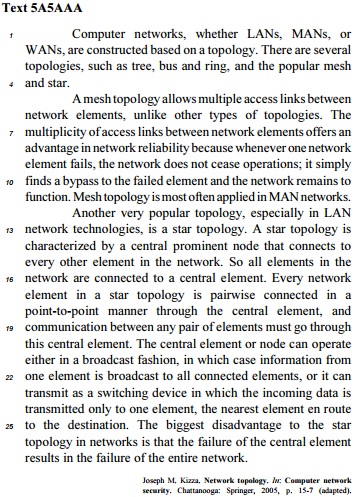
In the text 5A5AAA,
“it” ( .9) refers to “network element” (
 . 8 and 9).
The advantage
1 CARE Acquiring a new aircraft is already a complex enough process. Acquiring a pre-owned aircraft can be an even more challenging task. The industry has its fair share of brokers and experts all willing to offer you the best deal in town but, regrettably, once you have signed and the aircraft is delivered, they tend to vanish as they move onto the next deal. Our philosophy is very different. Every Embraer aircraft we lease has passed through our own Embraer facilities. Every aircraft is treated with a level of service and care that can only come from those who built them in the first place.
2 SUPPORT In choosing one of our pre-owned aircraft, all of our customers share a common goal: to ensure that the aircraft delivered perform seamlessly from day one and continue to perform for many years to come. In response to this, we offer the Lifetime Program by Embraer. This program represents a first in the industry and is the result of a very detailed review between ECC and Embraer on how best to support our customers. The Lifetime Program is unique to pre-owned Embraer aircraft and offers a wide range of services from startup through operation.
3 RELIABLE So when an ECC pre-owned aircraft is offered for delivery to its new home you can rest assured that it will provide many years of happy, reliable service. Our focus does not end there since we value the relationships we build with our customers. Our Lifetime Program is testament to this. This is a unique and new service from Embraer to support our used aircraft. We invite you to learn, in greater detail, how it will not only enhance your operation, but also keep your Chief Financial Officer happy. Transparency in costs and flexibility in adapting to your needs. It is our way of showing that every Embraer aircraft we offer has our seal of approval. Coming from the manufacturer, that's no small thing.
Source: http://www.eccleasing.com/Pages/fator.aspx [slightly adapted]
A design pattern is often posed as a question: how do we solve some design problem? However a design problem is, by its nature, nonspecific, and rarely has a single straight-forward answer. There might be several ways to solve the same problem, some better than others depending on the specific situation and the specific context of the problem. A design pattern is intended to share not just solutions but a better understanding of both the problem and how it might be solved. Firstly, patterns have a well-defined structure. This consistent layout makes it easy to browse through a collection of patterns to find relevant help and then dive further into the material. The structure encourages the author of the pattern to think carefully about the knowledge they're sharing, whilst making the material more consistently accessible to a reader.
(http://www.cambridgesemantics.com/semantic-university/semantic-web-design-patterns)
Na expressão: “… how it might be solved…”, a palavra sublinhada refere-se a:

Based on the text above, judge the following items.
In the first paragraph, the word “it” (l. 2 and 3) refers to
“technology” (l.2) both in “when it comes” (l.2) and in “it is
more” (l.3).

The words “their" (
 13) and “they" (14) refer, respectively,
to “people" (13) and “roles" (13).
13) and “they" (14) refer, respectively,
to “people" (13) and “roles" (13).
In reference to the content of the text, its vocabulary and syntactic structure, decide whether the following statements are right (C) or wrong (E).
In lines 4, 7 and 9, although with different syntactic functions,
the word it refers to the same thing: “the head of an enemy
which swung from the rafters” (l. 3 and 4).


That is Paula, _____ is his girlfriend. Mark and Paula are from Germany. _____ are german. I live with my brother and ___ have a pet. ____ is a dog called Otto.
A sequência correta é:
Teaching English as a foreign language teacher: job description
Teaching English as a foreign language (TEFL) involves teaching adults and children whose first or main language is not English. This can be done in the UK or abroad and the students may be learning English for either business or leisure reasons.
Teaching English to speakers of other languages (TESOL) is also a widely used term and often means the same thing as TEFL. It’s sometimes specifically used to refer to teaching English to people who are living in the UK but who do not speak English as a first language. These students are most commonly refugees and immigrants and need to learn the language in order to help them settle into the UK society.Their courses are often government funded.
Teaching English as a second language (TESL) or teaching English as an additional language (TEAL) may also be terms that are used but they generally all refer to the same thing - teaching English to someone whose native language is not English.
Teachers of English as a foreign language can work in a variety of settingswith different age ranges. This can include commercial language schools, schools and institutions of further and higher education throughout the UK and overseas. Some may also teach in industry, while others are self-employed. Classes are usually taught in English, evenwith beginners. Teaching English as a foreign language teacher: job description
Adapted from: < www.prospects.ac.uk/case-studies-working- abroad>
And congratulations on your new purchase. You’re now entitled to an unsurpassed service and a number of benefits as part of the Ericsson warranty and service program. Your Ericsson mobile phone was designed to offer you the ultimate in quality, convenience and performance. And of course, we guarantee it. From now on, as the new owner of an Ericsson mobile phone, you’ll have access to a number of exclusive advantages such as: a vast network of Ericsson service centers; a limited 1 year warranty and service agreement, and a toll-free customer service hotline.
WARRANTY CONDITIONS
Dear Customer,
If your Ericsson product needs warranty service, you should send the product to any company authorized service facility. For information contact the store from which you purchased the product. The product in all cases must be accompanied by the following items: your name, address, telephone number, warranty card, bill of sale bearing the serial number, date of delivery, or reasonable proof of these dates, and a detailed description of the problem.
Our warranty
This warranty is extended by Ericsson Inc. (“The Company”) to the original purchaser for use only. Ericsson warrants this product to be free of defects in material and workmanship at the time of its original purchase and for the subsequent period of one (1) year. All accessories for the product are covered for a period of one (1) year fromthe date of purchase.
What we will do
If, during the period of warranty, this product proves defective under normal use and service due to improper materials or workmanship, the company will repair or replace the defective item with a new or factory rebuilt replacement.
(Taken from Ericsson - One yearWarranty and ServiceAgreement)

When was the first computer unvented?
The word "computer" was first recorded as being used in 1613 and was originally used to describe a human who performed calculations or computations. The definition of a computer remained the same until the end of the 19th century when people began to realize machines never get tired and can perform calculations much faster and more accurately than any team of human computers ever could.
In 1822, Charles Babbage began developing the Difference Engine, which was considered to be the first automatic computing engine. It was capable of computing several sets of numbers and making hard copies of the results. Unfortunately, because of funding he was never able to complete a full-scale functional version of this machine. In June of 1991, the London Science Museum completed the Difference Engine Nº 2 for the bicentenni- al year of Babbage's birth and later completed the printing mechanism in 2000.
Fonte: http://www.computerhope.com/issues/ch000984.htm Acesso em: 15/10/2013
By JONATHAN WEISMAN and ASHLEY PARKER
Feb. 11, 2014
WASHINGTON - Ending three years of brinkmanship in which the threat of a devastating default on the nation’s debt was used to wring conservative concessions from President Obama, the House on Tuesday voted to raise the government’s borrowing limit until March 2015, without any conditions.
The vote - 221 to 201 - relied almost entirely on Democrats in the Republican-controlled House to carry the measure and represented the first debt ceiling increase since 2009 that was not attached to other legislation. Only 28 Republicans voted yes, and only two Democrats voted no.
Simply by holding the vote, Speaker John A. Boehner of Ohio effectively ended a three-year Tea Party-inspired era of budget showdowns that had raised the threat of default and government shutdowns, rattled economic confidence and brought serious scrutiny from other nations questioning Washington’s ability to govern. In the process, though, Mr. Boehner also set off a series of reprisals from fellow Republican congressmen and outside groups that showcased the party’s deep internal divisions.
During the October 2013 government shutdown, The Times’s David Leonhardt explained the debt limit and how a failure to raise it could have affected the economy both at home and abroad.
"He gave the president exactly what he wanted, which is exactly what the Republican Party said we did not want,” said a Republican representative, Tim Huelskamp of Kansas, who last year unsuccessfully tried to rally enough support to derail Mr. Boehner’s re-election as speaker. “It’s going to really demoralize the base.”
The vote was a victory for President Obama, Democrats and those Senate Republicans who have argued that spending money for previously incurred obligations was essential for the financial standing of the federal government. “Tonight’s vote is a positive step in moving away from the political brinkmanship that’s a needless drag on our economy,” Jay Carney, the White House press secretary, said in a statement.
"A clean debt ceiling is a complete capitulation on the speaker’s part and demonstrates that he has lost the ability to lead the House of Representatives, let alone his own party,” said Jenny Beth Martin, co-founder of the Tea Party Patriots. “It is time for him to go.”
Senator Harry Reid of Nevada, the majority leader, commended the speaker and promised to pass the bill as soon as possible. “We’re happy to see the House is legislating the way they should have legislated for a long time,” he said.
(Adapted from http://www.nytimes.com/2014/02/12/us/politics/ boehner-to-bring-debt-ceiling-to-vote-without-policy- attachments. html?nl=todaysheadlines&emc=edit_th_2014021 2&_r=0)
If It’s for Sale, His Lines Sort It
By MARGALIT FOX
It was born on a beach six decades ago, the product of a pressing need, an intellectual spark and the sweep of a young man’s
fingers through the sand.
The result adorns almost every product of contemporary life, including groceries, wayward luggage and, if you are a
traditionalist, the newspaper you are holding.
The man on the beach that day was a mechanical-engineer-in-training named N. Joseph Woodland. With that transformative
stroke of his fingers − yielding a set of literal lines in the sand − Mr. Woodland, who died on Sunday at 91, conceived the modern bar
code.
Mr. Woodland was a graduate student when he and a classmate, Bernard Silver, created a technology, based on a printed
series of wide and narrow striations, that encoded consumer-product information for optical scanning.
Their idea, developed in the late 1940s and patented 60 years ago this fall, turned out to be ahead of its time, and the two men
together made only $15,000 from it, when they sold their patent to Philco. But the curious round symbol they devised would ultimately
give rise to the universal product code, or U.P.C., as the staggeringly prevalent rectangular bar code (it graces tens of millions of
different items) is officially known.

Here is part of the story behind the invention:
To represent information visually, he realized, he would need a code. The only code he knew was the one he had learned in the
Boy Scouts.
What would happen, Mr. Woodland wondered one day, if Morse code, with its elegant simplicity and limitless combinatorial
potential, were adapted graphically? He began trailing his fingers idly through the sand.
“What I’m going to tell you sounds like a fairy tale,” Mr. Woodland told Smithsonian magazine in 1999. “I poked my four fingers
into the sand and for whatever reason − I didn’t know − I pulled my hand toward me and drew four lines. I said: ‘Golly! Now I have four
lines, and they could be wide lines and narrow lines instead of dots and dashes.’ ”
That consequential pass was merely the beginning. “Only seconds later,” Mr. Woodland continued, “I took my four fingers − they
were still in the sand − and I swept them around into a full circle.”
Mr. Woodland favored the circular pattern for its omnidirectionality: a checkout clerk, he reasoned, could scan a product without
regard for its orientation.
But that method − a variegated bull’s-eye of wide and narrow bands −, which depended on an immense scanner equipped with
a 500-watt light, was expensive and unwieldy, and it languished for years.
The two men eventually sold their patent to Philco for $15,000 − all they ever made from their invention.
By the time the patent expired at the end of the 1960s, Mr. Woodland was on the staff of I.B.M., where he worked from 1951
until his retirement in 1987.
Over time, laser scanning technology and the advent of the microprocessor made the bar code viable. In the early 1970s, an
I.B.M. colleague, George J. Laurer, designed the familiar black-and-white rectangle, based on the Woodland-Silver model and drawing
on Mr. Woodland’s considerable input.
(Adapted from http://www.nytimes.com/2012/12/13/business/n-joseph-woodland-inventor-of-the-bar-code-dies-at-91.html?nl=todaysheadlines
&emc=edit_th_20121214&_r=0)
O pronome “It”, no início do texto, refere-se a
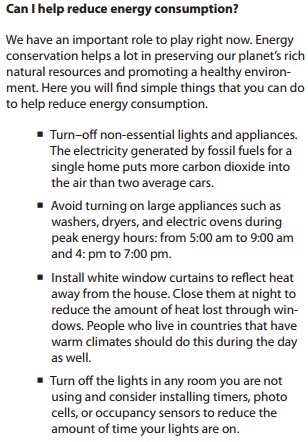
As palavras "We" e "Our" estão sendo usadas no texto como:

 Conheça nossos planos