Questões de Concurso
Sobre presente perfeito progressivo | present perfect continuous em inglês
Foram encontradas 35 questões


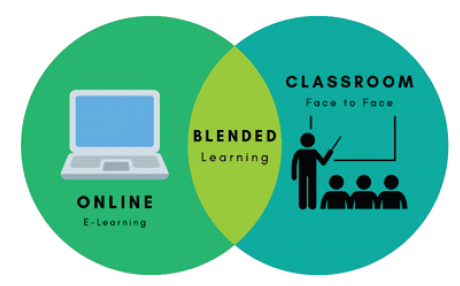
What is blended learning and how does it work?

Complete the sentence with the correct answer.
I _________ this type of food for the last 2 years.
Choose the correct question for the following answer:
She has been studying in a British school for five years.
Complete the sentence with the appropriate option:
I ________________________ for the test at the moment.
Consider the following sentences with the use of conditional clause if and choose the alternative with the correct verbs:
“She would have passed the test if she _______.”
“If he had had the money, he _______the new car.”
“If he goes to the mall I _____with him.”
Choose the correct answer.
There isn't any food in the refrigerator now. It ____ all
____ .
“That girls _________ on a diet since last month.”

Available at:< http://time.com/5363764/argentina-abortion-vote-progress/html>. Access on: Aug. 10, 2018
 The fair trade movement, which aims
ensure that fair prices are paid to producers in
developing countries, is one of the true global success
stories recent decades. The International
Fairtrade Certification Mark, a guarantee that producers are getting a fair price, has become one of the
most recognizable logos the world, which
91 percent of customers associate positive
values. When the logo first appeared in the UK, the
country where the largest number of fair-trade products are sold, nobody expected that the number of
certified products would grow from only 3 to over
4,500 in just 18 years. In 2011, people around the
world spent more than 6.5 billion US dollars on fair-
-trade certified goods, signifying a 12 percent increase
in sales from the previous year. This was at a time
when most market segments in the developed world
were still shrinking or stagnating from the after effects
of the 2008 banking crisis. Over 1.2 million farmers
and workers living in 66 countries benefit from fair-
-trade certification by being able to sell their products
at competitive prices, to ensure sustainability.
The fair trade movement, which aims
ensure that fair prices are paid to producers in
developing countries, is one of the true global success
stories recent decades. The International
Fairtrade Certification Mark, a guarantee that producers are getting a fair price, has become one of the
most recognizable logos the world, which
91 percent of customers associate positive
values. When the logo first appeared in the UK, the
country where the largest number of fair-trade products are sold, nobody expected that the number of
certified products would grow from only 3 to over
4,500 in just 18 years. In 2011, people around the
world spent more than 6.5 billion US dollars on fair-
-trade certified goods, signifying a 12 percent increase
in sales from the previous year. This was at a time
when most market segments in the developed world
were still shrinking or stagnating from the after effects
of the 2008 banking crisis. Over 1.2 million farmers
and workers living in 66 countries benefit from fair-
-trade certification by being able to sell their products
at competitive prices, to ensure sustainability.
 Fair-trade initiatives have been growing steadily since the late 1960s, when the fair trade
movement started with only a handful of committed
individuals in the West who believed there was an
alternative to the exploitation of farmers and workers
in the developing world. Fair trade ensures fair prices
for suppliers, as well as payment of a premium that
can be reinvested in the local communities (for example, in schools or sanitation) or in improving productivity. In India, for instance, a group of rice farmers used
the premium to buy farm machinery, which meant a
30 percent improvement in production.
Fair-trade initiatives have been growing steadily since the late 1960s, when the fair trade
movement started with only a handful of committed
individuals in the West who believed there was an
alternative to the exploitation of farmers and workers
in the developing world. Fair trade ensures fair prices
for suppliers, as well as payment of a premium that
can be reinvested in the local communities (for example, in schools or sanitation) or in improving productivity. In India, for instance, a group of rice farmers used
the premium to buy farm machinery, which meant a
30 percent improvement in production.
 As consumers look for, and recognize, the logo
and purchase fair-trade products, they put
pressure on companies and governments to do more
for global welfare. They also put pressure on supermarkets to sell fair-trade goods at the same price as
conventional products, shifting the extra costs involved from consumers to the corporations that collect
the profits.
As consumers look for, and recognize, the logo
and purchase fair-trade products, they put
pressure on companies and governments to do more
for global welfare. They also put pressure on supermarkets to sell fair-trade goods at the same price as
conventional products, shifting the extra costs involved from consumers to the corporations that collect
the profits.
 Critics of the fair trade movement say it is still
not doing enough. They stress that the key to
long-term development is not in small local improvements, but in moving the developing world from
the production of raw materials into processing them,
which can bring in greater profit. There are already some signs of this happening. A group of tea growers
in Kenya recently set up a processing factory to deliver the final products directly to their customers in
the West. By switching from the export of raw tea to
boxed fair-trade products, they achieved 500 percent
higher profits.
Critics of the fair trade movement say it is still
not doing enough. They stress that the key to
long-term development is not in small local improvements, but in moving the developing world from
the production of raw materials into processing them,
which can bring in greater profit. There are already some signs of this happening. A group of tea growers
in Kenya recently set up a processing factory to deliver the final products directly to their customers in
the West. By switching from the export of raw tea to
boxed fair-trade products, they achieved 500 percent
higher profits.
 It is important to realize that, despite all of its
benefits, the fair trade movement has its limitations. Some of the poorest farmers can’t afford to pay
the certification fees required for each fair-trade initiative, while others work for big, multinational employers that are excluded from participating. Fair trade is
certainly a step in the right direction, but there is a lot
more we must continue to do in order to help people
in the world’s poorest regions.
It is important to realize that, despite all of its
benefits, the fair trade movement has its limitations. Some of the poorest farmers can’t afford to pay
the certification fees required for each fair-trade initiative, while others work for big, multinational employers that are excluded from participating. Fair trade is
certainly a step in the right direction, but there is a lot
more we must continue to do in order to help people
in the world’s poorest regions.( ) The underlined words “As consumers look for …” can be replaced by ‘seek out’ without changing its meaning. ( ) The words ‘meant’; ‘been’ and ‘started’ are irregular verbs. ( ) “Fair-trade initiatives have been growing steadily since the late 1960s.” The underlined words are in the Present perfect continuous Tense. ( ) “They also put pressure on supermarkets to sell fair-trade goods….” The underlined word is the plural form of “good”.
Choose the alternative which presents the correct sequence, from top to bottom.
Read the following article and answer question based on the text.
Faced with the unprecedented stream of migrants fleeing war and trauma in the Middle East and North Africa, Europe needs to take clear-sighted action.
For its part, the UK has agreed to take 20,000 refugees, a significant portion of whom will likely be children and orphans according to report. One key aspect in ensuring their smooth settlement in the UK will be providing these refugees with language training.
Many Syrians are well-educated and many speak fluent English. Others, however, do not speak English well enough to function professionally within the UK. The issue of language is so fundamental to our lives that we often overlook it. Several multi-million pound training contracts have failed to be delivered on account of not addressing the language barrier. All the goodwill, financial backing, and technical expertise to deliver needed medical, economic, military,engineering, or navigational training may be present; but unless there is a shared language in which to impart that knowledge, little will be accomplished.
One of the biggest misconceptions about language is that if you “just go to the country,” you’ll pick it up. Many people believe that immersion will guarantee fluency; yet you may well know several immigrants who have been in this country for years and still only speak broken English. You might also know dozens of expats in various countries across the world who have failed to pick up the local languages of their host countries. Training and effort are both necessary.
Though not a guarantee of fluency, immersion is a wonderful opportunity. The first issue we need to address with respect to refugees is ensuring that those who come will actually be immersed. That is, that they will be welcomed as part of larger communities, and not simply join communities of other refugees. On the other hand, immersion is just an opportunity, and in order to take full advantage of it, training and education are required. In terms of refugees, we need to consider options for the provision of language training, whether by self-study, classroom instruction, private tuition, or some combination of the three.
The array of needs is staggering. In truth, every language learner has a different set of learning objectives, and will require different training to meet those objectives. Coordinating the actual needs with providers in different regions and accounting for different personal schedules and start dates is a significant challenge. It is, however, a challenge that must be addressed immediately, as proficiency in English will be a key enabler of success for refugees in this country.
(Adapted from Aaron Ralby http://www.blogs.jbs.cam.ac.uk/ socialinnovation/2015/11/16/)
Saint Patrick's Day, also known as The Feast of Saint Patrick, is a traditional holiday celebrated every year on March 17th, the day the patron saint of Ireland, Saint Patrick, died.
Patrick, who was born in the fourth century, lived in the British Isles, a land that had been invaded and conquered first by the Romans and then by Germanic tribes. At the age of 16, Patrick was captured and taken as a slave from the British Isles to what is now Ireland. He lived there for several years herding sheep. He was a religious boy, and he prayed that he would someday return to his homeland.
Legend has it that one night while he was praying, a voice told him to escape from the farm, and find a ship that was waiting for him in a harbor two hundred miles aways. Patrick got to the ship, sailed to Europe, and disembarked in what is now probably France. He ---1--- several of the ship's crew through a dangerous forest, praying all the time. Neither Patrick nor any member of his crew was captured. When some of the men were about to die of starvation, wild animals appeared to them to eat. Events such as these appeared to be miracles and gave rise to later legends surrounding Patrick.
Finally finding his way home, Patrick felt that he was called by God to perform an important mission. He believed it was his duty to go back to Ireland and convert the Celtic people to the Christian Religion.
Patrick arrived in England and became a missionary, traveling from village to village and talking about his faith. Once, several members of a tribe approached Patrick and told him that they found it difficult to understand and believe in the Holy Trinity. Patrick thought a moment, then stooped down and picked one of the plentiful shamrocks growing wild around Ireland. “Here are three leaves", he said, “yet it is one plant. Imagine the Father, Son and the Holy Spirit as each of these leaves. Here they are, yet they are one plant." The tribesmen understood, because Patrick had used a familiar object to explain. From that time on, the shamrock has been a revered symbol of Ireland.
There are lots of stories about Patrick. One of them is about him forcing snakes out of the entire country of Ireland. Even though there are many different stories about how he accomplished such a task, it is probably not true. Patrick died on March 17th, and the Irish people set aside the day to mourn. He became the patron saint of Ireland. Mourning turned to commemorating him and celebrating his life.
Because of Saint Patrick, lots of cities around the world with a large population of Irish have parades. Green is one of the national colors of Ireland. Green stripes are painted on the streets where the parade will travel. People wear green shirts, ties, hair ribbons, and hats. There are even pubs which serve green beer on that day.
Saint Patrick's Day was made an official Christian holiday in the early seventeenth century. It is now observed by the Catholic Church, the Anglican Communion, the Eastern Orthodox Church and Lutheran Church. The day commemorates Saint Patrick and the arrival of Christianity in Ireland. Not only that, but it also celebrates the heritage and culture of the Irish in general.
Source: adapted from http://www.inglesnapontadalingua.com.br/2014/03

In the sentence “A crossing in central London had programmed intervals for red and green lights” (l.14-15), the underlined verbal locution is in the ________________. If we put it in the present perfect continuous, it would be written as ______________.
Mark the alternative that correctly and respectively fill in the blanks above.
I. _________________ (to lie) in the sun for six hours. That’s why he is sunburnt.
II. Carry is on the phone now. _________________ (to talk) to her sister in Greece.
III. I’m not sure if this is a good book. _________________ (to read) it.
IV. I think I’m a good skier. _________________ (to go skiing) every weekend in the winter.
V. In Middle East the people _________________ (to rise up) against the dictator after the incident.
VI. Americans _________________ (to be) the first to send a man to the moon about fifty years ago.



 Conheça nossos planos