Questões de Concurso
Comentadas sobre preposições | prepositions em inglês
Foram encontradas 530 questões


Text 2:
Bad teaching habits: too much TTT
No teacher is perfect and all teachers have bad habits. Being a good teacher means reflecting (1) the following habits and trying to reduce them as much as possible.
TTT stands (2) teacher talking time. Obviously, during the course of the class, it is necessary for the teacher to explain rules, give advice and talk about instructions, among other things. However, teachers should attempt to limit the amount of time that they spend speaking to the class in order to maximize the opportunity that the students have to speak. A good rule (3) thumb is aiming for around 30% of teacher talk to 70% of student talk. This means planning out what you will say, when and how.
Adapted from: www.bbc.co.uk/learningenglish
Choose the correct preposition for the sentence below:
“Sugar dissolves ____ water.”
Instructions: answer the question based on the following text.
1 The Swansea-based scientist spent years piecing together ____ ancient DNA 2 puzzle that suggests hunting by humans caused this giant seabird's demise.
3 Dr Thomas studied bone and tissue samples from 41 museum specimens
4 during a PhD at both Bangor and Copenhagen University.
5 The findings paint a picture ____ how vulnerable even the most common
6 species are to human exploitation.
7 Storybook seabird
8 About 80cm (2ft 7in) tall, the stubby-winged and bulbous-billed great auks
9 used to be found all across the north Atlantic - from North America through
10 Greenland, Iceland, Scandinavia and the UK.
11 "Being flightless, they were always targeted ____ local people for food and for 12 their feathers," says Dr Thomas.
13 "But around 1500, when European seamen discovered the rich fishing
14 grounds off Newfoundland, hunting intensified."
15 By about 1850, the great auk was extinct; the last two known specimens were 16 hunted down by fishermen on Eldey Island, off the coast of Iceland.
17 The songbird obsession that became an extinction crisis
18 A third of tropical plants face extinction
19 Five ways to climate proof the world
20 One of these signatures might be a lack of genetic diversity, suggesting
21 individuals were inbreeding and the species, as a whole, was becoming
22 vulnerable to disease or environmental change.
23 "But their genetic diversity was very high - all but two sequences we found
24 were very different," Dr Thomas said.
25 In fact, the genetic timeline Dr Thomas and her colleagues were able to create 26 - published in the journal eLife - showed that, at the time the intensive great 27 auk hunting began, the species was doing "really well".
28 "They weren't at risk of extinction at all," said Dr Thomas.
29 "It emphasizes how vulnerable even the widespread and abundant species
30 are to this intensive, localized pressure."
Source (adapted): https://www.bbc.com/news/scienceenvironment-50563953.
Considering the grammar point Prepositions, which is the best alternative to complete the following sentence? “A lot of people are afraid _____ losing their jobs.”
The correct preposition to complete the sentence below is:
_______ the daytime the streets are crowded, but ______ night they are deserted.
The picture is familiar ____ me. In other words, I'm familiar ______ the picture.
The correct preposition to complete the sentence below is:
Bamboo can be made _____ fishing poles.
Global warming
The world’s oceans have warmed 50 percent faster over the last 40 years than previously thought due to climate change, Australian and US climate researchers reported Wednesday. Higher ocean temperatures expand the volume of water, contributing to a rise in sea levels that is submerging small island nations and threatening to wreak havoc in low-lying, denselypopulated delta regions around the globe.
The study, published ....................... the British journal Nature,adds ....................... a growing scientific chorus of warnings ....................... the pace and consequences rising oceans. It also serves as a corrective to a massive report issued last year ....................... the Nobel-winning UN Intergovernmental Panel on Climate Change (IPCC), according to the authors.
Rising sea levels are driven by two things: the thermal expansion of sea water, and additional water from melting sources of ice. Both processes are caused by global warming. The ice sheet that sits atop Greenland, for example, contains enough water to raise world ocean levels by seven metres (23 feet), which would bury sea-level cities from Dhaka to Shanghai.
Trying to figure out how much each of these factors contributes to rising sea levels is critically important to understanding climate change, and forecasting future temperature rises, scientists say. But up to now, there has been a perplexing gap between the projections of computer-based climate models, and the observations of scientists gathering data from the oceans.
The new study, led by Catia Domingues of the Centre
for Australian Weather and Climate Research, is the
first to reconcile the models with observed data. Using
new techniques to assess ocean temperatures to a
depth of 700 metres (2,300 feet) from 1961 to 2003,
it shows that thermal warming contributed to a 0.53
millimetre-per-year rise in sea levels rather than the
0.32 mm rise reported by the IPCC.
TEXT 1: How brightly the moon glows is a mystery, but maybe not for long.
“The lunar dark side may be the moon’s more mysterious face, but there’s something pretty basic scientists still don’t know about the bright side — namely, just how bright it is.
Current estimates of the moon’s brightness at any given time and vantage point are saddled with at least 5 percent uncertainty. That’s because those estimates are based on measurements from ground-based telescopes that gaze at the moon through the haze of Earth’s atmosphere.
Now, scientists have sent a telescope beyond the clouds on a high-altitude airplane in hopes of gauging the moon’s glow within about 1 percent or less uncertainty, the National Institute of Standards and Technology reports in a Nov. 19 news release.
Knowing the exact brightness of Earth’s celestial night-light could increase the reliability of data from Earth-observing satellites that use the moon’s steady glow to check that their sensors are working properly. Those satellites keep tabs on things like weather, crop health and dangerous algal blooms.”
(Adapted from https://www.sciencenews.org/article/how-brightly-moon-glows-is-mystery-but-maybe-not-long).
Complete the sentences with some or any and choose
the correct alternative.
She lives ____ the countryside.
The hospital is ____ the right.
John is ____ university.
They arrive ____ the airport tonight.
[…] as students are not able to choose ___ the universities.
Identify the best alternative that completes the context.
Economists may argue of the correct monetary policy at any given time or incentives and disincentives in taxes.
In the context above there is a mistake related to a or an:
Some children is more likely to develop teeth cavities.
In the context above there is mistake related to a or an:
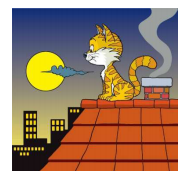
“The cat is _______ the roof.”
“ Please pay attention and make sure you’re ____________ time for the doctor’s appointment.”
I have taught brilliant students of color, many of them seniors, who have skillfully managed never to speak in classroom settings. Some express the feeling that they are less likely to suffer any kind of assault if they simply do not assert their subjectivity. They have told me that many professors never showed any interest in hearing their voices. Accepting the decentering of the West globally, embracing multiculturalism, compels educators to focus attention on the issue of voice. Who speaks? Who listens? And why? Caring about whether all students fulfill their responsibility to contribute to learning in the classroom is not a common approach in what Freire has called the “banking system of education” where students are regarded merely as passive consumers. Since so many professors teach from that standpoint, it is difficult to create the kind of learning community that can fully embrace multiculturalism. Students are much more willing to surrender their dependency on the banking system of education than are their teachers. They are also much more willing to face the challenge of multiculturalism. Multiculturalism compels educators to recognize the narrow boundaries that have shaped the way knowledge is shared in the classroom. It forces us all to recognize our complicity in accepting and perpetuating biases of any kind. Students are eager to break through barriers to knowing. They are willing to surrender to the wonder of relearning and learning ways of knowing that go against the grain. When we, as educators, allow our pedagogy to be radically changed by our recognition of a multicultural world, we can give students the education they desire and deserve. We can teach in ways that transform consciousness, creating a climate of free expression that is the essence of education.
Adapted from hooks, b. Teaching to Transgress: A Education as a Practice of Freedom. London/New York: Routledge, 1994.
Read the highlighted sentence in the text above. The cohesive device “since” can be substituted for:

 Conheça nossos planos