Questões de Concurso
Sobre passado simples | simple past em inglês
Foram encontradas 347 questões


Ano: 2019
Banca:
IDHTEC
Órgão:
Prefeitura de Vertentes - PE
Prova:
IDHTEC - 2019 - Prefeitura de Vertentes - PE - Professor de Inglês |
Q1738376
Inglês
Bia __________ to __________ when she was 22 years-old.
Ano: 2019
Banca:
IDHTEC
Órgão:
Prefeitura de Vertentes - PE
Prova:
IDHTEC - 2019 - Prefeitura de Vertentes - PE - Professor de Inglês |
Q1738375
Inglês
Yesterday, Julian __________ to school by car.
Ano: 2019
Banca:
IDHTEC
Órgão:
Prefeitura de Vertentes - PE
Prova:
IDHTEC - 2019 - Prefeitura de Vertentes - PE - Professor de Inglês |
Q1738373
Inglês
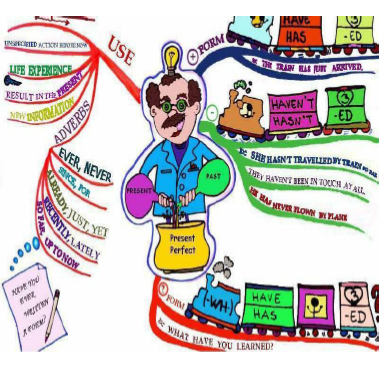
This is a mind map about:
Ano: 2019
Banca:
IESES
Órgão:
Prefeitura de Palhoça - SC
Prova:
IESES - 2019 - Prefeitura de Palhoça - SC - Professor de Anos Finais - Inglês |
Q1732455
Inglês
What is the simple past of the verb to shut?
Ano: 2019
Banca:
IESES
Órgão:
Prefeitura de Palhoça - SC
Prova:
IESES - 2019 - Prefeitura de Palhoça - SC - Professor de Anos Finais - Inglês |
Q1732453
Inglês
Complete the sentences and questions with the correct form of there to be and choose the correct alternative:
_____________ anybody in Room 307 at the moment? _____________ a man waiting for me outside the school.
How many CDs _________ in your box?
Ano: 2019
Banca:
Aprender - SC
Órgão:
Prefeitura de Tangará - SC
Prova:
Aprender - SC - 2019 - Prefeitura de Tangará - SC - Professor Educação Básica III - Inglês |
Q1732289
Inglês
Observe the following fragment.
They came for the scheduled meeting of a bikers' rights
group, topics such as road safety ____ on the agenda.
Identify the best alternative that completes the context.
Ano: 2019
Banca:
AMEOSC
Órgão:
Prefeitura de Princesa - SC
Prova:
AMEOSC - 2019 - Prefeitura de Princesa - SC - Professor de Inglês |
Q1729074
Inglês
The design of the plates _____________ supposed to be a joke about portion control.
Identify the best alternative that completes the context.
Ano: 2019
Banca:
IESES
Órgão:
Prefeitura de Gaspar - SC
Prova:
IESES - 2019 - Prefeitura de Gaspar - SC - Professor de Inglês |
Q1726384
Inglês
What is the simple past of the verb to draw?
Ano: 2019
Banca:
IESES
Órgão:
Prefeitura de Gaspar - SC
Prova:
IESES - 2019 - Prefeitura de Gaspar - SC - Professor de Inglês |
Q1726382
Inglês
Complete the sentences and questions with the correct
form of there to be and choose the correct alternative:
How many boys _____________ at your party last week? _____________ an accident in your street yesterday. My neighborhood is great _____________ a nice lake nearby.
How many boys _____________ at your party last week? _____________ an accident in your street yesterday. My neighborhood is great _____________ a nice lake nearby.
Ano: 2019
Banca:
AMEOSC
Órgão:
Prefeitura de Santa Helena - SC
Prova:
AMEOSC - 2019 - Prefeitura de Santa Helena - SC - Professor com Licenciatura em Língua Portuguesa e Estrangeira - Inglês |
Q1725579
Inglês
Read the sentence below.
Electric overhead signs urged people to avoid ____________________ bicycles and other large items.
Choose the correct alternative that completes the context.
Electric overhead signs urged people to avoid ____________________ bicycles and other large items.
Choose the correct alternative that completes the context.
Ano: 2019
Banca:
AMEOSC
Órgão:
Prefeitura de Paraíso - SC
Prova:
AMEOSC - 2019 - Prefeitura de Paraíso - SC - Professor de Inglês |
Q1725017
Inglês
Considere the sentence below:
“Our classes begin at nine.”
The verb tense is:
Ano: 2019
Banca:
Crescer Concursos
Órgão:
Prefeitura de Brejo de Areia - MA
Prova:
Crescer Consultorias - 2019 - Prefeitura de Brejo de Areia - MA - Professor Nível II - Inglês |
Q1724869
Inglês
Complete the sentence below with the correct verbs.
Choose the CORRECT answer.
“When Peter _______ at the meeting, it _______ already _______ .”
“When Peter _______ at the meeting, it _______ already _______ .”
Ano: 2019
Banca:
Crescer Concursos
Órgão:
Prefeitura de Brejo de Areia - MA
Prova:
Crescer Consultorias - 2019 - Prefeitura de Brejo de Areia - MA - Professor Nível II - Inglês |
Q1724854
Inglês
Complete the sentence below with the correct verb.
Choose the CORRECT answer.
‘‘At the train station - A: What is your train number? B: I ________ for the 8814.’’
‘‘At the train station - A: What is your train number? B: I ________ for the 8814.’’
Ano: 2019
Banca:
Crescer Concursos
Órgão:
Prefeitura de Brejo de Areia - MA
Prova:
Crescer Consultorias - 2019 - Prefeitura de Brejo de Areia - MA - Professor Nível II - Inglês |
Q1724853
Inglês
Complete the sentence below with the correct verb.
Choose the CORRECT answer.
‘‘Two years ago, I ________ Physics to my pupils.’’
‘‘Two years ago, I ________ Physics to my pupils.’’
Ano: 2019
Banca:
AMEOSC
Órgão:
Prefeitura de Iporã do Oeste - SC
Prova:
AMEOSC - 2019 - Prefeitura de Iporã do Oeste - SC - Professor de Inglês |
Q1723844
Inglês
Consider the following sentence:
“Peter __________ in his studio every day.”
The alternative that best completes the sentences above is:
Ano: 2019
Banca:
COTEC
Órgão:
Prefeitura de Carneirinho - MG
Prova:
COTEC - 2019 - Prefeitura de Carneirinho - MG - Professor II - Inglês |
Q1715849
Inglês
Texto associado
INSTRUCTIONS: Read the following text carefully and then choose the correct alternatives that answer the questions.
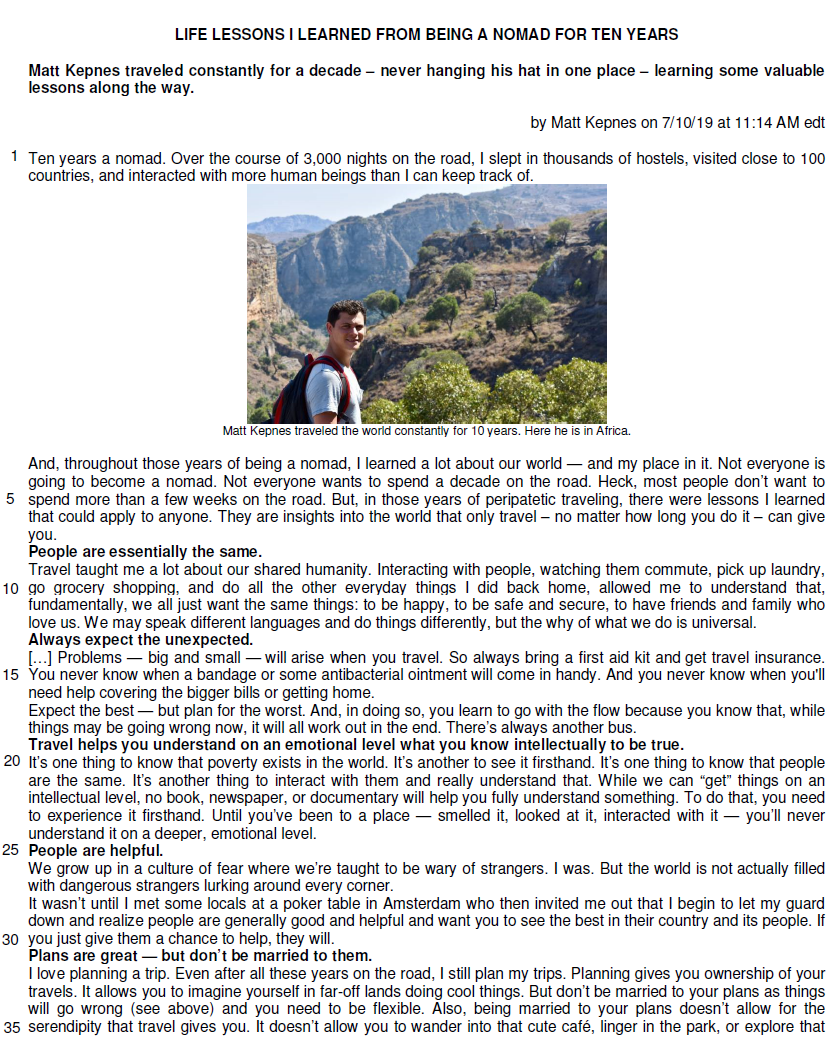

Source:<https://www.newsweek.com/9-life-lessons-matt-kepnes-learned-being-nomad-ten-years-1448511>
INSTRUCTIONS: Question refer to the sentence “Matt Kepnes traveled constantly for a decade – never hanging his hat in one place – learning some valuable lessons along the way” (heading).
There are the following verb tenses in the sentence:
There are the following verb tenses in the sentence:
Ano: 2019
Banca:
CONTEMAX
Órgão:
Prefeitura de Orobó - PE
Prova:
CONTEMAX - 2019 - Prefeitura de Orobó - PE - Professor de Inglês |
Q1708866
Inglês
Based on the English Grammar, we use the
simple past tense to talk about:
Q1646461
Inglês
Analyse the current sentences and choose
the option that describes their verb tense:
I - My brother has been teasing me since this morning. II - I am reading an excellent book. III - I have been to England twice. IV - My husband works everyday.
I - My brother has been teasing me since this morning. II - I am reading an excellent book. III - I have been to England twice. IV - My husband works everyday.
Ano: 2019
Banca:
ADM&TEC
Órgão:
Prefeitura de Joaquim Gomes - AL
Prova:
ADM&TEC - 2019 - Prefeitura de Joaquim Gomes - AL - Professor de Inglês |
Q1644433
Inglês
Leia as afirmativas a seguir:
I. Ocorre verbo na frase: the stone travelled the air. II. Está correta a grafia do trecho a seguir, em inglês: the lykees off (gente como).
Marque a alternativa CORRETA:
I. Ocorre verbo na frase: the stone travelled the air. II. Está correta a grafia do trecho a seguir, em inglês: the lykees off (gente como).
Marque a alternativa CORRETA:
Ano: 2019
Banca:
GUALIMP
Órgão:
Prefeitura de Areal - RJ
Prova:
GUALIMP - 2019 - Prefeitura de Areal - RJ - Professor Ensino Fundamental 6º a 9º Ano - Língua Inglesa |
Q1621171
Inglês
Complete the sentence below with the correct verbs. Choose the CORRECT answer.
“I _________ a ring to my girlfriend before I _________ to her.”
“I _________ a ring to my girlfriend before I _________ to her.”

 Conheça nossos planos