Questões de Concurso
Sobre passado perfeito | past perfect em inglês
Foram encontradas 149 questões


What is the verb tense underlined in the sentence below?
"The teacher thought we had understood the book."
Read the text below to answer the question:
ICEBERG A68a
An enormous iceberg that is heading toward the island of South Georgia in the southern Atlantic Ocean has broken up into three large chunks. Scientists from NASA have been tracking the berg - dubbed A68a - for several weeks. It actually calved from the Larsen C ice shelf in 2017 and has been floating northwards ever since. In recent weeks, a fast-moving stream of water known as the Southern Antarctic Circumpolar Current Front has put the chunks on a trajectory that means they could run aground off the coast of South Georgia. Scientists say the three fragments are roughly 2,600 square kilometres in size. The submerged part of one chunk is 106 metres at its thickest point.
The sheer bulk of the three iceberg chunks poses a serious threat to the wildlife of South Georgia. There could be an environmental catastrophe waiting to happen. If the three mini icebergs collide with the seabed, they could obstruct penguins and seals from foraging for fish. They could also block the route between penguin colonies and their feeding grounds during the breeding season. Scientists worry the underside of the fragments could grind the seabed near South Georgia and disrupt delicate underwater ecosystems. This could be exacerbated by the introduction of a mass of fresh water to the ecosystems as the stationary fragments melt over the summer months.
Available at: https://breakingnewsenglish.com/2012/201229-iceberg-a68a.html
Accessed on January 5th 2021.
Which verb tense the sentence below refer to?
"Has he been driving everyday?"
Instructions: answer the question based on the following text.

Source (adapted): https://www.bbc.com/news/worldafrica-50800864
1. ________ that movie with Brad Pitt?
2. I _________ home when I saw the accident.
3. They were sleeping when I ______.
4. We ______ TV all night long last night.
Complete the sentence below with the correct verbs. Choose the CORRECT answer.
“He _________ breakfast before he _________ his teeth.”
Choose the verb form that completes the sentence below correctly:
Fay was late for school yesterday.
When she arrived at school, the final test ...
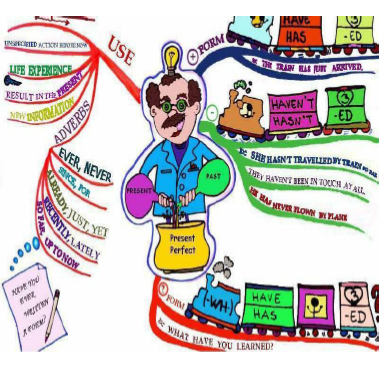
This is a mind map about:
“Katie is in love with Paris. She can get around pretty easily as she _________ French.”
‘‘At the train station - A: What is your train number? B: I ________ for the 8814.’’
‘‘Two years ago, I ________ Physics to my pupils.’’
I - My brother has been teasing me since this morning. II - I am reading an excellent book. III - I have been to England twice. IV - My husband works everyday.
Chose the alternative that fills the gaps below CORRECTLY:
He ________ really pleased that she ________ there.
“I _________ a ring to my girlfriend before I _________ to her.”
Instruction: Answer question based on the following text.

Source: https://www.newyorker.com/humor/daily-shouts/the-eurohug-is-it-a-thing-a-global-guide-toembrace

 Conheça nossos planos