Questões de Concurso
Sobre oposto | opposite em inglês
Foram encontradas 73 questões


1. noisy – ugly – terrible – friendly. 2. safe – calm – annoying – quiet. 3. curly – narrow – little – small. 4. street – across – between – in front of.
Text V
Language Assessment and the new Literacy Studies
Some Final Remarks
Planning language assessment from a structuralist view of language has been a fairly easy task, since it aims at testing the correct use of grammar and lexical structures. This has been a very comfortable way to evaluate students’ performance in many regular schools or language institutes due to the stability of standardized answers. From the perspective of the new literacy studies, the comfort of teaching and assessing objective and homogeneous linguistic contents is replaced by a wider spectrum of language teaching and assessing possibilities, whose key elements turn to be difference and critique. Typical activities based on this new approach would enable students to make and negotiate meanings in a much more flexible way, corroborating the novel notion of unstable, dynamic, collaborative and distributed knowledge.
The inclusion of contents of such nature in language assessments may be, at a first glance, a very laborious process due to the fact we are simply not accustomed to that. Actually, we sometimes find ourselves deprived from the teaching skills necessary to apply a more critical teaching approach, a fact that is much the results of our positivist educational background.
Nonetheless, since the emergent digital epistemology will require subject more capable of designing and redesigning meaning critically towards a great deal of representational modes, we need to reconsider our teaching approaches, go further and seek theories that take such issues into account. By redefining the notions of language and knowledge, we, thus, assume that the new literacy studies from the last decades may offer very good insights to the field of foreign language teaching.
The re-conceptualization of language assessment according to the new literacies project presented in this paper does not intend to suggest prompt fixed answers, but it takes the risk of outlining possible activities, signaling certain changes regarding its characteristics and contents, as previously shared.
The increasing importance of the new literacy and multiliteracies studies and their fruitful theoretical insight for the rethinking of pedagogical issues invite us to review our foreign language teaching practices in a different perspective. By sharing some of our local findings, we attempt to corroborate the collaborative and distributed knowledge discussed by the literacies theory itself and hope to be contributing to the new educational demands of the emerging epistemological basis.
From: DUBOC, A.P.M. Language Assessment and the new Literacy Studies. Lenguaje
37 (1), 2009. pp. 159-178, p. 175-176.
For the question use the poem below:
Eating Poetry
(Mark Strand)
Available at: https://www.poetryfoundation.org/poems/52959/eating-poetry Accessed on December 30th, 2019.
“The light is dim.” The opposite of the underlined word is:
The opposite of the superlative form THE BEST is:
According to the second paragraph, Finnish schools are very successful.
The opposite of the adjective SUCCESSFUL is:

Based on the text, judge the following item.
“bad” in “reception was sometimes bad” (line 9) is not
the contrary of better.
Executive Secretary
We are looking for a competent Executive Secretary to support high-ranking officials in our company. You will be the one to organize and maintain the executive’s schedule and assist them by performing a variety of administrative tasks.
Executive secretaries must be quick professionals with great time-management and multitasking abilities. It is with their diligence and competence in their work that executives can focus on their managerial responsibilities without worrying for other tasks.
The goal is to contribute to the efficiency of the overall business by ensuring all assigned administrative duties are carried on timely and efficiently.
Responsibilities
• Maintain executive’s agenda and assist in planning appointments, board meetings, conferences, etc;
• Attend meetings and keep minutes;
• Receive and screen phone calls and redirect them when appropriate;
• Handle and prioritize all outgoing or incoming correspondence (e-mail, letters, packages etc.);
• Make travel arrangements for executives;
• Handle confidential documents ensuring they remain secure;
• Prepare invoices or financial statements and provide assistance in bookkeeping;
• Monitor office supplies and negotiate terms with suppliers to ensure the most cost-effective orders;
• Maintain electronic and paper records ensuring information is organized and easily accessible;
• Conduct research and prepare presentations or reports as assigned.
Requirements
• Proven experience as executive secretary or similar administrative role; Proficient in MS Office and “back-office” software (e.g. ERP);
• In depth knowledge of office management as well as technical vocabulary of relevant industry;
• Familiarity with basic research methods and reporting techniques;
• Excellent organizational and time-management skills;
• Outstanding communication and negotiation abilities;
• Integrity and confidentiality;
• Degree in business administration or relative field.
(Adapted from: https://resources.workable.com/executive-secretary-job-description)
Consider the following words from the text:
DILIGENCE – CARRIED ON – OVERALL
We can state that possible opposites for them are:
Read TEXT 3 and answer question.
TEXT 3
THE PAPERLESS CLASSROOM IS COMING
Michael Scherer
Back-to-school night this year in Mr. G’s sixth-grade classroom felt a bit like an inquisition.
Teacher Matthew Gudenius, a boyish, 36-year-old computer whiz who runs his class like a preteen tech startup, had prepared 26 PowerPoint slides filled with facts and footnotes to deflect the concerns of parents. But time was short, the worries were many, and it didn’t take long for the venting to begin.
“I like a paper book. I don’t like an e-book,” one father told him, as about 30 adults squeezed into a room for 22 students. Another dad said he could no longer help his son with homework because all the assignments were online. “I’m now kind of taking out of the routine.”, he complained. Rushing to finish, Gudenius passed a slide about the debate over teaching cursive, mumbling, “We don’t care about handwriting.” In a flash a mother objected: “Yeah, we do.”
At issue was far more than penmanship. The future of K-12 education is arriving fast, and it looks a lot like Mr. G’s classroom in the northern foothills of California’s wine country. Last year, President Obama announced a federal effort to get a laptop, tablet or smartphone into the hands of every student in every school in the U.S. and to pipe in enough bandwidth to get all 49.8 million American kids online simultaneously by 2017. Bulky textbooks will be replaced by flat screens. Worksheets will be stored in the cloud, not clunky Trapper Keepers. The Dewey decimal system will give way to Google. “This one is a big, big deal,” says Secretary of Education Arne Duncan.
It’s a deal Gudenius has been working to realize for years. He doesn’t just teach a computer on every student’s desk; he also tries to do it without any paper at all, saving, by his own estimate, 46,800 sheets a year, or about four trees. The paperless learning environment, while not the goals of most fledgling programs, represents the ultimate result of technology transforming classroom.
Gudenius started teaching as a computer-lab instructor, seeing students for just a few hours each month. That much time is still the norm for most kids. American schools have about 3.6 students for every classroom computing device, according to Education Market Research, and only 1 in 5 school buildings has the wiring to get all students online at once. But Gudenius always saw computers as a tool, not a subject. “We don’t have a paper-and-pencil lab, he says. When you are learning to be a mechanic, you don’t go to a wrench lab.”
Ask his students if they prefer the digital to the tree-based technology and everyone will say yes. It is not unusual for kids to groan when the bell rings because they don’t want to leave their work, which is often done in ways that were impossible just a few years ago. Instead of telling his students to show their work when they do an algebra equation, Gudenius asks them to create and narrate a video about the process, which can then be shown in class. History lessons are enlivened by brief videos that run on individual tablets. And spelling, grammar and vocabulary exercises have the feel of a game, with each student working at his own speed, until Gudenius – who tracks the kids’ progress on a smartphone – gives commands like “Spin it” to let the kids know to flip the screens of their devices around so that he can see their work and begin the next lesson.
Source: TIME- How to Eat Now. Education: The Paperless Classroom is Coming, p. 36-37; October 20, 2014

Mining tourism in Ouro Preto
Ouro Preto is surrounded by a rich and varied natural environment with waterfalls, hiking trails and native vegetation partially protected as state parks. Parts of these resources are used for tourism. Paradoxically, this ecosystem contrasts with the human occupation of the region that produced, after centuries, a rich history and a cultural connection to mining, its oldest economic activity which triggered occupation. The region has an unlimited potential for tourism, especially in specific segments such as mining heritage tourism, in association or not with the existing ecotourism market. In fact, in Ouro Preto, tourism, history, geology and mining are often hard to distinguish; such is the inter-relationship between these segments.
For centuries, a major problem of mining has been the reuse of the affected areas. Modern mining projects proposed solutions to this problem right from the initial stages of operation, which did not happen until recently. As a result, most quarries and other old mining areas that do not have an appropriate destination represent serious environmental problems. Mining tourism utilizing exhausted mines is a source of employment and income. Tourism activities may even contribute to the recovery of degraded areas in various ways, such as reforestation for leisure purposes, or their transformation into history museums where aspects of local mining are interpreted.
Minas Gerais, and particularly Ouro Preto, provides the strong and rich cultural and historical content needed for the transformation of mining remnants into attractive tourism products, especially when combined with the existing cultural tourism of the region. Although mining tourism is explored in various parts of the world in extremely different social, economic, cultural and natural contexts, in Brazil it is still not a strategy readily adopted as an alternative for areas affected by mining activities.
(Lohmann, G. M.; Flecha, A. C.; Knupp, M. E. C. G.; Liccardo, A. (2011). Mining tourism in Ouro Preto, Brazil: opportunities and challenges. In: M. V. Conlin; L. Jolliffe (eds).Mining heritage and tourism: a global synthesis. New York: Routledge, pp. 194-202.)
Read text II and answer the question:
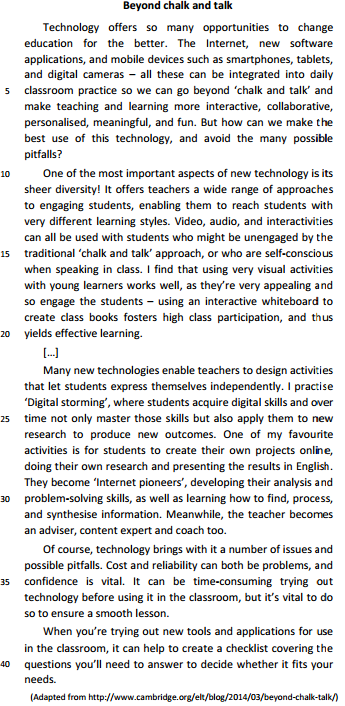
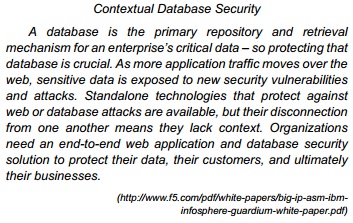

In the sentence “these findings suggest that Facebook may undermine it” (l.32 and 33), the verb “undermine” means the opposite of the verb to mine.


Some of you may be familiar with OSHA - the Occupational Safety & Health Administration. The sole purpose of this agency is to keep American workers safe. Complying with OSHA regulations isn't always easy, but if we work together, we can do it. Yet, complying with regulations is not the real reason for working safely. Our real motive is simple. We care about each and every one of you and will do what is necessary to prevent you from being injured.
However, keeping our workplace safe takes input from everyone. Management, supervisor, and all of you have to come together on this issue, or we're in trouble. For example, upper management has to approve the purchase of safe equipment. Supervisors, including myself, have to ensure that each of you knows how to use that equipment safely. Then it's up to you to follow through the task and use the equipment as you were trained. If any one part of this chain fails, accidents are going to happen and people are going to get hurt.
Responsibility Number One - Recognize Hazards
At the core of your safety responsibilities lies the task of recognizing safety and health hazards. In order to do that, you must first understand what constitutes a hazard. Extreme hazards are often obvious. Our hopes are that you won't find too many of those around here.
There are, however, more subtle hazards that won't jump up and bite you. As a result of your safety training and meetings like these, some things may come to mind. For example, a machine may not be easy to lock out. Common practice may be to use a tag. This is a potential hazard and should be discussed. Maybe something can be changed to make it easier to use a lock. Other subtle hazards include such things as frayed electrical cords, a loose machine guard, a cluttered aisle, or maybe something that just doesn't look right.
Responsibility Number Two - Report Hazards
A big part of recognizing hazards is using your instincts. Nobody knows your job as well as you do, so we're counting on you to let us know about possible problems. Beyond recognizing hazards, you have to correct them or report them to someone who can. This too, is a judgement call. For example, if something spills in your work area you can probably clean it up yourself. However, if there is an unlabeled chemical container and you have no idea what it is, you should report it to your supervisor.
Additional Employee Responsibilities
Good housekeeping is a major part of keeping your work area safe. For example, you should take a few minutes each day to ensure that aisles, hallways, and stairways in your work area are not obstructed. If boxes, equipment, or anything else is left to pile up, you have a tripping hazard on your hands. Those obstructions could keep you from exiting the building quickly and safely should you face an emergency situation.
Also watch out for spills. These can lead to slips and falls. Flammable materials are another thing to be aware of. Make sure they are disposed of properly.
Keep Thinking. Even if you're doing your job safely and you are avoiding hazards, there are often even better ways to work safely. If you have ideas for improving the safety of your job or that of co-workers, share them.
Concluding Remarks
While nothing we do can completely eliminate the threat of an incident, we can work together to improve our odds. As I said, this must be a real team effort and I'm counting on input from all of you. Let's keep communicating and continue to improve safety.
Available at: <http://www.ncsu.edu/ehs/www99/right/training/meeting/emplores.html>.Retrieved on: April 1st, 2012. Adapted.

 Conheça nossos planos