Questões de Concurso
Sobre interpretação de texto | reading comprehension em inglês
Foram encontradas 12.687 questões


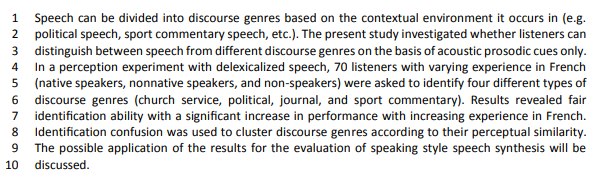
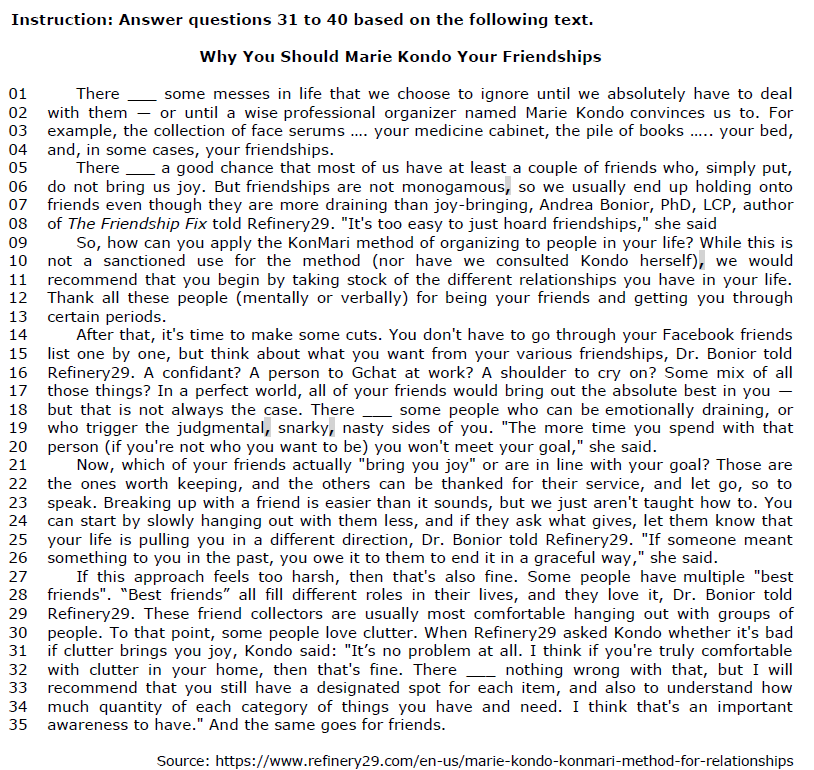
I. As showed in Marie Kondo new Netflix series, it is compulsory to apply the KonMari method to friendships. II. The best way to declutter is to suddenly stop talking to old friends.
III. The overall advice is to keep friends who bring joy to your life and are not energy draining.
Which ones are in agreement with the text?
I. ‘Marie Kondo’ is used as a noun. II. To understand the sentence you have to know who is Marie Kondo. III. The best translation would be “Por que você deveria se tornar a Marie Kondo das amizades?”.
Which ones are correct?
A Better Way to Paint a House
Fall is by far the best time to paint a house in most locations. The cooler, drier weather allows the paint to cure properly and also makes the work more _____________ rather than suffering through the summer heat or spring showers.
Keeping your house painted is the best way to keep issues like rot or termites at bay and should be a regularly scheduled part of your maintenance every 10-20 years depending on your climate and the condition of your paint.
If you let a paint job go too long you run the risk of damage to the underlying structure and increased costs for more involved surface prep. Heavy sanding, scraping and carpentry repairs can be budget busters so keeping your house painted regularly is a time and money saver.
https://thecraftsmanblog.com/... - adapted
A Better Way to Paint a House
Fall is by far the best time to paint a house in most locations. The cooler, drier weather allows the paint to cure properly and also makes the work more _____________ rather than suffering through the summer heat or spring showers.
Keeping your house painted is the best way to keep issues like rot or termites at bay and should be a regularly scheduled part of your maintenance every 10-20 years depending on your climate and the condition of your paint.
If you let a paint job go too long you run the risk of damage to the underlying structure and increased costs for more involved surface prep. Heavy sanding, scraping and carpentry repairs can be budget busters so keeping your house painted regularly is a time and money saver.
https://thecraftsmanblog.com/... - adapted
A Better Way to Paint a House
Fall is by far the best time to paint a house in most locations. The cooler, drier weather allows the paint to cure properly and also makes the work more _____________ rather than suffering through the summer heat or spring showers.
Keeping your house painted is the best way to keep issues like rot or termites at bay and should be a regularly scheduled part of your maintenance every 10-20 years depending on your climate and the condition of your paint.
If you let a paint job go too long you run the risk of damage to the underlying structure and increased costs for more involved surface prep. Heavy sanding, scraping and carpentry repairs can be budget busters so keeping your house painted regularly is a time and money saver.
https://thecraftsmanblog.com/... - adapted
According to the text, mark C for the Certain statements, W for the Wrong ones and, after, mark the alternative that presents the CORRECT sequence:
(---) Issues like rot or termites are not ordinary.
(---) Paint should be a regularly scheduled part of your maintenance every 10-20 days depending on your climate and the condition of your paint.
(---) Heavy sanding, scraping and carpentry repairs are expensive and takes time.
A Better Way to Paint a House
Fall is by far the best time to paint a house in most locations. The cooler, drier weather allows the paint to cure properly and also makes the work more _____________ rather than suffering through the summer heat or spring showers.
Keeping your house painted is the best way to keep issues like rot or termites at bay and should be a regularly scheduled part of your maintenance every 10-20 years depending on your climate and the condition of your paint.
If you let a paint job go too long you run the risk of damage to the underlying structure and increased costs for more involved surface prep. Heavy sanding, scraping and carpentry repairs can be budget busters so keeping your house painted regularly is a time and money saver.
https://thecraftsmanblog.com/... - adapted
I. The text defines “gift” as something “voluntarily transferred” and “without compensation”. II. Better to buy gifts by debit card always. III. Gifts would be genuine tokens of affection, given without any expectation of recompense.
The CORRECT item(s) is(are):
( ) A genre is a type of text, defined by its purpose and intended audience and identified by its format, style and language. An advertisement, a letter, an e-mail and a fairy tale are all examples of genres.
( ) Text types, on the other hand, represent groupings of texts which are similar in linguistic form, irrespective of genre. For instance, Hammond and colleagues (1992) classified the genre recipe as being of the procedure text type, and the genre student essay as being of the expository text type.
( ) Let’s take the ‘genre’ of advertisements for example. The purpose of an advertisement is to persuade the reader to buy something. Therefore, the format is attractive with pictures and few words. The style is direct and persua-sive, and the language uses short, simple sentences with powerful vocabulary.
( ) Teaching genre features do not help set the context for reading but, for writing, knowing genre features provide learners with a starting point and ensure cohesion.
( ) Teachers should use a range of genres and text types that match learners’ age, interests and needs.
Choose the alternative with the correct sequence:
Read the cartoon below and analyze the statements that follow:
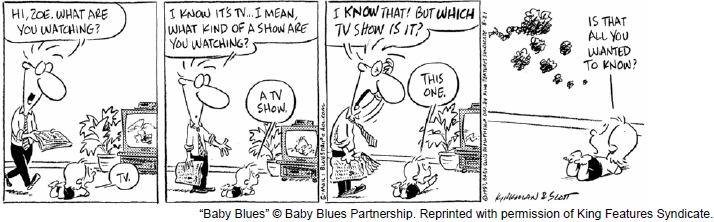
I- The dad loses his patience with Zoe because the kid doesn’t understand the questions he asks.
II- The cartoon is funny because of the inappropriateness of the interaction.
III- The kid in the cartoon hasn’t completely acquired the pragmatic maxims of conversation.
IV- The kid in the cartoon is lazy and not able to answer the questions.
Choose the correct alternative:
“This paper discusses some of the assumptions behind the use of the terms international, global, foreign, additional language and lingua franca when referring to English. Such terminology is approached from the angle of the pedagogical praxis surrounding teaching-learning English in Brazilian public schools (GIMENEZ, CALVO & EL KADRI, 2011), based on Derrida’s and Foucault’s thoughts on text and discourse, taken here as our focal point when analyzing such terminology for English language teaching. The connotations attributed to English are analyzed in their occurrence in language policy documents, international academic journals and abstracts of papers presented at a Brazilian teacher’s education conference; the uses of the terms are contrasted with English as a foreign language (EFL), as has been traditionally used in Brazil. KEYWORDS: foreign language, additional language, English, language concept, poststructuralism.” (JORDÃO, Clarissa Menezes. ILA – ILF – ILE – ILG: Quem dá conta? RBLA, v.14, n.1, p.13, 2014)
I- An abstract summarizes, usually in one paragraph of 300 words or less, the major aspects of the entire paper. It is normally followed by a list of keywords.
II- Jordão’s paper aims at discussing the implications of teaching English in Brazil.
III- In Brazil, the term EFL is present in all official documents.
IV- Jordão analyzes the uses of the terms international, global, foreign, additional language and lingua franca when referring to English in language policy documents, international academic journals and abstracts of papers presented at a conference.
Choose the alternative with the correct answer:
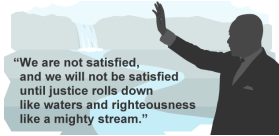
( ) The purpose of King’s rhetorical speech was to end racism in America and persuade the audience that everyone should have equal rights.
( ) King uses the expressions “until justice rolls down like waters” and “righteousness like a mighty stream” to make the reader visualize “justice” and “righteousness” as rushing water, thus, implying that they need to be forceful and unstoppable.
( ) The expressions “until justice rolls down like waters” and “righteousness like a mighty stream” are examples of simile, a comparison using like or as to create a vivid image.
( ) King is able to deliver a strong message because of the way he uses language.
Choose the alternative with the correct sequence:

 Conheça nossos planos