Questões de Concurso Sobre interpretação de texto | reading comprehension em inglês

Foram encontradas 12.992 questões

Q3071291 Inglês
What the Paris Olympics opening ceremony really meant

The opening ceremony of the Olympic Games traditionally offers the host city the opportunity to celebrate sporting excellence and international unity while also presenting to the world a flattering portrait of its own nation, informed by its own culture. [...]

[...] Entitled ‘Ça ira’ (‘It’ll be all right’), the show garnered mixed reviews in the French press. It was described variously as magical or catastrophic, as an astonishing apotheosis or a distressing accumulation of kitsch. Lady Gaga performed up and down a flight of stairs, dressed in feathers. The French singer Philippe Katerine, covered in blue body paint and dressed up as Bacchus, reclined in a platter of fruit. A threesome blossomed in the Bibliothèque Nationale. Decapitated figures of Marie-Antoinette holding their singing heads appeared at the windows of the Conciergerie. A floating piano was set on fire. The ceremony was conceived over two years by a committee made up of historian Patrick Boucheron (a member of the prestigious research institute, the Collège de France), the scriptwriter Fanny Herrero (creator of the Netflix series 10 Pour Cent/Call My Agent), the novelist Leïla Slimani (winner of the Goncourt literary prize for her novel Chanson douce/Lullaby), and the dramatist Damien Gabriac, who were all assembled in 2022 by the event’s master of ceremonies, theatre director Thomas Jolly. to co-write the script of their celebration of France. 

[...]

The man behind Le Puy du Fou is entrepreneur and politician Philippe de Villiers. Although de Villiers briefly served as Secretary of State for Culture under Socialist President François Mitterand, he is currently a member of French nationalist party Reconquête!, whose leader is the far-right firebrand Eric Zemmour. De Villiers is a Christian traditionalist who has expressed hostility towards Islam and has maintained that during the French Revolution a political ‘genocide’ was perpetrated against the Royalist people of Vendée.

It was therefore important for Jolly and his team firmly to distance their own project from Le Puy du Fou and to offer instead, as Jolly said: ‘the opposite of a virile, heroic and providential history’, of ‘an ode to grandeur’ or to the ‘manifestation of force’. Besides de Villiers’ theme park, another anti-model may have been the opening ceremony of the 2023 Rugby World Cup. Hosted by the popular actor Jean Dujardin and featuring a playful celebration of traditional French life, it was criticised for portraying a nostalgic and ‘rancid’ version of France. To be sure, at a time when France is politically and culturally riven, it would have seemed important to tell a national story that would unite rather than divide. In contrast, Jolly aimed for a celebration of ‘planetary multi-ethnicity’. But was it not in hindsight a mistake, a missed opportunity, to throw out, for fear that it might be politically toxic, anything that might be perceived as a celebration of French history, or the shared heritage that binds all French people together? 

Patrick Boucheron, the historian in Jolly’s team, has declared his ‘resistance’ to the idea of a ‘roman national’, the strengthening story a nation collectively weaves about itself – the word roman meaning in this instance at once a narrative and a romance. Boucheron favours instead a decentring of national consciousness and a deconstruction of national history. There was always a danger in rejecting historical greatness for ideological reasons. Louis XIV and Napoleon Bonaparte – both absent from the celebration – really do belong to all French; including them in the narrative would not have made it reactionary. Meanwhile Jolly’s desire systematically to foreground pop culture in order not to appear elitist often felt parochial. What is the long-term cultural significance of Nicky Doll, Paloma and Piche, stars of the reality show Drag Race France? Was the performance of John Lennon’s song Imagine really, as a sports historian declared in the newspaper Libération, ‘heavy with meaning’ because of its nature as a ‘political and cultural allegory’?

Wasn’t it also a pity not to celebrate France’s contemporary achievements, especially the rebuilding of Notre-Dame after its devastation by fire, and the Grand Paris Express transport network being developed for better integration of central Paris and its banlieues?

But above all, what was missing from the show, with rare exceptions – such as the sight of the Olympic cauldron rising into the sky tethered to a gigantic hot air balloon – was beauty. This signalled a lack of cultural confidence on the part of the ceremony’s storytellers. It was telling, for example, that Marcel Proust, one of France’s most exceptional writers, was featured as a caricatured carnival head, alongside Little Red Riding Hood and Marcel Marceau. Nor was placing the ceremony under the auspices of ‘Ça ira’, a 1790 anthem of the French Revolution as familiar to the French as the Marseillaise, an expression of intellectual confidence. Like the Marseillaise, ‘Ça ira’ is a call to violence – an ode to the systematic hanging of aristocrats from lamp-posts – and insisting, as Jolly did, that it can be reframed as a message of hope and of ‘union and unity within diversity’ is meaningless.

Ultimately, whether any of this landed with its audience remains doubtful. In spite of the driving rain, the French enjoyed the show’s wackiness, the party atmosphere, the excitement and anticipation of the Games. And the Games themselves were a wonderful success. But a message was sent nevertheless. And now that the Olympic truce is over, Emmanuel Macron must once again face up to a divided nation


In: https://engelsbergideas.com/notebook/what-the-paris-olympics-openingceremony-reallymeant/?gad_source=1&gclid=CjwKCAjwuMC2BhA7EiwAmJKRrLbi3d14OiB6WRug_hjU2I-75FCfTsQ0RitnqNM3GJxOqz9UCUlUBoCZ4IQAvD_BwE
Segundo o texto, a cerimônia de abertura das Olimpíadas de Paris teve em comum com a cerimônia de abertura da Copa do Mundo de Rugby de 2023, o fato de:
Alternativas
Q3070404 Inglês

Text IV


Diversity and Inclusive Teaching


    Teaching to engage diversity, to include all learners, and to seek equity is essential for preparing civically engaged adults and for creating a campus and society that recognizes the contributions of all people. Teaching for diversity refers to acknowledging a range of differences in the classroom. Teaching for inclusion signifies embracing difference. Teaching for equity allows the differences to transform the way we think, teach, learn and act such that all experiences and ways of being are handled with fairness and justice. These ideas complement each other and enhance educational opportunities for all students when simultaneously engaged. […]


    Inclusive teaching strategies are intended to ensure that all students feel supported such that they freely learn and explore new ideas, feel safe to express their views in a civil manner, and are respected as individuals and members of groups. Intentionally incorporating inclusive teaching strategies helps students view themselves as people who belong to the community of learners in a classroom and university.


Adapted from https://ctal.udel.edu/resources-2/inclusive-teaching/

When the text states that “students feel supported” (2nd paragraph), it is meant that they feel:
Alternativas
Q3070403 Inglês

Text IV


Diversity and Inclusive Teaching


    Teaching to engage diversity, to include all learners, and to seek equity is essential for preparing civically engaged adults and for creating a campus and society that recognizes the contributions of all people. Teaching for diversity refers to acknowledging a range of differences in the classroom. Teaching for inclusion signifies embracing difference. Teaching for equity allows the differences to transform the way we think, teach, learn and act such that all experiences and ways of being are handled with fairness and justice. These ideas complement each other and enhance educational opportunities for all students when simultaneously engaged. […]


    Inclusive teaching strategies are intended to ensure that all students feel supported such that they freely learn and explore new ideas, feel safe to express their views in a civil manner, and are respected as individuals and members of groups. Intentionally incorporating inclusive teaching strategies helps students view themselves as people who belong to the community of learners in a classroom and university.


Adapted from https://ctal.udel.edu/resources-2/inclusive-teaching/

Analyse the assertions below based on Text IV:

I. The concepts discussed in the text must not be combined. II. Polite self-expression is encouraged by inclusive teaching. III. Inclusion is a target that should be met.

Choose the correct answer:
Alternativas
Q3070400 Inglês

Text III


Q48_55.png (408×211)

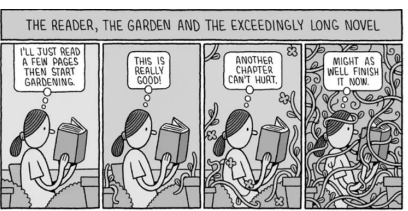
From: https://streetlibrary.org.au/reading-in-the-garden-tom-gauld-cartoon/

The opposite of the quantifier in “a few pages” (1st panel) is:
Alternativas
Q3070399 Inglês

Text III


Q48_55.png (408×211)

From: https://streetlibrary.org.au/reading-in-the-garden-tom-gauld-cartoon/

In the last panel, “might as well” indicates a(n):
Alternativas
Q3070398 Inglês

Text III


Q48_55.png (408×211)

From: https://streetlibrary.org.au/reading-in-the-garden-tom-gauld-cartoon/

In the first panel, “then” is used to: 
Alternativas
Q3070396 Inglês

Text III


Q48_55.png (408×211)

From: https://streetlibrary.org.au/reading-in-the-garden-tom-gauld-cartoon/

The idiom in “Another chapter can’t hurt” implies that the reading might prove to be:
Alternativas
Q3070395 Inglês

Text III


Q48_55.png (408×211)

From: https://streetlibrary.org.au/reading-in-the-garden-tom-gauld-cartoon/

The person in the comic strip is:
Alternativas
Q3070394 Inglês

Text II


Q43_47.png (277×428)

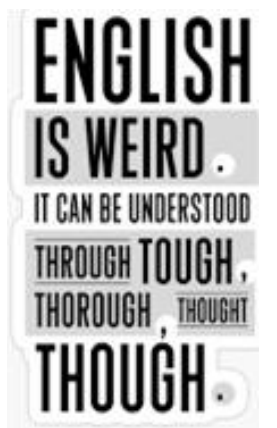
From: https://images.app.goo.gl/dCFurjmcnZzU7AHS6

The verb phrase in “It can be understood” is in the same voice as in the title of the song:
Alternativas
Q3070390 Inglês

Text II


Q43_47.png (277×428)

From: https://images.app.goo.gl/dCFurjmcnZzU7AHS6

In the first sentence, the poster states that English is:
Alternativas
Q3070389 Inglês

Text I


The BNCC and Twenty-First Century Skills


    The most ambitious feature of the BNCC, which only appeared in the document’s third version, was to establish ten core competencies that all students should develop throughout basic education, starting in early childhood. These competencies include lifelong learning, critical thinking, aesthetic sensibilities, communication skills, digital literacy, entrepreneurship, self-care, empathy, citizenship and ethics. The core competencies broaden the goals of basic education well-beyond academic skills to twenty-first century skills widely regarded as essential to preparing the next generations for the challenges of the 4th industrial revolution.


    As ambitious as it was, the BNCC was criticized for the lack of explicit links between the ten core competencies and the subject specific competencies and skills, leaving cities and states with the responsibility of making these links themselves. In addition to this, the core competencies are not generally integrated into teacher training programs and are often de-prioritized for the more basic literacy and numeracy needs. In this context, the Ministry of Education and its partners in the third sector have developed orientations, produced videos and online courses aimed at filling this gap, and helped cities and states integrate the ten core competencies in their curricula.


    […]


    Ensuring all Brazilian students master the ten core competencies laid out by the BNCC by the end of high school is a long-term, extremely ambitious goal. Before we can set a timeframe for when we will be able to achieve this feat, we need to know where we stand. Due to the core competencies’ complexity, each involves several skills, attitudes and sometimes values, it is unclear whether we will be capable of measuring all ten of them and by when. Until then we are in the company of the OECD, which is already tackling this challenge and will likely pave the way for Brazil in this respect


Note: BNCC: Base Nacional Comum Curricular;

OECD: The Organization for Economic Cooperation and Development.

Adapted from https://link.springer.com/chapter/10.1007/978-3-030-41882-3_2

The word “likely” in “will likely pave the way for Brazil” (3rd paragraph) indicates:
Alternativas
Q3070385 Inglês

Text I


The BNCC and Twenty-First Century Skills


    The most ambitious feature of the BNCC, which only appeared in the document’s third version, was to establish ten core competencies that all students should develop throughout basic education, starting in early childhood. These competencies include lifelong learning, critical thinking, aesthetic sensibilities, communication skills, digital literacy, entrepreneurship, self-care, empathy, citizenship and ethics. The core competencies broaden the goals of basic education well-beyond academic skills to twenty-first century skills widely regarded as essential to preparing the next generations for the challenges of the 4th industrial revolution.


    As ambitious as it was, the BNCC was criticized for the lack of explicit links between the ten core competencies and the subject specific competencies and skills, leaving cities and states with the responsibility of making these links themselves. In addition to this, the core competencies are not generally integrated into teacher training programs and are often de-prioritized for the more basic literacy and numeracy needs. In this context, the Ministry of Education and its partners in the third sector have developed orientations, produced videos and online courses aimed at filling this gap, and helped cities and states integrate the ten core competencies in their curricula.


    […]


    Ensuring all Brazilian students master the ten core competencies laid out by the BNCC by the end of high school is a long-term, extremely ambitious goal. Before we can set a timeframe for when we will be able to achieve this feat, we need to know where we stand. Due to the core competencies’ complexity, each involves several skills, attitudes and sometimes values, it is unclear whether we will be capable of measuring all ten of them and by when. Until then we are in the company of the OECD, which is already tackling this challenge and will likely pave the way for Brazil in this respect


Note: BNCC: Base Nacional Comum Curricular;

OECD: The Organization for Economic Cooperation and Development.

Adapted from https://link.springer.com/chapter/10.1007/978-3-030-41882-3_2

As regards Text I, analyze the assertions below:

I. Teacher education programs today focus more on the ten core competencies than on other needs the students may have. II. The BNCC has been the object of some resistance. III. Core competencies can now be measured in a simple way.

Choose the correct answer:
Alternativas
Q3070384 Inglês

Text I


The BNCC and Twenty-First Century Skills


    The most ambitious feature of the BNCC, which only appeared in the document’s third version, was to establish ten core competencies that all students should develop throughout basic education, starting in early childhood. These competencies include lifelong learning, critical thinking, aesthetic sensibilities, communication skills, digital literacy, entrepreneurship, self-care, empathy, citizenship and ethics. The core competencies broaden the goals of basic education well-beyond academic skills to twenty-first century skills widely regarded as essential to preparing the next generations for the challenges of the 4th industrial revolution.


    As ambitious as it was, the BNCC was criticized for the lack of explicit links between the ten core competencies and the subject specific competencies and skills, leaving cities and states with the responsibility of making these links themselves. In addition to this, the core competencies are not generally integrated into teacher training programs and are often de-prioritized for the more basic literacy and numeracy needs. In this context, the Ministry of Education and its partners in the third sector have developed orientations, produced videos and online courses aimed at filling this gap, and helped cities and states integrate the ten core competencies in their curricula.


    […]


    Ensuring all Brazilian students master the ten core competencies laid out by the BNCC by the end of high school is a long-term, extremely ambitious goal. Before we can set a timeframe for when we will be able to achieve this feat, we need to know where we stand. Due to the core competencies’ complexity, each involves several skills, attitudes and sometimes values, it is unclear whether we will be capable of measuring all ten of them and by when. Until then we are in the company of the OECD, which is already tackling this challenge and will likely pave the way for Brazil in this respect


Note: BNCC: Base Nacional Comum Curricular;

OECD: The Organization for Economic Cooperation and Development.

Adapted from https://link.springer.com/chapter/10.1007/978-3-030-41882-3_2

The competency that is most closely connected to literature and other forms of art is:
Alternativas
Q3070383 Inglês

Text I


The BNCC and Twenty-First Century Skills


    The most ambitious feature of the BNCC, which only appeared in the document’s third version, was to establish ten core competencies that all students should develop throughout basic education, starting in early childhood. These competencies include lifelong learning, critical thinking, aesthetic sensibilities, communication skills, digital literacy, entrepreneurship, self-care, empathy, citizenship and ethics. The core competencies broaden the goals of basic education well-beyond academic skills to twenty-first century skills widely regarded as essential to preparing the next generations for the challenges of the 4th industrial revolution.


    As ambitious as it was, the BNCC was criticized for the lack of explicit links between the ten core competencies and the subject specific competencies and skills, leaving cities and states with the responsibility of making these links themselves. In addition to this, the core competencies are not generally integrated into teacher training programs and are often de-prioritized for the more basic literacy and numeracy needs. In this context, the Ministry of Education and its partners in the third sector have developed orientations, produced videos and online courses aimed at filling this gap, and helped cities and states integrate the ten core competencies in their curricula.


    […]


    Ensuring all Brazilian students master the ten core competencies laid out by the BNCC by the end of high school is a long-term, extremely ambitious goal. Before we can set a timeframe for when we will be able to achieve this feat, we need to know where we stand. Due to the core competencies’ complexity, each involves several skills, attitudes and sometimes values, it is unclear whether we will be capable of measuring all ten of them and by when. Until then we are in the company of the OECD, which is already tackling this challenge and will likely pave the way for Brazil in this respect


Note: BNCC: Base Nacional Comum Curricular;

OECD: The Organization for Economic Cooperation and Development.

Adapted from https://link.springer.com/chapter/10.1007/978-3-030-41882-3_2

Based on Text I, mark the statements below as TRUE (T) or FALSE (F).

( ) The core competencies are not solely restricted to academic skills. ( ) Mastering the ten core competencies by the end of high school can be easily achieved. ( ) The core competencies established by the BNCC for basic education were a later development.

The statements are, respectively:
Alternativas
Q3069664 Inglês
Conclusions and Recommendations


    Given the panorama of English instruction in Brazil, particularly in the states of Minas Gerais and Mato Grosso, and considering the results of the surveys conducted with universities and teachers in both states, some conclusions and recommendations could be drawn.

    Nationally, English instruction has been gaining importance and visibility through curriculum reform and the new model of upper secondary school. It is an enormously significant achievement that, for the first time, English has become mandatory in all public and private schools from 6th grade onward. The BNCC offers clarity on the competencies and abilities that students should develop at each education level. However, if, on the one hand, making English compulsory was an important step, on the other hand, the implementation of this policy is still incomplete. The main issue is the limited amount of instructional time in English in the national curriculum guidelines. As the cases of Mato Grosso and Minas Gerais illustrate, the result is that students have insufficient exposure to the language, with only two classes per week in secondary schools and one class per week in upper secondary. Under these conditions, it is unlikely that learners will develop full proficiency in the language, and teachers will have the instructional time to focus on all the necessary competencies and abilities required by the BNCC.

    Another important consideration is the link between initial training for English teachers and how it interacts with the routines and challenges of the classroom. There is room for improvement when considering the mismatch between the programs of study at universities and the pedagogical practice required of English teachers and strengthened ties and communication between State Education Departments and the teacher training programs at universities.

    Universities face additional challenges, such as the low English proficiency of students in the initial training courses. Initial training institutions face difficulties in thoroughly preparing future teachers regarding language proficiency and the pedagogical elements related to being an effective teacher. In this sense, the situation can create a vicious cycle; students leave schools with a low proficiency level in English, and those who decide to take the initial training courses to become English teachers and enter universities cannot fully develop proficiency as pedagogical competencies. Therefore, they enter schools not fully prepared to be teachers and face all the challenges of a classroom.

    Another critical challenge is class size and the heterogeneity of students’ ability levels, which could limit teachers’ ability to implement some pedagogical practices, such as working with practicing speaking. This is not only a challenge faced by English teachers, but all teachers and that policymakers need to keep in mind. In addition, teachers commonly work in more than one school at a time and sometimes teach other subjects to meet the required hours of instructional time stipulated in their contracts.

   The surveys with teachers demonstrated that many have never participated in a professional development session specifically designed for English teachers. For those who have, not all considered the helpful training to improve their knowledge and practice. This points to the fact that more attention needs to be paid to the continuous training courses offered to English teachers. These training courses should be frequent and address specific challenges, taking into account the pedagogical issues and areas that English teachers identify as most critical.

    Briefly, it is important to highlight the windows of opportunity that have been opened in Brazil with the BNCC and the new upper secondary model. Through their education ministries, state governments have made significant efforts to adapt their regional curricula to the competencies and abilities listed on the BNCC and implement the first pilots and designed pathways for upper secondary schools. It remains a question of how the rest of those two processes will be implemented, but there are positive signs that English may gain more importance at a national level. At least in Minas Gerais and Mato Grosso, there is already a movement to increase the importance of the discipline.

    While Minas Gerais has developed a few specific training courses for English teachers focused on improving their pedagogical knowledge through the program “Pathways for Educators” and intends to create a training pathway for upper secondary students focused in English, Mato Grosso has implemented English in all primary schools in the state and launched the program “More English,” with resources to help teachers and students. Those efforts are aligned with the national reforms and illustrate the political willingness of states to promote more actions to improve teachers’ and students’ proficiency in English.

    In these states and, to some extent, at the national level, the foundations have been set to put English instruction in the spotlight as a crucial discipline to the integral development of students. However, much work and resources are still needed to realize this goal. Therefore, the following recommendations are intended to advise decision-makers at universities and State Education Departments.


(Source: https://www.thedialogue.org/wp-content/. Access: October 2024.)
Read the statements below.

( ) It is possible to say that the lack of continuing educational courses for English teachers influences poor pedagogical practices in school.

( ) The author expresses optimism for new pedagogical practices and teacher training in view of the changings that have taken place in curricula and educational policies.

( ) “Pathwaysfor Education” and “More English” are printed material resources developed for teachers’ pedagogical improvement.

( ) Essential foundations have been laid to position English training as a vital discipline for integral students’ development. Nevertheless, there is still a lot of work and resources needed to achieve this objective.

The sequence is correct only in 
Alternativas
Q3069663 Inglês
Conclusions and Recommendations


    Given the panorama of English instruction in Brazil, particularly in the states of Minas Gerais and Mato Grosso, and considering the results of the surveys conducted with universities and teachers in both states, some conclusions and recommendations could be drawn.

    Nationally, English instruction has been gaining importance and visibility through curriculum reform and the new model of upper secondary school. It is an enormously significant achievement that, for the first time, English has become mandatory in all public and private schools from 6th grade onward. The BNCC offers clarity on the competencies and abilities that students should develop at each education level. However, if, on the one hand, making English compulsory was an important step, on the other hand, the implementation of this policy is still incomplete. The main issue is the limited amount of instructional time in English in the national curriculum guidelines. As the cases of Mato Grosso and Minas Gerais illustrate, the result is that students have insufficient exposure to the language, with only two classes per week in secondary schools and one class per week in upper secondary. Under these conditions, it is unlikely that learners will develop full proficiency in the language, and teachers will have the instructional time to focus on all the necessary competencies and abilities required by the BNCC.

    Another important consideration is the link between initial training for English teachers and how it interacts with the routines and challenges of the classroom. There is room for improvement when considering the mismatch between the programs of study at universities and the pedagogical practice required of English teachers and strengthened ties and communication between State Education Departments and the teacher training programs at universities.

    Universities face additional challenges, such as the low English proficiency of students in the initial training courses. Initial training institutions face difficulties in thoroughly preparing future teachers regarding language proficiency and the pedagogical elements related to being an effective teacher. In this sense, the situation can create a vicious cycle; students leave schools with a low proficiency level in English, and those who decide to take the initial training courses to become English teachers and enter universities cannot fully develop proficiency as pedagogical competencies. Therefore, they enter schools not fully prepared to be teachers and face all the challenges of a classroom.

    Another critical challenge is class size and the heterogeneity of students’ ability levels, which could limit teachers’ ability to implement some pedagogical practices, such as working with practicing speaking. This is not only a challenge faced by English teachers, but all teachers and that policymakers need to keep in mind. In addition, teachers commonly work in more than one school at a time and sometimes teach other subjects to meet the required hours of instructional time stipulated in their contracts.

   The surveys with teachers demonstrated that many have never participated in a professional development session specifically designed for English teachers. For those who have, not all considered the helpful training to improve their knowledge and practice. This points to the fact that more attention needs to be paid to the continuous training courses offered to English teachers. These training courses should be frequent and address specific challenges, taking into account the pedagogical issues and areas that English teachers identify as most critical.

    Briefly, it is important to highlight the windows of opportunity that have been opened in Brazil with the BNCC and the new upper secondary model. Through their education ministries, state governments have made significant efforts to adapt their regional curricula to the competencies and abilities listed on the BNCC and implement the first pilots and designed pathways for upper secondary schools. It remains a question of how the rest of those two processes will be implemented, but there are positive signs that English may gain more importance at a national level. At least in Minas Gerais and Mato Grosso, there is already a movement to increase the importance of the discipline.

    While Minas Gerais has developed a few specific training courses for English teachers focused on improving their pedagogical knowledge through the program “Pathways for Educators” and intends to create a training pathway for upper secondary students focused in English, Mato Grosso has implemented English in all primary schools in the state and launched the program “More English,” with resources to help teachers and students. Those efforts are aligned with the national reforms and illustrate the political willingness of states to promote more actions to improve teachers’ and students’ proficiency in English.

    In these states and, to some extent, at the national level, the foundations have been set to put English instruction in the spotlight as a crucial discipline to the integral development of students. However, much work and resources are still needed to realize this goal. Therefore, the following recommendations are intended to advise decision-makers at universities and State Education Departments.


(Source: https://www.thedialogue.org/wp-content/. Access: October 2024.)
Read the statements.

I. One of the aspects that impair the implementation of the new educational guidelines mentioned in the text is student’s lack of sufficient language exposure, which may lead to lower English proficiency.

II. The mismatch between the initial training of English teachers in universities and the pedagogical practices required in schools is not considered to be a key factor that jeopardizes students’ English proficiency.

III. It is clear in the text that teachers who have not fully developed English proficiency during their initial training courses may face challenges when it comes to pedagogical practices in the classroom.

IV. Students’ different levels of English proficiency is a crucial factor that could inhibit speaking activities in the classroom.

Which statement is INCORRECT? 

Alternativas
Q3069661 Inglês
    The report presents an overview of English teaching in Brazil, examining the main national policies that regulate and inform English language learning and how they have been implemented. In addition, the study aims to exemplify how English teaching is guided from the national level to the state and municipal level, looking particularly at the states of Minas Gerais and Mato Grosso. The case studies in these two states examine state policies related to English, with a particular focus on teachers and their careers, from training to work routine and 20 classroom pedagogical practices.

    Based on an in-depth analysis of these two Brazilian states and the results of questionnaires conducted with universities and with teachers, this report offers a set of recommendations for improving English teaching in these two states, which can also be applied to other states or federal entities in Brazil. The aim is to consolidate these recommendations into workable and meaningful propositions with the ultimate goal of improving English teaching 25 in Brazil through better quality education led by qualified teachers.


(Source: https://www.thedialogue.org/analysis/english-language-learning-in-brazil/. Access: October 2024.)
Choose the option that is true about the following sentence: “In the case of Brazil, English instruction Has Been Gaining more importance in recent years, especially with the inclusion of the subject as compulsory at the secondary level (beginning in 6th grade) in all public and private schools.” (2º§)
Alternativas
Q3069659 Inglês
    The report presents an overview of English teaching in Brazil, examining the main national policies that regulate and inform English language learning and how they have been implemented. In addition, the study aims to exemplify how English teaching is guided from the national level to the state and municipal level, looking particularly at the states of Minas Gerais and Mato Grosso. The case studies in these two states examine state policies related to English, with a particular focus on teachers and their careers, from training to work routine and 20 classroom pedagogical practices.

    Based on an in-depth analysis of these two Brazilian states and the results of questionnaires conducted with universities and with teachers, this report offers a set of recommendations for improving English teaching in these two states, which can also be applied to other states or federal entities in Brazil. The aim is to consolidate these recommendations into workable and meaningful propositions with the ultimate goal of improving English teaching 25 in Brazil through better quality education led by qualified teachers.


(Source: https://www.thedialogue.org/analysis/english-language-learning-in-brazil/. Access: October 2024.)
Read the statements below.

I. A transition movement in the educational system has been happening due to facts like technology in schools, globalization, digitalization and the growing emphasis given to emotional and social abilities.

II. Bridging different people and cultures and being a highly demanded skill in the job market, the proficiency in English has become indispensable and justify the need for an excellent education in the language.

III. English language has become a mandatory subject at the secondary level in public schools and it is optional in private schools.

IV. A positive impact in the efficiency of English instruction in Brazil is believed to happen as a result of the current reforms in the educational system.

The true statements are
Alternativas
Q3069658 Inglês
    The report presents an overview of English teaching in Brazil, examining the main national policies that regulate and inform English language learning and how they have been implemented. In addition, the study aims to exemplify how English teaching is guided from the national level to the state and municipal level, looking particularly at the states of Minas Gerais and Mato Grosso. The case studies in these two states examine state policies related to English, with a particular focus on teachers and their careers, from training to work routine and 20 classroom pedagogical practices.

    Based on an in-depth analysis of these two Brazilian states and the results of questionnaires conducted with universities and with teachers, this report offers a set of recommendations for improving English teaching in these two states, which can also be applied to other states or federal entities in Brazil. The aim is to consolidate these recommendations into workable and meaningful propositions with the ultimate goal of improving English teaching 25 in Brazil through better quality education led by qualified teachers.


(Source: https://www.thedialogue.org/analysis/english-language-learning-in-brazil/. Access: October 2024.)
What is the purpose of the text?
Alternativas
Q3068829 Inglês

Read the text below and answer the question 


Paris 2024 Gymnastics: Rebeca Andrade captures

floor exercise gold ahead of Simone Biles and Jordan Chiles


By Scott Bregman / 05 August 2024


If this was a finale, Rebeca Andrade went out in style.

The most decorated Brazilian athlete at the Olympic Games added a gold medal Monday afternoon (5 August), claiming the women's floor title at the Olympic Games Paris 2024.

It's a second Olympic gold for Andrade, the Tokyo 2020 vaulting champion. She has six total medals in her three Olympic appearances. Andrade told media earlier this week that Paris could be her career floor finale.

"I am very happy and proud about what I did," she said. "We came here every day to compete and perform (well). Gymnastics is not an easy sport, it requires a lot from our body and mind.

"I was confident I was able to manage all of the pressure and I worked with my coach in order to achieve what we've done." Andrade's 14.166 was just ahead of Simone Biles (14.133). 

Biles' American teammate Jordan Chiles was third, scoring a 13.766 after a scoring inquiry lifted her from fifth to the podium.

It's the 11th Olympic medal for Biles, extending her record as the most decorated U.S. Olympic gymnast. The Brazilian star tumbled a front layout full to full-in and a full-twisting double layout to open. She closed with a controlled double pike.

Andrade took her time coming off the podium, savouring the appreciation from the crowd. When the final scores flashed inside Bercy Arena, the 25-year-old artistic gymnastics star seemed stunned during an embrace with coach.

In the warm-up, Biles looked cautious. 

She has been dealing with a strained calf injury throughout the Games and struggled through her signature triple-double (Biles II) in the moments before she competed.

But in competition, that tumbling pass gave her no trouble. Instead, Biles flew out of bounds with both feet on her second and fourth tumbling passes, incurring a .600 total neutral deduction.

"Obviously wasn't my best performances, but at the end of the day, whoever medaled, medaled and that's what's so exciting because you just never know with gymnastics," said Biles afterward. "So I'm not very upset or anything about my performance at the Olympics. I'm actually very happy, proud and even more excited about it." 

Chiles' score was originally 13.666 but coaches Laurent and Cecile Landi filed an inquiry. It was accepting, raising her difficulty score by .1 and giving her the bronze medal.

"I didn't even realize my coaches put in an inquiry, and I was like, 'Okay, yeah. Like, let's see... it can vary,'" explained Chiles. "So when it came through, I was very proud of myself. It was my first event final and my first event medal. This is crazy."


https://olympics.com/en/news/paris-2024-gymnastics-rebeca-andrade-captures-floor-exercise-gold

After winning the floor exercise gold at Paris 2024, Rebeca Andrade mentioned that gymnastics is not an easy sport. Based on the article, what reasons does Andrade give to explain the challenges of gymnastics, and how do her statements reflect her journey to winning the gold?
Alternativas
Respostas
3081: A
3082: B
3083: E
3084: E
3085: A
3086: E
3087: A
3088: C
3089: C
3090: C
3091: D
3092: B
3093: D
3094: A
3095: A
3096: B
3097: A
3098: B
3099: C
3100: B